About 3–4 cups of coffee per day are associated with lower risks of stroke, heart disease, type 2 diabetes, and early death, while caffeine can improve alertness and reaction time. The important qualifier is that when you drink coffee may matter nearly as much as how much you drink.
Many people think of coffee as a delivery system for caffeine. That's only part of the story. Coffee also contains polyphenols and minerals, and researchers have studied its relationship with the brain, cardiovascular system, metabolism, and longevity across many types of evidence.
Introduction, What You Actually Get From Your Morning Cup
The short answer to what is coffee good for is broader than “waking you up.” Coffee can help you feel more alert in the short term, support reaction speed during attention-heavy tasks, and, when consumed moderately, is associated with several favorable long-term health outcomes.
A large summary of prospective studies reported that 3–4 cups per day were linked with a 20% lower stroke risk in one study of 83,076 women, a 21% lower heart-disease risk in another cohort of 37,514 women, and a 21% lower risk of cardiovascular death in a meta-analysis of 21 prospective studies (Scientific Reports). These figures describe associations, not guarantees. Coffee isn't a treatment for disease, and an individual's response depends on dose, timing, sleep, genetics, and health status.
The more useful question is therefore not whether coffee is healthy. It's how to use it intelligently. A morning cup may support focus, while coffee late in the day may work against sleep. A convenient instant coffee can fit a workday, camping trip, or family routine, while used grounds can serve practical household purposes outside the mug.
The practical principle: Coffee works best as a tool, not as an unlimited health prescription.
The sections ahead examine how coffee affects cognition and metabolism, why morning timing deserves attention, who should be cautious, and how to choose a convenient product without treating convenience and quality as opposites.
The Science Behind Coffee's Health Benefits
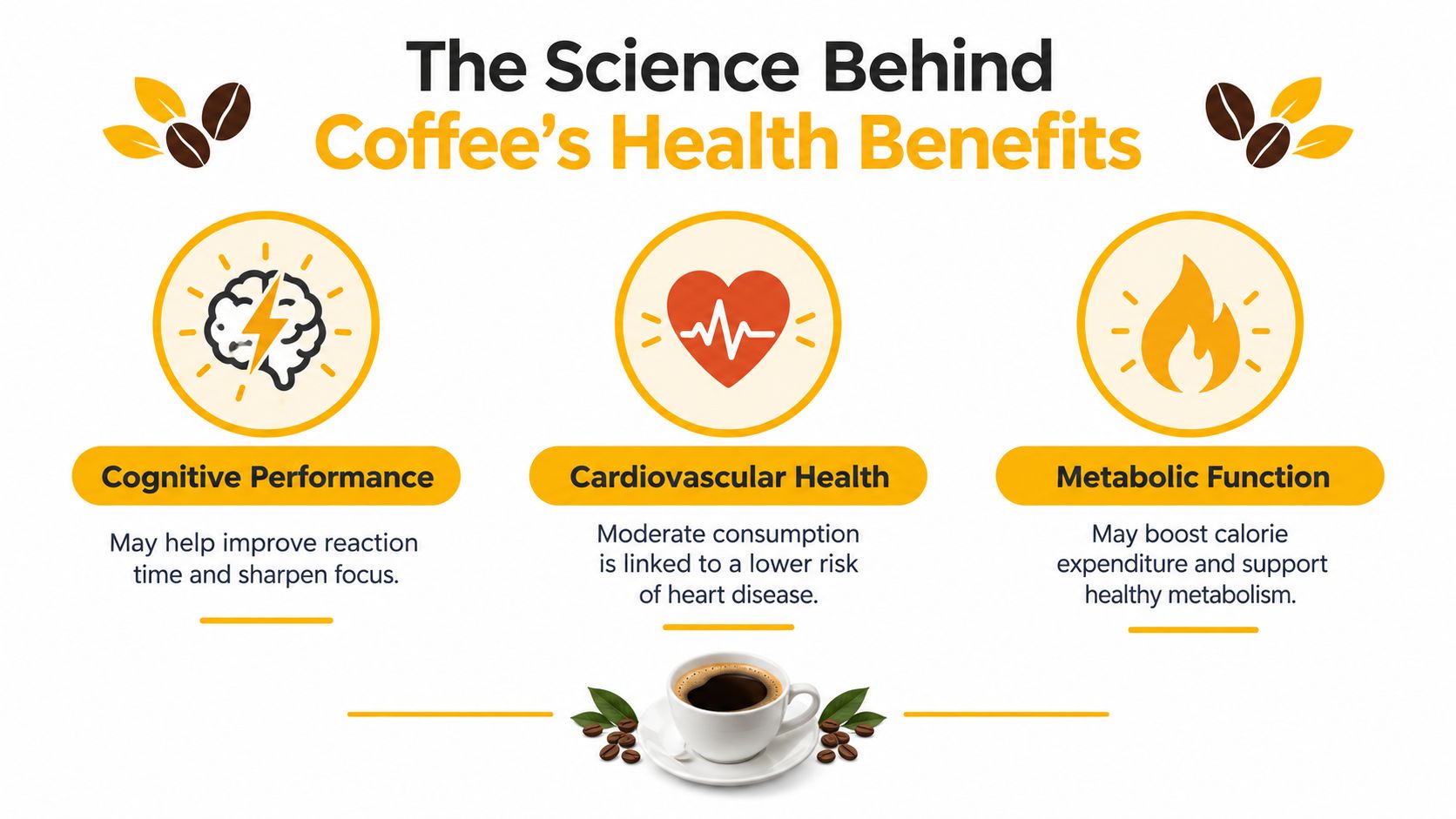
Coffee's effects come from a small team of compounds, not caffeine alone. Caffeine acts quickly on the nervous system, reducing the feeling of sleepiness and improving vigilance. Polyphenols and minerals such as magnesium may also influence glucose metabolism and insulin signaling, giving coffee a wider biological profile than a simple stimulant (umbrella review).
Brain performance
The clearest short-term effect is improved alertness. A review of caffeine and cognition found that caffeine can improve performance on simple and complex tasks, although adding more does not guarantee a proportional improvement. In a controlled cognition study, caffeine significantly improved participants' reaction time on a Go-No Go test.
That makes coffee useful before studying, driving, shift work, or early-morning decisions, when sustained attention matters. The benefit is often more noticeable when you are already sleepy. Coffee can temporarily make vigilance-dependent work easier, but it cannot replace adequate sleep.
Heart and metabolic health
Coffee's longer-term associations also extend beyond the brain. Large umbrella reviews found more favorable than harmful associations across cardiometabolic outcomes, with the largest risk reductions typically appearing around 3–4 cups per day in a review covering 201 meta-analyses. These findings describe patterns across populations, not a guaranteed personal result.
One possible explanation is that several compounds act on different pathways at once. Polyphenols and magnesium may support insulin signaling and glucose handling, while coffee's broader chemical profile may help explain its recurring association with lower type 2 diabetes risk. The drink works more like a collection of interacting ingredients than a single active substance.
A prospective-study summary reported that 3–5 cups daily were associated with a 15% lower risk of early death, while 6–7 cups daily were associated with a 16% lower risk, compared with non-drinkers (prospective-study summary). These are population-level associations, not instructions to keep increasing intake. For readers comparing preparation methods, this guide to instant coffee health benefits explains how the basic beverage relates to convenient formats.
Timing and Dosage, How to Drink Coffee for Maximum Benefit
Coffee timing can shape the result as much as the amount. An early cup may support alertness during the day, while a late cup can make sleep harder, especially for people who process caffeine slowly.
A recent observational study found that adults who drank coffee before noon had a 16% lower risk of all-cause death and a 31% lower risk of cardiovascular death over nearly 10 years (National Heart, Lung, and Blood Institute summary). The findings do not prove that morning coffee caused those outcomes. They suggest that timing deserves attention alongside quantity.
Match the routine to the goal
| Goal | Practical approach | Why it may help |
|---|---|---|
| Morning alertness | Drink coffee earlier in the day | It supports vigilance when many people begin work or make decisions |
| Sleep protection | Keep caffeine away from your usual bedtime | Less late-day stimulation can make sleep easier to protect |
| General health | Favor moderate intake rather than chasing more | Research often finds the strongest associations at moderate consumption |
| Exercise focus | Use coffee before a session only if you tolerate it | Caffeine may support attention and perceived effort, but responses differ |
An NHLBI summary of a 2026 American Heart Association review reported that moderate coffee or caffeine intake, about 3–5 cups per day and up to 400 mg of caffeine, is safe for most adults (NHLBI report). These figures are useful boundaries, not a target that every person needs to reach. A “cup” is not a fixed biological unit because serving sizes and brewing methods vary. This guide to coffee caffeine content provides context for comparing different drinks.
For sleep-sensitive readers, the best time to drink coffee for sleep depends on bedtime, serving size, and personal response. Start by moving the final serving earlier, then watch for changes in falling asleep and overall sleep quality. The practical rule is simple: use coffee when it supports the day, and leave enough time for its stimulating effect to fade before bed.
Who Drinks Coffee and Why, Real-World Use Cases
A busy professional may use coffee as a focus cue rather than as an all-day stimulant. One cup before a morning block of concentrated work can support alertness and reaction speed, especially when the alternative is trying to push through noticeable sleepiness. The aim isn't to keep adding servings whenever energy dips. It's to reserve coffee for work that genuinely requires vigilance.

A traveler or camper faces a different problem. They may want a warm, familiar drink without carrying a grinder, scale, or brewing setup. Instant coffee can solve that logistical problem with little equipment, making it practical for a campsite, hotel room, or early departure.
Families often value the same simplicity at home. A parent preparing breakfast doesn't always have time for a detailed brew routine, and a convenient format can make it easier to prepare separate cups without creating a sink full of equipment.
Caffeine can also fit around exercise, but the right choice depends on the person and the session. Readers weighing coffee or pre workout for gym should compare the ingredients and stimulant load of each option rather than assuming that more stimulation means better training.
The benefit may also be behavioral. If coffee helps you begin a task, travel efficiently, or maintain a consistent morning routine, its value comes from fitting your life without unnecessary friction. For readers interested in the relationship between coffee and eating patterns, coffee as an appetite suppressant provides a useful topic to evaluate carefully rather than treating coffee as a substitute for meals.
Beyond the Cup, Non-Drinking Uses of Coffee
Coffee grounds can be useful after brewing, but their value depends on the task. Some uses are straightforward household experiments, while others are better treated as folk wisdom rather than established fact.
Odor control is one plausible application. Dried grounds have a strong aroma and a porous texture, so people use them in small containers to help absorb or mask unwanted smells. They shouldn't be placed where moisture could encourage mold, and they aren't a replacement for cleaning the source of an odor.
Garden use requires more restraint. Grounds can add organic material to compost, but applying large amounts directly to soil may not suit every plant. Mix them into a broader composting process instead of assuming that every plant benefits from a thick layer.
Coffee can also become part of cooking. Its roasted flavor works especially well in savory preparations, where bitterness and toasted notes can complement meat. If you're trying the technique, this guide to how to use coffee rub on beef offers a practical starting point.
Avoid presenting grounds as a universal pest solution or a proven beauty treatment. Some household uses are sensible because of texture, aroma, or compost value. Others remain uncertain, so use them as low-stakes experiments, not as guaranteed outcomes.
Who Should Be Cautious About Coffee
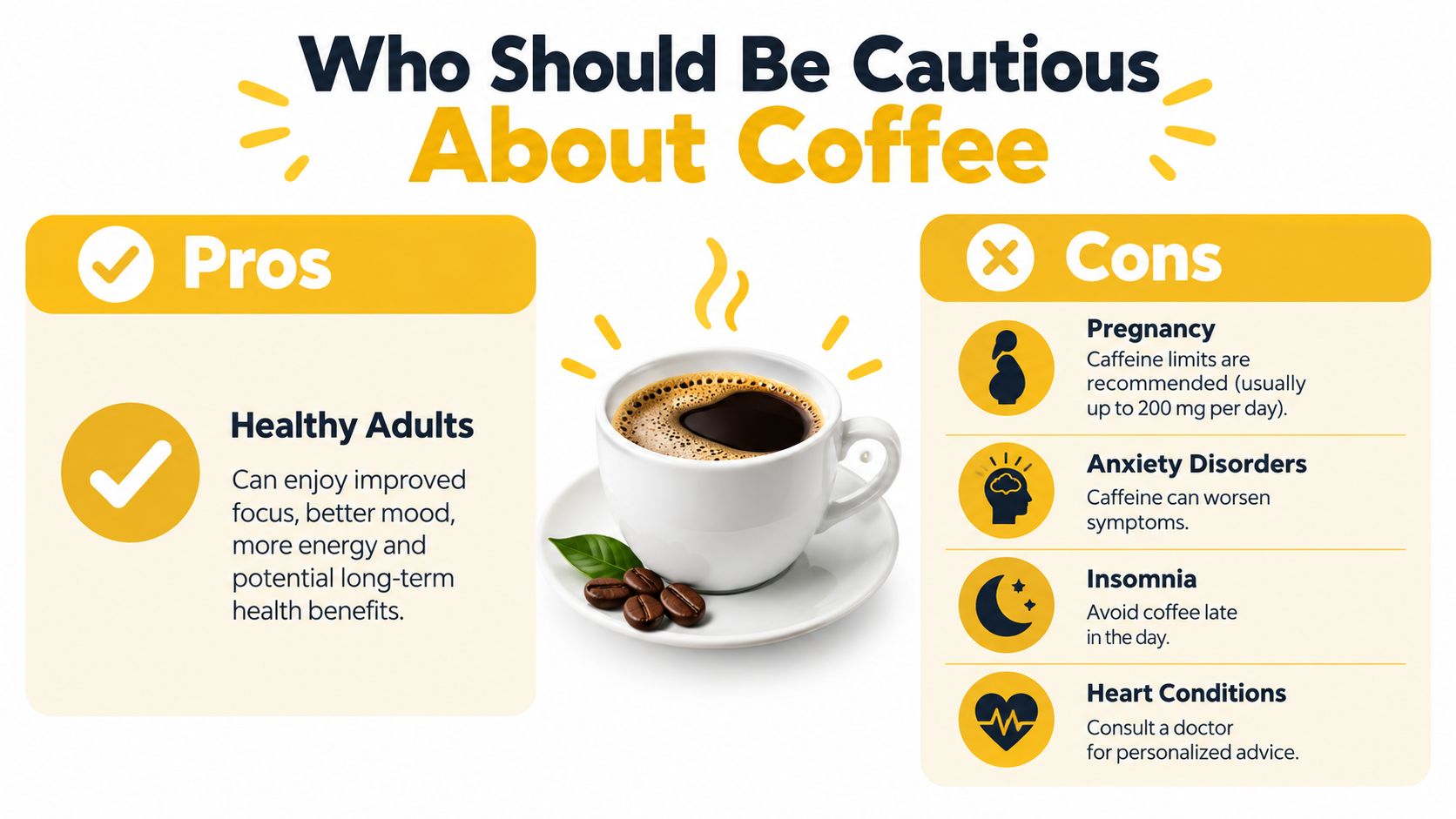
Coffee isn't equally comfortable for everyone. Population research associates moderate consumption with favorable outcomes, but those associations don't create a universal prescription. A person who feels calm and sleeps well after coffee has a different practical response from someone who develops anxiety, palpitations, or insomnia after a small serving.
Pregnant people should discuss caffeine intake with a qualified healthcare professional and follow current clinical guidance. People with anxiety disorders or strong caffeine sensitivity may find that coffee worsens symptoms, even if broad studies show benefits across populations.
Those managing blood pressure or heart conditions should also avoid turning general research into personal medical advice. Coffee may be compatible with their routine, but a clinician can account for medications, symptoms, and individual measurements.
The same caution applies to sleep problems. If coffee makes it harder to fall asleep or reduces sleep quality, the personal cost may outweigh a possible population-level benefit. Sleep disruption can also lead to more daytime fatigue, creating a cycle in which someone drinks more coffee to compensate.
A useful test: If coffee repeatedly worsens sleep, anxiety, or physical symptoms, reducing it is more informative than defending its average research profile.
Health summaries discuss associations with lower risks for conditions including type 2 diabetes, Parkinson's disease, liver disease, depression, and some cancers, while emphasizing that these are associations rather than universal prescriptions (About Coffee health overview). Start with your response, not with a target intake borrowed from someone else.
Choosing Quality Organic Instant Coffee
Convenience doesn't have to mean abandoning standards. When choosing instant coffee, look beyond the word “instant” and assess the product itself, including its ingredient list, sourcing information, preparation method, and whether the flavor suits the way you'll drink it.
Organic certification can matter to shoppers who want products aligned with organic agricultural standards. Clear labeling helps you distinguish certified claims from general marketing language. A short ingredient list is also useful because it shows whether you're buying plain coffee or a flavored mixture with added ingredients.
Flavor preservation is another practical criterion. Instant coffee should dissolve easily and produce a cup with recognizable coffee character, not just bitterness. Packaging matters because exposure to air and moisture can flatten aroma and create clumps, especially after opening.
A simple buying checklist
- Read the label: Look for clear information about ingredients and organic status.
- Consider the use case: Choose a format that works for your desk, travel bag, camping kit, or household routine.
- Assess the taste profile: A lighter, brighter cup may suit morning drinking, while a deeper roast may work better with milk.
- Check preparation simplicity: If convenience is the reason you're buying instant coffee, the product should fit that need without extra equipment.
Cartograph Coffee is one option for readers seeking organic instant coffee in a convenient format for work, travel, camping, or home use. The sensible choice is the product that matches your preferences, tolerance, preparation habits, and budget, rather than one selected only because it makes broad health promises.
Coffee quality also includes how much effort the routine demands. A product you enjoy and can prepare consistently is more useful than an elaborate setup you rarely use.
Conclusion, Making Coffee Work for You
Coffee can support several different goals, but each goal calls for a slightly different habit. Caffeine can improve alertness and reaction time, while moderate consumption is associated with favorable cardiovascular and metabolic outcomes. The evidence doesn't turn coffee into medicine, and it doesn't mean that increasing intake indefinitely will improve your health.
Timing gives the advice a practical edge. Earlier consumption, particularly before noon, is associated with more favorable outcomes in recent observational research, while avoiding late-day coffee can help people protect sleep. Dose matters too, and the strongest associations in broad reviews generally appear around moderate intake rather than unlimited consumption.
Your personal checklist is simple:
- Start with your response: Notice alertness, anxiety, physical symptoms, and sleep quality.
- Use coffee intentionally: Reserve it for mornings, demanding tasks, travel, or exercise when it genuinely helps.
- Choose a practical format: Instant coffee can suit busy schedules when convenience is part of the requirement.
- Stay cautious with medical conditions: Pregnancy, anxiety, caffeine sensitivity, blood-pressure concerns, and heart conditions all justify individualized guidance.
- Reuse grounds sensibly: Composting, odor control, and cooking are more grounded applications than sweeping household claims.
The best answer to “what is coffee good for” is therefore personal but evidence-aware. Coffee can be a useful daily tool when you choose a reasonable amount, drink it at a time that protects sleep, and treat population research as guidance rather than a guarantee.
If you want a convenient way to apply these principles, explore the organic instant coffee options from Cartograph Coffee. Choose a format that fits your mornings, workday, travel plans, or outdoor routine, then make your coffee work for your schedule instead of letting caffeine dictate it.