Yes, instant coffee can be surprisingly good for you, mainly because it's packed with antioxidants and key nutrients. Even though it often gets a bad rap as a "processed" option, it actually holds onto many of the same protective compounds found in brewed coffee, benefiting everything from brain health to your overall lifespan.
Demystifying the Health Profile of Instant Coffee
For a long time, instant coffee has been seen as the less sophisticated, less healthy cousin of a freshly brewed cup. The common thinking goes that the process needed to turn coffee into those little granules must strip away all the good stuff, leaving you with little more than caffeine.
But what if that's mostly a myth? The science actually tells a much more encouraging story.
The journey from bean to instant coffee involves brewing the coffee first and then removing the water, usually by freeze-drying or spray-drying. It sounds intense, but modern methods are incredibly good at preserving the coffee’s most valuable compounds. This means your quick cup still packs a punch of antioxidants, especially polyphenols and chlorogenic acids, which are your body's best friends for fighting cellular damage.
A Quick Look at the Evidence
So, what does this mean for your daily routine? It means that reaching for a high-quality instant coffee doesn't mean you're short-changing your health. You're actually getting a convenient source of compounds tied to some pretty impressive benefits.
We'll dive deeper into these, but here's a sneak peek:
- Antioxidant Power: Instant coffee is loaded with antioxidants that shield your body from oxidative stress.
- Cognitive Support: Moderate intake has been linked to a lower risk of neurodegenerative diseases.
- Longevity: Major studies connect regular coffee drinking to a lower risk of dying prematurely.
- Metabolic Health: It might help improve how your body handles sugar and lower the risk of type 2 diabetes.
Before we get into the nitty-gritty, it helps to understand what instant coffee really is. If you've ever wondered about its authenticity, our guide on whether instant coffee is real coffee has you covered.
The main takeaway here is that the good stuff isn't lost in translation. The beneficial compounds that make brewed coffee so celebrated are largely kept intact, making instant coffee a genuinely healthy choice.
To put things in perspective, let's see how the facts stack up against some of the old assumptions.
Instant Coffee Health Benefits at a Glance
This table provides a quick side-by-side look at the science versus common misconceptions.
| Health Aspect | Scientific Finding | Common Misconception |
|---|---|---|
| Antioxidant Levels | Contains high levels of polyphenols, comparable to brewed coffee. | The production process destroys all beneficial compounds. |
| Brain Health | Linked to reduced risk of cognitive decline and diseases like Alzheimer's. | Only provides a temporary caffeine jolt with no long-term benefits. |
| Longevity | Associated with a 15% lower risk of all-cause mortality. | It is a "processed food" and therefore inherently unhealthy. |
| Caffeine Content | Contains slightly less caffeine, offering more control over intake. | It is either much stronger or much weaker than regular coffee. |
As you can see, the evidence paints a pretty clear picture: a quality instant coffee can absolutely be part of a healthy lifestyle.
The Antioxidant Powerhouse in Your Cup
That simple cup of instant coffee does a lot more than just kickstart your morning; it’s a major player in your body’s daily defense system. To get a clear picture, think of your body's cells as tiny, bustling cities. Every single day, these cellular cities are under attack from unstable molecules called free radicals—imagine them as microscopic vandals causing damage and chaos wherever they go.
This cellular mayhem is known as oxidative stress. Left unchecked, it can contribute to premature aging and a whole host of health problems. This is where your humble instant coffee really starts to shine, because it’s absolutely packed with powerful compounds built to neutralize these tiny threats.
Meet Your Cellular Bodyguards
The heroes of this story are antioxidants. They’re essentially your body's personal security detail, constantly on patrol to disarm those free radical vandals before they can do any real, lasting harm. And it turns out, instant coffee is a surprisingly rich source of these protective compounds.
The two most important types you'll find in your cup are:
- Polyphenols: These are natural, plant-based compounds that form the first line of defense against oxidative stress. Coffee is loaded with them, which is a big reason for its protective qualities.
- Chlorogenic Acids (CGAs): As a specific type of polyphenol, CGAs are especially potent antioxidants. They're well-known for their anti-inflammatory properties and are central to many of the health benefits tied to drinking coffee.
Working together, these compounds create a robust shield for your cells, supporting your overall health from the inside out.
Here's the amazing part: the process used to make instant coffee—brewing it and then freeze-drying it—is fantastic at preserving these delicate bodyguards. Instead of destroying them, this process actually concentrates them into the convenient granules you stir into your mug.
How Instant Coffee Locks in Antioxidant Levels
It’s a common myth that any kind of processing strips food of its nutritional value. When it comes to high-quality instant coffee, however, modern techniques are incredibly effective at locking in the good stuff. The freeze-drying method, in particular, is exceptionally gentle.
The process is pretty straightforward: brewed coffee is flash-frozen, and then the frozen water is removed in a vacuum. Because it avoids the high heat of older drying methods, it helps maintain the chemical structure of those delicate polyphenols and chlorogenic acids.
The result? The antioxidant content stays impressively high. In fact, research shows that instant coffee often has antioxidant levels that rival, or sometimes even beat, traditionally brewed coffee. Scientific studies have confirmed that instant coffee is particularly rich in chlorogenic acid and polyphenols—the very compounds essential for protecting our cells. You can find more details on coffee's antioxidant benefits on drinksupercoffee.com.
Why This Matters for Your Health
Making sure your diet is rich in antioxidants is one of the most effective things you can do for your long-term health. By choosing instant coffee, you’re effortlessly adding a significant source of these protective compounds to your daily routine.
Here’s a simple breakdown of what they do for you:
- Neutralize Harm: Antioxidants find free radicals and stabilize them, stopping their damaging chain reactions in their tracks.
- Reduce Inflammation: Chronic, low-grade inflammation is at the root of many modern diseases. The antioxidants in coffee help calm this internal fire.
- Support Cellular Health: By shielding cells from damage, antioxidants help ensure your body’s systems are all running smoothly, which promotes overall vitality.
Ultimately, this high antioxidant content is the foundation for many of the other health benefits we’re about to explore. It’s not just about the caffeine boost; it’s about giving your body a daily dose of powerful, plant-based protection.
Connecting Instant Coffee to a Longer Lifespan
We've talked a lot about the powerful antioxidants in instant coffee, but their job goes beyond just fighting daily cellular damage. They’re also at the heart of one of the most surprising benefits linked to your daily cup: a longer, healthier life. It might sound a little too good to be true, but a growing mountain of research points to a real connection between regular coffee drinking and longevity.
This isn't some magic bullet. Instead, think of it as the result of all those protective plant compounds working in your body, day in and day out. It’s a lot like making small, steady deposits into a health savings account. One cup doesn't feel like much, but over years, the benefits compound, building a powerful wellness buffer that helps guard against age-related diseases.
The Science Behind a Longer Life
So, what’s actually happening here? Huge studies, following hundreds of thousands of people for decades, keep finding the same thing: coffee drinkers, on average, live longer than people who don't drink coffee. They consistently show lower rates of death from some of the biggest killers, including heart disease, stroke, and diabetes.
These aren't small, one-off experiments. They're massive, real-world observations. A landmark analysis that tracked over 200,000 people for up to 30 years found a clear pattern. People who drank 3-5 cups of coffee daily were 15% less likely to die prematurely from all causes compared to non-coffee drinkers. Harvard's School of Public Health has a great overview of coffee’s impact on longevity if you want to dig into the research.
That 15% reduction isn't just a number. It represents a meaningful increase in your "healthspan"—the amount of time you spend living in good health. It's about adding more life to your years, not just years to your life.
Finding the Sweet Spot for Longevity
When it comes to coffee, more isn't automatically better. The link between coffee and a longer life follows what researchers call a "dose-response" curve. All that means is there seems to be an ideal amount to get the best results.
Time and again, the data points to a clear sweet spot for most healthy adults.
- 1-2 Cups Daily: This amount is linked to a solid reduction in mortality risk.
- 3-5 Cups Daily: This range consistently shows up as the peak for longevity benefits, delivering the strongest protective effects.
- 6+ Cups Daily: The benefits tend to level off or even dip slightly, while the risk of side effects from too much caffeine can start to climb for some people.
This gives us a pretty practical roadmap. Aiming for that moderate 3-5 cup range seems to be the most effective way to tap into coffee's life-extending potential without going overboard.
It's Not Just About the Caffeine
Now for one of the most interesting parts of this story, and it loops right back to those antioxidants we covered. The same longevity benefits show up in people who drink decaf. This is a game-changing discovery because it proves the protective effects aren't just coming from the caffeine buzz.
The credit really belongs to that rich cocktail of bioactive compounds—things like polyphenols and chlorogenic acids—that are so well-preserved in quality instant coffee. These are the real workhorses, reducing inflammation and protecting your cells from the inside out.
What this means for you is simple: you can get the same life-extending advantages whether you need a morning jolt or prefer a soothing evening decaf. The key is the consistency of enjoying a high-quality, antioxidant-rich cup. That's what really makes a difference for your long-term health.
Instant Coffee vs. Brewed Coffee: A Health Showdown
When you line up instant and brewed coffee, it feels like a classic matchup. Most people automatically assume that the convenience of instant coffee means you're sacrificing health benefits, but the truth is a lot more interesting—and balanced.
At their core, both start from the same place: roasted coffee beans. That means they share a very similar profile of healthy compounds. The real difference is just in the journey from bean to cup.
Brewed coffee is simple: hot water meets ground beans. Instant coffee adds one more step. It's brewed into a very strong concentrate, and then the water is removed (usually through freeze-drying) to create those familiar soluble crystals. Modern methods are incredibly good at this, preserving nearly all of the bean's valuable goodness.
Caffeine, Antioxidants, and Acrylamide
Let's break down the three big questions people usually have when comparing the two.
Caffeine Content
The most noticeable difference is in the caffeine kick. An 8-ounce cup of instant coffee generally has 60-90 mg of caffeine. Brewed coffee, on the other hand, packs a bigger punch, usually landing somewhere between 70-140 mg. For some, this lower caffeine level in instant coffee is a huge plus, making it easier to manage intake and avoid those caffeine-induced jitters.
Antioxidant Power
What about the good stuff? Despite the extra processing step, instant coffee really holds its own here. Research has shown it contains a very similar amount of important polyphenols, like chlorogenic acids. Sometimes, it even has a bit more. This means you aren't missing out on those anti-inflammatory and cell-protecting benefits when you opt for a quick cup.
The Acrylamide Question
You might have heard concerns about a chemical called acrylamide in instant coffee. Acrylamide is a compound that forms naturally when many foods are cooked at high temperatures—think frying, baking, or roasting. Yes, that includes coffee beans.
Studies have found that instant coffee can have slightly more acrylamide than its brewed counterpart. But it's really important to see the bigger picture here. The amount in any kind of coffee is tiny compared to what you'd find in common foods like potato chips or french fries. Health authorities agree the levels in coffee aren't a significant concern for most people.
In fact, the massive body of research on coffee points to overwhelmingly positive health outcomes.
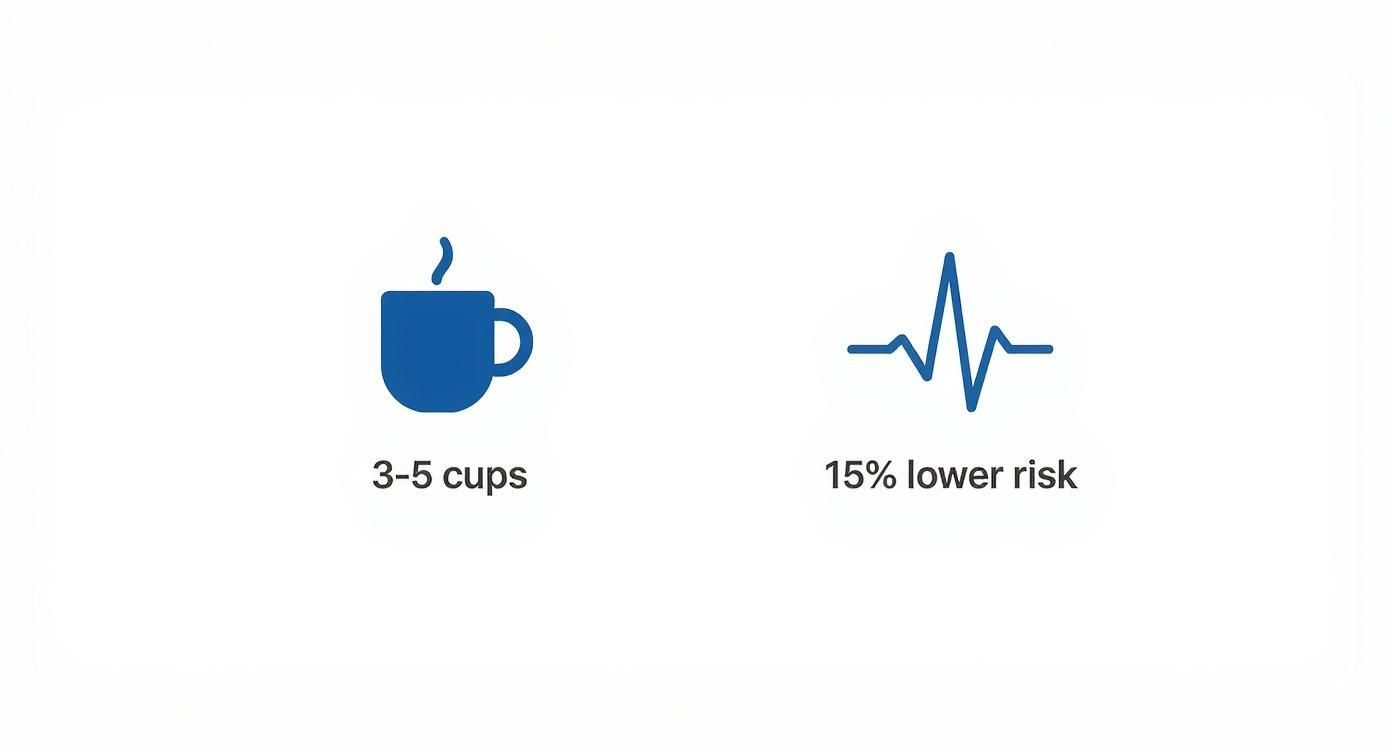
As you can see, consistent, moderate coffee consumption (around 3-5 cups per day) is linked to a 15% lower risk of all-cause mortality. This major benefit easily outweighs the minor concern over trace amounts of acrylamide.
Nutritional Showdown: Instant vs. Brewed Coffee
To make it even clearer, here's a side-by-side look at what you're getting in a typical 8-ounce cup.
| Component | Instant Coffee (8oz) | Brewed Coffee (8oz) | Key Health Implication |
|---|---|---|---|
| Caffeine | 60-90 mg | 70-140 mg | Lower caffeine in instant coffee can reduce jitters and is easier to manage. |
| Antioxidants | High (similar to brewed) | High | Both provide powerful polyphenols that fight inflammation and cellular damage. |
| Acrylamide | Slightly higher trace amounts | Trace amounts | Levels in both are low and not considered a significant health risk. |
| Diterpenes | Negligible | Low (paper filter) | Instant coffee is a great choice for those monitoring cholesterol levels. |
The takeaway here is that while the numbers vary slightly, the fundamental health profile is remarkably consistent.
The Final Verdict
So, which one should you choose? It really boils down to your lifestyle and what you value in a cup of coffee.
If you love the ritual of grinding beans, the complex aromas, and the nuanced flavors that come from a fresh brew, then brewed coffee is your champion.
But if your priorities are speed, consistency, and convenience—without giving up the core health benefits—a high-quality instant coffee is an absolutely fantastic choice.
For a more detailed look at how the preparation and taste differ, check out our full guide on instant coffee vs. ground coffee. The most important thing to remember is that both can be a healthy, enjoyable part of your daily routine.
How to Maximize Your Coffee's Health Benefits
Knowing your daily cup of instant coffee is full of protective compounds is one thing, but how you prepare it can make all the difference. It’s surprisingly easy to cancel out those fantastic health benefits with a few extra ingredients. The real goal is to enhance your coffee, not undermine it.
Think of a simple cup of high-quality black instant coffee as a clean slate—a powerful health supplement on its own. Every spoonful of sugar or pump of flavored syrup can work against its positive effects, especially when it comes to your metabolic health. Let's walk through how to build the healthiest cup possible without giving up on great taste.
Navigating the Dangers of Additives
The main culprits that turn a healthy brew into a nutritional liability are sugar, artificial creamers, and sugary syrups. A little bit of sugar isn't the end of the world, but most people add multiple teaspoons to every cup, and that adds up fast over the course of a week.
This constant flood of sugar can send your blood sugar on a rollercoaster, increase inflammation, and contribute to weight gain—the very things coffee's antioxidants are trying to help you fight. On top of that, many popular creamers are packed with hydrogenated oils, corn syrup, and artificial ingredients that do nothing for your health and can cause harm in the long run.
By loading your coffee with sugar and artificial additives, you're essentially putting the brakes on its health-boosting engine. The powerful antioxidants are still there, but they have to work overtime to manage the negative impact of what you've just added.
Smart Swaps for a Healthier Cup
You don't have to drink your coffee black to keep it healthy. Building a better cup is all about making simple, smart swaps that bring in flavor and creaminess without the junk.
Here are a few practical and delicious ideas:
- For Natural Sweetness: Skip the refined sugar and try a dash of cinnamon or a pinch of nutmeg. These spices add a warm, subtly sweet flavor and even bring their own anti-inflammatory benefits to the party.
- For a Creamy Texture: Ditch the artificial creamers. Unsweetened almond milk is a great low-calorie option, while oat milk delivers a much richer, creamier mouthfeel. Even a small splash of whole milk is a far better choice than a creamer filled with processed ingredients.
- For Richer Flavor: A single drop of pure vanilla extract adds a wonderful depth and hint of sweetness. Or, for a more decadent treat, blend in a teaspoon of unsweetened cocoa powder for a mocha-like flavor and an extra dose of heart-healthy flavonoids.
Making these small changes lets you customize your coffee and enjoy it to the fullest, all while letting its natural health benefits shine through.
Finding Your Ideal Daily Intake
While coffee is good for you, more isn't always better. The scientific consensus points to a "sweet spot" where you get the maximum benefits without running into potential downsides like jitters or poor sleep.
For most healthy adults, that magic number is around 400 milligrams (mg) of caffeine per day. An average 8-ounce cup of instant coffee has about 60-90 mg of caffeine, which means your ideal range is somewhere around 4 to 5 cups spread throughout your day. This is the level of consumption most often linked to longevity and neuroprotective benefits in major studies.
Of course, everyone handles caffeine differently. The most important thing is to listen to your body. If you feel anxious, restless, or find your sleep is suffering, it might be time to cut back or make your last cup an earlier one.
Special Considerations for Certain Groups
Moderate coffee consumption is perfectly safe for most people, but some folks should be a bit more cautious. It’s always smart to talk with your doctor if you have any underlying health conditions.
Here are a few key things to keep in mind:
- Pregnancy: The American College of Obstetricians and Gynecologists (ACOG) advises pregnant women to limit caffeine to less than 200 mg per day. That’s roughly two cups of standard instant coffee.
- High Blood Pressure: Anyone with severe, uncontrolled hypertension may need to limit their intake. One study found that for this specific group, drinking two or more cups of coffee daily could elevate cardiovascular risks.
- Caffeine Sensitivity: Some of us are just genetically slow metabolizers of caffeine. If you find that even one cup leaves you feeling buzzed and jittery for hours, that's a clear sign to stick with decaf or enjoy very small amounts.
By being mindful of what you add and how much you drink, you can turn your daily instant coffee ritual into a true cornerstone of your wellness routine.
Choosing and Preparing the Best Instant Coffee
Getting the most out of your instant coffee’s health benefits starts long before you even add the hot water. The choices you make in the coffee aisle are just as critical as how you fix your cup at home. It can feel like there are a million options out there, but knowing a few key things will help you pick a product that not only tastes great but also protects those vital, health-boosting compounds.
The main takeaway? Not all instant coffees are created equal. The way they’re made has a massive impact on the final quality.
Freeze-Dried vs Spray-Dried Instant Coffee
The biggest difference you’ll find on the shelf is how the water gets removed from the brewed coffee concentrate. The two primary methods—freeze-drying and spray-drying—give you completely different results in both flavor and nutrition.
- Spray-Drying: This is the older, quicker method. It involves spraying liquid coffee into a blast of hot air. While it’s efficient, that intense heat can destroy many of the delicate aromatic compounds and antioxidants, which often leads to a more bitter or even burnt taste.
- Freeze-Drying: This is the gold standard for any premium instant coffee. The coffee is first flash-frozen and then placed in a vacuum, which causes the ice to turn directly into vapor. This gentle, low-heat process does an amazing job of preserving the original flavor, aroma, and—most importantly—the polyphenols and chlorogenic acids that deliver so many health perks.
When you're shopping, always look for freeze-dried on the label. It’s a simple way to make sure you're getting a cup that’s not only more delicious but also packed with the protective antioxidants that support your long-term health.
Why Organic Instant Coffee Matters
Looking beyond the drying method, choosing organic is another smart move for a healthier cup. Conventional coffee farming can involve synthetic pesticides and fertilizers, and while the residue on the final beans is usually low, going organic offers total peace of mind.
Organic coffee, like the single-origin varieties from Cartograph Coffee, is grown without these artificial chemicals. It’s better for your body and for the planet. You’re simply getting the pure, unadulterated flavor of the coffee bean, exactly as nature intended. To dive deeper, check out our complete guide on finding the healthiest instant coffee and what sets it apart.
Simple Recipes to Boost Your Brew
Once you’ve got your hands on a high-quality, organic, freeze-dried coffee, the real fun begins. You can easily turn your daily cup into a delicious, functional beverage that lines up with your health goals. Instant coffee is surprisingly versatile—don't just stop at hot water!
Here are a couple of easy ideas to get you started:
- Protein-Boosted Iced Coffee: Grab a shaker bottle and combine one serving of your favorite vanilla or chocolate protein powder, 8-10 ounces of cold water or unsweetened almond milk, and one to two teaspoons of instant coffee. Shake it like you mean it until it’s smooth and frothy. It's the perfect post-workout refuel or a filling start to your day.
- Warming Spiced Coffee: Dissolve your instant coffee in hot water as you normally would. Then, stir in a splash of oat milk, a dash of cinnamon, and a tiny pinch of nutmeg. This simple trick adds a natural, sugar-free sweetness and gives you some extra anti-inflammatory benefits from the spices.
By choosing smart and preparing with a little thought, you can make sure every convenient cup is actively doing something good for your well-being.
Answering Your Questions About Instant Coffee
Even with all the good news, it's totally normal to have a few questions buzzing around. Let's clear up some of the most common worries people have about instant coffee, so you can sip your next cup with peace of mind.
Does Instant Coffee Dehydrate You?
This is probably the number one question I get. The short answer is no. While caffeine does have a mild diuretic effect (making you pee a bit more), studies show that the water in your coffee more than makes up for it. Your body is smart and adapts, so your daily cup won't leave you dehydrated.
Can It Help With Weight Loss?
Here's another popular one. On its own, instant coffee isn't a silver bullet for weight loss. But, a cup of black instant coffee is nearly calorie-free, and the caffeine can give your metabolism a small, temporary nudge.
When you skip the heaps of sugar and heavy cream, it can absolutely be a smart part of a healthy lifestyle and weight management plan.
What's the Deal with Acrylamide?
The word acrylamide can sound scary, and it's a valid thing to ask about. It’s a compound that forms when starchy foods are cooked at high temperatures—think of the browned bits on toast or roasted potatoes. The same thing happens when coffee beans are roasted.
Instant coffee sometimes has slightly more acrylamide than brewed coffee, but the levels are still quite low.
Here's the bottom line: Health organizations around the globe have looked at the data and concluded that the amount of acrylamide in a typical cup of coffee doesn't pose a significant health risk. In fact, the mountains of research on coffee's benefits suggest they far outweigh this one minor concern.
When you stick to a high-quality, freeze-dried instant coffee and enjoy it thoughtfully, you're getting a beverage that's not just convenient, but genuinely good for you.
Ready to see how good a health-conscious instant coffee can be? Check out Cartograph Coffee and explore our premium organic, freeze-dried options. Find your new favorite today.