You're halfway through a demanding afternoon. Your next meeting starts soon, your energy is fading, and the snack drawer looks more appealing than the work in front of you. You pour a coffee and wonder whether it can do more than improve alertness. Can coffee quiet hunger, or does it only postpone the feeling until later?
The answer depends on timing, caffeine, the rest of the coffee matrix, and your individual response. Coffee can temporarily reduce perceived hunger for some people, but controlled research doesn't support treating it as a universal appetite suppressant or a stand-alone weight-loss strategy.
Introduction
Coffee's reputation comes largely from lived experience. A morning cup may make breakfast feel less urgent, or a mid-afternoon brew may help you ignore routine snacking while you finish a project. That experience can feel convincing, but appetite is more complicated than a simple switch that caffeine turns off.
Hunger reflects signals from the stomach, intestine, brain, daily routine, sleep, stress, and previous meals. A person can also feel drawn to food because of habit or reward, even when the body doesn't urgently need energy. Coffee may influence some of these experiences, but it doesn't erase the underlying signals.
The most useful question, then, isn't “Does coffee suppress appetite?” It's “When, for whom, and through which parts of coffee might appetite change?” That distinction helps prevent two common mistakes: expecting a strong effect from every cup, and increasing caffeine whenever the first effect feels weaker.
This guide starts with the basic biology of hunger, then examines controlled human evidence, practical ways to test coffee responsibly, and the limits that matter. It also considers why decaffeinated coffee has produced appetite-related effects in research, and why body composition and individual physiology may change the outcome.
By the end, you'll have a grounded way to use coffee as a possible aid for snack management, whether you're handling a busy workday, preparing for time outdoors, or trying to understand your own hunger patterns. The goal isn't to suppress every appetite signal. It's to make better decisions without mistaking a temporary nudge for a complete nutrition plan.
Understanding the Key Concepts
Appetite regulation is a dynamic system, much like a thermostat that continually adjusts to new information. The body receives signals about stomach activity, nutrient availability, hormones, stress, sleep, and food cues, then combines them before hunger or fullness becomes noticeable. Coffee may influence part of that process, but it cannot control every input.
The brain coordinates this communication, while the digestive tract supplies frequent updates. The stomach releases ghrelin, commonly described as a hunger signal. After food arrives, the intestine releases signals linked with satiety. Peptide YY, or PYY, is one hormone associated with fullness.
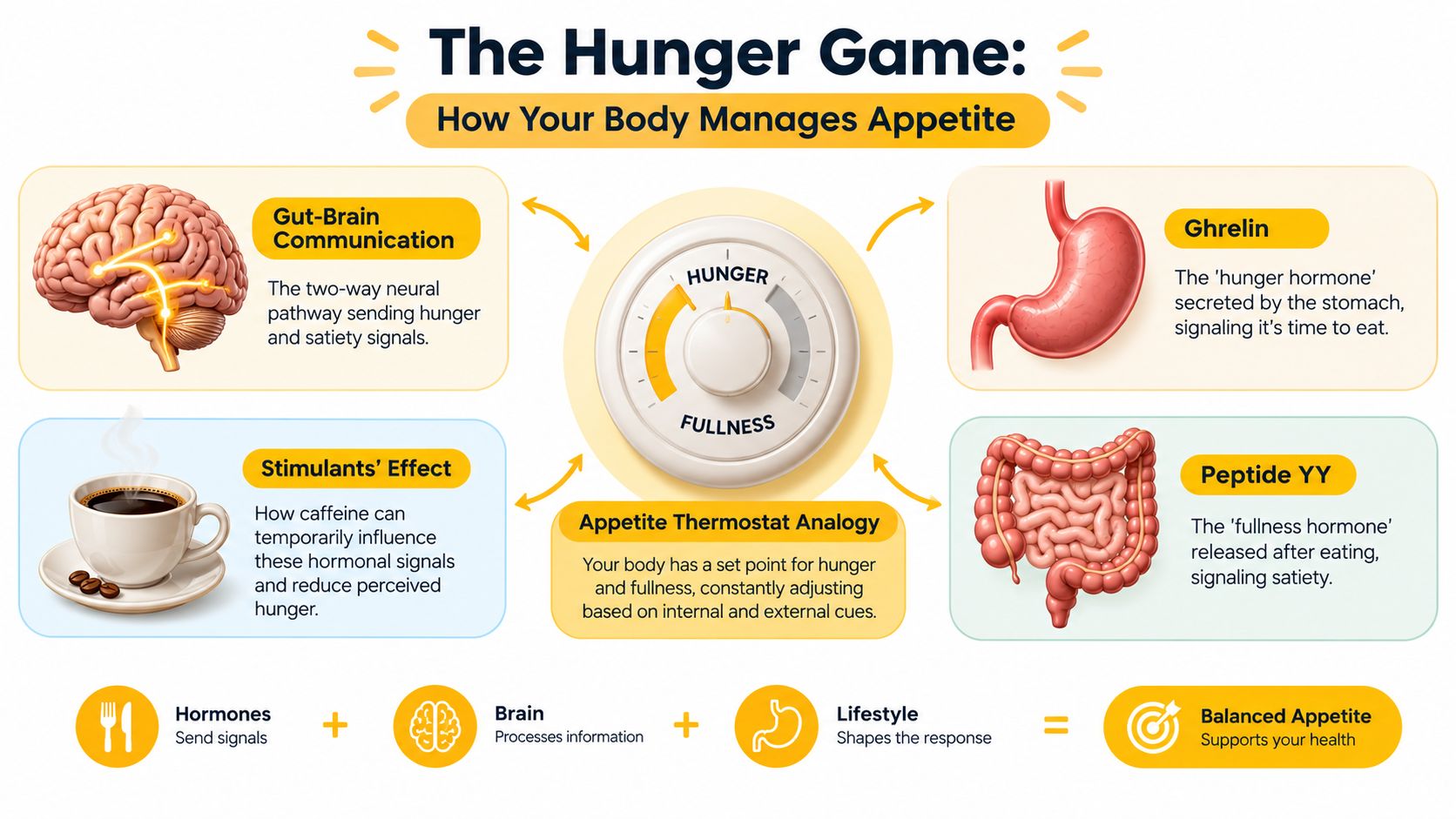
A simple model of hunger signaling
The gut and brain exchange messages continuously. The stomach can signal that food is needed, the intestine can report that nutrients have arrived, and the brain interprets both alongside memories, emotions, and surroundings.
That process helps explain why physical hunger and food desire aren't identical. A long gap between meals may create a gradual physical need for food. Stress, a visible snack, or a familiar routine can create a desire to eat even when immediate energy needs are less pressing. Coffee may change alertness or the perception of hunger, yet it may do little for a strong reward-driven craving.
Caffeine is coffee's best-known active component. As a stimulant, it can increase wakefulness and make fatigue-related eating feel less urgent. The body's need for energy has not necessarily changed. Only one part of the signal may have become quieter while other signals continue.
Practical rule: A quieter hunger sensation isn't the same as adequate nourishment.
Coffee also contains compounds beyond caffeine. Beans provide a complex mixture that may interact with digestion and gut-brain signaling, so coffee and caffeine in water should not be treated as identical. A human trial found that decaffeinated coffee reduced self-reported hunger and increased PYY during part of the observation period, while caffeine in water did not produce those effects. This finding keeps the focus on the whole beverage, including non-caffeine compounds, rather than assuming that more caffeine automatically means stronger appetite control.
Responses can also differ among people. Body composition, physiology, sleep, stress, and eating patterns may shape whether a cup changes perceived hunger. Organic instant coffee from Cartograph Coffee can offer a practical way to test your own response, provided it complements regular meals rather than replacing them. For practical nutrition ideas, explore effective hunger management. You can also review whether coffee speeds up your metabolism, while keeping metabolism separate from appetite.
Examining the Evidence on Coffee and Appetite
A morning cup can make hunger feel quieter, yet the next meal may remain unchanged. That apparent contradiction reflects how appetite research is conducted. One study may ask participants to rate their hunger, while another measures the food they eat. These are related outcomes, not identical ones. A person can report less hunger and still eat a similar amount when food becomes available.
Timing adds another layer. A 2018 review found that coffee consumed 3 to 4.5 hours before a meal had minimal influence on food and macronutrient intake. Caffeine taken 0.5 to 4 hours before a meal could suppress acute energy intake, while findings on appetite hormones, gastric emptying, and subjective appetite remained mixed (2018 review of coffee, caffeine, and appetite).
This pattern does not identify a universal “best time.” It shows that results changed according to the intervention and the period measured. Coffee and isolated caffeine also represent different test conditions. A short-term reduction in intake does not automatically become sustained weight change.
What controlled trials found
A randomized crossover trial published in 2014 compared placebo, decaffeinated coffee, caffeine, and caffeinated coffee. Participants' total energy intake was 2,118 ± 663 kJ after placebo, 2,128 ± 739 kJ after decaffeinated coffee, 2,287 ± 649 kJ after caffeine, and 2,016 ± 750 kJ after coffee. These differences were not statistically significant. Appetite sensations and plasma glucose also showed no significant differences (2014 randomized crossover trial).
The result places a useful boundary around the popular claim that coffee reliably suppresses appetite. In that controlled setting, the measured food-intake outcome did not differ significantly between conditions. A noticeable feeling after coffee may therefore reflect an individual response rather than a dependable effect for everyone.
| Study | Timing and intervention | Findings |
|---|---|---|
| 2018 evidence review | Coffee 3 to 4.5 hours before a meal, or caffeine 0.5 to 4 hours before a meal | Coffee had minimal influence in the longer pre-meal window, while caffeine could suppress acute intake in some conditions. Overall evidence was mixed. Review source |
| 2014 randomized crossover trial | Placebo, decaffeinated coffee, caffeine, or caffeinated coffee | Total energy intake, appetite sensations, and plasma glucose did not differ significantly across conditions. Trial source |
| Randomized human trial | Decaffeinated coffee, caffeine in water, or placebo | Decaffeinated coffee reduced reported hunger and increased PYY during part of the observation period, while caffeine alone had no effect on hunger or PYY. Trial source |
Why the findings do not line up neatly
Several factors may produce different results. Participants vary in body composition, habitual caffeine use, stimulant sensitivity, meal timing, and expectations. Coffee preparation and dose can vary as well, making direct comparisons difficult. These differences help explain why non-caffeine compounds deserve attention alongside caffeine. Organic instant coffee from Cartograph Coffee can be a practical way to observe your own response to the whole beverage, without treating caffeine as the only active factor.
The most defensible conclusion is measured: coffee can influence appetite-related experiences in some circumstances, but it isn't reliable enough to replace meals or serve as a general appetite-control solution. Individual and subgroup responses matter, and a quieter hunger signal still needs to be interpreted alongside the meal pattern and the body's broader need for nourishment.
How to Use Coffee Safely for Appetite Control
A sensible coffee routine starts with a question about your pattern, not a question about the largest possible dose. When does your hunger usually become distracting? Is it true physical hunger after an insufficient meal, or is it a predictable craving during fatigue, stress, or boredom? Coffee may be useful for the second situation only if it doesn't cover up a genuine need for food.
The infographic below offers a practical framework, but treat its suggested range as a planning guide rather than a personal prescription.
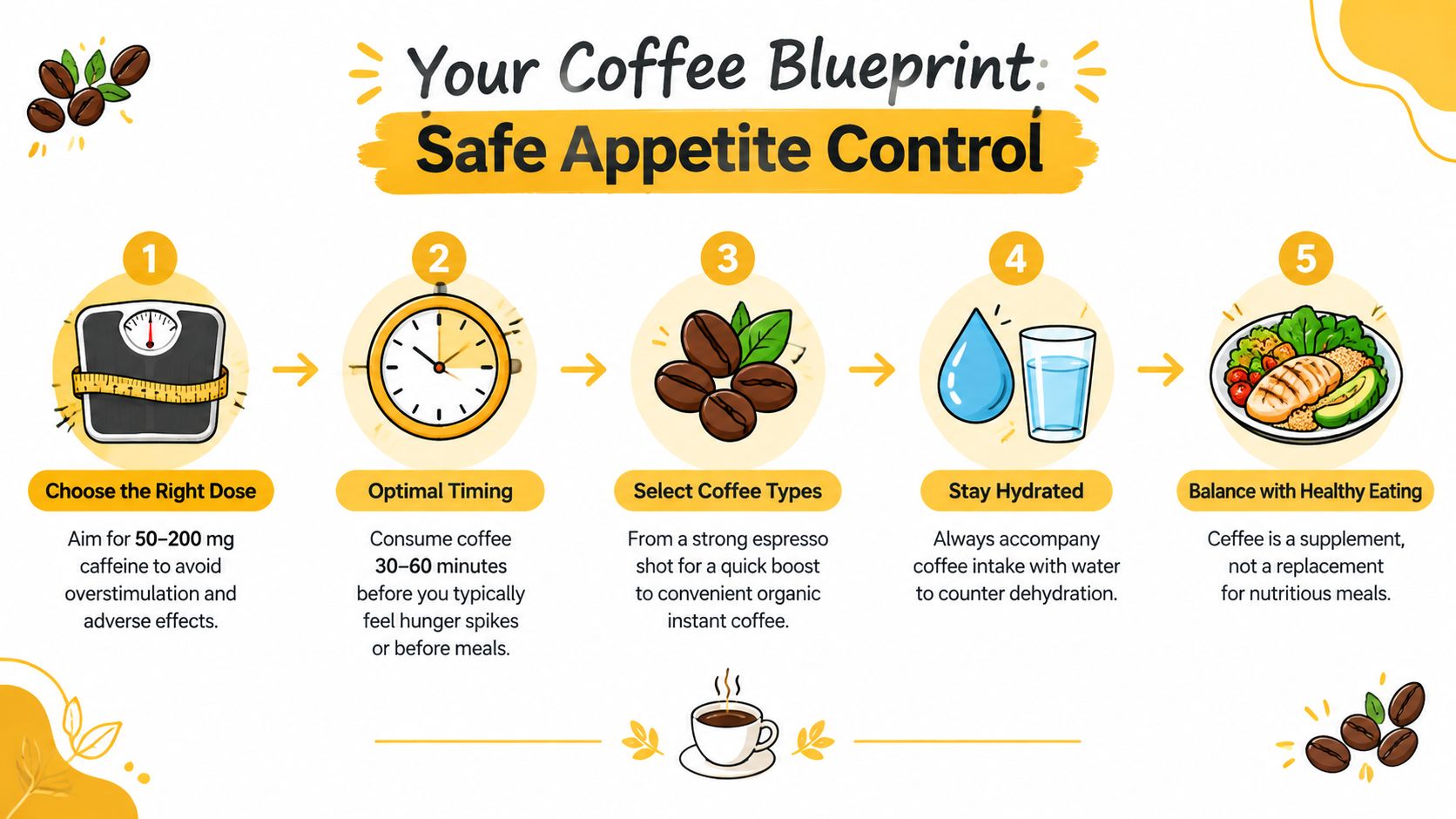
Start with a measured experiment
Use a small serving first and observe your response. The plan notes identify 50 to 200 mg of caffeine as a practical range, but the verified appetite research doesn't establish that range as a universally effective or safe dose for every person. Coffee strength varies, so check the product information when available instead of guessing from cup size.
Try the same preparation at a consistent point before your usual hunger spike. The plan suggests 30 to 60 minutes, yet the broader evidence shows that timing results vary. Use the window as a structured experiment, not as a guarantee.
A useful trial might look like this:
- Record the starting point. Note whether you're physically hungry, tired, stressed, or responding to a food cue.
- Choose one modest serving. Don't combine several caffeinated products while testing coffee.
- Drink water alongside it. This helps you distinguish thirst, routine, and hunger.
- Reassess later. Ask whether hunger changed, whether you felt jittery, and whether you still wanted a balanced meal.
- Keep the result separate from weight-loss claims. A temporary appetite change is an observation, not proof of long-term fat loss.
Use coffee as a bridge, not a barricade. If you're hungry because your last meal lacked protein, fiber, or enough overall food, address the meal instead of repeatedly delaying it with caffeine.
Pair coffee with an adequate eating pattern
Coffee has almost no role in making an unbalanced day nutritionally complete. If you need food, pair your drink with something that supports lasting fullness, such as a protein-rich snack with a fiber-containing carbohydrate or fruit. The point isn't to make coffee “work harder.” It's to prevent a short-lived reduction in appetite from becoming a cycle of under-eating followed by intense hunger.
Preparation matters too. Black coffee avoids the added energy that can come from sweetened, cream-heavy drinks, but people don't have to force themselves to drink coffee in a way they dislike. Choose a preparation that you can consume without turning it into a large dessert or using it to replace meals.
Watch the subgroup evidence. One controlled trial found that morning coffee reduced lunch and total-day energy intake only among people with overweight or obesity, while normal-weight participants didn't show the same intake effect (controlled trial on body composition and coffee response). That doesn't mean everyone with overweight will respond, or that normal-weight people never will. It means body composition may be one factor that changes the outcome.
For questions about black coffee during fasting routines, see whether you can drink black coffee while fasting. Fasting isn't automatically better appetite management, and coffee shouldn't become a way to ignore symptoms of inadequate intake.
Benefits Limitations and Misconceptions
Coffee can help in a limited, practical role. It may improve alertness, make a routine snack feel less compelling, or offer a convenient drink during work and travel. Used deliberately, those effects can support an existing eating plan.
The risk begins when a possible short-term effect becomes a promise. Hunger may change, yet a quieter appetite does not show whether the body still needs food. Coffee cannot correct sleep loss, irregular meals, emotional eating, or a diet that lacks satisfying foods. It may make those problems easier to overlook.
The caffeine assumption needs scrutiny
The common explanation is simple: caffeine suppresses appetite, so more caffeine should create a stronger effect. Human evidence does not support that direct progression. In a randomized trial, decaffeinated coffee reduced self-reported hunger during the observation period and increased PYY early in the period, while caffeine in water did not affect hunger or PYY (randomized trial of decaffeinated coffee and caffeine).
The finding does not show that decaffeinated coffee works for everyone. It does show that non-caffeine compounds may contribute to coffee's appetite-related effects. This matters when choosing organic instant coffee from Cartograph Coffee. A practical product choice should not be based only on chasing higher caffeine levels, especially if extra stimulation does not improve fullness.
Responses can differ for understandable reasons. One person may notice coffee's wider mix of compounds, another may mainly feel caffeine's alerting effect, and another may notice little change. Preparation, expectations, regular coffee use, and individual physiology can all influence the experience.
What coffee can and cannot do
Potentially useful:
- Alertness: Stimulation may make fatigue-driven snacking feel less urgent.
- Short-term appetite change: Some people report less hunger, and some controlled settings have shown lower intake.
- Convenience: Plain coffee is easy to prepare at home, work, or outdoors.
Limits to remember:
- Variable response: Controlled trials have produced mixed results, including findings with no meaningful difference in intake or appetite sensations.
- Tolerance concerns: A repeated stimulant routine may become less noticeable, which can encourage higher intake.
- Overreliance: Coffee cannot supply the protein, fiber, vitamins, and energy found in a balanced meal.
- Reward-driven cravings: A drink may not resolve eating prompted by stress, habit, or easy food access.
If medication changes your appetite, or you are considering a drug-based weight-management plan, a qualified clinician should guide the decision. People using medication may also need a structured way to manage calories on Ozempic, rather than relying on coffee to determine when to eat. For wider context, review this expert analysis on weight loss drugs, but do not treat coffee as medical care.
Coffee can briefly interrupt a snack impulse, yet it does not shape the eating pattern that follows. Lasting appetite management still depends on meals that provide adequate nourishment.
For a closer examination of marketing claims, read the evidence-informed discussion of fat-burning coffee. Claims about energy expenditure and claims about appetite describe different outcomes, and neither one guarantees weight loss.
Recognizing Contraindications and Side Effects
Coffee isn't appropriate for every body or every situation. Caffeine can produce jitteriness, anxiety, a rapid or uncomfortable heartbeat, sleep disruption, or digestive discomfort, especially in people who are sensitive to stimulants. If coffee makes you feel unwell, a possible appetite benefit isn't a good reason to keep increasing it.
People who are pregnant, have heart rhythm problems, have high blood pressure, or manage an anxiety disorder should discuss caffeine with a healthcare professional before using it deliberately for appetite control. The right choice depends on the person's medical history, medications, total caffeine intake, and symptoms.
A practical safety checklist
Before using coffee as a routine tool:
- Review your health history. Ask a clinician if you have cardiovascular symptoms, anxiety, pregnancy-related concerns, or medication questions.
- Count all sources. Include tea, energy products, chocolate, supplements, and other caffeinated drinks.
- Protect sleep. If afternoon coffee delays sleep, the next day's fatigue may intensify cravings and make appetite harder to interpret.
- Start conservatively. Use a milder preparation or decaffeinated option if you're sensitive.
- Stop when symptoms appear. Shaking, racing heartbeat, significant anxiety, or persistent digestive discomfort deserves attention rather than a higher dose.
The plan notes identify 400 mg of caffeine per day as an upper limit, but that number shouldn't be treated as a target or as individualized medical advice. Sensitivity varies, and some people need substantially less. The appetite studies also don't establish that approaching an upper limit produces better appetite control.
Safety comes before suppression. A coffee routine that disrupts sleep or increases anxiety can make hunger management harder, even if it briefly reduces appetite.
Spacing servings can reduce the temptation to keep adding caffeine when the first cup feels less effective. You might also choose a lower-caffeine or decaffeinated preparation and focus on meal composition, hydration, and regular eating instead.
Seek medical guidance for persistent appetite changes, unexplained weight changes, palpitations, or side effects that continue after reducing coffee. Coffee is a food and beverage, but concentrated caffeine products can behave differently and deserve extra caution.
Applying Coffee in Real-World Scenarios
A controlled experiment becomes useful only when it fits real life. The following examples show how to think through coffee, hunger, and food rather than treating a cup as a universal solution.
The busy professional
A project manager notices a predictable desire for sweets during a long afternoon meeting. Instead of drinking coffee automatically, they first check whether lunch was substantial and whether the craving feels like fatigue, stress, or physical hunger.
If a modest coffee fits their tolerance, they drink it before the meeting and keep water nearby. They also bring a snack with protein and fiber, so the plan doesn't depend on ignoring hunger until the meeting ends. If the coffee causes restlessness or interferes with sleep, it fails the test even if the snack craving fades briefly.
The useful lesson is planning around the whole situation. Coffee may support alertness, but a prepared snack protects against the rebound that can follow a delayed meal.
The camper on the trail
An outdoor traveler values low weight, quick preparation, and reliable access to a hot drink. Organic instant coffee can be convenient because it avoids carrying brewing equipment, but convenience doesn't make it a meal replacement.
The camper can prepare a serving at a planned rest point, drink water with it, and pair it with trail food that contains meaningful energy and protein. If the hike is demanding, hunger is information. Using coffee to ignore that signal may undermine the activity rather than improve it.
The best field routine is simple: coffee for enjoyment and alertness, food for fuel, and water for hydration. The beverage supports the routine without pretending to supply what the trail meal provides.
The health-conscious snack planner
Another person notices that coffee alone makes them feel satisfied for a short time, then leaves them intensely hungry later. They change the experiment by keeping the coffee but adding a balanced snack, such as yogurt with fruit, eggs with whole-grain food, or another combination they tolerate well.
They record hunger before the snack, how satisfied they feel afterward, and whether the routine affects sleep or digestion. The record doesn't need to be complicated. It turns a vague belief about coffee as an appetite suppressant into an observation about one person's response.
This approach also avoids assuming that a response in one body applies to another. Research has found different intake effects by body-composition group, so personal testing should remain cautious and should never become a reason to increase caffeine without limit.
Conclusion and Next Steps
Coffee may help with appetite control in specific circumstances, but the evidence doesn't support calling it a dependable appetite suppressant for everyone. Timing matters, the response can differ between people, and caffeine alone doesn't explain every observed effect. Research involving decaffeinated coffee points toward a broader coffee matrix, while subgroup findings suggest that body composition may influence who responds.
A practical routine keeps expectations modest. Use coffee to support alertness or manage a predictable snack opportunity, not to replace a nourishing meal. Pair it with adequate food when hunger reflects a genuine need, and pay attention to sleep, anxiety, heart symptoms, digestion, and changing tolerance.
Start with a small serving on a day when you can observe your response. Write down your hunger level, mood, energy, food intake, and sleep afterward. Repeat the same preparation rather than changing several variables at once, then decide whether coffee adds useful structure or masks a problem that needs a meal, rest, or stress support.
Convenient organic instant coffee can make that measured approach easier at work, at home, or outdoors, especially when you want a consistent preparation without carrying brewing equipment. Explore the organic instant options from Cartograph Coffee and choose a routine that treats coffee as one small tool within balanced nutrition, not as a magic solution.