That sinking feeling when you reach for a coffee filter and find an empty box? We’ve all been there. But a filter-less morning doesn't have to be a caffeine-free one. The truth is, brewing coffee is just about getting hot water and coffee grounds to mingle, and that paper filter is only one way to separate them.
Learning how to brew coffee without a filter is surprisingly easy, and you likely have everything you need in your kitchen right now.
No Filter, No Problem: Brewing Coffee Anywhere
Let's face it, that moment of dread is universal. But it’s a problem with some genuinely simple solutions. At its heart, coffee brewing is all about extraction. You’re just trying to pull all the tasty, soluble stuff out of the ground coffee and into your water, leaving the actual grounds behind.
This guide is here to show you how to make a fantastic, grit-free cup no matter where you are or what you have on hand. So, forget the panic. We're about to explore several straightforward techniques for making delicious coffee, completely filter-free. You might even find you prefer it, as these methods often produce a richer, fuller-bodied cup because more of the coffee's natural oils make it into your mug.
Why Filterless Brewing Works
Paper filters are great at trapping fine coffee grounds, but they also absorb many of the oils that give coffee its incredible aroma and full-bodied texture. When you skip the paper, those flavorful components end up right where they belong: in your cup.
This simple shift opens up a whole world of brewing possibilities that go way beyond your standard drip machine. Just think of all the times these skills could come in handy:
- Camping or Traveling: Packing light is key, and ditching the bulky filters saves precious space in your bag.
- Power Outages: Many of these methods are completely off-grid. If you find yourself in that spot, our guide on how to make coffee without electricity has even more ideas.
- Reducing Waste: Using a reusable or improvised filter is a fantastic eco-friendly alternative to single-use paper filters.
The key takeaway is that you don't need fancy equipment to brew a satisfying cup. From the rustic charm of Cowboy Coffee to clever kitchen hacks, a delicious brew is always within reach.
Mastering Classic Cowboy Coffee
When you think of brewing coffee without a filter, the image that usually pops into your head is a pot bubbling over a campfire. That's the heart of cowboy coffee—a legendary, rugged method that’s as simple as it is satisfying. But don't let its rustic reputation fool you; there’s a real art to getting it right.
This isn't just about dumping grounds into boiling water and hoping for the best. To really master this technique, you have to get a feel for the key variables: grind size, the ratio of coffee to water, and timing. Nail these, and you'll be rewarded with a surprisingly smooth, rich, and grit-free cup of coffee.
This method has some serious history behind it. The classic cowboy coffee we know today, a favorite among campers, actually goes back to the American West in the 1860s. Cowboys on long cattle drives would toss coarsely ground coffee into a pot of boiling water, let it steep, and then use a splash of cold water to settle the grounds. It was a practical solution that required no special gear, a tradition that continues with modern campers today. You can read more about how brewing methods have shaped the modern coffee market over on FactMr.com.
The Perfect Grind and Ratio
For this to work, the grind size is everything. You absolutely need a coarse grind, something that looks and feels like rough sea salt. If you use a fine grind, you’ll end up with a muddy, sludgy mess that's impossible to separate from the water, leaving you with a cup full of bitter sediment. The larger, heavier particles of a coarse grind are the key, as they'll sink right to the bottom of the pot.
Once you’ve got the grind right, let's talk ratio. A fantastic starting point for a balanced, flavorful brew is a simple one:
- Two level tablespoons of coarse grounds for every eight ounces of water.
This ratio gives you a robust flavor that isn't overwhelmingly bitter or disappointingly weak. Of course, you can always tweak it to your personal taste, but this is the tried-and-true formula for a great cup every time. If you’re looking for even more tips for brewing in the great outdoors, check out our guide on the best way to make coffee while camping.
The Brewing Process, Step by Step
With your coarse grounds measured out, the process is pretty straightforward.
First, bring your water to a rolling boil in a pot or kettle. Once it's boiling, take it off the heat and let it cool down for just 30-60 seconds. This small step is crucial—it drops the temperature just enough so you don't scorch the coffee grounds, which is what causes that harsh, bitter taste.
Next, add your coffee grounds directly to the hot water and give it one gentle stir. Let the coffee steep for about four minutes. I'd recommend using a timer here; it's easy to lose track, and over-steeping is a one-way ticket to bitterness.
Now for the secret trick to a clean cup: after the four minutes are up, pour about half a cup of cold water over the top. It sounds strange, but this works like magic, causing the grounds to quickly sink and settle at the bottom of the pot.
Finally, pour the coffee into your mug—slowly and gently. The goal is to leave that layer of settled grounds behind in the pot. What you're left with is a full-bodied, aromatic cup that’s a testament to simple, effective brewing.
Creative Kitchen Hacks for Straining Coffee
Caught without a coffee filter? Don't panic. Your kitchen is probably full of surprisingly effective tools for the job, you just have to get a little creative. A potential coffee disaster can easily become a moment of brewing ingenuity—and a great cup of coffee.
A fine-mesh sieve, the kind you’d normally use for sifting flour or rinsing grains, is one of the best stand-ins. Once your coffee has steeped in a pot for around four minutes, just pour the brew through the sieve and into your mug. The trick is to pour slowly and steadily. If you rush it, you risk overflowing the sieve and getting a mouthful of grounds. The reward for your patience is a full-bodied cup, since more of the coffee's natural oils make it through than they would with a paper filter.
The Improvised Coffee Sock Method
Another brilliant, time-tested technique is the “coffee sock.” This isn't a new idea; it was famously used by American GIs during WWII who needed a simple, portable way to make their brew. You can create your own version using a clean piece of cheesecloth, a sturdy paper towel, or even a clean cotton handkerchief.
It’s a great way to reduce waste, too. In fact, a Nielsen report pointed out that 68% of campers already use filterless methods to save space and pack lighter. It's part of a larger trend towards more convenient coffee, which you can read more about in this market analysis from ResearchAndMarkets.com.
Ready to try it? It's simple:
- First, drape your cloth or paper towel over your mug, pushing it down slightly to create a small pocket.
- Secure it around the rim. A rubber band works perfectly, but you can also just hold it tightly in place.
- Add your coffee grounds—a medium-coarse grind is best. Anything too fine will either slip through the cloth or clog it up.
- Pour your hot water (just off the boil) slowly over the grounds, letting the coffee drip through into the cup.
This handy decision tree will help you nail the right coffee-to-water ratio for your personal taste.
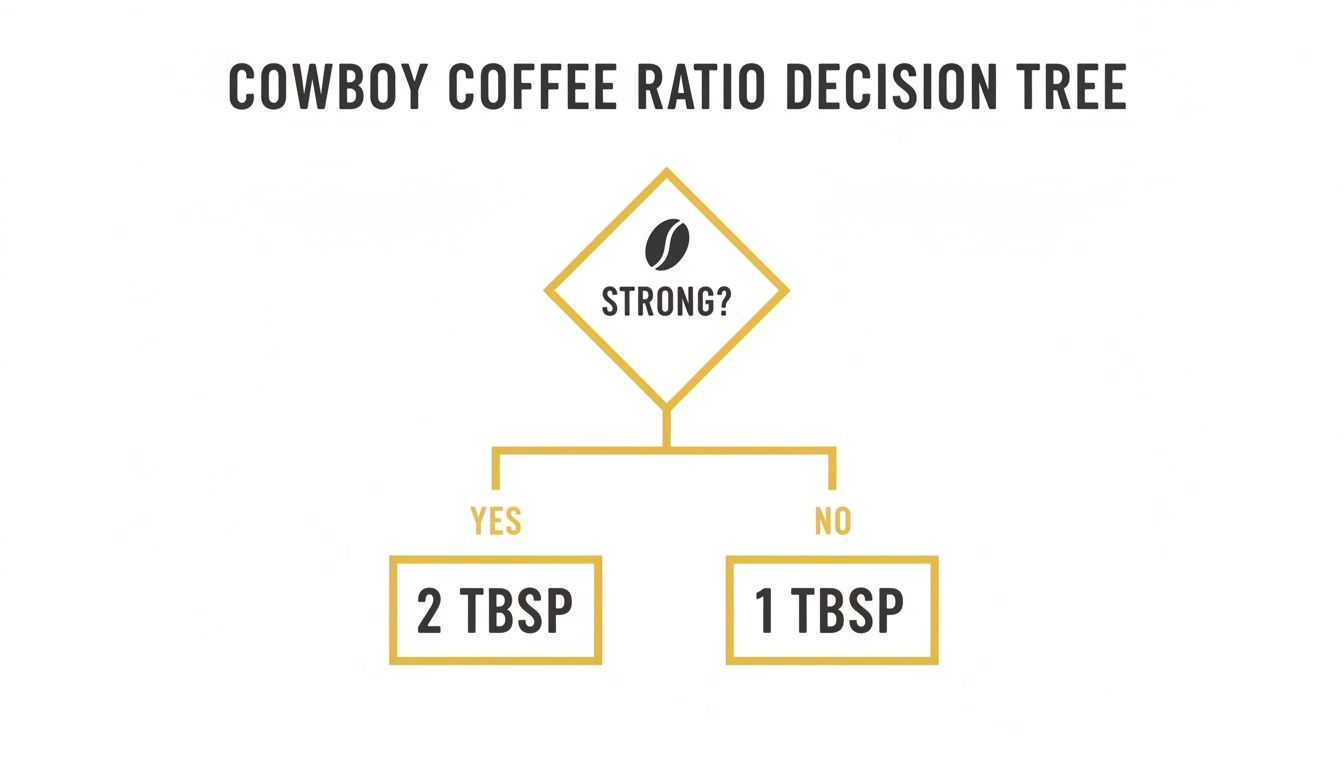
As you can see, for a stronger brew, simply double up from one to two tablespoons of coffee per cup. Easy.
Comparing Filterless Brewing Methods at a Glance
Choosing the right filter-free method often comes down to what you have on hand and what kind of coffee you're in the mood for. This quick comparison table breaks down the most common options to help you decide.
| Method | Best For | Grind Size | Taste Profile | Clean-Up Effort |
|---|---|---|---|---|
| Cowboy Coffee (Boiled) | Camping, groups, simplicity | Coarse | Bold, rustic, full-bodied | Low |
| Improvised Coffee Sock | Single cups, controlled brew | Medium-Coarse | Clean, balanced, less sediment | Medium |
| Fine-Mesh Sieve | At-home brewing, quick results | Medium-Coarse | Rich, oily, full-bodied | Low |
| Steep & Pour (No Press) | When you have no gear at all | Medium-Coarse | Similar to French Press, robust | Medium |
| Cold Brew (No Filter) | Smooth, low-acid coffee | Coarse | Mellow, chocolatey, sweet | High (long wait time) |
Each method has its own charm. The Cowboy method is unbeatable for its rugged simplicity, while an improvised sock gives you a surprisingly clean cup with minimal gear.
Tips for a Cleaner Cup
No matter which kitchen hack you go with, the main goal is to keep gritty sediment out of your final cup. Your best defense is starting with the right grind size. A medium to coarse grind is much easier to separate from the liquid than a fine, powdery one.
The most important technique for a clean pour is control. Pouring slowly and deliberately gives the grounds time to settle and prevents them from rushing into your strainer and overwhelming it.
Also, give your coffee a minute to rest after it's done steeping. This little pause lets most of the grounds sink to the bottom of the pot, making the whole straining process much cleaner and far more effective. With a bit of practice, you’ll find these improvised methods can produce a cup that’s every bit as good as your usual filtered coffee.
Brewing Rich and Velvety Turkish Coffee
If you're after a truly immersive and intensely flavorful coffee experience, you have to try making Turkish coffee. It's a fantastic way to brew without a filter. And you don't even need a traditional copper pot, known as a cezve—any small, long-handled saucepan will do the trick when you're in a pinch. The secret lies in the grind; it has to be super-fine, almost like a powder. This allows the coffee to partially dissolve, creating a uniquely thick and velvety body.
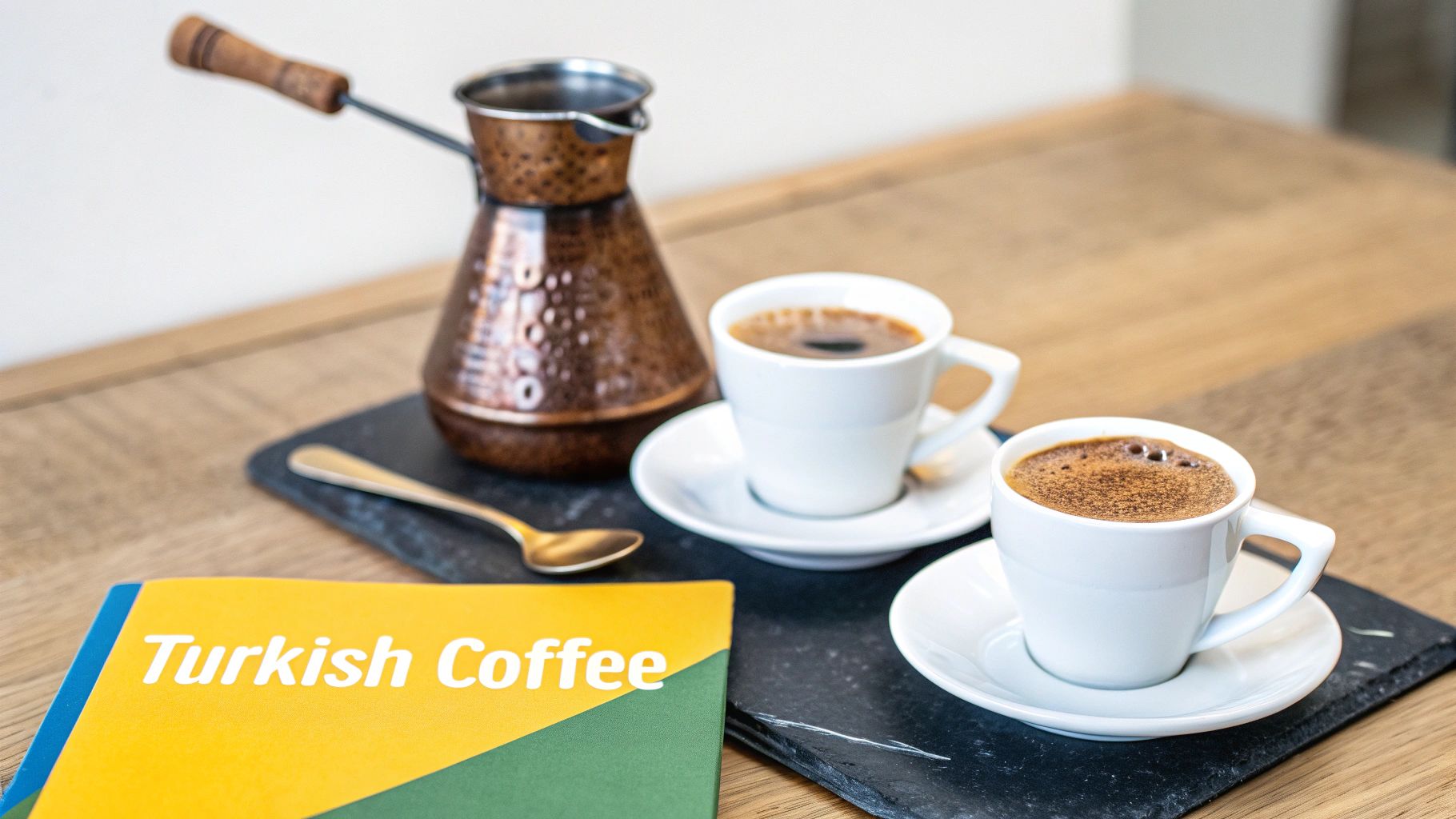
This method isn't just a brewing technique; it's a piece of history. Finely ground beans have been boiled directly in pots this way since the 16th century in Ottoman lands, a practice so significant it's now recognized as a UNESCO intangible heritage.
Interestingly, this filterless gem might also be a good choice if you're health-conscious. Unfiltered brewing methods like this one extract up to 30% more cafestol, a compound that research suggests can boost HDL ("good") cholesterol by as much as 8%. It's a fascinating example of how traditional methods maintain their appeal in the modern coffee world.
Crafting the Perfect Turkish Brew
Making Turkish coffee is more of a ritual than a recipe. The whole point is to carefully manage the heat, building a rich foam on top without ever letting it come to a rolling boil.
Here’s how you get started:
- Combine your ingredients: In your small pot, mix the super-fine coffee grounds, cold water, and sugar (if you're using it). A solid starting point is one heaping teaspoon of coffee for every two to three ounces of water.
- Give it one good stir: Stir everything together just once to make sure the grounds are saturated.
- Place on low heat: Now, put the pot on a low flame. This is important: do not stir it again. Any stirring from here on out will ruin the beautiful foam you’re about to create.
Mastering the Foam
This next part is where the magic happens. As the pot heats up, a dark foam will start to form on the surface. This is the most crucial stage, so you'll need to watch it like a hawk.
Just as the foam rises and looks like it's about to bubble over, immediately pull the pot off the heat.
A great little trick is to spoon a bit of this first foam into each of your serving cups. Doing this ensures everyone gets a taste of the richest part of the brew.
The key to developing that signature velvety texture is repetition. Return the pot to the heat, let the foam rise a second time, and remove it. Some traditionalists even repeat this for a third rise to maximize the flavor extraction.
After the final rise, you're ready to serve. Gently pour the coffee into small demitasse cups, pouring slowly down one side of the cup to keep that lovely foam intact.
Let the coffee sit for a minute or so. This gives the fine grounds time to settle to the bottom. What you're left with is a potent, intensely flavorful adventure in a cup. Just remember not to drink that last sludgy sip
The Easiest No-Filter Solution: Instant Coffee
We've covered some great hands-on brewing methods, but what about when you have no filter, no gear, and absolutely no time? This is where modern specialty instant coffee truly shines. It's the ultimate fallback for getting a great cup of coffee, right now, with zero fuss.
If your only experience with instant coffee is the bitter, burnt-tasting stuff from decades past, you’re in for a surprise. The game has completely changed. Today's high-quality options, like our own Cartograph organic instant, use sophisticated freeze-drying techniques that actually preserve the rich, complex flavors of the original coffee beans. All the delicate aromatics are locked in, ready to be released the moment you add water.
The result is a genuinely delicious cup of coffee that’s ready in seconds, with no cleanup beyond a quick rinse of your mug.
Why a Good Instant Coffee Is Your Best Friend
The appeal of a well-made instant coffee is its perfect blend of simplicity and quality. It’s a lifesaver on chaotic mornings, a non-negotiable for travel, and a must-have for any camping trip. You get all the flavor without any of the work.
Think about the sheer practicality of it:
- No Gear Needed: Seriously. All you need is a mug and hot water. No pots, no strainers, no mess.
- Flawless Consistency: Every single-serving packet is precisely measured for a perfect brew, every time.
- Unbeatable Portability: The packets are practically weightless and can be stashed in a pocket, a desk drawer, or a backpack.
The bottom line is this: convenience no longer means compromising on taste. A quality instant coffee is a legitimate, delicious solution that respects both your time and your palate. It’s the modern answer to the no-filter dilemma.
Making the Perfect Instant Cup
It's almost impossible to mess up, but a couple of small tweaks can take a great cup of instant coffee and make it even better. The package says "add hot water," but the temperature of that water makes a real difference.
Aim for water that's just off the boil, somewhere around 195-205°F (90-96°C). This is hot enough to dissolve everything perfectly but not so scorching that it mutes the flavor. It just helps all those nuanced notes come through.
Want to get it just right? We've got you covered with our guide on how to make perfect instant coffee. This isn't just a last-ditch emergency option anymore; for many people, the sheer quality and ease are making it a daily go-to.
Common Questions About Filterless Coffee
Stepping into the world of filter-free coffee can feel a little like breaking the rules, and I get that it brings up some questions. When you're trying something new like the Cowboy method or just MacGyvering a solution in your kitchen, a few worries tend to pop up. Let's tackle them head-on so you can brew your next cup with absolute confidence.
Learning to brew without a paper filter is a skill, and like any skill, it gets better with practice. These answers should help you get there faster.
Will My Coffee Be Gritty Without a Filter?
This is, without a doubt, the number one fear people have. The good news? A gritty, sludgy cup is completely avoidable. It really just boils down to two things: your grind size and giving the coffee enough settling time.
For methods where the grounds are steeped right in the pot, like Cowboy coffee, a coarse grind is your best friend. Seriously, don't even try it with a fine grind. You want something that looks like coarse sea salt. These bigger, heavier particles are much better at sinking to the bottom, while fine grounds love to float around and ruin the party.
Patience is the other half of the magic trick. Once the coffee has steeped, just let it be for a minute or two. This quiet moment lets all the grounds settle into a nice, neat layer at the bottom. The old-timer trick of adding a splash of cold water really does work—it creates a current that pushes the grounds down even faster. When you're ready to pour, do it slowly and gently. Don't disturb that sediment, and you'll be golden.
How Does Brewing Without a Filter Change the Taste?
This is where things get interesting. Brewing without paper fundamentally changes what ends up in your cup, and honestly, a lot of people (myself included) prefer it. Paper filters are great at their job, but they're a little too good—they don't just trap the grounds, they soak up the coffee's precious natural oils.
Those oils are where so much of the aroma and flavor live. They're what give coffee that rich, velvety texture and full-bodied mouthfeel. Take the paper filter out of the picture, and all those delicious oils flow right into your mug.
The result is a cup of coffee with a much fuller body and a more robust, complex flavor. You'll notice a richer, more lingering aftertaste because those oils coat your palate. It’s a totally different experience from the super-clean, crisp cup you get from a drip machine, but it’s one that many coffee lovers feel is truer to the bean's real character.
What’s the Best Grind Size to Use?
There's no single answer here—the perfect grind size depends entirely on the method you're using. Matching your grind to your technique is probably the most important thing you can do to guarantee a great cup.
Here’s a quick guide based on what you’re trying to do:
- Cowboy Coffee or Direct Steeping: Go coarse. I can't stress this enough. Anything finer is going to give you mud.
- 'Coffee Sock' or Sieve Method: A medium-coarse grind is perfect. It’s big enough that it won't pass through a cloth filter or fine mesh, but small enough to give you a good, balanced extraction.
- Turkish Coffee: This is the big exception. For this, you need an extremely fine, powder-like grind—even finer than espresso. The grounds are actually meant to be suspended in the coffee, which is what creates that signature thick, velvety body.
Isn't the Cleanup a Huge Hassle?
You'd think so, but it's actually often quicker and easier than cleaning a standard drip coffee maker. You don't have to deal with soggy, dripping paper filters, for one.
If you made Cowboy coffee, the used grounds are just sitting at the bottom of the pot. A quick swirl of water and a dump into the compost or trash is usually all it takes.
Using a fine-mesh sieve or a cloth "sock"? Even easier. Just tap the grounds out and give the tool a good rinse under hot water. It’s a no-fuss process that takes seconds, so you can get on with your day.
And for those times when you need a fantastic cup of coffee with zero filters, zero gear, and zero cleanup, Cartograph Coffee is the answer. Our organic instant coffee is specially crafted to deliver rich, complex flavor in seconds. It’s the perfect fallback for any situation. Discover a better instant coffee today at cartographcoffee.com.