Figuring out how to make perfect instant coffee really just boils down to a few simple things: starting with high-quality granules, using water just off the boil, and getting the coffee-to-water ratio right. Once you nail these, you can turn what's often seen as an average drink into something genuinely satisfying. It’s proof that convenience doesn't always have to mean compromise.
Why Your Instant Coffee Deserves a Second Chance
Let’s be real for a second—instant coffee has a bit of a reputation. For a long time, it was the emergency option, the last resort when you couldn't get your hands on "real" coffee. But that stereotype is getting pretty dusty.
The truth is, the instant coffee game has changed. A lot. It's time to give it another shot, because this isn't just about a quick caffeine fix anymore; it’s about actual quality. Thanks to some serious upgrades in how it's made, instant coffee has gone from a backup plan to a solid choice for people who actually care about what they're drinking.
The Modern Evolution of a Classic
So what's behind this glow-up? A few key things have really pushed instant coffee forward.
- Better Beans, Better Coffee: Premium brands are no longer using the cheap stuff. They're sourcing high-quality, single-origin Arabica beans—exactly the kind you’d expect to find at a specialty café.
- Smarter Science: The way instant coffee is made has improved dramatically. Modern freeze-drying is much gentler, and it does an incredible job of preserving the delicate flavors and aromas of the original coffee bean. It's a massive improvement over the old, harsh methods that basically baked all the good stuff out.
- It's More Popular Than You Think: This isn't just some small trend. The global instant coffee market was valued at a whopping USD 80.20 billion and is expected to climb to USD 110.28 billion by 2030. That kind of growth shows a huge shift in what people want, especially busy folks who need convenience but aren't willing to sacrifice quality. If you're curious, you can explore more data on this growing market.
The whole point here is to reset your expectations. Learning to brew a great cup of instant coffee isn’t about settling for less. It's about mastering a new, simple skill that delivers a surprisingly delicious and rewarding result.
What all this means for you is that the jar of instant coffee on your local grocery store shelf has more potential than ever to create a rich, smooth, and flavorful cup. You just need to know how to unlock it, and that's exactly what this guide is for. We'll show you that a fantastic brew is only a few simple tweaks away.
Choosing the Right Instant Coffee for Your Cup
The secret to a genuinely great cup of instant coffee doesn't start with the water or the mug. It begins right in the grocery store aisle. The jar you pick up sets the entire tone for what you’re about to drink, and understanding what’s inside that jar is the first real step toward a brew that can stand up to its cafe cousins.
The biggest difference you’ll find comes down to how the coffee was dried. This might sound like a minor technical detail, but it has a huge impact on the flavor and aroma that end up in your cup. The two main methods are spray-drying and freeze-drying.
Freeze-Dried Versus Spray-Dried
Freeze-drying is the more delicate, modern approach. The coffee extract gets frozen solid and then placed in a vacuum, which allows the ice to transform directly into vapor without ever becoming liquid again. This gentle process is fantastic at preserving the fragile compounds that give coffee its incredible aroma and complex flavors. What you get is a lighter, more aromatic crystal that dissolves beautifully.
Spray-drying, on the other hand, is all about speed and efficiency. Liquid coffee is sprayed into a blast of hot air, which instantly evaporates the water and leaves a fine powder. It works, but the intense heat can sometimes cook off some of the subtler flavor notes. This often results in a bolder, more traditional, and sometimes slightly more bitter coffee taste.
My Two Cents: If you're chasing nuanced flavors and a rich aroma, go for freeze-dried. If you want a strong, classic coffee kick and a friendlier price tag, spray-dried is a solid bet.
To help you decide at a glance, here’s a quick comparison of the two methods.
Spray-Dried vs Freeze-Dried Instant Coffee
This table should help you figure out which type of instant coffee best fits your taste and budget.
| Attribute | Spray-Dried Coffee | Freeze-Dried Coffee |
|---|---|---|
| Process | Liquid coffee is sprayed into hot air, evaporating water instantly. | Coffee extract is frozen, and ice is removed via a vacuum (sublimation). |
| Flavor Profile | Bolder, more robust, and can sometimes be slightly more bitter. | More nuanced and aromatic, preserving more of the original bean's character. |
| Texture | Fine, uniform powder. | Irregular, lighter crystals or granules. |
| Cost | Generally more affordable due to a faster, more efficient process. | Typically more expensive because the process is slower and more complex. |
Ultimately, there's no "wrong" choice here—it's all about what you're looking for in your morning cup.
What to Look for on the Label
Beyond the drying method, the label itself can tell you a lot about what to expect. Keep an eye out for these terms:
- 100% Arabica: These are the beans prized for their smoother, sweeter flavors. Think notes of fruit and sugar. They're a world away from the bolder, more bitter taste of their Robusta counterparts.
- Micro-ground: Some of the best instant coffees have finely ground coffee beans mixed right in with the soluble crystals. This gives the coffee a much richer body and complexity, getting you that much closer to a freshly brewed taste.
- Single-Origin: This means all the beans came from one specific country or region. Just like with wine, this often leads to a more distinct and consistent flavor profile that really lets the bean's origin shine.
Because it's so efficient, spray-drying dominates the market, holding a massive 72.3% of the global share. It’s simply the most common way instant coffee is made. You can dig deeper into the instant coffee market production on towardsfnb.com.
At the end of the day, the best instant coffee is the one you enjoy drinking. To get a head start, check out our guide on the best instant coffee brands and find a new favorite.
Getting Your Water and Ratios Just Right
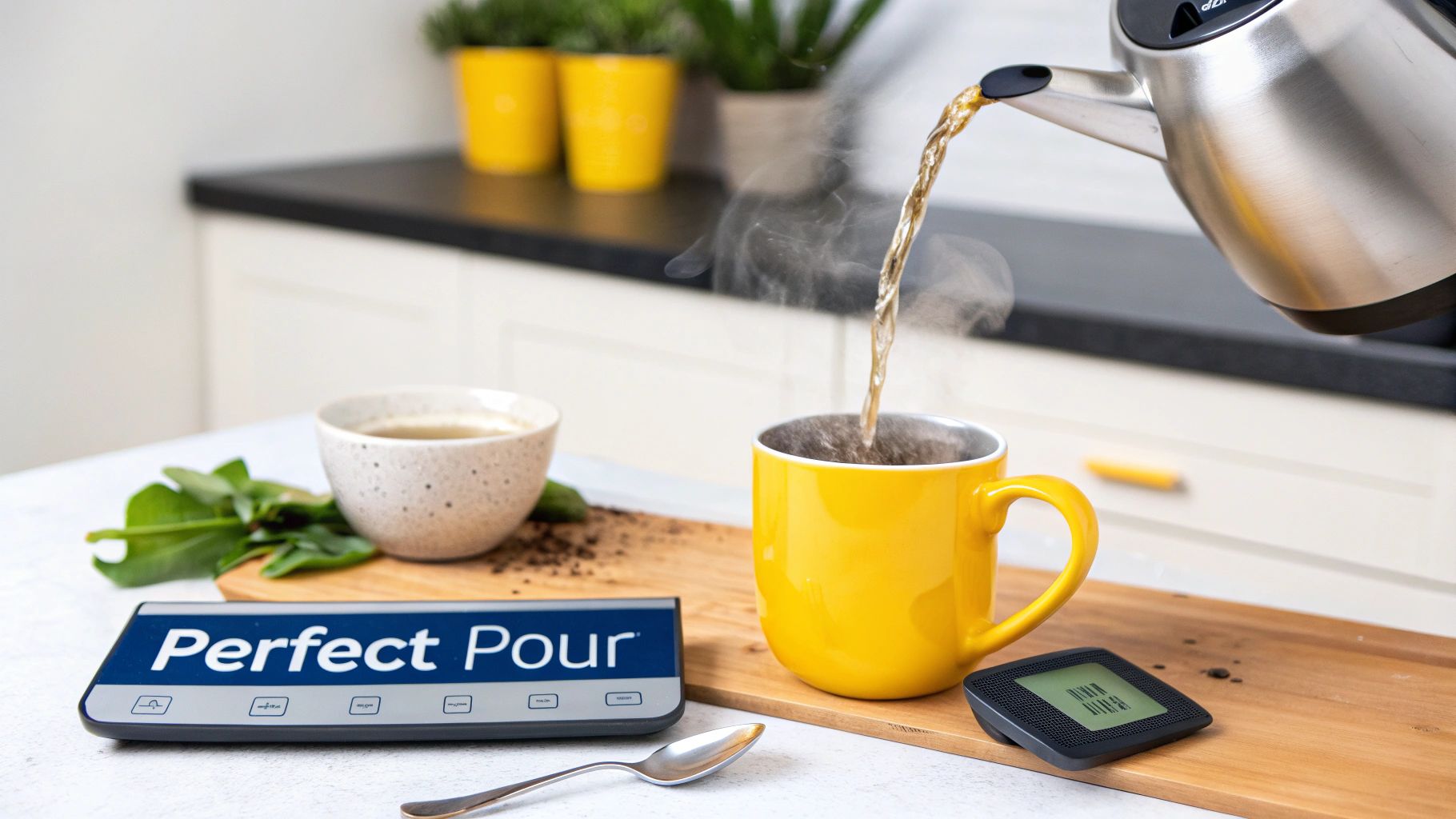
Alright, you've picked out a quality jar of instant coffee. Now for the two things that make or break your brew: the water you use and how much coffee you add. It’s so easy to just wing it here, but getting these details right is the secret to a surprisingly smooth and rich cup.
Think about it—your coffee is over 98% water. If your tap water tastes a bit like chlorine or is super "hard" with minerals, those flavors are going straight into your mug. This is often the culprit behind a flat or strangely metallic-tasting coffee.
The easiest fix? Use filtered water. It doesn't matter if it's from a Brita pitcher, your fridge, or a fancy faucet filter. Starting with a clean, neutral base lets the actual coffee flavors come through without any interference.
The Critical Role of Water Temperature
Here's the number one mistake I see people make: pouring boiling water directly onto the coffee granules. Water at a full boil (212°F or 100°C) is way too aggressive. It literally scorches the delicate coffee, creating that classic burnt, bitter taste that gives instant coffee a bad name.
The sweet spot for brewing is between 195-205°F (90-96°C). This range is hot enough to dissolve everything perfectly but gentle enough to coax out the good flavors without burning them.
You don't need a special thermometer to nail this, either. Just use this simple trick:
- Bring your kettle to a rolling boil.
- As soon as it clicks off, take it off the heat and just let it sit.
- Count to 30 or 60. That's it.
That short pause is all you need to let the water cool down into the perfect brewing zone.
This small pause is a total game-changer. It’s an effortless tweak that instantly gets rid of the harshness, leaving you with a much smoother, more balanced cup of coffee.
Finding Your Perfect Coffee-to-Water Ratio
With your water heated just right, the last piece of the puzzle is figuring out your ideal ratio. There’s no single right answer here, since everyone likes their coffee a little different. But having a solid starting point makes it easy to find what you love.
A great baseline to start with is:
- One rounded teaspoon of instant coffee granules
- For every eight ounces (about 240 ml) of hot water
Make your first cup using this measurement. Too weak? Add a little more coffee next time. A bit too bold for your taste? Dial it back slightly. Don't be afraid to experiment until you find the strength that's perfect for you. If you want to dive deeper, you can learn more about how much instant coffee to use per cup in our complete guide.
By just focusing on these two things—clean water at the right temperature and a ratio you enjoy—you’ll completely transform your instant coffee experience. It’s no longer just a quick caffeine fix; it becomes a genuinely tasty part of your morning.
Simple Techniques for a Smoother Brew
Alright, so you’ve got your hands on some quality instant coffee and you know how to get your water just right. You're already way ahead of the game. But if you want to go beyond just a quick stir and get something that feels more like a cafe-style drink, I've got a couple of simple tricks for you.
These little techniques are all about making sure every single coffee granule dissolves perfectly, which is the secret to a silky-smooth cup.
The Slurry Method: No More Clumps
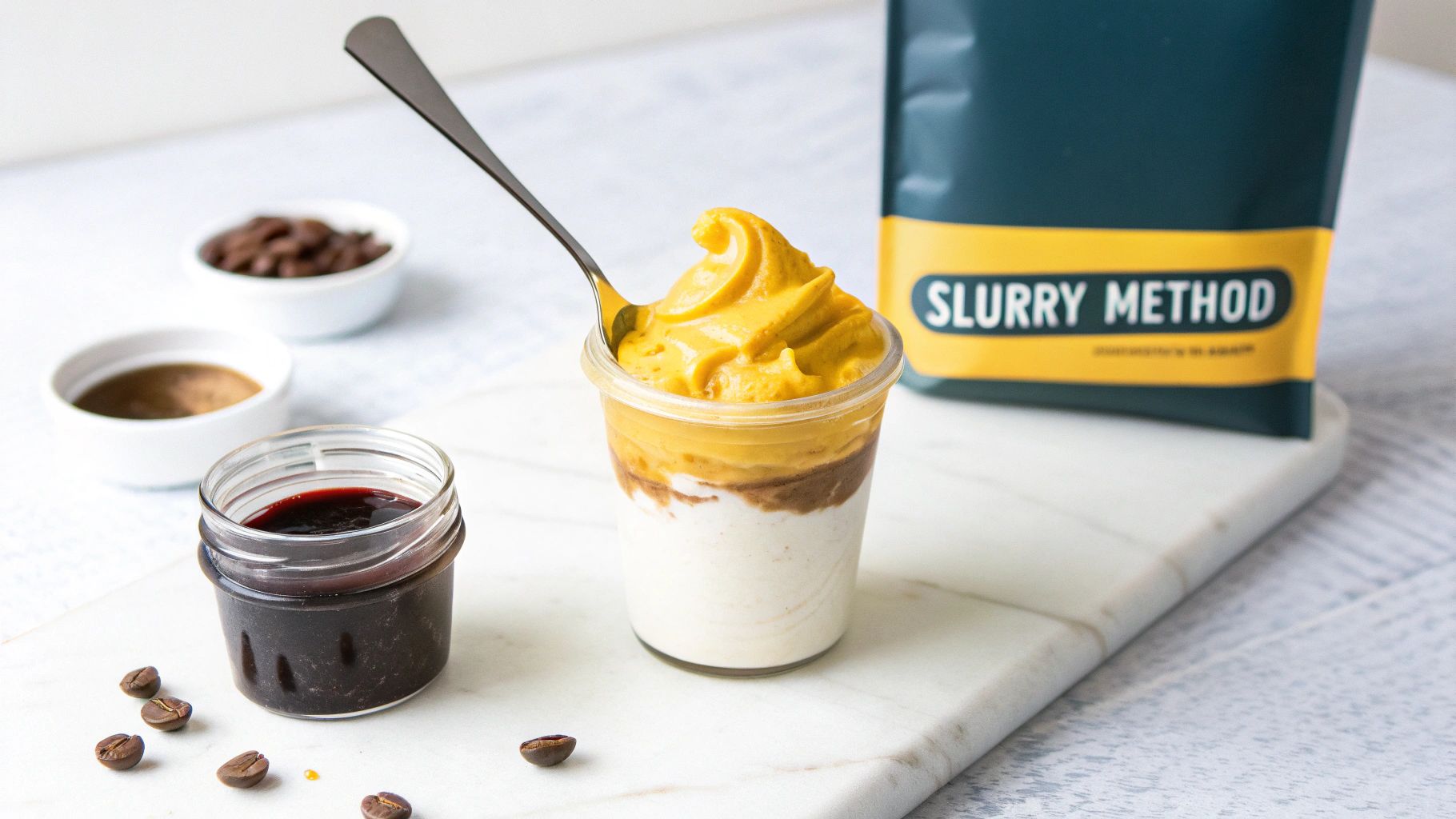
The easiest and most effective trick is what I call the "slurry" method. Instead of just dumping the coffee granules into a full mug of hot water, you’ll start by making a concentrated paste. It's a tiny extra step, but trust me, it makes a world of difference.
By creating this slurry first, you give the coffee a head start on dissolving. This completely gets rid of those stubborn, undissolved clumps that often end up at the bottom of your mug. This technique also works beautifully when you're paying attention to the correct temperature for coffee.
Here’s how you do it:
- Spoon your instant coffee granules into your mug.
- Add just a splash of cool or room-temperature water—you only need enough to wet the granules.
- Stir it vigorously for about 20-30 seconds. You’re looking for a thick, smooth, and glossy paste.
Once you have that concentrated base, slowly pour in your hot water (not boiling!) while you continue to stir. You'll see it right away—a richer color and a much more uniform texture than you'd get from mixing it all at once.
Pro Tip: This pre-dissolving step is the key to unlocking a flawlessly smooth cup. It ensures every granule is fully integrated, which also helps release more of the coffee's nuanced flavors and aromas.
Whipping Up a Velvety Foam (Dalgona-Style)
Feeling a little more adventurous? You can take your instant coffee to the next level by making a whipped coffee, which you might know by its viral name: Dalgona coffee. This technique transforms your basic ingredients into a rich, velvety foam that sits beautifully on top of milk. It’s an impressive and frankly fun way to enjoy your brew.
To make it, you just need equal parts of instant coffee, sugar, and hot water.
-
A simple recipe for one serving:
- 2 teaspoons instant coffee
- 2 teaspoons granulated sugar
- 2 teaspoons hot water
Combine these in a small bowl and get to whipping. A handheld milk frother is your best friend here, but a good old-fashioned whisk and some elbow grease work just fine. After a few minutes of whipping, the dark liquid will magically transform into a thick, light-brown, and stable foam. Just spoon this luxurious whip over a glass of iced or warm milk for a coffee that feels truly special.
This growing interest in creative home coffee methods isn't just a fleeting trend. In fact, instant coffee ownership in the United States has climbed from 27% to 35% in just five years, which points to a real shift in our coffee habits. You can see more on this trend in Mordor Intelligence's industry report.
Creative Ways to Upgrade Your Instant Coffee
Alright, so you’ve got the basics down. You know how to make a solid cup of instant coffee. Now for the fun part: making it your cup of coffee.
This is where you get to play and turn a simple daily ritual into something special. We're going to move past the usual milk and sugar and look at a few simple, but surprisingly effective, ways to give your brew a serious upgrade. Think of these less as recipes and more as ideas to get you started.
Simple Flavor Enhancers
You really don't need a cabinet full of fancy syrups to add some character to your coffee. In fact, some of the best additions are probably already in your spice rack.
- A Pinch of Salt: I know, it sounds weird. But trust me on this. A tiny pinch of salt mixed in with the coffee granules before adding water can completely transform a bitter brew. Salt actually cancels out bitterness, making the coffee taste smoother and richer.
- Warm Spices: For a cozy, comforting vibe, nothing beats a dash of cinnamon or a light sprinkle of nutmeg. It's especially great on a cold morning and adds a wonderful aroma without any extra calories.
- Vanilla or Almond Extract: Want that coffee shop flavor without all the sugar? A single drop of pure vanilla or almond extract is all it takes. It adds a subtle sweetness and a fantastic aroma that makes your coffee feel a bit more luxurious.
These little tweaks are a perfect example of how personal coffee can be. Don't be afraid to experiment! You might just stumble upon your new favorite combination.
Choosing the Right Milk Alternative
The milk you choose does more than just lighten your coffee; it changes the entire taste and texture. Dairy is the classic go-to, but the world of plant-based milks opens up a ton of new possibilities.
For instance, oat milk is a game-changer if you love a creamy, thick coffee. It froths up beautifully, giving you a latte-like feel right at home. If you prefer something lighter, almond milk offers a subtle nuttiness that pairs really well with coffee's natural flavors without stealing the show.
The Perfect Iced Instant Coffee
Making iced coffee at home often ends with a gritty sludge of undissolved coffee at the bottom of the glass. It’s a common problem, but there’s a ridiculously easy fix.
The secret is to bloom the coffee first.
Just dissolve your instant coffee granules in a tiny amount of hot water—a tablespoon or two is plenty. Stir it into a smooth, syrupy concentrate. Once every last granule has melted, pour this coffee shot over a glass packed with ice. Then, top it up with cold water or your milk of choice. The result? A perfectly smooth, well-mixed, and refreshing iced coffee every single time. No grit, guaranteed.
Answering Your Burning Instant Coffee Questions
Even with the right steps, sometimes things just don't turn out perfectly. Don't worry, that's part of the process. Let's walk through some of the most common hiccups people run into when they're dialing in their instant coffee game.
Why Does My Instant Coffee Taste Bitter or Burnt?
If your cup has a harsh, almost scorched taste, the problem is almost always your water temperature. When you pour water at a full, rolling boil (212°F or 100°C) straight onto the coffee granules, you're essentially burning them. That aggressive heat is what creates the bitterness that gives instant coffee a bad name.
Luckily, the fix is unbelievably easy. Once your kettle boils, just let it rest for 30 to 60 seconds before you pour. That little pause is all it takes for the temperature to drop into that sweet spot of 195-205°F (90-96°C). It's still plenty hot to dissolve the coffee, but it's gentle enough to coax out the good flavors instead of scalding them away.
Still too strong? If you've nailed the temperature and it's still too intense, you might just have your ratio off. Try pulling back a little on the coffee granules while keeping the water amount the same.
Can I Make an Instant Espresso for Lattes?
You absolutely can, and it's one of the best tricks in the instant coffee playbook. The key is to create a concentrated, robust shot of coffee that won’t get drowned out by all that creamy milk.
Here’s my go-to method for a quick "instant espresso" shot:
- Start with double the coffee you'd normally use for a single cup. So, if your usual is one teaspoon for eight ounces, use two teaspoons for your shot.
- Next, add just a splash of hot water—about two ounces is all you need.
- Stir this into a thick, smooth paste before you add any more liquid.
This potent little shot is the perfect base for a homemade latte, a frothy cappuccino, or an iced coffee that still packs a punch.
Is Instant Espresso Powder Different from Instant Coffee?
Yes, they're not quite the same, even though they can look alike. Instant espresso powder is usually made from a darker roast and is processed more intensely. This results in a powder that's much finer and has a deeper, more concentrated flavor.
You can drink instant espresso powder, but it's really a secret weapon for bakers. A teaspoon or two can seriously amplify the flavor of chocolate in brownies, cakes, or cookies without making them taste like coffee.
For your daily brew, a top-notch instant coffee is usually the way to go unless you're specifically after that super-bold, espresso-like kick.
How Should I Store Instant Coffee to Keep It Fresh?
Moisture is the ultimate enemy of instant coffee. Those little granules are hygroscopic, which is just a fancy way of saying they love to suck up moisture from the air. Once that happens, they start clumping, and the coffee begins to lose its flavor and aroma.
Keeping it fresh is simple if you follow a few rules:
- Seal it tight. Always keep the coffee in an airtight container. The one it came in is usually fine, as long as the lid is secure.
- Keep it cool, dark, and dry. A pantry or kitchen cabinet is perfect—just make sure it’s away from the stove and out of direct sunlight.
- Stay away from the fridge and freezer. I know it seems like a good idea, but the temperature fluctuations can cause condensation, and that brings moisture right back into the picture.
Store it right, and your last scoop will taste just as good as your first.
Ready to brew a cup that truly stands out? Cartograph Coffee offers premium organic instant coffee designed for a superior taste experience, whether you're at home or on an adventure. Discover the difference quality makes at https://cartographcoffee.com.