If you're looking for the best instant coffee brands that actually deliver on flavor, you'll want to look at specialty freeze-dried options like Waka Coffee and Swift Cup Coffee. Of course, there's also the premium mainstay, Starbucks VIA Ready Brew. These brands have one thing in common: they all start with high-quality Arabica beans and use advanced processing to make a cup that seriously rivals a traditional brew.
Why Instant Coffee Is Better Than Ever
Let's be honest, instant coffee used to have a bad rap. For decades, it was synonymous with harsh, bitter powders that were a last resort at best. But a quiet revolution has been happening behind the scenes, and modern instant coffee is shedding that old reputation. Brands are now using much better beans and more sophisticated production methods, creating a product that's genuinely enjoyable and a perfect fit for our fast-paced lives. It's a shift that's turning even the biggest coffee snobs into fans.
The single biggest game-changer? The industry's move toward freeze-drying instead of the old-school spray-drying method. If you're curious about the science, you can dig into the details of what is freeze-dried coffee, but the short version is that it preserves the delicate flavor compounds far more effectively. This technique is the key to capturing the true taste of the coffee beans.

Key Factors Behind the Quality Shift
So, what's really going on that makes today's instant coffee a worthy contender? It's not just one thing; it's a combination of factors that add up to a much better cup. The focus has shifted from cheap mass production to a more craft-oriented approach.
- Better Beans: The best brands are now sourcing high-quality, single-origin Arabica beans. These are the same beans specialty cafes use, known for their complex and nuanced flavors—a world away from the historically common (and cheaper) Robusta.
- Advanced Processing: As I mentioned, freeze-drying is a gentler process. It locks in aroma and taste by removing water at very low temperatures, which prevents that "cooked" flavor that plagued older instant coffees.
- Microground Coffee: Some of the top-tier options, like Starbucks VIA, take it a step further. They blend the instant coffee crystals with finely ground coffee beans. This adds body and depth, creating a much richer and more authentic coffee experience.
Modern coffee drinkers demand both convenience and quality, and the best instant coffee brands have risen to the challenge. They’ve proven that you don’t have to sacrifice flavor for speed, making a great cup of coffee accessible anywhere, anytime.
To see the difference in a nutshell, here’s a quick breakdown of the two main drying methods that create the quality gap in today's instant coffee market.
| Feature | Freeze-Drying Method | Spray-Drying Method |
|---|---|---|
| Process | Coffee is frozen, and water is removed as vapor. | Hot air is used to evaporate water quickly. |
| Flavor Impact | Preserves original aroma and flavor compounds. | High heat can degrade delicate flavor notes. |
| Texture | Creates light, porous granules that dissolve easily. | Produces a fine, sometimes clumpy powder. |
| Cost | More expensive and time-consuming. | Cheaper and faster production. |
Ranking the Top Instant Coffee Brands
Before we get into the nitty-gritty of flavor profiles and aroma, let's take a look at the major players in the instant coffee game. The market has exploded recently, moving far beyond the old grocery store standbys to include some seriously impressive craft options. This quick rundown will introduce you to the brands we'll be putting head-to-head.
I'll be judging each one based on what really matters: how it tastes, how easily it dissolves, and whether the price feels right for the quality you get. We've got everything from the brands your parents drank to new-wave challengers that might just change your mind about instant coffee for good.
The Main Contenders
The battle for the best instant coffee is surprisingly fierce. On one side, you have the legacy giants that have dominated shelves for generations. On the other, a new crop of specialty brands is completely rethinking what instant can be, using higher-quality beans and more sophisticated methods to get there.
- Nescafé: The undisputed titan of the industry. It's affordable, available everywhere, and delivers a consistent, no-fuss cup.
- Starbucks VIA Ready Brew: Starbucks' answer to instant, aiming to bring its signature dark roast flavor into a portable packet.
- Waka Coffee: A specialty brand that puts quality first, focusing on single-origin, freeze-dried 100% Arabica beans.
- Mount Hagen: A go-to for anyone prioritizing organic and fair-trade sourcing without sacrificing flavor.
- Swift Cup Coffee: Another specialty contender known for meticulous sourcing and a process that preserves the nuances of high-end coffee.
It's impossible to talk about instant coffee without mentioning Nescafé. This Nestlé powerhouse has been a global fixture for decades, available in over 180 countries and holding roughly 22% of the entire market share. Its sheer scale makes it the natural starting point for any comparison. You can dig into more of the numbers by checking out the global instant coffee market trends on mordorintelligence.com.
The secret to great instant coffee almost always comes down to two things: the quality of the beans and the drying process. Brands that start with 100% Arabica beans and use freeze-drying—a gentler method than spray-drying—tend to produce a cup with more complexity and less bitterness.
To help you get your bearings, I’ve put together a quick overview of our contenders. Think of this as the cheat sheet before we dive deep into the taste tests.
Top Instant Coffee Brands at a Glance
This table gives you a snapshot of what each brand is all about. It’s a great way to quickly see their core focus before we get into the details of what makes each one unique.
| Brand | Primary Bean Type | Processing Method | Price Tier | Best For |
|---|---|---|---|---|
| Nescafé | Arabica & Robusta Blend | Spray-Dried / Freeze-Dried | $ | Budget-conscious daily drinkers |
| Starbucks VIA | 100% Arabica | Freeze-Dried & Microground | $$$ | Fans of the Starbucks signature roast |
| Waka Coffee | 100% Arabica | Freeze-Dried | $$$ | Quality-focused, single-origin lovers |
| Mount Hagen | 100% Arabica | Freeze-Dried | $$ | Organic and ethical coffee drinkers |
| Swift Cup Coffee | 100% Arabica | Freeze-Dried | $$$$ | Coffee connoisseurs seeking convenience |
As you can see, the options range from simple and affordable to premium and specialized. Now, let’s see how they actually stack up when you add hot water.
Diving Deep into Flavor and Aroma
Let's be honest, the real make-or-break moment for any coffee is that first sip. Forget the clever packaging or the price tag for a second—it all comes down to what's in the cup. This is where the quality of the coffee beans and the sophistication of the process really show their cards. A truly great instant coffee doesn't just taste vaguely "like coffee." It delivers a genuine sensory experience, complete with distinct flavor notes, a satisfying body, and a clean finish.
This is where we'll get into the nitty-gritty. We're talking about everything from the aroma that hits you as soon as the hot water does, to the taste that lingers on your palate. Are we getting bright, fruity notes, or something deep and roasty? Is the coffee thin and watery, or does it have a pleasant weight to it?
Single Origin vs. Blends
One of the first forks in the road you'll encounter is the choice between a single-origin coffee and a blend. Think of a single-origin coffee as a spotlight on one specific place in the world. Brands like Waka Coffee or Swift Cup often feature beans from a single region, like Colombia or Ethiopia. This lets the unique character of that area's terroir—the soil, climate, and altitude—take center stage, often resulting in bright, clean, and complex flavors with hints of citrus, flowers, or berries.
Blends, on the other hand, are all about teamwork. Brands like Nescafé Azera and Starbucks VIA combine beans from different places to craft a very specific and consistent flavor profile. A well-executed blend can give you a balanced, full-bodied cup with those classic chocolate, nut, and caramel notes we all know and love. The goal here isn't to highlight one region's quirks but to deliver a reliable and harmonious taste every single time.
Why the Bean Type Matters So Much
The kind of coffee bean used is the absolute foundation of the final taste. You’ll notice that most premium instant coffees proudly state they use 100% Arabica beans. Grown at high altitudes, Arabica is the darling of the specialty coffee world, celebrated for its complex aromas, higher acidity, and a smoother, sweeter flavor.
In contrast, many of the classic, budget-friendly instant coffees use a mix of Arabica and Robusta beans. Robusta is a hardier plant, packs nearly twice the caffeine, and delivers that bolder, stronger, more "traditional" coffee flavor, which can sometimes come with earthy or even rubbery notes. While some coffee purists find Robusta a bit harsh, it’s fantastic for adding intensity and a thick crema to a blend. Getting to know the Arabica vs. Robusta beans difference is a shortcut to figuring out what an instant coffee will taste like before you even buy it.
Key Insight: A coffee's flavor is a direct passport to its origins. A 100% Arabica single-origin from Ethiopia will probably be light and floral, while a blend with a lot of Robusta will be bold and intense. Neither is "better"—it's all about what you're in the mood for.
So, how do our top picks stack up against each other? Let's break it down.
| Brand | Aroma Profile | Dominant Flavor Notes | Acidity & Body | Finish |
|---|---|---|---|---|
| Waka Coffee | Bright, often fruity or floral | Varies by origin (e.g., citrus, red fruit) | Bright, crisp acidity; medium body | Clean and smooth |
| Starbucks VIA | Roasty, smoky, intense | Dark chocolate, toasted nuts, caramel | Low acidity; full and robust body | Lingering, bold, slightly bitter |
| Mount Hagen | Mild, nutty, slightly earthy | Balanced notes of nuts and cocoa | Medium acidity; smooth, light body | Mild and pleasant |
| Nescafé Azera | Classic coffee, slightly roasty | Toasted grain, hints of dark chocolate | Low acidity; medium body with a foamy top | Short and straightforward |
This table shows a pretty clear divide in philosophy. Specialty players like Waka Coffee are all about preserving the delicate, nuanced flavors of single-origin Arabica, giving you a cup that’s bright and clean. Then you have brands like Starbucks VIA, which lean hard into a dark roast profile, prioritizing boldness and intensity over subtle complexities. Ultimately, your choice will come down to whether you prefer a light, acidic cup or a dark, robust one.
Finding the Right Coffee for Your Life
Let's be honest, the "best" instant coffee doesn't really exist. The best one is the one that fits your life. A brand that’s a godsend on a multi-day hike might feel like a waste of money for your daily morning cup at home. It’s all about context—where, when, and how you plan to drink it.
Instead of just talking about flavor, I'm going to break this down into real-world scenarios. This way, you can find a coffee that truly fits your routine, whether you're trying to get out the door on time, brewing up in the backcountry, or getting creative in your kitchen.
The Backpacker’s Choice
When you're out on the trail, every ounce in your pack matters. The perfect backpacking coffee needs to be lightweight, tough, and pack a punch of flavor that can cut through the cold morning air. Out here, convenience isn't a luxury; it's a necessity.
- Packaging: Single-serve sticks are your best friend. They're waterproof, perfectly portioned, and you're left with minimal trash to pack out. Brands like Starbucks VIA Ready Brew and Alpine Start really nail this, with sturdy packaging that won't explode in your bag.
- Flavor Profile: I find a bolder, darker roast just hits different in the backcountry. It delivers that comforting, strong flavor that feels more like a real cup of coffee on a chilly morning. Think medium-to-dark roasts that give you that classic "coffee" kick.
- Dissolvability: You need something that dissolves fast in hot or even cool water, because a rolling boil isn't always on the menu. Freeze-dried coffees almost always outperform their spray-dried cousins here.
My rule for trail coffee is simple: prioritize durability and a strong flavor. A coffee that tastes perfectly balanced at your kitchen table can feel weak and disappointing when you're sipping it in the crisp mountain air.
The Daily Commuter's Pick
If your morning is a mad dash, you need an instant coffee that’s reliable, affordable, and, well, instant. This is all about finding a dependable workhorse that won't drain your wallet when you're drinking it five days a week.
Mount Hagen Organic Instant Coffee is a standout for this. It comes in a glass jar, which I love because you can easily dial in the strength you need each morning. It hits that sweet spot between quality and price, giving you a smooth, 100% Arabica brew for way less than you'd pay for premium single-serve packets. The flavor is clean and balanced—a perfect, no-fuss daily driver.
The Home Barista's Shortcut
For anyone who enjoys making coffee drinks at home, instant coffee is an amazing tool to have in your arsenal. It’s a shortcut to a concentrated coffee base for lattes, dalgona coffee, or even cocktails, all without firing up an espresso machine. The trick is to find one with a clean, potent flavor that plays well with others.
This is where a high-quality, freeze-dried brand can really make a difference.
- For Iced Lattes: A coffee with brighter, fruitier notes—like a single-origin from Waka Coffee—can create an iced drink that’s surprisingly refreshing and complex.
- For Bold Flavors: When you're making something like a tiramisu or a coffee cocktail, you need a flavor that won’t get drowned out. The intense, roasty profile of Nescafé Azera Americano is perfect for this, acting as a powerful, rich ingredient.
By thinking about how you'll actually use your coffee, you can turn a simple convenience into the perfect part of your daily ritual.
Exploring Premium and Specialty Options
For those of us who refuse to compromise on a great cup of coffee, the world of premium instant has become a playground. Let's be clear: these specialty options are miles away from the dusty jars on the back of the grocery store shelf. They’re all about single-origin beans, advanced processing, and holding onto the delicate flavors that make coffee truly special. These brands aren't just selling a quick caffeine fix; they're delivering a legitimate craft coffee experience you can make in seconds.
What sets this top tier apart is an absolute commitment to 100% Arabica beans, usually sourced from specific high-altitude regions celebrated for complex flavor profiles. Unlike the mass-market stuff blended for sheer consistency, these coffees are designed to showcase the unique terroir of their origin. You'll actually be able to taste distinct notes—from bright citrus and florals to rich, nutty undertones. That's what makes the higher price tag well worth it.
Replicating the Cafe Experience
Starbucks is a perfect example of a brand that cracked the code, successfully shrinking its signature cafe taste into a portable stick. Starbucks VIA Ready Brew has practically taken over the premium instant scene in North America and Western Europe, thanks to its powerful brand recognition and a smart formula. By mixing freeze-dried coffee with finely microground beans, they achieve a body and depth that comes surprisingly close to a fresh-brewed cup. It's a strategy that's clearly won them a huge slice of the market, a trend you can learn more about by checking out the premium instant coffee segment insights on towardsfnb.com.
The real test of a premium instant coffee is whether it can make you forget you're drinking instant. It should deliver the aroma, body, and clean finish you'd expect from a drip coffee, proving that speed and quality don't have to be mutually exclusive.
This decision tree can help you figure out which type of coffee actually fits your life, whether you're climbing a mountain or just shuffling to your kitchen counter.
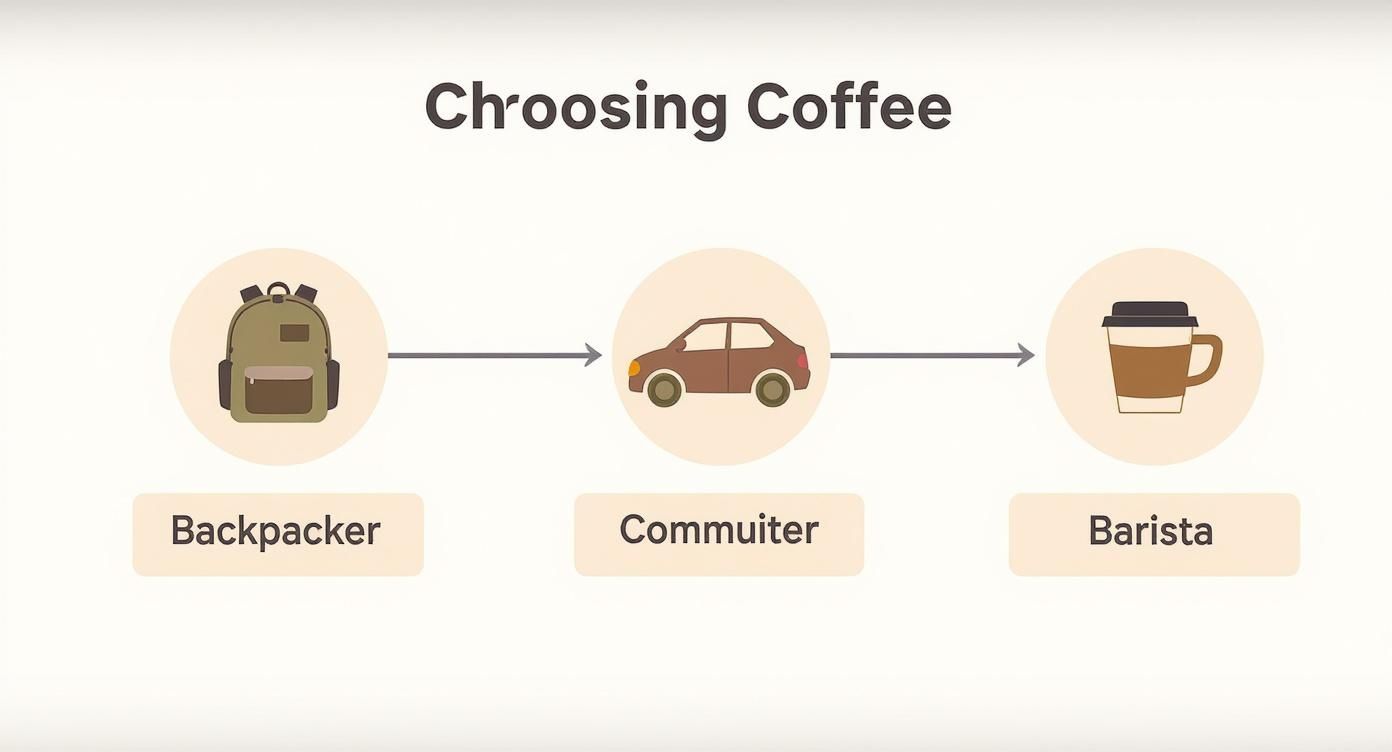
As you can see, your lifestyle is the biggest factor. An adventurer needs something bold and durable, while a home barista might want something with more nuanced flavors for lattes and other creations.
What Justifies the Higher Price?
So, what exactly are you paying for with these specialty instant coffees? The extra cost is a direct investment in the quality of the green beans and the careful, meticulous methods needed to protect their delicate flavors.
- Single-Origin Sourcing: These brands are often buying smaller, exceptional lots of coffee from individual farms or cooperatives. That’s a whole different ballgame—and price point—than buying commodity-grade beans by the ton.
- Advanced Freeze-Drying: While more expensive and energy-intensive than old-school spray-drying, this gentle process is the best way to preserve the coffee's fragile aromatic compounds.
- Small-Batch Production: Many specialty roasters produce their instant coffee in smaller runs. This gives them far more control over quality and ensures the final product you get is as fresh as possible.
Ultimately, choosing a premium brand comes down to prioritizing flavor. For anyone who truly appreciates the subtle notes in a thoughtfully sourced coffee, these brands offer an instant experience that makes a quick cup feel like a small, well-deserved luxury, no matter where you happen to be.
Common Questions About Instant Coffee
Even with today’s amazing specialty options, instant coffee still has a bit of a reputation, and a few questions tend to come up again and again. Let's clear the air on some of the most common ones so you can feel good about what you're stirring into your mug.
Lots of folks ask if instant coffee is even "real" coffee. The short answer is yes, but the process is totally different from your standard ground beans. If you're curious about the nitty-gritty, we have a whole guide explaining if instant coffee is real coffee that walks through how it’s made. It’s a great primer on what’s actually happening behind the scenes.
Freeze-Dried Or Spray-Dried Coffee
So, is freeze-dried coffee really better than spray-dried? In my experience, absolutely. The quality gap is pretty significant. Freeze-drying is a much gentler, low-temperature process that does an incredible job of preserving the delicate flavors and aromas we love in coffee.
Spray-drying, on the other hand, blasts the coffee with high heat, which can obliterate those subtle notes and leave you with a harsher, more generic coffee taste. It’s no surprise that nearly all the top-tier brands stick exclusively to freeze-drying to get that rich, brewed-from-scratch flavor profile.
The Takeaway: Freeze-drying carefully preserves the good stuff by turning water into vapor at low temperatures. Spray-drying uses intense heat that can cook off the very compounds that give coffee its character, resulting in a flatter, less impressive cup.
Caffeine Content in Instant Coffee
What kind of a kick can you expect? A standard 8-ounce cup of instant coffee usually has between 60-90 mg of caffeine. That’s a bit less than a typical cup of drip coffee, which often lands somewhere in the 95-165 mg range.
Of course, the final caffeine count can swing a bit based on a few things:
- Bean Type: Robusta beans pack nearly double the caffeine of their Arabica counterparts.
- Brand Formulation: Every brand has its own specific blend and concentration.
- Serving Size: This one's on you—how much powder you scoop into your cup makes a direct difference.
Making Iced Coffee and Shelf Life
Can you make iced coffee with instant granules? You bet. It’s probably one of the fastest and easiest ways to whip one up. Here’s a pro tip: always dissolve the coffee powder in a small splash of hot water first. This creates a smooth, concentrated shot that mixes perfectly.
Once it’s dissolved, just pour it over ice and add your cold water, milk, or whatever else you like. No clumps, no fuss.
And finally, does this stuff go bad? While instant coffee is famous for its long shelf life, it’s not immortal. An unopened package can sit in your pantry for years, but it will slowly lose its flavor and aroma. Once opened, it's best to use it within a few months for peak taste. The key is to store it in an airtight container somewhere cool, dark, and dry.
At Cartograph Coffee, we believe convenience should never compromise quality. Our organic, single-origin instant coffee is crafted for those who demand a superior taste experience, wherever life takes them. Discover the difference and elevate your daily ritual at cartographcoffee.com.