Yes, blonde roast generally trends slightly higher in caffeine than dark roast when coffee is measured by mass and brewed under identical conditions, but the difference is modest and not universal. In one controlled study, caffeine readings ranged from 1.30 to 1.53 grams per 100 grams of coffee, with the highest result from light-roast, fine-ground coffee and the lowest from dark-roast, coarse-ground coffee, a comparison that reflects grind as well as roast.[^1]
The surprising part is that roast color often matters less than what kind of coffee you buy and how you brew it. A darker coffee can deliver more caffeine than a blonde one if it contains a higher-caffeine species or is prepared in a way that extracts more caffeine. So if you're asking, “Does blonde roast have more caffeine?” the practical answer is often, but don't treat the roast label as a caffeine guarantee.
The Short Answer to the Blonde Roast Caffeine Question
Blonde roast often has a little more caffeine than dark roast when both are weighed and brewed the same way. Lighter roasting can preserve slightly more caffeine, and lighter beans are denser, so an equal-volume scoop may also hold more coffee mass. But neither point makes blonde roast the automatic winner in every cup.
A 2024 study compared filter coffees brewed using the same procedure and found caffeine concentration was generally lower in dark roasts than in light and medium roasts. The study reported about 134–165 mg per 8-ounce cup for natural Ethiopian coffee and 145–165 mg per 8-ounce cup for washed Ethiopian coffee. Those overlapping ranges show why roast level alone can't predict the caffeine in a serving. The researchers also found that extraction yield, meaning how much of the coffee's soluble material transfers into the water, had a greater effect on final caffeine concentration than roast degree alone.[^2]
| What you're comparing | What to expect |
|---|---|
| Blonde vs. dark, same coffee mass and brewing conditions | Blonde often trends higher, but the difference isn't guaranteed. |
| Equal-volume scoops | A scoop of blonde may hold more coffee mass because its beans are denser. |
| Different species or blends | Species can outweigh roast-level differences. |
| Different grind or brew method | Extraction can change how much caffeine reaches the cup. |
A useful way to think about it is to separate the coffee in the bag from the drink in your mug. Roast influences the bean, but dose, grind, water temperature, contact time, and brewing method determine how much caffeine makes it into your serving.
Practical rule: Treat blonde roast as a reasonable default if you're choosing between similar coffees, not as a promise of a stronger cup.
Why Roast Level Changes Caffeine at All
Roasting changes a coffee bean's chemistry and structure. Heat removes moisture, breaks down some compounds, and develops the aromas and flavors associated with coffee. Caffeine is comparatively stable, so roast level doesn't erase it, though prolonged heat can contribute to some loss.
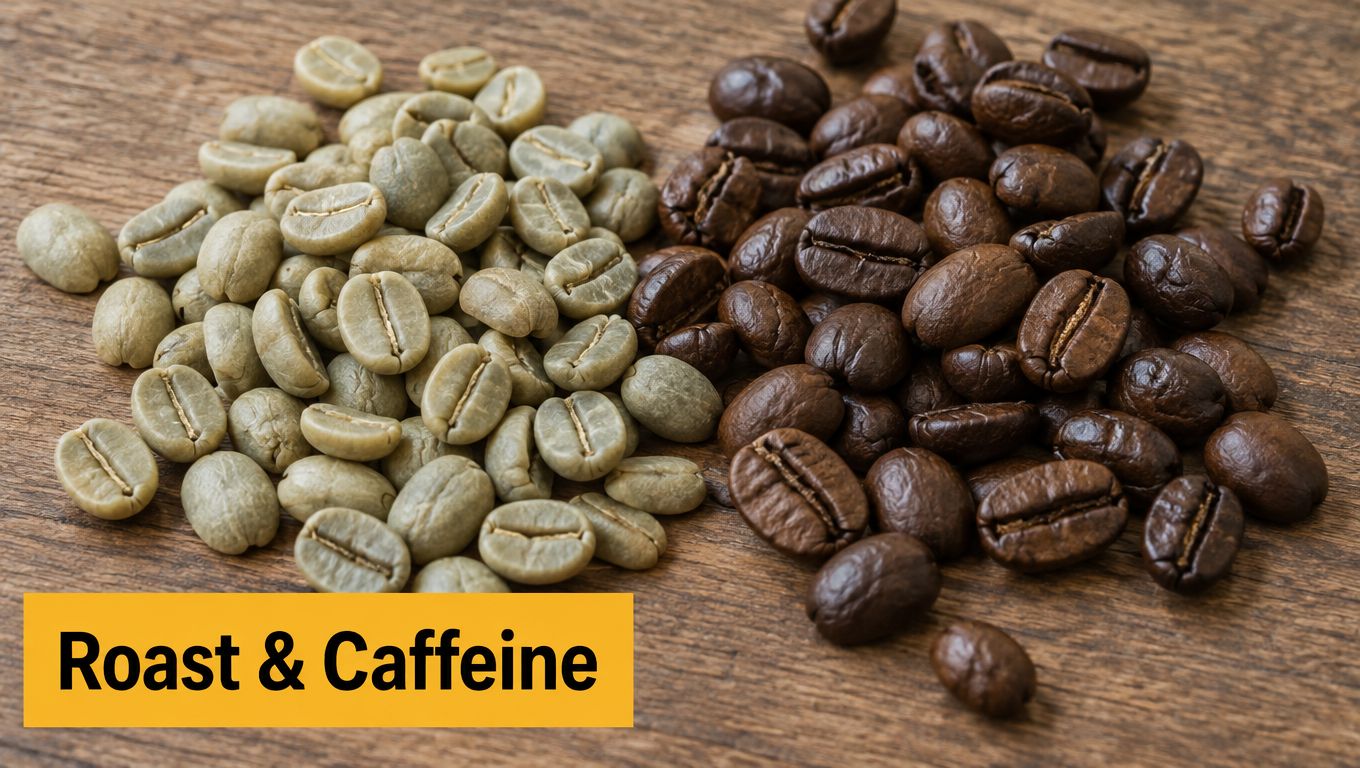
Roasting also changes bean density. Darker-roasted beans have lost more moisture and expanded, so a given scoop can contain less coffee by weight than the same scoop of denser blonde beans. That doesn't mean every scoop comparison will produce the same result, since bean size and shape vary. It does explain why measuring by volume can make roast comparisons misleading.
For a simple kitchen example, imagine filling the same scoop first with blonde beans and then with dark beans. The scoops look equally full, but they may not weigh the same. If you want to compare caffeine fairly, weigh the beans rather than relying on a scoop. You can learn more about the flavor and development differences in Cartograph Coffee's guide to roast types.
The final step is extraction. Your grinder breaks beans into particles, and hot water dissolves compounds from those particles. Finer grounds expose more surface area to water, while dose, water temperature, and contact time also affect how much caffeine moves into the cup.
This is why a roast label is only one part of the picture. Two coffees can have similar roast levels but brew differently, and the same coffee can produce different caffeine concentrations when you change the recipe.
For a visual introduction to how beans change during roasting, watch this short video.
Blonde Roast vs Medium vs Dark Roast Compared
Blonde, medium, and dark describe roast development, not a fixed caffeine scale. Lighter roasts tend to be denser, while darker roasts are typically less dense. Caffeine per gram doesn't follow a perfectly reliable ladder from light to dark, because grind and extraction can change the result.
The table is best read as a practical guide, not a lab guarantee. Flavor descriptions are common tendencies, while caffeine behavior depends on the coffee and its preparation.
| Roast Level | Bean Density | Caffeine per Gram | Caffeine per Equal Scoop | Flavor Profile | Brew Sweet Spot |
|---|---|---|---|---|---|
| Blonde or light | Usually denser | Often trends higher under controlled comparisons, but varies | May deliver more coffee mass than dark roast in a scoop | Brighter, with more noticeable origin character | Pour-over or drip when you want a clearer, livelier cup |
| Medium | Between light and dark as a general tendency | No guaranteed position | Depends on bean size and how the scoop is filled | Balanced, often combining sweetness and roast notes | Drip or pour-over for an adaptable everyday cup |
| Dark | Usually less dense | Not reliably higher because it tastes bolder | May contain less coffee mass in an equal-volume scoop | Deeper, roast-forward, often more bitter | Immersion or drip when you prefer a fuller, more pronounced roast character |
How to use the comparison
A blonde roast can be a sensible choice if you want a light-roast flavor and a slight caffeine edge under controlled conditions. A medium roast gives you a middle-ground flavor, but it isn't automatically the middle point for caffeine. Dark roast can taste more intense without being more caffeinated.
“Equal scoop” needs particular care. It means the same volume, not the same amount of coffee by weight. If you're using a scoop, you're comparing two things at once: roast level and the mass that fits in the scoop. Weighing the dose removes much of that measurement confusion.
Also separate strength of flavor from caffeine content. Dark-roast bitterness or a heavy-bodied cup can feel more forceful, but taste intensity doesn't tell you how much caffeine is present. For a more useful comparison, keep the coffee dose and brewing method consistent, then consider the bean species and grind as well.
How Grind Size and Brew Method Shift the Number
Grind size can change extraction enough to complicate a simple blonde-versus-dark comparison. A finer grind gives water more coffee surface to contact; a coarser grind exposes less. Dose, water temperature, and contact time also affect how much caffeine dissolves into the finished drink.
A 2025 HPLC study measured caffeine values from 1.30 to 1.53 g per 100 g of coffee across its tested roast and grind combinations. The light-roast, fine-ground sample had the highest reading at 1.53 g/100 g, while the dark-roast, coarse-ground sample had the lowest at 1.30 g/100 g. The difference was about 17.7%, and the researchers linked the pattern to both thermal loss during roasting and extraction efficiency from grinding.[^3]
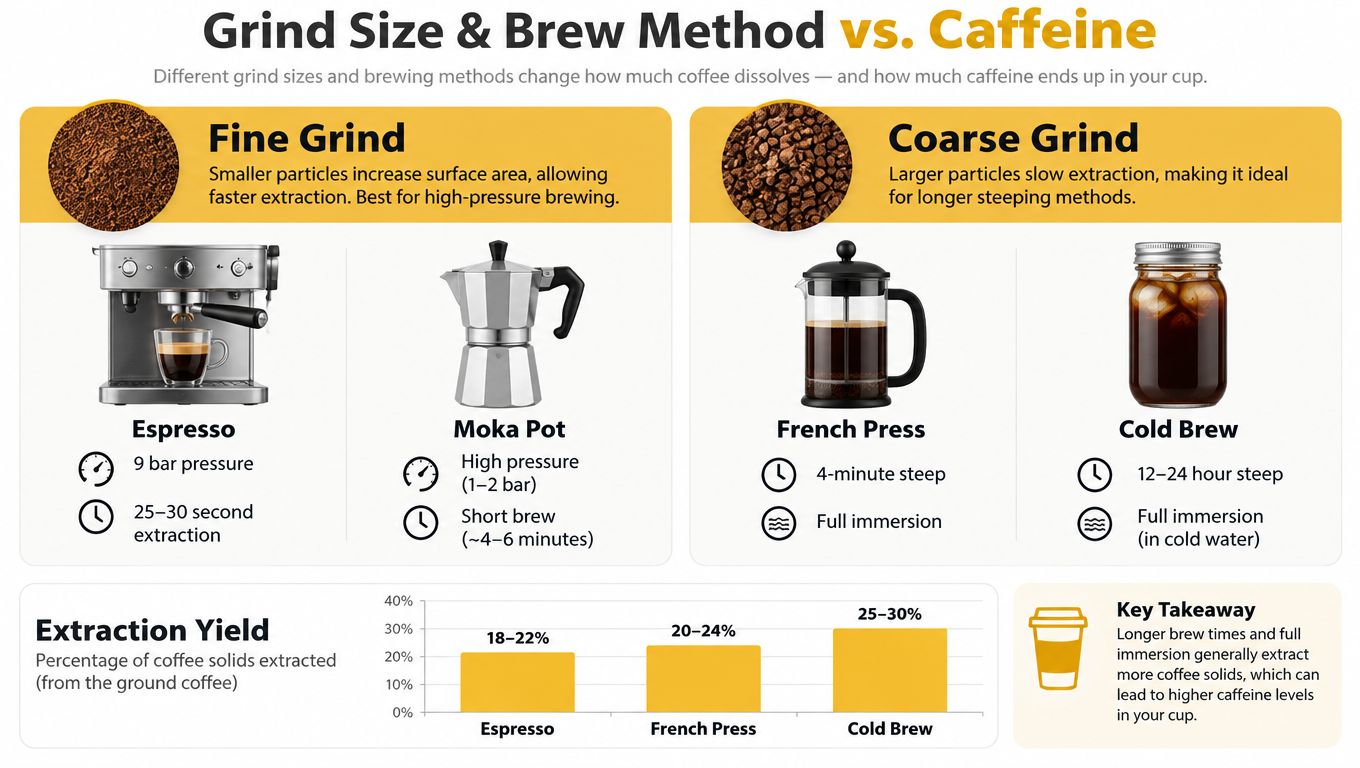
That result doesn't mean every fine-ground light roast will out-caffeinate every coarse-ground dark roast. The study tested particular coffees and preparation conditions. It does show why a comparison that changes both roast and grind can't tell you what roast alone did.
What to control in your brew
For a fair home comparison, keep the dose, grinder setting, water temperature, and brew method as consistent as you can. If you change the roast but also grind finer or use more coffee, you've changed multiple variables, making it hard to tell why the cup tastes or feels different.
A fine grind in one brewer may extract differently from a coarse grind in another. A pour-over's water flow, an immersion brewer's steep, and an espresso machine's pressure all shape contact between water and coffee. So “fine” or “coarse” isn't a complete recipe by itself.
For more context on caffeine across different coffee styles, Cartograph Coffee's coffee caffeine guide can help you think beyond roast color.
The most useful comparison is the coffee you actually drink, prepared the way you actually make it. A roast label can't stand in for your dose and brewing routine.
The Bean Species Question Most Comparisons Skip
Before comparing blonde and dark, check whether the coffee is Arabica, Robusta, or a blend. Species can create a larger caffeine difference than roast level. A systematic review reported average green-bean caffeine concentrations of about 22.15 mg/g for Arabica and 45.58 mg/g for Robusta, while noting substantial variation across samples.[^4]
Those are green-bean averages, not a promise about the finished coffee in your mug. Still, they show why a dark roast built on a different bean species could deliver more caffeine than a blonde Arabica, depending on the blend and preparation. If caffeine matters to you, species information can be more useful than the word “blonde” on a label.
Roast also changes flavor more conspicuously than it changes caffeine. Many flavor compounds shift as beans roast, and bitterness can become more prominent in darker coffees. That stronger, more bitter taste can make a cup seem more powerful, but it doesn't prove that it contains more caffeine.
What to look for on a coffee bag
- Species or blend details: Look for Arabica, Robusta, or a stated blend rather than assuming all coffee beans have similar caffeine.
- Serving-level information: If a product provides caffeine information for a serving, that's more directly relevant than a general roast description.
- Preparation instructions: Dose and brew method affect what ends up in the cup, particularly for coffee you prepare yourself.
For instant coffee, camping coffee, and mixed-origin products, the same principle applies. The roast name may tell you something about flavor, but it won't reveal the full species blend or serving-level caffeine on its own. For a closer look at the differences between the species, see Cartograph Coffee's Arabica and Robusta comparison.
How to Pick a Roast Based on Your Caffeine Goal
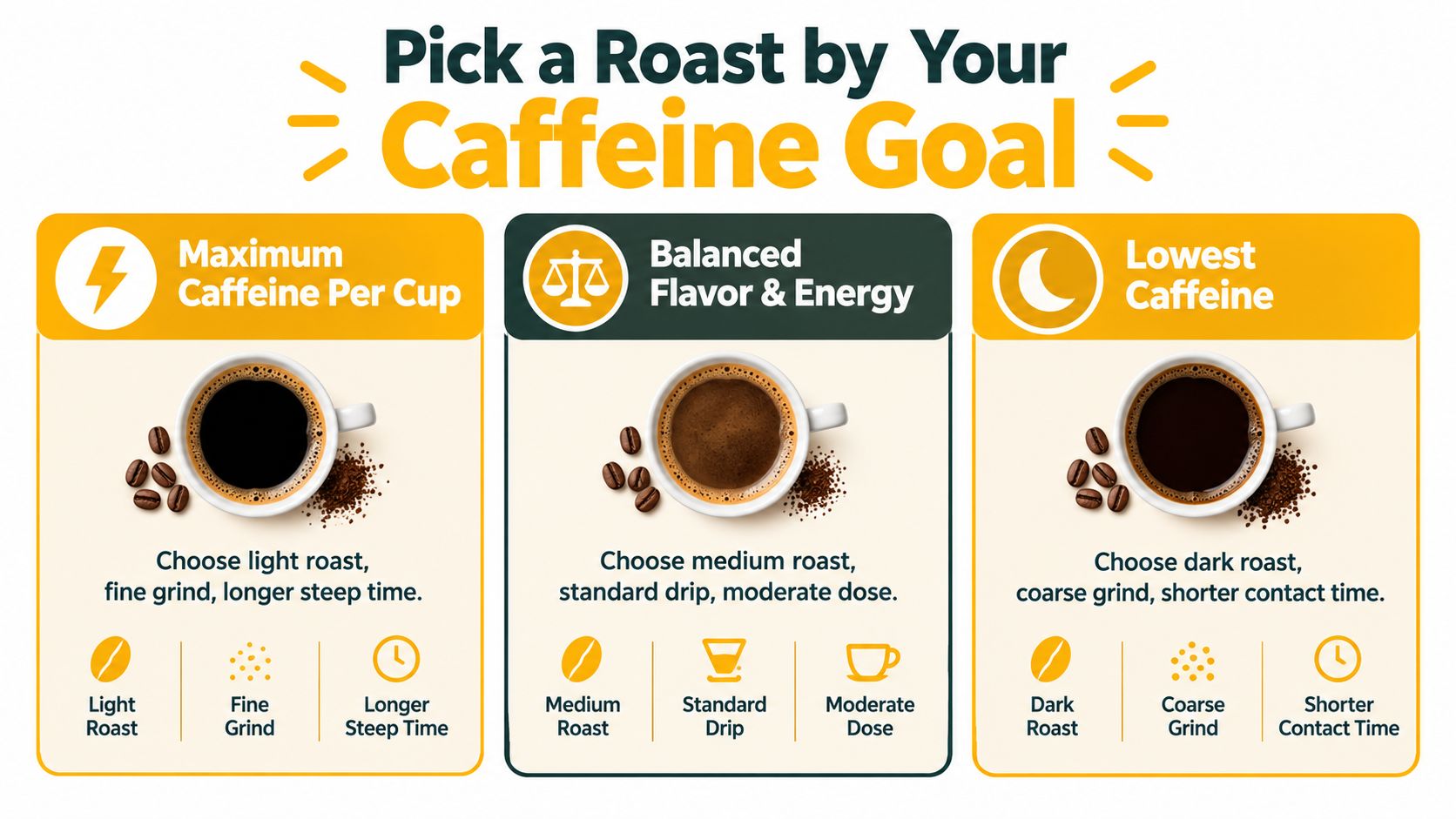
Choose your coffee based on the outcome you want, then keep your preparation consistent. If you want more caffeine, a lighter roast may be a reasonable choice among otherwise similar coffees, but checking the blend and the serving information can tell you more than roast color alone.
If you want more caffeine per cup
Start by looking for species or blend details, then choose a serving and brew method you can repeat. A blonde roast is a reasonable tie-breaker between similar coffees, and a finer grind can increase extraction under some conditions. Avoid treating a longer brew or finer grind as a guaranteed caffeine boost across every device and recipe.
If you want less caffeine but still want coffee
Don't rely on darker roast alone as a dependable way to reduce caffeine. Look for a product with clear serving information and adjust the amount of coffee you use. If you're changing the recipe at home, make one adjustment at a time so you can judge the flavor without guessing which change made the difference.
If you want a steady daily cup
Weigh your coffee and use the same brewer and recipe each time. This won't tell you the exact caffeine content unless that information is available for the coffee, but it gives you a more consistent preparation than an unmeasured scoop. For busy mornings, outdoor trips, or family routines, a repeatable dose is easier to manage than switching between roasts and brew styles.
If flavor comes first
Choose the roast that tastes good to you. Blonde and light roasts often appeal to drinkers who enjoy brighter flavors, while dark roasts suit those who prefer a more pronounced roasted profile. Medium roasts can offer a balanced option. If two coffees taste right, then compare their species and preparation guidance rather than assuming the darker bag is stronger.
Practical Takeaways for Choosing Your Next Bag
A reliable caffeine comparison starts with what's in the bag and continues through how you prepare it. Use these habits when you shop or brew:
- Weigh the dose: A scale makes it easier to compare the same coffee mass across roast levels than an equal-volume scoop does.
- Read beyond the roast name: Check whether the product identifies Arabica, Robusta, or a blend, and look for serving-level caffeine information when provided.
- Keep your recipe steady: Use the same brewer, dose, grind setting, and method when comparing coffees. Otherwise, you're changing more than roast.
- Ask the roaster a specific question: If caffeine is important, ask whether the coffee's species or blend is known and whether the roaster has serving-level caffeine information. Don't expect roast color alone to provide an exact answer.
- Treat instant coffee as its own serving: Follow the product's serving instructions and measure consistently. With instant coffee, you control the amount of coffee added, while roast density matters less than it does when scooping whole beans.
If you want a simple default, choose blonde roast when comparing similar coffees and you prefer its flavor, but don't count on it to guarantee more caffeine. Species, dose, grind, and brewing conditions can shift the result, so a measured, repeatable routine is the best way to make your own cup predictable.
Cartograph Coffee offers organic instant coffee designed for convenient cups at work, at home, or outdoors, where measuring a serving is straightforward. If you're comparing roast expectations with a practical on-the-go option, explore Cartograph Coffee and find a coffee that fits your routine.
[^1]: 2025 HPLC study of caffeine across roast and grind combinations
[^2]: 2024 Scientific Reports study of caffeine in filter coffee
[^3]: HPLC measurements and roast-grind findings
[^4]: Systematic review of Arabica and Robusta caffeine concentrations