You can choose a light, medium, or dark roast and still end up with a cup that tastes nothing like the label suggests. Why? Roast level is only one part of the equation. Bean origin, processing, grind size, brewing method, serving size, and even instant-coffee processing can change what reaches your mug.
A roast label describes how far the green coffee was developed through heat. It doesn't tell you whether the coffee is high quality, strong, highly caffeinated, or suited to every preparation method. The useful question isn't, "Which type of roast is strongest?" It's, "Which roast, prepared in which way, gives me the cup I want?"
Why Roast Level Changes the Coffee You Taste
A coffee shop may offer two bags made from the same coffee variety. One smells of citrus and flowers, while the other suggests dark chocolate, toast, and smoke. The difference may come largely from how long the beans were developed during roasting.
Roast level means the degree to which green coffee beans are heated. It isn't a statement about the species, origin, quality, or caffeine content of the coffee. Think of bread in a toaster. The starting slice matters, but additional heat changes its color, crispness, aroma, and flavor. Coffee behaves similarly, although roasting involves a far more complex set of chemical reactions.
Roast color isn't brew strength
Light roasts generally retain more of the bean's original sensory identity. They often taste brighter, sharper, or more fruit-forward. Medium roasts sit closer to the center, combining origin character with sweetness and a fuller texture. Dark roasts develop more roast-derived flavors, such as bitterness, smoke, toast, and char.
Those descriptions refer to flavor direction, not necessarily concentration. A dark coffee can taste bold because roast flavors and bitterness stand out, yet it may be brewed weakly if too little coffee reaches the water. A light coffee can taste intense because its acidity, fruit character, and aroma are vivid, even when the drink isn't heavy-bodied.
Roasters also use labels inconsistently. One company's “medium” may be closer to another company's medium-dark, so category names work best as starting points rather than exact technical specifications.
Practical rule: Read the roast label alongside the tasting notes, origin, process, and brewing guidance. The color family gives you a map, but the full description tells you where the coffee is likely to go.
Roasting also changes the balance between flavors that came from the bean and flavors created by heat. A coffee may begin with floral or fruit-like qualities, then gain caramelized sweetness as development advances. If roasting continues farther, those original notes can become less distinct beneath darker roast character.
That interaction is why choosing a type of roast requires more than picking a shade of brown. You're choosing a particular balance between acidity, sweetness, body, aroma, and origin expression.
Understanding the Main Types of Coffee Roast
Most labels fall somewhere on a spectrum from light to dark. The names aren't perfectly standardized, but the sensory landmarks are useful.
- Light roast: Beans are usually pale brown, dry on the surface, and strongly expressive of origin. The cup often emphasizes acidity, fruit, florals, herbs, or tea-like qualities.
- Medium roast: Beans are medium brown with little or no visible oil. This style often combines origin character with caramelized sweetness, moderate acidity, and a rounded body.
- Medium-dark roast: Beans are deeper brown and may show occasional surface oil. Roast-derived notes become more noticeable, with flavors such as bittersweet chocolate, toasted nuts, spice, and molasses.
- Dark roast: Beans are dark brown to nearly black and may look oily. The cup commonly leans toward smoke, toast, char, bitterness, and a heavier roast impression, while delicate origin notes can recede.
Use the comparison below as a sensory guide, not a rigid formula.
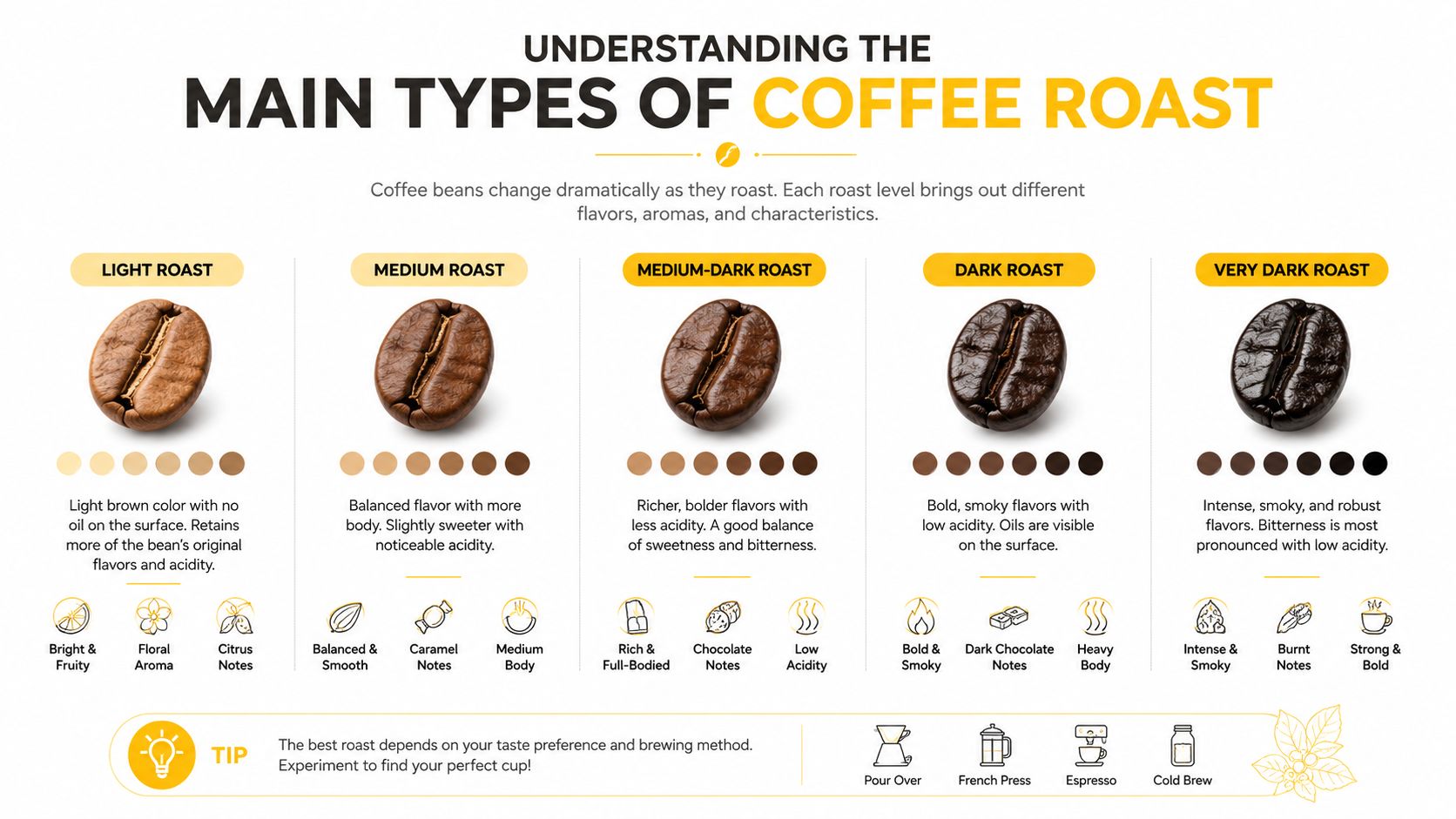
Coffee Roast Levels at a Glance
| Roast level | Acidity | Body | Common flavor cues | Origin character |
|---|---|---|---|---|
| Light | Bright and pronounced | Light to medium | Citrus, berries, florals, tea | Usually most apparent |
| Medium | Balanced | Medium and rounded | Caramel, cocoa, nuts, fruit | Present alongside roast sweetness |
| Medium-dark | Moderate to lower | Fuller | Dark chocolate, toast, spice, molasses | Noticeable but less delicate |
| Dark | Lower perceived brightness | Full or heavy | Smoke, char, bittersweet roast, dark toast | Often subdued |
A roaster may develop a light coffee farther than another roaster develops a medium coffee. That's why roast families are broad categories, not universal recipes. Bean density, moisture, origin, processing method, equipment, and the roaster's target profile all influence the result.
When a label feels vague, look for three practical signals. First, check the tasting notes for the flavor family you prefer. Second, look for origin and processing information, because these can explain why a coffee tastes fruity, sweet, earthy, or fermented. Third, note the recommended preparation. A coffee described for filter brewing may need a different approach from one developed for espresso or instant extraction.
The most reliable habit is to treat roast level as one filter among several. If you enjoy lively coffee, start with light or light-medium profiles. If you want a flexible daily cup, medium is often a sensible place to begin. If you prefer a smoky, assertive style, explore medium-dark or dark, while remembering that darker doesn't automatically mean better.
Flavor Profiles Across Roast Levels
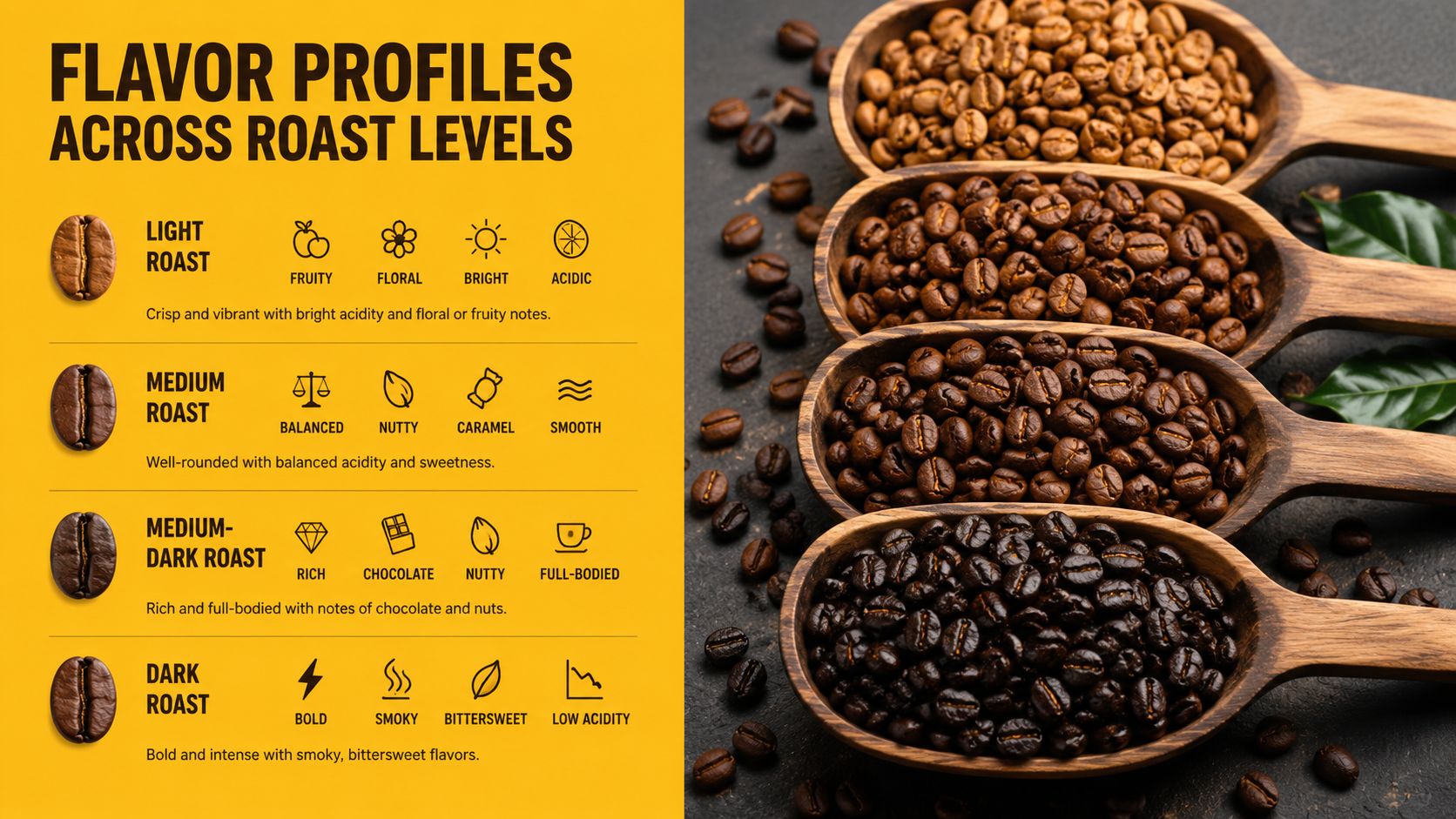
Roast level changes both the flavors you notice and the balance between native coffee compounds and roast-derived compounds. A light roast may make a coffee's origin feel obvious, while a dark roast can shift attention toward the transformation caused by heat.
Light roasts commonly show brightness, fruit, florals, herbs, and tea-like textures. Their acidity may resemble citrus, berries, or green apple, depending on the coffee itself. They can taste sharp when under-extracted, but a properly brewed light roast may feel juicy, layered, and clear rather than harsh.
Medium roasts often create the broadest middle ground. Caramelized sweetness, cocoa, nuts, and gentle fruit can appear together, with enough body to feel rounded without completely masking the bean's identity. That's one reason medium roast functions as the dominant default across broad consumer markets. One market estimate places medium roast at 42.3% of global roasted coffee consumption and about $38.3 billion in annual market value in 2025, while another report places medium roast preference at 49%, compared with 28% for dark roast and 12% for light roast (MarketIntelo roasted coffee market data).
Where roast character takes over
Medium-dark coffees tend to develop deeper sweetness and heavier texture. Bittersweet chocolate, toasted nuts, molasses, spice, and baking notes may become more prominent. The coffee can feel substantial without tasting aggressively smoky.
Dark roasts usually emphasize roast character. Smoke, char, dark toast, bitterness, and a lingering roasted aroma may dominate, especially when the coffee is brewed with a method that extracts quickly. That profile can work well for drinkers who add milk or want a bold cup, but it may hide subtle floral or fruit notes.
The chemical changes support these sensory differences. A review reports that acetic acid increases proportionally with roast level, while chlorogenic acids decline as roasting progresses because they break down into chlorogenic acid lactones, aromatic compounds, and other products (review of coffee roasting chemistry). Independent sensory research also finds that light roasts tend to retain higher total titratable acids than medium and dark roasts, which helps explain why light coffee often tastes brighter.
Flavor words remain clues, not promises. “Chocolate” doesn't guarantee sweetness, “fruit” doesn't guarantee sourness, and “smoke” doesn't necessarily mean the coffee is defective. The final result depends on the bean, roast development, freshness, grind, water, and extraction.
How Origin and Processing Shape the Final Cup
Roast level acts like a lens. It can sharpen, soften, or cover the traits the coffee brought with it from its origin.
A naturally expressive coffee may show berries, tropical fruit, florals, or fermentation character when roasted lightly or to a balanced medium point. A washed coffee may present a cleaner, more transparent profile, making citrus, florals, or a crisp finish easier to notice. These are tendencies, not guarantees, because each coffee responds to heat differently.
Consider two hypothetical bags. The first is a fruit-forward washed coffee. A light roast may preserve its citrus and floral identity, while a medium roast could add caramel sweetness and a rounder texture. If developed much farther, the cup may shift toward toast and bitterness, leaving less room for the original fruit character.
The second is a naturally processed coffee with a chocolate-oriented profile. A medium-dark roast might reinforce cocoa, toasted sugar, and body. A dark roast could make the coffee feel bolder, but it might also cover distinctions that made the coffee interesting in the first place.
Read beyond the roast label
Origin and process information can help you choose within a roast category. If you want a vivid, origin-led cup, look for tasting notes that mention fruit, citrus, flowers, or tea, then choose a lighter development when appropriate. If you want a familiar, rounded profile, seek caramel, cocoa, nuts, or chocolate alongside a medium roast description.
A single-origin coffee is identified by its sourcing context, not by one fixed flavor profile. For a clearer explanation of how that category differs from blends, see what single-origin coffee means.
The central rule is simple: roasting reveals character up to a point, then roast flavors can dominate it. The best choice depends on whether you want to explore the bean's identity, balance that identity with sweetness, or prioritize a bold roasted profile.
How Roasting Changes Extraction and Brewing
Why can the same recipe taste balanced with one roast and harsh with another? Roasting changes the bean's internal structure, so it affects grinding, water movement, and extraction, not only aroma and color. Darker beans generally hold less moisture, have lower density, and break apart more easily. Water can therefore pass through their porous structure more readily.
A comparative study recorded bulk density falling from 390.03 g/L in city roast to 283.50 g/L in Italian roast, while moisture declined from 1.51% to 0.74% (physical characteristics and sensory profile study). The findings also associate darker roasting with lower density and greater porosity. In practical terms, a dark roast may grind more easily and extract faster, while a light roast often needs more time or energy from the brew.
Diagnose the cup, then adjust
Use the flavor in the cup as your guide. A dark roast brewed with the same grind and contact time as a light roast may taste harsh, dry, or bitter. Try a slightly coarser grind, shorter contact time, or gentler extraction, depending on your equipment.
Light coffee often benefits from finer grinding, hotter water, longer contact, or a carefully adjusted recipe. These are starting points, not fixed rules. Bean origin, processing, water, grind consistency, dose, and serving size can all change the result.
- Sour and thin: The coffee may be under-extracted. Try a finer grind or longer contact time.
- Harsh and dry: It may be over-extracted, especially with a dark roast. Test a coarser grind or shorter contact.
- Weak and hollow: Check the dose, water ratio, and grind consistency before changing the roast.
- Sweet and clear: Keep the recipe stable, then make only small adjustments.
A filter brewer, espresso machine, immersion brewer, and instant coffee format expose different parts of the roasted bean. For comparisons among these approaches, see this overview of common coffee brewing methods. The right recipe is the one that fits your equipment and flavor target, rather than a roast label alone.
Does Roast Level Determine Caffeine
Does a darker roast give you more caffeine? The stronger taste can suggest that, but flavor intensity and caffeine delivery are separate questions. Roast level changes the bean's structure, while origin, dose, grind, brew method, and serving size determine how much caffeine reaches the cup.
Under identical brewing conditions, lighter roasts can test higher. However, a 2024 to 2025 study found caffeine extraction could peak in medium roasts, where retained caffeine and greater porosity may work together (study summary on roast level and caffeine). The results do not establish one roast as a universal winner. A useful comparison of coffee caffeine content also shows why the brewing recipe matters as much as the roast label.
What reaches your cup
Caffeine in the finished drink reflects several interacting choices:
- Dose: Using more ground coffee generally makes more caffeine available for extraction.
- Grind size: A finer grind exposes more surface area to water and can change how much is extracted.
- Brew method: Filter, immersion, espresso, and instant coffee use different extraction paths.
- Ratio: More or less water changes concentration and the way strength is perceived.
- Serving size: A larger drink can contain more total caffeine even when it tastes less concentrated.
- Processing: Instant coffee is extracted and concentrated before the powder or crystals reach your kitchen.
Instant coffee therefore deserves its own check. Its processing can shape the final caffeine amount, so do not assume its roast label follows the same pattern as freshly brewed beans. Product information, when available, gives you a more useful starting point than color alone.
The practical question is not just which roast has more caffeine. Ask how much coffee you use, how finely you grind it, how you brew it, and how large a serving you drink. Keep those variables consistent when comparing roasts.
Myth correction: A darker flavor does not prove higher caffeine. Choose the roast for its taste, then manage caffeine through the dose, recipe, processing information, and serving size.
For brewed coffee, medium roast is a reasonable starting point when you want a balance between flavor flexibility and caffeine uncertainty. At home, weigh the dose and keep your recipe steady. In an office, compare serving sizes and preparation methods before blaming the roast. Outdoors, instant coffee can simplify preparation, but check the product details rather than treating “dark” or “light” as a caffeine guarantee.
Choosing a Roast for Your Brewing Style
Choose in this order: taste preference, coffee character, brewing method, then convenience. That sequence prevents the common mistake of buying a roast because it sounds powerful, only to discover that its bitterness or acidity doesn't fit your routine.
Filter brewing often suits lighter coffees when you want to preserve clarity, fruit, flowers, or origin detail. Immersion brewing can make medium and medium-dark profiles feel rounder and more forgiving. Espresso requires dialing in the grind and dose for balance, so a dark roast won't automatically produce a better or stronger shot.
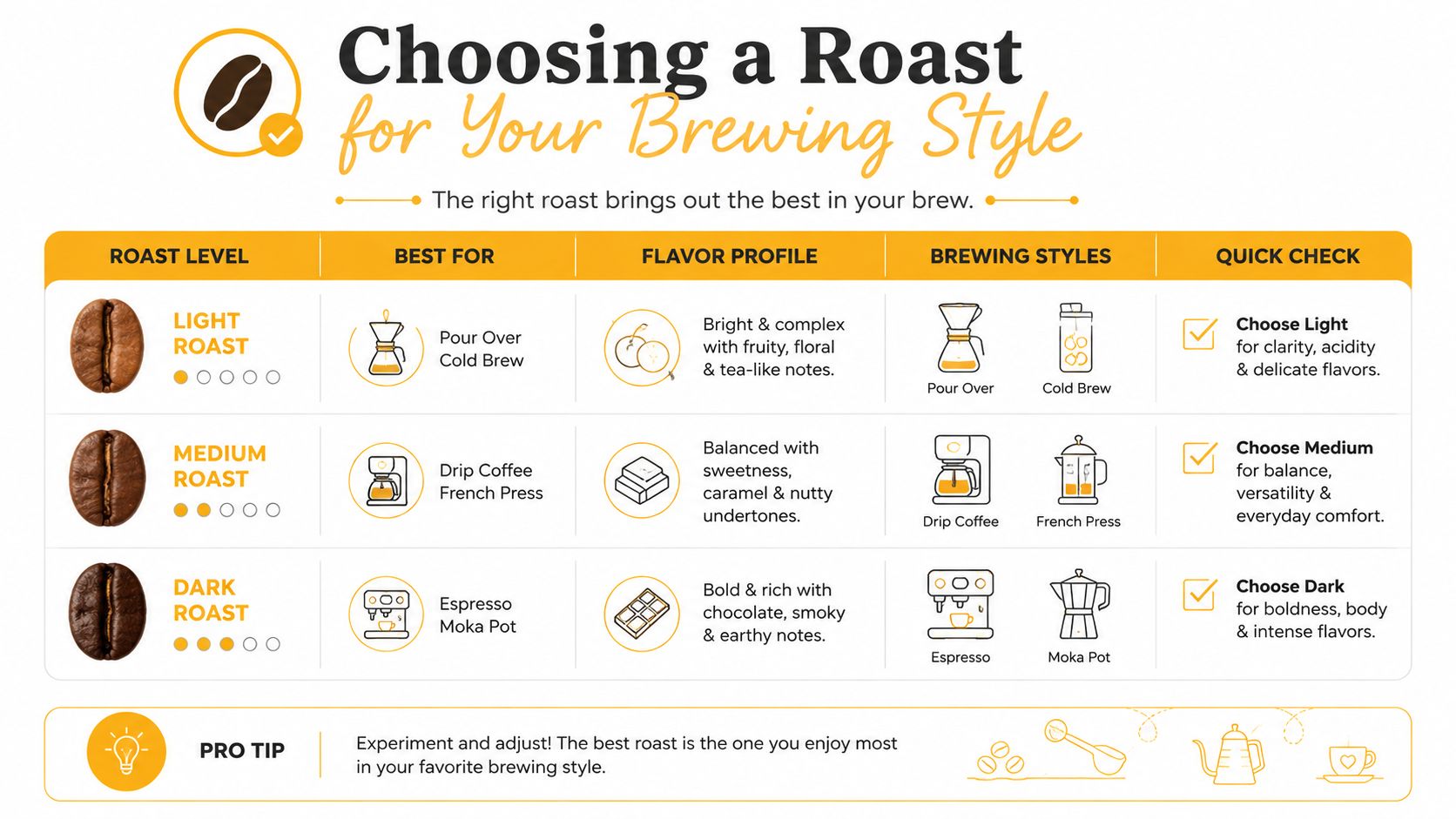
Match the roast to the situation
For a home filter setup, start with light or medium if you enjoy tasting origin differences. For an office, medium often works well because it can feel smooth, rounded, and approachable across several preparation preferences. If you're comparing the cost of equipment and buying prepared coffee, this resource on coffee machine vs roaster pricing can help frame the decision.
For camping or travel, prioritize portability and a preparation method you can repeat without precise equipment. A medium profile can provide a balanced cup, while light suits lively, fruit-led preferences and dark suits drinkers who want a roast-forward taste that stands up to milk.
Instant coffee deserves the same flavor-based attention. A balanced medium-roast instant coffee, such as Cartograph Coffee's organic freeze-dried instant coffee packets, can suit people who want convenience without choosing an aggressively dark profile. Choose light when you want brighter, origin-led notes, or dark when you prefer heavier roast character.
A small test routine keeps the decision practical:
- Pick the flavor family you already enjoy.
- Check the origin, process, roast description, and tasting notes.
- Match the coffee to your brewer and daily setting.
- Buy a modest amount before committing to a larger supply.
- Taste it prepared, not just from the dry aroma or bean appearance.
Common Roast Myths Worth Leaving Behind
Does a roast label tell you everything about the coffee? It tells you how far the beans developed during roasting, but not automatically how strong, fresh, healthy, or enjoyable the finished cup will be. Origin, processing, grind, water, brew method, serving size, and storage all affect that result.
Four assumptions to replace
Myth one, dark means stronger. Dark coffee often tastes more intense because bitterness, smoke, toast, and roast aroma are prominent. That sensory force does not necessarily mean higher concentration, more caffeine, fuller body, or better extraction. A light roast can produce a powerful cup when the grind, recipe, and serving size create greater concentration.
Myth two, oily beans prove freshness. Oil on the surface usually indicates more developed roasting, not a freshness guarantee. It can also influence storage and grinding. Judge the roast date, packaging, aroma, and brewed flavor together. Bean appearance is only one clue.
Myth three, roast level is a quality score. Light coffee is not automatically more refined, and dark coffee is not automatically inferior. Green-bean selection, processing, roasting skill, freshness, grinding, water, and preparation all contribute to quality. A well-made coffee should suit the drinker and the brewing method, not merely display a particular color.
Myth four, one roast wins for health. The answer depends on the compound and the benefit being discussed. Lighter roasting generally preserves more chlorogenic acids, while darker roasting can increase compounds such as N-methylpyridinium. That difference does not support a universal “healthier” verdict, especially because the amount consumed and the way the coffee is prepared also matter.
Roast is a powerful flavor and extraction variable, not a universal health or caffeine verdict.
A field-tested buying routine
Start with the flavor family you already enjoy, then read the roast description, tasting notes, origin, process, and preparation guidance. Buy a modest amount, follow the seller's brewing instructions, and judge the prepared cup rather than bean color or dry aroma alone.
- Light or light-medium: Choose this for bright, floral, fruity, origin-led cups. It suits home filter brewing when you want differences between beans to remain clear.
- Medium: Choose this for balance, sweetness, and flexible everyday use. It often works well in an office or shared routine.
- Medium-dark or dark: Choose this for heavier body and pronounced roast character, particularly with milk or simple outdoor brewing.
Instant coffee follows the same principle. Cartograph Coffee offers organic freeze-dried instant coffee packets with a balanced medium-roast profile, giving work, home, and outdoor routines a portable option without making dark roast the default.
Before buying, ask whether the tasting notes appeal to you, whether the roast suits your brewer, and whether you want origin character or roast character. Check freshness information and choose a format that fits home, work, travel, or any decaffeinated preference your routine requires.