When you get right down to it, the robusta vs arabica coffee beans debate boils down to two things: taste and caffeine. Arabica beans are known for their complex, sweet, and aromatic flavor profiles, but they pack a gentler caffeine punch. Robusta, on the other hand, delivers a bold, strong, and often bitter taste with nearly double the caffeine.
The choice really depends on what you’re looking for. Do you want a cup with delicate, nuanced flavors, or are you after a powerful jolt to get your day started?
An At-A-Glance Comparison
To really get a feel for what separates these two coffee giants, it helps to see their key traits side-by-side. These aren't just minor variations; Arabica and Robusta represent two completely different worlds of coffee, from how they grow to how they taste in your morning mug. They are, by far, the two most dominant species on the global market.
Just how dominant? In the 2023/24 coffee year, global Arabica production hit about 96.4 million 60-kilogram bags, while Robusta was around 72 million bags. This split really shows their different roles in the industry. Arabica is the star of the specialty coffee scene, while Robusta's resilient nature and bold flavor make it a go-to for different market segments, like espresso blends and instant coffee. You can dig deeper into global coffee production trends to see how these dynamics play out.
This visual breakdown captures the essential differences in flavor and caffeine that define each bean.
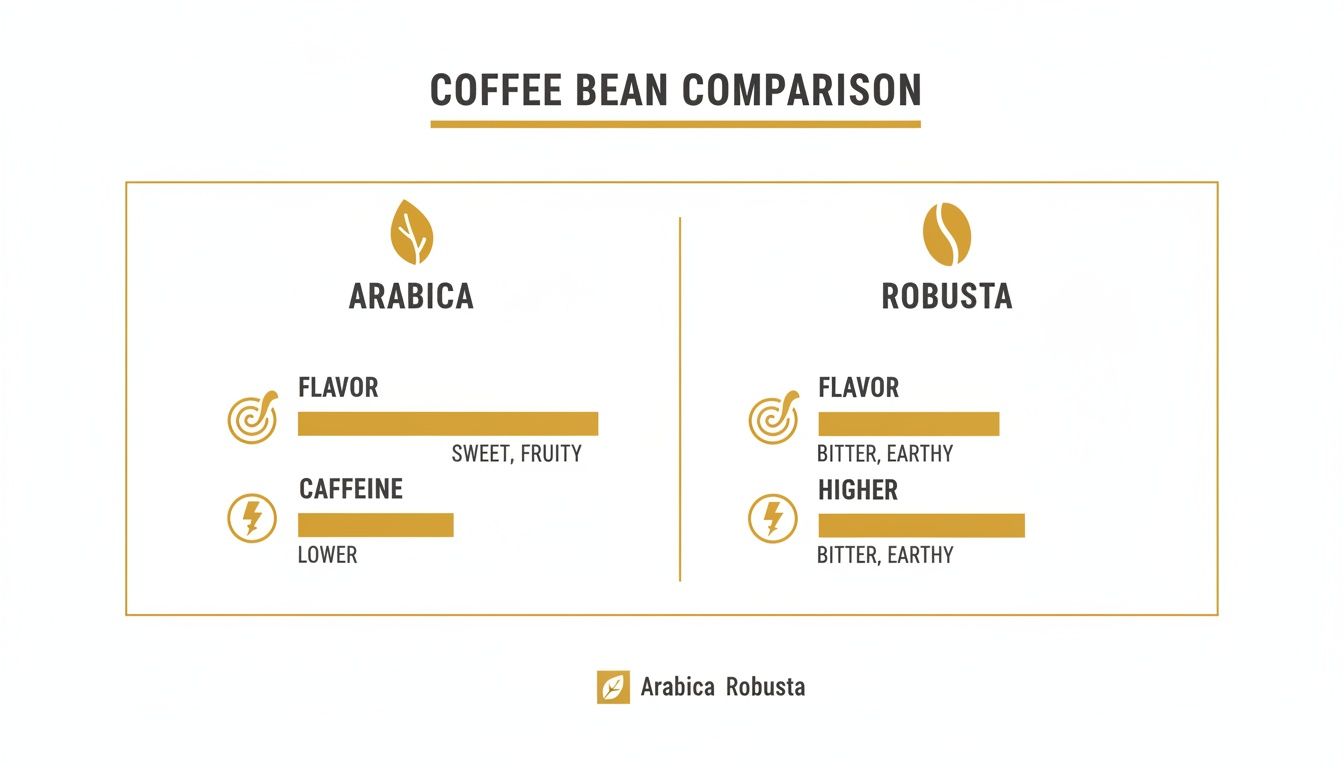
As you can see, Arabica is all about a more delicate and aromatic experience. Robusta? It's defined by its caffeine kick, which is a major selling point for many coffee drinkers.
Key Differences Between Arabica and Robusta Beans
To make things even clearer, here’s a straightforward table comparing the most important characteristics that set these two beans apart. This should help you quickly figure out which one is right for you.
| Characteristic | Arabica | Robusta |
|---|---|---|
| Flavor Profile | Sweet, soft, with notes of fruit and flowers | Strong, harsh, with a rubbery or chocolatey taste |
| Acidity | Higher, leading to a crisp and bright taste | Lower, resulting in a smoother but less nuanced flavor |
| Caffeine Content | Lower (approx. 1.5% by weight) | Higher (approx. 2.5% or more by weight) |
| Sugar Content | Higher (almost 2x more than Robusta) | Lower, contributing to its bolder, more bitter taste |
| Bean Shape | Oval | Round |
| Growing Altitude | High altitudes (600-2000 meters) | Lower altitudes (0-800 meters) |
| Cost | Generally more expensive | Generally less expensive |
| Common Uses | Specialty coffee, pour-overs, drip coffee | Espresso blends, instant coffee, fillers |
This side-by-side look really highlights why the robusta vs arabica coffee beans conversation is so central to the coffee world. Each bean has a distinct purpose, cultivated for its unique properties to serve different tastes and products.
Exploring the Sensory Differences in Taste and Aroma
When you get right down to it, the most obvious and important differences between Robusta and Arabica are in the cup. The way a coffee tastes and smells is where each bean’s true character comes out, and these distinctions aren’t just by chance. They’re a direct result of each bean’s unique chemical makeup, especially its sugar and acid content.
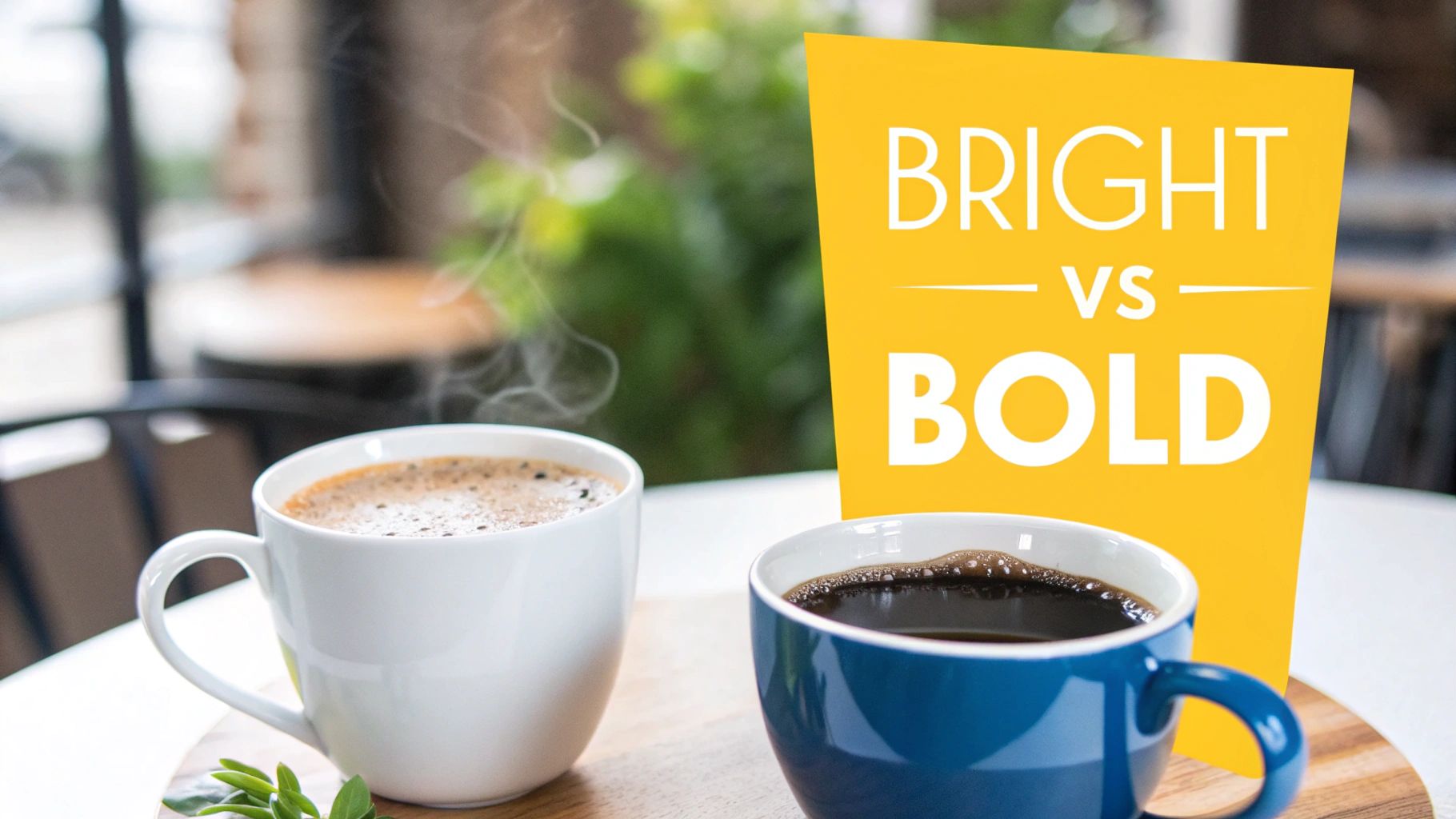
Arabica beans are famous for their complexity and incredible aromatics. People often describe them as bright and vibrant, thanks to higher levels of both acidity and sugar that create a canvas for a whole world of delicate notes.
The Nuanced World of Arabica Flavors
Drinking a well-brewed Arabica is like unfolding a detailed flavor map. Its natural sweetness comes from having nearly double the sugar of Robusta, which perfectly balances the bright acidity for a smooth, clean finish. This is what allows such a diverse range of tasting notes to shine.
Think of the crisp, tart bite of a green apple or the sweet tang of fresh berries—these are common ways to describe Arabica beans from places like Ethiopia or Kenya. Other varieties might give you more subtle sensations, like the fragrant scent of jasmine or a hint of sweet caramel.
For the discerning palate, Arabica coffee offers an intricate sensory journey. Its flavor profile is a delicate interplay of sugars and organic acids, which can manifest as anything from a bright, citrusy acidity to a soft, wine-like richness, depending on its origin and processing.
This complexity is exactly why Arabica completely dominates the specialty coffee scene. If you're curious to learn more about specific notes, you can explore speciality coffee bean flavors and see how professionals identify them. Every cup tells the unique story of its terroir—the soil, climate, and altitude where it was grown.
Unpacking Robusta’s Bold and Potent Profile
Robusta, on the other hand, is a completely different beast. It delivers a powerful, straightforward sensory kick. The flavor is bold, strong, and unapologetically intense, which is a direct result of its lower sugar and acidity, combined with much higher caffeine levels. This mix creates that characteristically bitter, full-bodied cup.
The tasting notes you’ll hear for Robusta are typically more earthy and deep. Forget bright fruits and florals; you’re far more likely to find flavors described as:
- Chocolatey: Think dark, unsweetened cocoa or baker's chocolate.
- Earthy: A profile reminiscent of rich soil or toasted nuts.
- Rubbery: A distinctive, somewhat pungent note that is a classic hallmark of many Robusta varieties.
This doesn't mean it's "bad" coffee—it's just different. That bitterness and strong character are precisely why Robusta is a key player in traditional Italian espresso blends. It’s what gives you that thick, stable crema and a powerful base that can punch through the milk in a cappuccino or latte.
Why They Taste So Different
The fundamental split in taste comes down to their internal chemistry. A good analogy is comparing two types of fruit. An apple (Arabica) is crisp, sweet, and acidic, giving you a refreshing, nuanced flavor. A raw cacao bean (Robusta) is bitter, earthy, and intense—a powerful, unrefined foundation.
Let's break down the core chemical drivers behind their taste:
-
Sugar Content: Arabica has almost 60% more lipids and nearly twice the concentration of natural sugars as Robusta. When you roast the beans, these sugars caramelize and create the sweet, complex, and aromatic compounds that define Arabica. With less sugar to work with, Robusta develops fewer of these notes, leading to its more direct and bitter flavor.
-
Acidity Levels: In coffee, acidity isn't sourness; it's a desirable "brightness" or "liveliness" on your palate. Arabica's higher acidity gives it that clean, crisp finish and makes its fruity and floral notes pop. Robusta’s lower acidity results in a smoother but flatter taste, lacking that vibrant spark.
Ultimately, choosing between them is all about personal preference and what you're using the coffee for. Arabica offers a delicate, aromatic, and complex cup that’s perfect for savoring on its own. Robusta provides a bold, strong, caffeine-rich experience that’s ideal for a powerful morning jolt or as the backbone of an espresso blend.
Caffeine, Acidity, and Flavor: The Science in Your Cup
To really get to the heart of the Robusta vs. Arabica debate, we need to look under the hood at their chemical makeup. The unique taste, the incredible aroma, and even the kick you get from your morning brew all come down to a few key compounds: caffeine, acids, lipids, and sugars. Think of these as the fundamental building blocks that define each bean's personality.
The most famous of these, of course, is caffeine. And this is where the two coffee species take sharply different paths. Robusta's famously high caffeine content isn't just a fun fact; it's a brilliant survival tactic.
Caffeine: A Built-In Defense System
Robusta beans pack a serious punch, with caffeine levels typically ranging from 2.5% to 4.5% by weight. That's nearly double the 1.2% to 1.5% you'll find in an average Arabica bean. This intense concentration acts as a natural pest repellent, protecting the Robusta plant from insects and diseases in the tougher, lower-altitude climates it calls home.
For us coffee drinkers, though, this evolutionary edge comes at a cost. Caffeine is naturally bitter, and Robusta’s potent dose is a major reason for its often harsh, rubber-like flavor. It delivers a powerful jolt, but it often sacrifices the delicate, nuanced flavors we love in specialty coffee. For a closer look, you can learn more by unpacking coffee caffeine content in our guide.
Arabica, with its gentler caffeine kick, allows a whole symphony of other, more subtle flavors to shine through without being drowned out by bitterness.
Acidity: The Secret to a Bright, Lively Brew
When coffee experts talk about acidity, they aren't talking about something sour. Good acidity in coffee is a sign of quality—it's the brightness, the crisp, lively sensation that makes the flavor feel vibrant and clean on your palate.
This is where Arabica truly excels. Its beans have a higher concentration of organic acids, like the citric and malic acids you find in lemons and green apples. This is exactly what gives Arabica its stunning range of fruity and floral notes.
Robusta, on the other hand, is much lower in acidity. This creates a brew that feels smoother and fuller in body, but it can also taste flat or one-dimensional. Without that bright spark, Robusta's profile often leans into earthy or dull territory.
Think of it like this: Arabica is sparkling water—lively and effervescent on the tongue. Robusta is more like still water—smooth and simple, but it's missing that exciting pop.
This one chemical difference is a huge reason why the specialty coffee world has built its foundation on Arabica.
Lipids and Sugars: Where Aroma and Body Are Born
The last pieces of the puzzle are lipids (oils) and sugars. These are the compounds that create the rich aromas and smooth, satisfying mouthfeel we all crave. And once again, Arabica comes out on top.
Arabica beans have nearly 60% more lipids and almost twice the sugar content of Robusta. When the beans hit the roaster, these sugars caramelize and the lipids help capture all the incredible aromatic compounds that get released.
Here’s how that translates directly into your cup:
- Aroma: More lipids and sugars in Arabica create a far more complex and inviting aroma, with everything from sweet caramel to delicate floral scents.
- Body: Those lipids give the coffee a smoother, richer mouthfeel, creating a pleasant weight and texture.
- Flavor: The sweetness from the caramelized sugars perfectly balances the bean’s natural brightness, creating a well-rounded and harmonious taste.
Robusta’s lower lipid and sugar levels mean it just can't produce the same aromatic magic during roasting. This leads to a simpler flavor and a less refined texture, solidifying its reputation as the bold, no-frills workhorse of the coffee world.
How Growing Conditions Shape Each Coffee Bean
The journey from a tiny coffee cherry to the brew in your cup starts on the farm, and the agricultural realities for Arabica and Robusta couldn’t be more different. These aren't just two beans with distinct flavors; they are entirely different plants with unique needs. Understanding where and how they grow is the key to appreciating why they taste, cost, and perform the way they do.
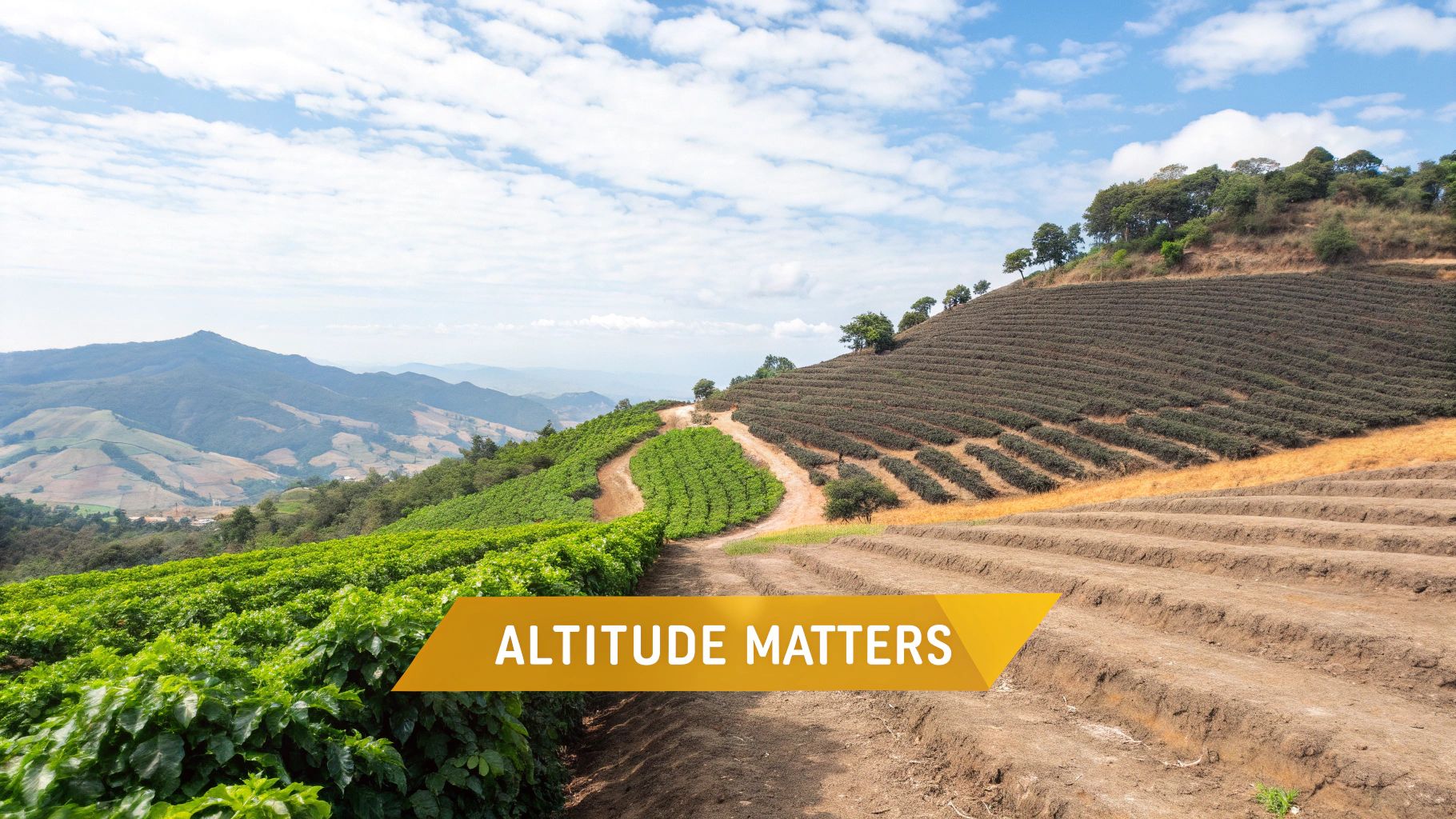
You can think of Arabica as the delicate, high-maintenance artist of the coffee world. It demands very specific conditions to thrive, which makes it a more challenging—and therefore more expensive—crop to cultivate.
Arabica: The High-Altitude Specialist
Arabica plants are picky. Their strict environmental needs are precisely what limits where they can be grown, driving their premium status and higher price tag.
These are the conditions it absolutely requires:
- High Altitudes: Arabica must grow at elevations between 600 and 2,000 meters (about 2,000 to 6,500 feet). The cooler air at these heights slows down the cherry's maturation process, giving the bean more time to develop complex sugars and nuanced flavors.
- Stable Temperatures: It needs a mild climate, ideally between 15-24°C (59-75°F). A sudden frost can kill the plants outright, while too much heat stunts their growth.
- Consistent Rainfall: Arabica needs a steady supply of water but hates having "wet feet," so well-drained soil is non-negotiable.
This sensitivity makes Arabica incredibly vulnerable to pests, diseases like coffee leaf rust, and the increasingly unpredictable effects of climate change. Add in the intensive manual labor needed to harvest on steep mountain slopes, and you begin to see why it costs more. The environment is so crucial, in fact, that it’s the foundation for the unique flavor profiles you find in specialty coffee, which you can learn more about in our guide explaining what is single origin coffee.
Robusta: The Resilient Survivor
In complete contrast, Robusta absolutely lives up to its name. It's a hardy, tough-as-nails plant that grows happily in conditions that would wipe out an entire Arabica crop. This adaptability makes it far easier and cheaper to produce on a massive scale.
Robusta's toughness isn't just a characteristic; it's a strategic advantage. Its ability to grow in hot, humid climates at lower altitudes makes it the workhorse of the coffee world, ensuring a steady global supply even when delicate Arabica crops fail.
Here’s a look at why Robusta is so much easier to farm:
- Lower Altitudes: It grows well from sea level up to around 800 meters (about 2,600 feet), opening up vast swaths of land for cultivation that are unsuitable for Arabica.
- Heat Tolerance: Robusta flourishes in hotter, more humid climates and easily handles temperatures of 24-30°C (75-86°F).
- Disease Resistance: Its naturally high caffeine content acts as a built-in pesticide, making the plant inherently more resistant to pests and common coffee diseases.
This hardiness means Robusta farms can be more mechanized, their yields are consistently higher, and production is more reliable year after year. All of this translates directly to a lower price for consumers.
Climate Change and the Shift in Coffee Farming
The stark differences in growing needs are becoming more critical as our planet warms. Traditional Arabica-growing regions are now under serious threat from rising temperatures and chaotic weather patterns. In response, we're seeing a fundamental shift in the global coffee landscape.
Brazil, the world's undisputed coffee king, has long been an Arabica powerhouse. But facing mounting climate challenges, the country is making a major pivot. Over the last decade, Brazil's Robusta production has skyrocketed by over 81% as a strategic hedge to maintain its position as the top global supplier. This trend underscores Robusta's growing importance—not just as a cheap filler, but as a vital crop for the future stability of the entire coffee industry.
Common Uses in Roasting and Brewing
The unique character of a coffee bean really comes to life in the roaster and the brewer. How a roaster handles an Arabica bean versus a Robusta is completely different, and that directly impacts what you taste in your cup. They're not in competition; they just play very different, but equally important, roles in the coffee world.
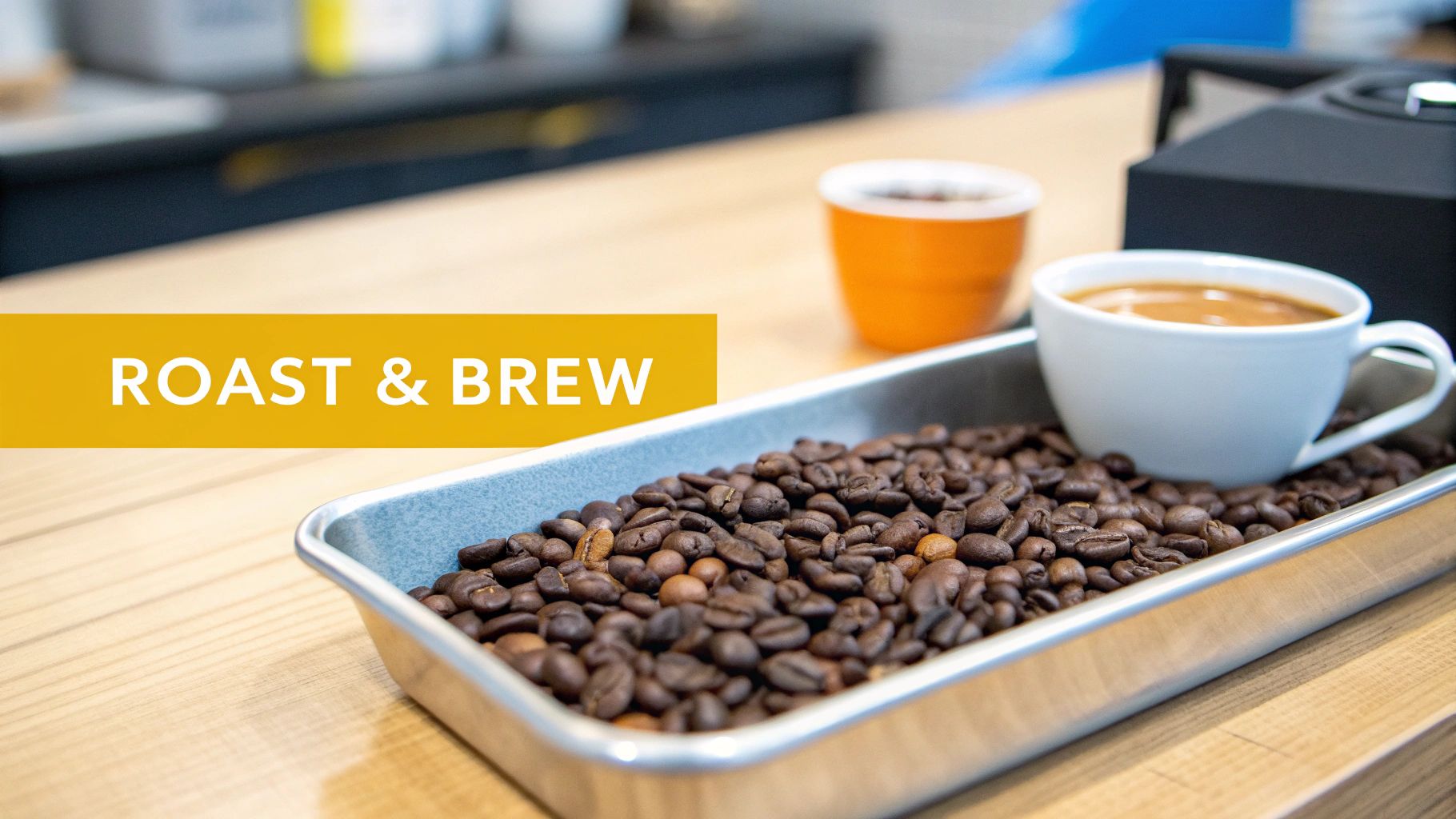
Roasting Arabica is all about finesse. With its high sugar content, the roaster's job is to coax out complexity, carefully caramelizing those sugars to develop nuanced floral, fruity, and sweet notes. Push it too far, and you burn it. Get it right, and you’ve got something special. This is why it’s the star of the specialty coffee scene.
Robusta, on the other hand, often requires a bolder approach. Roasters usually take these beans darker to tame their raw, sometimes rubbery, notes and transform them into something rich and chocolatey. It’s less about preserving delicate aromas and more about building a powerful, deep flavor base.
Arabica in the Specialty Coffee World
Step into any third-wave coffee shop, and you're in Arabica territory. Those single-origin bags with tasting notes of jasmine, citrus, or caramel? That’s 100% Arabica. Its bright acidity and aromatic complexity make it perfect for brewing methods like pour-over or siphon, where every subtle flavor is meant to be showcased.
The whole point is to taste the coffee's origin—its terroir. You want to experience the wine-like acidity of a Kenyan bean or the distinct blueberry notes from an Ethiopian Yirgacheffe. Arabica is the only bean that can deliver that kind of clarity and nuance. If you're hoping to explore this at home, our guide to the https://cartographcoffee.com/blogs/news/best-coffee-brewing-methods can help you get the most from your beans.
Robusta's Role in Espresso and Instant Coffee
While it may not get the spotlight in specialty cafes, Robusta is the workhorse of the coffee industry. Its most critical role? Espresso. A traditional Italian espresso blend isn't complete without it, and there's one simple reason: crema. Robusta’s unique chemical makeup produces a thick, stable, and beautiful crema that pure Arabica just can't match.
Robusta's power isn't just in its caffeine; it's in its structure. A small percentage of Robusta in an espresso blend provides a rich, persistent crema and a deep, bold body that cuts through milk, something pure Arabica blends often struggle to achieve.
Robusta is also the backbone of instant coffee. Its potent, straightforward flavor stands up to the intense processing required to make instant crystals. Delicate Arabica notes would get lost, but Robusta's boldness shines through, giving you that familiar, strong coffee kick. Its lower cost doesn't hurt, either, making it the practical choice for large-scale production.
A Quick Look at Where You'll Find Them
To make it simple, here's a breakdown of where you'll typically find each bean in the products you buy every day.
Common Applications for Arabica and Robusta
| Coffee Product | Primary Bean Type Used | Reasoning |
|---|---|---|
| Specialty Drip/Pour-Over | 100% Arabica | Prized for its complex, aromatic, and delicate flavor profile. |
| Traditional Espresso Blends | Arabica/Robusta Blend | Robusta adds a thick, stable crema and a powerful, bold body. |
| Instant Coffee | Primarily Robusta | Its strong flavor holds up during processing and it's cost-effective. |
| Canned/Bottled Coffee | Often Robusta or a blend | Delivers a strong coffee flavor that isn't lost among milk and sugar. |
| Supermarket Pre-Ground | Varies (Often Robusta-heavy) | Robusta's lower cost makes it ideal for mass-market ground coffee. |
This table shows just how complementary their roles are. Neither bean is inherently "better"—they are simply built for different jobs, from a delicate single-origin pour-over to a powerful morning espresso.
To truly understand how Arabica and Robusta beans perform in your cup, consider consulting comprehensive coffee brewing guides that detail how different methods extract flavor. Ultimately, they offer two distinct paths to a great coffee experience, each with its own strengths.
How to Choose the Right Coffee Bean for You
Figuring out whether to go with Robusta or Arabica isn't about crowning one as "better" than the other. It's really about matching the bean to your own preferences, what you need from your coffee, and how you brew it. Instead of looking for a single right answer, let’s find the right coffee for you.
Think about why you're reaching for that cup. Are you someone who loves to sit and explore delicate, complex flavors? Or are you looking for a powerful kick to get your day started? Knowing this is the key to making a great choice.
For the Flavor Enthusiast
If you see coffee as a sensory journey, full of nuanced tastes from bright citrus to sweet, floral notes, then 100% Arabica is definitely for you. You're the kind of person who appreciates the subtle differences that a bean's origin and processing can bring out. For you, it’s less about the caffeine and more about the experience in the cup.
Keep an eye out for these:
- Single-Origin Bags: These are your ticket to tasting the unique character of a specific place, like the bright, wine-like acidity of a Kenyan coffee or the rich, fruity notes of an Ethiopian.
- Light to Medium Roasts: Lighter roasts are perfect for preserving the delicate aromas and bright acidity that make Arabica so special.
For the Morning Warrior
Let's be honest, sometimes you just need coffee to work. If you depend on a serious energy boost to tackle your day, then a blend with Robusta is going to be your most reliable partner. It packs a famous caffeine punch—nearly double that of Arabica—delivering that potent jolt you're after.
Don’t confuse strength with poor quality. A good Robusta brings a bold, deep flavor and a wonderfully rich body that a lot of people actually prefer, especially when they need their coffee to perform at maximum capacity.
Look for blends that feature Robusta prominently, or even a 100% Robusta if you like a strong, earthy flavor with very little acidity. These beans are built for pure power and efficiency.
For the Home Barista
If you're obsessed with pulling that perfect espresso shot, you know it's all about balancing incredible flavor with that iconic, thick crema. This is exactly where Arabica and Robusta blends come into their own. A pure Arabica espresso can sometimes produce a crema that’s a bit thin and fades too quickly, and its acidity can be overwhelming in a concentrated shot.
By adding a bit of Robusta—say, 10-20%—to an Arabica blend, you get a much more structured and balanced shot. The Robusta contributes a thick, long-lasting crema and adds a deep, chocolatey body that holds up perfectly against milk in a latte or cappuccino. It’s truly the best of both worlds: Arabica’s sophisticated flavor supported by Robusta’s powerful foundation.
Common Questions About Coffee Beans
Even after digging into the details, a few questions always seem to pop up when people talk about Robusta versus Arabica. Nailing down the answers can really help you zero in on what you like and understand what you're actually buying. Let's tackle some of the most common ones.
Is Robusta Lower Quality Than Arabica?
Not always, but I understand why it has that reputation. Robusta’s image problem comes from its most common uses—it's often the backbone of cheaper instant coffees and used as a filler in ground coffee blends to keep costs down. That's where the idea of it being "inferior" comes from.
The truth is, high-quality, specialty-grade Robusta is out there, and roasters who know what they're doing value it for its unique, bold character. The real problem is that mass-produced, poorly processed Robusta has a harsh, almost rubbery taste that gives the entire species a bad name. In contrast, even a pretty average Arabica usually offers a sweeter, more approachable flavor, making it a safer bet for the specialty market.
The quality debate isn't really about the species. It's about the care put into growing, harvesting, and processing. A well-tended specialty Robusta can easily taste better than a neglected, low-grade Arabica.
Can You Mix Arabica and Robusta Beans?
Absolutely. In fact, blending them is an art form, especially in the world of espresso. Roasters create blends to hit a specific flavor target or achieve a certain kind of performance in the cup that a single bean just can't deliver on its own.
Mixing Arabica and Robusta is a time-honored technique for crafting a balanced, powerful espresso. Here’s a breakdown of why it's such a great combo:
- Flavor: Arabica brings the sweetness, complex aromatics, and bright notes.
- Crema & Body: Robusta is the secret to a thick, stable, and beautiful crema, and it adds a syrupy, full-bodied mouthfeel.
- Caffeine: A little Robusta goes a long way in boosting the caffeine kick.
A classic Italian espresso blend, for example, might have 10-20% Robusta. This isn't for filler; it's a deliberate choice to build that signature richness and picture-perfect crema. For some drinks, they're simply better together.
Which Bean Is Better for Cold Brew?
This is where things get interesting. The slow, room-temperature extraction of cold brew completely changes how flavors are pulled from the bean. This gentle process mellows out a lot of the acidity, which can be a huge plus for certain beans.
For cold brew, Robusta or a blend with a good amount of Robusta often shines. Its naturally lower acidity and bold, chocolatey profile are a perfect match for this brewing method. The long, slow steep smooths out any potential harshness, leaving you with a rich, powerful, and incredibly smooth concentrate that packs a serious caffeine punch.
You can definitely make a great cold brew with Arabica, but sometimes its more delicate, fruity, and floral notes get a bit lost in the process. The result can sometimes taste a little flat or one-dimensional compared to what you'd get from a hot brew.
Ready to taste what high-quality, convenient coffee is all about? Cartograph Coffee makes premium organic instant coffee for people who refuse to compromise on flavor. Find your perfect brew at https://cartographcoffee.com.