So, how much caffeine is really in your iced coffee? The answer isn't as straightforward as you might think. For a standard 16-ounce iced coffee, you're typically looking at a range between 90mg and 200mg of caffeine.
That’s a huge difference, right? This wide range exists because a lot of different factors—everything from the bean itself to how much ice gets scooped into your cup—can seriously alter the final caffeine kick.
Decoding Your Iced Coffee Caffeine Content
We’ve all been there. Staring at the menu, wanting that refreshing chill of an iced coffee, but wondering if it’s going to leave you buzzing with anxiety or give you that perfect, smooth boost of energy.
The truth is, "iced coffee" isn't a single, standard drink. It's a massive category, and the caffeine content is a moving target influenced by a handful of sneaky variables. Once you know what they are, you can stop guessing and start making smarter choices.
This guide will break down all the moving parts, turning complex coffee science into simple, practical knowledge. You'll learn exactly what determines the strength of your brew.
To give you a quick starting point, here's a general overview of what to expect from common iced coffee orders.
Quick Guide To Iced Coffee Caffeine Levels
This table gives you a ballpark estimate for caffeine in different iced coffee preparations. Think of it as a cheat sheet to get a baseline idea before we dive into the details.
| Iced Coffee Type / Size | Estimated Caffeine Range (mg) |
|---|---|
| Standard Iced Coffee (12 oz) | 70mg - 150mg |
| Standard Iced Coffee (16 oz) | 90mg - 200mg |
| Iced Americano (16 oz) | 120mg - 180mg |
| Cold Brew Concentrate (16 oz) | 150mg - 250mg+ |
Remember, these are just estimates! The real caffeine content in your specific drink will depend on the factors we're about to explore.
Why Does Iced Coffee Caffeine Vary So Much?
The world has gone wild for cold coffee. It's no longer just a summer treat; it's a daily ritual for millions. The market for iced coffee has exploded, growing from $7.49 billion in 2021 and projected to hit $9.81 billion by 2025, according to reports from Cognitive Market Research. With that kind of growth comes endless variety and, you guessed it, a lack of standardization.
The final caffeine number in your cup boils down to a few key things:
- The Type of Coffee Bean: Not all beans are created equal when it comes to caffeine.
- The Brewing Method: How you get the coffee flavor out of the grounds changes everything.
- The Serving Size & Dilution: It’s a simple ratio—more coffee and less ice means more punch.
We’re about to get into each of these, giving you the power to finally choose or craft an iced coffee that perfectly matches the energy you're looking for. And if you’re looking for a super convenient option with more predictable caffeine, check out our deep dive into instant coffee caffeine content.
The 7 Factors That Control Caffeine Content
Figuring out the caffeine in your iced coffee isn't about finding one magic number. It’s more like being a chef in your own kitchen—the final result depends entirely on the ingredients and techniques you use. From the bean itself to the amount of ice you plop in at the end, seven key factors work together to determine the final kick in your cup.
Once you get a handle on these variables, you’re in the driver’s seat. You can tweak and tune your iced coffee to get that perfect energy boost you're looking for. Let’s break them down one by one.
This quick map shows how the core components come together to shape your iced coffee's caffeine and flavor profile.
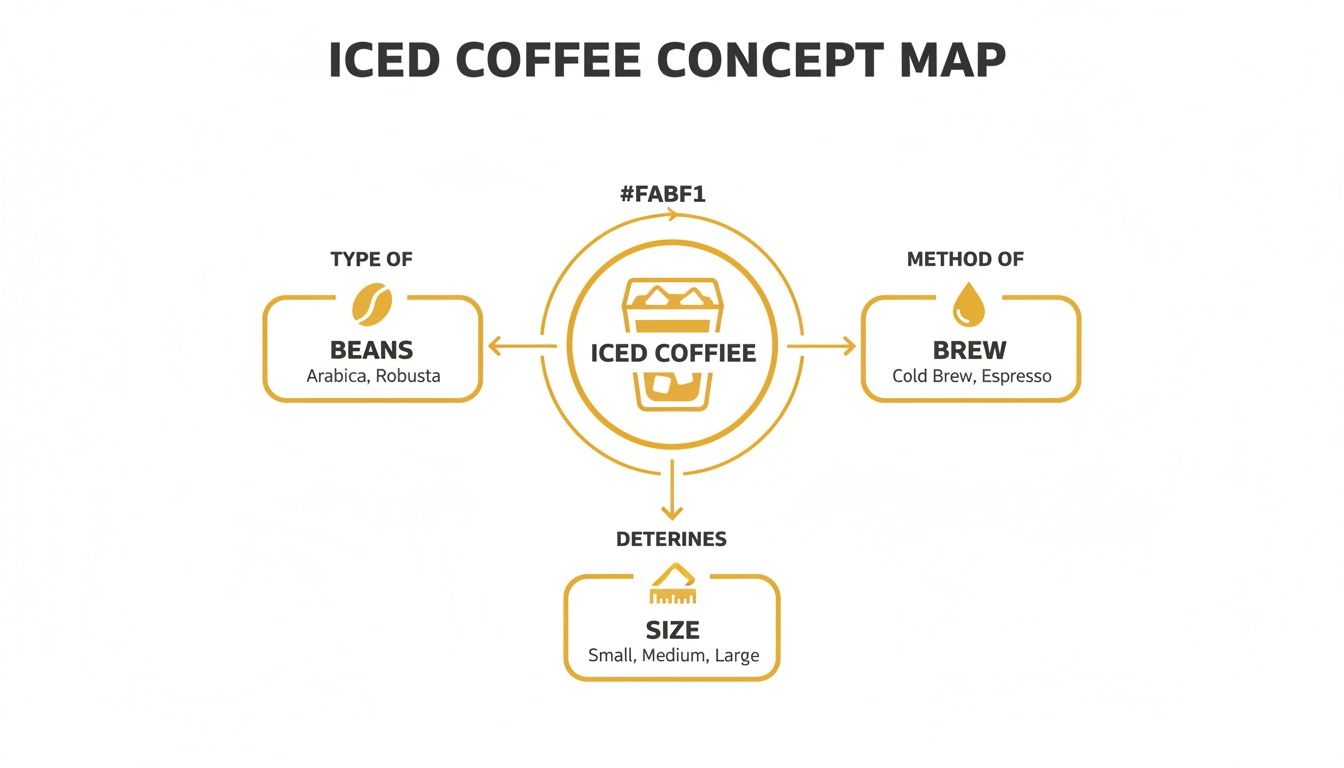
As you can see, the journey from bean to cup involves several decisions that directly influence that final caffeine punch.
1. Coffee Bean Type
It all starts with the bean. In the coffee world, there are two main players you need to know: Arabica and Robusta.
- Arabica Beans: These are the crowd-pleasers, making up over 60% of the world's coffee. They're prized for their smooth, aromatic, and complex flavors, often with fruity or sugary notes. When it comes to caffeine, Arabica is on the lower end.
- Robusta Beans: Just like the name implies, Robusta is a hardier plant with a bold, strong, and more bitter flavor—think rubbery or dark chocolatey. The big difference? Robusta beans pack nearly twice the caffeine of Arabica, which is why they're often blended into espresso and instant coffee for an extra jolt.
Think of Arabica as a smooth, reliable sedan and Robusta as a high-octane sports car. Both get you there, but one delivers a lot more punch.
2. Roast Level
Next up is the roast. Does a darker roast mean more caffeine? This is one of the biggest myths in coffee.
While it feels like a dark, oily bean should be "stronger," the roasting process actually burns off a tiny amount of caffeine. But here’s the twist: dark roast beans are less dense. If you measure your coffee by the scoop (volume), you'll end up using more dark-roasted beans to fill it, which can slightly increase the caffeine. If you measure by weight, the difference is negligible.
Key Takeaway: Measured by weight, a light roast bean and a dark roast bean have almost identical caffeine levels. Other factors, like your brew method, have a much bigger impact.
3. Grind Size
How you grind the beans directly affects extraction—the process of pulling flavor and caffeine from the grounds into the water.
A finer grind creates more surface area, which means water can extract everything much faster. This is perfect for quick methods like espresso. On the flip side, a coarser grind has less surface area, slowing down extraction. That's why it's the go-to for long-steeping methods like cold brew, as it keeps the coffee from getting bitter.
4. Brewing Method and Water Temperature
This is a huge one. Classic iced coffee is usually brewed hot and then cooled down over ice. That hot water, typically between 195°F and 205°F, is incredibly efficient at extracting caffeine in just a few minutes.
Cold brew, on the other hand, uses cold water and a much longer brew time—anywhere from 12 to 24 hours—to gently pull out the flavor and caffeine. This slow-and-steady approach creates a super-smooth concentrate that, before you dilute it, is often much higher in caffeine per ounce than drip coffee.
5. Coffee-to-Water Ratio
This one is pretty straightforward but easy to overlook. The more coffee grounds you use for a given amount of water, the stronger and more caffeinated your final drink will be. A higher coffee-to-water ratio always means more caffeine. Simple as that.
6. Extraction Time
Extraction time is just how long the coffee grounds and water are in contact. For hot coffee, it's just a few minutes. For cold brew, it can be an entire day.
Generally, a longer extraction time allows more caffeine to dissolve into the water. This is a key reason why cold brew concentrate is so potent.
7. Ice and Dilution
Finally, we get to the "iced" part of iced coffee. The amount of ice you use directly waters down the final drink.
As the ice melts, it dilutes the coffee, spreading the total caffeine across a larger volume. This means a cup packed with ice will have less caffeine per sip than one with just a few cubes, even if they both started with the exact same amount of coffee.
Iced Coffee vs Cold Brew: A Caffeine Showdown
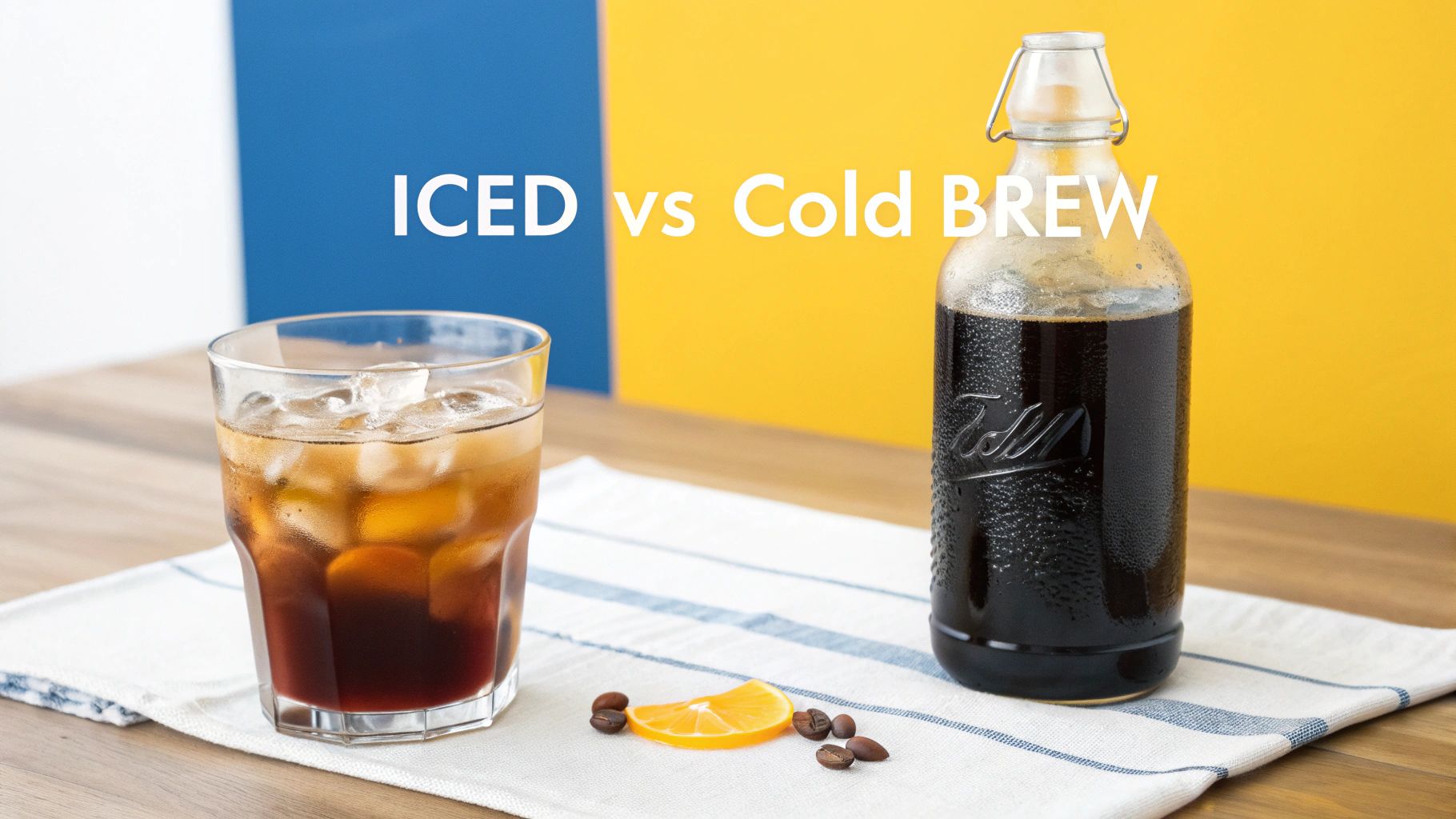
When you walk up to a coffee shop counter, you’ll likely see two main cold options: iced coffee and cold brew. They might look similar sitting side-by-side, but they’re two completely different drinks, made in ways that dramatically change their flavor and caffeine kick. Knowing the difference is your secret weapon for picking the perfect drink to match the jolt you're looking for.
At its heart, iced coffee is just what it sounds like: regular hot-brewed coffee that's been cooled down and poured over ice. Think of it like searing a steak on a hot pan—the heat works fast, pulling out flavor and caffeine in just a few minutes. It's quick and gets the job done.
Cold brew, however, is the slow-cooker of the coffee world. It’s made by steeping coarse coffee grounds in cold or room-temperature water for a long, long time—usually anywhere from 12 to 24 hours. This patient, heat-free method creates something entirely different.
What About Flavor and Acidity?
The brewing method is what really shapes the taste. Since iced coffee starts its life as hot coffee, it keeps all those bright, crisp, and sometimes bitter notes you’d find in a standard cup of drip. The downside? As the ice melts, it can get watered down pretty quickly, leaving you with a weaker-tasting drink.
Cold brew’s slow-and-steady steep gives you a drink that's noticeably smoother, way less acidic, and often carries these deep, chocolatey notes. That lower acidity is a big reason why it’s a go-to for people with sensitive stomachs.
It all comes down to the extraction. Hot water pulls out coffee’s compounds quickly and aggressively, which creates a more acidic profile. Cold water does it slowly and gently, resulting in a smoother, less bitter coffee concentrate.
The Real Story on Caffeine
This is where it gets a little tricky. Because it steeps for so long and typically uses a much higher coffee-to-water ratio, the cold brew concentrate is an absolute caffeine powerhouse. But here’s the thing: you almost never drink it straight. Baristas (and you, at home) dilute that concentrate with water, milk, or ice, which brings the final caffeine level down into a range that’s often similar to—or just a bit higher than—your average iced coffee.
It’s no surprise cold brew has become a huge deal in the coffee world, with its popularity skyrocketing past traditional iced drinks. Between 2023 and 2024, the global cold brew market shot up by a massive 22%. In places like the UK, an incredible 43% of coffee drinkers now enjoy it every month. If you want to dive deeper, you can explore more about these commercial cold brew trends and see just how big it's become.
To help you decide what's right for you, let's break it down head-to-head.
Iced Coffee vs Cold Brew: A Head-To-Head Comparison
Choosing between iced coffee and cold brew often comes down to personal preference for flavor, acidity, and the kind of caffeine boost you need. This table lays out the key differences to make your next coffee run a little easier.
| Attribute | Iced Coffee | Cold Brew Concentrate |
|---|---|---|
| Brewing Method | Hot coffee cooled over ice | Grounds steeped in cold water for 12-24 hours |
| Caffeine Level | Moderate (90-200mg per 16 oz) | Very High (150-250mg+ per 16 oz before dilution) |
| Acidity | Higher, brighter | Significantly lower |
| Flavor Profile | Crisp, traditional coffee flavor, can be bitter | Smooth, rich, often chocolatey, less bitter |
| Brew Time | Minutes | 12-24 Hours |
So, what’s the verdict? If you’re after that classic, crisp coffee flavor with a reliable, moderate caffeine kick, iced coffee is a solid choice. But if you’re craving something smoother, richer, and potentially more caffeinated (once diluted), with way less acidity, then cold brew is definitely the way to go.
How to Master Your Caffeine Intake at Home
Taking control of your iced coffee's caffeine content really begins in your own kitchen. Instead of rolling the dice with what your local cafe is serving, you can become the master of your own brew and dial in the perfect energy level for your day. Consistency is the name of the game, and a few simple practices will put you firmly in the driver's seat.
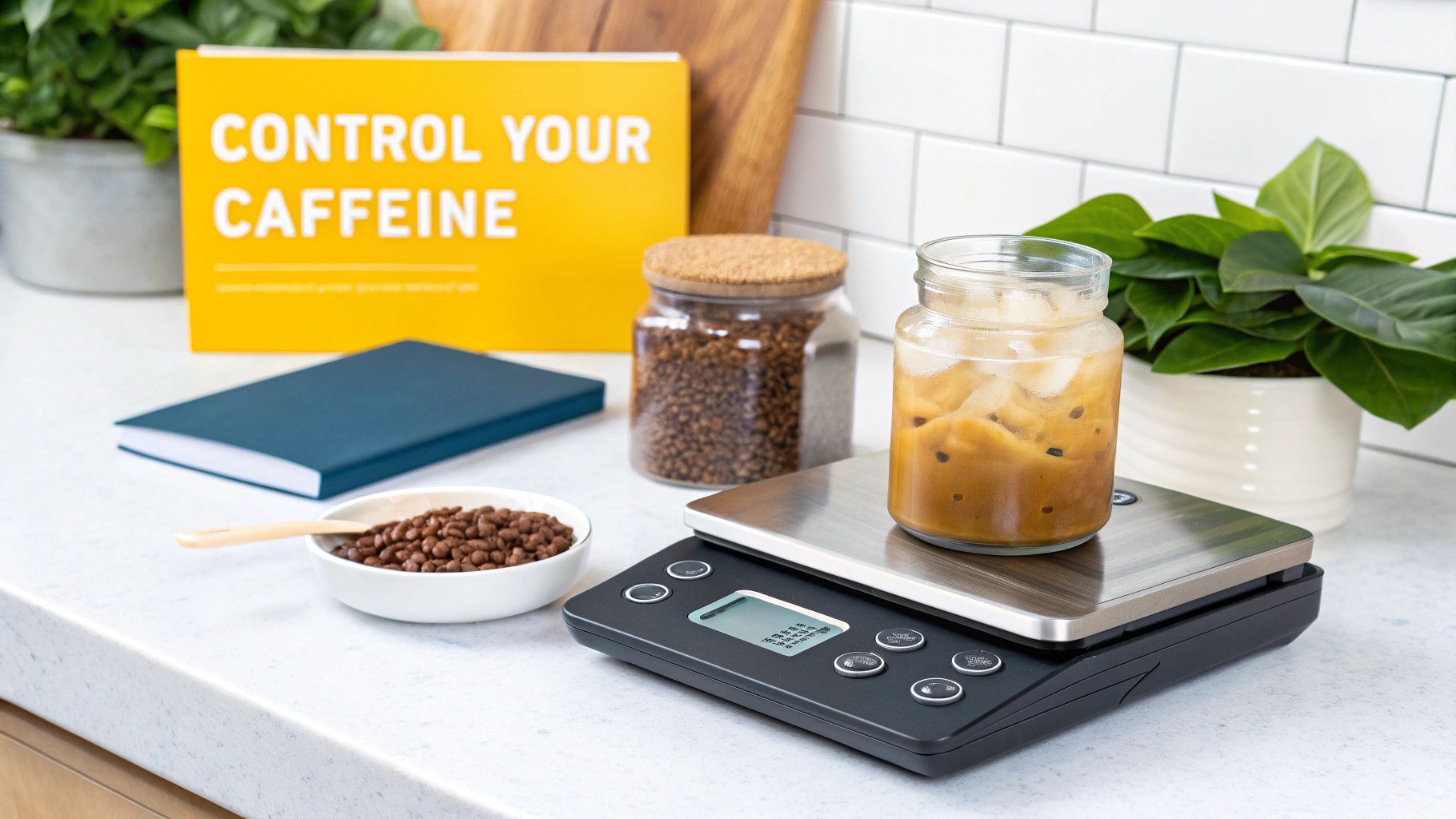
Think of it like baking. You wouldn't just eyeball the flour and sugar and hope for the best, right? The same logic applies here. Using a digital kitchen scale to measure your coffee grounds and water is the single most powerful way to get a repeatable, predictable result every single time.
Precision Brewing Tips
Nailing that perfect, predictable kick comes down to managing the variables we've already covered. A little attention to detail can transform your homemade iced coffee from a random caffeine lottery into a truly reliable source of energy.
Here are a few actionable steps to get you started:
- Standardize Your Ratio: Pick a coffee-to-water ratio that tastes good to you and stick to it. A great starting point for hot-brewed coffee is 1:16 (meaning one gram of coffee for every 16 grams of water).
- Time Your Brew: Always use a timer. This keeps your extraction time consistent, whether you're doing a four-minute pour-over or an 18-hour cold brew steep.
- Manage Ice Melt: To keep dilution from watering down your brew (and its caffeine), try pre-chilling your hot coffee in the fridge before pouring it over ice. Even better, make coffee ice cubes so your drink actually gets stronger, not weaker, as they melt.
By turning these small steps into habits, you take the guesswork out of the equation. You'll know exactly what to expect from your morning iced coffee. For a deeper dive, check out our guide on how to make good iced coffee at home.
The Easiest Path to Predictable Caffeine
While weighing beans and timing your brew gives you fantastic control, sometimes you just need something easier. For those who value convenience just as much as consistency, high-quality instant coffee provides a pre-measured, completely reliable dose of caffeine in every serving.
The Ultimate Shortcut: A perfectly dosed instant coffee stick or scoop removes almost every variable from the process. You get the same amount of caffeine, every single time, with zero need for scales or timers.
This is the perfect solution for busy mornings, travel days, or anyone who just wants a guaranteed result without any fuss. And by choosing a premium instant coffee, like what we make at Cartograph, you're not sacrificing flavor for that convenience. You're just picking a smart, simple way to master your caffeine intake, ensuring your iced coffee delivers the exact boost you need, right when you need it.
Smart Caffeine Habits for Health and Energy
Knowing what goes into your cup is one thing, but using that knowledge to build better habits is where you'll see a real difference. The goal isn't just to know the exact caffeine in iced coffee; it's about using it strategically to feel your best every day.
The FDA gives us a general ballpark figure to aim for: around 400mg of caffeine per day for most healthy adults. Think of this as your daily caffeine budget. It’s a useful number to keep in your back pocket, especially since just two strong iced coffees could get you close to that limit.
The Best Time to Drink Your Iced Coffee
When you drink your coffee can be just as important as how much you drink. The knee-jerk reaction for many of us is to grab a cup the second we roll out of bed, but you might get a much better lift by waiting just a little while.
See, your body has its own natural alarm clock. It produces a hormone called cortisol—which helps you feel awake and alert—in the first hour after you wake up.
By letting that natural cortisol wave do its thing first, the caffeine you introduce later has a much bigger impact. Try waiting 60 to 90 minutes after waking to have that first iced coffee. You'll likely find it gives you a smoother, more sustained energy boost without the shaky side effects. For more on this, check out our guide on how to stop caffeine jitters.
Caffeine has a half-life of about five hours. That means half the dose is still circulating in your system that long after you've finished your drink. If you have a coffee at 3 PM, it's like having half a cup at 8 PM.
Protecting Your Sleep
To make sure your coffee habit isn't wrecking your rest, setting a firm caffeine cutoff time is non-negotiable. For most people, that means no caffeine for at least six to eight hours before hitting the pillow.
That afternoon iced coffee might seem like a great idea when you're hitting a slump, but it could be the very reason you're staring at the ceiling at midnight.
And while coffee is fantastic, it's not your only option! Diversifying your caffeine sources can be a great way to mix things up. For instance, look into the benefits of drinking matcha for a different kind of alert-yet-calm energy. By being mindful of both how much caffeine you consume and when you consume it, you can make your iced coffee a powerful tool for your day, not a ticket to a sleepless night.
Common Questions About Iced Coffee Caffeine
As we wrap up, let's tackle some of the most common questions people have about the caffeine in their favorite chilled drink. Think of this as a quick-reference guide to clear up any lingering confusion and make you the resident coffee expert among your friends.
Does Adding Milk Or Cream Reduce The Caffeine In Iced Coffee?
Nope, this is a common myth. Adding milk, cream, sugar, or any other extras doesn't magically remove the caffeine from your coffee. It just increases the total volume of the drink.
You're still getting the same amount of caffeine, but it's now mixed into a larger beverage, which can dilute the coffee flavor. The only way to actually lower the caffeine content is to start with less coffee concentrate, brew a weaker batch, or use decaf beans from the get-go.
Is Cafe-Bought Iced Coffee Stronger Than Homemade?
It really depends. The strength of iced coffee from a cafe can be all over the map, depending on their recipe, the beans they use, and even who’s making it that day. One shop's large iced coffee might pack 150mg of caffeine, while the one down the street could easily top 200mg.
When you make it at home, you're the one in charge. You control every part of the process, from the beans to the brew strength. By sticking to a recipe or using a reliable product like a quality instant coffee, you can get a far more consistent caffeine kick than you might from a busy cafe.
Your homemade iced coffee can be precisely as strong as you want it to be. Consistency comes from controlling the variables, something much easier to do in your own kitchen than relying on a busy cafe.
How Does Grind Size Affect Caffeine Extraction?
Grind size is a huge deal—it basically controls how much flavor and caffeine get pulled from the beans. Picture it this way: a finer grind creates more surface area for the water to interact with, which means caffeine is extracted much faster. That’s why it’s perfect for the quick, high-pressure brew of an espresso shot that forms the base of an iced latte.
On the flip side, a coarser grind has less surface area, slowing everything down. This is exactly what you want for methods that involve long steeping times, like cold brew, because it prevents the coffee from tasting bitter and overdone. Mismatching your grind and brew method will leave you with a disappointing cup.
- Too Coarse (for the method): Your coffee will likely taste weak, sour, and under-caffeinated.
- Too Fine (for the method): Get ready for a harsh, bitter cup that’s been over-extracted.
Can I Make Great Iced Coffee With Decaf Beans?
Absolutely! Using decaf beans is a fantastic way to enjoy the rich flavor and refreshing ritual of iced coffee without the stimulant effect. The brewing process is exactly the same; you just swap out your regular beans for their decaffeinated counterparts.
It's worth remembering that "decaf" doesn't mean zero caffeine. Most decaf coffee still contains a tiny amount, usually around 2-5mg per cup. This makes it a perfect option for a late-afternoon treat or for anyone sensitive to caffeine who doesn't want to miss out on the taste.
For a consistently delicious and predictable iced coffee every time, Cartograph Coffee offers the perfect solution. Our premium organic instant coffee removes the guesswork, giving you a perfectly measured dose of caffeine and exceptional flavor in seconds.
Explore our collection and simplify your coffee routine today.