Sometimes, that beloved cup of coffee does more than just wake you up—it sends you into overdrive. One minute you're riding a wave of productivity, and the next, your heart is pounding, your hands are shaky, and a sudden sense of unease takes over. If that sounds familiar, you've experienced the classic caffeine jitters.
This isn't just in your head; it's a very real biological response. Caffeine gets its energizing power by blocking adenosine, the brain chemical that signals sleepiness. When adenosine is out of the picture, your body gets a green light to release adrenaline, the "fight-or-flight" hormone. A little adrenaline sharpens your focus, but too much throws your central nervous system into a state of high alert.
The Science Behind the Shakes
That feeling of being "overcaffeinated" is your body reacting to a false alarm. It's gearing up to face a threat that isn't there, and this hormonal surge is what triggers those telltale physical symptoms.
- Racing Heart: Adrenaline tells your heart to pump faster, preparing your body for action.
- Shaky Hands: Your muscles get tense and ready to move, which can cause tremors or that restless, twitchy feeling.
- Anxiety and Nervousness: With your brain on high alert, it's easy to feel edgy, anxious, or unable to focus on a single task.
Everyone’s experience with this is different. Your unique genetics, how fast your body metabolizes caffeine, and even what you had for breakfast all play a role in your sensitivity. Some people can down an entire pot and feel fine, while one strong espresso might be too much for others. Even the type of coffee bean makes a huge difference; for example, knowing the differences between Arabica and Robusta beans is crucial, as Robusta can pack nearly double the caffeine punch.
A sneaky contributor to the jitters is dehydration. Caffeine is a diuretic, meaning it makes you urinate more often. This can lead to a fluid imbalance that makes symptoms like a racing heart and nervousness feel even worse.
This is why grabbing a glass of water is one of the best first steps you can take. Staying hydrated helps your body manage the stimulant more effectively and can take the edge off the jittery feelings.
Your Action Plan for Immediate Jitter Relief
So, you overdid it with the coffee. We’ve all been there. That shaky, heart-pounding feeling means your body is swimming in caffeine and your nervous system is in overdrive. But you don't just have to ride it out.
The goal is to help your body pump the brakes. You can do that by giving it what it needs to process the caffeine and calm everything down. Here are a few things you can do right now to feel more like yourself again.
Drink Water to Dilute and Flush
This is your first and best move. Grab a glass of water.
Caffeine is a diuretic, meaning it makes you pee more, which can lead to dehydration. Dehydration on its own can make your heart race and leave you feeling dizzy—sound familiar? Adding jitters on top just makes everything worse.
Sipping water helps dilute the caffeine in your system and gives your kidneys a hand in flushing it out faster. Try to drink a full glass over the next 30-60 minutes. Just sip, don't chug, as that can make you feel bloated.
Eat a Smart Snack
Did you have that espresso on an empty stomach? That’s a recipe for a fast and furious caffeine spike.
Eating something can slow down how quickly your body absorbs the caffeine, taking the sharp edge off the jitters. You're not trying to stop it completely, just smooth out the peak.
A small snack with some fiber, protein, or healthy fat is perfect. Think about:
- A banana with a spoonful of peanut butter. The potassium is great for heart rhythm, and the fat and protein act as a buffer.
- A handful of almonds. They’re a good source of magnesium, which helps calm the nervous system.
- A slice of whole-grain toast with avocado. Complex carbs and healthy fats are your friends here.
The key is a small, nutrient-rich snack. A huge meal will just divert energy to digestion and might make you feel sluggish or uncomfortable later.
This diagram breaks down exactly what's happening inside your body.
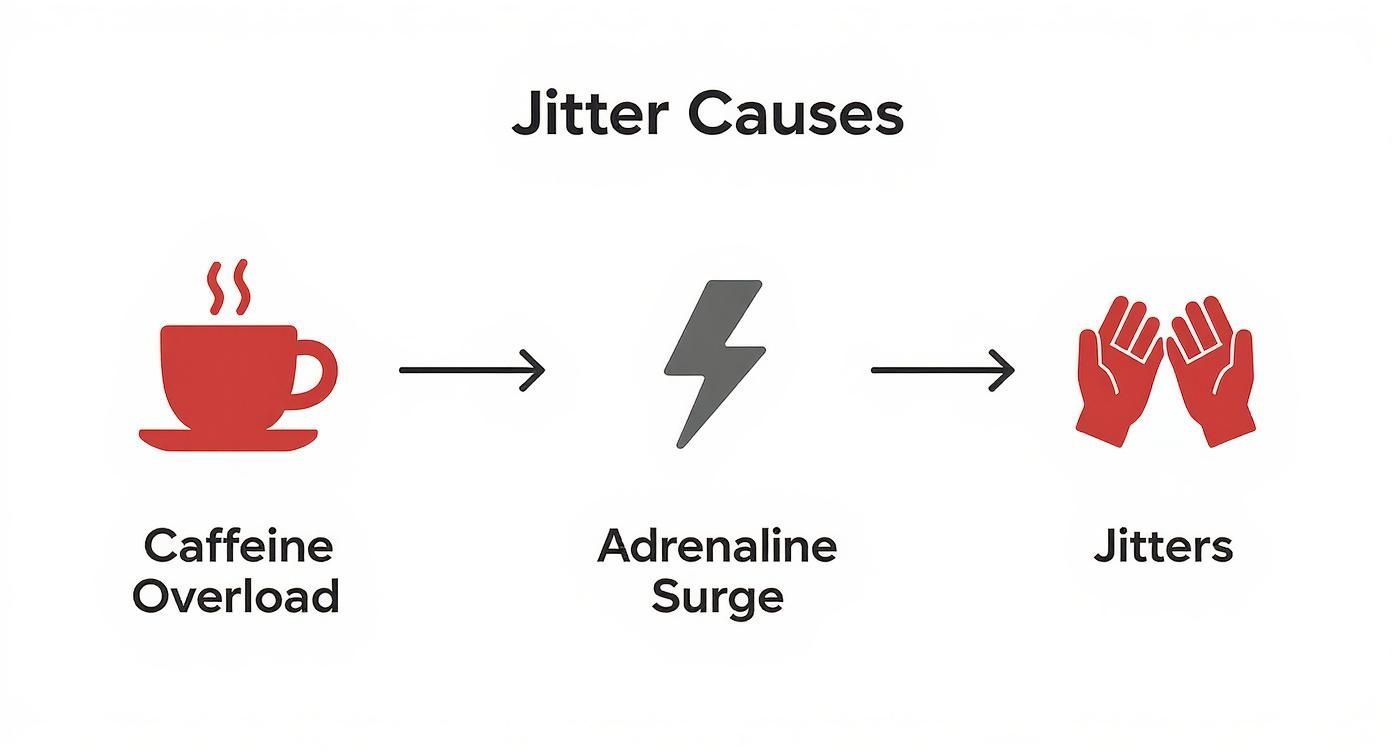
As you can see, that extra caffeine triggers a surge of adrenaline—the "fight-or-flight" hormone—which is what causes all those physical symptoms.
Get Moving and Breathe It Out
When you’re full of adrenaline, your body is primed for action. Just sitting at your desk can make that restless energy feel a thousand times worse.
A little gentle movement is one of the best ways to burn off that nervous energy. A quick, 10-15 minute walk outside can do wonders. It helps your body metabolize the caffeine and releases endorphins, your body's natural calming chemicals. Steer clear of a hard workout, though—that'll just crank your heart rate even higher.
You can also manually calm your nervous system with your breath. When we're anxious, our breathing gets fast and shallow. By deliberately slowing it down, you send a direct signal to your brain that the danger has passed.
A great technique for this is box breathing:
- Breathe in through your nose for a slow count of four.
- Hold your breath for a count of four.
- Breathe out slowly through your mouth for a count of four.
- Hold your breath again for a count of four.
Just a few minutes of this can work surprisingly well to slow your heart rate and help you feel more in control.
Smarter Ways to Enjoy Your Caffeine

While it's great to know how to stop the jitters once they start, the real win is avoiding them altogether. This is all about shifting from putting out fires to preventing them in the first place by being more intentional with your daily caffeine routine.
It all starts with listening to your body. We all know that one person who can down a triple espresso after dinner and sleep like a baby, while others get shaky after a single cup of tea. Getting a handle on how caffeine really affects you is the key to finding your personal sweet spot.
Find Your Caffeine Sweet Spot
The secret to a jitter-free day is knowing your limits and staying within them. For most of us, this means keeping an eye on our total intake and timing.
The FDA points to 400 mg of caffeine per day as a generally safe upper limit for healthy adults. Go beyond that, and you're rolling the dice on side effects like anxiety and, you guessed it, the jitters.
Remember, caffeine hits its peak in your bloodstream within 30–60 minutes and hangs around for a while—its half-life is about 3–5 hours. That means timing matters. A coffee at 3 p.m. could still be affecting you well into the evening.
Try this: for one week, just track what you drink and when. Jot down how much caffeine you had and how you felt afterward. You might be surprised to find that your 2 p.m. energy drink is the real reason you’re tossing and turning at 11 p.m.
Choose Your Caffeine Source Wisely
Not all caffeine is created equal. The drink it comes in can make a huge difference in how you feel. A simple swap might be all you need to change your entire experience.
Let's break down the usual suspects:
- Energy Drinks: These are often the biggest offenders. They're typically packed with high doses of caffeine and sugar, which can send you soaring and then crashing hard.
- Espresso and Strong Coffee: Perfect for a quick, powerful boost, but it’s incredibly easy to overdo it. That concentrated jolt, especially on an empty stomach, is a fast track to feeling wired.
- Green or Black Tea: This is where things get interesting. Tea has caffeine, but it also contains an amino acid called L-theanine. This incredible compound promotes a sense of calm focus, smoothing out caffeine's rough edges.
Opting for something like green tea gives you a synergistic combo—you get the focus without the frantic, buzzing energy. It's a fantastic alternative if you find coffee just a bit too much.
For instance, a runner might think an energy drink is a great pre-run boost, but the intense hit could just lead to a racing heart and an uncomfortable workout. If that sounds familiar, you can dig into our guide on finding the right balance between coffee and running.
Knowing what's in your cup is the first step to controlling your intake. Here’s a quick look at how common drinks stack up.
Caffeine Content in Common Beverages
This table gives you a side-by-side comparison of the typical caffeine content in popular drinks, helping you make more informed choices about your daily consumption.
| Beverage (8 oz / 240 ml) | Average Caffeine (mg) |
|---|---|
| Brewed Coffee | 95 mg |
| Espresso (1 shot / 1 oz) | 64 mg |
| Black Tea | 47 mg |
| Energy Drink | 80 mg |
| Green Tea | 28 mg |
| Cola | 22 mg |
| Decaf Coffee | 2-5 mg |
As you can see, a single mug of strong coffee can have more caffeine than three cups of green tea. Small changes really do add up.
Small Adjustments for Big Results
You don’t have to break up with your beloved coffee to get rid of the jitters. A few tiny, consistent tweaks can completely change your relationship with caffeine.
One of the easiest tricks in the book is to go half-caff. Just mix your regular coffee grounds with an equal amount of decaf. You still get the ritual and the taste you love, but with half the caffeine.
Another game-changer? Measure your coffee. Instead of just scooping haphazardly, use a proper coffee scoop or a small kitchen scale. This guarantees a consistent dose every single time, so you're not accidentally overloading your system on a Tuesday morning. It's a simple step that puts you back in the driver's seat.
How Diet and Lifestyle Affect Your Caffeine Sensitivity

Ever wonder why the same cup of coffee that helps you conquer a Monday morning sends you into a tailspin on a Tuesday? The answer often has less to do with the coffee and more to do with you. Your daily habits—what you eat, how you sleep, and how you manage stress—create the entire context for how your body handles caffeine.
Think of it this way: your body is a system. When that system is well-cared-for, it can handle a stimulant like caffeine gracefully. But when it's running on empty, that same stimulant can push it over the edge. Taking a step back to look at the big picture can make all the difference in keeping the jitters at bay.
For example, drinking coffee on an empty stomach is a classic mistake. It hits your system all at once, leading to a harsh, rapid spike. A balanced meal with some protein, fiber, and healthy fats completely changes the game by slowing down caffeine absorption. The result is a much smoother, more sustained energy lift without the crash and burn.
The Impact of Nutrition and Sleep
Little nutritional gaps in your diet can really amplify caffeine's dark side. A great example is magnesium, a mineral that's crucial for calming the nervous system. If you're running low on it, you're already more susceptible to anxiety, and caffeine just throws gasoline on that fire.
Building up your magnesium stores can help create a buffer. Try working more of these into your diet:
- Leafy Greens: Spinach and kale are powerhouses.
- Nuts and Seeds: Almonds, cashews, and pumpkin seeds are great to snack on.
- Legumes: Black beans and lentils are fantastic sources.
- Avocado: A tasty way to get both healthy fats and key minerals.
Of course, we can't talk about lifestyle without talking about sleep. When you're sleep-deprived, your body is already pumping out more cortisol, the primary stress hormone. Adding a powerful stimulant to an already stressed-out system is a surefire recipe for a racing heart and a bad case of the jitters.
Prioritizing 7-9 hours of quality sleep a night is one of the most effective things you can do. A well-rested body is far less likely to overreact to a moderate dose of caffeine and, frankly, you won't feel like you need as much to begin with.
Stress Levels and Physical Activity
Your baseline stress level is the final piece of this puzzle. If you're constantly living with high stress, your nervous system is already on high alert. Caffeine just kicks it into overdrive by boosting adrenaline, making you feel anxious and shaky. A chronically stressed system has almost no tolerance for stimulants.
This is where regular physical activity becomes your secret weapon. Exercise is incredible for managing stress and also helps your body metabolize caffeine more efficiently. You don't have to run a marathon—even a brisk daily walk can burn off that excess nervous energy that caffeine can create.
By building this foundation of solid nutrition, consistent sleep, and active stress management, you're not just preventing jitters. You're setting your body up to enjoy all the benefits of caffeine without any of the drawbacks.
Knowing When Jitters Are a Red Flag
Let's be honest, most of us have been there—that shaky, slightly frantic feeling after one cup too many. Occasional caffeine jitters are usually just a temporary sign that you’ve pushed your limit. It's a common experience, but it’s also important to know when your body is telling you something more serious.
Most of the time, that racing heart and buzz of nervous energy will start to fade as the caffeine works its way out of your system. If you grab some water or a snack, you should feel more like yourself within a few hours. That’s the standard playbook for a simple caffeine overload.
Symptoms That Warrant a Closer Look
But what if the feeling is more intense? Or if it just won't go away? If your symptoms feel severe or stick around, it's time to pay attention. This isn't about causing alarm; it's about being smart and listening to your body.
Here are a few signs that suggest it's more than just the jitters:
- Heart Palpitations That Don't Subside: A temporary flutter or a slightly pounding heart is one thing. But if that sensation goes on for hours, feels erratic, or comes with chest pain or shortness of breath, that’s a clear signal to get it checked out.
- Chronic or Severe Anxiety: If even a small amount of caffeine sends you into a spiral of anxiety, triggers a panic attack, or leaves you with a feeling of dread that disrupts your day, it might point to a deeper sensitivity.
- Persistent Digestive Distress: Caffeine is a known gut stimulant, but it shouldn't be causing severe pain or chronic cramping. If you're constantly running to the bathroom or dealing with stomach issues after your coffee, it could be more than just a simple side effect. For a deeper dive, our guide explores if coffee can cause nausea and related symptoms.
A Quick Word on Medications: It’s also worth remembering that caffeine can interact with certain medications, including some for thyroid conditions, depression, and even antibiotics. It can also make existing conditions like anxiety disorders, heart arrhythmias, or high blood pressure worse.
When to Talk to a Professional
If any of those more severe symptoms sound familiar, or if you’re worried about how caffeine might be affecting a pre-existing condition or medication, don't just brush it off.
Make an appointment to talk with your doctor. They can give you personalized advice, help you figure out a safe caffeine limit for your body, and make sure you're not putting your health at risk. It’s the best way to keep enjoying your daily boost without the worry.
Answering Your Top Questions About Caffeine Jitters
Even with all the right strategies, it’s normal to have some lingering questions about what’s going on inside your body and how to manage it. Getting clear answers is the best way to feel more in control of your caffeine consumption and its effects.
Here, we'll tackle some of the most common questions people have about managing those uncomfortable caffeine jitters, offering some quick, practical insights along the way.
How Long Do Caffeine Jitters Usually Last?
This really comes down to your personal metabolism and how much caffeine you’ve had. In general, caffeine has a half-life of about 3 to 5 hours. That’s the time it takes your body to process and eliminate half of the caffeine you consumed.
You'll almost always feel the peak effects within the first hour. After that, the jittery symptoms should start to fade over the next few hours. You can definitely help your body along and lessen the intensity by using the quick fixes we discussed earlier, like drinking plenty of water and having a solid snack.
Can You Build a Tolerance to Avoid Jitters?
Yes, you can absolutely build up a tolerance to caffeine with regular use. As your body adapts, you might notice that your usual cup of coffee doesn't give you the jitters anymore. But this isn't necessarily a good thing.
If you find yourself constantly upping your intake to chase that initial energy boost, you're on a fast track to dependence. It also means that on the day you accidentally have too much, the jitters can be much more intense. A smarter approach is to manage your dose carefully or even take occasional "tolerance breaks"—cutting back for a week or two can completely reset your system.
Taking a short break can do wonders. When you reintroduce coffee, you’ll often find that a much smaller amount feels incredibly effective, making it easier to stay under that jittery threshold.
Are Some People Naturally More Sensitive to Caffeine?
Absolutely. Your sensitivity is largely written in your DNA, specifically in how well your liver produces the enzyme that breaks down caffeine. If you're a "slow metabolizer," you’ll be much more likely to get jitters and anxiety from even a small dose.
On the flip side, "fast metabolizers" can often drink more coffee without feeling those negative effects. Of course, genetics isn't the whole story. Other factors play a big part, too:
- Body Weight: Caffeine is more concentrated in a smaller person.
- Age: Our metabolism often slows down as we get older, which can increase sensitivity.
- Overall Health: Your general wellness and especially your liver function impact how you process any stimulant.
Does L-Theanine Actually Help with Jitters?
Yes, it really does. There’s solid evidence that L-theanine, an amino acid found in tea leaves, is fantastic for counteracting the harsher side of caffeine. It promotes a feeling of calm, focused alertness without making you sleepy.
When you combine L-theanine with caffeine, it helps smooth out that sharp, stimulating buzz. The result is a more balanced and sustained energy lift, not the frantic, anxious feeling that coffee can sometimes cause. This unique synergy is exactly why many people report that green tea gives them a more mellow, productive boost.
At Cartograph Coffee, we believe you should enjoy all the benefits of coffee without the drawbacks. Our premium organic instant coffee is crafted for a smooth, balanced experience, perfect for busy professionals, outdoor adventurers, and anyone who appreciates exceptional quality. Taste the difference that mindful sourcing and expert craftsmanship make. Explore our collection at https://cartographcoffee.com.