Yes, coffee can absolutely make you a better runner. For many of us, that pre-run cup is more than just a morning ritual—it's a proven tool for getting more out of our miles. The link between coffee and running isn't just a feeling; it's backed by science that shows caffeine can make hard work feel easier, sharpen your focus, and help you go longer.
The Runner's Secret Fuel: Unlocking Performance with Coffee
Think of your body as a high-performance engine. Caffeine doesn't add new fuel to the tank; instead, it acts like a key that unlocks your body’s hidden energy reserves. It helps you tap into more power and focus than you might otherwise be able to access. It simply optimizes the incredible system you already have.
This guide is all about showing you how to turn that key effectively. We're going to dive deeper than just "coffee helps" and look at the specific ways it can elevate your training, from making tough miles feel more manageable to sharpening your mental game on race day.
Why Runners Swear by Their Pre-Run Brew
The perks of a well-timed coffee go way beyond a simple wake-up jolt. When you get it right, it becomes one of the most reliable tools in your performance kit.
- Reduced Perception of Effort: This is a big one. Caffeine can genuinely make hard runs feel less brutal, which allows you to push through mental and physical barriers with a little more comfort.
- Improved Mental Focus: A sharper mind is a huge asset. It helps you stay on top of your form, make smart decisions during a race, and find the motivation to keep going when things get tough.
- Enhanced Fat Oxidation: For long-distance runners, this is a game-changer. Caffeine encourages your body to burn fat for fuel, which helps preserve your precious (and limited) carbohydrate stores for when you need them most later in the run.
The science is there to back this up. Research has consistently shown that taking in 3 to 6 mg of caffeine per kilogram of body weight can boost running performance by around 1-7%. You can discover more insights about caffeine's impact on summer sports and see just how powerful it can be.
The right amount of coffee at the right time is one of the simplest, most effective, and legal performance enhancers available to a runner.
To help you put this all into practice, I've put together a quick reference guide that breaks down the essentials.
Coffee for Runners Quick Reference Guide
This table is your cheat sheet for integrating coffee into your running routine. It covers the what, when, and how much to help you get started.
| Benefit | Optimal Timing | Recommended Dose |
|---|---|---|
| Increased Endurance | 45-60 minutes before running | 3-6 mg of caffeine per kg of body weight |
| Sharper Focus | 45-60 minutes before running | 3-6 mg of caffeine per kg of body weight |
| Lower Perceived Effort | 45-60 minutes before running | 3-6 mg of caffeine per kg of body weight |
Keep this handy as you begin experimenting. Remember, finding what works for you is a personal journey, but these guidelines are the perfect starting point.
How Caffeine Scientifically Boosts Your Running Endurance
Ever wonder what’s actually happening in your body when that pre-run coffee kicks in? It’s not just a feeling—it’s a cascade of powerful biological responses. When you understand the science behind coffee and running, you can turn your daily ritual into a seriously effective performance tool.
At its most basic level, caffeine is a brilliant imposter. As you go about your day, a compound called adenosine builds up in your brain, plugging into specific receptors and making you feel sleepy. Think of adenosine as a key that slowly turns the lock on your energy levels, signaling it's time to power down.
Here's where caffeine works its magic. Its molecular structure is so similar to adenosine that it can sneak in and block those same receptors. It's like putting a piece of tape over the keyhole. The "fatigue key" can't get in, so your brain never gets the signal to feel tired.
This little biological trick is why a tough eight-mile run might feel more like a manageable six after a good cup of coffee. You haven't magically created new energy, but you've fundamentally changed your perception of the effort it takes.
Sharpening Your Focus and Reaction Time
Caffeine does more than just trick your brain into feeling awake; it also gives your central nervous system a jumpstart. It triggers a release of adrenaline, that classic "fight-or-flight" hormone that puts your entire body on high alert.
This jolt sharpens your mental focus, helping you concentrate on your form, your pacing, and the terrain ahead. It also speeds up your reaction time, which is a game-changer when you're dodging roots on a technical trail or navigating a crowded starting line. You're not just running harder, you're running smarter.
By blocking fatigue signals and stimulating the central nervous system, caffeine fundamentally alters how your brain perceives effort, allowing you to push past your usual limits with greater focus.
Unlocking Your Body's Best Fuel Source
For long-distance runners, this is probably the biggest win. Your body runs on two main fuel tanks: a small, high-octane tank of carbohydrates (glycogen) and a much larger, slow-burning reserve of fat.
When you're running for a long time, the name of the game is preserving that limited glycogen. Once it's gone, you hit the dreaded "wall." Caffeine helps you avoid this by encouraging your body to tap into its fat reserves for energy much earlier in your run.
This process is called fat oxidation, and it's a huge advantage. It spares your precious glycogen for when you really need it, like that final surge to the finish line. By shifting its fuel preference, your body becomes a much more efficient endurance machine.
Here’s a quick breakdown of how this fuel-saving trick helps you on the run:
- Spares Glycogen: You keep your fast-acting fuel in the tank for later, which is key for delaying fatigue.
- Increases Fat Burn: It essentially trains your body to use its massive fat stores more readily, perfect for those long, steady miles.
- Improves Endurance: Put it all together, and you can hold a stronger pace for a much longer time.
This isn't just about feeling more energetic; it’s about using the energy you already have far more intelligently. Once you grasp these principles, you can see how a cup of Cartograph Coffee isn't just a morning habit—it's a calculated part of your training plan to help you run stronger, longer.
Perfecting Your Pre-Run Timing and Dosage
Knowing exactly when to drink your coffee and how much to have can turn a simple morning ritual into a serious performance advantage. It’s not just about getting a jolt of energy; it's a strategic move, just like a proper warm-up. To really nail it, you need to understand how caffeine works its way through your body.
Once you take that first sip, caffeine starts entering your bloodstream. But it doesn't hit you all at once. It takes about 45 to 60 minutes for the caffeine concentration to peak, which is when you'll feel its full effects. This is your magic window.
Slamming a coffee right as you're lacing up your shoes means you won't get that boost until you're already a few miles in. By timing it right, you ensure the caffeine is firing on all cylinders just as you're hitting your stride, whether that's for a tough speed workout or settling in for a long race.
Finding Your Ideal Dose
Of course, "how much" is just as critical as "when." The sweet spot, backed by sports science, is between 3 to 6 milligrams (mg) of caffeine per kilogram (kg) of your body weight. Any less, and you might not feel a thing. Any more, and you risk jitters, a sour stomach, or other unpleasant side effects without any extra performance gain.
The real goal here is to find the minimum dose that gives you the maximum benefit. More is definitely not better, and figuring out what works for you in training is the best way to avoid a nasty surprise on race day.
To give you a clear starting point, we've put together a handy table. It helps you calculate your ideal caffeine range based on your weight. Always start on the lower end of the spectrum and pay close attention to how you feel on your training runs. You can always adjust from there.
Calculate Your Optimal Pre-Run Caffeine Dose
Use this table to find your personalized caffeine intake range, from a conservative starting point to a higher-end dose for more intense efforts.
| Runner's Weight | Low-End Dose (3mg/kg) | High-End Dose (6mg/kg) |
|---|---|---|
| 120 lbs (54 kg) | 162 mg | 324 mg |
| 150 lbs (68 kg) | 204 mg | 408 mg |
| 180 lbs (82 kg) | 246 mg | 492 mg |
| 210 lbs (95 kg) | 285 mg | 570 mg |
Once you've found your sweet spot, stick with it. Consistency is key to making caffeine a reliable part of your running toolkit.
Not All Coffee Is Created Equal
Remember, the caffeine content in your mug can vary dramatically. This is a huge factor when you're trying to hit a specific dosage. A standard 8-ounce cup of drip coffee usually has around 95 mg of caffeine, while a single shot of espresso lands closer to 64 mg.
Cold brew can be a real powerhouse, sometimes packing over 200 mg in a single serving because it's brewed with a higher coffee-to-water ratio. Instant coffee, on the other hand, gives you total control. It's easy to learn how much instant coffee to use per cup, making it a fantastic and reliable option for runners who want precision.
This infographic breaks down exactly how that caffeine helps you—by blocking fatigue, sharpening your focus, and helping your body burn fuel more efficiently.

These benefits all work together, helping you power through the tough miles when your legs start to burn. By choosing your brew method carefully and tracking your intake, you can build a pre-run routine that is both consistent and incredibly effective.
Navigating the Potential Downsides of Coffee for Runners
While coffee can be a runner’s best friend, it's not always a simple relationship. A smart strategy means understanding the full picture, including the times when that pre-race espresso might do more harm than good. Let's be honest about the potential challenges of mixing coffee and running so you can sidestep them and keep your performance locked in.
The most common complaints almost always circle back to the gut. Coffee’s natural acidity and caffeine kick can get your digestive system moving a little too efficiently, which is the last thing you want before a long run. This can manifest as anything from a mild stomach gurgle to a full-blown, run-interrupting emergency.
Then there are the race-day jitters. They're real enough on their own, but adding too much caffeine into the mix can crank up that anxiety to eleven. Instead of feeling dialed-in and ready, you might find yourself shaky and overstimulated, which can completely throw off your pacing and mental game.
Finding Your Balance to Avoid Pitfalls
The good news? These issues are usually pretty easy to solve with a few simple tweaks. You don't have to ditch your performance-boosting brew; you just need to be more intentional about how and when you drink it. Think of it as fine-tuning your personal fuel plan.
Here are a few practical ways to solve common coffee-related running problems:
- Combat Stomach Issues: If your stomach acts up, try a lower-acid option like a cold brew or a dark roast. Having your coffee with a small, easy-to-digest snack like a banana or some toast can also help cushion the impact. We actually have an in-depth guide that explores if coffee can cause nausea and how to stop it.
- Manage Jitters: The key is to find your minimum effective dose. Start on the low end of that recommended 3-6 mg/kg range and pay attention to how you feel. You might discover that a smaller cup gives you all the boost you need without any of the nervous energy.
- Debunking Dehydration: That old myth about coffee dehydrating you just won't quit. While caffeine is a mild diuretic, the water in your cup of coffee more than makes up for any fluid you might lose. As long as you're hydrating normally throughout the day, your pre-run coffee won’t sabotage your efforts.
Understanding Caffeine Tolerance
It’s also crucial to think about your day-to-day coffee habit. If your body is already used to a high daily dose of caffeine, the performance-enhancing effects from a pre-run cup might not be as dramatic. This is simply your body building up a tolerance.
Your body adapts to what you give it. If you're a heavy coffee drinker, you may not experience the same acute performance boost as someone who uses it more strategically before key workouts or races.
Research backs this up, showing that habitual high caffeine intake can blunt its race-day benefits. One study found that athletes who regularly drank the equivalent of three or more cups of coffee daily saw less of a performance bump from caffeine compared to those who drank less. You can read the full research about these findings to learn more. This doesn't mean your daily ritual is hurting you, but it’s something to be aware of. The only way to know for sure how it affects you is to experiment during training.
Choosing the Right Coffee for Your Running Goals
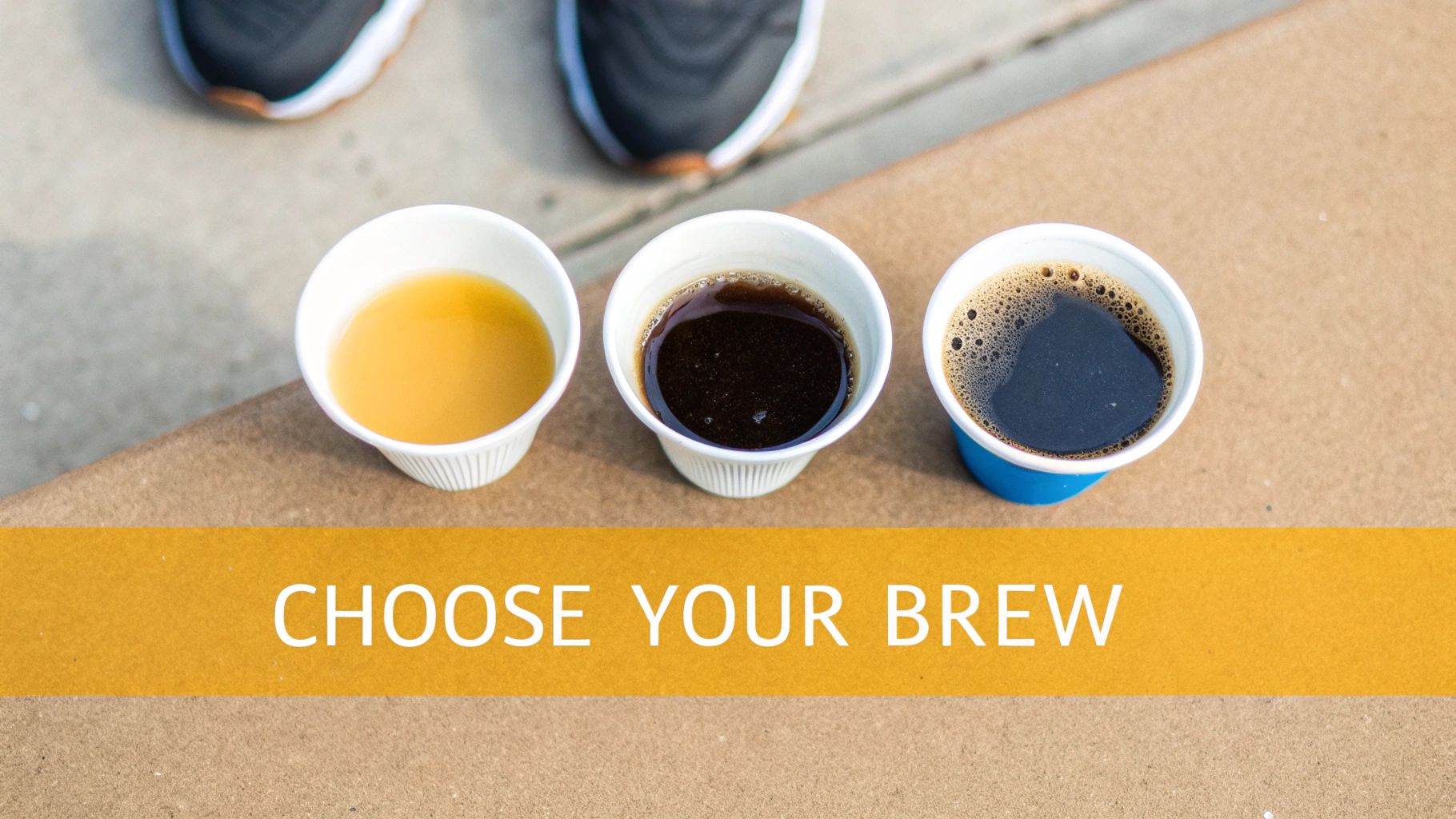
When you're depending on coffee to power your miles, it's worth remembering that not all brews are created equal. The type of bean, the roast level, and even how you prepare it can make a huge difference in your performance and how you feel on the road.
Think about it like picking the right pair of running shoes for a specific terrain. You wouldn't wear trail shoes for a track workout, right? The same logic applies here. Learning to be a little more selective with your coffee allows you to find the perfect match for your body’s needs, especially when it comes to caffeine sensitivity and digestive comfort.
Roast Levels and Caffeine Content
There's a persistent myth that a dark, almost-burnt roast delivers the biggest caffeine jolt. The truth is actually the opposite. Lighter roasts tend to pack a bit more punch because the roasting process is shorter and uses lower temperatures, preserving more of the bean's original caffeine.
- Light Roasts: These beans deliver a higher caffeine content along with brighter, more acidic flavor notes. If you’re looking for that maximum performance edge, a light roast is an excellent choice.
- Dark Roasts: With slightly less caffeine and lower acidity, a dark roast is often much easier on the stomach. If you’re someone who finds coffee a little harsh, this might be your perfect pre-run ritual.
The type of bean matters, too. For a deeper dive, you can explore the differences between Arabica and Robusta beans in our detailed guide to really dial in your selection.
Brewing Methods for Runners
The beans are only half the story; how you brew them is just as crucial. Different methods can alter the caffeine concentration and overall character of your cup, directly impacting your coffee and running experience.
For runners, the holy grail is a brew that delivers a consistent dose of caffeine without upsetting your stomach. The goal is to find a reliable method that just works for you, every time.
Cold brew, for example, is a fantastic option for many athletes. It’s steeped for a long time at a low temperature, which results in a brew that’s significantly less acidic than its hot-brewed counterparts. This makes it a great gut-friendly choice that still packs a high caffeine content for that endurance boost.
On the other hand, a classic pour-over gives you total command over the strength and flavor, letting you craft a perfectly consistent cup before every run. By experimenting with a few methods, you'll find the perfect way to prepare your Cartograph Coffee to support your training.
Beyond the Pre-Run Cup: Weaving Coffee Into Your Running Life
For most runners, the bond with coffee doesn't just clock out when the run is over. It’s a huge part of the whole culture, stretching way past the starting line. Think about it: the post-run coffee is a sacred ritual. It's that moment you finally get to unwind, rehash the run with your friends, and just bask in the glory of the miles you just put down.
This is where the real magic happens. That shared cup at your favorite local spot is where you dissect race strategies, complain about a tough hill, and build the kind of friendships that only shared suffering can forge. It takes coffee from a simple performance booster and turns it into a symbol of community, transforming a solo sport into a shared journey.
More Than Just a Ritual
But it's not all about the social buzz. A post-run cup of coffee can play a surprisingly big part in your body's recovery. When you push yourself hard on a run, you create something called oxidative stress—it's just a natural part of the process.
Well, coffee happens to be loaded with powerful antioxidants. You can think of them as your body's personal cleanup crew. These little compounds get to work neutralizing the cellular junk (called free radicals) that your hard effort produced, helping your body repair itself more effectively. So, that post-run brew isn't just a treat; it’s actually helping you get ready for your next workout.
It's no secret that coffee is one of the most popular drinks on the planet—an estimated two billion cups are consumed every single day. This makes caffeine a go-to tool for athletes everywhere, and its role in sports is only getting bigger. You can dig deeper into how caffeine boosts athletic performance to see just how common it is.
When you're intentional about it, coffee becomes so much more than fuel. It’s a tool for performance, a spark for community, and a partner in recovery—a true cornerstone of the running experience.
At the end of the day, weaving coffee into your life as a runner is all about finding what works for you. By nailing your timing, picking a brew you love, and understanding its role in both performance and recovery, you can make every single cup count. It stops being just about running faster and becomes about running smarter—and enjoying every step of the way.
Your Top Coffee and Running Questions, Answered
When you start mixing coffee and running, a lot of questions pop up. It makes sense—you want to get it right. Let's break down the most common ones so you can build a pre-run routine that works for you.
Will Coffee Before a Run Actually Dehydrate Me?
This is probably the biggest myth out there, but thankfully, the science is on our side. While caffeine technically has a mild diuretic effect (meaning it makes you pee), the water in your coffee more than offsets it.
So, for a normal intake of one to three cups, you don't need to worry about it hurting your hydration levels. Just keep sipping water throughout the day like you normally would.
Is Coffee Better for a Marathon or a Short Run?
Great question. The answer is, it’s a powerful tool for both, but it works a little differently depending on the distance.
For shorter, faster efforts like a 5K, the biggest win is how caffeine reduces your perception of effort. It basically makes that hard pace feel just a little bit easier, helping you push through from the start.
For a marathon, the game changes. Here, the primary benefit is that it encourages your body to tap into its fat stores for energy. This is huge, because it helps preserve your precious glycogen (carbohydrate) stores, saving them for when you need them most in those tough final miles.
The golden rule, no matter the distance: Never try anything new on race day. Test your exact coffee routine—how much, what kind, and when you drink it—many times during training to make sure your stomach is happy.
Does Adding Milk and Sugar Affect Performance?
It absolutely can. What you put in your coffee matters. A spoonful of sugar might give you a quick energy jolt, but it can also set you up for an unpleasant crash right in the middle of your run.
Milk, especially dairy or higher-fat options, can slow down digestion and sometimes lead to stomach cramps or GI issues. If you can't stand black coffee, try just a splash of something light and easy to digest. Ultimately, your training runs are the perfect laboratory to figure out what your gut can handle.
Ready to dial in your pre-run ritual? Cartograph Coffee offers premium, organic instant coffee that gives you a consistent, delicious cup every time. It’s smooth, easy on the stomach, and gives you precise control over your caffeine.