You're standing in the kitchen at 7 p.m. or sitting at a campsite after dark, and you want coffee without turning your night into a caffeine experiment. That's where most shoppers get stuck, because organic decaf sounds like one category, but it's really two decisions wearing the same label. If you care about the best organic decaffeinated coffee, you need to judge both the way the beans were grown and the way the caffeine was removed.
Why Organic Decaf Is a Two-Part Decision
Most bad decaf purchases happen because people shop with only one filter. They see organic and assume the whole cup is clean, flavorful, and low in caffeine. Then they get home, brew it, and discover a thin cup, a weird finish, or more caffeine than they expected.
The better way to buy is simple: treat organic coffee farming and decaffeination as separate questions. One answers how the bean was grown. The other answers what happened after harvest, and that second part is where taste and trace caffeine live or die.
Separate the farm from the process
A bag can be grown under organic standards and still be processed in a way that doesn't match your taste preferences. That's why buyers who want the best organic decaffeinated coffee should stop treating the organic seal like a complete verdict. It isn't.
This matters for a lot of people, not just purists. Evening coffee drinkers want a cup that won't keep them up. People with caffeine sensitivity want predictability. Pregnant buyers and anyone building a low-caffeine routine want fewer surprises. Campers want something better than stale convenience-store instant. All of them are really buying the intersection of certification and decaf method.
Practical rule: If a bag only tells you it's organic, you still don't know enough.
By the end of this guide, you should be able to read a decaf label like a buyer, not a spectator. That means spotting the process, checking the wording, and asking whether the cup is built for your actual use case, not just for marketing.
What Organic Certification Actually Covers
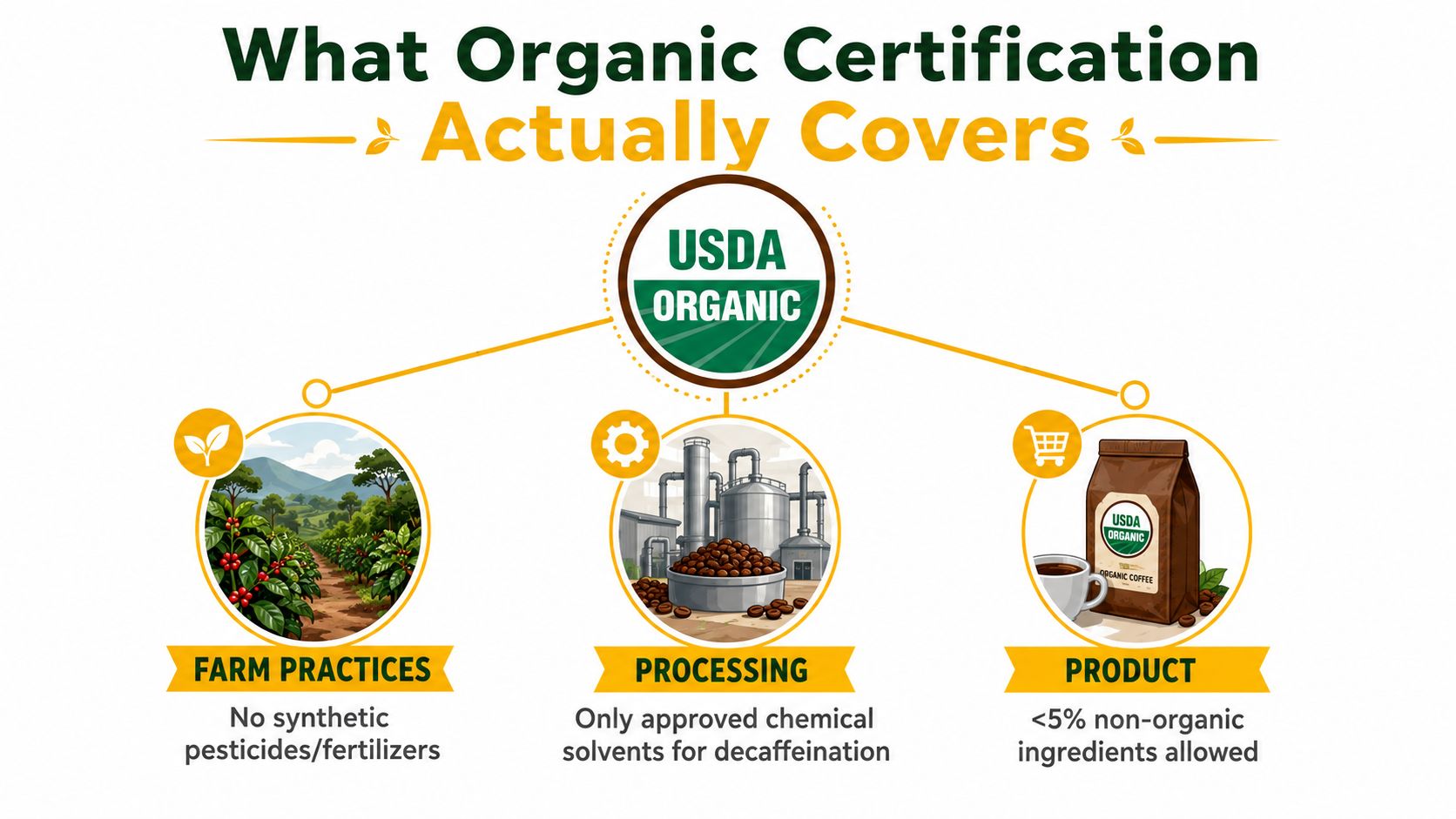
Organic certification is about how the coffee was grown and handled, not a magic guarantee that every step after harvest was natural or flavor-perfect. On a coffee bag, the seal tells you something useful, but it doesn't tell you everything. It says more about farming inputs than about the decaffeination facility.
Look for the exact wording. “100% organic” is stronger than “organic”, and both are different from weaker blended claims. If you're buying carefully, the certifying logo matters, but so does the rest of the label, because the bag can be honest and still leave out the one detail you care most about, the decaf process.
The legal decaf benchmark in the United States is a good reality check. Coffee labeled “decaf” must have at least 97% of its caffeine removed, and typical U.S. decaf coffee contains about 2 to 15 mg of caffeine per 8 oz cup compared with 80 to 100 mg in regular brewed coffee, according to the decaf brand benchmark from Coffee Studies. That's why organic alone doesn't settle the question.
What the label should tell you
Use the bag as a checklist, not a brochure. If a roaster publishes a clear organic certification and also explains the decaf process, you're in much better shape than if the bag just shouts “organic” in big letters and hides everything else.
A useful way to think about it is this. Organic certification can tell you the farm avoided the standard synthetic inputs, but it does not tell you whether the bean was decaffeinated with a method you'll like. That's exactly why two organic decafs can taste totally different.
If you want to go deeper on farm certification language, the internal guide on organic certified coffee is worth a look.
A clean organic seal is a starting point, not the finish line.
The Four Decaf Methods Compared
The method line on the bag matters more than you might think. Once the coffee is harvested, the decaffeination process becomes the main driver of residue expectations, flavor retention, and transparency. The common commercial methods are Swiss Water, supercritical CO2, methylene chloride, and ethyl acetate.
Swiss Water and CO2 get the most trust from flavor-focused buyers because they're often associated with better taste retention. That doesn't make the other methods unusable, it just means they're easier to misunderstand. The core issue isn't panic, it's clarity.
Decaf methods at a glance
| Method | Solvent or Medium | Typical Flavor Impact | Transparency on Label |
|---|---|---|---|
| Swiss Water | Water and filtration | Often cleaner, preserves origin character well | Usually clearly named |
| Supercritical CO2 | Carbon dioxide under pressure | Often strong at preserving cup structure | Sometimes clearly named |
| Methylene chloride | Solvent process | Can be very workable, but less appealing to method-sensitive buyers | Often less emphasized |
| Ethyl acetate | Natural solvent commonly associated with sugarcane processing | Can taste clean when done well, but buyers often want more detail | Sometimes described as natural or sugarcane |
The point isn't that one method is universally perfect. It's that the process line on the bag is a real buying signal, while the word organic alone isn't. A coffee can be organic and still use a decaf method you don't prefer. A coffee can also taste great without loudly marketing every technical step.
For my money, Swiss Water and CO2 are the easiest methods to recommend to most readers. They're the least confusing to shop, they're often linked with better flavor retention, and they give you a better shot at finding a cup that still tastes like coffee instead of a compromise.
If a roaster won't tell you the method, I skip the bag.
How Much Caffeine Actually Remains
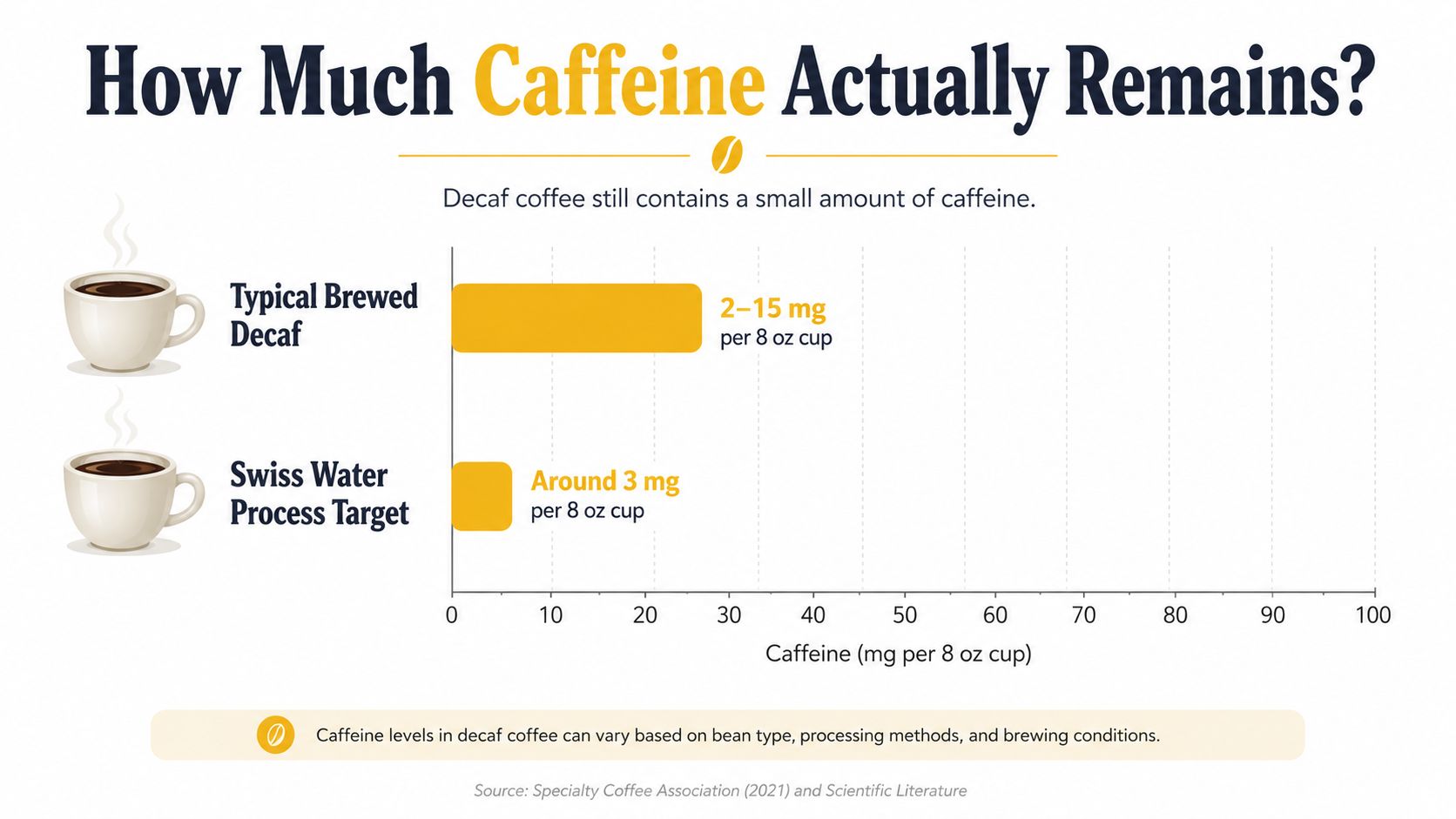
The caffeine conversation gets clearer when you stop using words like “low” and start using numbers. Independent guidance recommends targeting about 3 mg caffeine per 8 oz brewed cup, roughly 0.1% of the original caffeine, and notes that even “99% decaf” espresso can still deliver 1 to 2 mg per shot because espresso concentrates what's left, according to The Living Look.
That's the number I'd shop for if I were buying for evening drinking, pregnancy caution, or caffeine sensitivity. Anything looser than that is too vague to trust. If a roaster won't tell you the residual caffeine in mg, I assume they don't want you comparing products side by side.
Why lab testing beats language
The most useful quality metric is residual caffeine measured by HPLC, not marketing adjectives. HPLC testing gives you the kind of answer that matters when you want predictability, especially if you're drinking decaf every night or using it as your main cup. A bag that names the method and publishes a lab result is doing real work for the buyer.
Practical rule: If you want consistently low caffeine, shop the number, not the promise.
This is also where espresso trips people up. A shot can still have a small amount of caffeine left, but because espresso is concentrated, the residue matters more per ounce than buyers expect. That's why “decaf” is not the same thing as “zero caffeine.”
If you want a deeper caffeine reference point, the internal caffeine guide at Cartograph Coffee's caffeine content article is a good companion read.
The simple takeaway is this. Organic tells you about farming. Decaf method and residual caffeine tell you whether the cup fits your routine.
Flavor, Roast, and the Instant Question
Decaf coffee gives itself away when roasters hide behind roast level. A light roast can show origin character, but it also exposes flaws in processing faster. A darker roast can cover a lot, sometimes too much. In decaf, that tradeoff gets sharper because the bean has already gone through extra handling.
That's why I look harder at roast and format in decaf than I do in regular coffee. A well-processed decaf should still taste like coffee, not like burnt compensation. If the cup tastes hollow, the problem is often the combination of process and roast, not the word organic.
Whole bean, ground, and instant each serve a different job
Whole bean is the safest bet if you brew at home and care about freshness. Ground coffee is convenient, but you give up some control fast. Instant is the category a lot of coffee snobs dismiss too quickly, and that's a mistake for travel, office drawers, and camping.
Instant decaf has a clear place. If you need a cup that dissolves fast, packs light, and doesn't require gear, it solves the problem better than beans do. Cartograph Coffee's organic instant coffee is one example of how the category has become more practical for on-the-go drinkers, especially when convenience matters more than a perfect pour-over.
The right choice depends on your moment. For a home ritual, whole bean still wins. For a suitcase or trail bag, instant wins because it's simpler and more portable. For many buyers, the question isn't whether instant is “as good” in the abstract. It's whether the cup is good enough for the use case.
My blunt take: If you only judge decaf like a specialty pour-over, you'll miss the formats that actually fit real life.
That's why the best organic decaffeinated coffee isn't always the fanciest bag on the shelf. Sometimes it's the one that gives you a decent cup with no hassle, especially when you're standing next to a camp stove or making coffee before dawn.
Matching the Right Pick to Your Routine
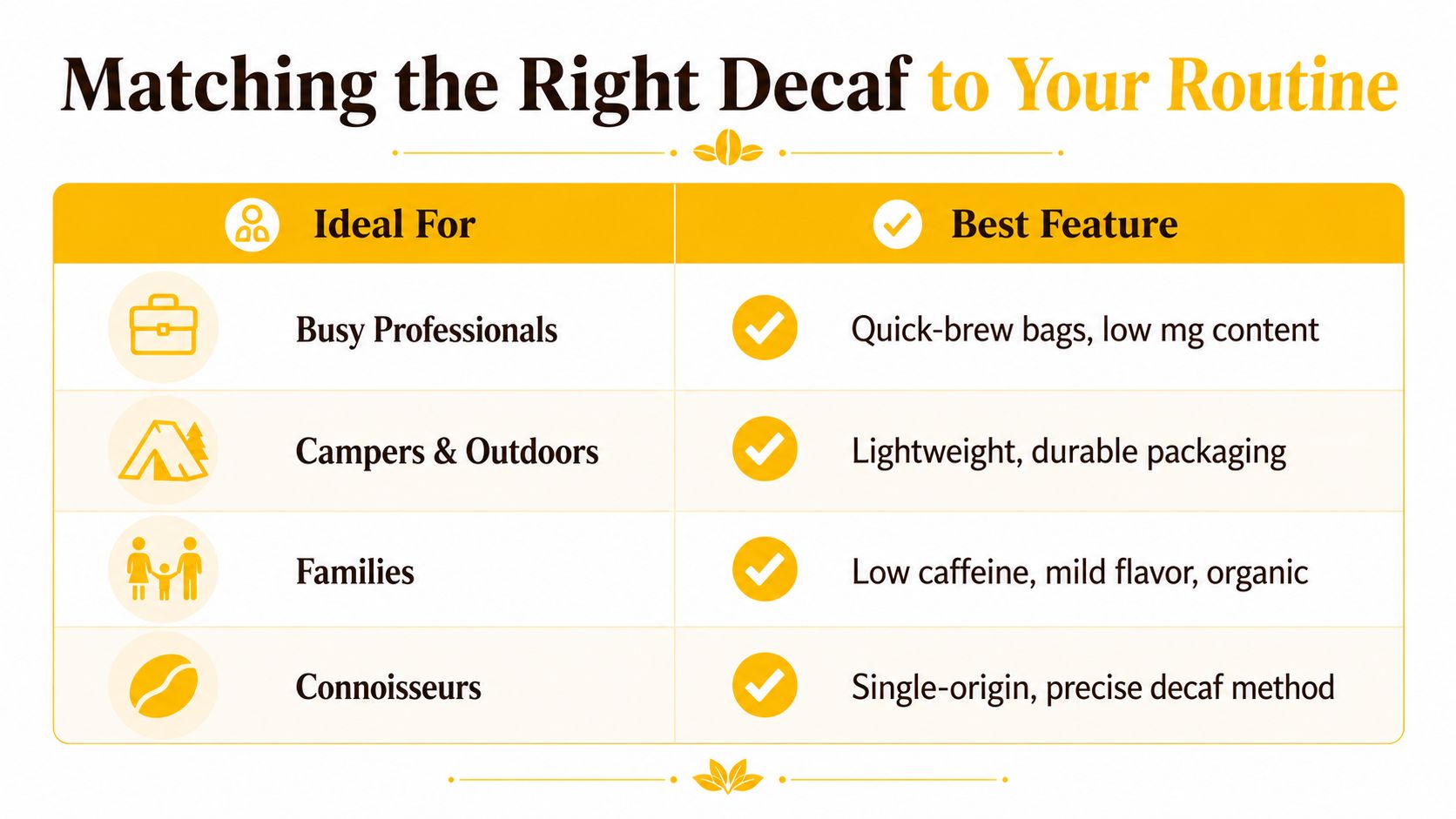
Your routine should drive the purchase, not the other way around. If you're buying for one cup after dinner, low residual caffeine matters more than anything. If you're buying for a campsite, format and portability matter more. If you're buying for a household, consistency starts to outrank coffee geek detail.
Many shoppers ask whether organic decaf is chemical-free, but most coverage stops at broad reassurance instead of comparing the main decaffeination methods by residue risk, flavor impact, and whether organic applies to the beans, the solvent, or both, as noted by Beantween. That's the exact wrong way to shop. The cleanest approach is to rank the decision in the right order for your life.
My recommendation by buyer type
- Busy professionals: Start with consistency. A clean method like Swiss Water or CO2 is easier to trust cup after cup, and instant becomes a real option if your mornings are packed.
- Campers and outdoor users: Pick the format first. Lightweight, durable packaging and fast solubility matter more than fancy origin notes when you're away from home.
- Families: Go for mild flavor, low caffeine, and clear organic verification. Nobody wants a decaf that drinks sharp or unpredictable.
- Connoisseurs: Pay attention to single-origin sourcing and named decaf method. You'll notice the difference faster than casual drinkers will.
The central idea is simple. Some buyers should lead with organic certification. Others should lead with decaf method. Most should care about both, but not in the same order.
If you want one line to remember, it's this. Choose the filter that protects your actual habit, not the one that sounds best in a product description.
Buying Checklist, Brewing, and Storage
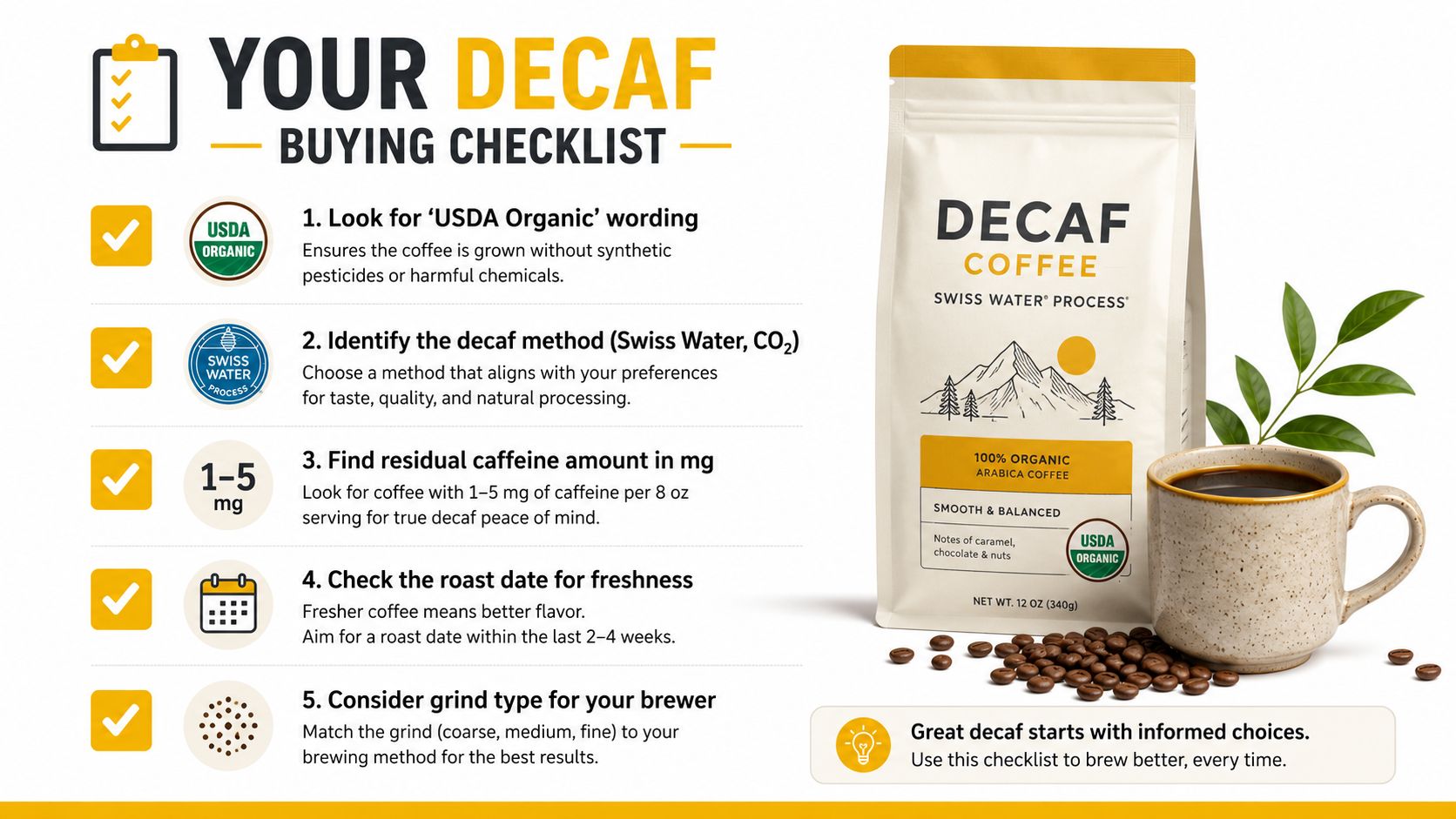
A strong product page should answer five questions fast. Is it certified organic? What decaf method was used? How much caffeine remains in mg? When was it roasted? What format am I buying? If a bag makes you hunt for all five, I move on.
Here's the buying checklist I use:
- Check the certification wording. Look for the actual organic claim, not just green branding.
- Name the process. Swiss Water and CO2 are the easiest methods to trust if you want clear labeling.
- Look for a caffeine figure. Residual caffeine in mg is more useful than vague “decaf” language.
- Confirm freshness. Roast date matters because stale decaf goes flat faster than people expect.
- Match the format to your brewer. Whole bean, ground, and instant all serve different jobs.
For brewing, treat decaf gently. I prefer water just off boiling rather than pushing hard extraction, because you don't need to bully the bean to get a good cup. Storage matters too. Keep whole-bean organic decaf airtight, opaque, and cool, and don't leave it sitting open on a counter. The decaffeination process can make the bean a little more vulnerable to flavor loss, so sloppy storage shows up faster.
If you want a simple storage refresher, the internal guide on how to store coffee beans properly lines up well with this approach.
The quick version is this. Buy by certification, method, mg, freshness, and format. Brew with care. Store like the flavor matters, because it does.
Your 60-Second Decision Framework
If you want the lowest caffeine residue, choose Swiss Water or CO2 first, then check for organic certification. If you want farm-level purity first, verify the organic claim and then pair it with the cleanest named decaf method you can find. If you need speed and portability, start with a reputable instant option and judge the cup, not the bag.
Taste still wins in the end, and you won't know your favorite until you brew two side by side. That's the only honest test that matters once the label looks good.
A CTA for Cartograph Coffee.