You've just brought home a beautiful bag of freshly roasted coffee beans. The best way to honor that coffee and ensure every cup tastes amazing is to store it properly. The secret? Keep your beans in an opaque, airtight container at room temperature, tucked away from direct sunlight. It’s that simple. This protects them from their biggest enemies—oxygen, light, heat, and moisture.
The Keys to Preserving Coffee Bean Freshness
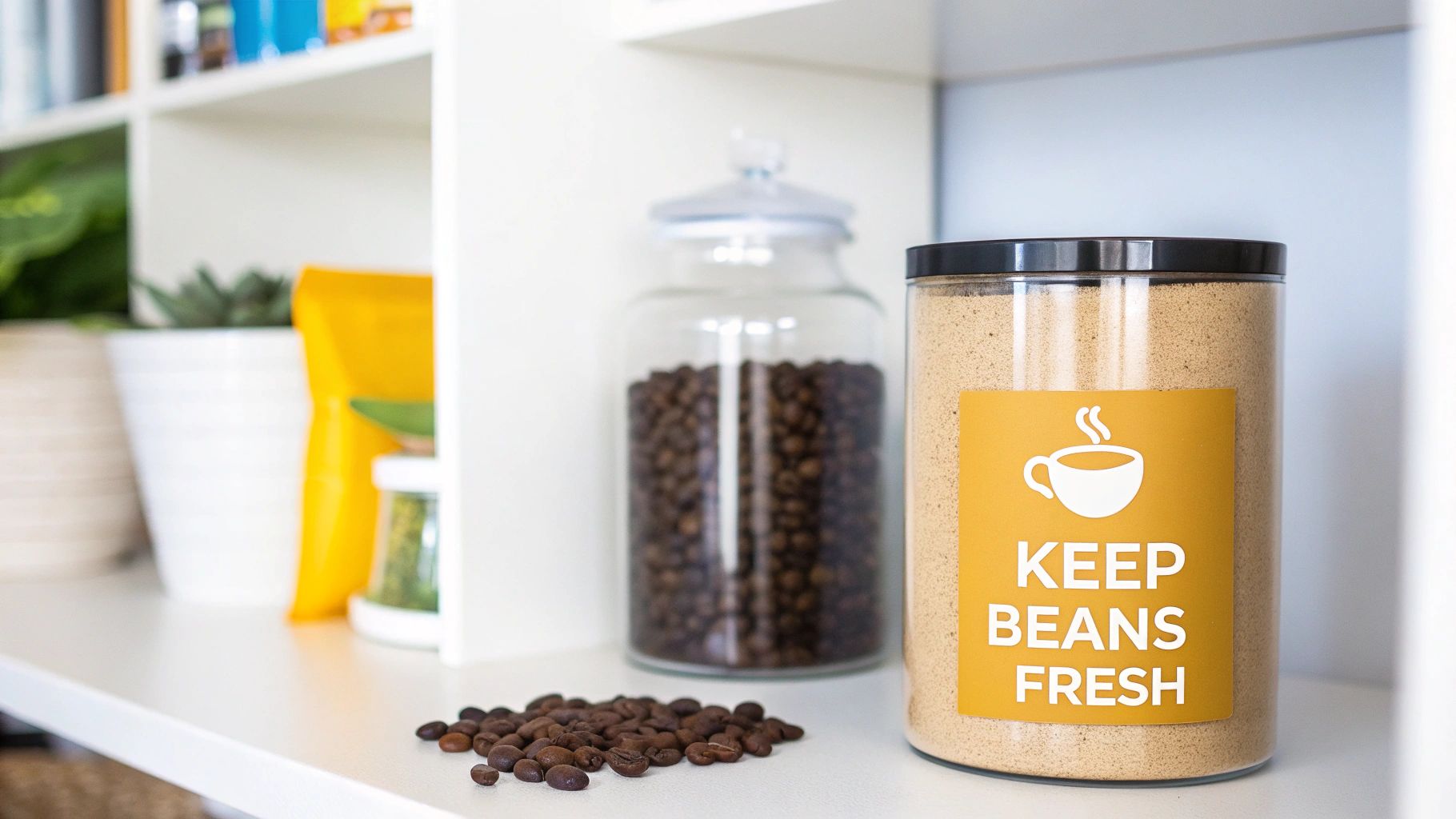 That bag of coffee represents a long and careful journey, from a farmer’s hands to your kitchen counter. Protecting the delicate oils and aromatic compounds that define its flavor is the final, crucial step. The moment those beans leave the roaster, the clock on their peak freshness starts ticking.
Unfortunately, a lot of common storage "wisdom" does more harm than good. Storing beans in the fridge or freezer is a classic mistake. These environments are full of moisture and odors, both of which can ruin your coffee’s complex flavor profile. Beans are porous and will absorb any nearby smells—yesterday's leftovers are not a flavor note you want in your morning brew.
Understanding Coffee's Four Main Enemies
To really nail coffee storage, you just need to know what you’re fighting against. Once you understand these four culprits, the right way to store your beans becomes second nature.
Here's a quick rundown of what makes coffee go stale.
The Four Enemies of Coffee Freshness at a Glance
| Enemy | Why It's a Problem | Simple Solution |
|---|---|---|
| Oxygen | Causes oxidation, which breaks down the oils and aromatics that create flavor and aroma. | Use an airtight container. |
| Light | UV rays accelerate the chemical reactions that make coffee taste stale. | Store in an opaque container. |
| Heat | Warms up the oils in the beans, causing them to evaporate and lose flavor much faster. | Keep away from heat sources like ovens or sunny windows. |
| Moisture | Beans are hygroscopic (they absorb moisture), which dilutes flavor and can even lead to mold. | Store in a dry place, never the fridge. |
As you can see, the solutions are straightforward and all point toward the same goal.
The goal is simple: create a stable environment that shields your coffee from these four elements. A cool, dark pantry or cupboard is the perfect sanctuary for your beans.
With the global coffee market projected to hit US$473.10 billion in 2025 and specialty coffee consumption reaching a 14-year high, preserving quality at home has never been more relevant. When you understand the different types of coffees and their unique qualities, you appreciate why protecting their flavor is so vital. That premium experience you paid for truly starts with how you store the beans.
Choosing the Right Storage Container for Your Coffee
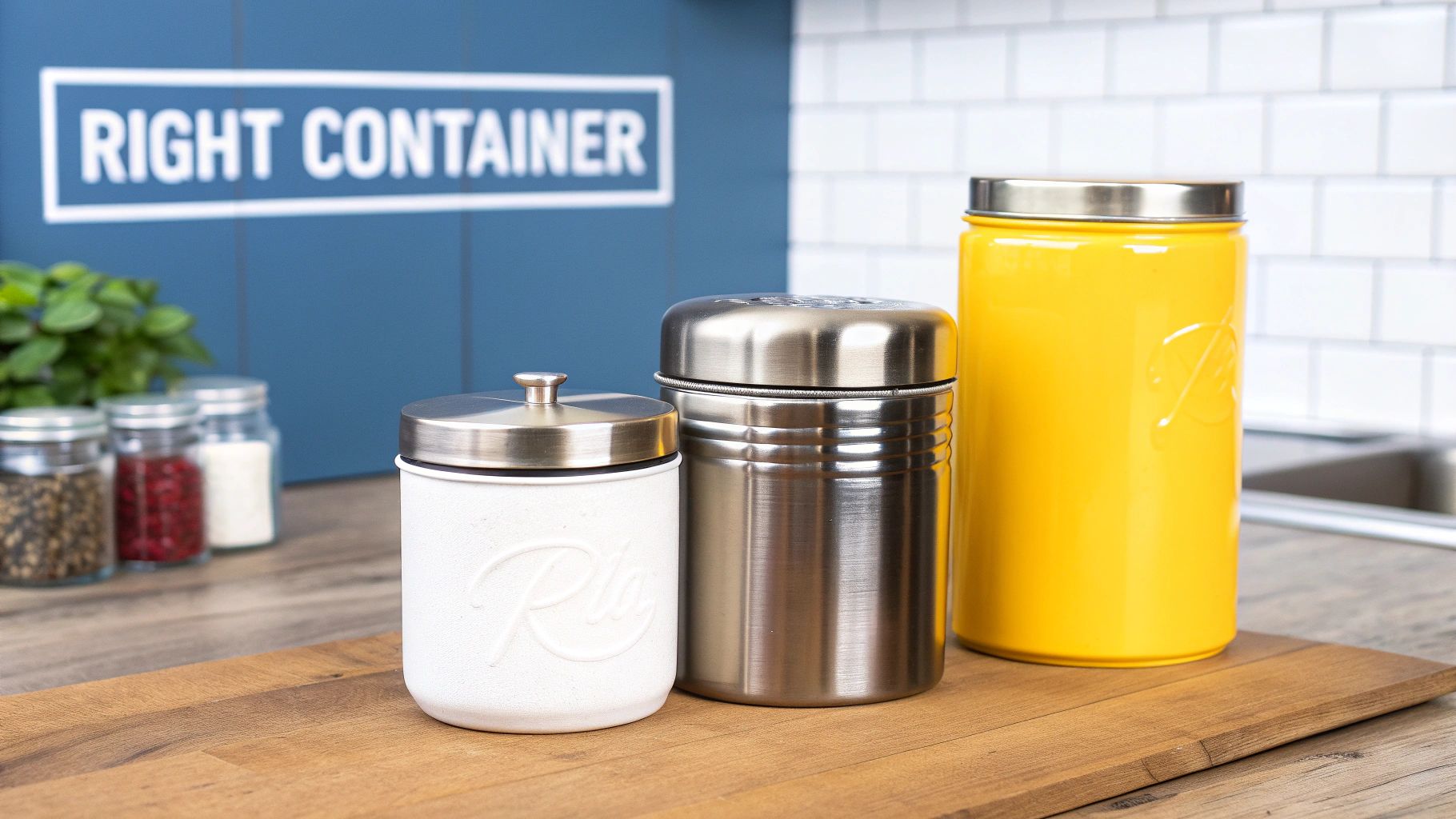
Once you know what you're fighting against—oxygen, light, moisture, and heat—picking the right home for your beans gets a whole lot easier. The container is your first and most important line of defense. So, let's get into the nitty-gritty of what actually works for a real-world kitchen and daily coffee routine.
A lot of us start with whatever's handy, like a classic Mason jar. The seal is great, but its biggest flaw is that it's clear. Leaving your beans exposed to light like that is a surefire way to kill their flavor, leaving you with a cup that tastes dull and flat.
Comparing Common Container Materials
So, what should you look for? The material of your container makes all the difference, and each one comes with its own set of pros and cons.
A beautiful ceramic canister might look perfect on your counter and does a fantastic job blocking light. The catch? They can be fragile, and you have to double-check that the lid's gasket creates a truly airtight seal.
Stainless steel is another popular choice. It's tough, opaque, and looks sleek. Just be smart about where you put it. If that canister sits in a sunny spot on your counter, the metal can heat up and slowly roast your beans all over again, making them go stale much faster.
- Glass: Only works if it's a dark amber color or you commit to storing it in a pitch-black cabinet. Clear glass is simply not an option.
- Ceramic: A great choice for blocking light. Just make sure it has a high-quality, airtight gasket on the lid.
- Stainless Steel: Durable, opaque, and effective. Keep it away from the stove and out of direct sunlight.
A container's job is simple: create an impenetrable fortress against oxygen and light. If it fails at either of those, it doesn't matter how good it looks. An airtight seal and opaqueness are the two non-negotiables for keeping your coffee at its best.
The Deal with CO2 Valves and Vacuum Sealing
You've probably seen those little plastic circles on coffee bags or some canisters. That's a one-way CO2 valve. It lets the carbon dioxide that freshly roasted beans naturally release (a process called degassing) get out without letting any oxygen get in. This is super important for roasters packaging fresh beans.
But do you need one at home? Honestly, for most of us, a truly airtight seal is far more critical. If you buy your beans in small batches and finish them within a couple of weeks, a simple, solid, airtight container is all you really need.
Now, if you're the kind of person who wants to squeeze every last bit of flavor out of your beans, that's where vacuum-sealed canisters come in. Brands like the Fellow Atmos or Airscape canisters let you actively pump out the air trapped inside with the beans.
By removing most of the oxygen, you slam the brakes on oxidation and keep your coffee tasting vibrant for much longer. While it's definitely a step up and not strictly necessary for everyone, it’s a worthwhile investment for anyone who geeks out over the delicate notes in a great single-origin coffee.
Where in Your Kitchen Should You Actually Store Coffee?
Even the world's best airtight container can't protect your beans from a bad environment. Now that you've got the right container, let's talk location. Your kitchen is secretly a minefield of coffee enemies—heat, light, and moisture—that will absolutely wreck your beans' freshness before you even know it.
A lot of us keep our coffee right on the counter next to the grinder. It makes sense for convenience, but it's often the worst possible spot. If that counter gets any direct sunlight, it's slowly baking your beans and killing off those fragile, flavorful oils. The same thing happens if it's sitting next to your stove or on top of the fridge, where there’s a constant, low-grade heat.
Watch Out for These Hidden Coffee Killers
Think about your morning routine for a second. Do you keep your coffee in the cabinet right above where you brew? All that steam from your kettle or coffee maker creates a humid little pocket up there, making it a terrible place to store beans. That cabinet over the oven or microwave is just as bad, getting warmed up every time you cook.
These are the spots that actively work against you. They speed up the staling process and are the reason you end up with a flat, boring cup of coffee. What we're looking for is a true coffee sanctuary: a spot that's consistently cool, dark, and dry.
The best way to think about it is that your coffee beans are basically vampires. They thrive in a cool, dark place away from the sun. Keep that in mind, and you'll do a much better job of preserving those amazing flavors you paid good money for.
The Coffee Sanctuary Checklist
Finding the right spot doesn't mean you need to remodel your kitchen. It’s all about being a little more strategic. Run through this quick checklist to find the best home for your beans.
- Keep It Away from Heat: Is the spot far from the oven, toaster, dishwasher, or microwave? All of these appliances give off heat that will degrade your coffee.
- Avoid the Sun: Make sure the location gets zero direct sunlight at any point during the day. Remember, the sun moves!
- Aim for a Stable Temp: You're just looking for simple room temperature, ideally between 68-77°F (20-25°C). Stay away from spots with big temperature swings, like right next to an outside door or a drafty window.
- Keep It Dry: Definitely avoid the cabinet under the sink or anywhere near plumbing. A pantry or a deep kitchen cupboard is almost always your safest bet.
A deep cabinet far from your main cooking zone or a cool, dark pantry are prime real estate for coffee storage. Taking just a minute to move your beans from a convenient-but-terrible spot to a safe one is one of the simplest, most effective upgrades you can make to your daily brew. It costs nothing but pays you back with better flavor, cup after cup.
How you store your coffee should really depend on how quickly you plan to drink it. The strategy for a bag you'll finish this week is completely different from the one for a special batch you want to save for a few months down the road. Thinking about your coffee in terms of "daily driver" versus "special occasion" is the key to keeping it tasting great.
For the coffee you reach for every morning, the goal is to balance freshness with easy access. This is your short-term supply—whatever you'll brew in the next one to two weeks. Just keep these beans in an opaque, airtight container somewhere cool and dark, like your pantry. This simple setup shields them from their biggest enemies (air, light, heat) while keeping them right where you need them for your daily ritual.
Navigating Long-Term Coffee Storage
But what about that extra bag you snagged on sale, or a rare single-origin you’re saving? This is where long-term storage comes in, and that means we need to talk about the freezer. It’s a bit of a controversial topic in the coffee world, but when you do it right, freezing is a fantastic way to hit the pause button on the staling process.
The whole point of freezing is to dramatically slow down oxidation and flavor loss. In fact, research shows that for every day coffee sits in a standard freezer at -18°C (0°F), it’s like it’s only been sitting for 90 days at room temperature. That’s a massive difference, making your freezer a powerful ally in preserving those special beans.
You can't just toss the bag in there, though. Coffee beans are porous, meaning they'll soak up moisture and any stray odors from last night's leftovers. That’s a recipe for a funky-tasting brew. The trick is to create a completely sealed, oxygen-free environment for them.
The golden rule for freezing is simple: keep oxygen and moisture out at all costs. A standard Ziploc bag just won’t do the job. You need a vacuum sealer to create a true barrier against freezer burn and flavor contamination.
The Right Way to Freeze Coffee Beans
Freezing coffee is a commitment, but getting these next steps right makes the difference between preserving your beans and accidentally ruining them.
- Portion It Out First: This is the most critical step. Before you seal anything, divide the beans into smaller, weekly portions. Once a batch of coffee is thawed, you can never refreeze it. The condensation from thawing and refreezing will destroy the beans' delicate structure. Portioning means you only take out what you'll use.
- Vacuum Seal Tightly: Place your weekly portions into vacuum-seal bags and remove every bit of air. If the original coffee bag is still sealed and doesn’t have a one-way valve, you might want to poke a tiny pinhole in it before placing it inside the vacuum bag. This helps ensure all the air gets sucked out.
- Label Everything: Don't forget to write the coffee's name and the date you froze it on each bag. This helps you keep your stash organized and use the oldest beans first. It's a simple step that saves a lot of guesswork later.
When you're ready for a cup, pull a bag out of the freezer and let it thaw completely at room temperature without opening it. This can take a few hours, but it's an essential wait. Opening the bag too soon causes condensation to form directly on the cold beans, instantly adding unwanted moisture.
Once fully thawed, treat them like fresh beans. Transfer them to your go-to airtight container and use them within a week for the best flavor. While this method takes a bit of prep, it’s a game-changer for long-term storage and is quite different from how other coffee products are preserved. To see how this compares to more durable options, check out our guide on the shelf life of instant coffee.
To make it even clearer, let's break down the key differences between your daily storage routine and your long-haul preservation plan.
Storage Method Comparison Short-Term vs Long-Term
This table lays out the best practices for each scenario, helping you choose the right approach every time.
| Storage Duration | Best Method | Key Considerations | Common Mistakes |
|---|---|---|---|
| Short-Term (1-2 weeks) | Opaque, airtight container in a cool, dark place (pantry/cabinet). | Focus on accessibility and protection from daily environmental factors like light and air. | Leaving beans in the original bag (unless it has a good zip-lock), storing near the oven, or using a clear container. |
| Long-Term (1-6+ months) | Vacuum-sealed bags stored in a deep freezer. | Portion beans into weekly amounts before freezing. Never refreeze thawed beans. | Tossing the original bag directly into the freezer, using a simple Ziploc bag, or opening the bag before it has fully thawed. |
Ultimately, matching your storage method to your drinking timeline is the best way to ensure every cup of coffee you brew is as fresh and flavorful as possible.
Common Coffee Storage Mistakes to Avoid
Knowing how to store coffee beans properly often starts with understanding what not to do. It's easy to fall into habits that seem harmless but are silently sabotaging the flavor of your coffee, one cup at a time. Let's walk through some of the most frequent missteps and, more importantly, how to fix them for a better brew tomorrow.
One of the biggest culprits I see is people displaying their beautiful beans in a clear glass jar on the kitchen counter. It looks fantastic, I get it. But clear glass offers zero protection from sunlight. UV rays are the enemy of freshness, breaking down the delicate oils and aromatic compounds that give coffee its character. It's like leaving a fine wine out in the sun; you're actively destroying what makes it special.
This infographic lays out the basic decision-making process for your beans.
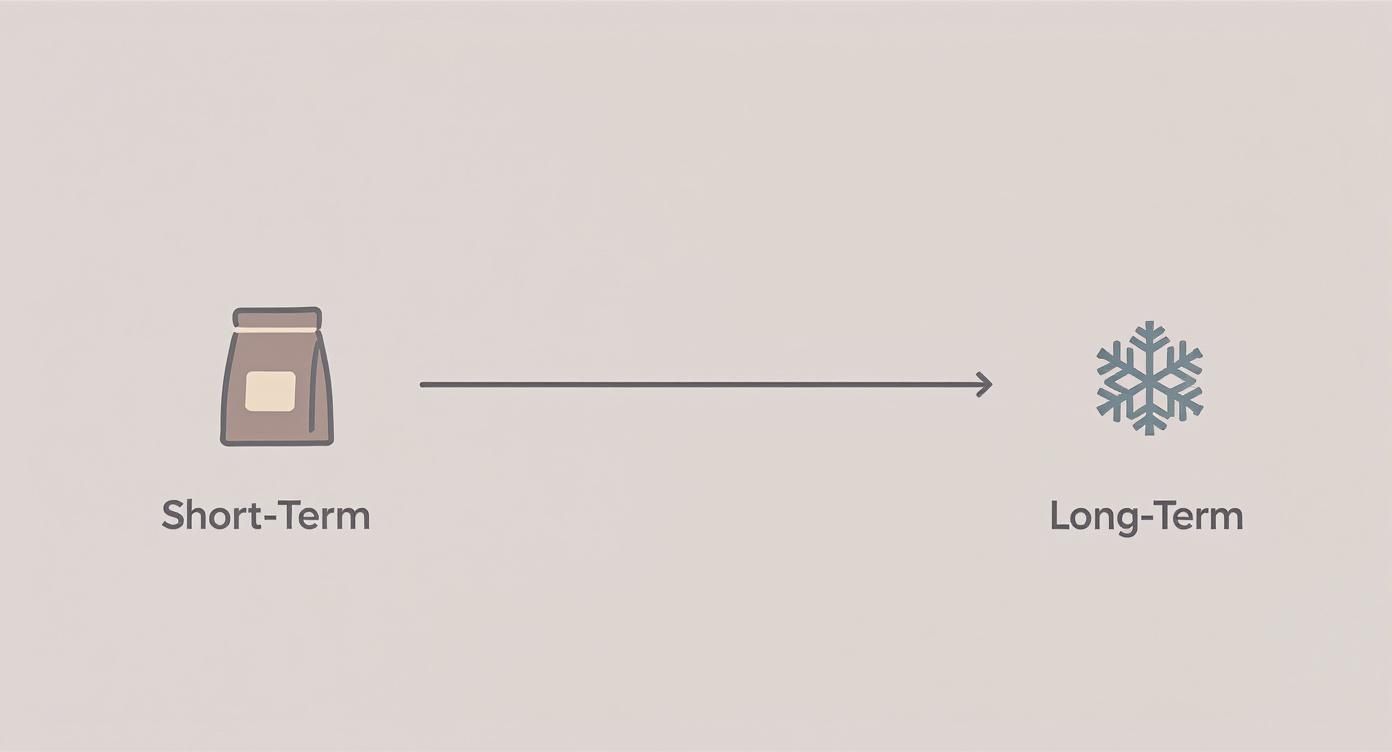
It’s a simple visual guide: what you're brewing this week goes into a sealed container, while anything you need to keep for longer needs the heavy-duty protection of a freezer.
Relying on the Original Bag
We’ve all done it—rolled down the top of the roaster's bag and thrown a clip on it. Unfortunately, most of these bags just aren't designed for long-term, airtight storage once they've been opened. Oxygen inevitably seeps in, kickstarting the oxidation process that turns vibrant coffee into something dull and lifeless.
The better move? As soon as you get your beans home, transfer them into a dedicated, opaque, and truly airtight container. This small step is your best defense against flavor loss.
The Refrigerator and Freezer Trap
Putting coffee beans in the refrigerator is a huge mistake. The fridge is a humid environment, packed with all sorts of food odors. Coffee beans are porous and will absorb both moisture and smells like a sponge. Think garlic-infused coffee—not a pleasant thought. This moisture also accelerates staling once you take them out.
The freezer can be a powerful tool, but only if you use it correctly for long-term storage, ideally with a vacuum sealer. Just tossing a half-used bag in there is a recipe for disaster. It invites freezer burn and condensation, which will ruin the beans the moment you thaw them.
Your goal is to create a stable, protected environment. The fluctuating temperatures, humidity, and constant light of a typical kitchen counter are the exact opposite of what your coffee needs to stay fresh and vibrant.
Buying Pre-Ground Coffee in Bulk
The convenience of pre-ground coffee is tempting, but it comes at a steep cost to flavor. The moment you grind beans, you increase their surface area exponentially. This exposes all those fragile compounds to oxygen, and they go stale almost immediately. Buying a big bag of pre-ground coffee all but guarantees that the last half will be tasteless.
With the United States consuming 517 million cups of coffee every single day, keeping that coffee tasting great at home is a big deal. For a great coffee experience, consistency is everything, and that starts with protecting the bean's integrity right up until you brew. You can find more fascinating stats on global coffee consumption at Balance Coffee.
Answering Your Coffee Storage Questions
Even when you've got a solid routine down, a few tricky questions always seem to pop up. Let's walk through some of the most common ones I hear from fellow coffee lovers to help you nail down your storage game for good.
Should I Store My Coffee Beans in the Refrigerator?
Let's get this one out of the way: absolutely not. Putting your coffee in the fridge is one of the fastest ways to ruin a great bag of beans. Your refrigerator is a humid environment, and it's full of odors. Coffee beans are porous, meaning they act like a sponge, soaking up all that moisture and the aromas from last night’s leftovers.
That moisture messes with the delicate oils that give coffee its amazing flavor and aroma. Plus, when you pull those cold beans out, condensation immediately forms on them, which speeds up the staling process. Your best bet is always a cool, dark, and dry spot right on your countertop or in your pantry.
How Long Do Roasted Coffee Beans Actually Stay Fresh?
Here's the real deal: roasted coffee beans are at their absolute peak within the first two to three weeks of their roast date. After that, oxidation starts to kick in, and you'll notice the flavors start to flatten out.
Pro Tip: Always look for a “roasted on” date, not an expiration date. The roast date is your single best indicator of freshness. I always tell people to buy only what they can realistically drink in about two weeks to make sure every cup is as vibrant as it should be.
The beans are still fine to brew for a few months, but you'll be missing out on all the complex, nuanced flavors the roaster worked so hard to bring out.
Is a One-Way Valve on a Container Really Necessary?
That little valve on your coffee bag is a big deal, especially for freshly roasted coffee. Right after roasting, beans release a lot of carbon dioxide in a process called degassing. The valve is a brilliant little piece of engineering that lets all that CO2 escape without letting oxygen—coffee's worst enemy—sneak in.
While it's essential on the bag you buy from a roaster, it’s less critical for your at-home storage container. For daily use, a truly airtight seal is what matters most. Once you're past the first day or two after the roast date, the main priority shifts from letting gas out to keeping oxygen away.
Does Storing Whole Beans vs Ground Coffee Matter?
Yes, this is a huge one. It makes a massive difference. Grinding coffee drastically increases the surface area, exposing all those fragile oils and aromatic compounds to the air. The quality drops off a cliff almost instantly, and the flavor starts going stale just minutes after grinding. This is a world away from specialized preservation methods; for instance, you can see how long-term stability is achieved by learning what freeze-dried coffee is and how it's designed to lock in flavor.
If you want the best possible taste, always buy whole beans and grind them just seconds before you brew. Honestly, it’s the single biggest upgrade you can make to your daily coffee ritual.
At Cartograph Coffee, we believe a great cup starts with fresh, quality beans. Our organic instant coffee is crafted for those who value amazing flavor without the fuss, whether you're at home or on an adventure. Experience the convenience of exceptional coffee by exploring our collection at https://cartographcoffee.com.