Here's a simple, surprising fact: that jar of instant coffee sitting in your pantry can last an astonishingly long time. We're talking anywhere from 2 to 20 years if it's left unopened. Even after you break the seal, it's still good for several months as long as you store it properly.
This incredible staying power comes down to one thing: a lack of moisture. Unlike fresh coffee beans, which have a ticking clock on their flavor, instant coffee is built to last.
Understanding Instant Coffee's Shelf Life
The secret to instant coffee's shelf life is baked right into its creation. The manufacturing process removes nearly all the water, leaving behind dry granules that are incredibly stable. This is precisely why it remains a reliable backup for your morning caffeine boost, even after months (or years!) of being tucked away.
But not all instant coffee is created equal. The exact lifespan really hinges on a few things:
- How It's Made: Freeze-dried coffee typically outlasts its spray-dried counterparts. The freeze-drying process is gentler and more effective at zapping moisture.
- The Packaging: A factory-sealed glass jar or tin can is like a fortress, protecting the coffee from its enemies—oxygen and humidity.
- Where You Keep It: The storage conditions in your home, both before and after opening the container, make all the difference in preserving its taste and smell.
From Sealed and Safe to Opened and Exposed
The moment you crack open a new container, the game changes. An unopened jar of instant coffee is essentially in a state of suspended animation, perfectly preserved. But as soon as you introduce air, and with it, potential moisture, the countdown to peak freshness begins.
While it will still be perfectly safe to drink for a long time, you'll notice its bold, rich flavor will start to fade.
Think of it like this: Unopened instant coffee is in hibernation. When you pop the lid, you wake it up, and it starts to age. It won't spoil like milk, but it will slowly lose its character.
This remarkable durability is what makes instant coffee such a pantry staple, perfect for travel, camping, or just having on hand for emergencies. Thanks to modern production techniques, like those detailed in instant coffee market analyses, manufacturers have perfected the art of minimizing moisture and oxidation, pushing the product’s lifespan toward that impressive 20-year mark.
For a quick overview, this table breaks down what you can generally expect.
Instant Coffee Shelf Life at a Glance
This table offers a quick reference for how long you can expect your instant coffee to last, depending on its state.
| Coffee State | Typical Shelf Life (Unopened) | Typical Shelf Life (Opened) |
|---|---|---|
| Freeze-Dried Granules | Up to 20 years | 1-2 years |
| Spray-Dried Powder | 2-10 years | 6-12 months |
| Coffee Singles/Packets | Up to 2 years | Single use (best by date) |
Keep in mind these are just general guidelines. The "best by" date on the package is the manufacturer's promise of peak quality, but as you can see, the coffee itself is safe to consume for much, much longer.
The Science Behind a Decades-Long Shelf Life
The incredible instant coffee shelf life isn't some happy accident; it's the result of some pretty clever food science. The entire process hinges on one simple, powerful principle: get rid of the water.
Think about making beef jerky or drying fruit. By removing nearly all the moisture, you stop the growth of bacteria and mold that would normally cause food to spoil. Instant coffee manufacturers use this exact same concept to give their products their staying power.
From Brew to Granule
The transformation from liquid coffee to those familiar dry granules is a fascinating journey. It all comes down to sophisticated drying techniques designed to remove a staggering amount of water—up to 97% of the brewed coffee's weight.
Two main methods dominate the industry:
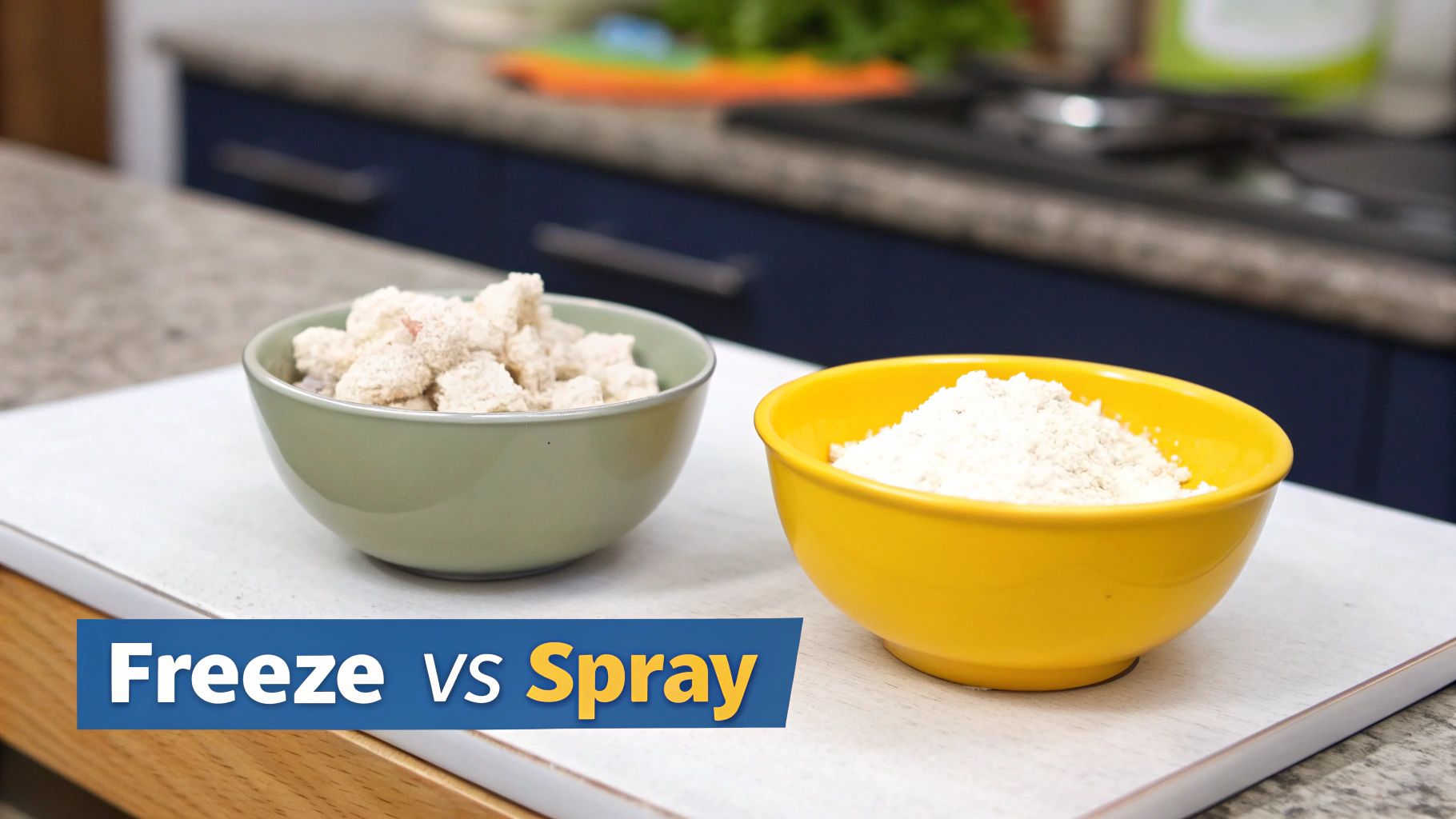
- Spray-Drying: This is the most common approach. Concentrated liquid coffee is sprayed as a fine mist into a tower of hot air. The heat instantly evaporates the water, and what's left falls to the bottom as a fine, dry powder.
- Freeze-Drying: This is a more delicate, premium process. The coffee is frozen solid and then placed in a powerful vacuum. This causes the ice to turn directly into vapor—a process called sublimation—which does a much better job of preserving the coffee’s original flavor and aroma.
The core idea is simple: water is the enemy of shelf stability. By removing it almost completely, manufacturers essentially pause the aging process, giving instant coffee its remarkable staying power.
While both methods get the job done, the meticulous nature of freeze-drying often produces a higher-quality product with an even longer potential shelf life. To get a better sense of this, you can learn more about what freeze-dried coffee is and why it matters for both taste and preservation.
Packaging: The Final Line of Defense
Dehydration is only half the battle. Once the coffee is dry, it needs protection. Modern packaging is like a fortress, shielding the fragile granules from their three biggest enemies: oxygen, light, and moisture.
Those airtight seals on jars and tins are crucial. They keep oxygen out, which would otherwise degrade the delicate oils that give coffee its flavor. Some high-end brands even take it a step further with nitrogen flushing, where they replace the oxygen in the container with inert nitrogen gas before sealing it. This creates a perfect, stable environment, ensuring that a decades-long shelf life isn't just a possibility—it's a reality.
The Enemies of Fresh Instant Coffee
The moment you crack the seal on a new jar of instant coffee, a battle for freshness begins. Think of that factory seal as a fortress wall. Once it's down, you’ve let the three biggest enemies of your coffee inside: moisture, air, and heat.
Understanding what you're up against is the first step to keeping that rich, satisfying flavor in your cup.
The number one villain here is moisture. Instant coffee granules are what we call 'hygroscopic,' which is a fancy way of saying they are like tiny, super-thirsty sponges. They're so dry that they will pull any available moisture right out of the air.
This is why your coffee can turn into a solid, unusable brick if you’re not careful. It’s a classic sign that the instant coffee shelf life is taking a hit. Something as simple as using a damp spoon or leaving the jar next to a boiling kettle is enough to start the clumping process.
Air and Heat: The Silent Accomplices
Next up is air. Specifically, the oxygen in the air. Oxygen is the culprit behind oxidation, a slow-moving reaction that breaks down the delicate oils and aromatic compounds that give coffee its incredible flavor and aroma.
Every time you open that lid, you're not just scooping out coffee granules—you're letting a little more of the enemy in. An opened jar is in a constant fight to stay fresh.
Finally, there’s heat. Heat is the ultimate accelerator. It doesn't just cause problems on its own; it makes the damage from moisture and air happen much, much faster.
Storing your coffee in a warm place—like on a sunny windowsill or in a cabinet right above your stove—is a surefire way to get a dull, lifeless brew. Heat causes those fragile flavor compounds to break down, leaving you with a cup that tastes flat.
So, to keep your coffee at its best, you need to guard against these three culprits. The main reasons coffee goes stale, clumpy, or bland are almost always:
- Humidity: Steam from the kettle, a wet spoon, or even just a humid kitchen.
- Oxygen: A container left open or one that doesn't seal properly.
- Direct Heat: Sunlight or warmth from nearby appliances.
By keeping these threats in mind, you can easily take a few simple steps to protect your coffee, making sure it stays fresh and flavorful for a long, long time.
Properly Storing Instant Coffee for Maximum Flavor
To get the most out of your instant coffee, you need to protect it from its natural enemies: air, moisture, heat, and light. Think of it as a simple mission with one clear goal—keep your coffee cool, dark, and dry. Your best weapon in this fight is a good airtight container.
Once you've opened the original packaging, transfer the granules into a container that seals completely. This one step is a game-changer, shielding the coffee from the humidity in the air that causes clumping and dulls the flavor. The perfect home for it is a kitchen cupboard or pantry, far away from the heat of the stove and out of direct sunlight.
If you want ultimate convenience without sacrificing freshness, single-serving options are a fantastic solution. You can learn more about how instant coffee packets are designed to lock in flavor, giving you a perfect portion every time.
Common Storage Mistakes to Avoid
A lot of people make one critical mistake: storing their instant coffee in the fridge or freezer. It seems like a smart idea for keeping things fresh, but for instant coffee, it completely backfires.
Think of your coffee jar as a magnet for moisture. When you pull a cold container out of the fridge, condensation immediately forms on the outside. Every time you open it, that damp air gets inside, turning your fine granules into a solid, useless brick.
To really maximize your instant coffee shelf life and preserve its taste, just stick to these simple rules:
- Always use a dry spoon: Seriously, even a single drop of water is enough to start the clumping process.
- Seal it up quick: As soon as you've scooped out what you need, get that lid back on tight to keep air and moisture out.
- Pick the right spot: A cool, dark cupboard is always better than a cold, damp refrigerator.
By dodging these common pitfalls, you can make sure every cup tastes just as fresh and flavorful as the first one did.
How to Tell if Your Instant Coffee Is Past Its Prime
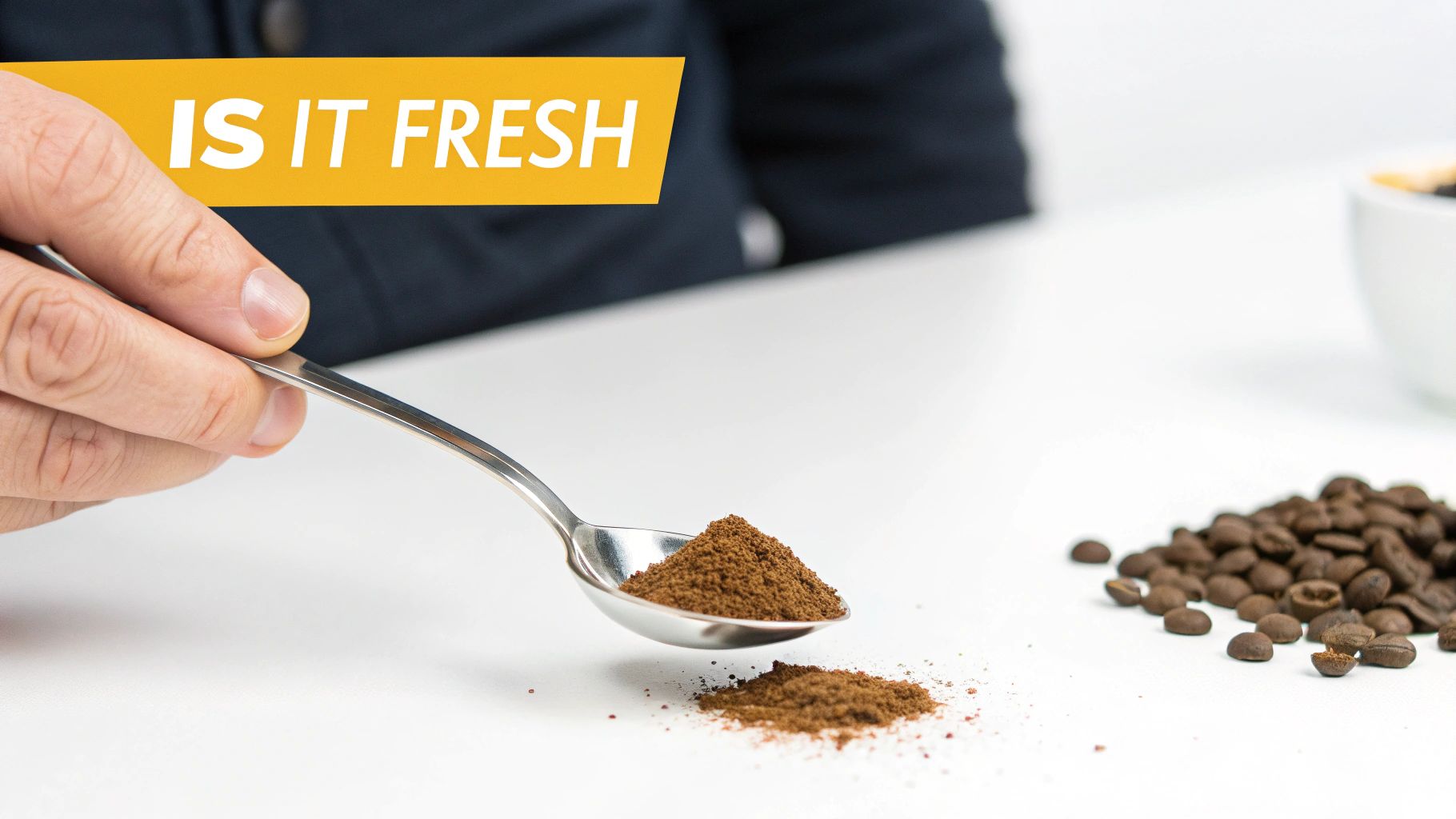
Thanks to its incredibly long instant coffee shelf life, you almost never have to worry about it becoming unsafe to drink. But that doesn't mean it will taste good forever. Forget looking for mold—that only happens with major moisture exposure. Instead, you just need to trust your senses to spot a decline in quality.
Check the Scent and Texture
Your nose is your first and best tool. Pop open the lid. You should get that familiar, welcoming coffee aroma. If what you smell is faint, dusty, or vaguely like cardboard, the coffee's best days are behind it. Those delicate aromatic compounds are the first to go, and a weak scent guarantees a weak flavor.
Next, take a look at the granules themselves. They should be loose and pour freely, like sand.
If you find hard, solid clumps or the entire jar has turned into a coffee brick, moisture has found its way inside. Moisture is the number one enemy of instant coffee, ruining both its flavor and its ability to dissolve.
The Ultimate Test: Taste and Dissolvability
Of course, the real proof is in the cup. Spoon some into hot water and see what happens. If you're left with stubborn clumps that refuse to dissolve no matter how much you stir, you know humidity has gotten to it. You can learn more about the science behind this in our guide on how instant coffee works.
Finally, give it a taste. Is the flavor flat, stale, or just plain bitter? If there's none of that rich coffee character left, it's time to let it go. While a long shelf life is a huge perk for producers in the massive global market, it doesn't freeze that perfect flavor in time. You can read more about the instant coffee market's growth on Mordor Intelligence to see just how big this industry is.
Your Top Questions About Instant Coffee Shelf Life, Answered
Let's clear up some of the most common questions about keeping your instant coffee fresh. Here are some quick, practical answers to help you get the best possible cup, every time.
Can I Drink Expired Instant Coffee?
Absolutely. In almost all cases, it's perfectly safe to drink. The date printed on the package is a "best-by" date, which is the manufacturer's guess for when the coffee will be at its peak flavor—it's not a hard expiration date for safety.
As long as your coffee has been stored correctly and you don't see any weirdness like mold or signs of moisture, it won't harm you. That said, the taste is another story. An old jar of instant coffee will taste dull, flat, and lifeless. So, while it's safe, it probably won't be very enjoyable.
Think of it this way: the "best-by" date is about flavor, not food safety. Your coffee will lose its personality long before it becomes unsafe to drink.
Does a 3-in-1 Coffee Mix Last as Long?
Not a chance. Those handy 3-in-1 packets with coffee, creamer, and sugar have a much shorter fuse. The oils and dairy in the creamer can go rancid, and the sugar is like a magnet for moisture.
These extra ingredients mean 3-in-1 mixes typically last only 6 to 18 months, a far cry from the years you can get from pure instant coffee. Always double-check the date on these, as they are much more perishable.
Why Did My Instant Coffee Get Hard and Clumpy?
If your instant coffee has turned into a solid brick, you've got a moisture problem. Clumping is the number one tell-tale sign that water has invaded the jar, ruining its quality and dramatically shortening the instant coffee shelf life.
This kitchen tragedy usually happens in a few ways:
- A wet spoon: It only takes a single, tiny drop of water to start a clumping catastrophe.
- A loose lid: If your container isn't sealed airtight, it will slowly suck in humidity from the air.
- Steamy storage spots: Keeping your coffee near the stove, dishwasher, or kettle is asking for trouble.
While it's not technically dangerous, the coffee is compromised. The clumps won't dissolve properly, and the flavor will be weak and just... off. The fix is simple: always use a completely dry spoon and store your coffee in a sealed container somewhere cool and dry.
Tired of playing the freshness guessing game? Cartograph Coffee delivers premium organic instant coffee in perfectly portioned packets that lock in that fresh-brewed flavor. Taste the difference that quality and care make. Explore our coffee today at cartographcoffee.com.