When you hear the term "organic certified coffee," what comes to mind? For many, it's a simple mark of quality, but it's actually a rock-solid guarantee. It means the coffee beans you're about to enjoy were grown and processed under strict guidelines that ban the use of synthetic pesticides, herbicides, and fertilizers.
Think of it as a farm-to-cup promise of purity and environmental stewardship. This certification isn't just a fancy sticker; it ensures the coffee meets demanding standards for soil health, biodiversity, and sustainable farming practices.
What the Organic Label Really Means
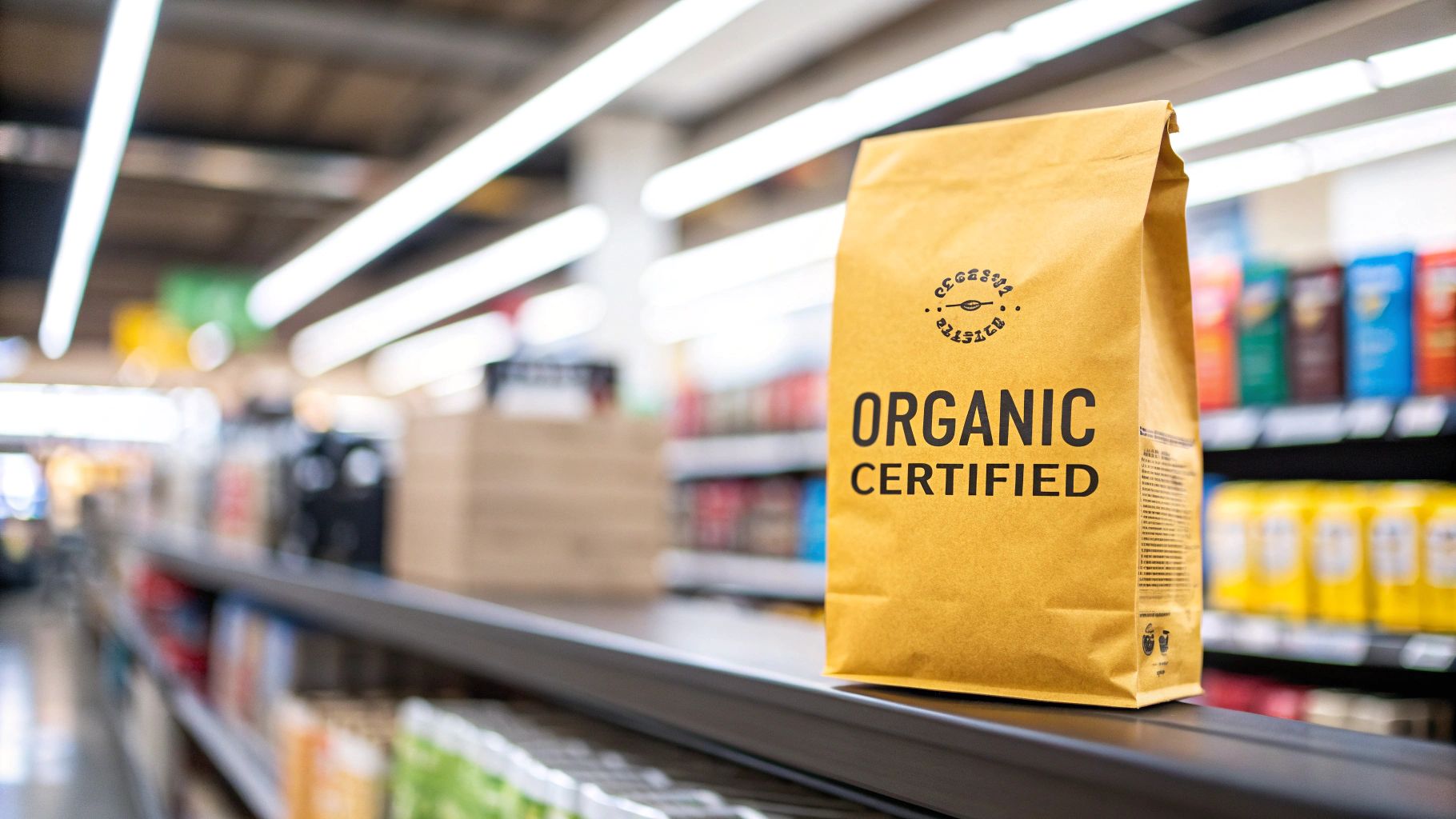
Spotting an official organic seal on a bag of coffee means you're looking at something much deeper than a marketing buzzword. It represents a serious commitment to a whole-systems approach to farming—one that enriches the land, protects wildlife, and keeps harmful chemicals out of the picture. This isn't just a suggestion; it's a standard verified by impartial, third-party auditors.
At its heart, organic coffee farming is all about working with nature, not against it. Instead of dousing crops in synthetic chemicals, farmers use time-tested, natural methods to manage their land and build healthy, living soil. This approach helps create a self-sustaining ecosystem where coffee plants can truly flourish.
Core Principles of Organic Coffee Farming
To earn that coveted organic certification, farmers have to play by a very specific set of rules. These principles are in place to protect the integrity of the coffee, all the way from the soil it grows in to the cup you hold in your hands.
Here's what it takes:
- No Synthetic Chemicals: The use of synthetic pesticides, herbicides, and fertilizers is completely off-limits. Instead, farmers rely on natural solutions like compost, cover crops, and even beneficial insects to manage pests and build soil fertility.
- GMO-Free: Genetically modified organisms have no place in organic agriculture. The coffee must be grown from natural, non-GMO seeds, period.
- Sustainable Practices: Farmers must actively use methods that promote ecological balance. This often includes practices like strategic crop rotation, conserving water, and protecting the natural habitats that exist on and around their land.
This commitment to natural farming isn’t just about what’s left out; it's about what’s put in. Healthy, vibrant soil is the foundation of delicious, high-quality coffee, allowing the bean's true flavor profile to shine.
A Promise of Purity and Transparency
Ultimately, the organic seal is a symbol of trust. It’s your assurance that the coffee has passed a demanding inspection and verification process. For busy professionals, health-conscious families, and outdoor adventurers who value both quality and convenience, that label provides some much-needed peace of mind.
Want to go a bit deeper? You can find out more about what makes coffee organic in our detailed guide. This standard connects you directly to a healthier planet and a purer coffee experience, which is exactly what we're all about here at Cartograph Coffee.
The Gatekeepers of the Organic Coffee Seal
So, who actually gets to decide if a coffee is organic? It’s not something a farmer can just claim on their own. That organic seal you see on the bag is a serious mark of trust, awarded and policed by incredibly thorough, independent organizations. These certifiers are the global gatekeepers, ensuring any coffee with their logo has met a strict, legally defined set of rules.
Think of them as the auditors of the agricultural world. They don't just take a farmer's word for it. They walk the fields, comb through records, and test the soil to make sure everything is up to snuff. This whole process is designed to guarantee that the organic promise is kept, from the seedling in the ground to the coffee in your cup.
The USDA Organic Seal
If you're buying coffee in the United States, the most familiar symbol is the green and white USDA Organic seal. This isn't just a pretty sticker; it's a federal guarantee managed by the U.S. Department of Agriculture. When you spot this seal, you know the coffee inside has cleared a high bar.
To get the nod from the USDA, a coffee farm has to prove it hasn't used any prohibited stuff—like most synthetic pesticides and fertilizers—for at least three years before the coffee is even harvested. It’s a genuine, long-term commitment to working with nature to build healthy soil.
Here’s what the USDA seal promises:
- No Synthetic Stuff: Farmers have to get creative with natural solutions like composting and introducing beneficial insects instead of reaching for synthetic pesticides, herbicides, or fertilizers.
- GMO-Free Zone: Genetically modified organisms are a hard no. They're banned from every step of the process.
- Yearly Check-ins: A USDA-accredited inspector has to visit the farm in person every single year to confirm they're still following all the rules.
This seal provides a consistent national standard, giving you a reliable benchmark for what "organic" really means.
Global Guardians of Organic Integrity
While the USDA is the big name in the U.S., organic coffee is a worldwide affair, with equally tough certifiers across the globe. You might also run into the EU Organic seal or the Japanese Agricultural Standard (JAS). They have different logos, but they're all playing the same game with the same core mission.
The EU Organic logo, known as the "Euro-leaf," is a green rectangle with stars forming a leaf shape. It’s required on all pre-packaged organic goods made and sold in the European Union. Its rules are right in line with the USDA's, with a heavy focus on protecting the environment, promoting biodiversity, and banning chemical inputs.
Over in Japan, the Japanese Agricultural Standard (JAS) seal is the official mark. If you want to sell coffee as organic in Japan, it must meet JAS standards, which also champion natural farming and outlaw synthetic chemicals and GMOs.
The great thing about this global system is something called equivalency. The USDA, EU, and JAS have all looked at each other's programs and agreed they're comparable. This means a coffee grown in Peru and certified by a USDA-approved agent can proudly wear the USDA seal in the States and often be co-labeled for sale in Europe or Japan without a hitch.
This network of certifiers creates a global system you can trust. It means that no matter where your organic certified coffee started its journey, it was held to an incredibly high standard. These gatekeepers are your assurance that the coffee is as pure as the land it came from.
Navigating Organic and Other Ethical Coffee Labels
When you're standing in the coffee aisle, the sheer number of seals and logos on a single bag can be a bit much. You’ll often spot an "Organic" seal right next to a "Fair Trade" logo or the little green frog from the Rainforest Alliance. While they all signal a better, more thoughtful cup of coffee, they don't all mean the same thing.
Think of these labels less as competitors and more as specialists, each with a distinct and vital mission. Getting a handle on what each one stands for helps you cut through the noise and pick a coffee that truly aligns with your values. A certified organic label is a rock-solid promise about the farming itself—what goes into the soil and, more importantly, what's kept out. Other labels zoom in on different, but equally crucial, parts of the coffee's journey from farm to cup.
What’s the Difference Between Organic, Fair Trade, and Rainforest Alliance?
Let's break down the main goals of the three labels you're most likely to see. Each one answers a different question about how your coffee was grown and sourced. Seeing them side-by-side really clarifies how they can work together to create a truly responsible product.
-
Organic Certification: This one is all about environmental purity and soil health. Its entire focus is on making sure the coffee was grown without any synthetic pesticides, herbicides, or GMOs. The promise here is straightforward: natural farming that keeps harmful chemicals out of the ecosystem and out of your morning brew.
-
Fair Trade Certification: This label shifts the focus to economic fairness and empowering farming communities. It guarantees that the farmers who grew the beans received a stable, fair price for their crop. It also champions safe working conditions and funds community development projects, putting the people behind the product first.
-
Rainforest Alliance Certification: You'll know this one by its green frog seal, and its mission is all about biodiversity and sustainable land management. This certification means the farm is run in a way that protects forests, conserves wildlife habitats, and supports the well-being of workers and their families. It’s about farming in harmony with nature.
When you see multiple seals on a bag, it's a powerful statement. A coffee that is both Organic and Fair Trade, for example, tells a complete story: it was grown without synthetic chemicals and the farmers were paid fairly for their hard work. It's a win-win for both environmental and social responsibility.
How These Labels Work Together
The great thing is, these certifications aren't mutually exclusive. In fact, they often complement each other to paint a fuller picture of what "ethical sourcing" really means. A farmer might start by getting organic certification to restore their land, then add Fair Trade to ensure their cooperative can command a better price on the global market.
This chart gives you a look at the major global gatekeepers of organic certification—the big names like USDA Organic, EU Organic, and JAS.
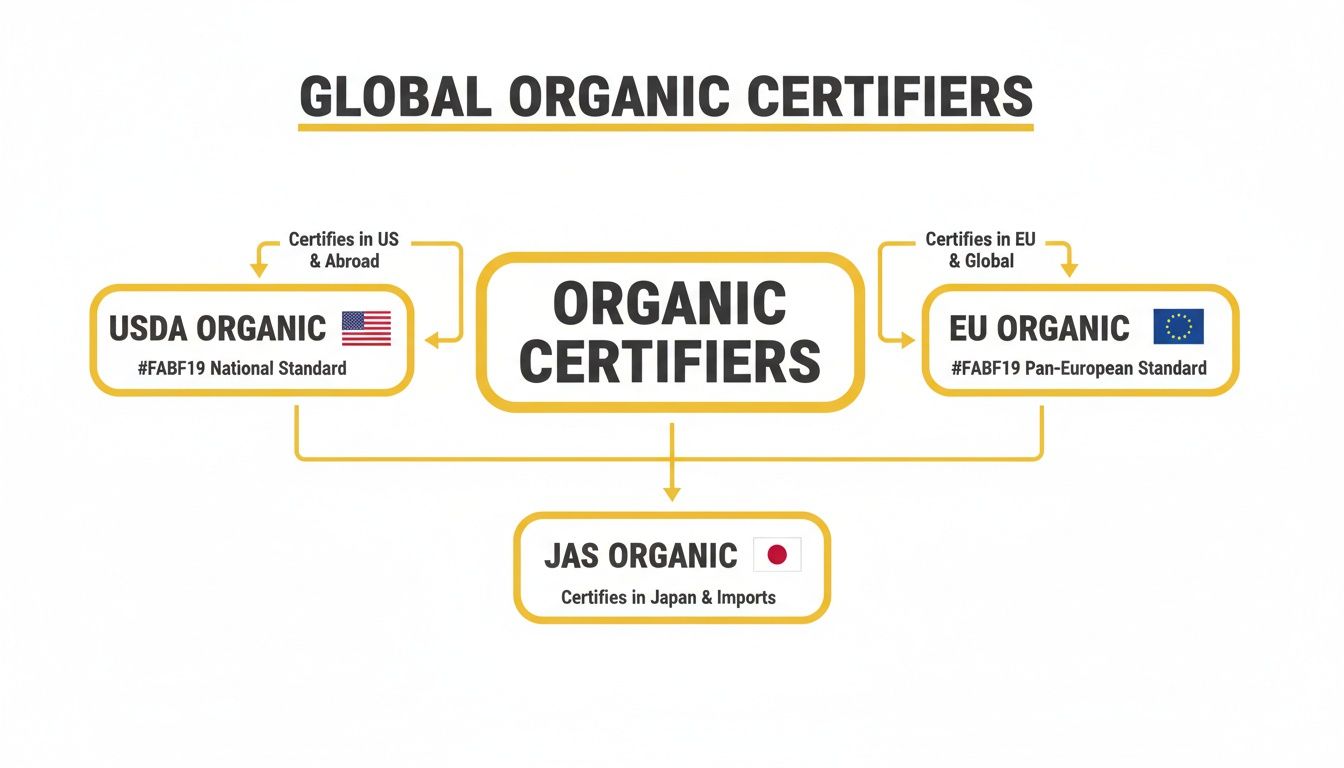
Each of these bodies sets a clear, verifiable standard for what "organic" means in their part of the world. This gives you, the coffee drinker, a trustworthy benchmark for agricultural purity, no matter where the beans come from.
Comparing Key Coffee Certification Seals
Here’s a quick-glance table to help you understand the primary focus of each major certification and what it promises for your coffee.
| Certification | Primary Focus | What It Guarantees For Your Coffee |
|---|---|---|
| USDA/EU Organic | Environmental Purity & Soil Health | Grown without synthetic pesticides, herbicides, fertilizers, or GMOs. |
| Fair Trade | Economic Fairness & Social Equity | Farmers received a minimum price and a premium for community investment. |
| Rainforest Alliance | Biodiversity & Ecosystem Protection | Farmed using methods that protect wildlife, forests, and water resources. |
Choosing a coffee with any one of these labels is a fantastic step. If you’re especially passionate about making sure farmers get a fair deal for all their hard work, you might want to learn more about the specifics of Fair Trade coffee in our deep-dive article.
Ultimately, by understanding what each seal represents, you can confidently pick a coffee that reflects your commitment to a healthier planet and a more equitable world.
The Journey from an Organic Farm to Your Cup
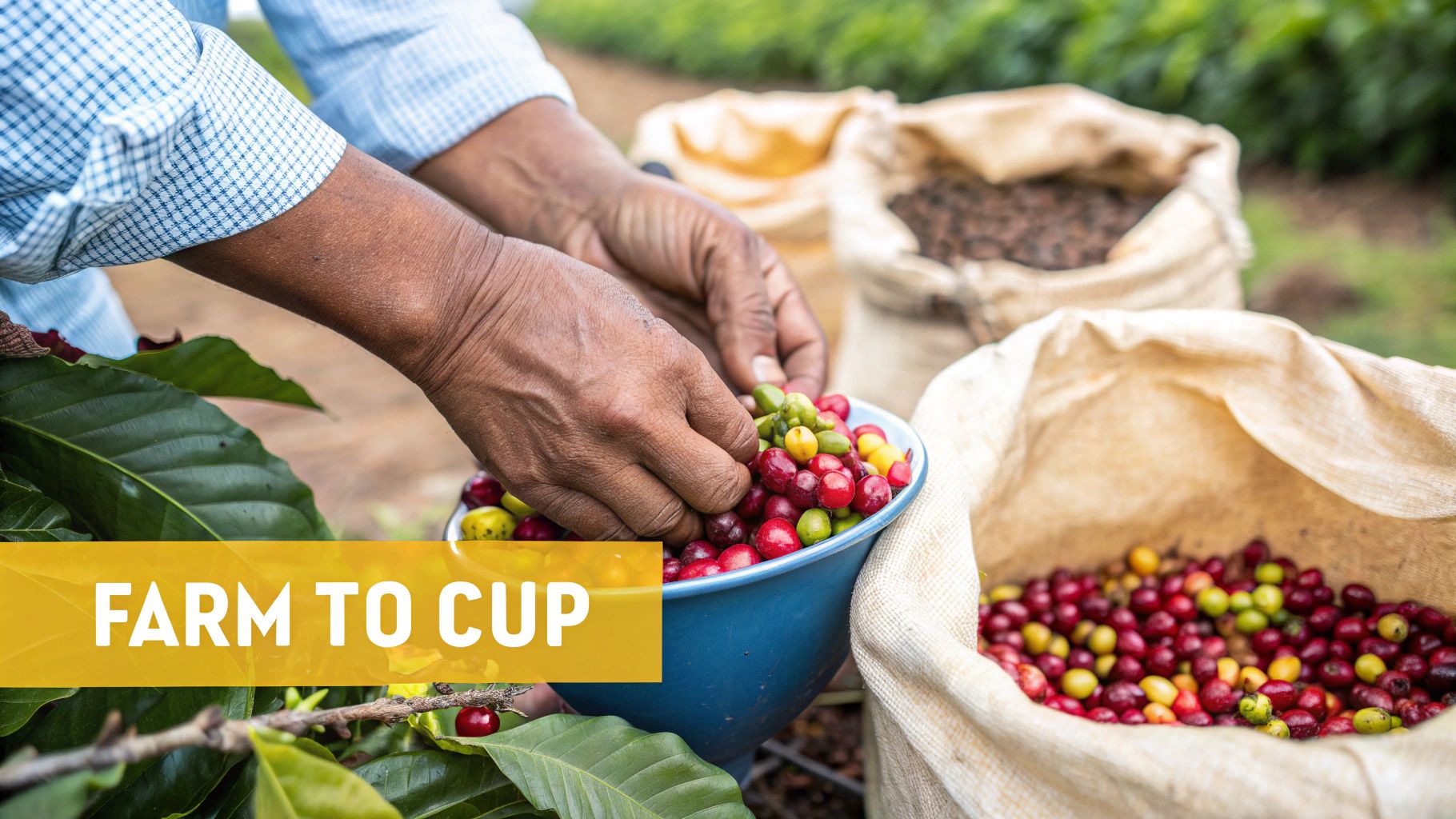
The path an organic certified coffee bean takes from a distant mountainside to your morning mug is one of incredible dedication. It doesn't just start with a seed; it starts with the soil. For an organic farmer, the earth is everything. They aren’t just growing coffee; they’re cultivating a living ecosystem.
Instead of quick-fix synthetic fertilizers, these farmers spend years enriching the ground with natural compost and cover crops. This isn't the easy way, but it's the right way for the long haul. It builds healthy, resilient soil that allows the coffee plants to flourish on their own terms, producing a coffee that genuinely tastes of its pristine origins.
Cultivating Coffee in Harmony with Nature
So, how do you handle pests and weeds without chemical sprays? It takes a bit of creativity and a whole lot of respect for the local environment. Organic farmers have a full toolbox of natural techniques that work with the land, not against it.
They might use methods like:
- Companion Planting: Growing other crops, like citrus or bean plants, right alongside the coffee. These companion plants can do all sorts of clever things—attract good insects that eat pests, add nitrogen to the soil, or even act as a natural pest repellent.
- Natural Barriers: Planting native species to create physical barriers. This simple trick helps stop soil erosion and can keep unwanted critters out of the coffee groves.
- Manual Weeding: Sometimes, the best approach is the most direct. Farmers and their teams get their hands dirty, pulling weeds by hand to make sure the coffee plants get all the nutrients, water, and sunlight they need to thrive.
All this hands-on work is a huge part of what makes organic coffee so special. It's about letting nature lead. The result is coffee cherries that ripen slowly, developing a much richer and more complex flavor profile.
When the cherries finally hit that perfect, deep red color, they're often picked by hand. This selective harvesting is a crucial quality step, ensuring only the absolute best beans move on to the next stage.
Securing the Chain of Custody
But the journey is far from over once the coffee is picked. Every step that follows—processing, drying, and shipping—has to be carefully managed to protect the coffee's organic integrity. This is where the chain of custody comes in.
The chain of custody is a documented, unbroken trail that tracks organic coffee from the farm all the way to the final bag. Think of it as a guarantee, verified by rigorous audits, ensuring that organic beans are never mixed with or tainted by non-organic ones.
It’s like a secure pipeline from the farm to the roaster. Certifiers inspect every single link in that chain: the mill where the beans are processed, the warehouse where they're stored, and even the roasting facility. This strict separation means you can be 100% confident that the coffee you're drinking is exactly what it claims to be.
This meticulous process is scaling up as more people seek out organic options. Organic certified coffee is booming in places like Ethiopia, where sustainable farming is leading the charge. In fact, global forecasts for the 2025/26 crop year predict record-breaking output, thanks in part to the success of these organic practices. You can explore the data behind this global coffee boom to see just how much certified production is growing.
Even the final steps of roasting and packaging fall under strict organic rules. Roasters must use dedicated equipment and keep immaculate records. It’s this painstaking attention to detail, from a faraway farm to your cup, that makes organic coffee a true product of passion—a quality that anyone, from a busy commuter to a backcountry camper, can taste and appreciate.
Health and Environmental Benefits of Choosing Organic
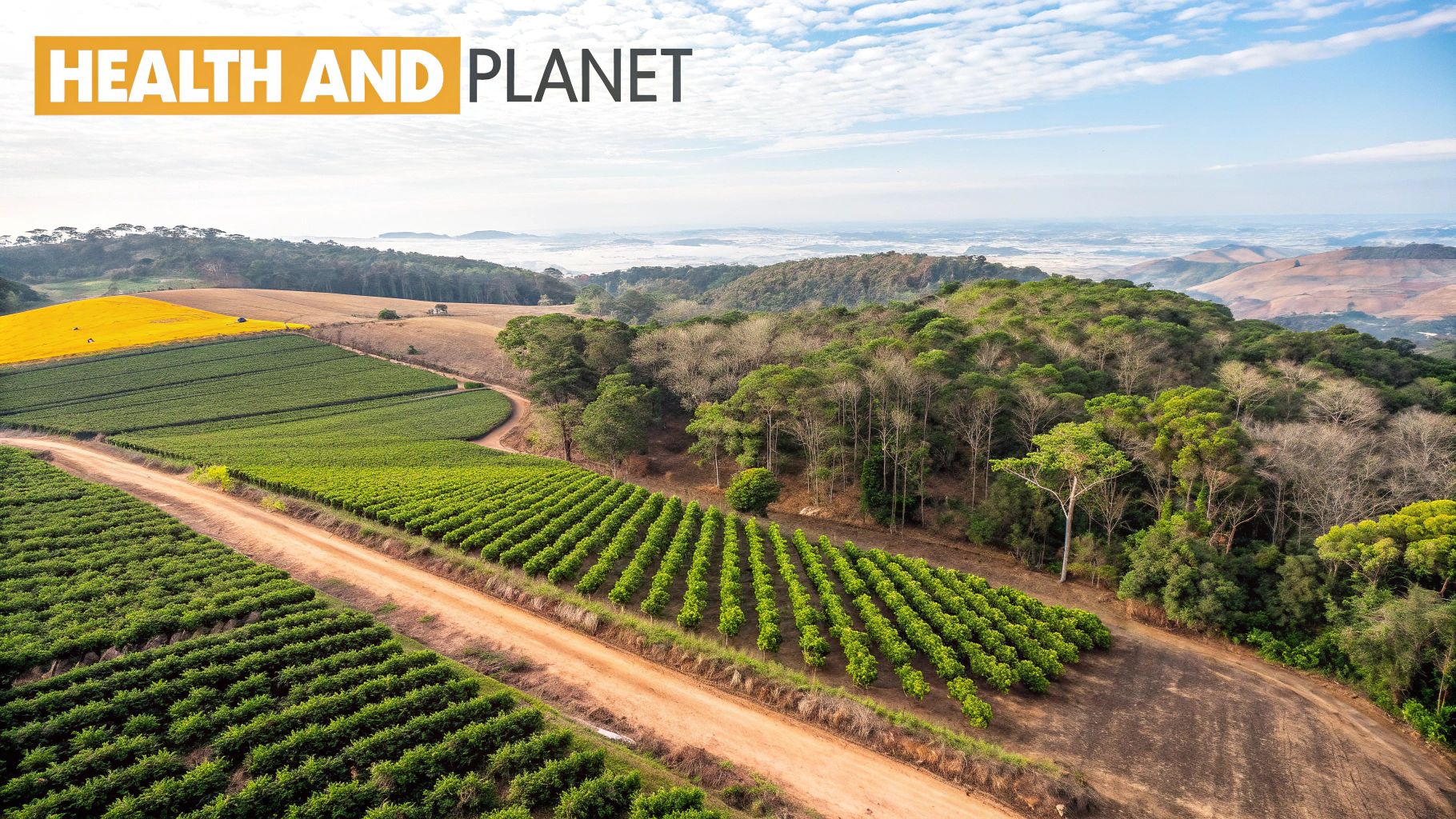
When you choose an organic certified coffee, you’re doing more than just picking a brew for your morning. You're making a conscious decision that sends positive ripples out into the world, benefiting both your own well-being and the health of our planet. That little seal on the package is your connection to a chain of good that starts in the soil and ends in your cup.
And it’s a choice more and more people are making. The tide is turning toward sustainable options, with a recent survey showing that 82% of drinkers are willing to pay a premium for products that reflect their values. This isn't a niche trend; it's a major market shift. Experts project the organic coffee market will grow by a staggering USD 5.24 billion between 2025 and 2029, all thanks to people who care about what they put in their bodies and the impact of their purchases. You can dive deeper into the numbers in Technavio's industry analysis.
A Healthier Choice for Your Body
For many, the biggest draw of organic coffee is simple peace of mind. The certification is a rock-solid guarantee that the beans were grown without synthetic pesticides, herbicides, or fertilizers. No nasty chemical residues, period.
This means you can be confident that what you're tasting is pure, unadulterated coffee. Nothing else.
Beyond what’s not in the coffee, there’s a lot to say about what is. Organic farming is all about building rich, healthy soil. That nutrient-dense earth can then produce more vibrant, nutrient-dense coffee beans. While the science is still catching up, it just makes sense that a healthier start leads to a better final product—a smart move for anyone building a clean, wholesome lifestyle.
A Powerful Vote for the Planet
This is where the impact really multiplies. The environmental benefits of organic coffee farming are huge, and they start the moment a farm rejects synthetic chemicals. By working with nature instead of against it, these farms become havens for the entire local ecosystem.
Here’s how organic practices create a healthier planet:
- Champions Biodiversity: Organic farms are buzzing with life. Instead of sterile rows of a single crop, they often feel more like lush, wild gardens. By using natural pest control and avoiding harsh chemicals, they become safe habitats for birds, insects, and wildlife, turning a simple coffee farm into a critical ecological sanctuary.
- Improves Soil Health: Rather than stripping the land of its nutrients, organic methods like composting and planting cover crops actually build healthier soil over time. This rich, living soil holds water more effectively and is far less prone to erosion, preserving the land for generations to come.
- Protects Water Resources: This one is crucial. With no synthetic fertilizers or pesticides, there’s no toxic runoff to pollute nearby streams, rivers, or groundwater. This keeps local water sources clean and safe for both surrounding communities and the wildlife that depends on them.
Every time you purchase organic certified coffee, you are directly supporting a system of agriculture that heals the earth. It's an investment in sustainable farming that conserves precious resources and fosters a more balanced relationship with nature.
Ultimately, choosing organic is a win-win. It’s a simple action that benefits everyone, from the family who wants pure ingredients to the camper who cherishes wild, pristine landscapes.
Your Top Organic Coffee Questions, Answered
Even after getting the basics down, you probably still have a few questions. Does organic coffee actually taste different? Is it worth the extra few bucks? And how can something like instant coffee really be organic? Let's dive into these common questions to clear everything up.
This section gives you straight-up, practical answers. We'll show you what makes organic certified coffee a standout choice and how we at Cartograph Coffee make sure our instant coffee lives up to that promise.
Does Organic Certified Coffee Actually Taste Different?
While everyone’s palate is different, many coffee lovers and pros agree: organic beans often have a cleaner, brighter, and more defined flavor. This isn't just a happy accident—it’s a direct result of how they're grown.
The magic is in the soil. Organic farming is all about building up rich, healthy soil that’s buzzing with life. This strong foundation lets the coffee plants soak up a wider range of nutrients, which in turn creates more complex and interesting flavors in the beans.
Think of it like the difference between a garden-grown tomato and one from a massive commercial farm. The tomato from your backyard, grown in soil you've carefully tended, will almost always taste sweeter and more, well, tomato-ey. Coffee works the same way.
By skipping the synthetic chemical residues that can mute a coffee's natural flavor, organic farming lets the bean's unique origin—its terroir—shine through loud and clear. For us, starting with incredible organic beans is the non-negotiable first step to crafting an exceptional instant coffee.
How Can Instant Coffee Be Certified Organic?
This is a great question, and it gets right to the core of what certification is all about. The organic seal isn't just for the farm; it covers the product's entire journey, from the soil right up to the sealed package. For an instant coffee to earn that seal, every single step has to follow strict organic rules.
It’s an unbroken chain of custody that makes a product like ours possible. Here’s how it works:
- The Beans: It all starts with 100% organic certified coffee beans, sourced from farms that have been thoroughly audited.
- The Facility: The place where the beans are brewed and freeze-dried has to be certified organic, too. This proves their equipment, cleaning routines, and storage methods prevent any contact with non-organic products.
- The Process: Absolutely no synthetic chemicals, additives, or unapproved ingredients can be used during the brewing or drying stages.
It’s a demanding process that requires careful tracking and oversight. We're proud to meet these standards to ensure our convenient instant coffee delivers the exact same organic integrity you'd expect from a bag of whole beans.
Is Organic Coffee Worth the Higher Price?
It’s true—organic coffee often costs a little more, and it's totally fair to ask why. That price difference reflects the real costs and deeper value packed into every organic bean. Simply put, organic farming is more hands-on and often yields less coffee per acre than conventional farming, which leans on chemical shortcuts.
The certification process itself also has costs, from annual inspection fees to the time spent on detailed record-keeping. But that extra cost is a powerful investment in a much better system.
When you buy organic certified coffee, you're paying for:
- A product free from synthetic pesticides and chemicals.
- Farming methods that protect ecosystems, boost biodiversity, and keep waterways clean.
- Safer conditions for farmworkers who aren't exposed to toxic substances.
- Long-term sustainability that builds healthy soil instead of stripping it.
For many people, the real-world benefits for their health and the planet make organic coffee an easy choice. The market is showing this, too. The global organic coffee market was valued at $10.79 billion in 2024 and is expected to hit $17.58 billion by 2029. This growth is fueled by people who see the value beyond the price tag—in fact, 82% of coffee drinkers globally are willing to pay more for sustainably produced coffee. You can read more about the explosive growth of the organic coffee market to see how this trend is reshaping the industry.
How Do I Know a Coffee Is Genuinely Organic?
In a world full of marketing buzzwords, this is the most important question of all. The easiest, most reliable way to know if a coffee is truly organic is to look for an official certification seal right on the package.
Seals like the USDA Organic logo in the U.S. or the EU Organic "Euro-leaf" are legally protected. A company can't just slap one on their packaging; they have to earn it by passing a tough, third-party audit of their entire supply chain.
If a coffee’s label says things like "organically grown" or "100% natural" but doesn't have an official seal, it hasn't been verified by an accredited certifier. The farmer might be using organic practices, but there's no independent guarantee.
Brands that are serious about transparency, like Cartograph Coffee, proudly display these certifications on our products. It’s your ultimate proof of authenticity and quality, giving you peace of mind whether you're making a quick cup before work or sipping one on a quiet mountaintop. If you want to explore other trusted options, check out our guide to some of the best organic coffee brands on the market today.
At Cartograph Coffee, we believe that exceptional coffee should be simple, pure, and accessible anywhere your journey takes you. Our organic instant coffee is crafted for those who refuse to compromise on quality, even when life gets busy. Experience the difference and explore our collection today.