So, what does it really mean when you see the word "organic" on a bag of coffee? It’s not just a buzzword. It’s a promise that the coffee was grown and processed following a strict set of earth-friendly rules—no synthetic pesticides, herbicides, or fertilizers allowed.
Think of it as farming in partnership with nature. Instead of fighting against it with chemicals, organic coffee farming creates a healthy, balanced environment, almost like a natural forest. This approach ensures the coffee you drink is clean and the land it came from is respected.
The Core Principles of Organic Coffee
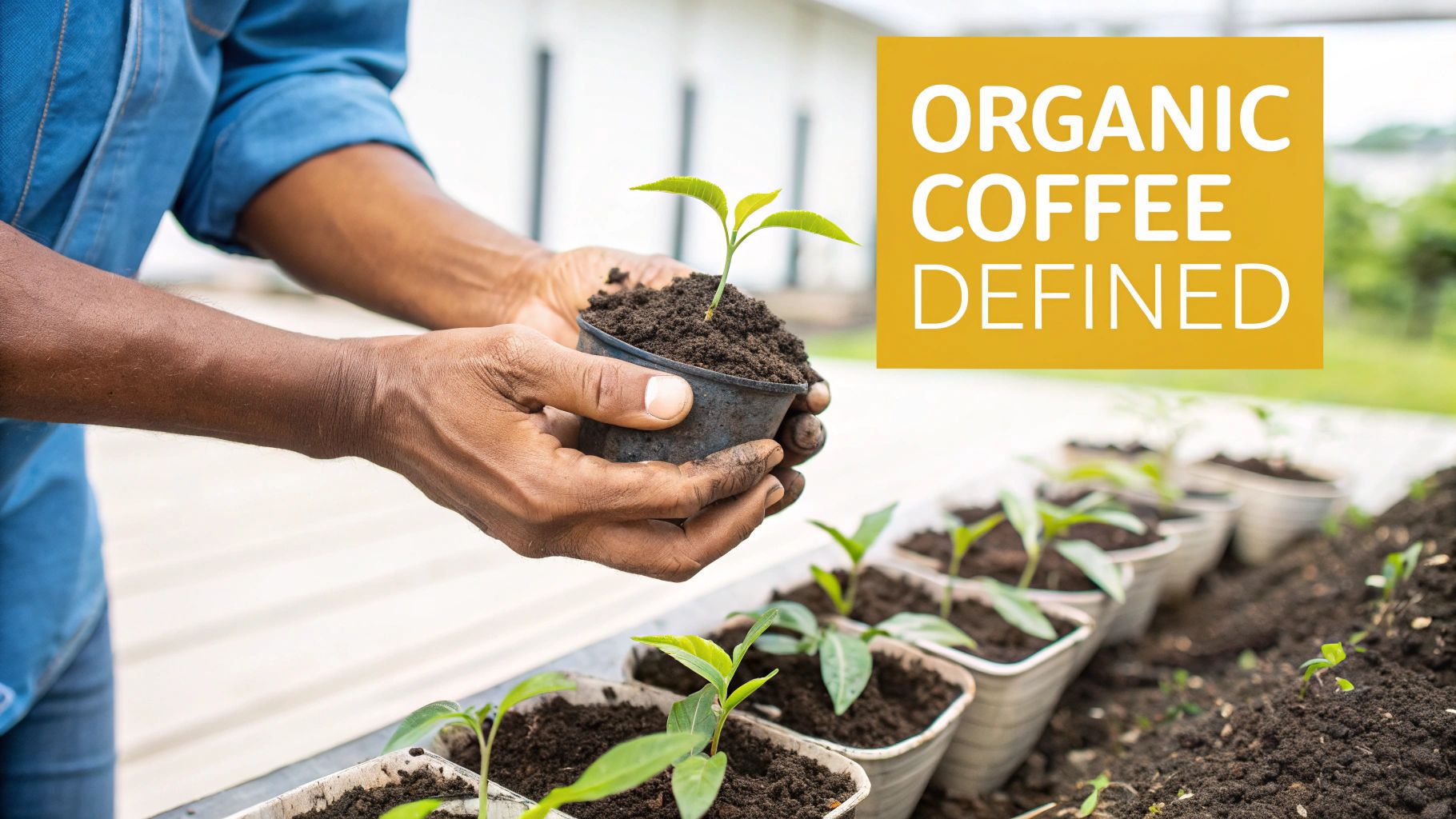
That little "organic" seal on your coffee bag signifies a deep commitment to a specific agricultural philosophy. It's a guarantee that from the moment the coffee was a tiny seedling to the final roasted bean, it was nurtured in a system designed to work with the environment.
This approach is a world away from conventional farming's reliance on synthetic chemicals. Organic farmers use natural methods to enrich the soil and manage pests, fostering a self-sustaining ecosystem where coffee plants can truly flourish.
What Organic Farming Prohibits
At its heart, the definition of organic coffee is built on a very clear list of what’s not allowed. To earn that label, a farm must steer clear of:
- Synthetic Pesticides and Herbicides: Forget chemical sprays for weeds or insects. Organic farmers get their hands dirty with manual weeding or bring in beneficial insects to handle pests naturally.
- Artificial Fertilizers: Instead of manufactured, nitrogen-based fertilizers, organic farms build rich, fertile soil using things like natural compost, animal manure, and planting "cover crops."
- Genetically Modified Organisms (GMOs): Every organic product, coffee included, must be completely free from genetic engineering.
This isn't just a casual commitment. The global organic coffee market was valued at a whopping USD 7.92 billion and continues to climb, driven by people who want sustainably grown coffee. For a farm to even be considered for certification, it has to follow these rules for at least three years. After that, they face ongoing inspections to prove they’re sticking to the standards. You can learn more about the organic coffee market growth and see the full picture in industry reports.
The essence of organic coffee lies in its holistic approach. It’s about cultivating a healthy farm ecosystem that produces high-quality coffee while respecting the planet’s natural cycles.
Ultimately, when you choose organic, you’re backing a system that puts the environment first. It’s a method that ensures your coffee is as pure and clean as the process used to grow it.
Organic vs Conventional Coffee At a Glance
To make it even clearer, let's break down the fundamental differences between organic and conventional coffee farming. This quick comparison shows just how different the two approaches really are.
| Farming Practice | Organic Coffee | Conventional Coffee |
|---|---|---|
| Fertilizers | Natural compost, manure, cover crops | Synthetic, chemical-based fertilizers |
| Pest Control | Natural predators, manual removal | Synthetic chemical pesticides |
| Weed Control | Mulching, manual weeding, ground cover | Synthetic chemical herbicides |
| Biodiversity | Encouraged (shade-grown, diverse plants) | Often discouraged (sun-grown monoculture) |
| Soil Health | Top priority; built with natural matter | Often depleted by chemical use |
| GMOs | Strictly prohibited | Allowed in some regions |
As you can see, the divergence is stark. Organic farming is a proactive, long-term investment in the health of the entire farm ecosystem, while conventional farming often focuses on short-term yield using synthetic inputs.
The Organic Farming Philosophy From Soil to Sip
When you dig past all the rules and official seals, you'll find that organic coffee farming is really a whole different way of thinking. It's less about ticking boxes on a checklist and more about treating the farm as a complete, living ecosystem. The whole point is to work with nature's rhythms, not against them.
Imagine an organic farm as a bustling, self-contained little world. Every single piece plays a part, from the tiniest microbes in the dirt to the birds nesting in the canopy overhead. The farmer is less of a factory manager and more of a caretaker, gently guiding these natural systems to create a place where coffee can flourish on its own terms, without a drop of synthetic chemicals.
Building a Living Foundation with Soil
It all starts from the ground up—literally. For an organic farmer, the soil isn't just dirt; it's a dynamic, living community. Instead of pumping the plants full of chemical fertilizers, the focus is on feeding the soil, letting the rich, healthy earth do the work of nourishing the coffee.
So, how do they do it? It comes down to a few core practices:
- Composting: All that leftover coffee pulp, leaves, and other farm waste gets turned back into a rich compost, basically a superfood for the soil's microscopic critters.
- Cover Crops: Farmers will plant things like legumes between the coffee rows. These plants are fantastic at pulling nitrogen from the air and fixing it into the soil, acting as a natural fertilizer while also stopping erosion.
- Mulching: Spreading a thick blanket of organic matter on the ground is a game-changer. It keeps moisture in the soil, smothers weeds, and slowly breaks down to provide a steady trickle of nutrients.
This dedication to healthy soil creates a powerful, resilient base that’s better at holding water and grows stronger, more vibrant coffee plants.
Cultivating Biodiversity as a Natural Defense
Conventional agriculture often defaults to "monoculture"—huge fields of just one crop. It’s efficient, but it's also incredibly fragile and a magnet for pests. An organic coffee farm, on the other hand, is a picture of diversity.
The philosophy here is simple but incredibly effective: a diverse ecosystem is a strong ecosystem. By encouraging a rich variety of plants and animals, the farm essentially builds its own immune system.
Take shade-grown coffee, a common practice on organic farms. Here, the coffee bushes grow under a canopy of taller, native trees. These trees aren't just for shade; they become a home for birds and beneficial insects that naturally prey on coffee pests. Suddenly, you don't need chemical pesticides. The farm itself becomes a sanctuary for local wildlife, protecting the balance of the entire region. This intricate web of life is what truly makes organic coffee a sustainable choice, from the soil right to your morning cup.
How a Coffee Farm Earns the Organic Seal
When you see an organic seal on a bag of coffee, it’s more than just a fancy sticker. It’s the final stamp of approval on a long and demanding journey, a testament to a farmer's deep commitment to quality and sustainability. Earning that certification isn't a simple weekend project; it's a rigorous, multi-year overhaul of the entire farm, all to ensure every single bean meets incredibly strict standards.
The whole process kicks off with a massive first step: the transition period. A farm can't just flip a switch and become organic. It has to go through a three-year conversion process where not a single prohibited substance—no synthetic fertilizers, no chemical pesticides—is allowed to touch the soil. Think of it as a detoxification, giving the land time to purge old chemical residues and start rebuilding a healthy, living ecosystem from the ground up.
The Application and Inspection Gauntlet
After that three-year detox, the real paperwork begins. Farmers have to put together a highly detailed application, creating what’s called an Organic System Plan. This isn't just a form to fill out; it's a comprehensive blueprint that maps out every single practice on the farm. We're talking everything from their specific soil management techniques and natural pest control methods to how they process the beans and keep their records.
Next up, an accredited certifying agent shows up for an exhaustive on-site inspection. This is a top-to-bottom audit. The inspector walks the fields, verifies that the farm's real-world practices match the written plan, scrutinizes the soil, checks storage facilities, and interviews the team to ensure everyone is on the same page. And this isn't a one-and-done deal. To keep their organic status, farms have to pass these intense inspections every single year.
This whole process is designed to protect the clean, simple journey from healthy soil to your morning cup.
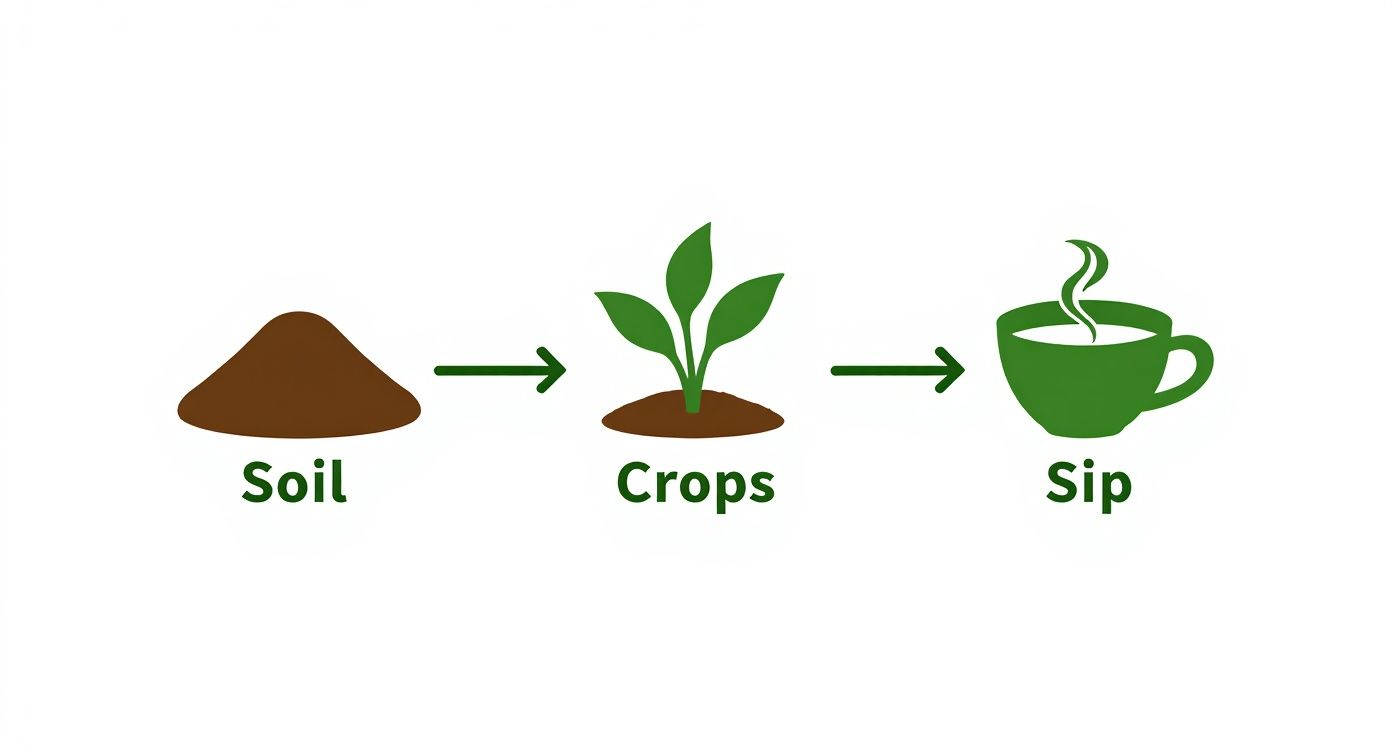
As you can see, the entire philosophy connects healthy land management directly to the quality of the coffee that ends up in your mug.
Global Standards and What the Labels Mean
While the USDA Organic seal is the one most of us see in the United States, it’s part of a bigger global picture. Similar tough certifications exist all over the world, like the EU's organic logo. These organizations often have equivalency agreements, which basically means they trust each other's standards. So, coffee that's certified organic in one country is recognized as meeting the same high bar in another.
This global network is crucial for coffee. Much of the world's organic coffee comes from Latin America, with powerhouses like Peru, Colombia, and Honduras leading the charge. For all their hard work growing beans without synthetic inputs, farmers can earn price premiums of up to 30% more for their certified crop. Of course, this is backed by a meticulous system of record-keeping and those regular audits. You can find more details in this report on the Latin American organic coffee market.
As a buyer, it also helps to know exactly what the labels on the package mean. Here’s a quick breakdown:
- 100% Organic: Just what it sounds like. Every single ingredient in the package is certified organic.
- Organic: This means at least 95% of the ingredients are certified organic. The remaining 5% must be non-GMO and on an approved-substances list.
- Made with Organic Ingredients: This label means the product is made with at least 70% certified organic ingredients.
It's a meticulous, multi-stage process, but it's what ensures that when you see that organic seal, you can trust it represents a genuine commitment to chemical-free farming, from the soil all the way to your sip.
The Real-World Impact of Choosing Organic Coffee
Every choice you make in the coffee aisle sends a ripple out into the world, traveling from your kitchen right back to the hands that picked the beans. Grabbing a bag of organic coffee isn't just about personal taste—it's a conscious vote for a system that’s healthier for both people and the planet. That purchase directly supports farming that values long-term ecological balance over short-term chemical fixes.
The impact starts with what's actually in your cup. It’s a little-known fact that conventional coffee is one of the most chemically-treated crops out there. When you opt for organic, you’re sidestepping potential residues from synthetic pesticides and herbicides, making sure your morning brew is as clean as it is delicious.
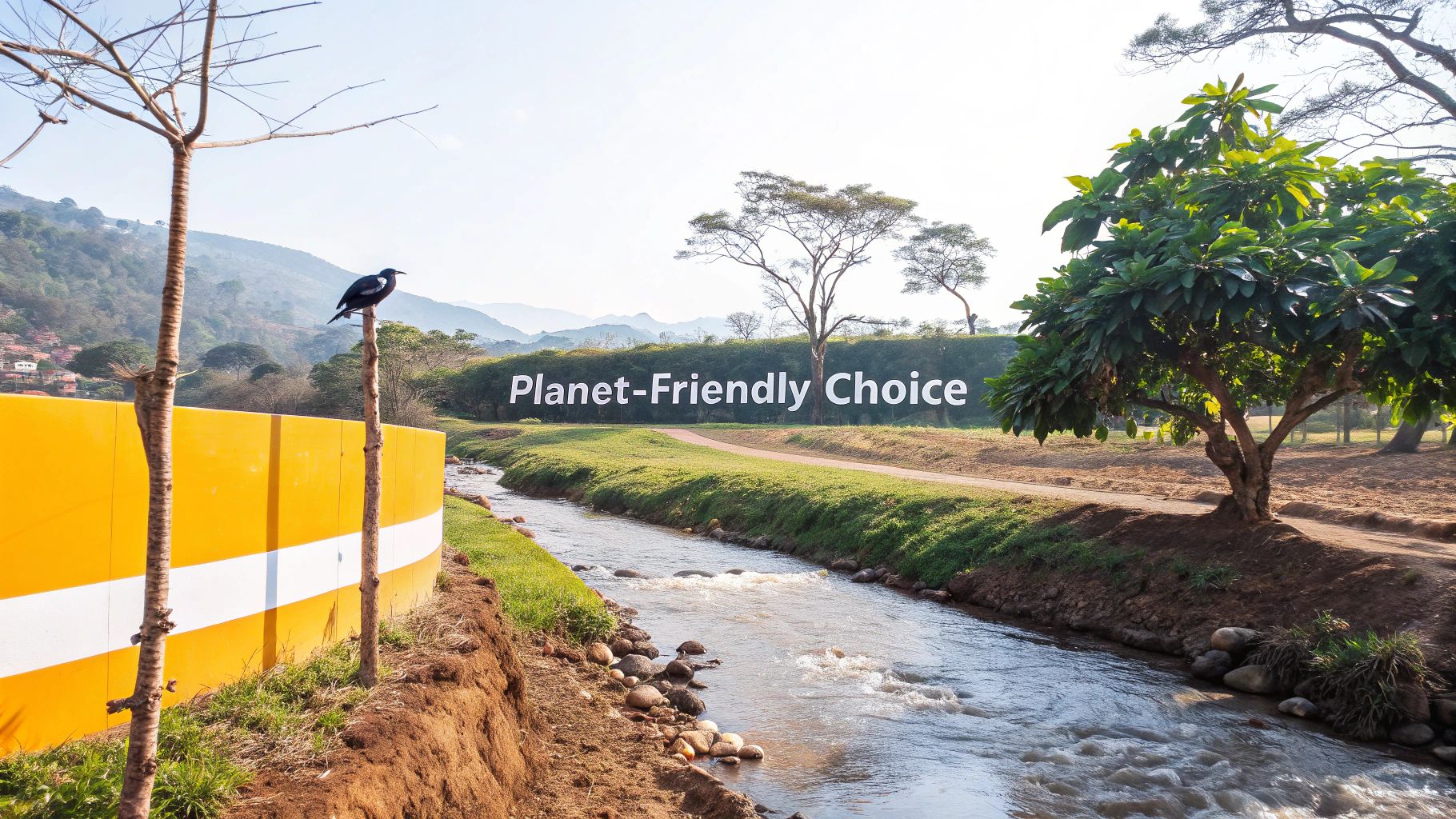
A Healthier Planet, One Bag at a Time
The environmental benefits of farming coffee organically are huge, and they don't stop at the farm's edge. When farmers stop using synthetic chemicals, the entire local ecosystem gets a chance to breathe and recover.
Water quality sees one of the biggest improvements. Without chemical fertilizers and pesticides, there’s no toxic runoff poisoning nearby streams, rivers, and groundwater. This is a game-changer for aquatic life and it helps ensure local communities have access to cleaner drinking water—a resource we all depend on.
Plus, the soil itself becomes a superhero in the fight against climate change. Organic practices like composting and cover cropping create rich, living soil that’s buzzing with microbial activity. Healthy soil like this is a carbon-storing powerhouse, pulling carbon dioxide out of the atmosphere and locking it safely underground.
By choosing organic, you are directly supporting farms that act as carbon sinks, improve water purity, and create safe havens for wildlife. It's a simple action with a powerful, positive outcome.
These farms aren't sterile, silent fields. They're bustling habitats. The shade trees required for much organic coffee cultivation become homes for migratory birds, helpful insects, and other animals, protecting the intricate web of biodiversity that large-scale industrial farming often flattens.
Your Purchase as a Statement
Every time you buy a bag of certified organic coffee, you’re sending a clear signal to the entire coffee industry. You’re telling roasters, importers, and retailers that you care about environmental stewardship, the well-being of farmworkers, and a pure product. This demand from coffee lovers is what really pushes more farmers to make the switch to sustainable methods.
The differences in how your coffee is grown are massive, and knowing them can make you a much smarter shopper. To really get into the weeds, you can explore the key distinctions between organic coffee vs regular coffee in our detailed comparison. At the end of the day, your choice is an investment in a cleaner, healthier food system for everyone.
Does Organic Coffee Actually Taste Better?
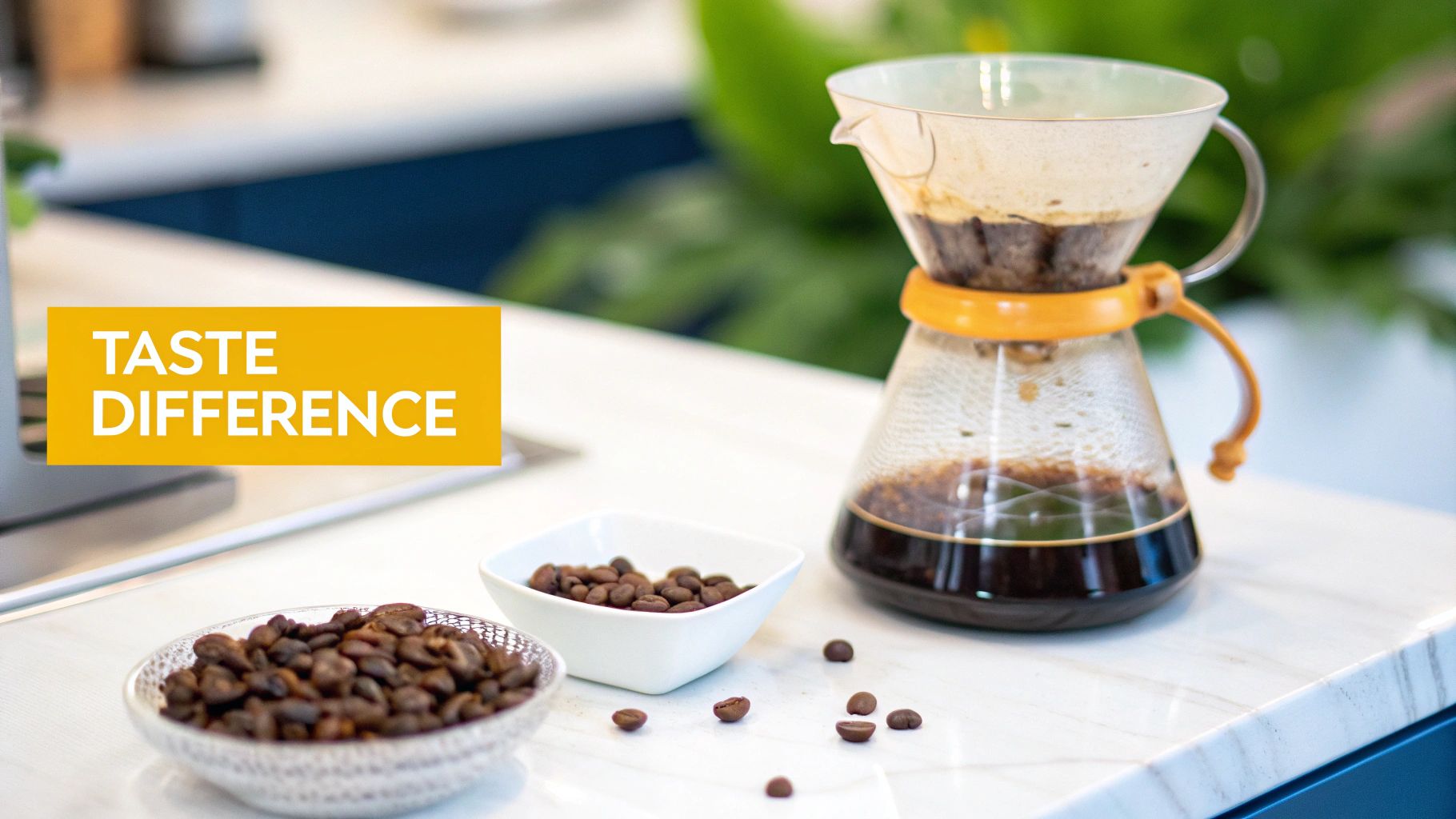
This is the real question, isn't it? For any coffee lover, it all comes down to what’s in the cup. Does that little "organic" seal actually mean you're getting a better-tasting coffee?
Well, "organic" isn't a flavor note like "caramel" or "citrus." But the farming practices required to earn that label absolutely create the right conditions for a truly superior coffee.
Think about it like this: Compare a mass-produced, conventionally grown tomato to one from a small organic farm. The first might be watery and bland, pushed to grow fast with synthetic fertilizers. The organic one, nurtured in rich, living soil, is often bursting with deep, complex sweetness. The very same principle applies to coffee cherries.
Healthy soil is the bedrock of flavor. The organic approach, with its emphasis on compost and natural soil health, allows the coffee plant to pull in a richer, wider array of nutrients. Those nutrients find their way into the cherries, and ultimately, into the beans we roast and brew.
How Farming Practices Shape the Flavor
It’s less about the label itself and more about the methods behind it. Several farming techniques common in organic coffee production have a direct and powerful impact on the final flavor of the bean.
One of the biggest game-changers is shade-growing. A huge number of organic coffee farms cultivate their plants under the protective canopy of a diverse forest. This isn't just a win for local wildlife—it also forces the coffee cherries to ripen much more slowly.
A slower maturation period allows the coffee cherry to develop more complex sugars and acids. This results in a denser, sweeter, and more aromatic coffee bean with a richer, more profound flavor profile.
This patient, deliberate process is a world away from sun-drenched conventional farms, where cherries often ripen too quickly, resulting in a flatter, less developed taste. Put simply, the organic method gives the bean more time to build its character.
What to Expect in Your Cup
So, while not every single organic coffee will blow away every conventional one—things like the roast profile and brewing method are still hugely important—the potential for greatness is definitely higher. When you sip a well-grown organic coffee, here are a few things you might notice:
- Greater Complexity: That nutrient-rich soil often translates into a wider spectrum of subtle flavors, from bright, zesty notes to deep, jammy berry tones.
- Enhanced Sweetness: The slow-ripening process concentrates the natural sugars in the cherry, leading to a cup that’s inherently sweeter and often less bitter.
- A Cleaner Finish: Without any chance of chemical residues, many drinkers report that organic coffees have a crisper, purer taste that doesn't linger in an unpleasant way.
Ultimately, choosing organic gives you a better shot at tasting the coffee’s true, unadulterated origin—the unique fingerprint of its soil and climate, pure and simple.
Your Guide to Buying Authentic Organic Coffee
Now that you know what goes into making coffee truly organic, you can walk down the coffee aisle with a whole new level of confidence. It’s actually pretty simple to make an informed choice once you know what to look for. The real trick is learning to spot the difference between a legitimate, hard-earned certification and a bunch of vague marketing fluff.
The single most important thing to find is the official certification seal. Here in the United States, that's the round green and white USDA Organic seal. Seeing that logo is your guarantee. It means the coffee has passed the strict federal standards for everything from soil health to processing. If you're buying international coffee, keep an eye out for equivalents like the EU's organic leaf logo—they follow similarly tough rules.
Look for the Seal, Not Just the Word
Be a little skeptical of bags that throw around words like "natural," "sustainably grown," or "eco-friendly" without a seal to back them up. While these terms sound great, they aren't legally defined or regulated like the word "organic" is. If a coffee is genuinely organic, the roaster paid for that certification and will almost always show it off right on the bag.
A certification seal is basically a third-party promise. It proves a producer didn’t just say they followed the rules—they went through a tough inspection process to prove it. It's the difference between a claim and a verified fact.
This independent verification is what sets authentic organic coffee apart from products that just use green-sounding language to attract buyers. Always, always trust the seal over the marketing words.
Verifying Claims on Different Coffee Products
These same principles apply no matter what kind of coffee you're buying—whole beans, pre-ground, or even instant. For instant coffee, the rules don't change: check the packaging for the USDA Organic seal or another recognized international one. This confirms the original beans were grown and processed organically before they were turned into those convenient soluble crystals.
If you want a shortcut to finding roasters you can trust, a great starting point is exploring a curated list of the best organic coffee brands. Brands that are proud of their certifications and open about where their beans come from are usually a safe bet.
When you're standing in the aisle, just remember these quick tips:
- Prioritize the Seal: The USDA Organic logo or a trusted international seal is your best friend.
- Check the Ingredients: For "100% Organic" or "Organic" labels, make sure coffee is listed as such.
- Visit the Brand's Website: Good brands are transparent and will have details about their farms and certifications online.
By keeping these simple guidelines in mind, you can be sure the coffee you bring home truly lives up to the organic principles you care about. You'll be supporting a healthier planet and enjoying a cleaner cup every morning.
Common Questions About Organic Coffee
Walking through the coffee aisle, you're hit with a lot of different seals and labels. It's easy to get them mixed up, but figuring out what they all mean helps you pick a coffee you can feel great about. Let's tackle some of the most common questions that pop up.
Is "Fair Trade" the Same as "Organic"?
This is probably the biggest point of confusion, and for good reason. Both labels point to a better, more thoughtful way of producing coffee, but they focus on completely different things.
Think of it like this: Organic certification is all about the environment and farming methods. It’s your guarantee that the coffee was grown without a bunch of synthetic pesticides and fertilizers. Fair Trade certification, on the other hand, is about people and economics. It ensures the farmers who grew the beans earned a fair, stable price for their hard work and have safe working conditions.
A coffee can definitely be both—and that’s a real win-win—but they are two separate certifications. One isn't a substitute for the other.
Why Does Organic Coffee Cost More?
It's true, you'll often see a higher price on that bag of organic beans. That extra cost isn't just for the label; it directly reflects the incredible amount of hands-on work required.
Organic farming is just more labor-intensive. Instead of a quick chemical spray, farmers are out in the fields weeding by hand. The certification process itself is a major investment of time and money for growers, especially for small family farms. Sometimes, organic yields can even be a bit lower. So, that higher price you pay is directly funding these sustainable, meticulous practices.
Can I Trust an Organic Label from Another Country?
Absolutely. The system is built on trust and verification. For any coffee to be sold in the United States with an "organic" label, it has to meet the strict standards set by the USDA.
This means the coffee is either USDA certified directly or comes from a country that has an "equivalency agreement." In simple terms, the USDA has officially recognized that country's organic certification program as being just as tough and reliable as its own. This ensures that when you see the organic seal on a bag of coffee from Peru or Ethiopia, it holds the same weight as one from a farm in Hawaii.
Digging into the benefits of drinking organic coffee really drives home why these global standards are so important for both our health and the planet.
Ultimately, these certifications provide a transparent system. They give you confidence that the coffee you're buying truly aligns with the farming practices you want to support, no matter where in the world it was grown.
At Cartograph Coffee, we're dedicated to providing high-quality, organic instant coffee that you can trust. Experience the difference in every convenient cup.