So, what exactly are single-serve coffee packets? At their core, they’re brilliantly simple: small, self-contained filters filled with real, pre-ground coffee. This clever design lets you brew a genuinely high-quality cup with nothing more than hot water—no machines, no fuss.
Think of it as your own personal, portable pour-over. It’s the perfect middle ground between cumbersome brewing gear and the often disappointing flavor of instant coffee.
The Perfect Cup of Coffee Anywhere You Go
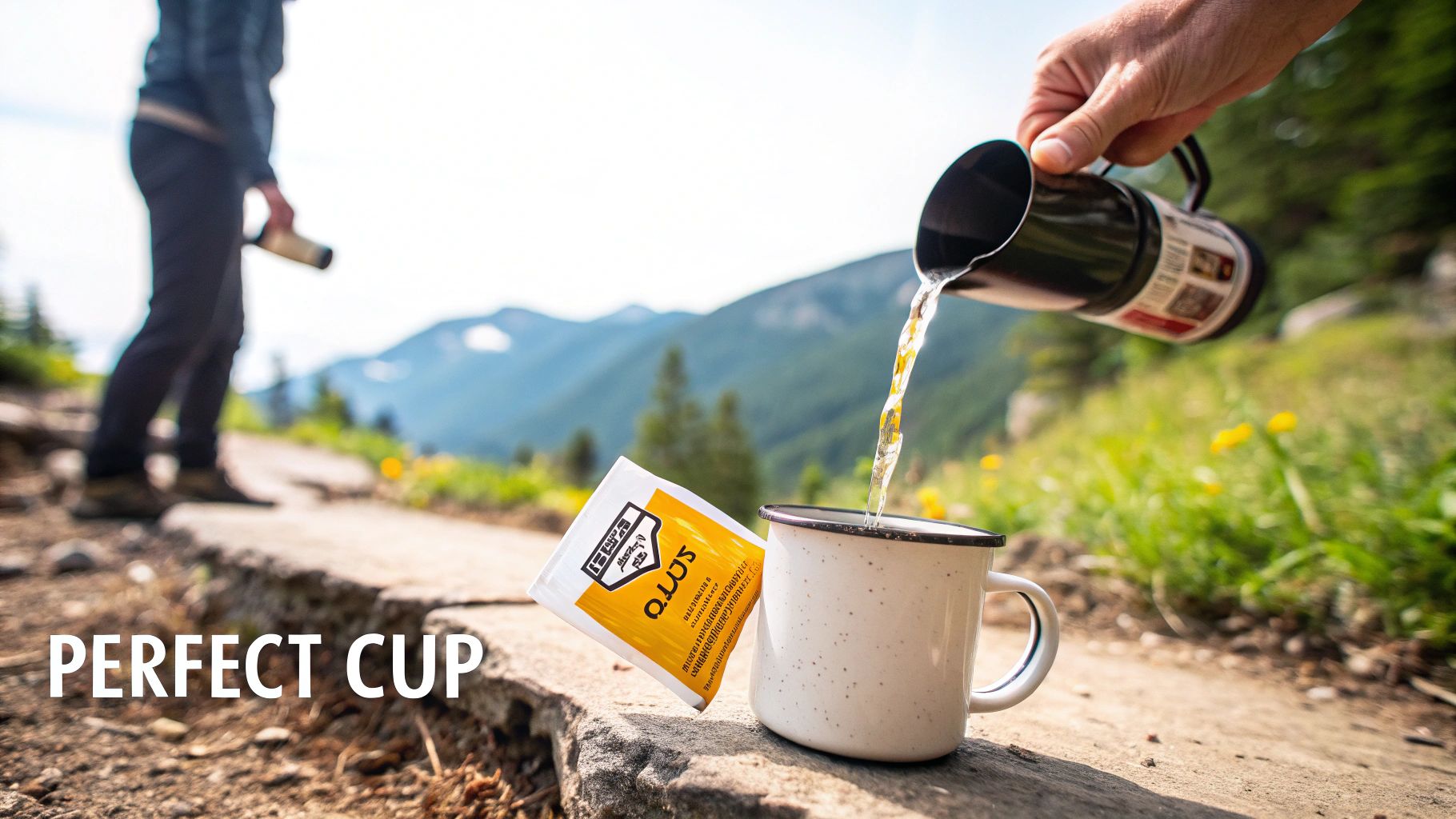
Picture this: you’re brewing a rich, aromatic cup of specialty coffee. But you're not in a cafe—you’re on a quiet mountain trail, in a busy airport, or just sitting at your desk. This is the magic of single-serve coffee packets.
More and more coffee lovers are turning to these portable wonders for one simple reason: they deliver a true craft coffee experience without sacrificing convenience. This guide will walk you through everything you need to know, from the smart design inside each packet to picking the right roast for your adventures.
Bridging the Quality and Convenience Gap
For a long time, getting your coffee fix on the go involved a frustrating trade-off. You either settled for instant coffee crystals that often tasted flat, or you had to lug around gear like a grinder, a press, or a pour-over cone.
Single-serve coffee packets completely change the game. They offer a third way—one that respects both your schedule and your taste buds. Each packet contains actual ground coffee, precisely measured and sealed to lock in all that delicious freshness. You're not just rehydrating a powder; you're genuinely brewing a fresh cup through extraction, just like a barista would.
By packing specialty grounds into an integrated filter, these packets deliver a brewed coffee taste that used to be impossible to get without all the equipment.
Who Are These Packets For?
The beauty of these coffee packets is that they're for anyone who loves great coffee but lives a life on the move. They’re a fantastic fit for all kinds of people who refuse to compromise on their daily cup.
- Busy Commuters: Ditch the cafe line and brew an amazing cup right at your desk in just a couple of minutes.
- Outdoor Adventurers: Finally, a lightweight, no-mess way to make incredible coffee while camping or hiking.
- Traveling Professionals: Get a consistently great brew in any hotel room or airport lounge.
- Families on the Move: Quickly make individual cups without brewing a whole pot—perfect for those chaotic mornings.
At the end of the day, these packets are for anyone who believes a good cup of coffee shouldn't be confined to the kitchen. They prove that convenience and quality can, and should, go hand in hand.
How Single Serve Coffee Packets Really Work
Ever wondered what's going on inside those little single-serve coffee packets? Think of each one as your personal, on-the-go barista. The key thing to understand is that these aren't your grandma's instant coffee crystals. Inside is real, actual ground coffee, and the packet itself is engineered to perform a proper brew.
The magic word here is extraction. This is the same process your fancy drip machine at home uses: hot water flows through the coffee grounds, pulling out all the oils and delicious flavor compounds that make coffee, well, coffee. It’s a miniaturized version of a high-quality brew method, and it’s why they taste so much better than instant. To really see the difference, check out our guide on how instant coffee works.
Two Main Brewing Styles
You'll generally find single-serve packets in two clever designs, each offering a slightly different way to get to that perfect cup.
- Pour-Over Drip Bags: These are probably what you picture first. The packet cleverly unfolds into a tiny filter basket, complete with paper "wings" that hang right on the rim of your mug. You just slowly pour hot water over the grounds, and it drips through, brewing directly into your cup. It’s a true pour-over experience, simplified.
- Steepable Coffee Bags: Even simpler, these work just like a tea bag. The ground coffee is sealed inside a porous little sachet. You just drop it in your mug, pour hot water over it, and let it steep for a few minutes. The longer you leave it, the stronger it gets.
The Science Inside the Packet
Getting a great cup from a tiny packet isn't an accident. It comes down to three things working in perfect harmony: the filter, the grind, and the packaging.
The filter material isn't just any old paper. It’s designed to control how fast the water flows through the grounds. Too fast, and you get weak, sour coffee. Too slow, and it turns bitter. The sweet spot gives you a balanced extraction that lets all the coffee's best notes shine.
Then there's the grind size. The coffee is ground to a very specific, consistent size—usually medium-fine. This is crucial for getting the most flavor out in a short amount of time, avoiding the guesswork and inconsistency of grinding at home.
Finally, keeping it all fresh is a little trick called nitrogen flushing. Just before the packet is sealed, all the oxygen is pushed out and replaced with nitrogen. Oxygen is the enemy of fresh coffee, so this step stops the grounds from going stale and locks in that amazing just-roasted aroma and taste.
It's this blend of quality and convenience that has people so excited. The single-serve coffee market is already valued at over USD 900 million and is expected to nearly double. It’s a clear sign that more and more of us are looking for premium coffee experiences that actually fit into our busy lives.
Comparing Your Coffee Brewing Options
Picking your daily coffee ritual is a big deal. It usually comes down to a personal tug-of-war between four things: how it tastes, how easy it is to make, what it costs, and its impact on the planet. Single-serve coffee packets have really started to make a name for themselves, but how do they actually compare to the usual suspects like pods, ground coffee, and instant?
To figure out what's right for you, it helps to put them all side-by-side. Let's dig into the real-world trade-offs of each method.
Taste and Quality: What's Really in Your Cup?
Flavor is everything, but not all quick coffee is created equal. Pods from brands like Keurig are consistent, sure, but the high-pressure, super-fast brew can leave the complex flavors of good coffee behind. The result is often a bit flat.
Instant coffee is on another level entirely. It's the king of convenience, but you're just rehydrating coffee crystals. That means you miss out on the rich body and amazing aromas you get from fresh grounds. It works for a quick caffeine fix, but it's not what most would call a great coffee experience.
This is where single-serve coffee packets really deliver. Because they use actual, high-quality ground coffee and a gentle brewing method like a pour-over or a steep, they hang onto all those delicate, interesting flavor notes. You end up with a cup that tastes like it was made with care—because it was.
Convenience and Portability: Coffee That Keeps Up With You
When you're constantly on the move, ease of use is non-negotiable. Coffee pods lock you into a specific, often clunky machine. That’s not exactly portable. And brewing with traditional ground coffee? That’s a whole process with grinders, filters, and a pot—great for a slow Sunday morning, but not for a hectic weekday.
Instant coffee and single-serve packets are the clear winners when you need to grab-and-go. The packets, however, give you a much better brew without any extra fuss. You get the simple, "just add hot water" nature of instant, but with the quality of a real, freshly brewed coffee.
This handy visual breaks down the two main brewing styles you'll find with single-serve packets.
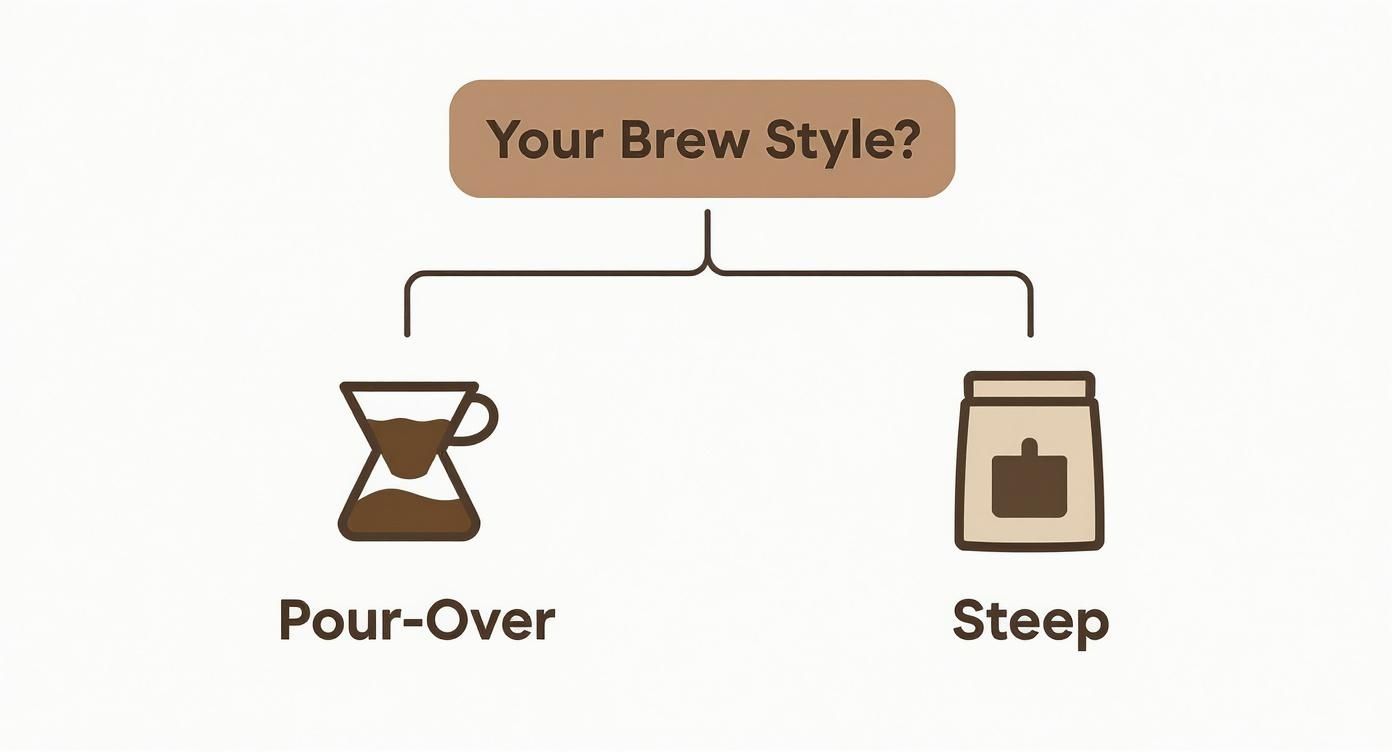
Whether you prefer the control of a mini pour-over or the set-it-and-forget-it ease of steeping, there's an option that fits your pace.
Cost and Environmental Considerations
Let's talk dollars and sense. The initial cost of a pod machine can be steep, and the price of those little plastic cups adds up quickly. On the flip side, buying whole bean or ground coffee in bulk is almost always the cheapest way to go.
Single-serve coffee packets strike a nice balance. They typically cost more per cup than bulk coffee, but they’re a bargain compared to a daily café run and deliver that same premium quality.
When it comes to the environment, things get a bit more complicated. We’ve all seen the reports about single-use plastic pods piling up. In fact, the global market for pods and capsules jumped from USD 8.63 billion to USD 8.95 billion in just the last year and is expected to hit nearly USD 12.8 billion soon. That's a staggering amount of waste. You can find more insights on the single-serve coffee market and its rapid growth online.
Many single-serve coffee packets are designed to be a better alternative, using materials that are compostable or biodegradable. This makes them a more mindful choice for anyone trying to reduce their waste without giving up the convenience of a perfect single cup.
To help put it all into perspective, here's a quick comparison of the most popular coffee methods.
How Single Serve Packets Compare to Other Coffee Methods
| Method | Taste & Quality | Convenience & Portability | Average Cost Per Cup | Environmental Impact |
|---|---|---|---|---|
| Single Serve Packets | Excellent; preserves specialty coffee notes through steeping/pour-over. | Highest; ultra-lightweight, no machine needed. Just add hot water. | $1.50 - $3.00 | Low; many brands use compostable or biodegradable materials. |
| Coffee Pods | Good but often one-dimensional due to rapid, high-pressure brewing. | High, but requires a specific, bulky machine. Not portable. | $0.50 - $1.25 | High; most pods are single-use plastic and difficult to recycle. |
| Ground Coffee | Excellent; full control over grind size, brew method, and strength. | Low; requires grinder, filters, and brewing equipment. Not portable. | $0.25 - $0.75 | Low to Moderate; grounds are compostable, but filters add waste. |
| Instant Coffee | Fair to Poor; lacks the complexity and aroma of freshly brewed coffee. | Highest; dissolves in hot water, extremely portable. | $0.10 - $0.40 | Lowest; minimal packaging, no grounds or filters to discard. |
Ultimately, choosing the right coffee comes down to your priorities. But if you're looking for that perfect intersection of amazing taste, true portability, and a lighter environmental footprint, single-serve packets are tough to beat.
How to Brew the Perfect Cup Every Time
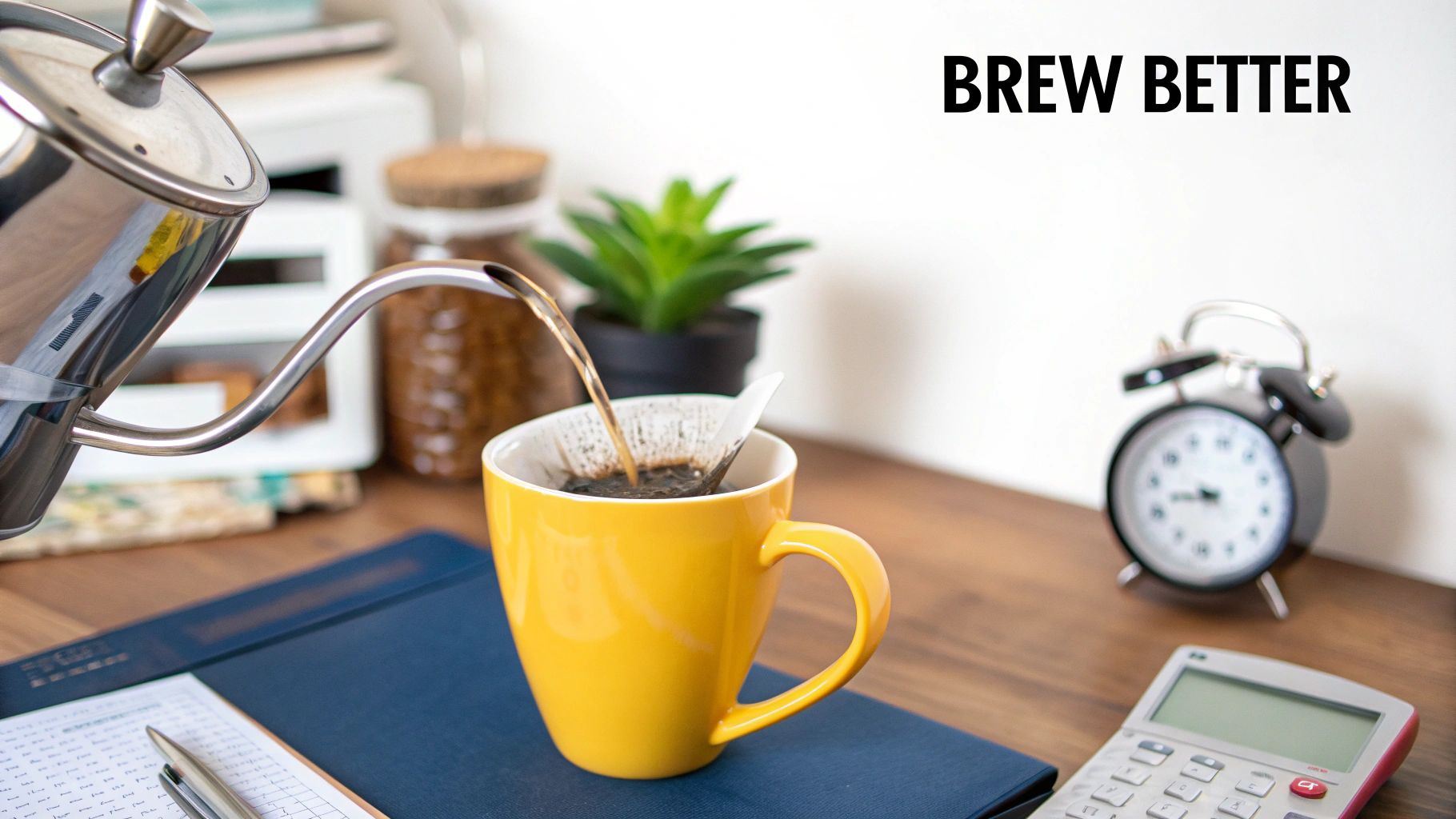
Using a single-serve coffee packet is simple, but truly mastering it? That’s an art. With just a couple of tweaks to your routine, you can unlock the incredible flavor potential sealed inside each packet and brew a consistently amazing cup, no matter where you find yourself.
The secret isn't fancy equipment. It’s about getting a feel for a few key principles of coffee extraction. Let's walk through the small steps that make a huge difference, turning you from a casual coffee drinker into a brewing pro.
The Importance of Water Temperature
First things first: your water. It’s so tempting to just pour boiling water straight from the kettle, but that’s a classic mistake that can scorch the delicate grounds, leaving you with a bitter, harsh brew.
For the absolute best results, you want water that’s just off the boil—ideally between 195°F and 205°F (90°C to 96°C). No thermometer? No problem. Just let your boiling water rest for about 30 to 45 seconds before you pour. That slight drop in temperature is much kinder to the coffee, allowing all its sweet, nuanced flavors to come forward. If you want to nerd out on the science, our guide on the best water temperature for brewing coffee breaks it all down.
Mastering Your Pour and Steep Time
How you pour the water is just as important as its temperature. The right technique really depends on which kind of packet you're using.
- For Pour-Over Drip Bags: Take your time. A slow, steady pour in a circular motion is key to wetting all the grounds evenly for a balanced extraction. Try pouring in a few separate stages, letting the coffee drip through a bit before adding more water. This mimics the same process we use for a craft pour-over in our cafes.
- For Steepable Coffee Bags: Think of this like brewing a fantastic cup of tea. Once the bag is in your mug and the hot water is in, just let it steep. The sweet spot is usually between 4 to 6 minutes, but you can adjust based on how bold you like your coffee. Try to resist the urge to dunk or squeeze the bag too much—that can release some bitter notes.
The goal is controlled extraction. A slow, patient pour or a calm, steady steep prevents under-extraction (weak, sour coffee) and over-extraction (harsh, bitter coffee), putting you right in that delicious sweet spot.
Storing Your Packets for Lasting Freshness
While each packet is individually sealed to lock out coffee's three biggest enemies—oxygen, light, and moisture—where you keep the box matters, too.
To make sure every single cup tastes as fresh as the first, store the packets in a cool, dark, and dry place. A pantry or cupboard away from the stove or a sunny window is perfect. Heat fluctuations can mess with the coffee's delicate oils over time, dulling the flavor.
Proper storage is all about preserving the hard work that went into roasting and grinding that coffee. By keeping these simple tips for water, technique, and storage in mind, you’re in complete control of the final cup. The result? A perfect, aromatic brew every single time.
A Buyer's Guide to Choosing the Right Coffee Packet
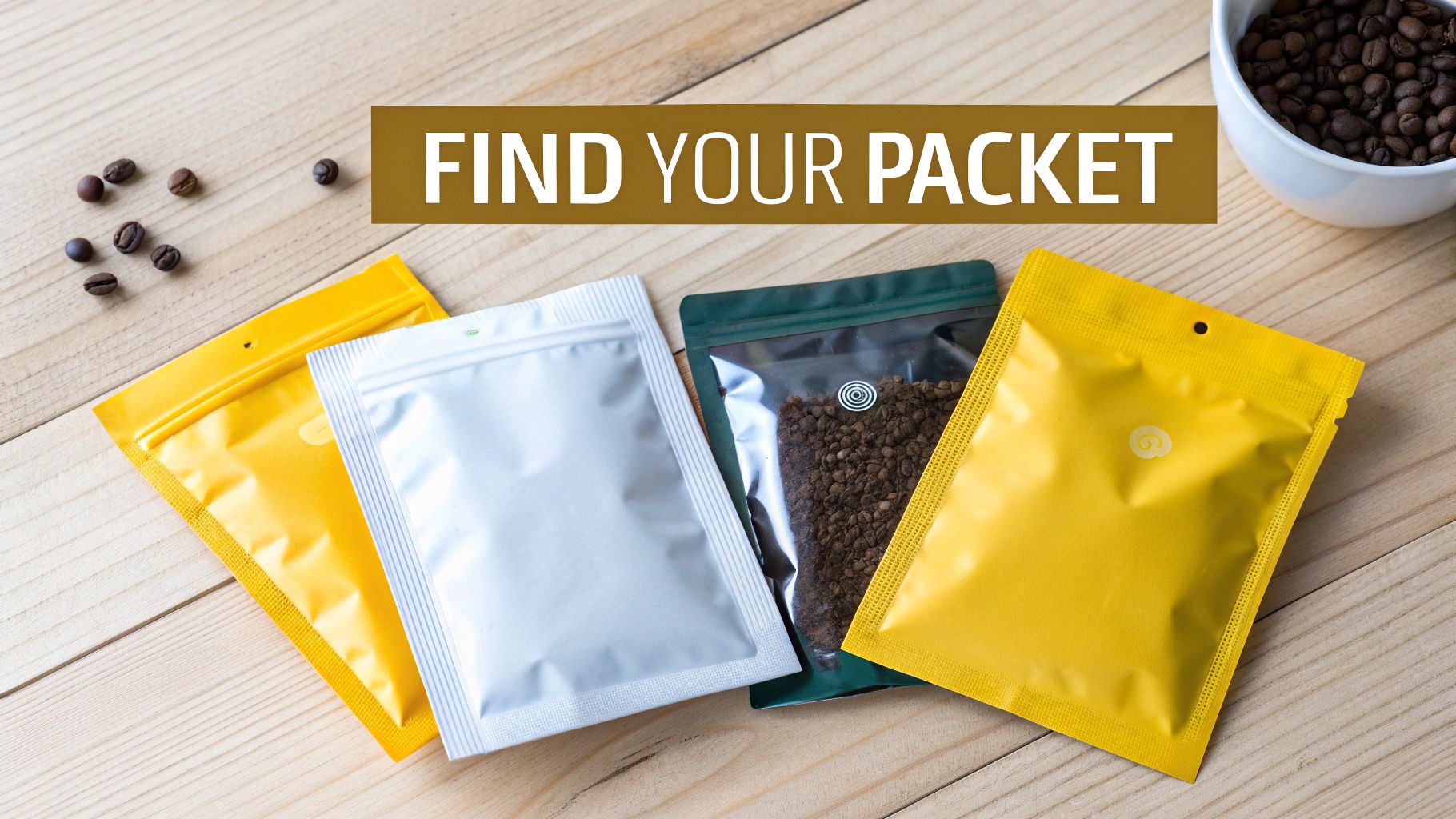
With so many single-serve coffee packets on the shelf, finding your perfect match can feel like a real quest. But the best choice isn't just about taste. It's about finding a coffee that slides seamlessly into your lifestyle, your values, and your daily routine.
Think of this guide as your personal coffee compass. Whether you're a weekend warrior, a busy professional, or just someone who really appreciates a great cup, we'll break down exactly what to look for. You'll be picking the right packet with confidence every time.
Tailoring Coffee to Your Lifestyle
Your day-to-day life really dictates your coffee needs. What works for a camper braving the elements isn't going to be the top priority for someone brewing at their desk. Let's zone in on the key features for different types of coffee drinkers.
- For the Outdoor Adventurer: Durability is everything. You need weatherproof, tear-resistant packaging that can handle being tossed in a backpack and jostled around. Lightweight, minimalist designs are a huge plus for keeping your pack weight down on the trail.
- For the Daily Commuter: Convenience is king. You're looking for packets that are quick to open and easy to brew without making a mess on your way out the door. Consistency is also crucial—you want that perfect, reliable cup to start your workday right, no surprises.
- For the Specialty Coffee Enthusiast: It's all about the details. Seek out packets that highlight single-origin beans, specific flavor notes, and roast levels. This is your chance to explore unique taste profiles from around the world with ultimate ease.
Decoding the Coffee Label
The front of the box is more than just slick marketing; it's a roadmap to the coffee waiting inside. Getting familiar with a few key terms empowers you to make a choice that aligns with both your taste buds and your principles.
Roast Level
This simply tells you how long the coffee beans were heated, which has a massive impact on the final flavor.
- Light Roast: Expect a brighter, more acidic flavor with delicate floral or fruity notes.
- Medium Roast: This is your balanced and smooth profile, often bringing out hints of chocolate, nuts, and caramel.
- Dark Roast: You'll get a bold, rich, and full-bodied taste with lower acidity and smoky or bittersweet notes.
Origin
This is where the coffee was grown, and it gives you some great clues about its potential flavor. For instance, coffee from Ethiopia often has bright, citrusy notes, while beans from Colombia are famous for their smooth, nutty sweetness.
When you see "single-origin" on a packet, it means all the coffee comes from one specific farm or region. This offers a distinct and pure taste of that location. Blends, on the other hand, combine beans from multiple origins to create a balanced and consistent flavor profile.
Certifications
Those little logos you see on the packaging represent a commitment to specific ethical or environmental standards.
- USDA Organic: This guarantees the coffee was grown without synthetic pesticides or fertilizers—a great choice if you're health-conscious.
- Fair Trade Certified: This seal ensures that farmers were paid a fair, stable price for their beans, which helps promote sustainable livelihoods for them and their communities.
- Rainforest Alliance: This one indicates that the coffee was produced using methods that support environmental, social, and economic sustainability.
The demand for convenient, high-quality options like these is surging. In fact, the broader single-serve packaging market is projected to grow to over $15 billion in the coming years, all driven by our collective need for portable and reliable products. You can discover more about this market's expansion and the trends fueling it.
By taking a moment to think about your needs and read the label, you move beyond just grabbing any old box. You start choosing a coffee packet that doesn't just taste good but also feels right for your life. And for those days when even this feels like too much effort, check out our guide to the best instant coffee brands for an even simpler solution.
The Future of Convenient, High-Quality Coffee
The world of single-serve coffee is evolving fast. It's all being driven by a simple demand from people like us: we want coffee that’s both incredibly easy to make and genuinely delicious. As more people experience the rich, full-bodied taste you can get from real ground coffee in a portable packet, the industry is taking notice. We're seeing some exciting changes focused on smarter design, incredible flavor, and sustainability.
This isn't just about making coffee easier anymore. It's about making it better in every single way. The future of single serve coffee packets is being shaped by people who care where their coffee comes from and where the packaging goes.
Pushing the Boundaries of Sustainability
Let’s be honest, the biggest conversation in single-serve coffee has always been about waste. For too long, convenience came with a side of environmental guilt. But that’s changing. Brands are finally getting serious about real solutions that go beyond just slapping a recycling symbol on the box.
Here are a couple of key innovations to watch for:
- Fully Compostable Materials: Keep an eye out for packets made from plant-based materials like corn starch or sugarcane. These are designed to break down completely in a commercial composting facility, turning everything—the coffee grounds and the packet itself—back into healthy soil.
- Waste Reduction Programs: Some of the most forward-thinking companies are creating mail-back programs. You just collect your used packets and send them back to be professionally composted or recycled. It closes the loop and takes all the guesswork out of what to do with them.
This focus on sustainability is no longer a niche trend. It's becoming a fundamental expectation for anyone who cares about the impact of their daily brew.
A Deeper Dive into Specialty Coffee
At the same time, our taste in coffee is getting more sophisticated. We want unique, exceptional flavors, and single-serve packets are no longer just about a generic "medium roast." They're quickly becoming a fantastic entry point into the world of specialty coffee, letting you taste specific origins and artisanal roasts without investing in a ton of gear.
The next wave of single-serve coffee is a curated experience. Expect to see more single-origin offerings from specific farms in Ethiopia, Colombia, or Guatemala, each with a unique story and distinct flavor notes.
This means you can try a rare Geisha varietal one morning and a bright, fruity Kenyan coffee the next, one cup at a time. This shift makes the often-intimidating world of high-end coffee more approachable than ever, letting you become a connoisseur right from your own kitchen—or tent, or office. It’s the perfect blend of quality, convenience, and conscious consumption, and it represents a smarter, more flavorful way to enjoy your coffee, wherever you happen to be.
A Few Common Questions About Single Serve Coffee
It’s totally normal to have a few questions, especially when you’re trying something new. Single-serve coffee packets are a different way to think about your daily brew, so let's tackle some of the most common things people ask.
We hear these questions all the time from busy commuters, weekend campers, and coffee lovers just looking for an easier way. Getting these cleared up will help you see just how simple and delicious these packets can be.
So, Is This Just Instant Coffee?
This is easily the #1 question we get, and the answer is a firm no. There's a night-and-day difference. Single-serve packets are filled with actual, freshly ground coffee—the same quality stuff you'd buy in a big bag.
Instant coffee is made of dehydrated crystals that just dissolve in water. Our packets, on the other hand, work through extraction. Hot water flows through the coffee grounds, pulling out all those complex flavors and amazing aromas. It's like having a personal pour-over brewer in your pocket. You get a rich, full-bodied cup, not the flat, one-dimensional taste of instant.
The key takeaway is brewing vs. dissolving. Packets brew a fresh cup from real grounds. Instant coffee just rehydrates a pre-brewed concentrate. That’s why the taste is worlds apart.
How Long Do The Packets Stay Fresh?
We put a lot of work into making sure your coffee tastes just as fresh as the day it was ground. Each packet is individually sealed and nitrogen-flushed, a fancy way of saying we push all the oxygen out before sealing it tight. Oxygen is the enemy of fresh coffee.
This process keeps the grounds inside perfectly fresh for months, often up to a year. Of course, once you tear open a packet, the clock starts ticking. For that perfect, aromatic cup, you’ll want to brew it right away.
What Kind of Gear Do I Need?
This is the best part: practically none. The beauty of these packets is their incredible simplicity. All you really need is:
- A Mug: Any old cup will work just fine.
- Hot Water: From a kettle, a thermos, or even heated over a campfire.
And that’s it. No grinders, no scales, no complicated coffee machines. This is what makes them the perfect solution for traveling, heading to the office, or any time you just want a great cup of coffee without the fuss. You get a genuinely high-quality brew with zero hassle.
Ready to see what all the fuss is about? Check out Cartograph Coffee's lineup of organic single-serve options and find out just how easy it is to have a perfect cup, no matter where you are. Find your perfect brew today.