A flavored coffee packet can be a welcome shortcut when you're packing for a camping trip, rushing through a workday, or craving something warm without setting up a brewer. Add water, stir, and you've got a cup with coffee and flavor in one convenient format. Whether it tastes like a considered treat or a disappointing shortcut depends on what's in the powder, how it was made, and how you prepare it.
Powdered flavored coffee isn't just coffee with a flavor name on the packet. Some products combine instant coffee with sweeteners, creamer, and flavorings; others keep the ingredient list simpler. Understanding that difference helps you choose a cup that suits your taste and preferences, whether you're at home, at work, or outdoors.
Why Powdered Flavored Coffee Deserves a Second Look
On a busy morning, a jar or sachet of flavored instant coffee can be easier than measuring grounds and cleaning a coffee maker. At a campsite, it can spare you from carrying brewing gear. And at work, it gives you a quick option when the coffee on offer isn't quite what you want.
Convenience can make powdered coffee seem like a compromise, but the format has a long history. Britain granted John Dring a patent for a concentrated product called a “coffee compound” in 1771, generally recognized as the earliest documented form of instant coffee. Soluble coffee powders and commercial production developed later, and instant coffee became a familiar choice for American consumers during the mid-twentieth century. Flavored varieties took hold as a modern category after General Foods International Coffees introduced them in the 1970s. A history of instant coffee shows that powdered coffee has evolved through changes in processing, availability, and how people like to prepare it.
That history doesn't mean every product is delicious, or that it will taste just like freshly brewed coffee. It does show that instant coffee is an established format, not a novelty. And soluble coffee remains a significant part of coffee consumption worldwide, even though the available global figures track instant or soluble coffee rather than flavored powders specifically. International context for instant coffee helps put that distinction in perspective.
The most useful question isn't whether powdered flavored coffee is “real” coffee. It's whether the product gives you the cup you want. To answer that, look beyond the flavor name and follow its journey from coffee solids to the finished drink. The way the powder is made, the ingredients added, and the way you mix it all shape what ends up in your mug.
How Powdered Flavored Coffee Is Made
Powdered coffee starts as brewed coffee. Manufacturers extract soluble material from roasted coffee beans, then dry that liquid into particles that can be stored and dissolved again. Spray-drying and freeze-drying are two common approaches, but their different processes can affect the powder's appearance, behavior, and aroma.
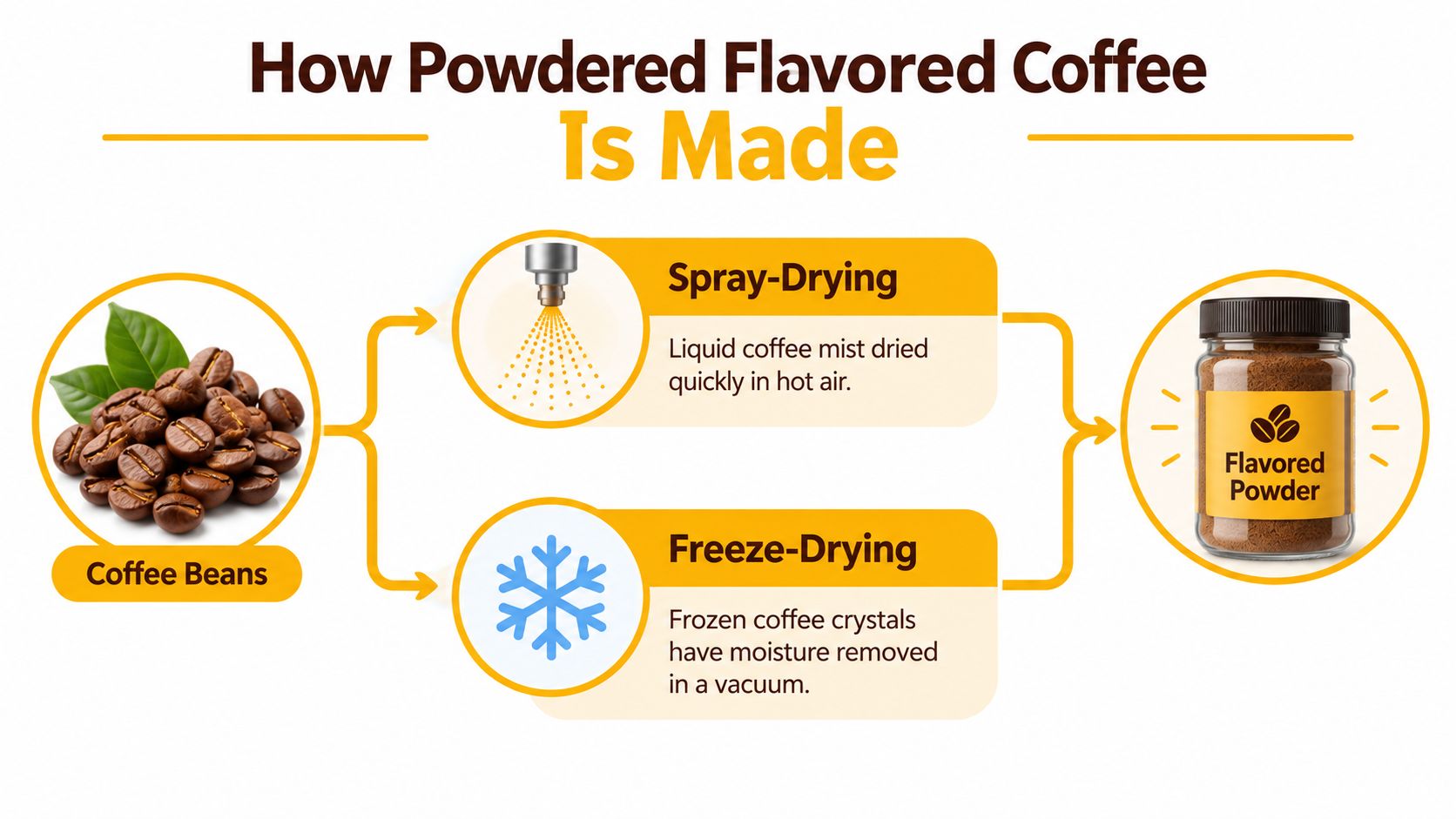
Two routes from coffee liquid to powder
In spray-drying, a concentrated coffee liquid is broken into droplets and dried in hot air. This process makes powder quickly, but exposure to heat can affect volatile aroma compounds, the molecules responsible for many of coffee's distinctive smells. In freeze-drying, coffee is frozen and moisture is removed under vacuum, leaving dried material that can be broken into pieces. The difference isn't a simple quality ranking: the coffee itself, the processing choices, and storage all influence the finished cup.
One study of spray-dried coffee and maltodextrin systems found that raising feed-solids concentration from 20% to 50% increased retention of selected volatile compounds to approximately 80%, compared with about 20% at 20% solids, across the tested outlet-temperature range. The result illustrates how the makeup of the liquid feed can affect aroma retention during drying. It doesn't mean that every product uses the same formula or will retain aroma to the same degree. The spray-drying study on coffee aroma retention also describes how a denser drying matrix can slow the escape of volatile compounds.
When the flavor goes in
A manufacturer may add flavor before or after drying, depending on the product and its process. Timing matters because some flavor molecules are volatile and can be affected by heat. Think of adding herbs to a dish: the point at which you add them changes how much of their aroma remains when the food is served.
A product's performance also depends on its particles and how they dissolve. A technical review of dried coffee powders connects drying with qualities such as moisture content, particle size, bulk density, reconstitution, and aroma retention. A review of spray-drying, freeze-drying, and spray-freeze-drying offers useful background on why a powder's texture and preparation can vary. For more detail on the process itself, see this overview of how instant coffee is produced.
Powdered Flavored Coffee vs Brewed Coffee and Liquid Flavorings
A packet of flavored instant coffee, a mug of brewed coffee with flavor added, and coffee with syrup can all make a flavored cup. The best fit depends on whether you care most about speed, control, equipment, or knowing exactly what went into the drink. There's no universal winner, and the flavor name alone won't tell you which approach you'll prefer.
| Factor | Powdered Flavored Coffee | Brewed + Liquid Flavoring | Brewed + Syrups |
|---|---|---|---|
| Preparation | Add water and stir | Brew coffee, then add flavoring | Brew coffee, then add syrup |
| Equipment | A cup and a way to heat water | Brewing equipment and a cup | Brewing equipment and a cup |
| Flavor control | Depends on the product and serving amount | Adjust flavoring to taste | Adjust syrup to taste |
| Ingredient transparency | Check the powder's full ingredient list | Check the coffee and flavoring labels | Check the coffee and syrup labels |
| Convenience | Handy for work, travel, or outdoors | Requires coffee-making equipment | Requires coffee-making equipment and syrup |
| Sweetness | May be included in the powder | Depends on the flavoring | Depends on the syrup |
Convenience or control?
Powdered flavored coffee is a natural option when carrying a brewer isn't practical. It packs easily, takes little preparation, and combines coffee and flavor in one product. But if you like adjusting a cup to match your mood, brewed coffee with a separate flavoring lets you decide how much to add and keep the coffee itself unchanged.
Syrups can add both flavor and sweetness, so check their labels rather than assuming they're interchangeable with unsweetened liquid flavorings. For a closer look at that option, read about flavored syrups for coffee.
Taste is personal, too. Some people enjoy the consistency of a ready-to-mix product; others prefer the aroma or control of brewing coffee themselves. Instant coffee isn't automatically inferior, but neither is convenience a guarantee of quality. Compare products by their ingredients and by the cup they make, especially if you'll prepare them in a way other than the one on the label.
What's Really in Your Flavored Coffee Powder
The flavor printed on a packet tells you what the manufacturer wants the drink to taste like. It doesn't tell you which ingredients create that taste, how sweet the cup will be, or whether it contains a creamer. For those answers, start with the ingredient list and nutrition information.
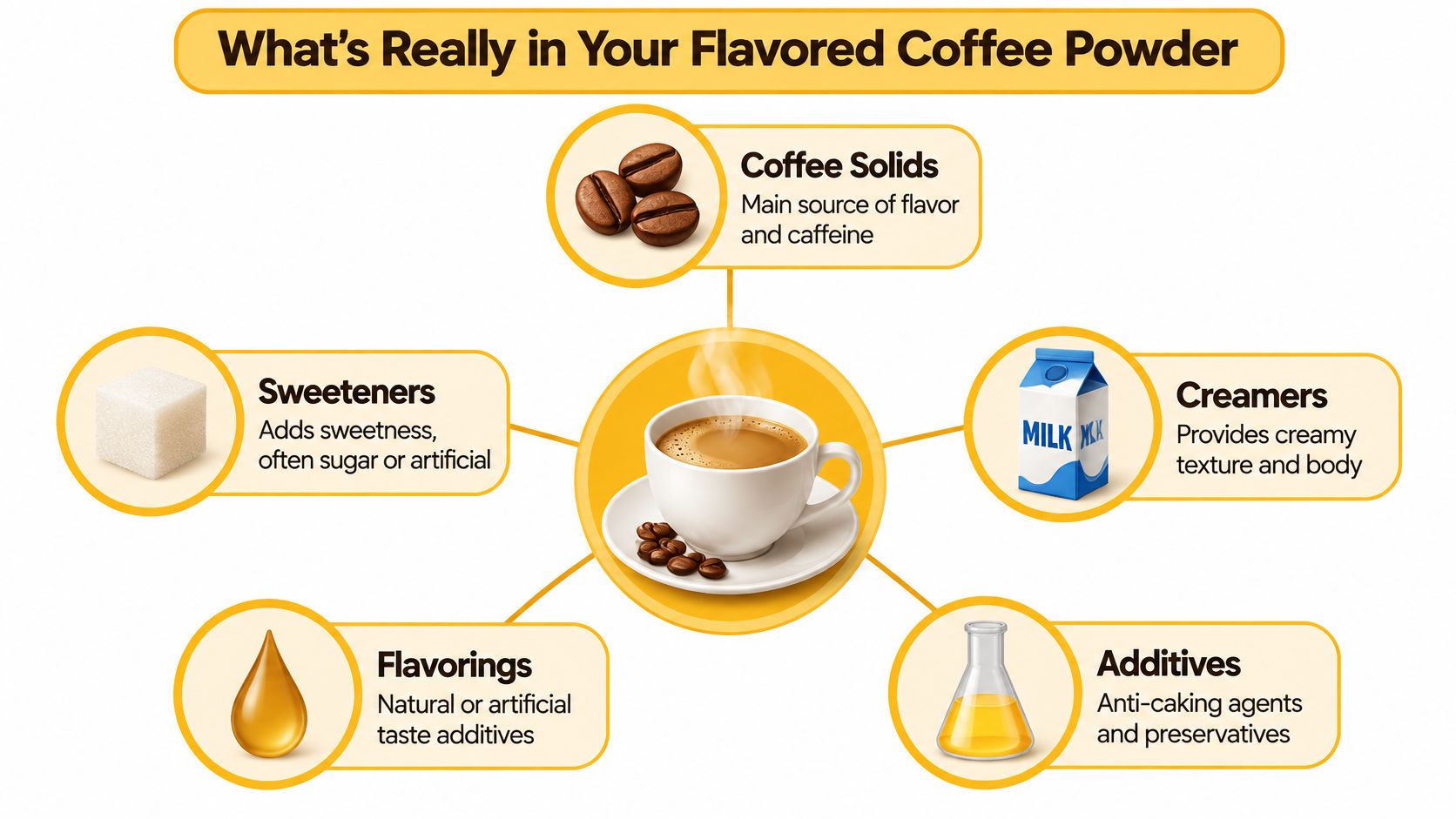
Read the list by function
Different ingredients do different jobs. Coffee solids provide the coffee base and caffeine. Sweeteners add sweetness, while creamers can make the drink feel richer. Flavorings supply a taste such as vanilla or hazelnut; carriers such as maltodextrin may help ingredients mix or be handled in a powder. Other additives can support texture or help keep a product free-flowing. These ingredients aren't automatically good or bad; the important question is whether they match your preferences and dietary needs.
“Sugar-free,” “no added sugar,” and “naturally sweetened” don't all mean the same thing. Check the nutrition information for a prepared serving, then scan the ingredient list for sweeteners, creamers, and carbohydrate-bearing ingredients. A flavored coffee may taste sweet without containing ordinary sugar, and a serving of powder may not be the same as the prepared cup you drink.
A 2025 analysis of three large U.S. cohorts found that coffee consumed without additives was associated with a lower risk of type 2 diabetes, while the association differed for coffee with sugar or artificial sweeteners. The study was observational, so it doesn't prove that coffee prevents diabetes. Its practical lesson for shoppers is narrower: consider the whole drink, not just the word “coffee” on the package. Coverage of the 2025 coffee and diabetes analysis provides context for interpreting those findings.
Check what matters to you
Look for allergen information and any statements about cross-contact if those concerns apply to you. If you avoid dairy, check whether the creamer contains milk-derived ingredients. If you're limiting sweeteners, make sure you're comfortable with the type used, not just the product's front-of-pack claim.
Some products combine coffee, sweetener, and creamer in one mix, a format often called three-in-one coffee. Knowing what that term can involve makes it easier to compare three-in-one coffee ingredients and formats with a powder that keeps coffee and other additions separate.
How to Brew the Best Cup of Powdered Flavored Coffee
Start with the product's directions, then adjust the cup to suit your taste. A useful first try is to dissolve the powder in a small amount of water before topping up. That gives you a chance to stir out clumps and check the strength before committing to a full mug.
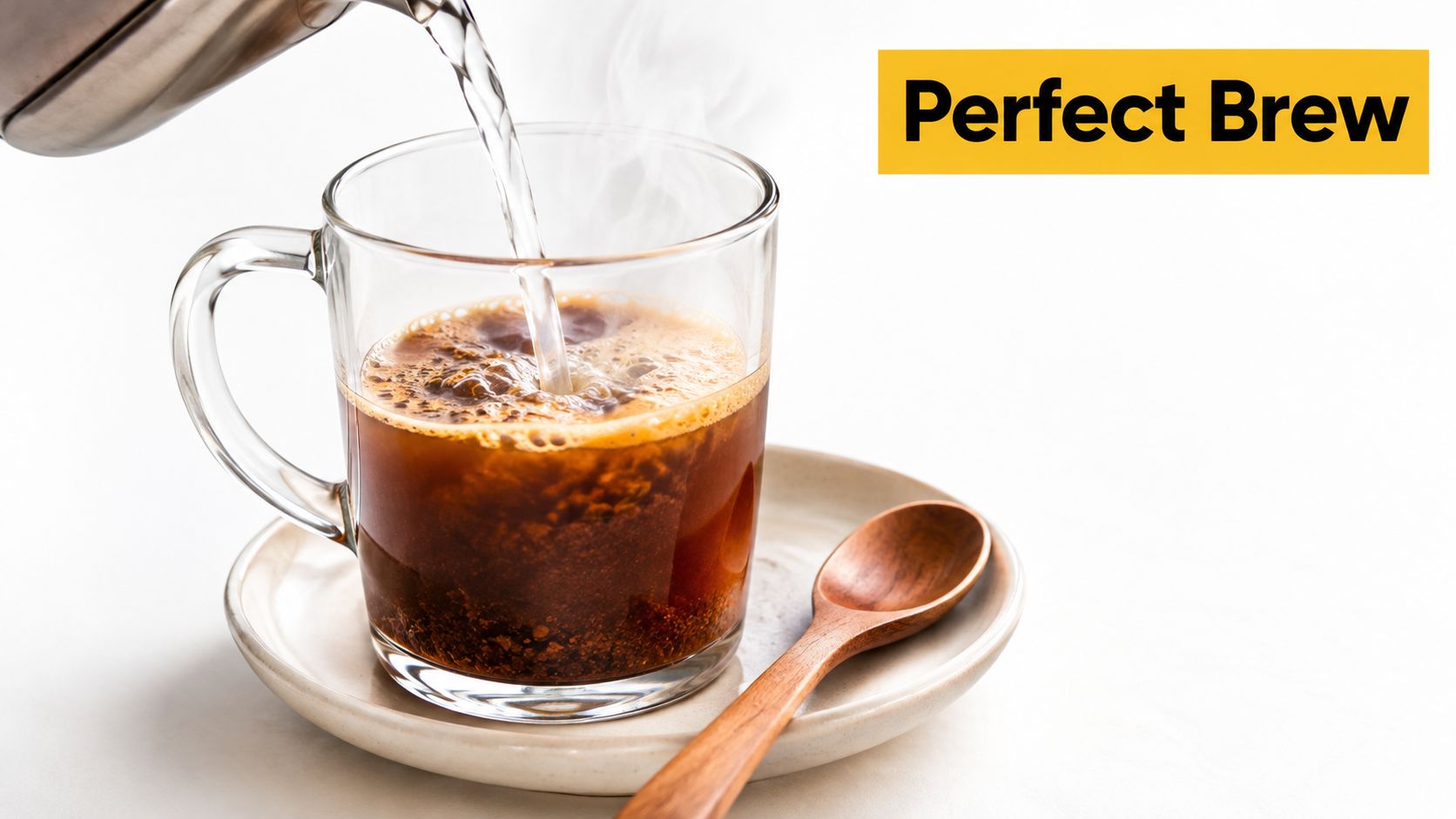
Make a smoother hot cup
Use hot water that's below a rolling boil if you find the flavor dull or harsh. Add the powder to your mug, pour in a splash of water, and stir until the mixture looks smooth. Then add more water to reach your preferred strength. Follow the package's serving instructions as a starting point because products differ in concentration and serving size.
For milk or a plant-based alternative, dissolve the powder first, then add the milk and taste. If you add a sweetened milk or syrup, remember that it changes the drink's sweetness as well as its texture. A watery cup may need less water or a little more powder, while a drink that tastes too intense can be adjusted with more liquid.
Practical rule: Change one thing at a time. Adjusting the water, powder, and sweetener all at once makes it harder to learn what improved the cup.
Take it iced, or make it outdoors
For iced coffee, dissolve the powder in a small amount of warm water first, then add cool water or milk and ice. This helps the powder disperse before the drink gets cold. At a campsite or office, use a travel mug or cup with enough room to stir thoroughly; a tightly packed cup makes mixing harder.
If learning coffee preparation is part of your interest, a barista course for job seekers can introduce practical skills beyond instant coffee, including how to work with brewed espresso-based drinks. The same habit of tasting and adjusting applies here: make a cup, notice what you'd change, and refine the next one.
For a visual look at preparing a cup, you can also watch this video.
Choosing a Quality Powdered Flavored Coffee
Start with the drink you want to make. A powder built around coffee solids with a light flavoring behaves very differently from a sweetened, creamer-heavy mix, and neither is wrong. They suit different cups. Deciding which experience you're after narrows the field before you ever pick up a jar.
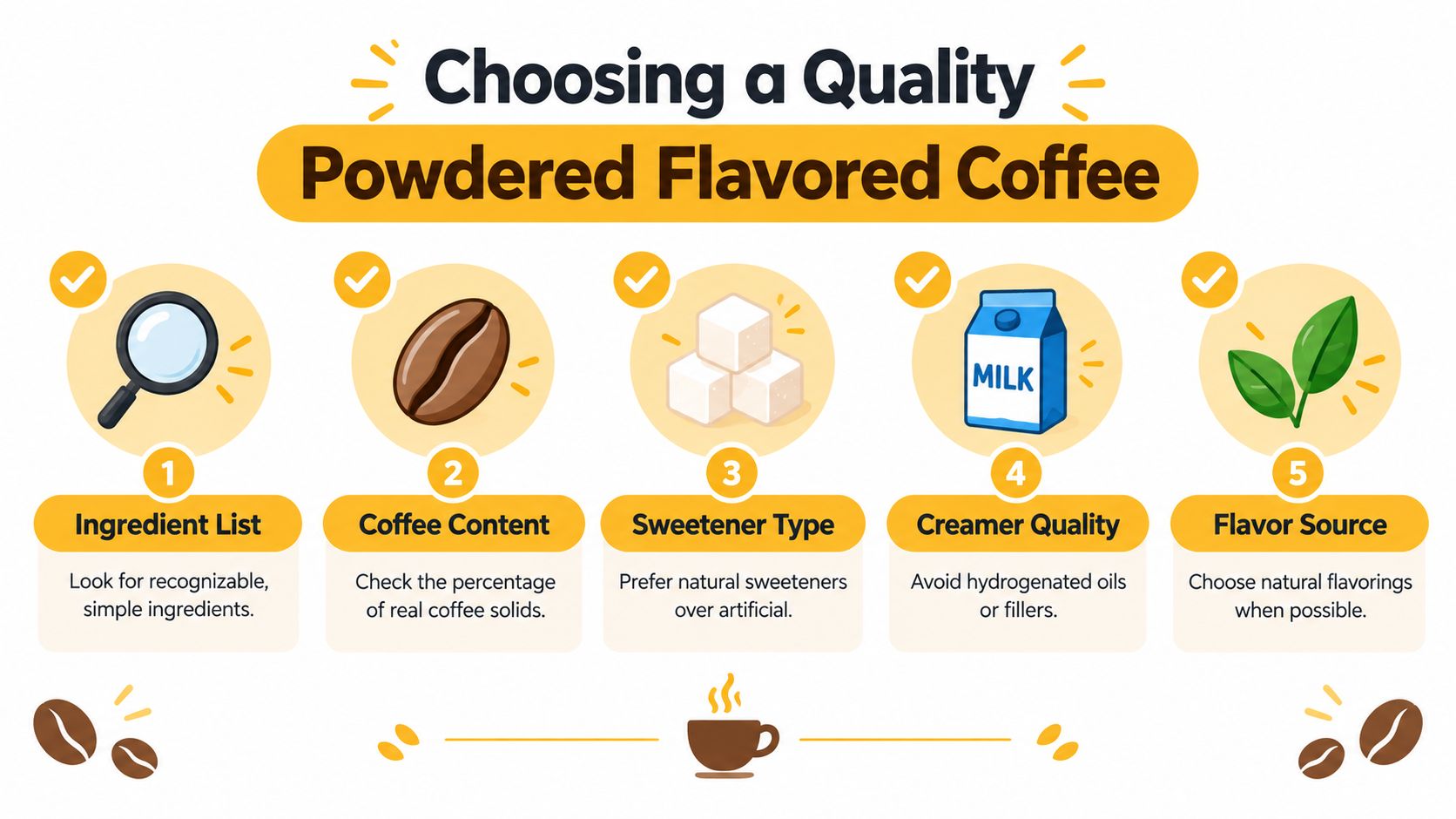
A practical label check
Check which ingredient leads the list. In many markets, labels run in descending order by weight, so a first-place sugar or creamer tells you the coffee is playing a supporting role and the cup will taste that way. Then compare the serving information against how you prepare drinks at home, since a scoop sized for a small cup may under-deliver in a large mug.
For a worked example, the Vitamin Planet coffee product range includes an amaretto-flavoured instant coffee in a 50 g jar, a useful product to practice on: note where coffee sits in the ingredient order, whether a sweetener appears, and how the label defines one serving. Those three details are worth comparing across any product before you buy.
Treat "natural" and "artificial" as categories, not verdicts. They describe where the flavor compound came from, not how the finished drink will taste. Whenever possible, test a powder in the preparation you plan to use, since a product that reads well in hot water can fall flat over ice.
Storage deserves a quick thought too. Coffee powder absorbs moisture readily, which encourages clumping, so keep the container tightly closed and follow the storage directions printed on the pack; the drying science behind this is covered earlier in the article.
Common Misconceptions About Instant Coffee
“Instant coffee is always low quality.” That's too broad. A powder and a brewed coffee can differ in aroma, body, and taste, but processing choices and ingredients also influence the final cup. Some people will prefer brewed coffee, while others value how easily instant dissolves and how little equipment it requires.
“Flavored powder is always full of artificial ingredients.” Not necessarily. Products vary, so the label is more useful than a general assumption. Check what provides flavor, sweetness, and creaminess, and look for allergens or ingredients you avoid.
“Powdered flavored coffee can't fit a health-conscious routine.” Whether it suits you depends on the full drink, including its serving size, sweeteners, creamer, and any additions you make. A 2025 multi-country Foodwatch/YouGov survey found that more than half of respondents felt insufficiently informed about additives in foods and beverages. The survey also reported that sweeteners were used at least occasionally by many respondents, while confidence and perceptions of risk varied. The Foodwatch/YouGov survey on additives and sweeteners underscores why clear labels and ingredient literacy matter.
And no, every flavored powder doesn't taste the same. Ingredients, processing, water, and the way you prepare the cup can all shape the result. Choosing instant isn't a test of how much you love coffee. It's a practical preference, and the right product is the one that fits your taste and routine.
Final Thoughts on Enjoying Powdered Flavored Coffee
Powdered flavored coffee makes the most sense when convenience matters and you've found a product you enjoy. Knowing how it's dried helps explain why aroma and texture can vary. Reading the ingredient list tells you what gives the drink its sweetness, creaminess, and flavor, while a little care in mixing can make the cup more enjoyable.
Try the product as directed first, then adjust the water or milk to suit your taste. If you're comparing options, look at the prepared serving rather than relying on a flavor name or a “no sugar” claim alone. Keep your preferences in view: a plain, coffee-forward cup and a creamy, sweet one are both valid choices, but they're different drinks.
The best coffee routine is one you'll want to return to. That might be a quick cup at your desk, a mug beside the tent, or a quiet moment in the kitchen. Start with an ingredient list you understand, choose a flavor you like, and make the drink your own.
Cartograph Coffee offers organic instant coffee made for convenient moments at home, at work, or outdoors. If you're looking for a quality-focused option to explore, visit Cartograph Coffee and find a coffee that suits your next cup.