Spray-dried formats held 63.52% of the instant coffee market in 2025, and some industry reporting says almost 80% of instant coffee is made using spray drying. That single fact explains why most instant coffee tastes fast, familiar, and sometimes flat.

Every morning, someone stirs a spoonful of granules into hot water and expects a decent cup in seconds. What's hidden in that routine is a chain of industrial decisions that decide whether the coffee tastes thin and papery, or surprisingly close to a fresh brew. The instant coffee production process is really a sequence of engineering choices, and the final drying step does most of the damage or most of the preservation.
Instant coffee isn't one product. It's a category built on different drying methods, different extraction efficiencies, and different ways of protecting aroma after the coffee has already been brewed once. A buyer looking at a tin, packet, or stick is really looking at the end result of those choices.
The Hidden World Inside Your Instant Coffee
A cup of instant coffee is the end point of a long industrial chain. Green beans arrive, get roasted, ground, brewed, concentrated, and dried, and each step decides how much sweetness, body, acidity, and aroma will survive to the shelf. By the time the powder meets hot water, the flavor has already been shaped by a series of physical separations and heat treatments.
Instant coffee is coffee rebuilt into a soluble form, and the rebuilding method matters. Market reporting says almost 80% of instant coffee is made using spray drying [industry reporting on spray drying], which helps explain why many lower-cost products taste light in aroma and body. Premium products often preserve more structure and a more brewed-coffee character because the drying step protects more of the original soluble material.
Practical rule: if a label says only “instant coffee” and gives no drying method, the product is usually designed for convenience and scale first.
That does not mean spray-dried coffee is automatically poor, or that freeze-dried coffee is always better. The process leaves fingerprints in the cup, much like the same ingredients can taste different after being pan-fried or baked. Aroma retention, particle structure, and how much volatile material escapes during drying all shape the final mug, which is why one instant coffee can smell vivid while another feels muted. The answer usually sits in the factory, not in your mug.
Selecting the Right Green Coffee Beans
The process begins with the raw seed, not the roast. Green coffee beans carry the chemical potential for sweetness, acidity, body, and aroma, and that potential depends on origin, cultivar, and farming conditions. Beans from different growing regions can behave very differently during extraction, so sourcing choices shape the cup before any heat is applied.
For instant coffee, producers usually want beans that deliver dependable soluble yield and a clean defect profile. That practical filter matters because it shows the maker has thought beyond generic raw material and toward the cup they want to deliver. In some blends, Arabica is chosen for brightness and nuance, while Robusta brings more body and structure, and producers can blend the two when the goal is a balanced soluble base. For a clear overview of the bean-side tradeoff, comparing Arabica and Robusta beans is a helpful companion piece.
What producers look for first
- Low defect rates: fewer bad beans mean fewer off-notes after extraction.
- Consistent origin lots: uniform green coffee helps industrial brewing behave predictably.
- Fit for the end product: a coffee meant to be bold and economical will not be sourced the same way as one meant to preserve delicate origin character.
The key point is simple. If the green coffee is ordinary, the final instant coffee has a hard ceiling on quality. Later processing can improve the result, but it cannot fully rescue weak raw material.
Roasting and Grinding for Extraction
Roasting is where green coffee starts to turn into a material that can be extracted well. Heat triggers browning reactions, develops aroma compounds, and shifts sweetness and bitterness into a balance that manufacturers can work with, but the roast profile also shapes how much soluble flavor ends up in the extract. In instant coffee, the roast has to do two jobs at once, it needs to taste coherent and it needs to produce grounds that release their solubles efficiently in the next stage.
Why roast level matters
A lighter roast can hold onto more origin character, but it may leave the extract thinner or less rounded after drying. A darker roast can push the cup toward a stronger, more roasted profile, yet it can also make the final drink feel flatter once processing has stressed the volatile compounds. Many industrial roasts sit between those poles, because the coffee needs enough development to extract cleanly without being pushed so far that the finished cup loses definition.
Grinding comes immediately after roasting, and particle size has a direct effect on extraction behavior. Fine grind creates more surface area, but it can also slow water flow and cause uneven contact through the coffee bed. Coarse grind allows water to move more freely, yet some soluble material stays trapped in the grounds and never makes it into the liquid. The grind is not a cosmetic detail, it is part of how manufacturers control yield.
Practical rule: in instant coffee manufacturing, roast and grind are selected for extraction performance first, not for the idea of a perfect standalone brew.
The numbers make that trade-off easier to see. A World Bank source in the provided material reports that 100 kg of clean green beans yields about 38.5 kg of roasted soluble coffee [source link], and roasting causes an average 16% weight loss [source link] before extraction and drying even begin. Those losses show why roast control matters on both sides of the process. The wrong roast can waste material and weaken the cup at the same time.
Extraction and Concentration Methods
The extraction stage turns roasted grounds into coffee liquor, and it sets the ceiling for everything that follows. Industrial producers usually rely on percolation or counter-current systems, because they can control water flow, pressure, and temperature more tightly than home brewing. The aim is simple: pull out the soluble material that carries coffee flavor, while leaving behind as much unwanted bitterness and astringency as possible.
A strong extraction stage often decides whether an instant coffee tastes lively or flat. If the process under-extracts, the dryer cannot recover compounds that never entered the liquid. If it over-extracts, the concentrate carries harsher notes that become more obvious after the water is removed.
One cited process description reports a split extraction design that achieved yields over 45% [source link] and produced a first-stage extract at 28% solids [source link]. That kind of split flow helps explain why concentration matters before drying begins. A thicker liquor carries more soluble material per unit of water, so the plant can reduce later evaporation and keep the extract moving through the rest of the line more efficiently.
What concentration changes
Concentration changes more than water content. It also shapes how the extract feels and how the flavor balance survives the next processing step. Lower water content means less energy spent later, but the factory still has to keep the liquor from turning dull, cooked, or overly stressed while it is being handled.
The practical trade-off is easy to miss if you only look at the final powder. A dense extract can help drying run efficiently, yet density alone does not guarantee a rounded cup. The plant has to preserve enough aroma and clean soluble material before the liquid reaches the dryer. That is the same reason some manufacturers focus on gentle concentration methods, while others accept a little more thermal stress in exchange for easier processing.
For readers who want the broader drying context, freeze-dried coffee production shows how the quality of the extract shapes the finished granule.
A strong extract is not the same thing as a balanced one. The best plants try to produce both before the coffee ever reaches the dryer.
Drying Technologies and Their Flavor Impact
Drying is the fork in the road. The concentrated extract becomes the product you buy here, and the choice of method shapes aroma, particle structure, and how the coffee feels when it rehydrates. The two main routes, spray drying and freeze drying, solve the same problem in very different ways.
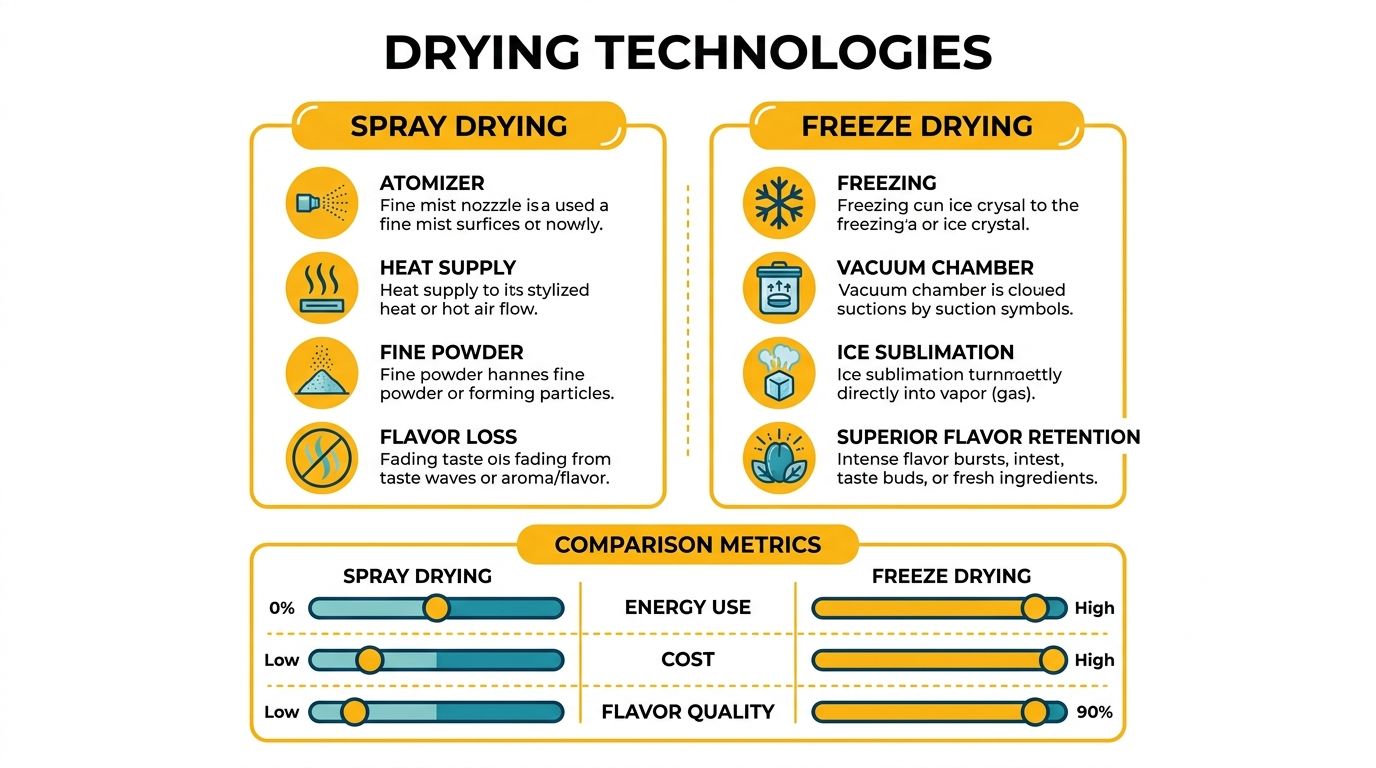
Spray drying versus freeze drying
Spray drying works by atomizing coffee concentrate into hot air. It's fast, continuous, and efficient, which is one reason it dominates the category. But that speed comes with a cost, heat can strip volatile aromatics and push the cup toward roasted or slightly burnt notes. Spray-dried coffee is often followed by agglomeration so the fine particles dissolve more easily in the cup, and industry overviews note that instant coffee is usually dried to a final moisture content below 5% instant coffee overview.
Freeze drying takes the opposite approach. The concentrate is first frozen to about –40°C, then water is removed by sublimation under vacuum, which is much gentler on aromatics. That's why freeze-dried granules usually feel more porous and rehydrate more readily. The trade-off is cost and throughput, because the method is slower and more energy-intensive.
For a focused look at the premium side of the method, what is freeze-dried coffee fits well here.
What the cup tells you
- Spray dried: usually more economical, often more common, and more prone to aroma loss.
- Freeze dried: usually more aromatic, more porous, and more expensive to produce.
- Below 5% moisture: a key shelf-stability target for both paths.
That difference is the heart of the consumer question. Some instant coffees taste flat because the process prioritized speed and cost. Others keep more coffee character because the process protected volatile compounds longer.
Quality Control and the Solubility Challenge
Quality control in instant coffee is mostly about problems you notice only when they fail. The powder should dissolve cleanly, smell like coffee instead of cardboard, and stay stable on the shelf without clumping or going stale too fast. That sounds simple, but the process has a narrow margin for error.
A major issue is aroma preservation. Even freeze drying can't fully keep the complete aroma profile of freshly brewed coffee, because volatile compounds shift or disappear during concentration and drying. One common response is caffeol restoration, where recovered coffee oil is sprayed back onto granules after drying to rebuild some of the lost fragrance. That doesn't recreate fresh coffee completely, but it does help the cup feel less empty.
Solubility is the other side of the problem. Instant coffee has to dissolve fast and completely, which depends on particle size, moisture level, and agglomeration quality. If the particles are too fine or too dry, they can misbehave in packaging and in the cup. If they're too wet, storage and flavor both suffer.
For teams trying to improve consistency in this kind of line, find manufacturing improvement strategies is a useful resource because the same principles that support reliable food lines also apply here, tight process control, clean handoffs, and fewer weak points between stages.
Premium instant coffee often succeeds not because it hides the process, but because it manages these losses better.
Packaging, Sustainability, and Small-Batch Innovations
Packaging is the last defense between a well-made soluble coffee and the air around it. Instant coffee is hygroscopic, so it absorbs moisture quickly, which is why manufacturers rely on moisture-barrier packaging such as lined pouches, sealed tins, and protective closures. The goal is to keep oxygen and humidity out long enough for the product to stay stable and flavorful on the shelf.
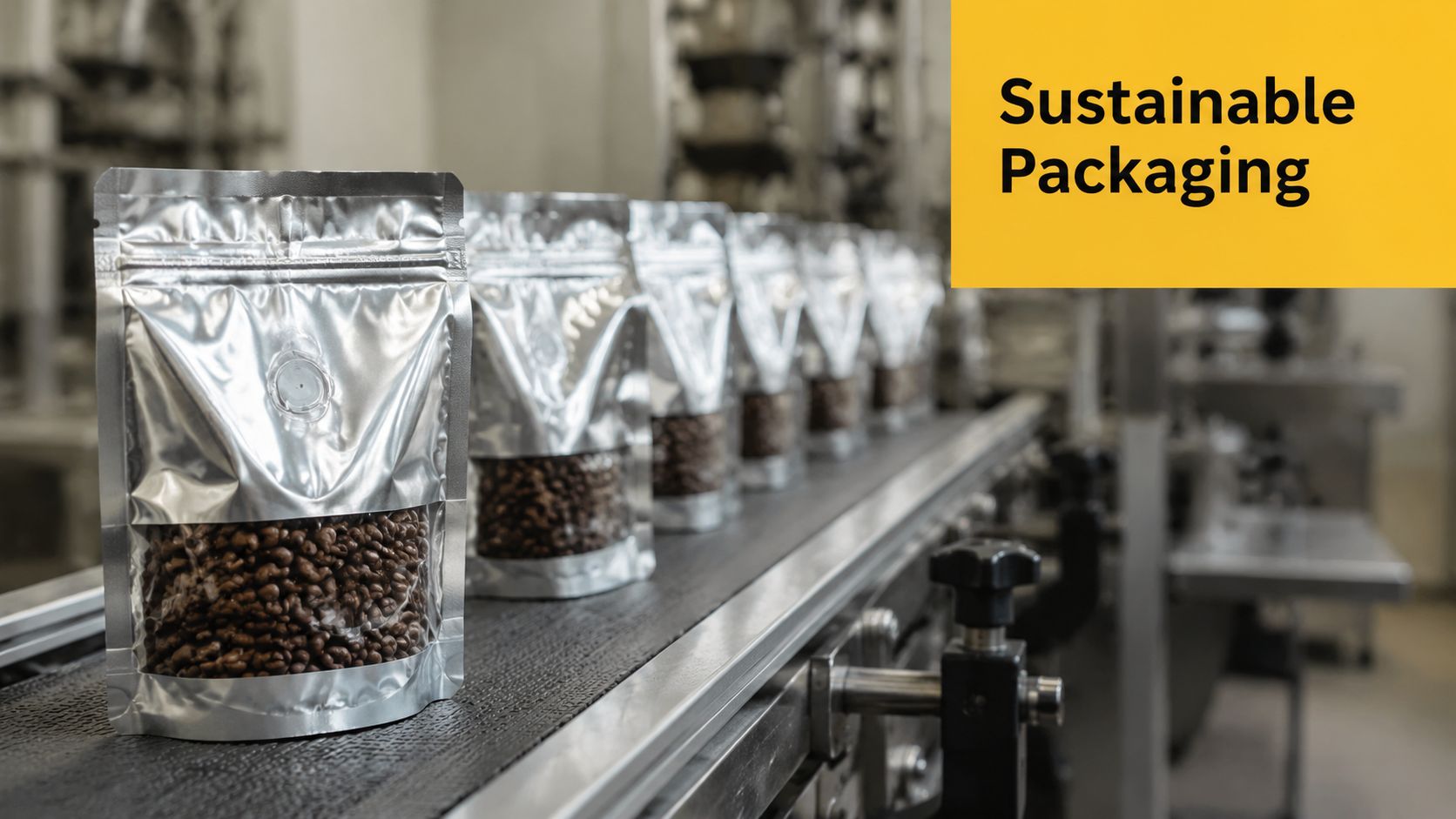
Why the package matters as much as the powder
Shelf-life engineering is part of the value proposition. Once the coffee leaves the dryer, the packaging line has to protect whatever aroma survived production. That's why machinery reliability matters, and why a practical reliability strategy for packaging lines is more than an operations topic. If the pack fails, the coffee degrades before the consumer ever opens it.
The sustainability side is shifting too. Organic certification requires the raw coffee to be grown without synthetic pesticides or fertilizers, and processing systems must avoid contamination. Buyers who care about this should look for clear sourcing language, because certification is only meaningful when the handling chain stays clean.
Small-batch instant coffee is changing expectations
The old assumption was that instant coffee had to be anonymous and industrial. That's no longer the whole picture. Some specialty roasters now offer freeze-dried single-origin products in limited quantities, treating instant coffee as a craft product rather than a compromise. The result is still soluble coffee, but the sensory target is very different from mass-market spray drying.
Cartograph Coffee is one example of a brand using freeze drying for organic instant coffee packets, which shows how the category can be built around flavor preservation rather than pure convenience. For packaging-specific considerations, instant coffee packaging is worth reading alongside this section.
The big shift is simple. Better instant coffee now depends on better protection, cleaner sourcing, and more deliberate process choices from the factory floor to the shelf.
What This Means for Your Next Cup
Once you understand the process, the label starts to make more sense. Spray drying dominates because it's efficient and scalable, while freeze drying protects more aroma by using a gentler path. That's why two instant coffees can look similar in the jar and taste very different in the cup.
The production chain also explains why instant coffee is more resource-intensive than many people assume. The roasted coffee loses mass, the extract has to be concentrated, and the drying stage has to work hard to protect what's left. The cup you get is the result of those trade-offs, not a shortcut around them.
When you shop, read the product through that lens. If the brand tells you how it's dried, how it's packaged, and where the beans come from, you're seeing a maker that understands the engineering behind the cup. If it doesn't, you're probably looking at a product built for speed first.
If you want instant coffee that treats flavor as part of the process, not an afterthought, visit Cartograph Coffee and see how organic freeze-dried coffee fits into a more thoughtful approach to convenience. Their packets are built for people who want a fast cup without giving up the character that makes coffee worth drinking.