So, what exactly is organic instant decaffeinated coffee? It's a surprisingly simple idea: delicious, easy-to-make coffee from beans grown the way nature intended, without synthetic pesticides or fertilizers. Thanks to modern freeze-drying and chemical-free decaffeination, you get a pure, rich taste in every cup. It's the perfect choice for anyone who wants great coffee flavor without the caffeine kick or chemical extras.
What Makes Organic Instant Decaf Coffee Special?
To really get what's in your mug, it helps to break down the name into its three key parts. Each word—organic, instant, and decaffeinated—tells a piece of the story, from the farm all the way to your kitchen. Think of it as a three-part harmony; each note is crucial for the final experience.
While each of these terms is familiar on its own, bringing them together creates something special. It’s a coffee built for a modern lifestyle, one that values quality, convenience, and well-being all at once.
The Organic Promise: Purity From The Start
When you see the word "organic," you can trust that the coffee beans were grown without any synthetic fertilizers, pesticides, or genetically modified organisms (GMOs). Instead of harsh chemicals, farmers use natural methods like composting and crop rotation to keep the soil and the coffee plants healthy.
This isn't just better for the planet—it often leads to a far better cup of coffee. Healthy, vibrant soil can produce beans with more complex and interesting flavors, giving your decaf a richer, more satisfying taste right from the start.
The Instant Advantage: Convenience, Redefined
Let’s be honest, instant coffee used to have a bad rap. But the bitter, bland stuff from decades ago is a world away from today's high-quality options. The best organic instant decaf, like what we craft here at Cartograph Coffee, is freeze-dried.
Here’s how it works: freshly brewed coffee is turned into a rich concentrate, flash-frozen, and then placed in a vacuum. This clever process makes the frozen water evaporate without ever turning back into a liquid, leaving behind pure coffee crystals. This method is fantastic because it locks in the delicate aromas and flavors of the original brew. It’s all the convenience, with none of the compromise.
The Decaf Difference: Great Taste, Anytime
And finally, "decaffeinated" is what lets you savor that amazing coffee flavor any time of day, without worrying about being up all night. The best decaffeination methods, especially solvent-free ones like the Swiss Water Process, remove at least 97% of the caffeine while meticulously preserving the coffee’s natural taste.
This focus on clean, high-quality coffee has clearly struck a chord. The organic decaffeinated coffee segment is now a major player in the specialty market, making up about 65% of total demand in the United States.
That huge market share shows a real consumer shift toward products that are better for both our bodies and the environment. In fact, demand for organic decaf is expected to grow much faster than its conventional counterpart, all thanks to its superior flavor and chemical-free processing. You can dive deeper into the data on this growing coffee trend from recent industry market analysis.
This combination of organic, instant, and decaf truly offers the best of all worlds—a pure, delicious, and incredibly convenient coffee that fits perfectly into any part of your day.
The Journey from Bean to Your Morning Cup
Every tiny crystal of organic instant decaf coffee has quite a story to tell. It’s been on a remarkable journey, starting as a humble green coffee cherry and transforming into the convenient, flavorful brew you're about to enjoy. This multi-step process is a delicate dance between science and craft, all designed to make sure every sip is rich and satisfying, just without the caffeine.
It all begins long before the beans ever see a roaster, with the all-important first step: decaffeination.
The goal seems simple but is deceptively tricky: get the caffeine out while leaving all the complex, delicious flavor compounds behind. This is where the specific method used makes all the difference in the world.
Choosing a Path to Decaf
Not all decaffeination processes are created equal. Far from it. Some rely on chemical solvents to do the job, while others use nothing more than natural elements like water. This choice dramatically impacts the final taste, quality, and purity of your coffee, making it a critical decision for any brand that cares about its product.
The infographic below breaks down the three core pillars of this unique coffee’s creation.
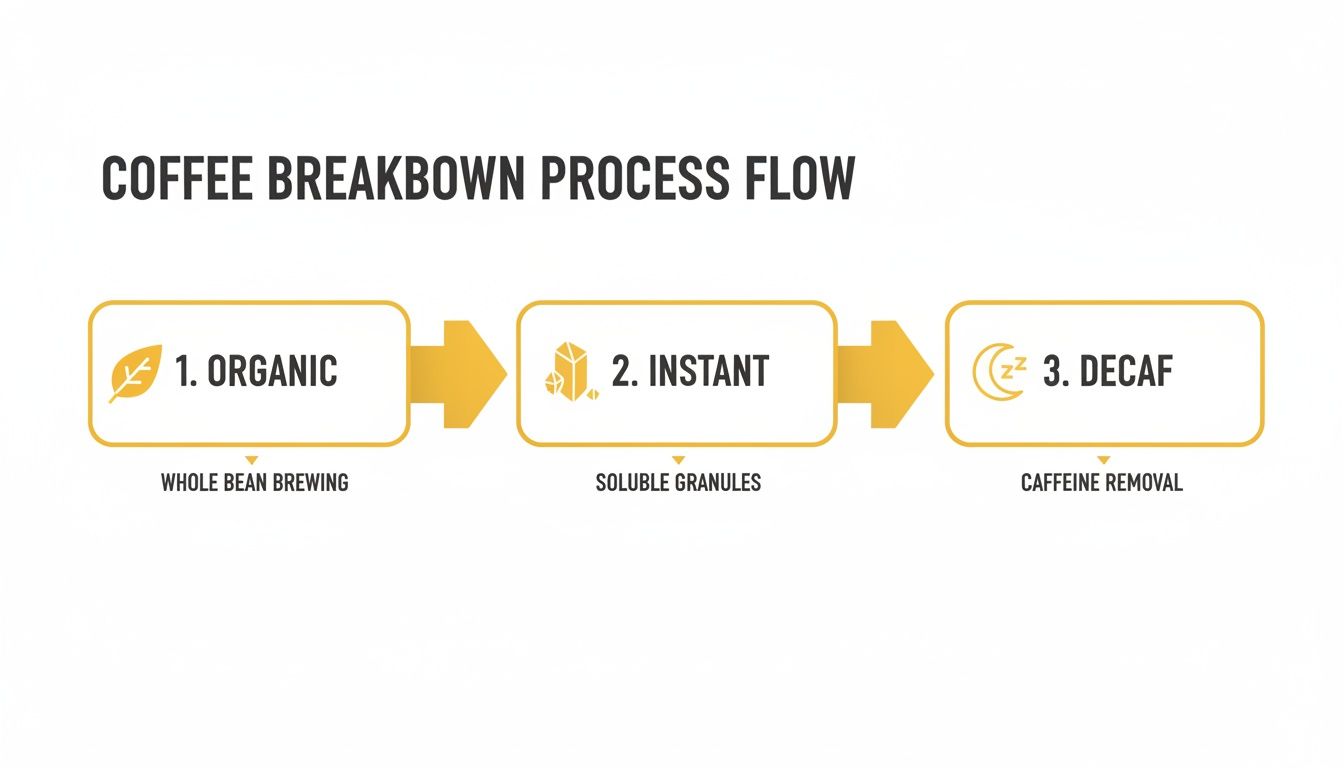
As you can see, the "organic," "instant," and "decaf" qualities are distinct yet deeply interconnected steps in producing the final coffee you hold in your hands.
To really get a feel for why this matters so much, let’s compare the most common decaffeination techniques. Each one takes a different approach to separating caffeine from the coffee bean, with very different results.
Comparing Decaffeination Methods
This table lays out the most common processes, showing how they stack up in terms of flavor, health, and environmental impact. It's a quick way to see why one method might be a better choice than another.
| Method | Process Description | Flavor Impact | Health & Safety | Best For |
|---|---|---|---|---|
| Swiss Water Process | Green coffee beans are soaked in a proprietary, flavor-charged solution called Green Coffee Extract (GCE). This caffeine-free liquid naturally draws only the caffeine from the beans. | Excellent. Preserves the coffee’s original character and aromatic profile beautifully, since no flavor compounds are stripped away. | 100% chemical-free. Widely considered the gold standard for purity and safety, especially for organic coffee. | Coffee lovers who want the purest taste without any chemical involvement. |
| CO2 Process | Supercritical carbon dioxide (CO2) acts as a highly selective "natural solvent" under pressure, bonding with and removing caffeine molecules while leaving flavor intact. | Very good. Effectively targets caffeine with minimal impact on the original flavor compounds. | Also 100% chemical-free. CO2 is a natural compound, making this a very clean and safe method. | Those seeking a high-quality, chemical-free decaf that maintains most of its original flavor. |
| Direct Solvent | Beans are steamed open and then repeatedly rinsed with a chemical solvent (like methylene chloride or ethyl acetate) that chemically bonds with the caffeine. | Can diminish flavor. The process can strip away some of the coffee’s delicate oils and subtle tasting notes. | Solvents are steamed off, but lingering concerns about potential chemical residue are common for health-conscious consumers. | Mass-market coffee where cost-effectiveness is the primary concern over flavor or purity. |
Choosing the right method isn't just a technical detail—it's a commitment to quality.
The Swiss Water Process is Cartograph Coffee's chosen method for a simple reason: it perfectly aligns with our commitment to purity. By using only water, we ensure our organic instant decaffeinated coffee is as clean and flavorful as it can possibly be. No compromises.
From Roasted Bean to Instant Crystal
Once the beans are caffeine-free, they're roasted to perfection. This is where the magic happens, developing those rich, aromatic profiles and bringing notes of chocolate, fruit, or nuts to life. But how do you get that perfectly brewed coffee into an instant crystal? It comes down to two key stages.
-
Creating the Concentrate: First, we brew the freshly roasted and ground beans into a super-concentrated liquid coffee. This isn't your average pot of coffee—it's an intense, flavorful extract that captures the full soul of the roast.
-
Drying the Concentrate: Next, that liquid has to be turned into a solid, shelf-stable form. This is done through dehydration, and once again, the method used is absolutely critical for preserving quality.
The two main ways to do this are spray-drying and freeze-drying. Spray-drying involves blasting the coffee concentrate into a chamber of hot air, which is fast but often scorches the delicate flavor compounds, leaving a bitter taste.
Freeze-drying, on the other hand, is a much gentler technique. The coffee concentrate is flash-frozen and then placed in a low-pressure vacuum chamber. This causes the frozen water to turn directly into vapor without ever melting—a process called sublimation.
This gentle transition preserves the coffee's aromatic oils and complex flavors far more effectively than harsh, high-heat methods. The result is a light, porous crystal that dissolves instantly, releasing the authentic taste of a carefully brewed cup. If you want to dive deeper, you can explore the full science in our guide on how instant coffee works. This dedication to a better process ensures every cup of Cartograph Coffee is a genuinely exceptional experience.
Why Choosing Organic Decaf Matters
Picking up a jar of organic instant decaffeinated coffee is about so much more than a quick, convenient cup for the evening. It’s a conscious decision that touches on your personal health, the well-being of the planet, and the actual flavor complexity you get to enjoy. It's about connecting what you drink to a bigger picture of purity and sustainability.
For most people, the journey starts with personal health. When you choose organic, you're sidestepping the synthetic pesticides and fertilizers that are common in conventional coffee farming. Since coffee is one of the world's most heavily sprayed crops, going organic is a simple way to slash your exposure to chemical residues.
This really resonates with active families and anyone who makes clean eating a priority. It’s the same thinking behind grabbing organic apples instead of conventional ones—you're choosing something that’s cleaner from the very beginning, ensuring what goes into your body is as pure as it can be.
A Healthier Planet, One Cup at a Time
The positive impact of going organic reaches far beyond your coffee mug. Conventional coffee farming can be incredibly harsh on the environment, often causing soil degradation and water pollution from chemical runoff. These methods can throw delicate local ecosystems out of balance and damage the biodiversity our planet needs to thrive.
Organic farming, on the other hand, works with nature. Farmers rely on natural composting, cover crops, and shade-growing techniques to build fertile, living soil.
This approach delivers some powerful environmental wins:
- Keeps Water Clean: No chemical pesticides and fertilizers means no nasty runoff polluting rivers and streams.
- Boosts Biodiversity: Organic coffee farms are often lush, forested environments that become safe havens for birds, insects, and other wildlife.
- Fights Soil Erosion: Healthy soil is naturally more resilient and holds together better, preserving precious farmland for the future.
Every time you choose organic, you're casting a vote for these sustainable methods. You’re supporting farmers who are dedicated to protecting the environment, ensuring the beautiful places where coffee grows can flourish for generations.
Better Flavor Grows from Better Soil
It's a simple truth, but a powerful one: healthier soil produces a better-tasting coffee bean. When soil is rich with organic matter, coffee plants can grow deeper roots and pull in more nutrients. This translates directly into a more complex, nuanced, and delicious flavor in the final cup.
Many coffee lovers swear that organic beans have a smoother, richer taste with less of that harsh bitterness. That's because the slower, natural growing cycle allows the coffee cherries to ripen perfectly, developing all the subtle sweetness and aromatic notes that make a great coffee truly special.
This is exactly why a company like Cartograph Coffee is so committed to organic sourcing. It’s not just about a certification sticker; it's about a core belief that a better process creates a better product. When you sip a cup of organic instant decaffeinated coffee, you’re tasting the direct result of a healthier, more balanced way of farming. Want to dive deeper? You can explore the full story of what makes coffee organic in our detailed guide.
How to Spot High-Quality Organic Instant Decaf
Walking down the coffee aisle can be a little dizzying, but finding a truly great organic instant decaffeinated coffee is easier than it looks. Once you know what to look for, you can read the packaging like a pro and pick a coffee that actually delivers on flavor and purity. Think of this as your personal checklist for separating the good from the mediocre.
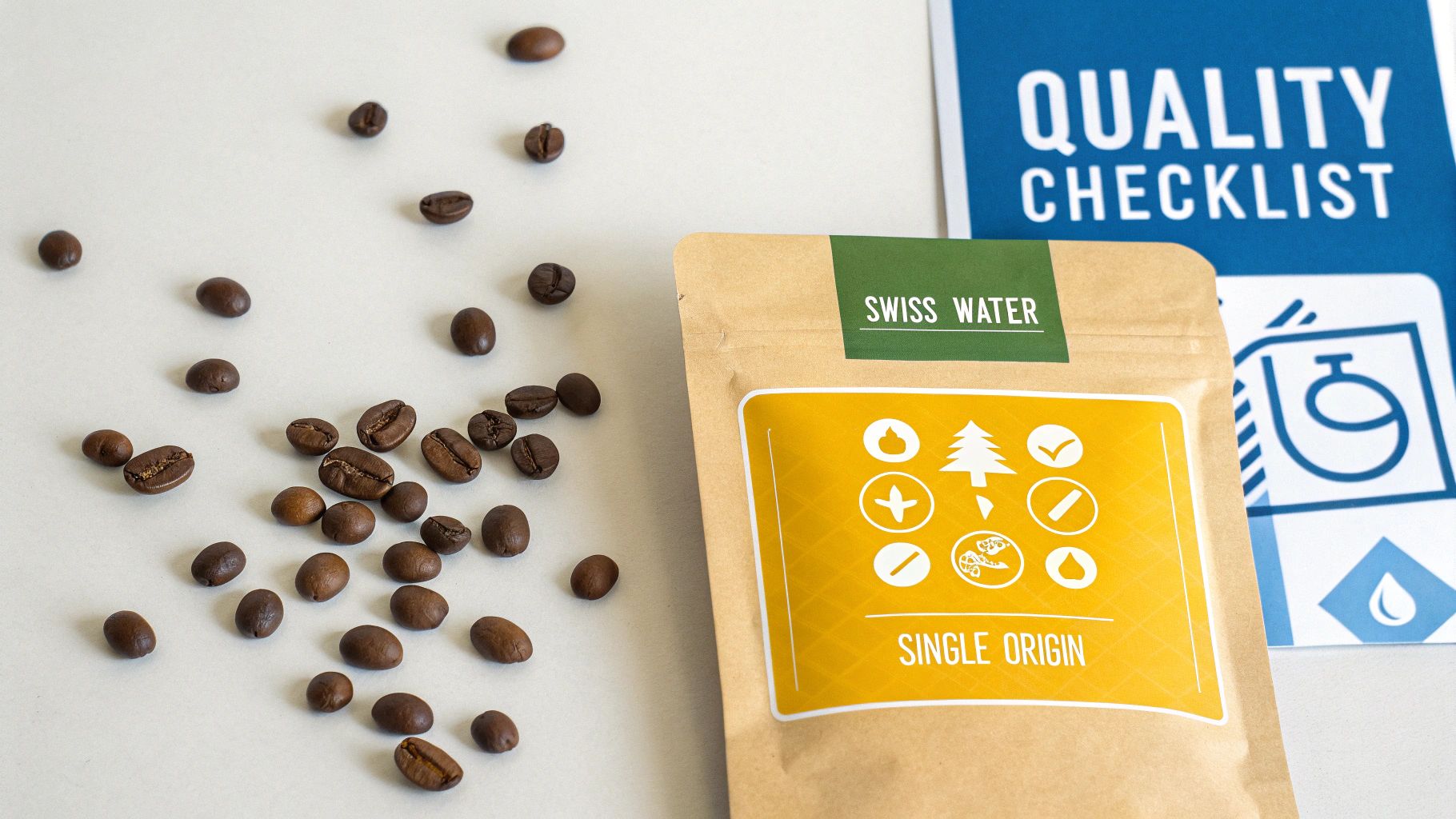
Let's turn you into a smarter coffee shopper. This isn't just about finding an "organic" sticker; it's about identifying real quality.
Look for 100% Arabica Beans
The first thing to check is the type of bean. The label should proudly say "100% Arabica." There's a good reason for this. Arabica beans are grown at high altitudes, and they're known for their complex, aromatic flavors and lower acidity. They just taste better.
The alternative, Robusta beans, packs about twice the caffeine and often has a rubbery, bitter flavor. It’s cheaper to grow, which is why some brands use it, but it simply can’t deliver the smooth, nuanced taste you want in a premium cup. When a brand commits to 100% Arabica, they're putting flavor first.
Check for Single-Origin Sourcing
Beyond the bean type, where it comes from is a huge deal. The term "single-origin" means all the coffee beans in that package came from one specific country, region, or even a single farm. This is your clue that the coffee will have a unique, distinct character.
It’s just like wine—a Pinot Noir from Burgundy, France, tastes completely different from one grown in Oregon. In the same way, a coffee from Colombia will have a different personality than one from Ethiopia. This transparency is a sure sign of a quality-focused brand like Cartograph Coffee, which sources beans from specific, high-altitude regions to capture their unique flavors.
When a coffee brand tells you exactly where the beans are from, it’s a sign of pride and traceability. It’s their way of saying, "We stand by this coffee," giving you confidence in every sip.
Prioritize a Chemical-Free Decaffeination Method
This one is non-negotiable for any top-tier organic decaf. The packaging needs to be upfront about how the caffeine was removed. You’re looking for solvent-free methods that protect the bean's natural flavor.
Here are the best ones to keep an eye out for:
- Swiss Water Process: This is the gold standard for organic decaf. It uses only pure water to gently remove 99.9% of the caffeine. The process leaves no chemical residue and keeps the coffee’s delicate original flavors intact.
- CO2 Process: Another fantastic, chemical-free option. This method uses natural carbon dioxide to selectively target and draw out caffeine molecules.
- Sugarcane Process (E.A.): While this process uses a natural derivative of sugarcane (ethyl acetate), it’s widely considered a natural and effective method that preserves flavor well.
If the label is silent on the decaffeination method, you can probably assume they used a chemical solvent process. Honesty here is a huge telltale sign of a brand's commitment to purity.
Read the Tasting Notes
Finally, take a look at the tasting notes on the package. When you see descriptions like "hints of cocoa," "toasted marshmallow," or "dried fruit," don't dismiss them as marketing fluff. These notes are identified by professional tasters and give you a genuine preview of the coffee's flavor profile.
A brand that takes the time to provide detailed tasting notes really knows its coffee. It shows they've carefully roasted and processed the beans to bring out their best qualities. These notes are your guide to finding a coffee that perfectly suits your palate, turning a quick cup into a truly enjoyable experience.
Mastering Your Perfect Cup of Instant Decaf
Turning a spoonful of organic instant decaffeinated coffee into a genuinely fantastic cup is an art, but it's a simple one to learn. It really just comes down to breaking a few old habits—like using boiling water, which can scald the delicate coffee crystals and leave you with a bitter, harsh brew. The real secret to a smooth, delicious cup is all about a little precision and a willingness to get creative.
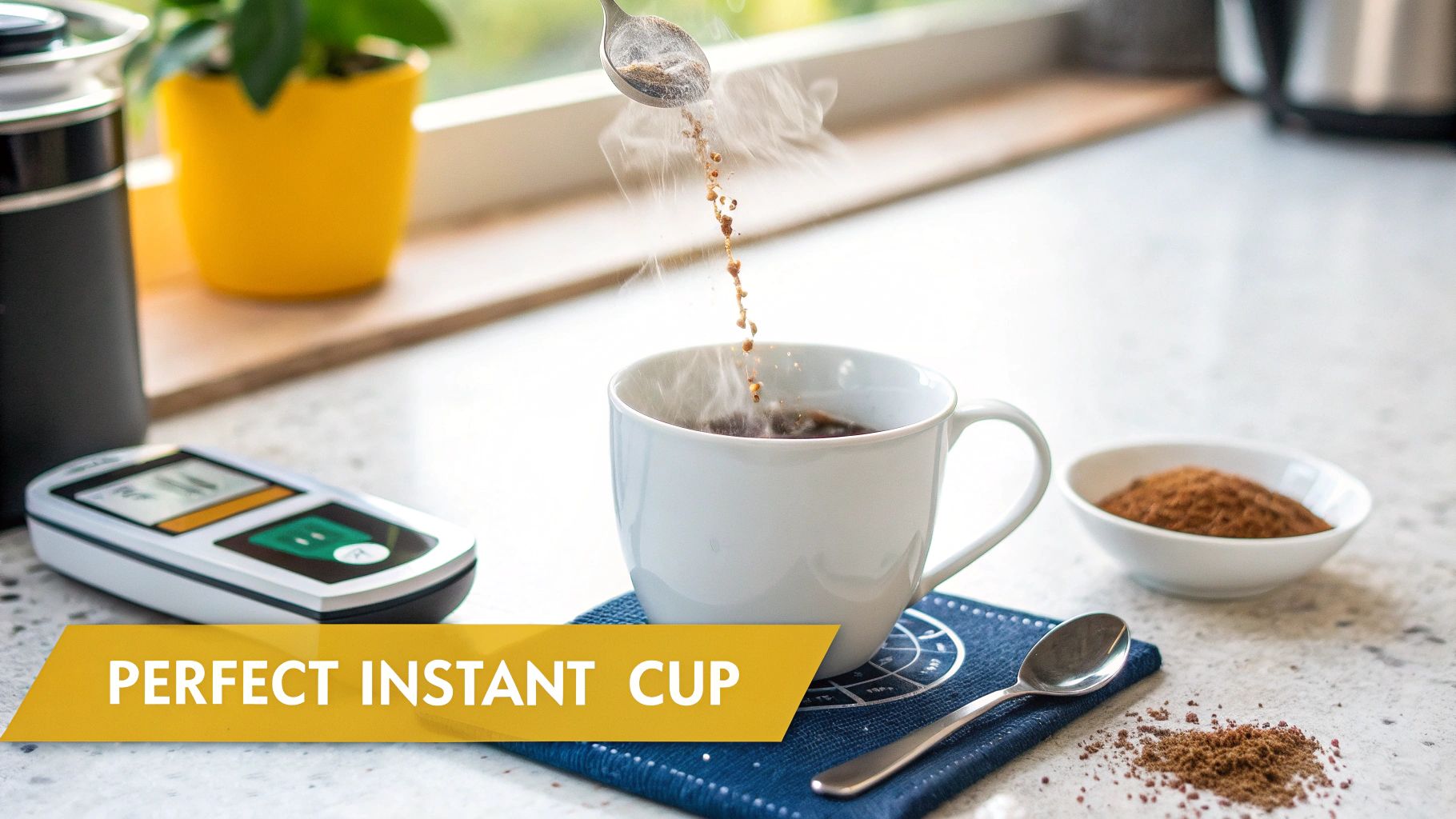
First things first: get your water temperature right. You’re shooting for hot, but not boiling—somewhere between 195°F and 205°F (90°C to 96°C) is the sweet spot. If you don't have a fancy kettle or thermometer, no problem. Just bring your water to a boil, then let it rest for about 30 to 45 seconds before you pour. This small pause is enough to prevent scorching and lets the coffee's full, nuanced flavors dissolve beautifully.
Finding Your Perfect Ratio
With your water at the right temp, the next step is nailing the coffee-to-water ratio. This is totally a matter of personal taste, but a great place to start for a well-balanced cup is one to two teaspoons of instant coffee for every six ounces of water.
Try one teaspoon first and give it a taste. Craving something a bit bolder and more robust? Add another half-teaspoon and see what you think. This simple tweak is often the only thing standing between a weak, watery drink and a rich, satisfying brew that tastes like it came from your favorite coffee shop. For a deeper dive, check out our complete guide on how to make perfect instant coffee.
Get Creative in the Kitchen
Don't let your instant decaf live its whole life in a mug! Its concentrated nature makes it an amazing secret ingredient that can elevate both sweet and savory recipes.
Think of the rich, dissolvable crystals as a flavor booster in disguise. They add a deep, earthy complexity to dishes without adding extra liquid, which can throw off the texture of your creations.
Here are a few ideas to get you started:
- Quick Iced Decaf Latte: Dissolve two teaspoons of coffee in just two tablespoons of hot water to create a concentrate. Pour it over a glass packed with ice, top with your milk of choice, and sweeten it up.
- Whipped Dalgona Coffee: Remember this trend? Combine equal parts instant decaf, sugar, and hot water (two tablespoons of each works well). Use a hand mixer to whip it into stiff, glossy peaks, then spoon that delicious cloud over iced milk.
- A Savory Secret: Sneak a teaspoon of the dry coffee crystals into your next batch of chili, a dry rub for steak, or a homemade barbecue sauce. It won't make your food taste like coffee—I promise. It just deepens the other savory notes and adds an incredible layer of richness.
Storing for Lasting Freshness
Finally, let's talk storage. To make sure your last cup tastes just as good as your first, you have to store it properly. Instant coffee is hygroscopic, which is just a fancy way of saying it loves to absorb moisture from the air. That moisture leads to clumping and, worse, a loss of flavor.
Always keep your coffee in an airtight container in a cool, dry, and dark place—your pantry is perfect. Steer clear of the refrigerator or freezer. The condensation that forms when you take it out is a fast track to ruining its quality. Protect your coffee from its four biggest enemies—air, moisture, heat, and light—and it'll stay fresh and flavorful for months.
So, What Makes Cartograph Coffee Different?
The coffee world is crowded, we get it. But we started Cartograph Coffee with a simple, non-negotiable belief: you should never have to compromise on your coffee.
A quick cup shouldn't mean a bad cup. Choosing organic shouldn't be a sacrifice. And decaf? It deserves to be just as mind-blowingly delicious as its caffeinated cousin. This idea is baked into everything we do, from the farm to your mug. We're here for the busy parents, the weekend adventurers, and anyone who simply demands a great cup of coffee without the fuss.
We don’t just sell coffee—we obsess over the entire journey. Every granule of our organic instant decaffeinated coffee begins its life as single-origin, 100% Arabica beans. This isn't just a fancy label; it means we can trace every bean back to its roots, ensuring a quality and character that reflects the unique soil and climate it came from.
What We Stand For
Our promises aren't just marketing copy on a bag. They're the real-deal principles that guide every single choice we make. It’s a commitment to excellence you can taste.
Here’s what sets Cartograph apart:
- Exceptional Beans: We start with the best of the best: single-origin, high-altitude, USDA-certified organic Arabica beans. This gives us a pure, clean foundation to build a truly complex and flavorful coffee.
- Pure, Chemical-Free Decaf: We exclusively use the Swiss Water Process. It's the only way to go, as far as we're concerned. This gentle, 100% chemical-free method uses only pure water to remove 99.9% of the caffeine, keeping the bean's delicate flavor notes intact. You get all the taste, none of the weird stuff.
- Locking in the Flavor: To make our instant coffee, we use freeze-drying. It’s a slow, low-temperature process that carefully preserves the coffee’s rich aroma and nuanced flavors. It's a world away from the high-heat spray-drying used by many brands, which often scorches the coffee and leaves it tasting bitter.
A Coffee You Can Count On
We know that how you get your coffee matters just as much as what's in the cup. More and more people are skipping the grocery aisle and buying their coffee directly online, and for good reason.
In fact, retail and online sales now make up over 60% of the entire decaffeinated coffee market. This shift allows small, quality-focused brands like us to connect directly with coffee lovers, share our story, and ensure every batch meets our sky-high standards. You can dive deeper into these consumer habits and discover more insights on the decaf market at Mordor Intelligence.
This direct line to you is everything to us. It means we can deliver a consistently fantastic coffee right to your door.
Whether you're a parent who needs a quick, clean cup between school runs or a hiker who wants amazing flavor at the top of a mountain, Cartograph is more than just coffee. We're a partner in your daily ritual, here to deliver on our promise of exceptional taste and effortless convenience, one perfect cup at a time.
Got Questions About Organic Instant Decaf?
It’s totally normal to be a little curious, or even skeptical, about organic instant decaf. Let's tackle some of the most common questions head-on so you can feel great about what's in your mug.
We'll clear up everything from caffeine myths to flavor realities, giving you the straightforward answers you need.
Is Organic Instant Decaf Completely Caffeine-Free?
This is a big one, and the short answer is: almost, but not quite 100%. No decaffeination method can strip out every last molecule of caffeine. That said, the best processes get remarkably close.
Take the Swiss Water Process, for example. It’s certified to remove 99.9% of the caffeine. A standard cup of decaf made this way has just 2 to 5 milligrams of caffeine. Compare that to a regular cup of coffee, which can pack anywhere from 95 to 200 milligrams. That tiny trace amount left in decaf is so small you won't feel any of the typical caffeine buzz.
To put it in perspective, the European Union has a strict rule: for coffee to be labeled "decaffeinated," the beans must have no more than 0.1% caffeine content. This ensures the coffee you're drinking won't have any noticeable stimulant effects.
Can Instant Decaf Actually Taste as Good as Brewed Coffee?
Honestly? Yes, it absolutely can. The old-school instant coffee that gave the category a bad name was often made with harsh, high-heat spray-drying that basically torched all the delicate flavors. But premium instant coffee has come a long way.
The key is a process called freeze-drying. Instead of scorching heat, it gently freezes the coffee and removes the water, which locks in the bean's authentic aroma and flavor. When you start with amazing, single-origin organic beans and use this gentle technique, the result is an instant coffee that’s rich, smooth, and full-bodied. It can easily stand up to—and sometimes even beat—your average cup of drip coffee.
What’s the Best Way to Keep It Fresh?
Proper storage is the secret to making sure your last scoop of instant decaf tastes as good as your first. Instant coffee's main enemies are moisture, air, light, and heat. Any of these can make the crystals clump together and go stale.
Here’s all you need to do to keep it tasting great:
- Use an airtight container. The original packaging is often fine, but a dedicated canister with a solid seal is your best bet.
- Find a cool, dark, and dry spot. Think pantry or cupboard—perfect.
- Steer clear of the fridge and freezer. Big temperature swings create condensation, and moisture is the fastest way to ruin your coffee.
Follow these simple tips, and your organic instant decaf will stay fresh and flavorful for months, ready whenever you need a quick, delicious cup.
Ready to taste the difference for yourself? See what makes Cartograph Coffee the gold standard in organic instant decaffeinated coffee. Explore our collection today.