For anyone who loves a great cup of coffee but wants to skip the caffeine jitters and pesticide concerns, organic instant decaf coffee is a fantastic discovery. It delivers that smooth, satisfying flavor you crave, making it perfect for a relaxing evening drink or a focused, calm start to your day. It’s truly the best of both worlds: wellness and convenience in one cup.
Why Choose Organic Instant Decaf Coffee
Picture this: you're enjoying the deep, comforting aroma of freshly made coffee, completely confident that it aligns with your health goals and personal values. That's the beauty of organic instant decaf. It's not just a quick drink; it's a mindful choice that slots perfectly into a modern, health-aware lifestyle. It finally closes the gap between wanting a quick, delicious cup and staying true to clean, pure ingredients.
This move toward healthier coffee isn't just a small trend, either—it's happening worldwide. The decaf coffee market is on track to hit USD 22.30 billion by 2025, and the demand for organic options is climbing even faster. This boom shows a real collective shift toward products that support our well-being, whether that means getting better sleep or cutting down on anxiety. You can actually explore the full market dynamics and see just how big this movement has become.
Who Benefits from This Coffee Choice
Switching to organic instant decaf is a smart move for all sorts of people. It offers some pretty clear advantages for anyone who doesn't want to sacrifice taste or quality.
-
Health-Conscious Consumers: If you're actively trying to reduce your exposure to synthetic chemicals, this is the coffee for you. Its organic certification is your guarantee that no synthetic pesticides or fertilizers were involved.
-
Busy Professionals: For those of us with back-to-back meetings, having a premium-tasting coffee ready in seconds is a lifesaver. You get that warm, comforting ritual without worrying about caffeine jitters derailing an important presentation.
-
Outdoor Adventurers: Instant coffee has always been a camper's best friend—it's lightweight and couldn't be easier to pack. An organic decaf version means you can enjoy a perfect brew by the campfire without it messing with your sleep under the stars.
With organic instant decaf, you no longer have to pick between convenience, health, and flavor. Today’s production methods mean you get all three in every single cup, turning your coffee break into a genuinely restorative moment.
How Premium Instant Coffee Is Crafted
The journey from a fresh coffee cherry on the branch to the dark, rich crystals in your mug is a fascinating one, especially when we're talking about premium organic instant decaf coffee. It all starts with a deep-seated commitment to organic farming—a choice that lays the groundwork for a cleaner, higher-quality coffee from the get-go.
Picture an organic coffee farm not just as a field, but as a living, breathing ecosystem. Instead of dousing crops with synthetic pesticides and fertilizers, these farmers work with nature. They use things like compost and crop rotation to build healthy soil and manage pests, which is better for everyone.
This approach does more than just protect the local environment from chemical runoff. It also means the coffee beans themselves grow pure, without absorbing any of those unwanted synthetic residues.
The Organic Farming Standard
When you see that trusted USDA Organic seal on a bag of coffee, it means something. It's a guarantee that the farm has followed incredibly strict standards for at least three years, all designed to promote ecological balance and protect biodiversity.
- No Synthetic Pesticides: Farmers rely on natural deterrents and even helpful insects to keep crops safe, which keeps harmful chemicals out of our soil and water.
- No Synthetic Fertilizers: The soil is kept rich and healthy with natural compost and other organic matter, creating a sustainable, self-nourishing cycle.
- GMO-Free: Organic rules strictly forbid the use of genetically modified organisms, so you can be sure you're getting coffee in its most natural state.
This dedication to purity is why so many health-conscious coffee drinkers seek out organic options. You can sip your brew with total confidence, knowing it’s as clean as it is delicious.
By choosing organic, you're not just getting a better cup of coffee; you're supporting a system of agriculture that respects the planet and the farmers who cultivate the land.
Transforming Brew into Crystals
So, once those high-quality organic beans are harvested, roasted to perfection, and brewed into a beautiful coffee, how does it become instant? The old way of making instant coffee involved blasting it with high heat, which unfortunately destroyed most of the delicate flavors and aromas we love. Thankfully, the best brands today use a much smarter method: freeze-drying.
Freeze-drying is a clever process that gently locks in the coffee's true character. Think of it like flash-freezing fresh summer berries to preserve their peak flavor—the same idea applies here. The brewed coffee is frozen solid, then placed into a low-pressure vacuum. This nifty trick causes the ice to turn directly into vapor, skipping the liquid stage entirely.
This process carefully removes the water but leaves behind all the concentrated coffee solids that hold the rich taste and aromatic compounds of the original brew. What you're left with are light, soluble crystals that dissolve instantly. To get the full story on this amazing technique, you can learn more about what freeze-dried coffee is and why it's the secret behind a superior instant coffee. It’s this very process that makes an organic instant coffee decaf that can truly stand up to a cup from your favorite cafe.
The Art of Chemical-Free Decaffeination
You might be surprised to learn that not all decaf is created equal. The real magic—and the difference between a bland cup and a great one—happens in how the caffeine is gently coaxed from the bean. This single step determines the final purity and flavor of your organic instant coffee decaf.
Many conventional decaf coffees rely on chemical solvents to get the job done. For a coffee to be certified organic, however, the process must be completely chemical-free.
Think of it like this: using chemicals is like stripping old paint with a harsh solvent—it gets the job done, but it can easily damage the beautiful wood grain underneath. Chemical-free methods, on the other hand, are more like a skilled art restorer meticulously cleaning a masterpiece, carefully lifting away only what's necessary while leaving the original character completely intact. This is the gold standard for preserving both the coffee’s organic integrity and its delicate, nuanced flavors.
This journey, from a certified organic farm to the flavorful instant crystals in your mug, is all about preserving that natural quality.
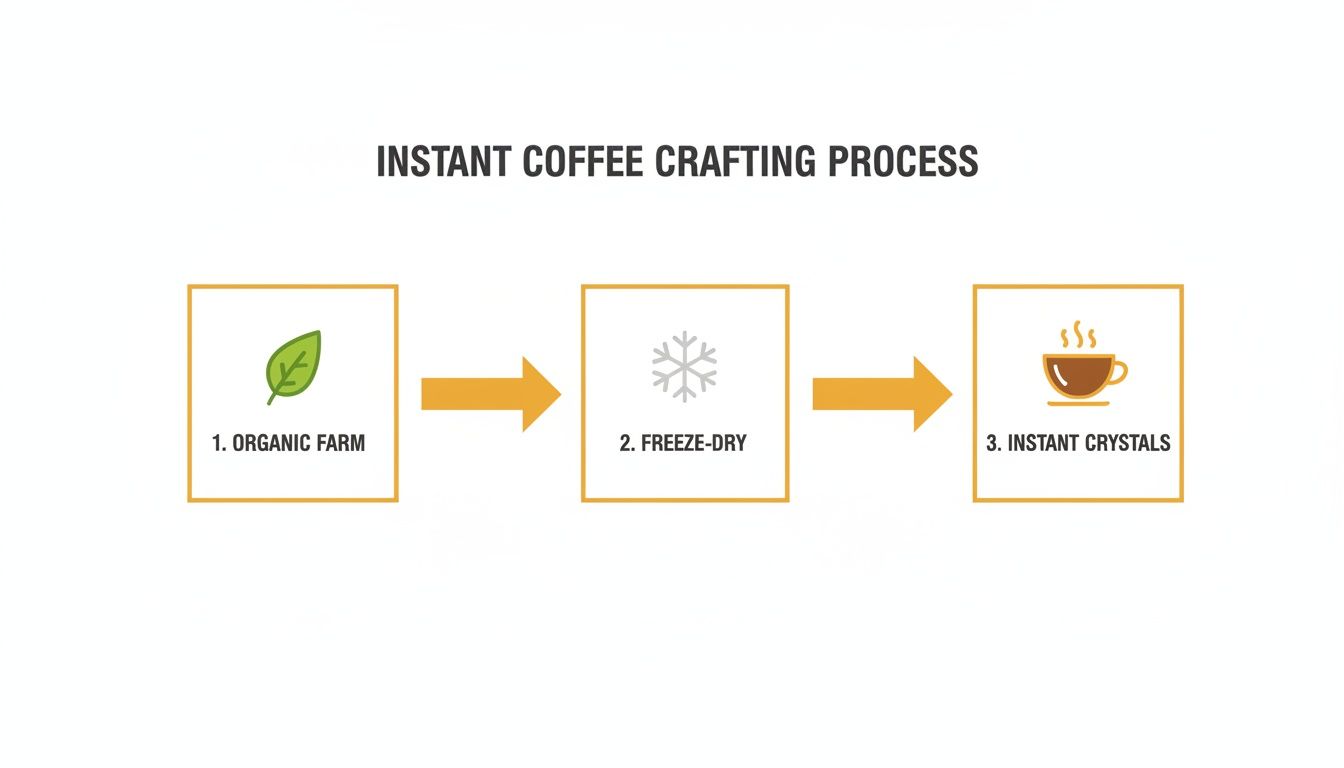
As the infographic shows, every step, from sustainable cultivation to advanced freeze-drying, is designed to protect what makes the coffee special in the first place.
The Swiss Water Process
One of the most respected and widely used chemical-free methods is the Swiss Water Process. It’s a beautifully simple and clever technique that relies on nothing more than water, temperature, and time to remove caffeine.
The process begins by soaking a batch of green coffee beans in hot water, which creates a solution full of both caffeine and soluble flavor compounds. This liquid is then passed through a special charcoal filter designed to capture only the larger caffeine molecules, letting all the smaller, flavor-rich compounds pass right through.
Now, you have a flavor-charged, caffeine-free liquid. This liquid is then used to wash the next batch of beans. Because it's already saturated with all the good stuff from the coffee, it can't absorb any more flavor—it only pulls out the caffeine. It's a brilliant, gentle cycle that results in coffee that is 99.9% caffeine-free without sacrificing taste.
The Swiss Water Process is a testament to natural innovation. By using the elements of water and coffee itself, it decaffeinates beans while meticulously protecting the nuanced flavor profile that makes each origin unique.
The CO2 Method
Another fantastic chemical-free technique is the CO2 Method. This process uses carbon dioxide—the same gas that puts the fizz in your soda—in a "supercritical" state where it behaves like both a gas and a liquid. In this unique state, CO2 becomes a highly selective solvent that bonds almost exclusively with caffeine.
First, the green coffee beans are soaked in water. Then, they’re placed in a chamber where pressurized CO2 is introduced. The CO2 circulates through the beans, acting like a magnet that pulls the caffeine molecules out while leaving the larger flavor molecules completely untouched. Once the job is done, the pressure is released, the CO2 simply evaporates, and what's left behind are pure, beautifully decaffeinated coffee beans.
To give you a clearer picture, here’s a quick comparison of how these natural methods stack up against common chemical-based processes.
Comparing Popular Decaffeination Methods
| Method | Process Overview | Chemicals Used | Flavor Impact | Organic Status |
|---|---|---|---|---|
| Swiss Water | Uses a flavor-charged water solution (Green Coffee Extract) and carbon filters to gently remove caffeine from green coffee beans. | None | Minimal; preserves origin-specific flavors. | Certified Organic |
| CO2 Method | Uses supercritical carbon dioxide (CO2) to selectively bind with and extract caffeine molecules. | None | Excellent; retains original aroma and flavor compounds. | Certified Organic |
| Solvent-Based | Beans are steamed and then repeatedly rinsed with a chemical solvent (like methylene chloride or ethyl acetate) to dissolve the caffeine. | Methylene chloride or ethyl acetate | Can strip some flavor and aroma, potentially leaving a slight chemical aftertaste. | Not Organic |
| Triglyceride | Hot water-soaked beans are immersed in coffee oils from spent grounds. The triglycerides in the oils selectively remove caffeine. | None | Moderate; can sometimes alter the original flavor profile. | Can be Organic |
As you can see, the Swiss Water and CO2 methods are the clear winners for anyone seeking a pure, flavorful, and certified organic decaf. They ensure your coffee is free from unwanted chemical residues.
The growing preference for these cleaner methods isn't just a niche trend. Decaf consumption in the US jumped by 33% recently, and the global market is projected to hit USD 3.28 billion by 2030. If you're curious about how little caffeine is actually left, you can explore our detailed guide on coffee caffeine content.
The Health and Lifestyle Benefits of Organic Decaf
Choosing organic instant decaf coffee isn't just about what you're getting—it's about what you're leaving behind. For many of us, it’s a conscious step towards a lifestyle that feels more balanced and intentional, a way to keep the comforting ritual of coffee without the side effects that can throw your day (and night) off track.
If you're mindful about what you put into your body, the "organic" part is a huge win. You're effectively sidestepping the synthetic pesticides and fertilizers that are a staple in conventional coffee farming. This means the cup you're sipping is as pure as it gets, packed with natural antioxidants and free from chemical residues. It's a simple swap that offers real peace of mind.
Then there's the "decaf" advantage. We've all been there—that one-too-many cups that lead to jitters, anxiety, or a restless night. Decaf lets you disconnect the flavor you love from the caffeine kick, making it possible to enjoy a warm, satisfying cup in the evening without it sabotaging a good night's sleep.
A Fit for Every Lifestyle
The beauty of organic decaf is how it effortlessly slots into just about any routine, making life a little easier and a lot more enjoyable.
-
For Busy Professionals and Parents: When your days are a blur, convenience is everything. Instant coffee gives you a great-tasting cup in seconds, and an organic decaf version means you can tackle that afternoon lull without the jitters that kill your focus or the late-night buzz that ruins your rest.
-
For Students: Pulling an all-nighter? You can still have the comforting ritual of a warm drink to stay sharp, but without the overstimulation that inevitably leads to a crash. It’s a much smarter way to fuel those long study sessions.
-
For Outdoor Enthusiasts: Anyone who camps or hikes knows that every ounce in your pack counts. Organic instant decaf is incredibly lightweight and simple to make, giving you that perfect, soul-warming cup by the campfire without interfering with a peaceful night's sleep under the stars.
This shift toward cleaner, calmer coffee isn't just a niche trend; it's a global movement. The decaf market is expected to grow from USD 21.28 billion in 2025 to a staggering USD 32.89 billion by 2035, all thanks to people like you looking for wellness-first options. For a deeper dive, you can explore the data behind this expanding decaf coffee market on marketresearchfuture.com.
By choosing organic instant decaf, you're not just picking a beverage. You're opting for a coffee that actively supports your well-being, fits your demanding schedule, and reflects a more mindful way of living. It’s the ideal intersection of health, convenience, and fantastic taste.
This dedication to purity is what the organic movement is all about. If you're curious about the standards and what it takes to earn that label, our guide on what makes coffee organic breaks down why it's a better choice for both you and the environment.
How to Choose and Brew the Perfect Cup

Walking down the coffee aisle can be a dizzying experience, but picking out a top-notch organic instant coffee decaf is actually pretty simple once you know what to look for. Your quest for the perfect cup really just begins with reading the label and understanding what it’s telling you.
First things first, hunt for the USDA Organic seal. That little logo is your guarantee that the coffee was grown and processed without any synthetic pesticides or fertilizers. It’s the non-negotiable starting point for a cleaner, healthier coffee.
After that, you'll want to find out how it was decaffeinated. Keep an eye out for phrases like "Swiss Water Process" or "CO2 Method" right on the package. This confirms you're getting a brew that's free from chemical solvents.
Decoding the Details on the Label
Once you've got the essentials covered, a few more clues on the label can lead you to an even better-tasting coffee. Think of it as getting to know the coffee's personality before you even brew it.
-
Bean Type: The best brands almost always use 100% Arabica beans. Arabica is known for its smooth, complex flavors with a hint of sweetness, putting it a cut above its more bitter and punchy cousin, Robusta.
-
Bean Origin: Where the coffee is grown has a huge impact on its taste. Coffee from Latin America often has classic nutty and chocolate notes, whereas beans from Africa might surprise you with bright, fruity, or even floral flavors.
-
Third-Party Certifications: You might also spot other seals like "Fair Trade," which means farmers were paid fairly for their work, or "B Corp," signaling that the company meets high ethical and environmental standards.
Choosing the right coffee is like picking out a great bottle of wine; the quality of what goes in determines the quality of what comes out. By starting with organic beans and a chemical-free decaf process, you're setting yourself up for an exceptional cup every time.
Elevating Your Instant Coffee Game
So, you've found the perfect organic instant coffee decaf. Now what? Brewing it the right way is the final step to unlocking all that great flavor. Even though it's designed to be easy, a couple of minor tweaks can completely transform your experience.
Let’s start with the water. Pouring boiling water directly over the coffee crystals can actually scorch them, leaving you with a bitter taste. For a smoother brew, bring your water to a boil, then let it cool for about 30 seconds. This brings it down to the sweet spot, around 200°F (93°C).
The coffee-to-water ratio is all about personal preference, but a good place to start is one to two teaspoons of instant coffee for every eight ounces of water. Once you dial that in, don't be afraid to experiment! Your instant decaf is surprisingly versatile—try blending it into a smoothie, adding it to dessert recipes for a rich coffee kick, or shaking it with ice and milk for a quick and delicious iced latte.
Got Questions About Organic Instant Decaf? We’ve Got Answers.
Stepping into the world of specialty coffee can feel a bit overwhelming, especially when you're trying to find something that fits your health-conscious lifestyle. Let's clear up some of the most common questions about organic instant decaf coffee so you can feel great about what's in your mug.
Is Organic Instant Decaf Coffee Really Caffeine-Free?
The short answer is no, but it's incredibly close. No coffee can be 100% caffeine-free, but the decaffeination process gets it nearly all the way there.
An average 8-ounce cup of decaf has only about 2-5 milligrams of caffeine. Compare that to the 95 milligrams you'd find in a standard cup of regular coffee, and you can see it's a massive difference. This trace amount is why a warm cup of organic instant coffee decaf is the perfect evening ritual—all the rich flavor, none of the sleep-disrupting jitters.
Can Instant Decaf Actually Taste as Good as Brewed Coffee?
It absolutely can. The old stereotype of bland, watery instant coffee is a thing of the past, thanks to some major leaps in how it's made. Top-tier brands have moved on to using high-quality, 100% Arabica beans and sophisticated methods like freeze-drying, which is a gentle way to lock in the bean's natural flavor and aroma.
When you combine great beans with a clean decaffeination method like the Swiss Water Process, you get a cup that's smooth, full-bodied, and genuinely delicious. It truly holds its own against a freshly brewed cup, with the added bonus of being ready in seconds.
What Should I Look for on the Label?
When you're at the store, the packaging itself can tell you a lot about the quality inside. A few key seals and phrases are your best guide to a truly premium product.
- USDA Organic Seal: This is non-negotiable. It’s your guarantee the coffee beans were grown without synthetic pesticides or fertilizers—better for you and for the environment.
- Chemical-Free Decaffeination: Keep an eye out for terms like "Swiss Water Process" or "CO2 Process." This tells you that the caffeine was removed naturally, without the use of harsh chemical solvents.
- Fair Trade or B Corp: These certifications aren't just buzzwords. They mean the company is committed to ethical practices, from paying farmers a fair wage to operating sustainably.
Spotting these labels ensures the organic instant decaf coffee you're buying is not only tasty but also made with integrity.
Ready to experience the perfect blend of convenience, flavor, and wellness? Discover Cartograph Coffee’s premium organic instant decaf and elevate your daily ritual. Shop our collection today!