So, what exactly is organic instant coffee? In short, it’s real coffee, grown to strict organic standards, that’s been turned into a convenient, quick-dissolving powder. You get the speed and ease of instant without skimping on the clean, sustainable principles that define organic farming.
The result is a pure, rich-tasting cup of coffee that’s better for you and a whole lot kinder to the planet.
The Best of Both Worlds: Convenience Meets Purity
Let's bust a common myth right away. Organic instant coffee isn't some second-rate substitute for "real" coffee. It's the smart combination of two fantastic ideas: the get-it-now convenience of an instant brew and the deep commitment to organic agriculture.
Think about it this way. A conventional coffee farm often relies heavily on chemical inputs to get the job done. An organic farm, on the other hand, is managed like a self-sufficient ecosystem, where building healthy soil and maintaining a natural balance are the name of the game.
It all begins with certified organic beans. This certification is a big deal—it guarantees the coffee was grown in soil that has been free from prohibited synthetic substances for at least three years. Farmers enrich the soil and fend off pests using natural techniques like composting and planting cover crops, ensuring the coffee bean is pure right from the start.
What This Means for Your Cup
The "instant" magic happens after the beans are roasted and brewed into a super-strong coffee concentrate. This liquid is then carefully dehydrated, leaving behind the soluble coffee crystals you know and love. The crucial difference here is that every single step, from the farm to the jar, follows strict organic protocols.
This dedication to a clean process delivers some pretty clear benefits:
- No Synthetic Residues: You can sip with confidence, knowing your coffee is free from the residues of synthetic pesticides and fertilizers.
- Fuller, Cleaner Flavor: Many coffee lovers report that organic beans produce a cleaner, more vibrant taste, allowing the bean's natural flavor notes to shine through without being muted by chemicals.
- Environmental Stewardship: When you choose organic, you're voting with your wallet for farming practices that protect biodiversity, conserve water, and build healthier soil for years to come.
At its heart, organic instant coffee is a promise. It's a promise of a quick, delicious cup without compromising your health or your values. It beautifully bridges the gap between our busy, modern lives and our desire for clean, thoughtfully sourced food.
Ultimately, this isn't about taking shortcuts; it's about smart, thoughtful innovation. You get a high-quality coffee that fits perfectly into your hectic schedule while aligning with a more conscious way of living. If you want to dig deeper into the farming side of things, our guide on what makes coffee organic has all the details. It’s the perfect brew for anyone, anywhere.
The Journey From Organic Bean to Instant Cup
Have you ever wondered how a solid, vibrant coffee cherry becomes a fine powder that dissolves in seconds? It’s a pretty amazing process. For organic instant coffee, that journey starts not in a factory, but on a farm where every step is guided by a deep respect for nature. It's a meticulous path that protects the bean's integrity from the soil all the way to your cup.
Everything begins with certified organic coffee beans. Unlike conventional operations, these farms are managed as balanced ecosystems. Farmers use natural methods like composting to build healthy soil and even bring in helpful insects to manage pests. Synthetic fertilizers and pesticides? They're completely off the table. This commitment lets the coffee cherries mature with a pure, unadulterated flavor.
Once harvested, the deep red cherries are processed to get to the green coffee beans inside. Then comes the art of roasting. This is where precision heat transforms the raw beans, unlocking the complex aromas and rich flavors we all look for in a great cup of coffee.
The whole process, from farm to cup, is a fascinating journey.
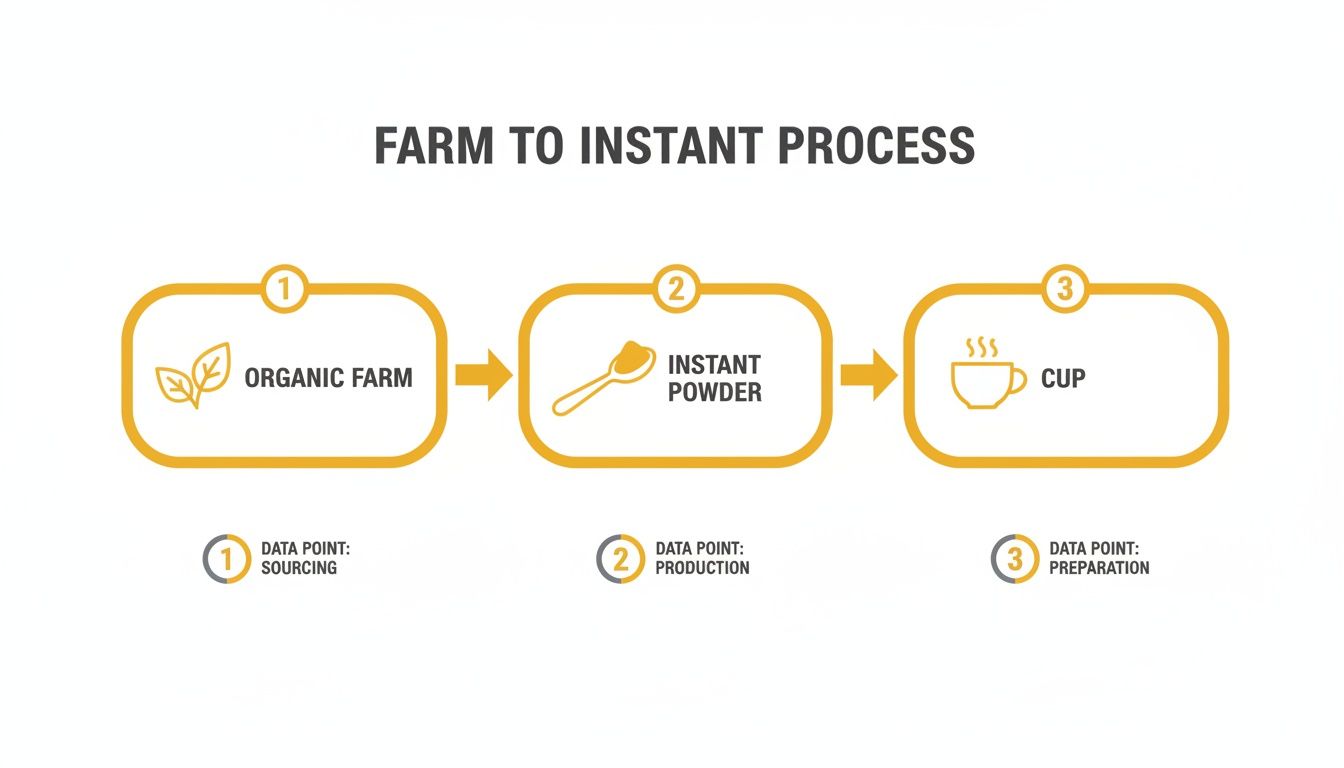
As you can see, the real challenge is turning a natural agricultural product into a convenient, shelf-stable powder without compromising its organic principles.
Creating the Coffee Concentrate
After roasting, the beans are ground up and brewed on an industrial scale. Picture making a gigantic, incredibly potent pot of coffee. The idea is to pull out all the coffee solids, flavors, and aromas into a super-concentrated liquid.
This step is make-or-break for the final quality of the organic instant coffee. Everything from water quality and temperature to brewing time is carefully controlled to create a rich, flavorful base. This liquid concentrate is essentially the soul of the coffee, ready for its final transformation.
The Magic of Dehydration
Here's where the real "instant" magic happens. To create those familiar crystals, all the water has to be removed from the coffee concentrate, leaving only the soluble coffee goodness behind. There are two main ways to do this, and each one has a big impact on the final taste and quality.
To get the full picture, it helps to understand a bit of the science. If you’re curious, our article explaining how instant coffee works gets into the nitty-gritty details.
The two main dehydration methods are:
- Freeze-Drying
- Spray-Drying
Let's break down how each of these techniques works.
Freeze-Drying: The Premium Method
Freeze-drying is widely seen as the best way to make high-quality instant coffee. It’s a more delicate and complex process, but it does a fantastic job of preserving the coffee's original flavor and aroma.
Think about preserving fresh raspberries. You wouldn't blast them with heat if you wanted to keep their vibrant color and taste. You’d flash-freeze them. Freeze-drying coffee operates on a similar principle.
The process involves freezing the coffee concentrate to around -40°C (-40°F). It's then placed in a low-pressure vacuum, and gentle heat is applied. This causes the frozen water to turn directly into vapor without ever becoming liquid again—a process called sublimation.
This gentle technique is crucial because it protects the delicate aromatic compounds that give coffee its wonderful character. What you're left with is a lighter, more fragrant crystal that holds onto much of the complexity of the original brew. It costs more, but this method is the gold standard for premium organic instant coffee.
Spray-Drying: The Efficient Alternative
Spray-drying is a much faster and more budget-friendly method. The process is similar to how powdered milk is made. A fine mist of the coffee concentrate is sprayed into a chamber of very hot air, typically heated to around 250°C (480°F).
The intense heat causes the water in the mist to flash-evaporate, leaving behind tiny particles of coffee powder that collect at the bottom.
While it's incredibly efficient, this blast of high heat can be tough on the coffee's more delicate flavor compounds. Many of the nuanced aromas and subtle tasting notes get lost in the process. That's why spray-dried instant coffee often has a bolder, sometimes more bitter, and less complex flavor profile compared to its freeze-dried cousin.
Why Going Organic Matters for You and the Planet
Choosing organic instant coffee is about more than just what’s in your mug. It's a small choice that has a big impact, benefiting your own well-being and the health of our planet. Every cup is an investment in cleaner farming, healthier ecosystems, and a purer product from the ground up.
When you go organic, you’re supporting a whole philosophy of farming—one that works with nature, not against it. That simple decision sends positive ripples through the entire system, from the soil where the coffee plants grow to the water sources that surround them.
A Cleaner Cup for a Healthier You
The most immediate benefit of switching to organic instant coffee is what you avoid. Conventional coffee farming often depends on a cocktail of synthetic pesticides, herbicides, and fertilizers. While there are regulations in place, trace amounts of these chemicals can sometimes make their way from the farm to your cup.
Organic farming standards, on the other hand, are incredibly strict and forbid the use of these artificial inputs. This means the coffee you’re drinking is as pure as it gets, free from unwanted chemical baggage. For many people, that peace of mind is reason enough to make the switch.
Coffee is already celebrated for being rich in antioxidants, which are fantastic compounds that help protect your body's cells. Some research even suggests that organically grown crops can pack a bigger antioxidant punch than their conventional counterparts. So, while all coffee has benefits, organic ensures you’re getting all the good stuff without anything extra.
By choosing organic, you’re simply opting for a cleaner ingredient. It’s a straightforward swap that ensures your convenient cup of coffee is free from synthetic pesticide residues, letting the bean's natural goodness shine.
Nurturing the Planet, One Farm at a Time
The environmental case for organic coffee is compelling. The entire system is built around creating and maintaining what experts call "living soil." This isn't just inert dirt; it's a dynamic, thriving ecosystem packed with microorganisms.
Healthy, living soil delivers a few major environmental victories:
- Better Water Quality: With no synthetic chemical fertilizers or pesticides, there’s no risk of nasty runoff contaminating local rivers, lakes, and groundwater. This keeps water sources clean for wildlife and nearby communities.
- A Boost for Biodiversity: Organic farms are buzzing with life. By avoiding harsh, broad-spectrum pesticides and planting diverse cover crops, they become havens for beneficial insects, birds, and other animals, creating a more balanced and resilient ecosystem.
- Fighting Climate Change: Healthy organic soil is loaded with organic matter, which acts like a giant sponge. It soaks up and retains far more water, making farms more resilient to drought. Critically, it also pulls more carbon out of the atmosphere and locks it in the ground, making it a small but mighty tool in the fight against climate change.
The People Behind the Coffee
The benefits don't stop with the soil. Choosing organic instant coffee often means supporting a safer, fairer system for the people who grow it. Farmworkers on organic plantations aren't exposed to potentially hazardous synthetic chemicals, which is a huge win for their long-term health.
On top of that, many organic coffee producers are also part of Fair Trade cooperatives. This certification guarantees that farmers are paid a fair, stable price for their harvest, giving them the economic security to invest back into their families, communities, and local schools.
Making the switch to organic instant coffee is a conscious choice that feels good for a reason. If you want to dive deeper into how small changes can make a difference, you can explore the principles of sustainable living and see how it all connects. Your daily brew can be more than just a quick caffeine fix—it can be a meaningful act that supports both your health and the world around you.
How to Choose the Best Organic Instant Coffee
Staring at the coffee aisle can be dizzying, especially when you’re hunting for an organic instant coffee that genuinely tastes good. With so many brands popping up, how do you sift through the options to find a real gem? It all boils down to knowing what to look for on the label.
The great news is, you're not alone in your search. The demand for clean, chemical-free coffee is surging, and the market is responding. While the entire instant coffee industry is growing, the organic segment is expanding at an impressive 8.5% CAGR. This boom is fueled by people like you who want convenience without sacrificing quality or health.
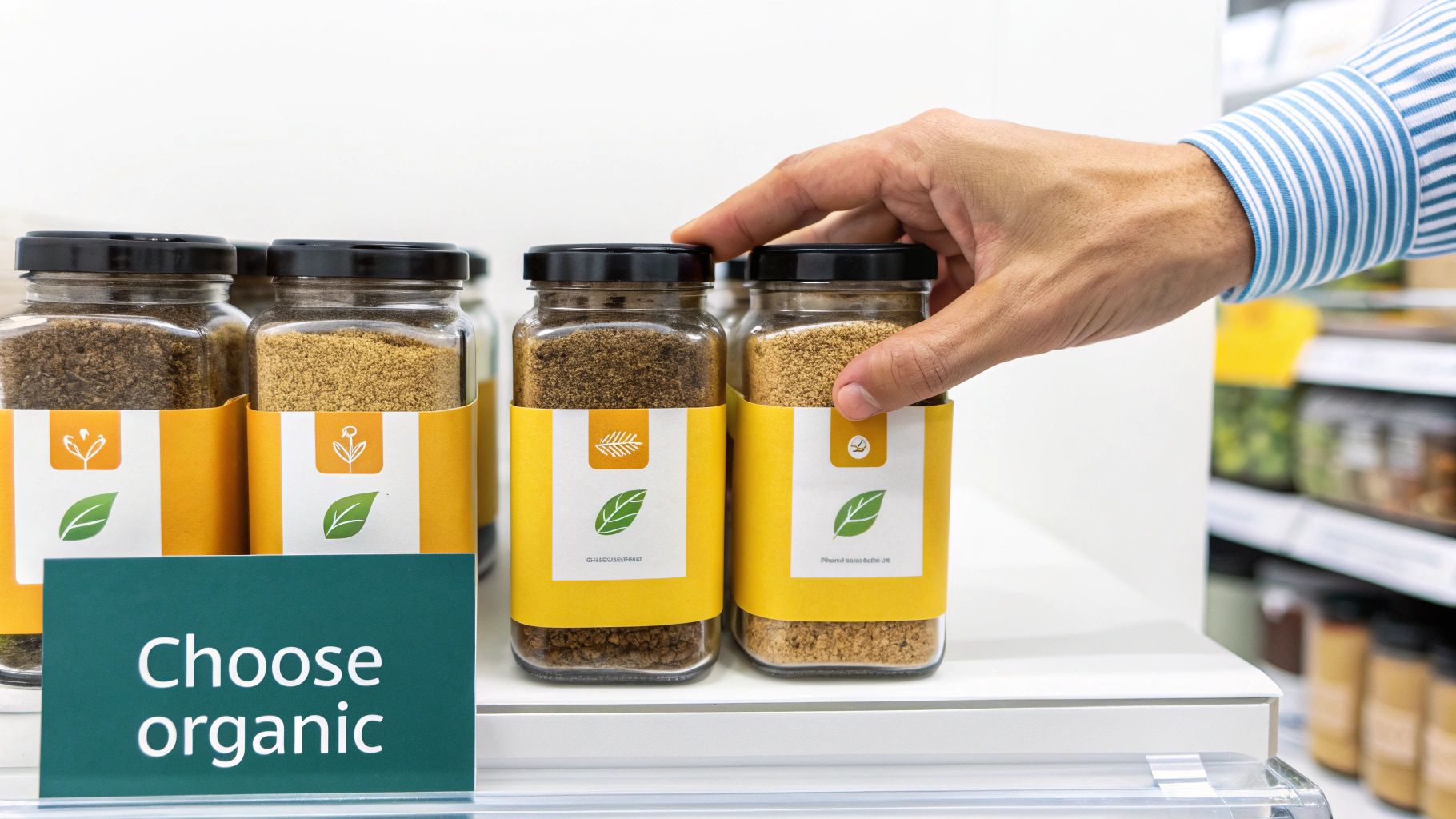
More choice is a fantastic thing, but it also means you need a game plan. Let's walk through the four key things that will lead you to a fantastic cup.
H3: Check the Bean Type: Arabica vs. Robusta
First things first, look at the beans. Much like grapes in winemaking, the type of coffee bean used is the single biggest factor in the final taste, aroma, and even the caffeine kick. You'll mainly see two types: Arabica and Robusta.
- Arabica: This is the specialty coffee bean. It's prized for a smooth, sweet, and often complex flavor profile with notes of fruit, chocolate, or flowers. Arabica is also naturally lower in acid and caffeine. If you want a nuanced, aromatic coffee, look for 100% Arabica.
- Robusta: Just like it sounds, Robusta is a hardier bean. It delivers a bold, strong, and sometimes bitter flavor. It packs nearly double the caffeine of Arabica, which is why it's often used in blends to add intensity and keep costs down.
For a truly top-shelf organic instant coffee, you can't go wrong with 100% single-origin Arabica. It provides a cleaner, more sophisticated taste that lets the bean's natural character shine through.
H3: Understand the Processing Method
As we touched on earlier, how the liquid coffee is turned into crystals is a make-or-break step for flavor. This process determines how many of those beautiful, original coffee aromas actually make it into your mug.
Freeze-drying is the gold standard for quality. This gentle method involves freezing the coffee concentrate and then removing the ice in a vacuum. It’s a slow process, but it masterfully locks in the delicate aromatic compounds. The result is a richer coffee that tastes strikingly close to a fresh brew.
On the other hand, spray-drying uses intense heat to evaporate the water. It’s much faster and cheaper, but that heat can obliterate the subtle flavors, often leaving you with a generic or bitter-tasting coffee. When you’re paying a premium for organic, choosing a freeze-dried product is the only way to go.
H3: Look for Official Organic Certifications
This one is non-negotiable. The word "organic" can be thrown around as a marketing buzzword, so you need proof. To be sure your coffee meets strict, third-party standards from farm to jar, always look for an official certification seal.
In the United States, the most reliable seal is the USDA Organic logo. This seal is your guarantee that the product is made with at least 95% organic ingredients and was grown and processed without synthetic pesticides, fertilizers, or GMOs. Don't just trust the front of the package—flip it over and find that seal.
H3: Decode the Flavor Notes and Packaging
Finally, let the packaging tell you a story. Brands that are truly proud of their coffee will give you the details you need to make a great choice.
- Flavor Notes: Scan the label for descriptions like "fruity," "nutty," "chocolatey," or "bright." These aren't just fancy words; they are your guide to finding a flavor profile that matches your personal taste.
- Packaging Quality: Good packaging isn't just about looks—it's about freshness. Quality materials are crucial for protecting the coffee from air and moisture, which are the enemies of flavor. Understanding the science behind film packaging solutions for food safety and freshness shows just how important this is.
To make things even clearer, here’s a quick table to help you compare your options at a glance.
Comparing Organic Instant Coffee Features
| Feature | What to Look For | Impact on Your Coffee |
|---|---|---|
| Bean Type | 100% Arabica for smooth, complex flavors. | Delivers a sweeter, less bitter taste with nuanced aromas of fruit, flowers, or chocolate. |
| Processing Method | Freeze-dried for maximum flavor preservation. | Results in a richer, fuller-bodied coffee that tastes much closer to a fresh brew. |
| Certifications | The official USDA Organic seal (or equivalent). | Guarantees the coffee is free from synthetic pesticides and GMOs. |
| Flavor Profile | Specific tasting notes like "nutty," "fruity," "bright." | Helps you select a coffee that perfectly matches your personal taste preferences. |
By keeping these factors in mind, you can cut through the noise and confidently pick an organic instant coffee that truly delivers on taste and quality.
If you're ready to see some of these principles in action, take a look at our curated guide to the best organic instant coffee brands and find your new favorite.
Mastering the Art of Brewing Instant Coffee
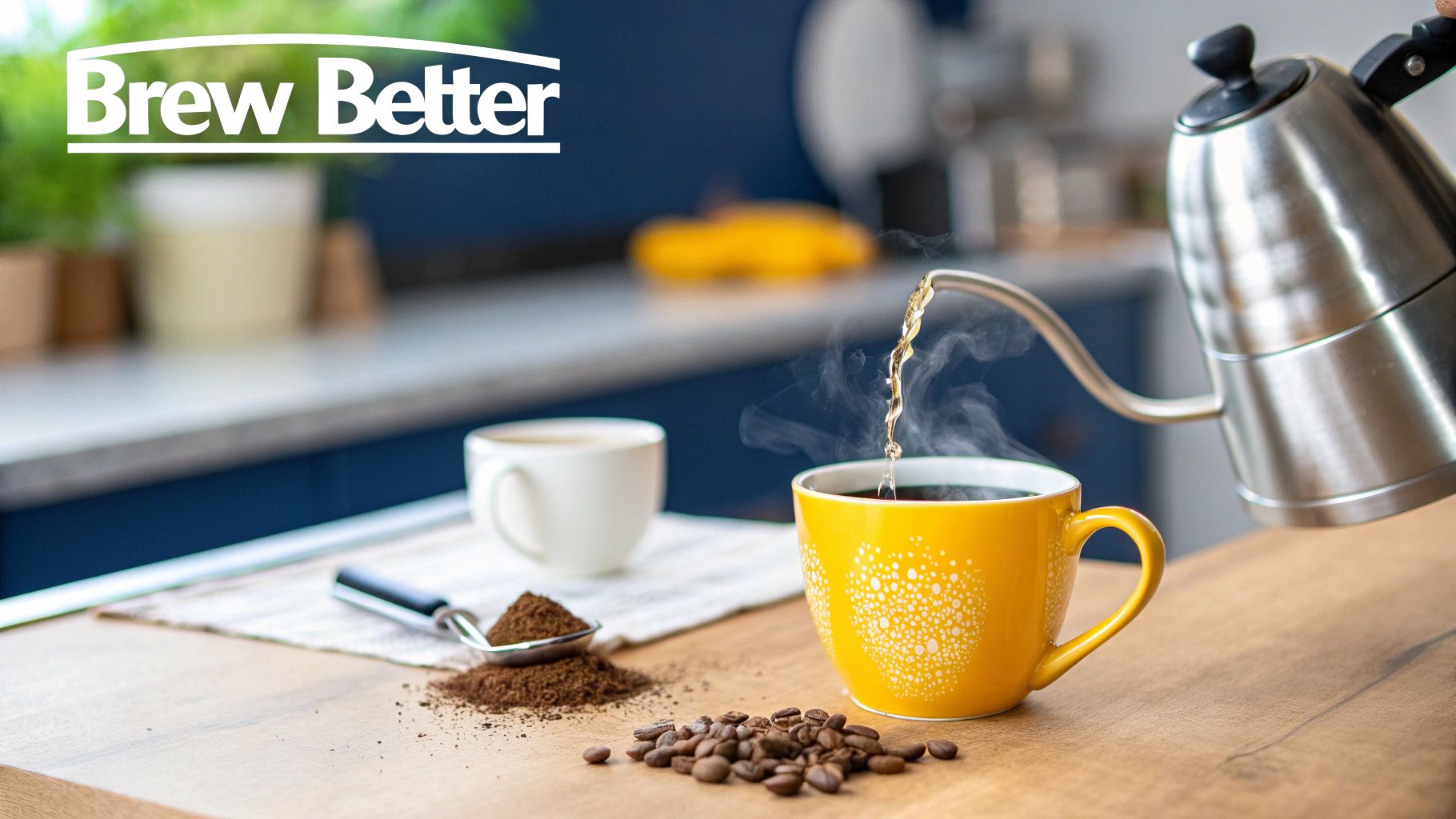
To get a truly great cup from your organic instant coffee, you need to think beyond the simple "scoop, pour, and stir" routine. Yes, convenience is the whole point, but a few tiny adjustments can elevate your brew from a quick fix to a genuinely satisfying cup. It all starts with the basics you control right at home.
The number one rule? Never use boiling water. Pouring scalding water directly over the coffee crystals actually scorches them, creating a harsh, bitter taste that completely overpowers the bean's intended flavor profile. The sweet spot is between 195°F and 205°F (90°C to 96°C)—that's just off the boil.
The easiest way to hit this temperature is to let your kettle rest for about 30 seconds after it clicks off. That small drop in heat makes a massive difference.
Getting Your Ratio Just Right
Next up is the coffee-to-water ratio. Most brands suggest one to two teaspoons per six ounces of water, but think of that as a starting point, not a hard rule. The perfect strength is all about your personal taste and the specific coffee you’re using.
Start with the recommended amount and then tweak it. Want it bolder? Add a little more coffee. Too strong? Use a bit less next time. A pro tip is to dissolve the coffee crystals in a splash of lukewarm water first, creating a smooth paste before adding the hot water. This simple step guarantees a perfectly smooth, lump-free brew.
Think of brewing instant coffee like seasoning a dish. You start with a base recipe but adjust to your own taste. A little more coffee for boldness, a little more water for a lighter cup—you are in complete control of the final result.
Once you nail the basic hot cup, you can start having some real fun. Organic instant coffee is surprisingly versatile and can be the secret ingredient for all sorts of cafe-style drinks you can whip up in seconds.
Creative Ways to Use Your Instant Coffee
Ready to experiment? One of the best things about high-quality organic instant coffee is how easily it dissolves in both hot and cold liquids. This opens up a whole world of possibilities far beyond a simple black coffee.
Here are a few ideas to get you started:
- Quick Iced Latte: Dissolve two teaspoons of instant coffee in two tablespoons of hot water to create a concentrated coffee shot. Pour it over a glass packed with ice and top it off with your favorite milk. A perfect latte in under a minute.
- Whipped Dalgona Coffee: In a bowl, combine equal parts instant coffee, sugar, and hot water (two tablespoons of each is a great place to start). Use a hand mixer or frother to whisk it until you get stiff, creamy peaks. Spoon that glorious fluff over a glass of iced milk.
- Rich Mocha Smoothie: Add a teaspoon of instant coffee directly to your blender along with your other smoothie ingredients. It's a fantastic match for banana, chocolate protein powder, a spoonful of nut butter, and almond milk, giving your morning shake a nice caffeinated kick.
- A Baker's Secret Ingredient: Elevate your baked goods by mixing a teaspoon of dissolved instant coffee into your chocolate cake, brownie, or cookie batter. It deepens and enriches the chocolate flavor without tasting like coffee.
Got Questions About Organic Instant Coffee? We Have Answers.
So, you're getting a handle on what organic instant coffee is and how to spot a good one. But a few practical questions are probably still floating around. It's only natural to wonder how it really stacks up against the fresh stuff in your mug, especially when it comes to health, caffeine, and price.
Let's clear the air and tackle these common questions head-on. Think of this as the final piece of the puzzle, giving you the confidence to know you're making a great choice.
Is Organic Instant as Healthy as Freshly Brewed Organic Coffee?
This is a great question, and the answer is refreshingly simple: for the most part, yes. When it comes to the main reason you'd choose organic in the first place—avoiding synthetic chemicals—they're on equal footing. Both are made from coffee beans grown without those nasty pesticides and fertilizers, so you’re getting a cleaner cup either way.
Both instant and brewed organic coffee are also packed with antioxidants, those helpful compounds that support your overall wellness. The real difference comes down to the processing. To become "instant," the coffee has to be dehydrated, and the high-heat spray-drying method can sometimes diminish the more delicate aromatic compounds.
It's a bit like comparing a fresh strawberry to a freeze-dried one. The freeze-dried berry keeps nearly all its flavor and nutrients, while one dried with high heat might lose some of its punch. This is exactly why freeze-dried organic instant coffee is the way to go.
While a perfectly brewed cup of fresh organic coffee might win by a nose on flavor complexity, a high-quality organic instant is still a world away from its conventional instant cousin. It’s an incredibly convenient way to get all the clean benefits of organic beans without any of the hassle.
Does Organic Instant Coffee Have Less Caffeine?
The caffeine in your cup has almost nothing to do with it being organic and everything to do with the beans themselves. That said, as a general rule, instant coffee often contains a bit less caffeine than a standard brewed cup.
Here’s a quick rundown:
- A typical mug of instant coffee usually has between 60-90mg of caffeine.
- A standard brewed coffee generally contains between 95-165mg of caffeine.
The real variable, though, is the bean. Robusta beans can pack nearly double the caffeine of the smoother, more nuanced Arabica beans. An organic instant made from 100% Arabica will naturally be on the lower end of the caffeine spectrum, while a blend that includes Robusta will be much punchier. If you're sensitive to caffeine or just prefer a gentler lift, always look for "100% Arabica" on the label.
How Do I Know My Instant Coffee Is Really Organic?
In a world full of clever marketing, this is the most important question of all. The only surefire way to know your coffee is legitimately organic is to look for an official certification seal on the package. The word "organic" on its own isn't enough; you need proof.
In the United States, the gold standard is the "USDA Organic" seal. This little green and white logo is legally protected and acts as your guarantee that the product has met incredibly strict standards, from the soil it was grown in all the way to the jar on the shelf.
Across the pond in Europe, you’ll want to spot the "EU Organic" leaf logo. These seals aren't just for show—they represent a transparent, accountable supply chain. If a product just says something vague like "made with organic ingredients" but lacks the seal, it likely hasn't met the same tough criteria. For total peace of mind, always hunt for that official emblem.
Why Does Organic Instant Coffee Cost More?
That higher price tag on organic instant coffee isn't just for the label—it reflects the true cost of doing things right. It’s a completely different approach to farming that skips the cheap chemical shortcuts used in conventional agriculture.
Several things contribute to the higher cost:
- Hands-On Farming: Instead of just spraying chemicals, organic farmers use natural, labor-intensive methods like composting, cover crops, and crop rotation to keep pests away and soil healthy.
- The Price of Certification: Getting and keeping an organic certification is a complex and expensive process for farmers. Those annual fees and inspection costs get factored into the final price.
- Quality Over Quantity: Organic farms often produce slightly lower yields per acre because they aren't pushing the land to its absolute limit with synthetic fertilizers. The focus is on long-term sustainability.
- Paying Farmers Fairly: Many organic coffee producers are also part of Fair Trade programs, which ensure farmers get a stable, living wage. That ethical commitment is a huge part of the value you’re investing in.
When you buy organic instant coffee, you're paying for more than just a quick cup. You’re supporting a system that builds healthier soil, keeps chemicals out of our waterways, ensures safer conditions for farmworkers, and delivers a purer, better-tasting product to you.
At Cartograph Coffee, we believe exceptional coffee can be both convenient and conscious. Our organic instant coffee is crafted for those who refuse to compromise on quality, whether you're scaling a mountain or just conquering your morning. Discover the difference a truly great instant coffee can make and join us on a journey to better brews.