If you're on the hunt for the best organic instant coffee brands, you've come to the right place. The top contenders are usually single-origin, freeze-dried coffees that don't make you choose between incredible flavor and ethical sourcing. They’ve finally closed the gap between convenience and quality.
The Search for a Better Instant Coffee
We live in a world that moves fast, but we also care more than ever about what we put in our bodies. That often makes the morning coffee ritual feel like a tough compromise. Do you grab the quick and easy instant coffee, or do you take the time to brew a high-quality cup that aligns with your values?
Luckily, that's a choice you no longer have to make. A new wave of organic instant coffee brands is completely changing the game.
This isn't your grandparents' instant coffee. The perception of instant as a bitter, last-resort option is fading fast. It's now becoming a genuinely premium choice for coffee lovers who demand great taste and high standards but don't always have time to spare.
This guide is all about exploring that shift. We'll dig into what makes these coffees so different and show you what to look for to find a truly superior product. The goal is simple: to help you find a delicious, quick coffee you can feel great about drinking every single day.
The best organic options deliver a rich, complex flavor profile without the synthetic pesticides or fertilizers common in conventional coffee farming. This commitment to cleaner ingredients is a huge part of why they're becoming so popular.
We’ll break down everything you need to know, focusing on the details that really matter in a great organic instant coffee:
- Purity and Health: What does that "organic" seal really mean for you and your morning cup?
- Flavor Preservation: We'll look at the smart processing methods that lock in the authentic taste and aroma of the beans.
- Ethical Sourcing: Why certifications matter for supporting farmers, communities, and the planet.
Let's redefine what instant coffee can be, together.
So, What Exactly Makes Instant Coffee "Organic"?
The word "organic" is everywhere these days, but what does it really mean when it’s on your coffee label? Picture a coffee farm that operates more like a lush, balanced garden than a sterile factory. Instead of dousing plants with synthetic pesticides or chemical fertilizers, organic farmers cultivate incredibly rich, healthy soil. This soil-first approach creates a natural ecosystem where coffee plants thrive on their own terms.
This means you’re sidestepping potential residues from chemicals—like chlorpyrifos or endosulfan—that are often part of conventional coffee farming. When you opt for organic, you’re simply getting a cleaner cup, made from beans grown the way nature intended. We break down even more of the differences in our guide to organic coffee vs regular coffee.
From High-Quality Bean to Instant Crystal
Okay, so the beans are grown with care. But how do the best organic instant coffee brands keep that amazing quality intact? It all comes down to the drying process. The old-school method of blasting coffee with high heat is long gone—it scorched the beans and killed all the delicate flavors. Today's top-tier brands use far more sophisticated techniques.
- Freeze-Drying: This is the gold standard for a reason. First, the organic coffee is brewed to perfection. Then, it's flash-frozen and placed in a strong vacuum. This process allows the frozen water to turn directly into vapor, leaving behind pure coffee crystals packed with flavor, all without the damaging effects of heat.
- Spray-Drying: This method is quicker and involves spraying liquid coffee into a chamber of hot air. While it gets the job done, it's less common for premium brands because that heat can compromise the subtle, nuanced notes that make specialty coffee so special.
This meticulous approach is exactly why modern organic instant coffee is shattering old stereotypes. People are demanding better, and the market shows it. The global organic coffee market is expected to grow from USD 10.79 billion in 2024 to USD 12.05 billion in 2025 alone. That’s a huge jump, and it shows just how much our tastes are changing. You can dig into more stats on this market trend at The Business Research Company.
When you choose a brand that invests in superior methods like freeze-drying, you're getting a cup that truly honors the original bean. All the complex aromas and rich flavors make the journey from the farm to your mug, giving you a convenient coffee that doesn't compromise on taste.
How to Choose the Right Organic Instant Coffee
Diving into the world of specialty coffee can feel a little intimidating, but I promise, finding the perfect organic instant coffee is easier than it looks. The real secret is to look past the fancy marketing on the front of the package. Your first move? Figure out what you actually like your coffee to taste like.
Are you a fan of those deep, rich, chocolatey notes? Or do you lean towards a cup that's bright, zesty, and almost fruity? The flavor all comes down to where the coffee was grown and how it was roasted. For example, a medium-roasted bean from South America often gives you that classic, balanced, nutty flavor. On the other hand, a light roast from Africa can surprise you with bright, citrusy highlights. Just thinking about what you enjoy is the best place to start.
The choice between organic and conventional coffee makes a huge difference, impacting everything from the health of the soil where the beans grow to the final brew in your cup. This little graphic really breaks down the core of that decision.
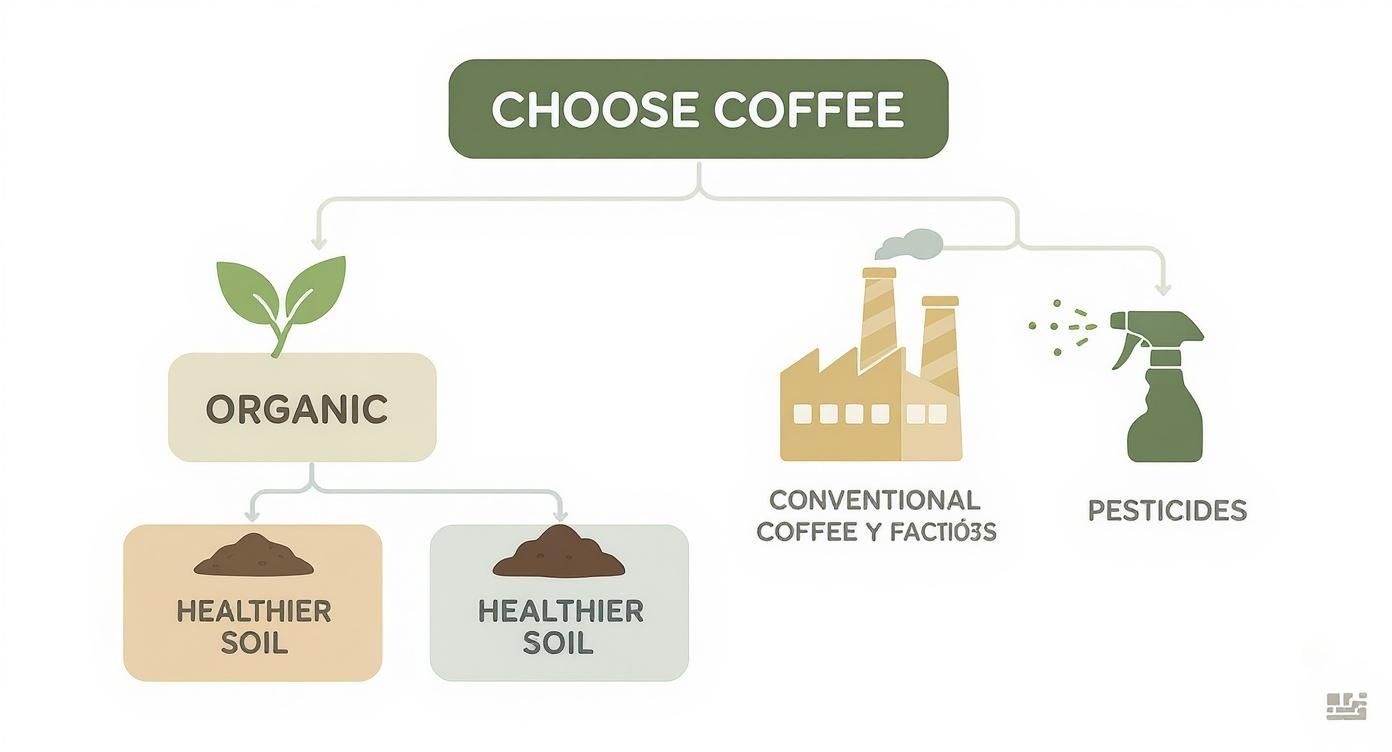
As you can see, going organic means you're supporting farming that skips the synthetic pesticides and fertilizers common in conventional methods. It's a cleaner path from farm to cup.
Look for Meaningful Certifications
Once you've got a flavor profile in mind, the next step is to check for certifications. These aren't just fancy logos; they’re a promise from the brand that they’re committed to high standards for both people and the planet.
Here are the big ones to keep an eye out for:
- USDA Organic: This is your starting point. It's the official seal guaranteeing the coffee was grown and processed without synthetic pesticides or fertilizers, a huge part of what makes for the healthiest instant coffee.
- Fair Trade Certified: This label means the farmers who grew the beans were paid a fair, stable price for their crop. It helps build stronger communities and ensures they can make a sustainable living.
- Rainforest Alliance: See that little frog seal? It tells you the coffee was produced in a way that protects biodiversity, conserves natural resources, and promotes the well-being of farmworkers.
Picking a brand with these certifications means your morning coffee does more than just wake you up. You're actively supporting a better, more sustainable, and fairer coffee industry.
To make things even simpler, here's a quick checklist you can use when you're comparing different brands.
Organic Instant Coffee Evaluation Checklist
This handy table is a quick reference guide to help you compare and select the best organic instant coffee brand for your needs.
| Evaluation Factor | What to Look For | Why It Matters |
|---|---|---|
| Taste Profile | Descriptions of flavor notes (e.g., "chocolatey," "fruity," "nutty"). Look for roast level (light, medium, dark). | This is all about your personal enjoyment. Matching the profile to your preference ensures you'll love every cup. |
| Certifications | USDA Organic, Fair Trade, Rainforest Alliance seals on the packaging. | These logos are your guarantee of quality, ethical labor practices, and environmental stewardship. |
| Bean Origin | Single-origin vs. blends. Transparency about the country or specific region where the coffee was grown. | Single-origin coffees offer a unique, distinct taste of a specific place, while blends create a balanced, consistent flavor. |
| Packaging | Recyclable, compostable, or reusable materials. Minimalist design to reduce waste. | Eco-friendly packaging reduces your environmental footprint, making your convenient coffee habit a guilt-free one. |
Using this checklist will help you cut through the noise and find a coffee that truly aligns with your values and your taste buds.
Sourcing and Packaging Matter Too
Finally, don't overlook sourcing transparency and the packaging itself. Does the company tell you exactly where their beans come from? Single-origin coffees, which come from one specific farm or region, tend to have a more distinct and pure flavor profile than blends.
You’ll also notice that the best organic instant coffee brands are moving toward eco-friendly packaging. Keep an eye out for options that are recyclable, compostable, or made from post-consumer materials. It’s the last piece of the puzzle, ensuring your coffee habit is as good for the planet as it is for you.
The Real Benefits of Going Organic
Let's be honest, choosing organic instant coffee is about more than just a fancy label. It's a deliberate choice that ripples outward, impacting your health, the planet, and frankly, the flavor in your cup. Every sip is a small nod to a cleaner, more thoughtful way of growing things.
On the health side, the biggest win is what you're not getting. Conventional coffee farming can involve a whole cocktail of synthetic pesticides and fertilizers. By going organic, you sidestep potential residues from chemicals you can't even pronounce. Organic farms focus on building rich, healthy soil from the ground up, which naturally leads to a purer coffee bean. You can dive deeper into the advantages of drinking organic coffee in our full guide.
A Better Cup for a Healthier Planet
The good vibes don't stop with you. Organic farming is one of the most practical ways to be a good steward of the environment.
- Protects Biodiversity: When you take harsh chemicals out of the equation, coffee farms can become bustling ecosystems. They provide a safe haven for birds, beneficial insects, and other critters that keep nature in balance.
- Conserves Water: Healthy soil acts like a sponge. It holds onto moisture much more effectively, which means less need for irrigation and better conservation of a resource we can't take for granted.
- Builds Healthier Soil: Instead of stripping the land of its nutrients, organic methods actively enrich the soil. This creates a sustainable cycle that keeps the land fertile for generations to come.
This commitment to quality isn't just a niche idea; it's a major shift in the coffee world. People are voting with their wallets for ethically sourced products, and that's fueling the growth of organic coffee. Since premium Arabica beans already account for over 60% of the world's coffee for their incredible taste, it’s no surprise that the best organic instant coffee brands are all-in on this variety. You can get more details on this trend by reading the full market report.
At the end of the day, the meticulous care that goes into organic farming translates directly to the flavor. You often get a cleaner, more complex, and vibrant taste. It’s not just a quick cup—it's the genuine taste of a healthier plant nurtured in healthier soil.
Top Organic Instant Coffee Brands Worth Trying

Trying to pick a coffee from the crowded store shelves can feel like a mission. But when it comes to organic instant coffee, a few names consistently deliver the goods. To cut through the noise, I’ve pulled together a short list of brands that nail the balance between quality, taste, and ethical sourcing.
Think of this as your starting point. Each of these brands shines in its own way, whether you're after a bold dark roast, unique processing methods, or a company that puts its farming partners first. There's something here for everyone.
Brands That Set the Standard
Here are a few brands that really walk the talk, from sourcing fantastic beans to processing them with care.
-
Mount Hagen Organic Instant Coffee: Mount Hagen has been a go-to in the organic instant world for years, and for good reason. It’s known for its incredibly smooth, balanced flavor that never veers into bitterness. The beans are 100% Arabica, grown in the highlands of Papua New Guinea, and it’s certified both USDA Organic and Fair Trade. It's the perfect, reliable choice for a classic, mild cup.
-
Cafédirect Fairtrade Machu Picchu: This one is all about its single-origin story and serious commitment to ethics. The beans come straight from Peru, giving the coffee a rich body with noticeable nutty and dark chocolate notes. What makes Cafédirect truly special is its mission: they reinvest 50% of their profits right back into the farming communities they work with. Every cup you drink makes a real difference.
When you find a brand that is transparent about its sourcing and reinvests in its farmers, you’re not just buying coffee. You are supporting a system that values people and the planet, ensuring the longevity of high-quality coffee for years to come.
- Voila Specialty Instant Coffee: If you're a coffee snob (it's okay, I am too), Voila is for you. They’ve cracked the code on making instant coffee taste like it came from your favorite third-wave cafe. Voila partners with top-tier specialty roasters to freeze-dry their best single-origin coffees, locking in all those complex, delicate flavors. It's a bit of a splurge, but if you refuse to compromise on taste, it’s worth every penny.
Common Questions About Organic Instant Coffee
Even with all the clear benefits, it's totally normal to have a few questions. Moving up to a premium coffee—even an instant one—is a decision worth thinking through. Let's tackle some of the most common things people wonder about.
How Does It Compare to a Freshly Brewed Cup?
This is the big one, isn't it? For years, instant coffee had a reputation for being a huge step down in quality. But thanks to modern techniques like freeze-drying, the best organic instant coffee brands today deliver a surprisingly rich and complex flavor that honestly gives a standard drip machine or French press a run for its money.
Now, will it beat a pour-over made by a top-notch barista with perfectly ground, single-origin beans? Probably not. But the gap has closed dramatically. You're getting 95% of the quality for about 5% of the effort, which is a trade-off most of us are happy to make on a busy morning.
Why Is Organic Instant Coffee More Expensive?
You've probably noticed it costs a bit more, and that's because there's a lot of value and care that goes into it. Organic farming is just more hands-on. It skips the cheap chemical pesticides and fertilizers, focusing instead on building healthy soil to grow healthier, purer coffee beans.
That price difference isn't just for a fancy label. It’s an investment in cleaner ingredients, farming practices that are better for the planet, and a final product that truly tastes better. It's about a commitment to quality from the farm all the way to your mug.
And people are catching on. The demand for great coffee that's also incredibly convenient is soaring. The instant coffee market is expected to hit USD 29.38 billion by 2032, driven by coffee lovers who want premium products in quality packaging. You can explore more market insights on Research and Markets to see the full trend.
Does "Organic" Mean Less Caffeine?
Nope, not at all. The organic certification has nothing to do with how much caffeine is in your cup. Caffeine levels really come down to two main things: the type of coffee bean (Robusta beans pack more punch than Arabica) and how dark it's roasted (lighter roasts actually keep a little more caffeine than dark ones).
Ready to see what convenient, high-quality coffee is all about? Cartograph Coffee delivers exceptional flavor without compromise, crafted for people who value their time and their well-being. Discover our organic instant coffee today!