Organic dark roast coffee is exactly what it sounds like: beans that are grown organically and then roasted to a deep, dark finish. The process starts on farms that skip synthetic pesticides and fertilizers and ends in a roaster that pushes the beans past the "second crack." This creates a uniquely bold, low-acidity coffee with a rich, smoky flavor and a tell-tale oily sheen—a pure and intense experience for those who love a powerful cup.
Unpacking Organic Dark Roast Coffee
Think about the difference between a supermarket tomato and one you just picked from a small, local organic garden. That’s the same spirit that separates conventional coffee from its organic cousin. The name "organic dark roast" points to two critical parts of the coffee's story: how it was grown and how it was roasted. When these two elements come together, you get a premium coffee celebrated for its incredible depth and clean taste.
The "organic" piece of the puzzle is all about the farming. For coffee to earn that label, the farmers have to follow incredibly strict rules. That means no synthetic pesticides, herbicides, or man-made fertilizers. This isn't just about producing a purer coffee bean; it's a commitment to building healthier soil, keeping water sources clean, and helping the local ecosystem thrive. If you want to dive deeper into what this certification really means, you can explore what makes coffee organic right here.
The Art of the Dark Roast
Now for the "dark roast" part. This is where the roaster’s craft comes into play. Imagine a chef carefully browning butter or caramelizing sugar—it's a delicate balance. To hit that perfect dark roast, the beans are heated to a high temperature for a longer time, going well beyond a critical moment roasters call the "second crack." It’s an intense process that fundamentally changes the bean.
The second crack is that key point in roasting where the bean’s natural oils are pushed to the surface, giving dark roast beans their characteristic shine. This is what creates that full body, low acidity, and those deep, smoky notes you love.
This style of roasting intentionally mutes the bean's original, brighter, more acidic flavors. In their place, deeper, more profound tastes develop. The final cup is all about those rich, roasty notes:
- Dark chocolate and cacao
- Toasted nuts and burnt sugar
- Smoky and earthy undertones
For anyone who truly appreciates a bold and intense flavor profile, it's this combination of responsible farming and masterful roasting that makes organic dark roast so special. If you're looking to really get to know your coffee, this guide to organic coffee beans is a great place to start.
The Journey from Bean to Bold Flavor
The story of a great organic dark roast coffee doesn't start in the roastery. It begins high up on organic farms, where coffee beans grow dense and tough. These beans, usually specialty Arabica, are hand-picked because they can handle the intense heat of a dark roast without tasting burnt or becoming fragile.
This careful selection at the source is the first critical step. The combination of rich organic soil and high-altitude air gives the beans complex sugars and a solid core. Think of it as building a strong foundation; this allows the bean to develop that deep richness and body we love, rather than just turning bitter under fire.
From Green Bean to Roasting Artistry
Once they're harvested, these green beans face the most important part of their journey: the roast. For a master roaster, this is where science meets art. They don’t just turn up the heat; they guide the beans, carefully managing the temperature and listening for the sounds that tell them the magic is happening.
The key moment is the "second crack." It’s a distinct popping sound, a bit like popcorn, that signals the bean's internal structure is fracturing as oils rush to the surface. This is the moment of truth—the definitive sign that the sugars have fully caramelized and created the signature flavor of a true dark roast.
The path from the farm to the final roast is a simple but precise one, as you can see below.
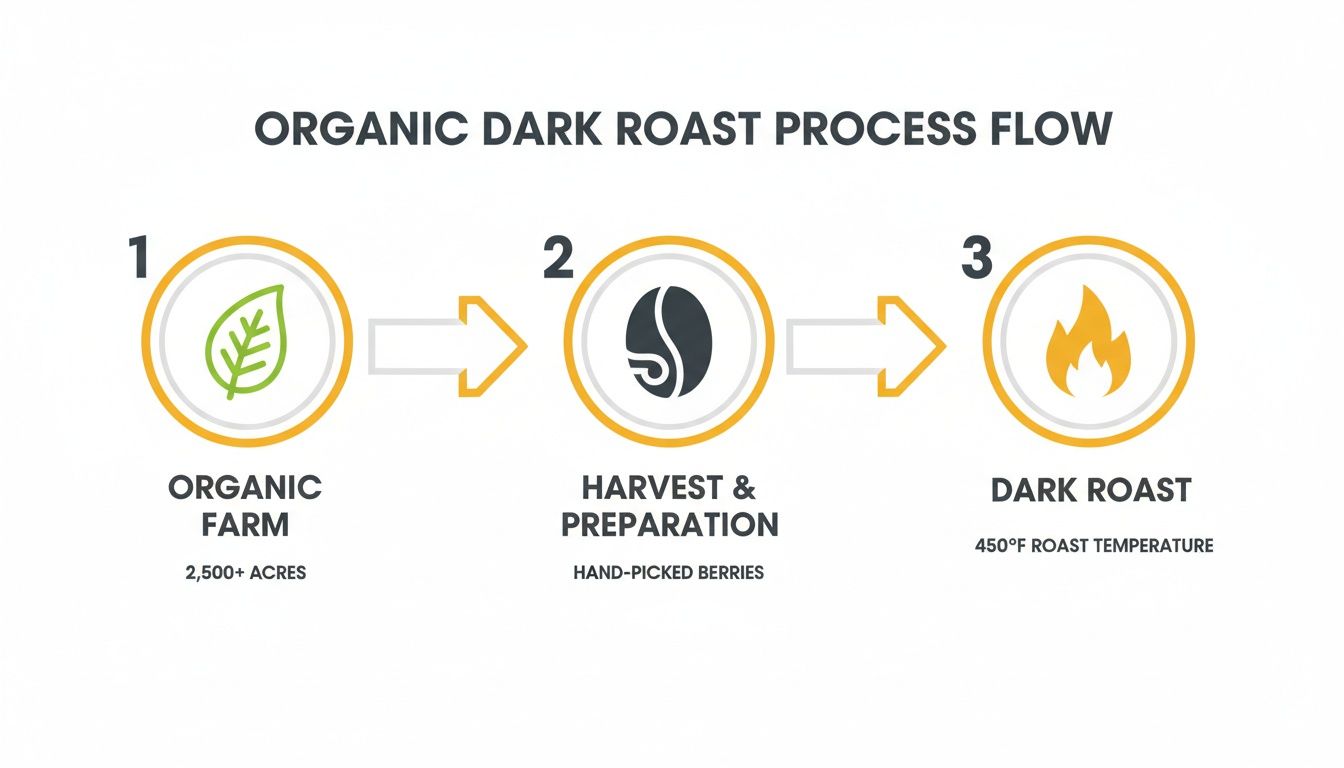
This visual really brings home how each stage—from the organic soil to the roaster's flame—plays a direct role in creating that bold, complex flavor in your cup.
Unlocking Deep and Complex Flavors
This intense roasting process completely changes the bean's chemistry, producing the qualities that dark roast lovers look for. For one, it dramatically lowers the coffee's acidity, which makes it feel smoother and can be gentler on the stomach. It also develops a full, heavy body, giving the coffee a satisfying weight and presence.
The market definitely shows a love for these characteristics. Organic dark roast is a powerhouse in the organic coffee world, with Arabica beans holding a massive 76.5% revenue share largely because their intricate flavors are brought to life so well by a dark roast. Even Robusta, known for its punchy intensity and common in espresso blends, is becoming more popular as it combines sustainability with those deep, chocolatey notes people want. You can dive deeper into the data on these organic coffee trends to see how consumer tastes are shifting.
In the end, this entire journey—from the thoughtful cultivation of organic beans to the roaster’s perfect timing of the second crack—is all about creating a rich, deeply satisfying cup. Every step is a deliberate choice made to bring out those beloved notes of toasted nuts, molasses, and dark chocolate.
Why Choose Organic and Dark Roast?
Picking an organic dark roast coffee is about so much more than its deep, satisfying flavor. It’s a conscious choice that benefits your body and the planet. When you opt for a coffee that’s both organic and dark-roasted, you’re really embracing a philosophy that puts purity, health, and environmental care into every single cup.
This decision has a direct impact on your well-being. By going organic, you’re making sure your coffee is grown without synthetic pesticides or chemical fertilizers. This gives you a cleaner bean and, ultimately, a purer brew—a huge reason so many health-conscious coffee drinkers are making the switch.
On top of that, the dark roast itself comes with some unique perks. The extended roasting process actually lowers the coffee's acidity, which many people find is gentler on their stomach. If you've ever felt that acidic bite from a lighter roast, an organic dark roast could be a much smoother experience. To dive deeper, you can learn more about the benefits of drinking organic coffee in our detailed guide.
A Healthier Planet in Every Cup
The positive ripple effect of choosing organic extends far beyond your personal health. Organic farming practices are designed to work with nature, not against it. Instead of stripping the soil with harsh chemicals, organic farmers build rich, fertile earth using natural methods like composting, ensuring the land can sustain crops for generations to come.
This commitment to sustainability has a massive impact on the local ecosystem:
- Protects Water Sources: With no chemical runoff, nearby rivers and streams stay clean. This preserves aquatic life and provides safer water for local communities.
- Promotes Biodiversity: Organic farms often become sanctuaries for birds, beneficial insects, and other wildlife, creating a balanced and thriving natural environment.
- Supports Farming Communities: Choosing organic often goes hand-in-hand with supporting fair trade practices, which helps ensure farmers earn a livable wage for their incredible hard work.
Picture a small farming cooperative in the mountains of Peru. By dedicating themselves to organic methods, they not only produce world-class coffee beans but also protect the delicate cloud forest surrounding their farms. Your purchase helps them continue this vital work, turning your morning ritual into a small act of global support.
Driving a Sustainable Market
This growing demand for clean, ethically produced coffee is making waves in the industry. Fueled by health and sustainability trends, the global roasted coffee market—where dark roasts are a serious contender—was valued at $46.8 billion and is projected to hit $85.4 billion by 2034. The popularity of Arabica beans, with their complex flavors that shine in a dark roast, fits perfectly with what consumers want: a high-quality, low-acidity coffee without the chemicals of conventional farming.
At the end of the day, choosing an organic dark roast is a powerful statement. It's a vote for a healthier you, a healthier planet, and a fairer coffee industry for everyone involved.
How to Brew the Perfect Cup of Dark Roast
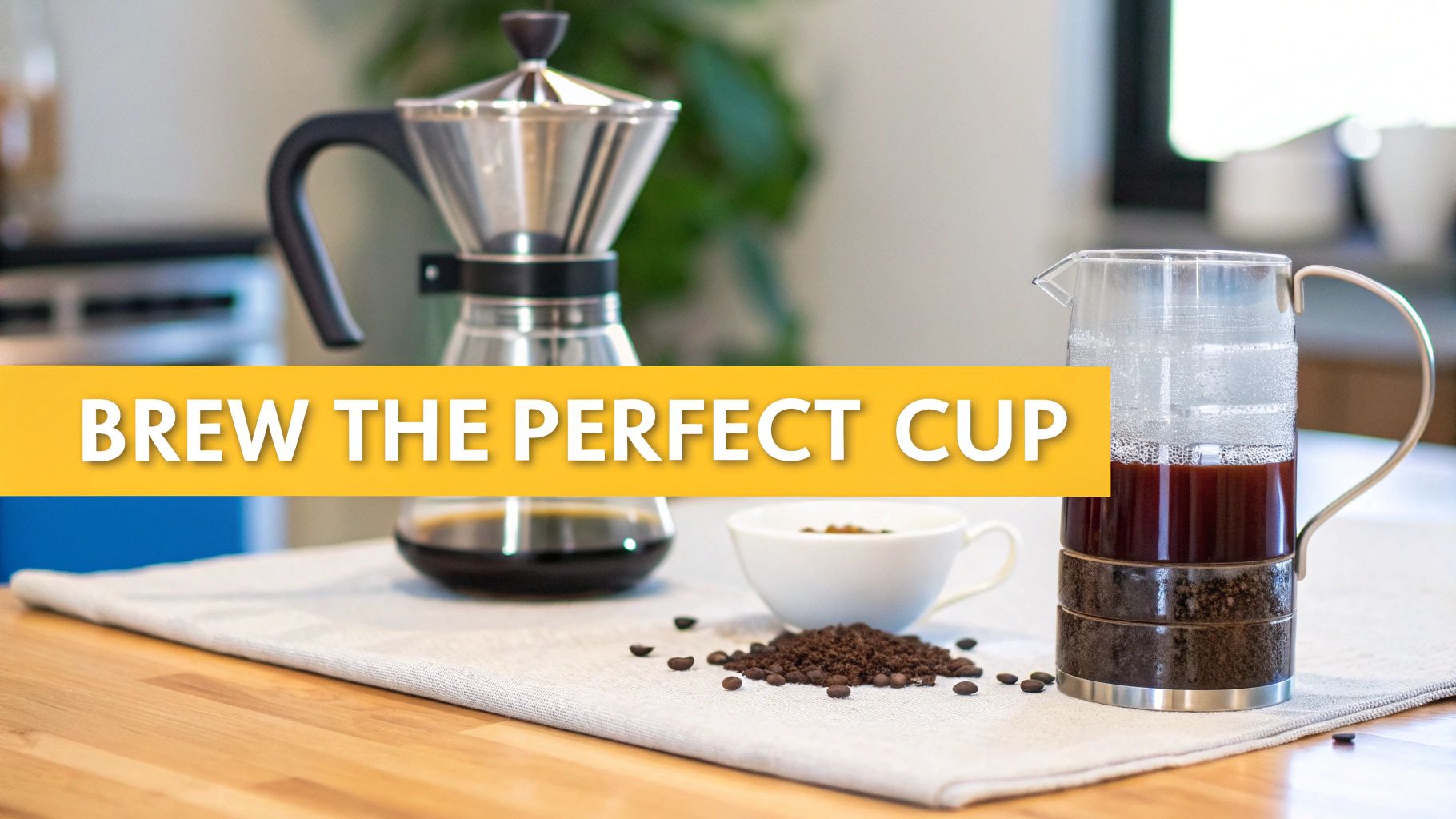
You’ve got the beans. Now, how do you get that perfect cup? Making a truly great dark roast is all about coaxing out the good stuff without inviting in the bad. Since these beans have spent more time in the roaster, they’re more porous and soluble than their lighter counterparts. This just means the flavor comes out faster, so a little finesse goes a long way.
Think of it like searing a steak in a hot cast-iron skillet. A few seconds too long, and you go from perfectly caramelized to burnt. It’s the same with dark roast. Your goal is to capture those deep, chocolatey notes before any harsh, bitter flavors have a chance to show up. It all comes down to controlling two things: temperature and time.
Taming the Heat for Better Flavor
Here’s the single biggest mistake I see people make with dark roasts: using water that’s straight-up boiling. Water at 212°F (100°C) is just too aggressive for these beans. It literally scalds the oils on the surface, which is what gives you that acrid, "burnt tire" taste. Nobody wants that.
The sweet spot is just a little cooler. I recommend aiming for a water temperature between 195-205°F (90-96°C). This is still plenty hot to get a full extraction, but it’s gentle enough to keep the bitterness at bay. An easy trick? Just bring your kettle to a boil, then take it off the heat and let it sit for about 30-45 seconds before you start brewing.
This little pause is a game-changer, especially for methods where the coffee grounds are fully immersed in water.
French Press Pro-Tip: This is where dark roasts really shine. Go with a coarser grind than you would for a drip machine and use that slightly cooler water. The coarse grind and lower temp work together to slow everything down, resulting in a cup that’s incredibly rich and full-bodied but beautifully smooth. A four-minute steep time is usually perfect.
Brewing for Your Lifestyle
One of the best things about a quality organic dark roast is how well it adapts. Whether you're a slow-pour weekend warrior or just need a good cup of coffee right now, there’s a brewing method that will make it sing.
-
The Pour-Over Method: If you love having total control, this is for you. A medium-coarse grind works best. Using your 195-205°F water, pour slowly in concentric circles. This ensures the water saturates the grounds evenly, which really helps bring out those subtle, smoky-sweet notes that make a dark roast special.
-
The Instant Coffee Solution: Let’s be real—sometimes we just need coffee on the go. For hikers, travelers, and anyone with a busy morning, a high-quality organic instant dark roast is a fantastic option. The key is simply getting the ratio right. Start with one to two teaspoons of instant coffee for every eight ounces of hot (but not boiling!) water, then adjust until it tastes just right. You’ll be surprised at how full-flavored it can be.
-
The Cold Brew Concentrate: Dark roast beans were practically made for cold brew. Their naturally low acidity and bold, chocolate-forward profile create a concentrate that is unbelievably smooth and sweet. Just mix coarsely ground coffee with cold water in a large jar—a 1:8 ratio of coffee to water is a great starting point. Give it a stir, pop it in the fridge for 12-24 hours, then strain. You'll have a fantastic coffee base ready for the whole week.
When you match your technique to the bean, you unlock what makes an organic dark roast so satisfying. Each method is just a different path to the same delicious destination.
How to Select and Store Your Coffee Beans
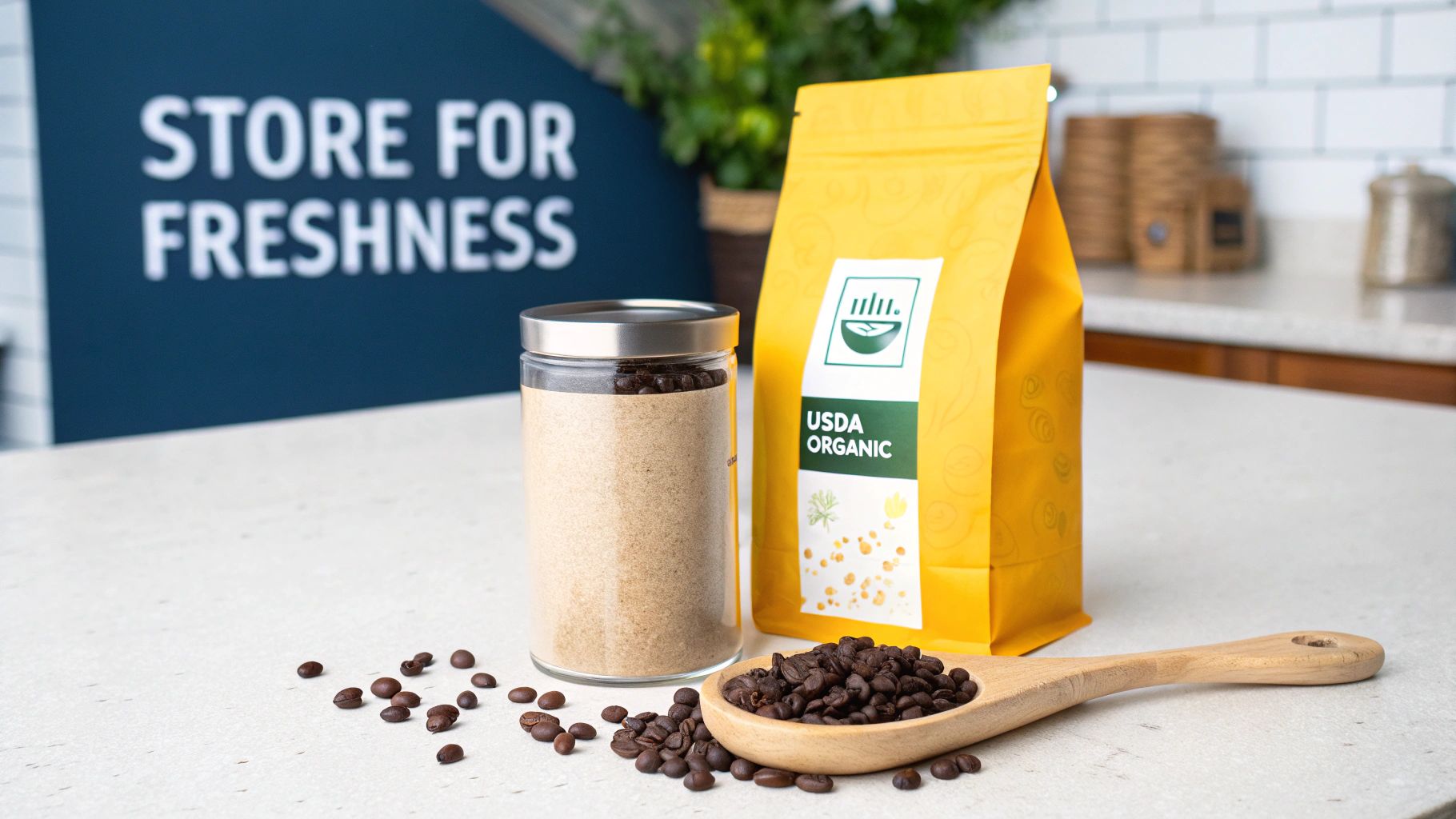
Finding a truly great organic dark roast starts long before you ever brew a cup. It begins right there in the aisle, where the story of your coffee is told on the bag. When you're picking out your next roast, let the packaging be your guide.
First things first, look for certifications. A "USDA Organic" seal isn't just a fancy sticker; it’s your assurance that the coffee was grown and processed according to strict federal guidelines, free from synthetic pesticides and fertilizers. You might also spot terms like "single-origin," which tells you the beans all came from a specific farm or region. This is often a sign of unique, place-specific flavor notes.
Identifying Quality Beans
Once you get that bag home and open it up, your own eyes are the best judge of quality. Top-notch dark roast beans have a look all their own. You're looking for a deep, rich brown color—almost black—with a distinct oily sheen coating the surface.
Don't mistake that gloss for a defect. It's actually a hallmark of a well-executed dark roast. The extended roasting process coaxes the beans' natural oils to the surface, and it’s these oils that contribute to the heavy body and bold flavors dark roast lovers are after.
The appreciation for high-quality, organic coffee is bigger than ever. The global organic coffee market, valued at $10.79 billion, is projected to climb to $17.58 billion by 2029. This isn't just a trend; it's a movement of coffee drinkers demanding a better-tasting, cleaner product.
Protecting Your Investment with Proper Storage
You've found the perfect beans. Now, the mission is to keep them that way. Freshness is everything, especially for an organic dark roast where those precious oils on the surface can quickly go stale when exposed to the elements.
Your coffee’s number one enemy is air. Oxygen degrades the delicate oils and aromatic compounds that give your coffee its incredible flavor. Light, heat, and moisture are right behind it, all working to turn your beautiful beans dull and lifeless.
Let’s bust an old myth right now: the freezer is not your friend. The condensation it creates can do more harm than good. To keep your beans at their peak, just stick to a few simple rules.
- Use an Airtight Container: The bag your coffee came in is for transport, not storage. Move those beans into a container that seals completely, like a ceramic or opaque glass canister.
- Find a Cool, Dark Place: Think of a pantry or a cabinet, somewhere away from the stove and out of direct sunlight. Consistency is key.
- Buy Whole Beans: This is the big one. Grinding your coffee right before you brew locks in flavor like nothing else.
For a great cup every time, mastering proper coffee bean storage is non-negotiable. If you want to go even deeper, be sure to check out our complete guide on how to store coffee beans properly. A little care goes a long way in making sure every cup is as amazing as the first.
Got Questions About Organic Dark Roast? We've Got Answers.
Stepping into the world of specialty coffee can feel like learning a new language. When you zero in on something as specific as an organic dark roast, it's natural to have a few questions. Let's tackle some of the most common ones and clear up the confusion.
Is Dark Roast Weaker? Does It Have Less Caffeine?
This is probably the biggest myth in the coffee world, and it just won't go away. The truth is, a dark roast won't leave you short on caffeine. While the roasting process does burn off a minuscule amount, the difference is so small you’d never notice it.
The real difference comes down to how you measure your beans. Dark roasting makes beans expand and lose density, so they're lighter and puffier than their light-roast cousins. If you measure by the scoop, you’re technically using fewer beans, which means a tiny bit less caffeine. But if you measure by weight—the way most pros do—the caffeine content is pretty much identical. So rest assured, your dark roast has all the kick you need to get your day started.
Is Organic Coffee Actually Healthier?
Absolutely. Choosing organic coffee makes a real difference. The most straightforward benefit is what's not in your cup: synthetic pesticides, herbicides, and fertilizers. When you sip on a cup of organic coffee, you're enjoying a product that's been clean from the moment the seed was planted.
Beyond that, some studies have pointed to a surprising perk of the dark roasting process itself. The compounds developed at high heat might actually help protect your stomach lining. Combine that with its naturally lower acidity, and you've got a coffee that can be much gentler on sensitive stomachs.
It’s a win-win—a choice that’s better for your body and for the planet.
Why Does My Dark Roast Coffee Taste So Bitter?
Let's get one thing straight: a great organic dark roast should be bold, smoky, and deeply satisfying—never burnt or harsh. If you're puckering up from bitterness, the problem isn't the roast; it's usually one of two things: low-quality beans or, more often, an issue with your brewing.
Before you blame the beans, try these two quick brewing fixes:
- Cool Your Water Down: Pouring boiling water (212°F or 100°C) directly onto your coffee grounds will scorch them, creating instant bitterness. The simple fix? Let your kettle sit for 30 to 60 seconds after it boils. That slight temperature drop makes all the difference.
- Coarsen Your Grind: A super-fine grind is great for espresso, but for most other methods, it exposes too much surface area and leads to over-extraction. This pulls out all the bitter compounds you don't want. Try making your grind a bit coarser, especially if you're using a French press.
If you’ve made these adjustments and the bitterness is still there, it might be time to upgrade your coffee. Starting with expertly sourced and roasted beans is the only way to guarantee a smooth, rich foundation.
What Should I Eat with My Dark Roast?
The deep, powerful notes of an organic dark roast make it an incredible companion for all kinds of food. Its low acidity and rich, chocolatey character can stand up to big flavors without getting lost in the mix.
Think of it as the perfect counterpart to rich and decadent treats. It’s a natural match for dark chocolate, nutty pastries, or anything with a caramel drizzle. For a savory start to your day, it beautifully complements a classic breakfast of bacon and eggs. It’s also the ultimate after-dinner coffee, rounding out a meal alongside a slice of tiramisu, a dense cheesecake, or a simple biscotti for dipping.
Ready to taste what a truly exceptional organic dark roast is all about? Cartograph Coffee brings you premium organic instant coffee, so you never have to sacrifice quality for convenience.
Explore our collection and elevate your daily coffee ritual today!