It's 4 PM, the day still has a few hours left, and you want the comfort of coffee without inviting a wired evening. That's the moment low caffeine instant coffee makes sense. It gives you the ritual, the warmth, and the familiar aroma, but with a lighter stimulant load that fits a later cup.
That middle ground matters because instant coffee already sits below a standard brewed cup in caffeine, and decaf instant lands far lower still. Mayo Clinic places a standard 8 fl oz serving of instant coffee at about 62 mg of caffeine, while decaffeinated instant coffee averages about 2 mg per serving, and a typical brewed cup lands around 96 mg per 8 fl oz (Mayo Clinic). In practice, the phrase low caffeine usually points to a product that either uses decaf processing, a smaller dose, or both.
The appeal is simple. Some people want to cut back for sleep, some are managing sensitivity, and some just want coffee that fits a more careful routine. A good cup doesn't have to be a jolt.
Why Low Caffeine Instant Coffee Deserves Your Attention
Late-day coffee usually comes with a small negotiation. You want the mug, the steam, the pause at your desk, but you also know that your body has already had enough stimulation for one day. Low caffeine instant coffee exists for that exact moment, when the ritual still matters and the stimulant load needs to stay lighter.
The middle lane between regular instant and decaf
Regular instant coffee is already lower in caffeine than many brewed cups, but the gap is not as large as the word “instant” might suggest. A standard 8 fl oz serving of instant coffee is about 62 mg of caffeine, while a typical brewed cup is around 96 mg per 8 fl oz (Mayo Clinic). Decaffeinated instant coffee averages about 2 mg per serving, which is a very different experience in the cup and in the body.
That creates a useful middle lane. Some products are called “low caffeine” because they begin with a decaf base. Others stay lower because the serving size is smaller, the blend is formulated differently, or the powder is meant to be mixed more lightly. The label alone does not tell you which route the manufacturer used, so the milligrams per serving matter more than the front-of-pack phrase.
Practical rule: if a brand says “low caffeine,” check the milligrams per serving, not just the marketing phrase.

Why the category keeps showing up in real life
The category keeps showing up because it fits specific moments that many coffee drinkers face. A person may want coffee during a late work session, while traveling, during pregnancy, or after dinner, but may not want the full stimulant effect of a normal cup. The point is not to give up coffee, it is to match the cup to the hour and the body's tolerance.
A simple framework helps here. Regular instant suits an ordinary coffee break, low caffeine instant coffee suits a cautious coffee break, and decaf instant suits the most conservative choice. That is clearer than trusting vague words like “light,” which can mean very different things from one package to the next. For someone who is sensitive to caffeine, even a modest difference in milligrams can decide whether a cup feels comfortable or disruptive.
How Low Caffeine Instant Coffee Is Made
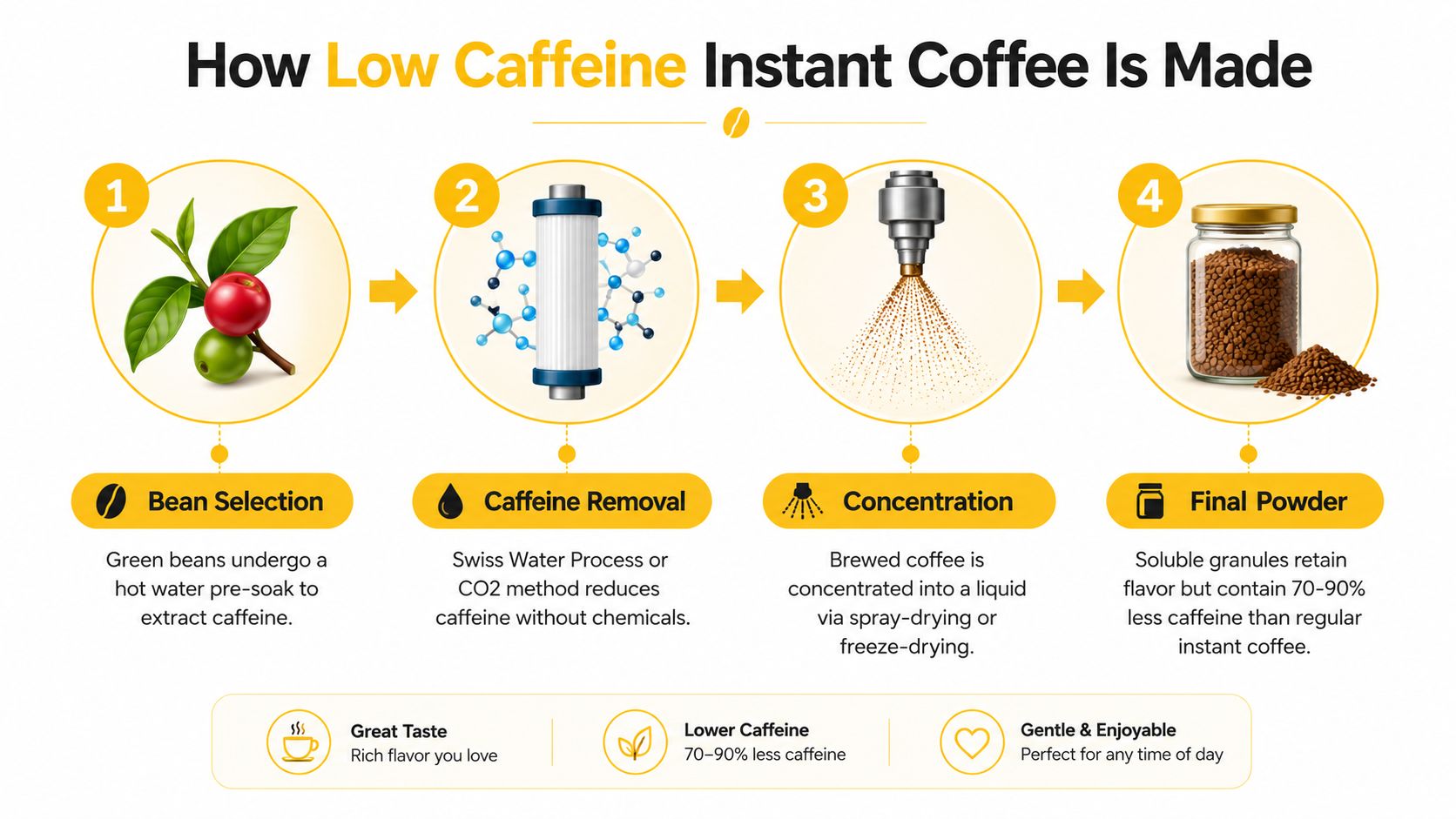
A tin of instant coffee can look simple on the shelf, yet the cup starts with a fairly involved chain of steps. The beans are roasted, brewed into a concentrate, and then dried into soluble granules or powder. The two main drying routes are spray drying and freeze drying, and both are designed to leave a product that dissolves quickly in water.
Where the caffeine gets reduced
The caffeine reduction happens before the powder reaches your mug. One route uses beans or extracts that already contain less caffeine. Another removes caffeine before the coffee is turned into instant granules. The technical specification in the brief shows why that early stage matters, since commercial instant coffee powders can sit in a wide range, from 2% to 5% caffeine by weight, with an industry nutrition sheet listing 2.0 to 4.5 g caffeine per 100 g powder and exceptional cases up to 5.4 g per 100 g.
That means dose matters as much as powder chemistry. At roughly 1.8 g powder per teaspoon, the same source translates that to about 28 to 57 mg caffeine per teaspoon before any blending or decaffeination adjustments. A slightly heavier scoop can change the cup more than many people expect, especially for readers who are tracking their intake closely.
Coffee extraction works a lot like steeping tea. The longer or denser the contact between water and soluble material, the more ends up in the cup. Coffee just carries more compounds, and caffeine is one of the most noticeable ones.
Why the process changes taste
Freeze drying usually preserves more of the delicate aroma than a harsher drying approach, so it often feels a little closer to brewed coffee. Spray drying can still make a very usable cup, but the final character may be flatter if the extract or the drying step is pushed too hard. That is why some low-caffeine products taste brighter or cleaner, while others seem muted.
For a closer look at decaf-style processing in instant format, this guide on decaf instant coffee is a useful companion. The practical takeaway is straightforward. The more carefully a manufacturer controls the coffee extract before drying, the easier it is to keep flavor while reducing caffeine.
Comparing Caffeine Levels Across Coffee Types
Confusion starts when a package says “low caffeine,” but your body only cares about the actual milligrams in the cup. A label can sound gentle and still deliver more caffeine than you expected if the serving size is larger than you assume. That is why the safest comparison is not the style name, but the amount per serving.
Caffeine Content Comparison by Coffee Type
| Coffee Type | Caffeine per 8 oz (mg) | Notes |
|---|---|---|
| Regular instant coffee | About 62 | A standard instant baseline, with food-data summaries placing it in the same general range as other instant products |
| Low caffeine instant coffee | Usually below regular instant | Often reduced through decaf processing or a smaller-dose formula, so the package should show the actual serving amount |
| Decaf instant coffee | About 2 | Decaf instant sits near trace levels, usually low enough that the cup feels like coffee without much stimulant effect |
| Traditional brewed coffee | About 96 | A typical brewed cup is usually stronger than instant coffee at the same size |
The spread is wider than many shoppers expect because instant coffee is not one fixed product. One summary of regular instant coffee reported a median of 66 mg per cup with a range of 29 to 117 mg, while drip coffee at the same cup size had a median of 112 mg (Wikipedia summary). That kind of variation comes from bean choice, scoop size, and how concentrated the powder ended up before drying. For a closer look at how brands usually describe that range, this instant coffee caffeine content guide is a useful reference.
Why the gap between 2 mg and 60 mg matters
A cup with 2 mg of caffeine and a cup with 60 mg are separated by more than a label. For someone who is sensitive, 2 mg is close to a background trace, while 60 mg can feel like a real stimulant dose, especially later in the day or after earlier coffee.
That difference becomes easier to manage when you treat caffeine like a fixed ingredient instead of a vague coffee trait. If you check the milligrams per serving, you can match the cup to your own tolerance, whether that means a gentle morning sip, a later afternoon mug, or a coffee habit that has to fit around other caffeine sources.
The practical rule is simple. Read the serving size, read the milligrams, and decide from there instead of relying on words like “low” or “light.”
Who Benefits Most from Low Caffeine Instant Coffee
The people who reach for this category usually aren't trying to be difficult about coffee. They're trying to make coffee fit a real schedule, a real body, or a real boundary. The product works because it keeps the cup in the routine without forcing everyone into the same caffeine level.
Daily life scenarios that make the choice obvious
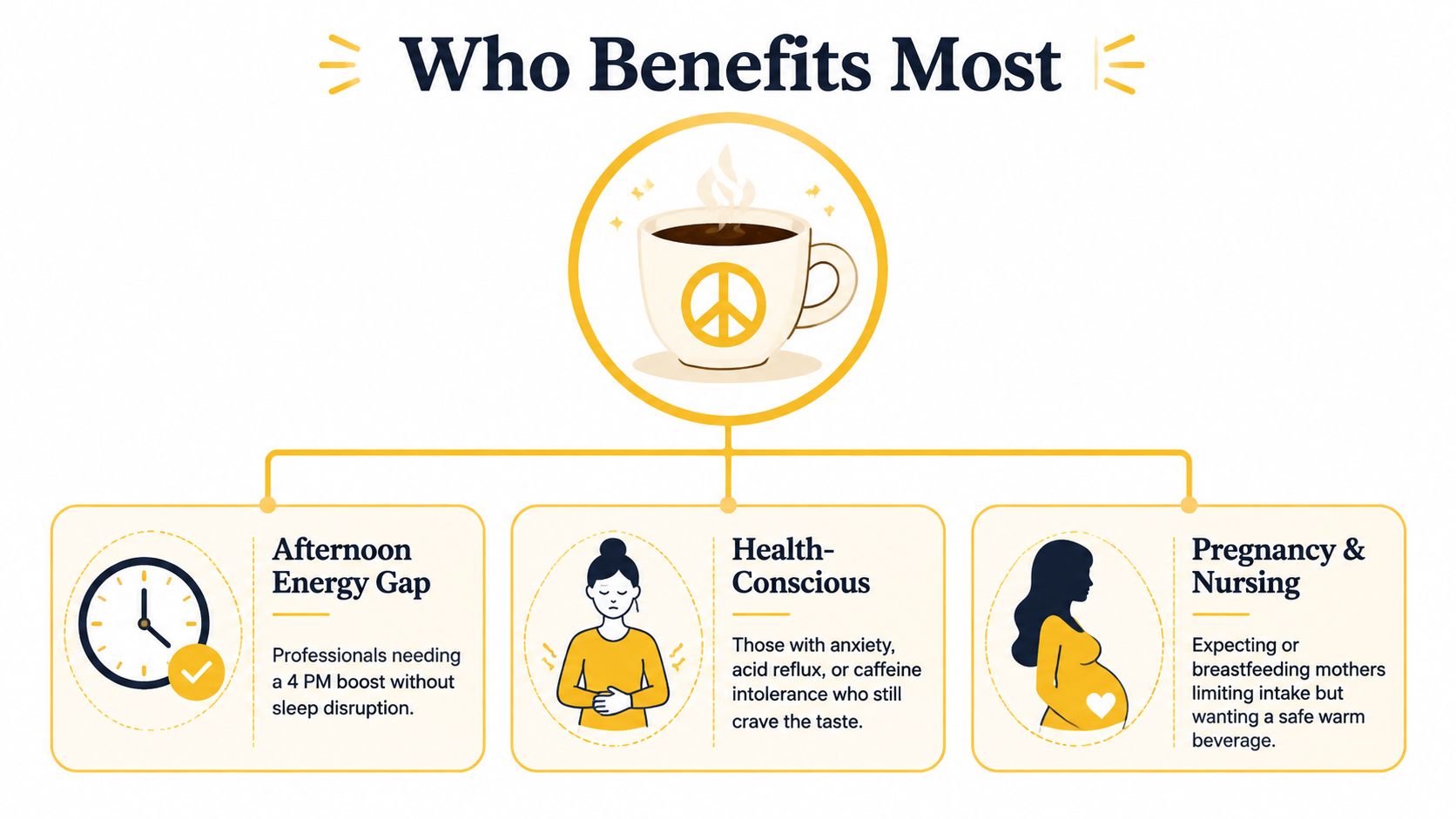
An office worker who hits a slump at 4 PM often wants taste and warmth more than a second spike. Low caffeine instant coffee can keep the ritual intact without making bedtime feel like a gamble. The same is true for someone working odd shifts, where coffee timing matters as much as coffee strength.
Outdoor use is another natural fit. Instant coffee is easy to pack, easy to prepare, and easy to portion, which makes it appealing on the trail or at camp when every ounce and every step count. A lighter-caffeine cup can be especially welcome when the day is already physically stimulating.
Pregnant or nursing coffee drinkers tend to think in terms of totals and tradeoffs, not slogans. A lower-caffeine instant option gives them a warmer, easier-to-control beverage when they want coffee flavor but need to stay mindful of daily intake. People who feel jittery, anxious, or sensitive to caffeine often land in the same place.
If you're choosing coffee for a sensitive body, the serving size matters more than the product category.
A useful mindset for buyers
The label category should match the reason you're buying it. If you want a lighter afternoon cup, a product near the decaf end may be enough. If you want coffee flavor with room for a second cup later, a moderate instant product may be the better compromise. If you want the quietest possible option, the decaf range is the cleanest answer.
Brewing Tips for the Best Low Caffeine Cup
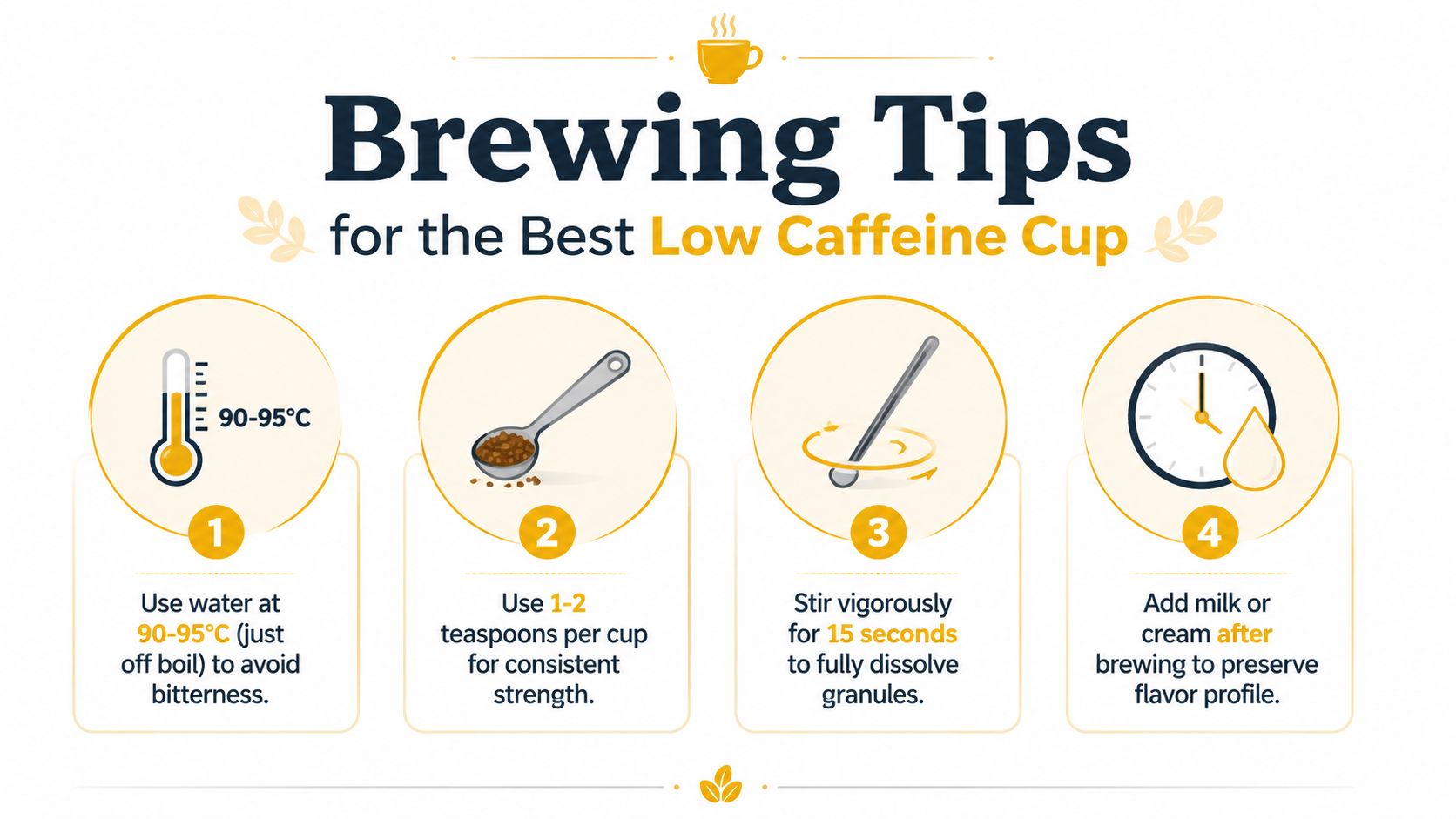
A good cup of low caffeine instant coffee starts before the water hits the mug. If you are trying to match coffee to your own caffeine tolerance, the small details matter more than the label on the jar. A level scoop, a steady water amount, and the right temperature help you keep the dose predictable instead of leaving it to chance.
Keep the serving size steady
Use a spoon or a scale instead of eyeballing the powder. If the packet or jar does not clearly state how many grams are in one serving, treat the first few cups as trial runs and note what feels right for your body and routine. That matters because even a familiar spoonful can change the caffeine you drink, especially when the powder is fine and easy to overfill.
Water temperature also affects the result. Aim for water that is just off the boil, not aggressively bubbling, so the coffee dissolves cleanly and the cup stays smoother. For a closer look at that step, this guide on instant coffee water temperature explains why temperature changes both taste and extraction.
Make the cup work for your routine
A simple routine keeps the cup consistent. Start with a measured dose, add hot water, stir fully, then taste before you change the strength. If you want a fuller cup, change the water volume first, or add milk or a milk alternative, before adding more powder.
That approach helps you separate flavor from caffeine. A stronger-tasting cup does not always need more coffee, sometimes it just needs less dilution. If you are trying to stay within a personal caffeine limit, that distinction is useful.
A few everyday moves make instant coffee easier to control:
- Use a level measure: This keeps each cup closer to the last one.
- Stir until dissolved: Undissolved granules can leave the first sip weak and the last sip harsh.
- Adjust with water first: Less dilution can sharpen flavor without changing the dose.
- Store it tightly sealed: Moisture dulls aroma and can make the powder clump.
You can also serve it iced if you want a lighter-feeling afternoon cup. Mix the powder with a small splash of cold water first, then add ice and milk if you like a creamier finish. The point is to make the cup predictable, so the caffeine level matches the reason you chose low caffeine instant coffee in the first place.
Choosing the Right Low Caffeine Instant Coffee Brand
The best buying decision starts with disclosure. If a brand won't tell you the caffeine per serving, the serving size, or the production method, you're left guessing. That's a weak position if you're buying for sleep, pregnancy, anxiety, or any situation where milligrams matter.
What to read on the label
Look for transparent caffeine disclosure first. Then check whether the coffee is freeze dried or spray dried, because that can affect flavor and texture. If sourcing matters to you, organic certification and single-origin claims can help, but they're most useful when the brand also tells you how the product performs in the cup.
Cartograph Coffee is one option that fits this values-driven approach, because it sells organic instant coffee packets and frames instant coffee around convenience, quality, and clear product intent. Their background in the food industry and family-led story also signals a maker that thinks about the product as food, not just commodity powder. That perspective matters when you're comparing brands that all promise convenience but not all explain what's inside the tin.
A quick shopper's filter
Use this short checklist when you compare options:
- Caffeine per serving: Find the milligrams, not just the adjectives.
- Processing method: Freeze dried or spray dried should be easy to identify.
- Source transparency: Look for origin details if flavor matters to you.
- Packaging style: Packets, jars, and tins all fit different routines.
- Practical use case: Office, travel, camping, or late-night sipping each reward a different format.
If you're pairing instant coffee with a machine-friendly routine, a guide like quick instant coffee with Keurig can help you think through the broader setup. The bigger idea is simple. Buy the coffee that gives you the control you want, not the label language you wish meant something clearer.
Your Low Caffeine Coffee Action Plan
Start with your body, not the branding. If you're sensitive, choose the product with the lowest clearly stated milligrams per serving. If you just want a calmer afternoon cup, a measured low-caffeine instant coffee may be enough. If you need the least stimulant possible, decaf instant is the safer target.
Use this quick shopping checklist:
- Check the milligrams per serving
- Confirm the serving size in grams
- Look for a clear processing method
- Match the coffee to the time of day
- Keep your scoop consistent
Low caffeine instant coffee isn't a compromise. It's a deliberate choice for people who know what they want from coffee and what they don't want from caffeine.
If you want a coffee that respects both flavor and function, Cartograph Coffee offers organic instant coffee packets built for real life, from desk days to travel to slow mornings at home. Visit Cartograph Coffee to see how a more thoughtful instant coffee can fit your own caffeine routine.