Instant decaf coffee is exactly what it sounds like: real coffee, just without the caffeine buzz. It starts as regular coffee, but goes through a process to remove at least 97% of the caffeine before being freeze-dried. The result is soluble crystals that dissolve in seconds, giving you a rich-tasting cup of coffee anytime, anywhere.
Why Instant Decaf Coffee Is Having a Moment
Let's be honest, for a long time, instant decaf had a terrible reputation. It brought to mind thin, watery cups that were more about compromise than actual enjoyment. But the coffee world has changed, and what was once a dusty can on the back shelf is now taking center stage for all the right reasons.
People are rediscovering high-quality instant decaf, from busy parents who need a quick, calming ritual to hikers wanting a warm, comforting brew on a chilly morning. This isn't just some fringe trend; it’s a full-blown movement. We all want convenience, but we're no longer willing to sacrifice quality for it.
A Market Awakening
Modern coffee processing has completely flipped the script. We can finally forget the bland, bitter powders of the past. Today's methods are gentle enough to preserve the delicate flavors and aromas that make coffee so special, delivering a cup that is genuinely satisfying.
This shift couldn't have come at a better time. As more people focus on wellness, the demand for decaf is soaring. The entire market is expected to jump from $21.28 billion in 2025 to a massive $32.89 billion by 2035. And the instant coffee segment is growing at an incredible 7.21% compound annual rate through 2030, outpacing whole beans simply because it fits our busy lives.
Today’s best instant decaf isn’t about what’s missing (caffeine), but about what’s preserved: exceptional taste, aroma, and the pure enjoyment of a great cup of coffee.
The Modern Coffee Drinker
This new appreciation is all about enjoying the ritual of coffee at any hour. We're more informed than ever and want products that fit our wellness goals—like getting the antioxidant benefits and comforting flavor of coffee without the sleep disruption. You can learn more about the surprising health benefits of instant coffee in our guide.
Ultimately, this new wave of instant decaf delivers on that promise, offering a sophisticated, delicious experience that’s ready in seconds.
How Coffee Becomes Decaf Without Losing Its Soul
Ever wonder how the caffeine actually gets out of the coffee bean? It’s a fascinating process that starts long before the beans are ever roasted, when they are still hard, green, and full of untapped potential.
Think of a green coffee bean as a tiny, complex package of flavor. It’s packed with hundreds of oils, acids, and sugars that will eventually create the taste you love. Caffeine is just one of those components. The real trick is getting the caffeine out while leaving everything else behind.
This is why decaffeination almost always happens while the beans are green. At this stage, their flavor is dormant, making it the perfect time to work some magic before the roasting process brings out all those rich, aromatic notes.
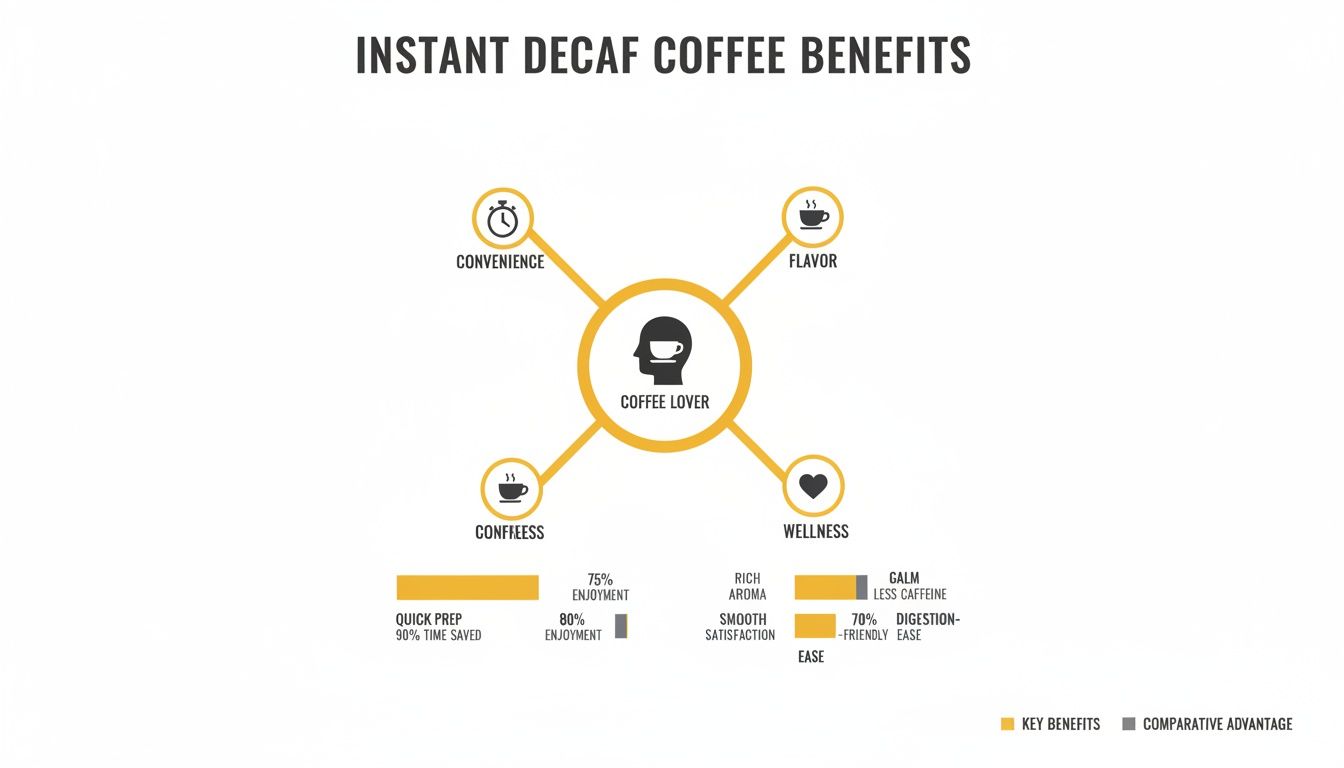
As you can see, a great instant decaf doesn't ask you to compromise. It brings together the ease, the taste, and the wellness benefits that so many of us are looking for in our daily cup.
The Two Main Paths: Solvents vs. Water
Historically, decaffeination relied heavily on chemical solvents. These methods are efficient and keep costs down, but they've always raised a few eyebrows among health-conscious coffee drinkers and those who prioritize pure flavor.
Let's break down the four primary ways coffee is decaffeinated.
A Quick Comparison of Decaffeination Methods
This table gives a bird's-eye view of the main methods, helping you understand the trade-offs between process, flavor, and chemical use.
| Method | Process Overview | Flavor Impact | Chemical-Free? |
|---|---|---|---|
| Direct-Solvent | Beans are steamed, then rinsed repeatedly with a chemical solvent (methylene chloride or ethyl acetate) that bonds with and removes caffeine. | Can sometimes strip delicate flavor notes, potentially leading to a flatter taste. | No |
| Indirect-Solvent | Beans are soaked in hot water to remove caffeine and flavor. The beans are set aside, a solvent is added to the water to remove the caffeine, and then the beans are returned to the decaffeinated water to reabsorb flavor. | Generally better at preserving flavor than the direct method, but still relies on chemicals. | No |
| Supercritical CO₂ | Pressurized liquid carbon dioxide is used as a natural solvent to selectively extract caffeine molecules, leaving larger flavor molecules intact. | Excellent at preserving the coffee's original character. Very clean, but also very expensive. | Yes |
| Swiss Water® Process | A batch of beans is soaked in a caffeine-free "Green Coffee Extract" (GCE) that is already saturated with coffee flavor compounds, so only caffeine leaches out. | Considered the gold standard for flavor preservation in a chemical-free process. | Yes |
While regulatory bodies consider the trace amounts of solvents left behind to be safe, many of us would simply rather skip them. Plus, these processes can sometimes mute the coffee’s more subtle notes. This is what paved the way for a more natural, flavor-forward alternative.
The Swiss Water® Process: A Chemical-Free Masterpiece
For those of us who want the purest coffee experience possible, the Swiss Water® Process is in a league of its own. It’s celebrated because it uses only water, time, and temperature to gently remove the caffeine. No chemical solvents, period. This makes it the only real choice for certified organic coffees.
The process is incredibly clever. It all revolves around a unique solution called Green Coffee Extract (GCE)—which is just pure water saturated with all the soluble flavor compounds found in coffee, minus the caffeine.
The genius of the Swiss Water Process is that it creates a "flavor equilibrium." The GCE is already full of coffee flavor, so it can't absorb any more from the new beans—leaving only the caffeine to be drawn out.
Here’s a quick look at how it works:
- First, a batch of green beans is soaked in hot water to create the initial, flavor-rich GCE. These beans are then discarded.
- This GCE is passed through proprietary carbon filters that are designed to capture only the larger caffeine molecules, letting all the smaller flavor molecules pass right through.
- Now, a new batch of green coffee beans is submerged in this caffeine-free GCE. Since the water is already saturated with flavor, the beans' original character can't escape. Only the caffeine migrates out of the beans and into the extract.
- The team monitors this process carefully, repeating it until the beans are 99.9% caffeine-free.
This gentle, chemical-free journey ensures the coffee's original personality—its unique acidity, body, and tasting notes—remains almost completely intact. After decaffeination, the beans are ready to be roasted and eventually turned into a high-quality instant coffee.
For a closer look at that next step, you can learn more about how great instant coffee is made in our detailed guide.
What Does Great Instant Decaf Actually Taste Like?
Let's be real for a moment. The phrase "instant decaf coffee" probably doesn't make your mouth water. For years, it brought to mind a watery, bland, and maybe even slightly chemical taste—something you drank out of desperation, not for enjoyment. That reputation wasn’t exactly unearned, either. Old-school methods often used cheap, low-grade beans and harsh processing that stripped out all the flavor right along with the caffeine.
But things have changed. A lot. The best instant decaf on the shelf today doesn't taste like a compromise. It just tastes like good coffee.
Forget what you think you know. We're talking about a brew that’s smooth, rich, and full-bodied, without any of that dreaded bitterness or weird aftertaste. When it's done right, a top-tier instant decaf delivers a surprisingly complex and satisfying cup that can honestly stand up to what you'd get from your local coffee shop.
From Bean to Crystal: The Flavor Journey
So, what separates a fantastic instant decaf from a disappointing one? It's not just one thing. It's a series of careful decisions that prioritize quality every step of the way, long before those little crystals ever make it into your mug.
Three things make all the difference in the final taste:
- The Quality of the Green Coffee Beans: This is non-negotiable. You simply can't make great coffee from bad beans. Premium brands start with high-quality, often single-origin Arabica beans, which are prized for their aromatic, nuanced flavors—a world away from the harsh, rubbery taste of Robusta.
- The Decaffeination Method: As we talked about, a gentle, solvent-free process like the Swiss Water Process is crucial. It meticulously removes the caffeine while preserving the delicate, original character of the bean. The goal is to take out only the caffeine, not the coffee's soul.
- The Drying Process: This is a big one. The best instant coffee is freeze-dried, not spray-dried. Freeze-drying is a cold process that gently locks in the coffee's volatile aromatic compounds, keeping its rich aroma and complex taste intact. Spray-drying, on the other hand, uses intense heat that can scorch the coffee, creating that classic bitter, burnt flavor.
The rule is simple: quality in equals quality out. A great instant decaf isn't about covering up flaws; it's about preserving the natural excellence of the coffee bean itself.
Identifying Premium Tasting Notes
Once you know what you’re looking for, you can really start to appreciate the range of flavors that high-quality instant decaf has to offer. Just like with any specialty coffee, the tasting notes can vary dramatically based on where the beans were grown and how they were roasted. You can even explore our guide to the best instant coffee brands to see how different options stack up.
Here are a few common flavor profiles you might find in a well-crafted instant decaf:
- Smooth and Chocolatey: A lot of Latin American coffees, especially from places like Peru or Colombia, will give you delicious notes of milk chocolate, toasted nuts, and caramel. These make for a balanced, comforting, and incredibly smooth cup.
- Bright and Fruity: Beans from African countries like Ethiopia often have a brighter, more vibrant profile. Think hints of berries, citrus, or even floral notes.
- Earthy and Bold: Coffees from regions like Indonesia can be deeper and earthier, with notes of dark chocolate, warm spice, and a much fuller body.
The true mark of quality is the clarity of flavor. A great instant decaf won't just taste like generic "coffee." You should be able to pick out these specific, enjoyable notes. If all you get is a blast of bitterness or a flat, chemical-like taste, you're almost certainly dealing with a product made from subpar beans and harsh processing.
How to Choose the Best Instant Decaf Coffee
Walking down the coffee aisle can feel a bit like a guessing game, especially with instant decaf. But once you know how to read the labels, you can cut right through the noise. Forget the flashy packaging—a few key details will tell you everything you need to know about the quality and flavor you're about to get.
Think of it this way: the journey to a great cup of instant decaf starts long before it hits your kitchen. It starts with the bean itself. This single factor has the biggest impact on taste.
Start with the Right Bean: Arabica vs. Robusta
First thing's first: check what kind of coffee bean is in the jar. You'll almost always see one of two names: Arabica or Robusta. They are worlds apart.
-
Arabica Beans: This is the good stuff. Arabica is the gold standard in the specialty coffee world for a reason. It’s grown at high altitudes, which allows it to develop complex, aromatic flavors. Think smoother, sweeter notes of fruit, chocolate, or caramel. Arabica is also naturally lower in caffeine and acidity. If you want a genuinely delicious cup, the label absolutely must say 100% Arabica.
-
Robusta Beans: Just like the name implies, Robusta is a hardier plant that’s easier and cheaper to grow. The tradeoff? It packs roughly double the caffeine and has a much harsher, more bitter taste—often described as rubbery. You’ll find it in cheaper instant coffees and some espresso blends where it helps create a thick foam, but it just doesn’t have the finesse for a great-tasting brew.
So, settling on 100% Arabica is your first move. Next, let’s talk about where those beans came from.
Understand the Origin: Single-Origin vs. Blends
A coffee's origin is like its fingerprint; it tells a unique story about its flavor. You’ll usually see two options here: single-origin or a blend.
A single-origin coffee comes from one specific place—a single country, region, or sometimes even one farm. This lets the unique character of that environment (the soil, climate, and altitude) really come through in the cup. A single-origin decaf from Peru, for instance, might taste nutty and chocolatey, while one from Ethiopia could be much brighter and more floral.
Blends, on the other hand, mix beans from different places to hit a specific, consistent flavor profile year-round. They aren’t inherently bad, but sometimes blends are used to hide lower-quality beans in the mix. If you’re after the purest expression of a coffee’s flavor, single-origin is what most coffee lovers reach for.
The demand for truly good decaf is surging, and instant coffee is a huge part of that wave. In 2024, the global market for decaffeinated coffee hit $14 billion, with the U.S. alone accounting for $826 million. It’s clear that people are looking for premium, convenient options like organic instant decaf. You can get a better sense of this trend by exploring the full market overview.
Look for Quality Processing and Certifications
Okay, so you’ve got your beans. But how they’re handled after they’re picked is just as crucial. As we covered earlier, the decaffeination and drying methods make a world of difference. Always keep an eye out for Swiss Water® Process for a chemical-free decaf and freeze-dried to ensure the original flavors are locked in.
Finally, don't overlook certifications. They’re a simple, trustworthy way to know you’re getting a quality product that was sourced responsibly.
Here are the big two you should look for:
- USDA Organic: This seal is your guarantee that the coffee was grown without any synthetic pesticides, herbicides, or fertilizers. It’s better for you and it's way better for the planet, promoting healthier soil, cleaner water, and more biodiversity on the farms.
- Fair Trade: This certification means the farmers who grew your coffee were paid a fair and stable price for their hard work. It helps support ethical business practices, safe working conditions, and vital community projects where the coffee is grown.
By looking for these simple markers—100% Arabica beans, a quality drying process, and meaningful certifications—you can confidently pick an instant decaf that doesn't just taste great, but also feels good to drink.
Brewing the Perfect Cup and Keeping It Fresh
So, you think making a great cup of instant decaf coffee is as simple as adding hot water? Well, you're not wrong—that's the beauty of it. But with a couple of small adjustments, you can elevate a decent cup into something truly exceptional, bringing out all the flavor packed into those high-quality beans.

The single most common mistake? Using water that’s too hot. Pouring boiling water directly over the coffee granules can scorch them, leaving you with a bitter, burnt taste. For the best results, you want water that's hot, but not boiling. The ideal range is right around 185-195°F (85-90°C).
Pro Tip: Don't have a fancy thermometer? No worries. Just let your kettle click off, then give it 30 to 45 seconds to cool down before you pour. That little pause is all it takes to hit the perfect temperature for a smooth, well-rounded brew.
Mastering the Ratios and Mix
With your water at the right temp, the next piece of the puzzle is the coffee-to-water ratio. This is mostly a matter of taste, but a solid starting point is one teaspoon of instant decaf for every six to eight ounces of water.
- For a standard cup: Stick with 1 teaspoon per 8 oz of water.
- For a stronger, bolder flavor: Try 1.5 teaspoons or use a bit less water.
- For a lighter, milder brew: Dial it back to just under 1 teaspoon.
Feel free to play around until you find your perfect brew strength. Here's a great little trick: mix the coffee granules with just a splash of your hot water first. Stir it into a smooth paste, then add the rest of the water. This ensures everything dissolves evenly, leaving no clumps behind.
Beyond the Hot Mug: Creative Uses for Instant Decaf
Don't let your instant decaf live its whole life in a hot mug. It's incredibly versatile and makes a fantastic base for all sorts of coffee-shop drinks you can whip up at home.
- Quick Iced Latte: Dissolve two teaspoons of instant decaf in two tablespoons of hot water to create a concentrated coffee "shot." Pour it over a glass packed with ice, then top it off with your milk of choice.
- Coffee-Powered Smoothie: Toss one teaspoon of granules right into your blender along with a banana, a scoop of protein powder, a splash of milk, and some ice. It's a creamy, energizing way to start the day.
- Mocha Frappe: For a perfect afternoon treat, blend one teaspoon of instant decaf, a cup of milk, a tablespoon of chocolate syrup, and a handful of ice until smooth.
Keeping Your Coffee Fresh
Knowing how to brew is one thing, but knowing how to properly store food to extend its shelf life is just as important for maintaining flavor. Instant coffee has four main enemies: air, moisture, heat, and light. Your best line of defense is a simple one—an airtight, opaque container stashed in a cool, dry spot like a pantry.
Instant decaf has come a long way since its post-WWII origins. Today, it’s a serious player. The global decaf market hit a value of $2.39 billion in 2024 and is projected to grow at a 7.21% CAGR through 2030. This isn't just a niche product anymore; it's a mainstream staple, giving brands the chance to deliver fantastic organic coffee that fits a busy lifestyle. By storing yours correctly, you guarantee that every cup tastes just as fresh and aromatic as the first.
Why Quality Sourcing and Processing Matter
You can't fake a great cup of coffee. A truly exceptional instant decaf is never an accident—it's the end result of a long chain of very intentional, quality-obsessed decisions that start long before the coffee ever gets near your cup. It’s a lot like cooking: a world-class chef can't make a masterpiece out of subpar ingredients.
This is where the best brands really set themselves apart. It all begins with the raw material. You can't make great instant decaf without first having great green coffee beans. That usually means starting with high-altitude, single-origin Arabica beans, the kind prized for their nuance and aromatic complexity.
From High-Altitude Farms to Gentle Processing
Once those top-tier beans are in hand, we get to the most critical step for decaf: the decaffeination itself. As we covered earlier, the method chosen here is a massive fork in the road for the final flavor. For us, working with processors who only use the Swiss Water Process isn't just a preference; it’s a requirement for preserving the delicate notes of a great organic bean.
This process is completely chemical-free, designed to single out and remove caffeine while leaving the coffee's original character—its soul, really—untouched. It’s a gentle, respectful method that honors the farmer's hard work and the unique environment where the coffee was grown. This is what we mean by a "clean" process.
The secret to a remarkable instant decaf isn't a secret at all: it’s an unwavering commitment to quality at every single stage. From the farm's soil to the final drying technique, each step builds upon the last to preserve the coffee's inherent goodness.
Finally, you have to turn that perfectly brewed coffee into the crystals that end up in your packet. This last piece of the puzzle is all about the drying method. To do it right, you have to rely on advanced freeze-drying techniques.
This cold process gently removes the water, locking in all the coffee’s precious aromas and complex flavors. It’s a world away from the common, heat-blasted spray-drying method, which often scorches the coffee and is responsible for that bitter, flat taste many of us remember from the instant coffees of the past. It’s this end-to-end dedication—sourcing, decaffeination, and drying—that makes an instant decaf that completely shatters expectations.
Got Questions About Instant Decaf? Let's Clear Things Up.
Even with all the incredible leaps in quality, a few old myths about instant decaf still hang around. It's a product that has totally transformed, so it’s only natural to wonder what you're really getting in that cup. Let's tackle some of the most common questions head-on.
This section is all about giving you those last pieces of the puzzle. Once we're done, you can pour that next cup feeling great about your convenient, delicious, and buzz-free coffee.
Is Instant Decaf Actually 100% Caffeine-Free?
This is probably the biggest question out there. While the name implies zero caffeine, the truth is that no decaf coffee is 100% free of it. The best decaffeination methods, like the Swiss Water Process, are incredibly thorough and remove 99.9% of the caffeine, but a tiny trace amount always sticks around.
A standard cup of instant decaf has just 2 to 5 milligrams of caffeine. Compare that to a regular cup of coffee, which can easily have 60 to 100 milligrams. For almost everyone, that minuscule amount in decaf is completely unnoticeable—it won't give you the jitters or mess with your sleep schedule.
Think of it this way: claiming decaf is completely caffeine-free is like saying a squeezed orange has zero pulp. You've gotten the vast majority out, but a few tiny bits will always be left behind. For most people, it's a difference that just doesn't matter.
Does Instant Decaf Still Have Health Benefits?
Absolutely. It's a common myth that the decaffeination process strips away all the good stuff along with the caffeine. The reality is that instant decaf is still packed with the same powerful antioxidants—especially polyphenols—that make regular coffee so celebrated.
These compounds are known for their health-promoting properties. So, you can still get many of the wellness perks of coffee without the stimulating effects of caffeine. It’s the perfect way to enjoy that rich flavor and antioxidant boost without the buzz.
How Long Does Instant Decaf Last Once I Open It?
Instant coffee is known for its impressive shelf life, but for the best flavor, you’ll want to use it within a few months of opening the package. Your main job is to protect it from its four sworn enemies: air, moisture, heat, and light.
Keeping it fresh is simple:
- Use an airtight, opaque container. The original packaging often works, but a dedicated coffee canister is even better for sealing out the elements.
- Find a cool, dry home for it. A pantry or kitchen cabinet is perfect—just keep it away from the stove and out of direct sunlight.
Storing it properly keeps the granules from clumping and protects those delicate aromas and flavors from fading away.
Can I Just Mix Instant Decaf with Cold Water for Iced Coffee?
You can, but you probably won't love the result. Instant coffee granules are engineered to dissolve quickly and completely in hot water. When you try to mix them straight into a cold liquid, you often end up with stubborn clumps and a weak, unevenly mixed drink.
For a perfect iced coffee every single time, just try this little trick:
- Make a quick concentrate: Mix your instant decaf with just an ounce or two of hot (not boiling) water.
- Stir it smooth: Swirl or stir until every last granule has dissolved. You'll have a smooth, concentrated coffee "shot."
- Build your drink: Pour this concentrate over a glass full of ice. Top it off with cold water, milk, or whatever you like.
This extra step takes just a few seconds but makes all the difference, guaranteeing a perfectly smooth and refreshing iced coffee.
Ready to taste what a truly exceptional instant decaf is all about? Cartograph Coffee sources high-altitude, organic beans and uses the superior Swiss Water Process to deliver a rich, flavorful brew that’s ready in moments.