Looking for the instant coffee with the most kick? Concentrate sachets can top >200 mg per 8 fl oz, while mainstream blends hover around 50–80 mg and high-performance mixes sit at 120–135 mg.
Instant Coffee Caffeine Tiers
Here’s a quick rundown of how different instant coffee categories stack up in a standard 8 fl oz cup. Use this snapshot to match your brew with your daily energy goals.
| Category | Caffeine Range (mg) |
|---|---|
| Mainstream Blends | 50–80 |
| High-Performance Mixes | 120–135 |
| Concentrate Sachets | >200 |
This table makes it easy to see where each tier fits into your routine—whether you need a gentle lift or a powerhouse boost.
In this illustration, you’ll notice that freeze-dried and spray-dried processes deliver different caffeine densities based on bean choice and extraction technique.
Key Caffeine Differences
Mainstream blends work well for steady, everyday sipping. High-performance mixes bridge that gap with a bit more zip and a balanced flavor profile. Concentrate sachets are for those moments when you need to power through tight deadlines or intense workouts.
Extraction style matters, too. Freeze-dried crystals often trap slightly more caffeine by weight than spray-dried granules, which can affect both strength and mouthfeel.
Adjusting your scoop size directly changes your caffeine intake. For example, sticking to a 400 mg daily cap means you could enjoy two concentrate sachets or three servings of a high-performance mix and stay within safe limits.
Everyone’s tolerance is unique. Start low, observe how you feel, and tweak your serving size before settling on a routine.
This overview sets you up to dive deeper into how bean origin and processing methods shape both caffeine content and flavor nuances.
- Limit total caffeine to 400 mg per day for healthy adults
- Spread servings at least two hours apart to avoid sudden peaks
- Pair each cup with water to help minimize jitters
- Weigh your powder-to-water ratio in grams for precise dosing
At Cartograph Coffee, we list the exact milligrams of caffeine on every package so you can choose with confidence.
Explore the next sections to see how single-origin beans and specific extraction techniques come together in your perfect cup. Check your personal caffeine sensitivity regularly and find the tier that fits your life.
Understanding Instant Coffee Caffeine Factors
Instant coffee’s caffeine punch comes down to four main elements—each one shaping how strong your cup will be.
- Bean Species sets the baseline caffeine per gram (Arabica vs Robusta).
- Processing Technique determines how much caffeine survives extraction.
- Roast Degree influences granule density more than caffeine percentage.
- Powder-to-Water Ratio is your easiest dial for more—or less—caffeine.
Decades of tweaking extraction pressure and drying temperatures have pushed instant coffee beyond simple convenience. Today, performance-focused blends can pack a serious punch without sacrificing clarity or aroma.
Historical Shifts In Caffeine Levels
Instant coffee first hit shelves in the 1930s with 50–80 mg per cup, prioritizing solubility and shelf life.
By the 1980s, extraction methods had tightened up, yielding 120–150 mg in high-performance sachets.
Come the 2000s, Robusta-rich blends and gentle drying lifted some servings past 200 mg—a leap that opened doors to niche, caffeine-driven offerings.
- 1930s: 50–80 mg per serving
- 1980s: 120–150 mg per serving
- 2000s: Up to 200 mg per serving
Bean Species And Caffeine Content
Different beans carry very different caffeine loads by weight.
| Bean Type | Caffeine per Gram (mg) |
|---|---|
| Arabica | 12–15 |
| Robusta | 22–27 |
A Robusta-forward mix will deliver nearly double the caffeine in each scoop compared to pure Arabica. For instance, 1.5 g of Robusta-heavy granules can yield around 40 mg of caffeine.
Processing Techniques Matter
How producers dry and concentrate their extract makes a measurable difference.
| Technique | Caffeine per Gram (mg) | Impact |
|---|---|---|
| Freeze-Dried | 20–28 | +10–15% |
| Spray-Dried | 18–25 | Baseline |
| Concentrated Extract | 30+ | +25% |
“Extraction style and crystal form can shift caffeine levels by over 20% in weight for the same bean.”
— Industry insight
Since instant coffee’s debut, brands have raced to refine these methods—moving from the original 50–80 mg cups to blends that now span 130–300 mg per serving. Discover more insights about caffeine evolution in instant coffee on Hello5Coffee
Roast Degree And Extraction Ratio
Roasting barely alters caffeine by weight, but darker beans lose volume, so a scoop holds less mass.
Always weigh by grams if you want consistency—your teaspoon won’t tell the full story.
Tweaking your powder-to-water ratio is the most direct route to dialing strength. Bump one teaspoon to two and you’re nearly doubling the caffeine.
Practical Tips To Maximize Caffeine
- Weigh each serving on a kitchen scale for repeatable results.
- Reach for Robusta-forward blends when you need more kick.
- Try concentrated extracts for travel, pre-workout, or tight schedules.
- Use less water per gram to intensify caffeine and flavor.
Cartograph Coffee’s instant selections take these factors into account, blending Robusta-rich beans with optimized freeze-drying to hit the sweet spot between taste and performance.
You might be interested in reading our guide on coffee caffeine content in our article Coffee Caffeine Content Explained
Comparing Instant Coffee Caffeine Categories
Instant coffee generally breaks down into three tiers by caffeine content in an 8 fl oz cup. Mainstream blends settle between 57–98 mg, offering a smooth, everyday lift. Then come high-caffeine formulas at 120–135 mg, perfect when you need more focus. Finally, extreme concentrate sachets push up to 300 mg, built for rapid-fire energy.
Each level influences taste, price, and convenience. Choosing the right one depends on your routine—whether it’s an afternoon pick-me-up, a pre-workout jolt, or a compact travel companion.
Caffeine Comparison Across Instant Coffee Types
Below is a snapshot of how these categories stack up and who they suit best.
| Category | Typical Caffeine (mg) | Recommended User |
|---|---|---|
| Mainstream Blends | 57–98 | Casual drinkers |
| High-Caffeine Formulas | 120–135 | Focus-seekers |
| Concentrate Sachets | 200–300 | Power users & travelers |
This table highlights the core differences in caffeine dose and helps you match your cup to the moment. For example, someone eyeing a steady boost might stick with a mainstream blend, while an athlete could lean on a concentrate sachet for maximum punch.
Situational Recommendations
-
Mid-Afternoon Recharge
A 120–135 mg high-caffeine formula restores focus without overwhelming bitterness. -
Pre-Workout Spike
A 200–300 mg concentrate sachet delivers a sharp energy surge when you need it most. -
Travel-Ready Fuel
Single-serve concentrates fit neatly in your bag and guarantee consistent strength across time zones.
These scenarios demonstrate how your choice aligns with activity levels, taste preferences, and caffeine tolerance.

The infographic above lays out the key drivers of caffeine content—from Robusta bean ratios to freeze-drying and concentrated extracts. It clarifies why processing methods and bean selection can shift caffeine per gram so dramatically.
To dive deeper into how freeze-drying locks in caffeine, check out our detailed guide on What Is Freeze-Dried Coffee.
Price Point And Ease Of Use
Instant coffee isn’t just about strength—cost and convenience matter too. Here’s a quick breakdown:
- Mainstream Blends: $0.15–$0.30 per serving in jars
- High-Caffeine Sachets: $0.30–$0.50 per serving
- Concentrate Sachets: $0.60–$1.00 per serving
“When you compare price per milligram of caffeine, concentrates often offer the best value for heavy users.”
Cartograph Coffee’s premium instant line slots in at 130–150 mg of caffeine per cup for about $0.40 each, packaged in twist-off sachets. It strikes a balance between potency, flavor integrity, and grab-and-go simplicity.
Selecting the right caffeine tier boils down to your daily habits, taste cravings, and budget. Whether you opt for a gentle mainstream blend, a bold high-caffeine mix, or an extreme concentrate, this breakdown equips you to make an informed choice.
Choosing High-Caffeine Instant Coffee
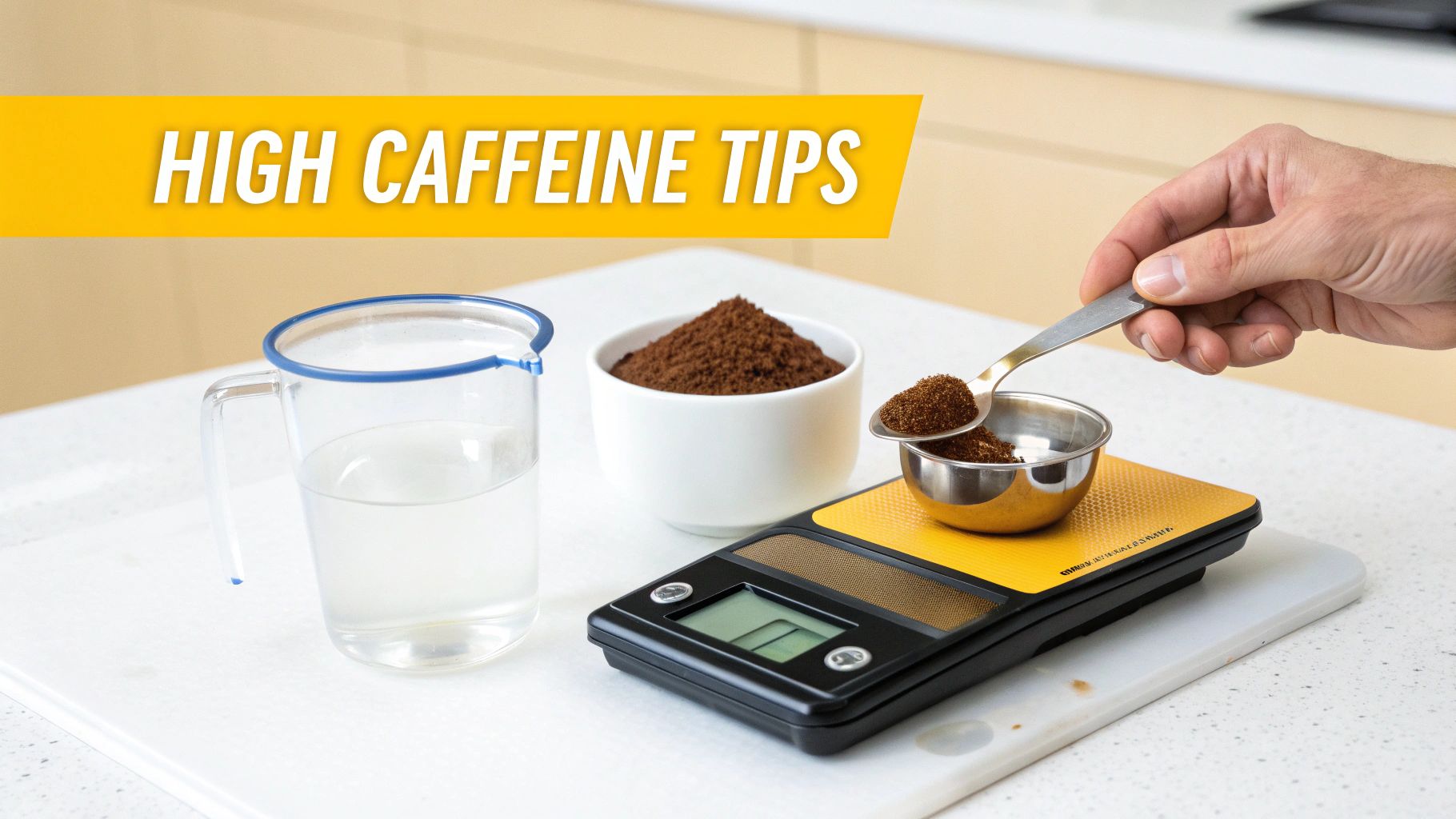
Finding that extra kick in your instant cup is all about reading labels and tweaking your brew. Start by looking at the blend’s bean ratio—Robusta-forward mixes usually pack 22–27 mg of caffeine per gram. Then, check whether the product is a concentrated extract, which often pushes caffeine above 30 mg per gram due to less water content.
Next, confirm the mg-per-serving on the package so there are no surprises in your morning dose. Finally, adjust your water ratio—pouring in less liquid ramps up the caffeine density in each sip.
By blending these tactics—bean type, extraction style, serving specs and water volume—you’ll dial in the strongest instant cup without any guesswork.
Label Signals And Blend Ratios
First, examine the ingredient list for bean composition. Robusta beans deliver nearly twice the caffeine of Arabica, so blends with a higher Robusta percentage typically outperform standard mixes.
Next, scan for the phrase “concentrated extract.” This often means more caffeine carried through during production.
“A Robusta-rich mix can boost your caffeine by up to 30% over a standard blend.”
For a hands-on test, open two sachets side by side and weigh their dry powder. The denser extract will show up heavier per teaspoon. From there, record those grams on a kitchen scale to lock in consistent strength every time.
Practical Brewing Scenarios
In real life, context matters. For example, you might:
- Combine a 1.5 g standard serving with a 0.5 g extract topper to hit 75 mg total caffeine before a workout.
- Pack single-serve sachets listing at least 120 mg per serving for long-haul flights.
- Sip three mini doses of 3 g each over an hour during a study session (that’s 75 mg per dose) to stay sharp without the jitters.
Example Case Study:
- Pre-Workout Fuel Mix
- Base scoop 15 g standard instant (330 mg caffeine)
- Extract shot 5 g concentrated extract (150 mg caffeine)
- Travel Sachet
- Ready-to-go packet 8 g blend (200 mg caffeine)
- Study-Session Concentrate
- Three mini doses 3 g each over 90 minutes (75 mg each)
These scenarios show exactly how to tailor strength to your routine.
Dosage Tips And Packaging Cues
Precision starts with a reliable digital scale—shaving off or adding just 1 g can swing your caffeine by 20–30 mg. Always look for clear mg-per-serving details. If it’s missing, simply divide the total caffeine by the number of servings.
| Powder Weight (g) | Caffeine Estimate (mg) |
|---|---|
| 5 | 110 |
| 10 | 220 |
| 15 | 330 |
| 20 | 440 |
For batch prep, measure your powder into a dry container, then label it with the date and estimated caffeine. Finally, try cutting your water volume from 240 ml to 160 ml—that alone can boost caffeine density by 50%.
Roast Choices And Flavor Balance
Roast level doesn’t just affect taste; it changes granule density. Weigh by gram, not by scoop, to keep caffeine consistent.
- Dark Roast delivers smoother acidity with minimal volume change.
- Medium Roast strikes a balance between body and caffeine extraction.
- Light Roast packs more mass per scoop and offers brighter flavor.
Sample small batches to zero in on your perfect blend of strength and taste.
Cartograph Coffee blends Robusta-rich beans with optimized freeze-drying to deliver 150 mg of caffeine per 8 fl oz cup.
- Transparent labeling shows mg-per-serving clearly.
- Organic sourcing maintains flavor integrity.
Use Cartograph Coffee sachets in your travel kit or pre-workout mix to enjoy reliable strength and taste anywhere you go. Adjust servings to suit your personal tolerance.
Maximizing Caffeine Safely
When you’re hunting for the richest instant coffee, it’s easy to overlook safety. Experts agree that most healthy adults should stay under 400 mg of caffeine per day to avoid unwanted side effects. Spreading your intake over several servings helps maintain steady energy and wards off crashes.
- Side Effects: jitteriness, insomnia, elevated heart rate
- Cumulative Intake: coffee, energy drinks, supplements can add up fast
- At-Risk Groups: pregnant individuals, people with anxiety, those with heart conditions
Dosage Limits And Timing
Most health guidelines cap daily caffeine at 400 mg.
Aim to space servings at least 2 hours apart to prevent sudden spikes.
Give yourself a 6-hour window before bedtime to preserve sleep quality.
- Spread doses every 2–3 hours
- Track total caffeine from all sources each day
- Use a kitchen scale or scoop for accurate portions
- Avoid late-day caffeine to protect your rest
Monitoring intake closely keeps you from accidentally overloading when mixing drinks and supplements.
Mitigation Tactics
- Always pair your coffee with a full glass of water to help your body process caffeine.
- Have a protein-rich snack—think nuts or Greek yogurt—to steady your blood sugar.
- Increase caffeine volume gradually (about 10% every few days) to build tolerance safely.
- Keep an eye on your heart rate and back off if you notice palpitations.
These simple moves can ease jitters and soothe your stomach when you’re pushing boundaries.
“Single servings over 200 mg can overwhelm many systems,” says dietitian Kara Mills.
Pay attention to headaches, irritability or tummy upset—those are your cues to ease up.
Design Your Caffeine Schedule
Building a clear rhythm around your caffeine boosts focus and performance.
| Scenario | Serving Details | Total Caffeine (mg) |
|---|---|---|
| Morning Work Sprint | 8 fl oz instant brew | 120 |
| Pre-Workout Boost | Concentrated sachet (200 mg) | 200 |
| Study Session Spread | Three 75 mg doses over 3 hrs | 225 |
Each option spaces servings by at least 2 hours and pairs with hydration. If you’re extra sensitive or have heart concerns, aim for 200 mg or less daily.
Check out our guide on how to stop caffeine jitters to learn more ways to stay comfortable.
Monitor Side Effects Closely
Even with smart scheduling, watch how your body responds.
- A pounding headache or dizziness can signal overstimulation
- Stomach upset often means your coffee is too concentrated
- Rising anxiety or palpitations are red flags—cut back immediately
Customize Intake For Your Goals
Whether you’re tackling a work project, a tough workout or a long study session, match your caffeine to the task.
For back-to-back challenges, stick to 100 mg per serving and hydrate between cups. Cartograph Coffee clearly lists caffeine content on every bag, so tracking becomes effortless. Their organic instant blends deliver clean energy without harsh acidity.
Create Personalized Caffeine Profile
Start a simple log—note serving size, time, and how you feel afterward. You’ll begin to spot patterns in energy peaks and crashes. Adjust your water ratio or switch to a milder blend if tolerance shifts, keeping your routine fresh and effective.
Balance Caffeine With Rest
Good sleep is the foundation of any caffeine strategy. Use your coffee to power short bursts of activity, not as a substitute for rest. Rotate between high-caffeine and gentle blends on lighter days to reset your sensitivity and ensure each cup still feels like a pickup.
By combining clear labeling, precise dosing and thoughtful timing, you can safely optimize your instant coffee for maximum caffeine. Cartograph Coffee’s transparent sourcing and organic beans support both your performance goals and long-term wellness. Start low, track your progress, and build a plan that fits your lifestyle—so every cup works in harmony with your health.
When To Choose Cartograph Coffee
Cartograph Coffee turns to premium Robusta beans and a gentle, low-temperature extraction that keeps caffeine intense but smooth. You’ll notice consistent strength and little to no bitterness. That makes it a go-to choice whether you’re kicking off a busy morning, powering through deep-work, or packing light for travel.
Cartograph roasts organic Robusta for a reason: each 8 fl oz cup delivers 130–150 mg of caffeine. That’s slightly above many competitors, which often sit between 120–135 mg. Its extraction process locks in those caffeine molecules without increasing acidity.
Early Morning Performance
Mornings call for a clear jolt, not a rough jolt. Here’s how to nail your pre-work routine:
- Scoop 8 g of Cartograph instant (about 130 mg of caffeine).
- Stir into 180 ml of hot water for a smooth start.
- Pair with a light breakfast to keep energy levels steady.
“I switched to Cartograph because I can count on 140 mg every morning. No grit, no crash.” — A real customer
You’ll find yourself diving into tasks alert and focused, not shaky or wired.
Sustained Deep-Work Focus
By mid-morning or afternoon, you want a steady tide of concentration. Cartograph’s method preserves aroma oils and flavor, so you stay sharp without dulling your palate.
- Use 8 g with 160 ml of water to boost caffeine density by about 20%.
- Enjoy rapid solubility and a clean taste—no chalky aftertaste.
Key Benefits:
- Transparent mg-per-serving labels for precise dosing
- Consistent flavor, even at higher concentrations
- Instant mix dissolves in seconds
Compact Travel Kits
Whether you’re trekking, flying, or just on the move, Cartograph’s single-serve packets are a suitcase staple. Each one lists its exact caffeine content, so surprises are out of the question.
| Context | Caffeine per Serving (mg) | Ideal Use Case |
|---|---|---|
| Early Morning Start | 130–150 | Pre-work routine |
| Deep-Work Sprint | 140–150 | Creative sessions |
| Travel Essentials | 135–145 | Hiking, flights, road trips |
Competitors might promise a big caffeine hit, but they often skip clear labeling or compromise taste. Cartograph strikes a balance: predictable strength and genuine flavor every time.
“Cartograph sachets were my go-to on a week-long trek. Every cup was reliably strong and smooth.” — Outdoor enthusiast
How Cartograph Stacks Up
If you’ve tried mainstream instant blends (usually 50–80 mg per cup) or aggressive high-caffeine mixes (120–135 mg), you know the extremes can be disappointing. Cartograph’s 130–150 mg sweet spot fills that middle ground nicely—powerful yet palatable.
| Category | Caffeine (mg) per 8 fl oz |
|---|---|
| Mainstream Instant | 50–80 |
| High-Caffeine Mixes | 120–135 |
| Cartograph Coffee | 130–150 |
When you need reliable energy without overwhelming bitterness, Cartograph delivers. Its organic sourcing and transparent labels appeal to anyone mindful of quality and dosage.
Explore pack sizes and clear caffeine profiles on the Cartograph Coffee website. Clean flavor, consistent potency—no guesswork required.
Frequently Asked Questions
How Do Different Brewing Methods Change Caffeine Extraction In Instant Coffee?
Instant coffee usually delivers 60–200 mg of caffeine per cup, depending on how you prepare it. A single heaping teaspoon in 240 ml of hot water typically yields 60–80 mg. If you opt for a high-performance sachet or concentrate, you can push that above 200 mg. Powder-to-water ratio and extract concentration are your main levers. Water temperature and stirring speed play minor roles—hotter water dissolves faster but can also mute some flavor notes.
What Happens If I Stack Doses Too Quickly?
Spreading your cups throughout the day is vital. Adults should cap at 400 mg daily and wait at least two hours between stronger servings to avoid jitters or headaches.
- Skip late afternoon brews to protect your sleep cycle.
- Log every caffeine source—coffee, tea, supplements, energy drinks.
- Always pair each cup with about 250 ml of water to stay hydrated.
Caffeine Stacking Safety
“Cumulative caffeine from coffee and supplements can exceed safe limits faster than most realize.”
The general rule is no more than 400 mg per day. If you’re sensitive or have heart concerns, aim for 200–300 mg. Spread your intake evenly and watch for insomnia, rapid heartbeat, or anxiety. Consult a healthcare professional if you have underlying conditions.
Keeping a brief log—serving size, time, and how you feel—helps you spot patterns. Over a week, this data will guide you toward the right dose and timing.
Identifying High-Caffeine Options
Look for clear mg-per-serving labels and powder weight. Blends rich in Robusta or true concentrated extracts typically pack more punch. Avoid vague terms like “strong roast” without caffeine numbers.
| Label Claim | What It Means |
|---|---|
| 150 mg per 8 fl oz | High-performance blend |
| >200 mg per 8 fl oz | Extreme concentrate |
Weigh your powder for a quick reality check. More grams almost always mean higher caffeine density. Then adjust water volume to find your ideal strength without unnecessary bitterness.
What Packaging Cues Signal Authentic High-Caffeine Blends?
Look for:
- Explicit mg-per-serving and powder weight.
- Bean origin (Robusta mentions) and extraction method.
- Batch-specific testing or third-party certificates.
How Can I Calculate Total Daily Caffeine When I Drink Multiple Cups?
Multiply the mg listed per serving by the number of cups. Three cups at 120 mg each equals 360 mg. Don’t forget to add any caffeine pills or sodas.
How Can I Minimize Caffeine Crashes?
Pair coffee with a balanced snack—nuts, whole-grain toast, or yogurt—to stabilize blood sugar. Stay hydrated and take brief activity breaks to smooth out energy dips.
Ready to dial in your instant coffee routine? Focus on transparent labels, robusta ratios, and precise dosages.
For reliable strength and clarity, brew your next cup with Cartograph Coffee