If you're hunting for the instant coffee with the most caffeine, you'll quickly find yourself looking past the grocery store aisle. Specialty brands are where the action is, with some packing over 400 mg per serving—a massive leap from the typical 60-90 mg in your average cup.
Understanding the High Caffeine Coffee Landscape
Let's be honest. If you're seeking out the most potent instant coffee, you're not just looking for a convenient morning pick-me-up. You're looking for peak performance in a mug. The high-caffeine coffee scene is crowded, with everything from slightly stronger blends to extreme brews designed to deliver a serious jolt. Knowing what sets them apart is the key to finding the right one for you.
The secret to a seriously powerful cup of coffee almost always comes down to the bean. While most premium coffees favor Arabica beans for their smooth, complex flavors, brands chasing the highest caffeine content lean heavily on Robusta beans. It’s simple biology: Robusta naturally contains nearly double the caffeine of Arabica, making it the non-negotiable foundation for a high-octane brew. But the bean is just the start; the roast and processing method also fine-tune that final caffeine kick.
Key Factors to Consider
-
Bean Variety: Robusta is the undisputed king. If a brand proudly states it uses 100% Robusta, you can bet it's packing a punch.
-
Serving Size: Always check the recommended serving size. A coffee might boast huge caffeine numbers, but if you need two heaping scoops to get there, you'll be running through your supply twice as fast.
-
Brand Specialization: Some companies have built their entire reputation on being the "world's strongest coffee." These are usually a great place to start your search.
To give you a sense of the upper limit, Death Wish Coffee's instant version is often held up as the benchmark, delivering a staggering 485 mg of caffeine per 8 fl oz serving. That’s more than four times what you'd get from a standard cup, placing it in a category of its own.
A truly potent instant coffee isn't an accident. It’s the result of intentional choices—from selecting the right beans to precision roasting and advanced processing, all engineered to maximize caffeine without completely sacrificing flavor.
Caffeine at a Glance Comparing Instant Coffee Brands
This table offers a quick snapshot of the caffeine landscape, from standard grocery brands to the high-performance players. It’s a great way to see just how wide the caffeine gap can be. For a more detailed look at what makes each product unique, see our breakdown of the best instant coffee brands.
| Instant Coffee Brand | Typical Caffeine (mg per 8oz) | Primary Bean Type |
|---|---|---|
| Standard Generic Brand | 60–90 mg | Arabica/Robusta |
| Starbucks VIA Instant | 130–140 mg | 100% Arabica |
| Waka Coffee (Robusta) | ~140 mg | 100% Robusta |
| Specialty High-Caffeine | 200–485+ mg | 100% Robusta |
As you can see, once you enter the specialty realm, the numbers climb fast. These brands aren't just making coffee; they're engineering an experience for those who need the most from their cup.
Understanding How Caffeine in Coffee is Measured
Before we dive into finding the instant coffee with the most caffeine, it’s worth understanding how those numbers on the label come to be. When a package boasts 200 mg of caffeine, that figure isn't just a marketing guess—it's the result of some pretty serious lab work. Knowing this helps you cut through the hype and make a truly informed choice.
At its most basic, caffeine is measured in milligrams (mg). This tells you the literal weight of the caffeine in the product. But that number is only half the story. The real question is: milligrams per what? Is it per gram of dry coffee? Per serving? Per 8-ounce cup? This is where things can get confusing.
For instance, one brand might list its caffeine content for a tiny 2-gram serving, while another bases its numbers on a fully prepared 8-ounce cup. A simple difference in how "a serving" is defined can make one coffee seem way more potent than another, so you always have to look closely to make a fair comparison.
How Scientists Get the Numbers
Pinning down the exact caffeine content in instant coffee isn't something you can do in your kitchen. It requires a sophisticated lab technique called High-Performance Liquid Chromatography, or HPLC for short. This is the gold standard for separating, identifying, and measuring the different chemical components in a mixture.
To put it simply, a coffee sample is dissolved and then pushed through a specialized column under very high pressure. As it travels, different compounds—like caffeine—separate because they move at different speeds. A detector at the other end precisely measures the amount of each compound as it comes out, giving a highly accurate milligram count for the caffeine.
Key Takeaway: The caffeine number on a package isn't just an estimate. It’s a precise measurement from advanced lab analysis, so you can trust you’re getting what the label says.
Reading Between the Lines
Once you know how the measurement works, you can become a much smarter coffee shopper. A common misconception is that a "bold" or "intense" flavor means more caffeine. In reality, dark roasts that produce those smoky, rich flavors can actually have slightly less caffeine than their lighter-roasted counterparts.
Here’s what to focus on when you're comparing different instant coffees:
- Caffeine per Serving: This is your most practical number. Look at the recommended serving size—whether it's a packet or a teaspoon—and see how much total caffeine you're getting.
- Caffeine per Gram: If you want a true apples-to-apples comparison, find the caffeine content per gram of the dry coffee crystals. This metric cuts out any confusion caused by different serving sizes.
- Preparation Instructions: Remember, how much water you add will change the strength of the flavor, but it will not change the total amount of caffeine in your cup. The caffeine is in the crystals, not the water.
Ultimately, understanding the science of measurement gives you the power to see past the marketing and evaluate any product that claims to be the instant coffee with most caffeine. By focusing on the milligrams per serving and knowing how that number is determined, you can confidently pick the coffee that gives you the exact kick you’re looking for.
What Really Determines Caffeine Content
If you're hunting for instant coffee with the most caffeine, you need to look past the marketing hype on the label. The real story of a powerful brew comes down to three things: the coffee bean itself, the way it’s roasted, and how it’s turned into instant crystals. Get a handle on these, and you'll know how strong an instant coffee is before you even take a sip.
The journey to a high-caffeine instant coffee starts with the bean. This is, without a doubt, the most important piece of the puzzle. It all boils down to the two main players in the coffee world: Arabica and Robusta.
Bean Variety: The Foundation of Strength
Arabica beans get all the love in the specialty coffee scene. They're known for their smooth, complex, and aromatic flavors. Because they're a bit fussy to grow—thriving only at high altitudes—they tend to cost a bit more. But when it comes to a pure caffeine kick, Arabica is the lightweight.
Enter Robusta, the undisputed heavyweight champion of caffeine. Just as its name implies, it’s a tougher, more resilient plant that’s easier to farm. It produces a coffee with a bold, strong flavor, often with notes of chocolate or even a hint of rubber. Here’s the critical part: Robusta beans pack nearly double the caffeine of Arabica beans. We're talking 2.2% to 2.7% caffeine by weight, compared to Arabica's 1.2% to 1.5%. This genetic difference is why any brand serious about making an instant coffee with the most caffeine will almost always reach for 100% Robusta.
To get a better feel for how these two beans stack up in every category, from taste to caffeine, check out our in-depth guide on the differences between Arabica and Robusta beans.
This graphic breaks down how we think about caffeine, from the whole cup right down to the milligram.
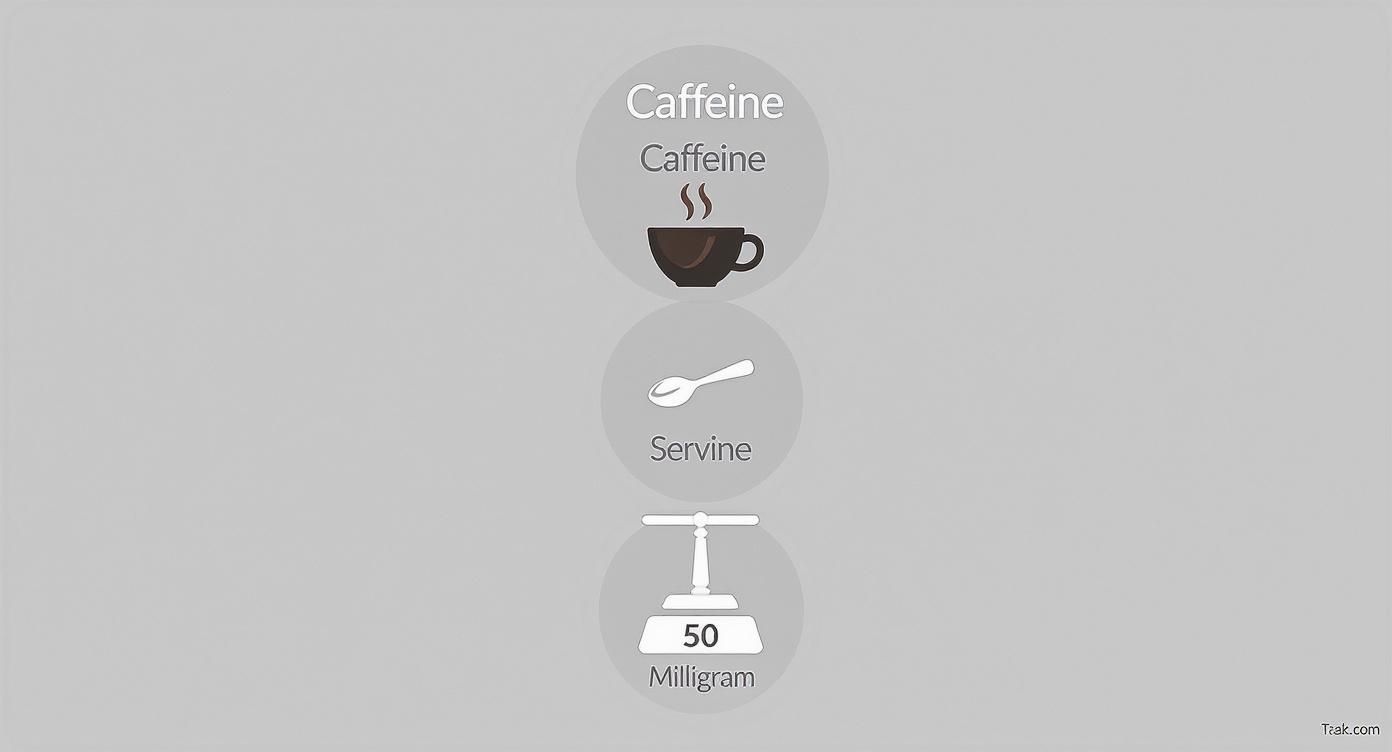
It’s a simple reminder that the serving size is what translates the potential in the bean to the actual jolt in your mug.
It’s a common myth that a darker, more “intense” taste means more caffeine. The truth is, the bean variety has a much, much bigger impact on the final caffeine count than the flavor profile ever will.
The Great Roast Debate: Debunking a Myth
After the bean is chosen, it's time for roasting. This is where another coffee myth trips a lot of people up. The assumption is that a dark, oily roast must be stronger and more caffeinated because of its powerful flavor. The reality is the complete opposite.
Caffeine is a remarkably stable compound, but roasting does affect it slightly—just not in the way you think. As beans roast, they lose water and puff up, becoming less dense. So, if you measure your coffee with a scoop (by volume), a light roast will actually give you a bit more caffeine. The beans are smaller and denser, so more of them fit into the scoop.
- Light Roast: Denser beans mean more coffee mass, and thus more caffeine, fits into a scoop.
- Dark Roast: The beans expand, so a scoop holds less coffee mass and slightly less caffeine.
If you’re measuring by weight on a scale, the difference between roasts is pretty much insignificant. The main takeaway is simple: don't ever mistake a dark roast for a high-caffeine coffee. A light or medium-roasted Robusta will always pack a bigger punch than a dark-roasted Arabica.
Processing Method: Finalizing the Potency
The last step in the chain is turning liquid coffee into the instant granules you buy. The two main ways to do this are spray-drying and freeze-drying, and the choice has a real impact on both flavor and caffeine.
The table below breaks down how each decision point—from the farm to the factory—shapes the final caffeine level in your cup.
How Key Factors Influence Caffeine Levels
| Factor | Option for Higher Caffeine | Option for Lower Caffeine | Why It Matters |
|---|---|---|---|
| Bean Variety | 100% Robusta | 100% Arabica | Robusta naturally contains almost twice the caffeine of Arabica. This is the single biggest factor. |
| Roast Level | Light to Medium Roast | Dark Roast | Roasting burns off very little caffeine, but dark roasts are less dense. By volume (scoop), lighter roasts pack more punch. |
| Processing | Freeze-Drying | Spray-Drying | Freeze-drying is a gentle, low-heat process that perfectly preserves caffeine and flavor compounds. |
As you can see, a high-caffeine instant coffee is no accident; it's the result of deliberate choices aimed at maximizing that final number.
Spray-drying is the quick and dirty method. Hot coffee concentrate gets blasted into a chamber of hot air, which instantly evaporates the water. It’s efficient, but that intense heat can damage the delicate flavor compounds and may degrade the caffeine content slightly.
Freeze-drying, on the other hand, is the gold standard for quality. Coffee extract is frozen solid, then placed in a vacuum where the ice turns directly into vapor, leaving the coffee solids (and all their caffeine) perfectly preserved. It takes longer and costs more, but the result is a far superior product.
This is why you'll see premium instant coffees—especially those engineered for high caffeine—exclusively use the freeze-drying method. It guarantees that every last bit of potency and flavor makes it into the final product. Even a quality Arabica can pack a surprising wallop when processed this way. Take Starbucks VIA Instant Coffee, for example. It's 100% Arabica but delivers a hefty 130 to 140 mg of caffeine per serving, all thanks to high-quality beans and a careful production process.
Diving into Specialty High-Caffeine Brands
https://www.youtube.com/embed/rNpTveKB-8Y
Once you step outside the familiar supermarket aisles, you’ll discover a whole scene of specialty brands built for one thing: delivering the instant coffee with the most caffeine. These aren't just brewing coffee; they're engineering a high-octane experience from the ground up. Figuring out their different approaches is the key to finding the right fuel for your day.
These dedicated brands all start from the same powerful foundation—sourcing high-quality 100% Robusta beans. As we've covered, Robusta beans naturally pack nearly double the caffeine punch of their Arabica cousins. But just choosing the right bean is only the beginning.
From there, many of these companies have developed their own unique roasting profiles and processing methods. Every step is meticulously designed to preserve as much caffeine as possible, making sure the final powder is incredibly potent. This careful engineering is what separates a regular strong coffee from a true high-caffeine beast.
The Two Camps of High-Caffeine Coffee
As you explore these specialty brands, you'll notice they tend to fall into one of two main groups. Each philosophy is tailored to a different kind of coffee drinker, so figuring out which one you are will point you toward your perfect match.
The first camp is all about Raw Power Above All. Brands in this category are in a constant competition for the title of "world's strongest coffee." Their main objective is to cram as much caffeine as they can into a single serving, often blowing past 400 mg.
- Their Beans: Almost always single-origin Robusta varieties, chosen specifically for their high caffeine levels.
- Their Roast: Carefully managed to prevent any caffeine from burning off, typically a medium roast.
- Their Flavor: Taste isn't an afterthought, but it definitely takes a backseat to potency. You can expect a bold, intense, and often bitter flavor that is pure Robusta.
- Who It's For: Anyone needing a massive jolt to get through a night shift, a brutal workout, or a deadline that’s just around the corner.
The second camp focuses on the Balance of Potency and Palate. These brands want to give you a serious caffeine kick without sacrificing the complex flavors that make coffee so enjoyable. They’re here to prove that strong doesn't have to mean harsh.
- Their Beans: You'll often find a blend of top-tier Robusta and specialty Arabica, or even a single-origin Robusta that's been processed to mellow out its bitterness.
- Their Roast: They use more complex roasting techniques to bring out subtle notes like chocolate or nuts.
- Their Flavor: The goal here is a smooth, easy-drinking cup that still packs a serious punch.
- Who It's For: The daily coffee enthusiast who needs more buzz than a standard cup can offer but still craves a genuinely delicious taste experience.
Choosing a high-caffeine coffee isn't just about finding the biggest number on the label. It's about matching the coffee's personality to your own needs—whether you're chasing pure, unadulterated energy or looking for a powerful yet refined daily brew.
How These Brands Stand Out from the Pack
Since they all share the goal of high caffeine, these specialty companies have to find other ways to set themselves apart. Some put a heavy emphasis on ethical sourcing, building direct relationships with farming co-ops to get their hands on rare, high-potency Robusta lots. This not only guarantees incredible quality but also promotes sustainable farming practices.
The processing method is another huge differentiator. We already know that freeze-drying is the best way to protect both flavor and caffeine. The top-tier high-caffeine brands almost always use this method and aren't shy about mentioning it on their packaging as a seal of quality. If you see a brand using spray-drying, it's a good sign they might be cutting corners.
Finally, transparency is everything. The best brands are completely upfront about their caffeine content, giving you exact numbers in milligrams per serving. They don't hide behind fuzzy words like "extra strong" or "intense." This kind of honesty empowers you to make a smart decision based on your personal caffeine tolerance and what you need to get done.
Here at Cartograph Coffee, we've built our philosophy around that perfect balance of quality and convenience. While our main focus is on delivering an exceptional flavor experience with our organic, single-origin instant coffees, we certainly appreciate the need for a stronger cup. By sticking to principles like careful bean selection and using superior processing methods, we make sure our coffee provides a satisfying lift without ever compromising on the incredible taste. You can see how we approach quality firsthand over at the Cartograph Coffee website.
How to Brew for Maximum Caffeine Extraction
Picking an instant coffee with the most caffeine is only half the battle. How you actually brew it can make a surprising difference, and a few small tweaks to your routine can help you get every last milligram of caffeine out of those crystals.
It really all comes down to maximizing solubility and concentration. By getting just a few variables right, you can turn a potent instant coffee into an absolute powerhouse.
Perfecting Water Temperature
Here’s one of the most common missteps: using water straight off a rolling boil. While it feels intuitive that hotter water works better, water that’s too hot (212°F or 100°C) can scorch the coffee. This doesn't just make it taste burnt and bitter; it can also interfere with a clean, efficient caffeine extraction.
For the best results, you want to aim for a temperature just below boiling—somewhere between 195°F and 205°F (90°C to 96°C). This is the sweet spot where the water is hot enough to dissolve everything quickly but not so hot that it ruins the flavor. If you don't have a variable-temp kettle, just let your boiled water cool for 30-60 seconds before you pour.
Nailing the temperature is the foundation for a great cup. You’ll pull out all the caffeine while keeping the coffee's intended flavor profile intact.
We get into the weeds on this topic in our complete guide to the best water temperature for brewing coffee, which has insights that apply to instant coffee, too.
Mastering the Coffee to Water Ratio
Your coffee-to-water ratio is your direct control over the strength of your drink. While a stronger brew doesn't magically add more caffeine to the scoop, it delivers a more concentrated punch with every sip.
A good starting point for a strong, balanced cup is one teaspoon of instant coffee for every six ounces of water. But if you’re looking for a serious jolt, feel free to experiment.
- For a Bolder Cup: Up the dose. Try one and a half or even two heaping teaspoons for the same six ounces of water.
- For an "Instant Espresso" Shot: This is where you get really concentrated. Mix a heaping teaspoon with just one or two ounces of hot water.
That little "instant espresso" shot is a fantastic tool. You can down it straight for a quick hit or use it as a base for lattes and iced coffees, giving them a real coffee backbone that won't get watered down by the milk or ice.
The Importance of Proper Agitation
It might seem almost too basic to mention, but how you stir your coffee genuinely matters. If you just give it a quick swirl, you risk leaving undissolved crystals at the bottom of your mug—and that's just wasted caffeine and flavor.
Stirring vigorously for a solid 15-20 seconds ensures everything is fully incorporated. For a foolproof method that prevents clumping, try this:
- Start with the Coffee: Add your instant coffee granules to the empty mug first.
- Create a Slurry: Pour in just a tiny splash of hot (or even cold) water and stir it into a thick, uniform paste.
- Pour and Stir: Add the rest of your hot water, stirring continuously as you pour.
- Finish Strong: Give it one final, thorough stir to make sure it's perfect.
By managing the temperature, dialing in your ratio, and stirring properly, you’re not leaving any of that precious caffeine behind.
Know Your Limits: How to Safely Enjoy High-Caffeine Coffee
Chasing that powerful caffeine buzz is one thing, but knowing your body’s limits is just as important. A strong cup of instant coffee can be a fantastic tool for a demanding day, but overdoing it can quickly turn that energy boost into a jittery mess. Let’s talk about how to get that potent kick without the negative side effects.
Health experts, including the FDA, generally suggest that healthy adults stick to around 400 milligrams (mg) of caffeine per day. Think of this as a solid guideline, not a hard-and-fast rule. To put that in perspective, some of the strongest specialty instant coffees pack over 200-300 mg into a single serving. That means one or two cups could easily push you right up to—or past—that daily recommendation.
Are You Drinking Too Much? Signs to Watch For
Pushing past your personal caffeine limit can bring on a host of unpleasant symptoms. The key is to pay attention to what your body is telling you so you can dial it back when needed.
If you’ve had too much caffeine, you might experience:
- Jitters and Restlessness: That classic "wired" feeling where you just can't sit still.
- Anxiety Overload: Caffeine can amplify feelings of nervousness or even trigger anxiousness.
- A Racing Heart: You might feel a noticeable flutter or a heart that’s beating way too fast.
- Sleepless Nights: High doses of caffeine, especially in the afternoon, are notorious for wrecking sleep.
- Stomach Troubles: For some people, too much coffee leads to an upset stomach or other digestive issues.
This isn't meant to scare you off strong coffee. It's about being informed. When you know what to look for, you can enjoy your brew responsibly and keep the experience positive.
Smart Ways to Stay in the Safe Zone
Everyone’s caffeine tolerance is different. It’s shaped by your metabolism, body weight, and even how often you drink coffee. What feels perfect for one person might be way too much for someone else. This is why mindful consumption is so critical.
Treat high-caffeine coffee with the respect it deserves. Start with a smaller serving to see how you feel, and try not to drink it on an empty stomach, which can make the effects feel much stronger.
If you’re trying a particularly potent brand for the first time, maybe start with half a serving. This gives you a chance to see how your body reacts before you go all-in. Timing is also huge. To avoid tossing and turning all night, it's a good idea to cut off high-caffeine drinks at least six to eight hours before bedtime.
By being a little strategic, you can tap into the full potential of the instant coffee with the most caffeine while staying comfortably in control. It's all about making sure that powerful brew works for you, not against you.
Your Top Questions About High Caffeine Coffee, Answered
Diving into the world of high-potency coffee can feel a bit overwhelming. When you're trying to find the instant coffee with the most caffeine, you're bound to have a few questions. Let's clear things up with some straight answers to what people ask most.
This is your go-to guide for making a smart choice, covering everything from how instant compares to drip coffee to whether milk actually weakens your brew.
Is High-Caffeine Instant Coffee Stronger Than Regular Brewed Coffee?
In most cases, absolutely. A typical 8-ounce cup of drip coffee usually lands somewhere between 95-120 mg of caffeine. But the high-caffeine instant coffee space is playing a completely different game. These aren't your grandmother's coffee crystals; they're engineered for a serious kick.
High-octane instant coffees, particularly those made from 100% Robusta beans, can pack a punch ranging from 200 mg to over 400 mg in a single cup. That makes them significantly more powerful than even a strong cup from your local coffee shop, delivering a much more concentrated jolt.
The bottom line is this: specialty instant coffees are often built for potency, not just convenience. Always check the label for the specific caffeine content so you know exactly what you're getting into.
Does Adding Milk or Sugar Reduce The Caffeine Content?
This is one of the most common myths out there, but the answer is a simple no. Milk, cream, sugar, or any other additions don't magically remove caffeine from your cup. The caffeine is already dissolved in the water, and its total dosage isn't going anywhere.
What you are doing is diluting the mixture and changing the flavor profile. Adding milk can mellow out the taste and cut through some of the bitterness common in strong coffees. But the 300 mg of caffeine you started with is still there, ready to do its job.
How Can I Identify High-Caffeine Coffee From The Packaging?
When you're scanning shelves or browsing online, the packaging is your best friend. Brands that pride themselves on potency usually aren't shy about it.
Here’s what to look for:
- Bean Type: The biggest giveaway is a label that proudly says "100% Robusta." Since Robusta beans pack nearly twice the caffeine of Arabica, this is your number one clue.
- Bold Claims: Brands often use direct language like "high caffeine," "extra bold," or even claim to be the "world's strongest coffee." These aren't just marketing fluff; they usually signal a high-caffeine formula.
- Specific Milligram Counts: The most trustworthy brands give you the hard numbers, stating the exact caffeine content per serving (e.g., "350 mg of caffeine per serving"). This is the only way to make a true apples-to-apples comparison.
If you keep an eye out for these details, you'll have no trouble spotting the coffees designed to deliver that powerful boost you're after.
At Cartograph Coffee, we believe in creating an exceptional coffee experience that balances rich, organic flavor with the convenience you need. Explore our commitment to quality and discover your next favorite cup. Find your perfect brew at Cartograph Coffee.