You're standing in a hotel room with a kettle, a mug, and a packet of instant coffee, while the café downstairs is still closed. At home, the choice looks different: a grinder, espresso machine, fresh beans, and a few minutes of ritual are waiting on the counter. Both drinks can start your morning, but they solve different problems.
The central distinction is simple. Espresso is coffee extracted under pressure, while instant coffee has already been brewed and dehydrated, so you're reconstituting it with water. That difference affects texture, aroma, preparation effort, caffeine concentration, and environmental impact. It doesn't automatically make one drink superior.
For readers exploring alternatives beyond conventional coffee, this mushroom coffee guide offers useful context on another category of instant-style preparation. The more practical question is this: which coffee works best for the situation in front of you?
Introduction to Instant Coffee and Espresso
Espresso is built around a short, controlled extraction. Finely ground coffee sits in a portafilter, hot water passes through it under pressure, and the result is a small, concentrated drink with a dense body and, when conditions are right, a layer of crema. The process rewards equipment, technique, and consistency.
Instant coffee starts earlier in the supply chain. A manufacturer brews the coffee, removes the water, and turns the concentrated coffee into soluble granules or powder. At home, you add water and dissolve it. There's no extraction to dial in, no puck to distribute, and no machine to clean after every cup.
| Consideration | Instant coffee | Espresso |
|---|---|---|
| What happens at home | Brewed coffee is reconstituted | Coffee is extracted under pressure |
| Main equipment | Mug and hot water | Espresso machine, grinder, and accessories |
| Sensory profile | Clean, quick, and formulation-dependent | Concentrated, textured, and technique-dependent |
| Best practical strength | Easy to adjust with dose and water | Concentrated by design |
| Cleanup | Minimal | Portafilter, basket, group head, and workspace |
| Strongest advantage | Portability and low friction | Fresh extraction and café-style texture |
That table exposes the mistake behind many “instant coffee vs espresso” comparisons. Instant coffee isn't failed espresso. It's a different format designed around speed, storage, and reconstitution, whereas espresso is designed around extraction and sensory intensity.
Practical rule: Judge instant coffee by how well it dissolves, smells, and tastes in the cup. Don't judge it by whether it behaves like a pressure-brewed shot.
The right choice depends on what you value at that moment. If you want a dense drink with crema and enjoy the preparation, espresso has an obvious appeal. If you're packing for a trailhead, rushing into an office meeting, or working with only a kettle, good instant coffee can be the more capable tool.
Production Methods and Flavor Mechanics
Espresso and instant coffee may start with brewed beans, but they reach the cup through different systems. A conventional espresso shot is built around roughly 9 bar of pressure, water at 90–96°C, and an extraction lasting 25–35 seconds. It typically targets an 18–22% extraction yield and produces about 8–12% total dissolved solids, creating its dense body and concentrated flavor. These parameters are examined in this peer-reviewed analysis of coffee processing and quality.
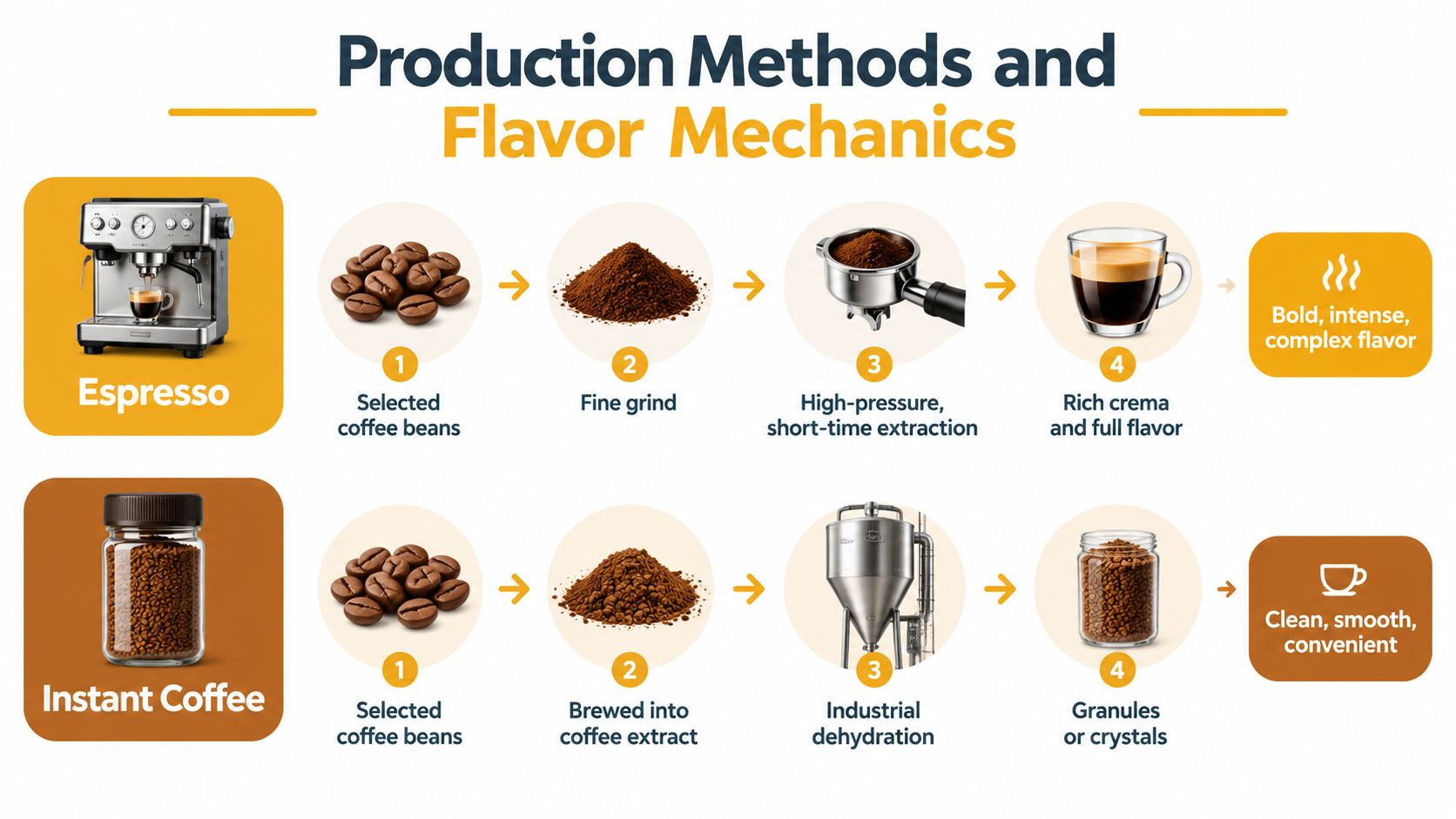
Espresso extracts, instant coffee dissolves
Espresso gives you direct control over grind size, dose, distribution, tamping, water temperature, pressure, and shot time. Each variable affects acidity, bitterness, body, and the balance of compounds entering the cup. A minor change can turn a balanced shot into something harsh, thin, or sour.
Instant coffee has already been brewed and dried before it reaches your kitchen. Its flavor depends on the original coffee, the extraction, dehydration method, and storage. At home, you mainly control the powder dose, water temperature, water volume, and how thoroughly the granules dissolve.
Freeze-drying generally protects aroma more effectively than spray-drying. Processing data report that freeze-dried coffee retains about 17–20% more low-boiling aroma compounds and about 75% more boiling-point volatile compounds than spray-dried soluble coffee, as documented in the analysis cited above. That difference helps explain why a high-quality freeze-dried coffee can smell fuller and taste less flat after reconstitution.
Why the cups feel different
Espresso's high dissolved-solids content gives it weight. Crema creates a temporary foam layer, but it is not stable milk foam or proof of perfect extraction. Texture comes from concentration, emulsified oils, suspended particles, and the pressure-based brewing method working together.
Instant coffee usually has a cleaner, lighter mouthfeel because it is designed to dissolve in water. Some products clump, leave sediment, or lose aroma quickly, especially when mixed with cooler water. The category itself is not the problem. Manufacturing choices and formulation determine whether a packet tastes merely functional or genuinely satisfying.
For a practical look at how soluble coffee moves from brewed liquid to a portable product, read Cartograph's explanation of the instant coffee production process. Check a jar or packet for quick dissolution, minimal clumping, a clear aroma after stirring, and flavor that remains noticeable as the cup cools. In a campsite or busy office, those details can matter more than espresso-style texture.
Understanding Caffeine and Serving Sizes
“Which is stronger?” sounds like a simple caffeine question, but it hides two different measurements. Concentration describes caffeine in a given volume, while total caffeine describes what you consume in the whole serving. Espresso usually wins the first comparison, but a larger instant coffee can close the gap or exceed a single shot.
A peer-reviewed chemical analysis measured espresso at 331.59 mg of caffeine per 100 mL, or approximately 3.3 mg per mL. The instant coffee sample contained 124.05 mg per 100 mL, or about 1.24 mg per mL, meaning the espresso sample had roughly 2.7 times the caffeine concentration by volume. The underlying analysis is available in this review of caffeine levels in coffee.
That comparison changes once serving size enters the picture. A standard espresso reference serving is about 40 mL, while instant coffee is often prepared as a much larger mug. The same scientific review reported an average of approximately 64 mg of caffeine in 160 mL of instant coffee, showing why a full cup can deliver caffeine comparable to, or greater than, one espresso shot despite its lower concentration.
Three ways to compare strength
| Measurement | What it tells you | Likely result |
|---|---|---|
| Per milliliter | How concentrated the liquid is | Espresso generally comes out stronger |
| Per prepared serving | How much caffeine reaches your cup | The result depends on serving size and recipe |
| Per amount of powder or coffee used | How much raw material contributes | Product formulation and dose become decisive |
This is why “espresso roast” isn't a reliable caffeine prediction. Roast language may describe flavor direction or marketing position, but it doesn't tell you how much coffee was used, how the product was formulated, or how large your drink will be. Dose and preparation instructions are more useful.
Managing your actual intake
If you're sensitive to caffeine, trying to protect sleep, pregnant, or just reducing your intake, measure the recipe you make. Check the product label where available, follow the recommended serving guidance, and remember that adding more instant powder increases the amount delivered even though the drink may not look larger.
The same principle applies to espresso. A short drink can be highly concentrated, but caffeine varies substantially among beans, doses, extraction methods, and commercial products. One study of commercial espresso coffees found servings ranging from 51 to 322 mg, a more than sixfold difference, so the word “espresso” alone can't tell you the dose.
For a broader practical reference, Cartograph's guide to coffee caffeine content is useful when you're comparing recipes rather than relying on café terminology.
Brewing Equipment and Preparation Time
Espresso asks you to build a small system. At minimum, you need an espresso machine and ground coffee, while a grinder gives you much better control over freshness and grind size. You'll also need to distribute the grounds, tamp evenly, lock in the portafilter, start the shot, and clean the parts that touched coffee.
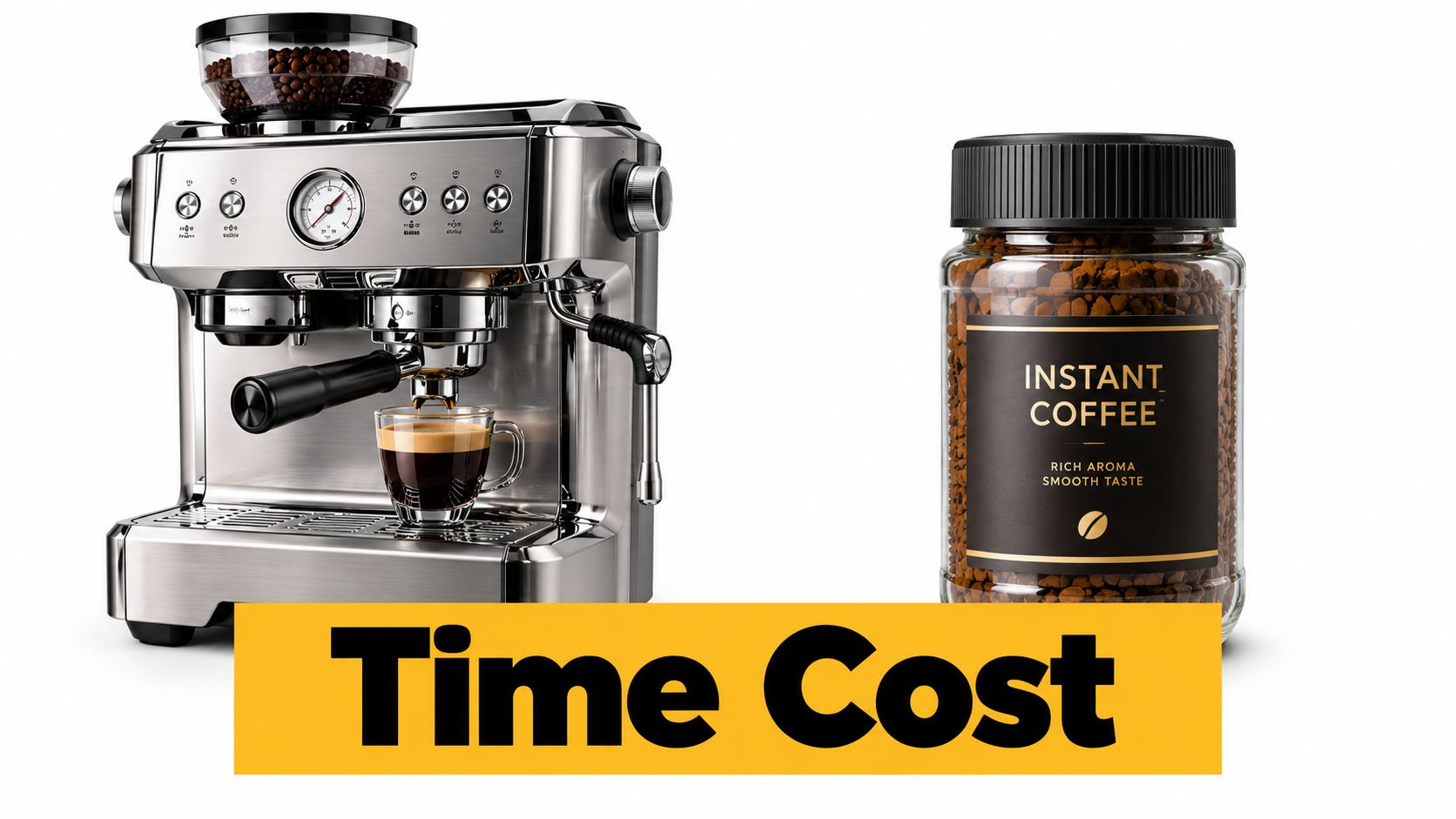
The extraction itself is short, but the routine includes everything around it. You may need to warm the machine, purge the group head, weigh or dose coffee, adjust the grinder, and rinse the basket. In a busy kitchen, that maintenance is often the primary time cost.
Instant coffee removes nearly all of that friction. Boil only the water you need, add the powder to a mug, pour, stir, and adjust. A compact kettle works in an office or hotel room, and a camping stove can handle the same basic job outdoors.
The fastest coffee is the one that fits the equipment you already have.
Water temperature still affects the result. Very hot water can make some instant coffees taste harsher, while insufficiently hot water may leave granules floating or clumped. Stirring the powder with a small amount of water first can help create a smoother mixture before you add the rest.
Espresso without a dedicated machine is possible, but the alternatives change the drink rather than reproducing a café setup. Moka pots, AeroPress brewers, manual lever devices, and concentrated brewers each use different pressure and filtration systems. Cartograph's guide to making espresso without a machine explains where those methods fit and where their results differ.
If you're comparing the routines visually, this short demonstration can help you think about the practical sequence rather than just the final cup.
The important trade-off is mental load. Espresso offers control, but it also gives you more ways to get a poor result. Instant coffee offers fewer variables, which is exactly why it works so well on rushed mornings.
Best Use Cases for Every Lifestyle
A hotel room exposes the difference immediately. If you have a kettle, a mug, and limited counter space, instant coffee gives you a hot drink without carrying a grinder, grounds, filters, or cleaning equipment. It's not trying to reproduce the crema of a café shot. It's solving the travel problem cleanly.
Camping makes the case even more strongly. A packet of freeze-dried coffee weighs little, stores neatly, and dissolves in the same hot water you've already heated for breakfast. There's no spent puck to dispose of and no fragile brewing setup to protect in a pack. For a cold morning when the priority is getting moving, that simplicity often matters more than maximum flavor complexity.
Where espresso earns its place
At home, espresso becomes more compelling when the ritual is part of the pleasure. The grinder noise, the smell of freshly ground coffee, the act of adjusting a shot, and the ability to build a cappuccino or flat white all add value. Someone who enjoys that process won't experience the equipment as a burden.
An office kitchen sits between those extremes. An espresso machine may produce excellent coffee, but shared equipment needs regular cleaning and consistent handling. Instant coffee is easier to keep available for a team because each person can prepare a cup without taking over the counter or learning a technical workflow.
Sustainability depends on the serving
Environmental comparisons also change with the question being asked. A 2024 University of Manchester assessment found that instant coffee had the lowest environmental impacts and costs when comparing one serving and one litre of coffee, while espresso was the worst option for the one-litre functional unit. The assessment is summarized in the University of Manchester research record.
That result doesn't mean instant coffee is always the greenest choice in every scenario. Home preparation matters. Heating water, operating an espresso machine, leaving equipment on standby, cleaning, and wasting unused water can all affect the result. Brewing one small espresso and preparing a large amount of instant coffee are different behaviors, so the serving size and routine should be part of the comparison.
Use the smallest amount of water you need, whether you're filling a kettle at camp or preparing a drink at home.
For a family, instant coffee can also make portion control easier because each person can choose the amount of powder and water. For a coffee enthusiast, espresso may reduce the need for a separate brewed drink when making milk-based beverages. The better option is the one that produces the drink you'll finish, without unnecessary equipment use or wasted ingredients.
How to Choose the Right Option for You
Choose espresso when you want concentrated flavor, crema, freshly extracted aromatics, and the ability to make milk drinks. It suits a stable home setup, a person who enjoys dialing in coffee, and anyone who sees preparation as part of the experience.
Choose instant coffee when your priorities are portability, predictable preparation, low cleanup, and flexible serving size. It fits hotel rooms, office drawers, family kitchens, road trips, and campsites. A high-quality freeze-dried product can offer a more expressive aroma than basic soluble coffee, particularly when it dissolves cleanly and retains volatile compounds well.
A simple decision test works better than asking which category is objectively stronger:
- No machine available: Use instant coffee or a manual brewer that matches your travel setup.
- You have time and enjoy technique: Espresso gives you more control and a more textured drink.
- You're monitoring caffeine: Check the label, measure the dose, and calculate the whole serving rather than judging by roast name.
- You're making one quick cup: Instant usually creates less work and less cleanup.
- You're making a milk-based café drink: Espresso provides the concentrated base and texture many recipes depend on.
Cartograph Coffee offers organic freeze-dried instant coffee packets designed to be prepared with hot water, including products positioned as instant espresso for people who want a more concentrated style without espresso equipment. Visit Cartograph Coffee to compare its soluble coffee options for home, work, travel, or the trail.