By 7 a.m., the kitchen can already feel too warm for a steaming latte. You want something cold, but you still want the concentrated aroma and rounded milk texture of espresso. That's where an iced flat white earns its place. It isn't a hot drink poured onto ice. It needs its own balance of espresso, milk, texture, and dilution.
The method below treats the drink as a practical coffee design problem. You'll find a machine recipe, an instant version for offices and campsites, a comparison with iced lattes and cortados, milk guidance, and fixes for the failures that make this drink taste thin or watery.
What an Iced Flat White Actually Is
You take the first sip and the coffee should still lead, even as cold milk and melting ice soften it. That requires a concentrated espresso base, plenty of solid ice, and a restrained amount of milk foam. An iced flat white is therefore a separate cold drink, not just a hot flat white poured over ice.
Its balance depends on proportion. The familiar hot version generally uses 100–130 ml of milk, while iced recipes tend toward a double espresso, cold milk, and little or no foam. This flat white preparation guide also separates the drink from a larger, milkier latte. For an iced version, leave enough room for dilution without allowing the ice to erase the shot's sweetness and aroma.
The history is tied to Australia and New Zealand during the 1980s, although the details remain disputed. The most cited Australian milestone connects the name with Alan Preston's Moors Espresso Bar in Sydney in 1985. New Zealand accounts often place the drink's development in Wellington around 1989. The Culture Trip's account of the flat white's history records that contested Australasian background.

The working blueprint
Build the drink from four parts:
- Espresso: A short, intense double shot supplies the aromatic centre.
- Milk: Cold milk rounds the coffee while keeping its flavour present.
- Ice: Fresh, hard ice chills the drink, then gradually adds dilution.
- Foam: Optional cold foam contributes body, not a stiff cap.
The drink should stay compact, smooth, and espresso-forward. A latte becomes longer and milkier as its milk volume increases, while cold brew gets its character from a different brewing method. Serve an iced flat white in a small glass rather than a large tumbler. You can also browse coffee cups and saucers suited to shorter milk drinks.
Barista rule: If the coffee disappears after the first sip, the drink has become an iced latte in everything but name.
Building the Classic Espresso Version
An iced flat white needs its own build. Start with a concentrated espresso base, use less milk than an iced latte, and let the ice provide controlled chilling rather than watery dilution. A sound baseline uses an 18 g dose, extracted to about 36 g out in 27–32 seconds, a target supported by technical flat white guidance. A ristretto profile can stop earlier while keeping the dose constant, producing a denser, sweeter cup when the coffee suits it.
Chill the serving glass before brewing. Add fresh, hard ice just before assembly, then pour the espresso over it so the shot starts cooling immediately. Do not leave espresso in a warm cup while texturing milk. The delay dulls aroma and gives the ice more time to melt.
A repeatable home sequence
- Prepare the coffee. Grind finely and dose 18 g into the portafilter. Aim for about 36 g of espresso, or choose a shorter yield if you are deliberately making a ristretto.
- Cool the vessel. Use a chilled glass and fresh ice. Soft, wet cubes create dilution before the coffee reaches the glass.
- Texture the milk cold. Pour 100–130 ml of cold milk into a French press and pump the plunger repeatedly until it looks glossy and lightly aerated. A handheld frother also works. Stop while the foam remains pourable, not spoon-stiff.
- Combine low and gently. Pour a small amount of milk into the espresso from close to the surface. This helps the milk integrate instead of sitting as a separate layer.
- Finish with restraint. Raise the pour slightly near the end and add a thin foam finish. An iced flat white should not carry a cappuccino-sized mound.
The espresso-to-milk balance can shift with the coffee and your preference. Some guidance places the relationship near 1:2, while other references use a broader 1:3 coffee-to-milk range. Use enough milk to round acidity and bitterness, then stop before the espresso loses its presence. This flat white brewing guide also cautions that oversized cups and excess milk move the drink toward latte territory.
Classic espresso iced flat white component ratios
| Component | Amount / Setting | Purpose |
|---|---|---|
| Coffee dose | 18 g | Creates a substantial double-shot base |
| Espresso yield | About 36 g, or a shorter ristretto yield | Preserves intensity over ice |
| Extraction time | About 27–32 seconds | Gives you a practical starting point for dialing in |
| Cold milk | Roughly 100–130 ml | Adds sweetness and body without overwhelming the coffee |
| Ice | Fresh, hard cubes | Chills the drink while limiting early dilution |
| Foam | Thin and integrated | Adds texture without making the drink airy |
Taste the espresso before changing the milk. Sourness usually calls for more extraction, while bitterness often calls for a shorter yield or a coarser grind. For the effect of yield on concentration and balance, consult this guide to espresso shot size. Then adjust one variable at a time, because changing the shot, milk, and ice together hides the cause of a poor result.
Making It with Instant Coffee Anywhere
Instant coffee can produce a convincing travel version when you treat it as a concentrate rather than a normal mug. The objective is to create a small, strong coffee base that can withstand cold milk and ice.
Use 2 teaspoons, about 4 g, of instant coffee dissolved in 60 ml of water, following the practical ratio in the supplied instant method. A single-serve organic instant sachet can replace the powder. Use cold or room-temperature water when convenience matters, but make sure every granule dissolves before adding milk. Hot water dissolves powder more easily, yet it can also warm the drink and accelerate melting, so use only enough warmth to dissolve a stubborn blend.
The jar method
- Add the instant coffee and water to a sealable jar.
- Pour in 120 ml of cold milk.
- Add four or five solid ice cubes.
- Seal the jar and shake hard for 10–15 seconds.
- Open carefully, taste, and adjust with a little more milk if the coffee is too aggressive.
Shaking performs two jobs at once. It chills the mixture and incorporates air into the milk, producing a loose cold foam. The result won't copy espresso's crema or texture, but it can still deliver the same useful structure, concentrated coffee, restrained milk, and a cold finish.
For a no-shake setup, combine the coffee concentrate and milk in a tall container, then use a battery frother for about 20 seconds. Keep the whisk below the surface at first, then bring it closer to the top briefly. Too much air makes a large, unstable foam layer instead of a smooth drink.

Choose freeze-dried instant coffee with a clean aroma and visible roast information where possible. Weaker organic blends may need less milk rather than more powder, because extra powder can increase bitterness quickly. For more background on selecting and preparing instant coffee, consult Peak Performance's coffee guide.
This instant coffee method for travel works well in a hotel room, office kitchen, or campsite because it needs no grinder, portafilter, or steam wand.
Keep the foam modest. The drink should still taste like cold coffee with milk, not a shaken dessert.
Iced Flat White vs Iced Latte vs Cortado
Names vary between cafés, so the cup's actual design matters more than the label. Compare the drinks by coffee concentration, milk volume, and texture rather than assuming every menu uses the same recipe.
| Drink | Espresso | Milk Volume | Texture | Glass Size | Caffeine Strength |
|---|---|---|---|---|---|
| Iced flat white | Usually a double espresso or short espresso | Smaller than a latte, commonly around 100–130 ml | Integrated cold milk, optional thin foam | Compact serving glass | Strong coffee presence |
| Iced latte | Single or double espresso | Larger, often substantially more than a flat white | Cold milk, sometimes cold foam | Larger glass | Milder per sip |
| Iced cortado | Often a short espresso serving | Close to the espresso volume | Very little foam | Small glass | Most intense and compact |
The cortado is the choice for a short, direct coffee experience. Its near-even coffee-and-milk structure keeps the espresso prominent, with little foam to interrupt the liquid texture.
The iced flat white is the middle option. It gives the espresso more room than a latte, but milk contributes enough sweetness and weight to make the drink feel rounded. Cold foam can add a velvety surface, though it shouldn't dominate the cup.
The iced latte suits anyone who wants a longer, softer drink. More milk reduces coffee intensity and creates more space for syrups, flavoured sauces, or alternative milks. That flexibility is part of why cold espresso drinks have become routine rather than occasional summer orders. A 2026 trend report describes iced latte and iced flat white as mainstream or table-stakes choices in the UK and US, with customization such as cold foam and syrups increasingly common. The 2026 coffee trends report provides that market context.
An iced flat white isn't a watered-down latte. It's a smaller, more concentrated drink whose success depends on keeping milk and dilution under control.
Choosing the Right Milk for Cold Foam
Milk changes the drink's sweetness, weight, and stability more than most home recipes admit. Cold foam doesn't receive the heat-assisted structure of steamed milk, so the starting liquid, protein content, and frothing method all matter.
Whole dairy milk remains the benchmark. Its fat and protein give the foam a rich mouthfeel and a stable, lightly sweet profile. It works best when you want the espresso to taste rounded without adding syrup.
Barista oat milk is the closest plant-based substitute for that broad, creamy texture. It often brings more cereal-like sweetness and can soften a sharp espresso. Look for a formulation designed for coffee, since these products are generally engineered to handle frothing better than ordinary oat drinks.
Barista soy milk can create a firm foam because of its protein content. That strength is useful, but its savoury or caramel-like flavour can compete with delicate light-roast coffees. It pairs more comfortably with chocolate-forward espresso.
Almond milk produces a lighter drink with a distinct nutty note. Its foam usually collapses sooner than dairy, oat, or soy, so it's best when you're serving immediately or adding a flavour that makes the almond character intentional.
Match the milk to the drink
- For maximum body: Choose whole dairy and keep the foam thin.
- For a dairy-free default: Choose barista oat when you want a rounded, café-style result.
- For firmer foam: Try barista soy, especially with a darker espresso blend.
- For a lighter, flavoured drink: Use almond milk with vanilla or nut syrup.
Milk alternatives can change both taste and foam behaviour, which is why current flat white discussions increasingly focus on barista formulations rather than treating all plant milks as interchangeable. The guide to frothing milk for coffee is useful when you're testing different tools and textures.
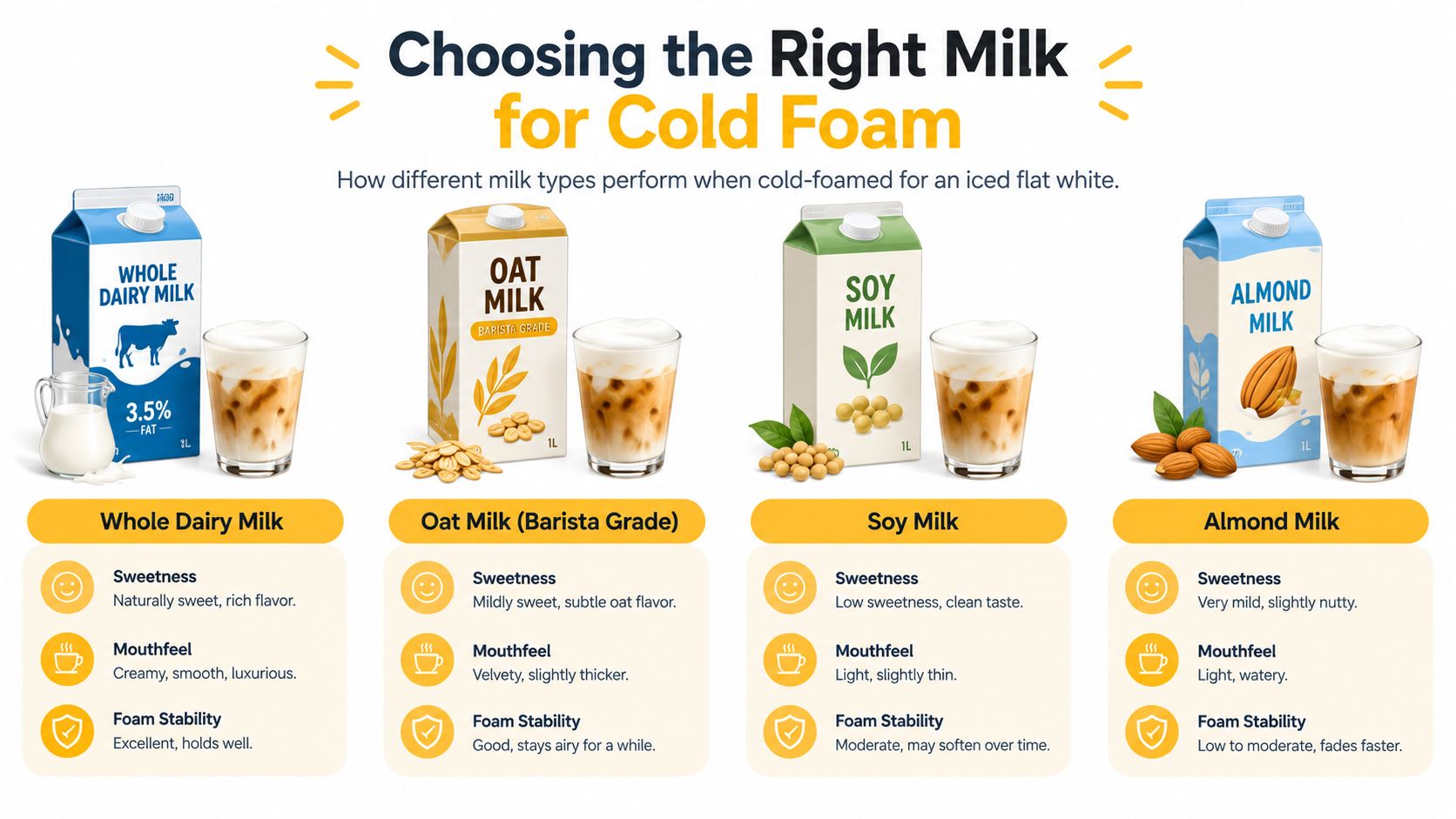
Without a steam wand, use a French press or handheld frother for roughly 20–30 seconds, then stop as soon as the milk looks glossy and pourable. Cold foam should integrate into the coffee. If it sits as a dry cap, you've over-aerated it.
Common Mistakes That Ruin the Drink
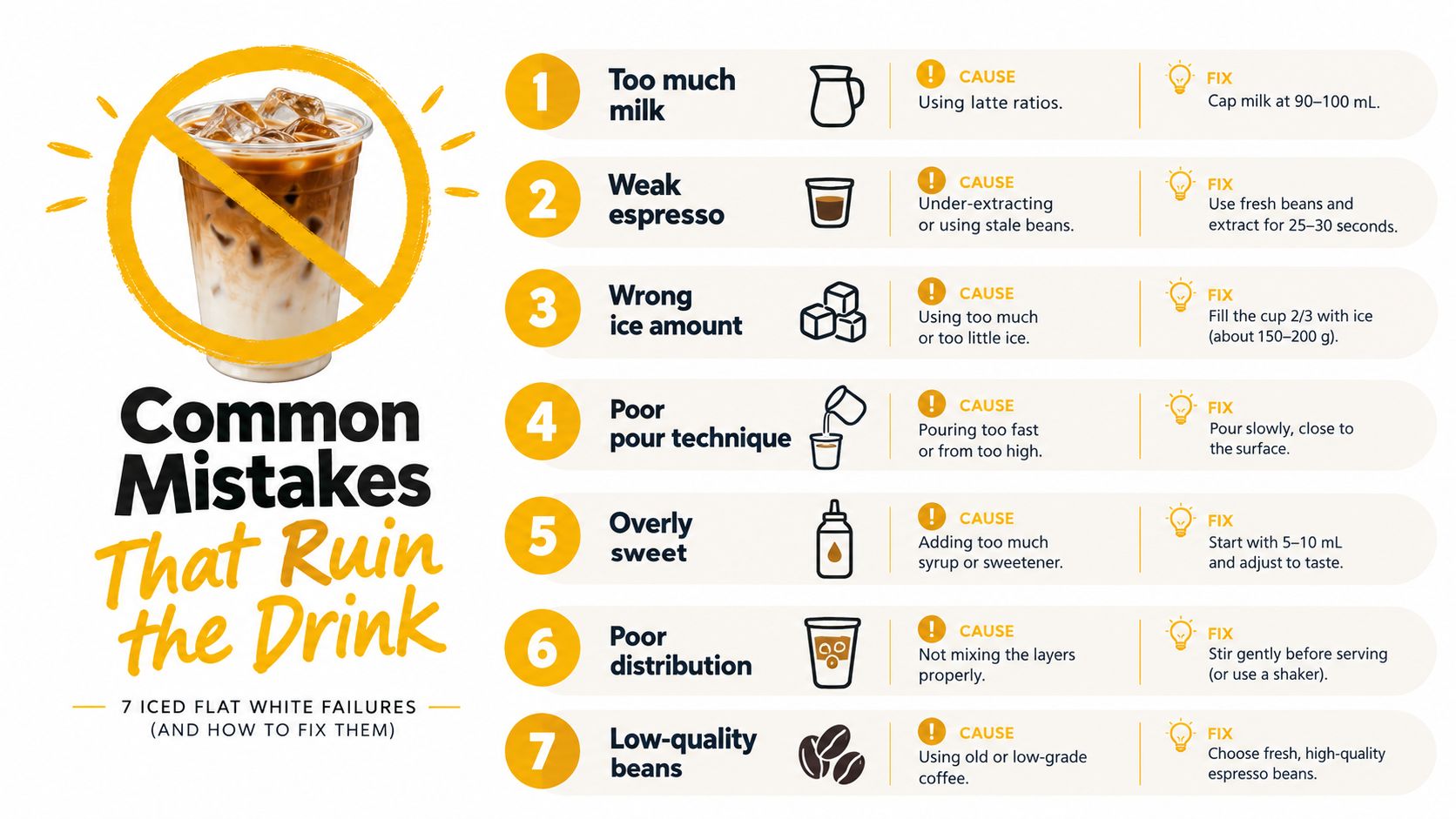
An iced flat white usually fails through poor balance, not a lack of expensive equipment. The common mistake is treating it like an iced latte, then adding more milk and a larger glass until the espresso disappears. Build it as a cold drink with its own ratio, milk volume, and dilution control.
Run this quick diagnostic
- Too much milk: Latte-style proportions bury the espresso. Measure a smaller amount and stop when the coffee stays present from the first sip.
- Weak shot: A single shot or thin extraction fades under ice. Start with the 18 g in, 36 g out baseline described earlier, then adjust by taste.
- Watery foam: Excessive aeration creates large bubbles that collapse quickly. Froth only until the volume rises modestly and the texture becomes glossy.
- Warm milk: Hot milk melts ice immediately and dulls the finish. Use milk straight from the refrigerator and froth it cold.
- Diluted coffee: Ice begins melting while the drink waits for assembly. Chill the glass, prepare the milk before extraction, and combine everything as soon as the shot is ready.
- Separated foam: Milk that has not been mixed evenly pours in layers. Rotate the container gently before pouring so the liquid and foam recombine.
- Flat flavour: Stale coffee loses aroma before milk and ice can support it. Grind immediately before extraction, and use beans that still smell lively when you open the bag.
A stronger coffee is not always the answer. An overly harsh shot can taste worse once chilled. Protect concentration with a sensible yield, a restrained milk volume, cold ingredients, and quick assembly.
Cold-build principle: The espresso should be the warmest ingredient in the glass. Milk and ice need to be ready before it arrives.
If the finished drink tastes watery, inspect the order of operations first. Ice left in a warm glass while you prepare the other components has already added dilution. If the drink tastes milky, measure the milk instead of filling the cup by eye. Small adjustments to milk and ice usually improve the result more than changing equipment.
Quick Variations, Storage, and Final Tips
Use the classic build as a base, then change one variable at a time. A small amount of flavour can support the coffee, while a large amount turns the drink into a sweet milk beverage.
- Vanilla: Add 1–2 teaspoons of vanilla syrup to a roughly 6 oz serving before adding milk.
- Hazelnut: Add 1–2 teaspoons of hazelnut syrup and pair it with a chocolatey espresso blend.
- Mocha: Stir cocoa-based syrup into the espresso while it's still warm, then add cold milk and ice.
For cold foam, prepare only what you'll use soon. Store it in a sealed jar in the refrigerator for up to 24 hours, then re-whisk before pouring. It may lose some volume during storage, so judge it by pourability rather than trying to restore a large, stiff foam.
Batching works best with the coffee concentrate only. Keep it chilled in a sealed container, prepare fresh ice for each serving, and add milk immediately before drinking. The texture will always be cleaner when the final assembly happens at the last moment.
Before serving, check three things:
- Shot: Is the espresso concentrated without tasting burnt?
- Milk: Is the foam glossy rather than airy?
- Ice: Is the glass cold and the ice solid?
The most useful final formula is simple: concentrated espresso, restrained milk, fresh ice, and cold foam to taste. If you prefer a precise starting point, use a roughly 1:1 espresso-to-milk ratio by weight, then adjust the milk only after tasting the finished drink.
Cartograph Coffee focuses on organic instant coffee designed for quality and convenience at home, at work, and outdoors. Visit Cartograph Coffee to explore coffee made for a better iced flat white when an espresso machine isn't within reach.