If you love coffee but can't stand the acidic bite, you're not alone. The good news is, you can make your daily cup much smoother and easier on your stomach with a few simple tweaks. Things like choosing dark roast beans, using a coarser grind, trying a cold brew, or even just adding a splash of milk can dramatically lower the perceived acidity.
Your Guide to a Gentler Cup of Coffee
Many people think they have to give up their morning coffee to avoid digestive discomfort, but that's simply not true. That bright, sharp acidity you taste is a natural part of coffee's complex flavor, but for those with sensitive stomachs or acid reflux, it can be a real problem. Thankfully, you have more control over the acidity in your cup than you might think.
This isn't about getting a Ph.D. in chemistry or buying a bunch of expensive gear. It’s about making small, smart changes to your routine. When you understand what affects acidity—from the coffee bean’s origin to the water in your kettle—you can brew a cup that’s both delicious and gentle.
Key Strategies for Lowering Coffee Acidity
Taming the acid in your coffee really boils down to three areas you can control: the coffee you buy, how you brew it, and what (if anything) you add to it afterward.
- Start with the Right Beans: Look for beans grown at lower altitudes, like those from Brazil, Sumatra, or Peru. They tend to be naturally less acidic. Also, a darker roast level (think French or Italian roast) is your best friend here, as the longer roasting process breaks down many of the acidic compounds.
- Adjust Your Brewing Technique: How you brew makes a huge difference. Cold brew is famously low in acid because the cold water just doesn't extract the acidic compounds the way hot water does. Even with your regular hot coffee, simple adjustments like using a coarser grind size or slightly cooler water (aim for 195°F instead of 205°F) can significantly smooth things out.
- Use Simple Additives: Sometimes the easiest solution is the best one. A splash of milk, cream, or a dairy-free alternative helps neutralize acid. For a more direct approach, a tiny pinch of baking soda can balance the pH without really changing the taste.
This flowchart maps out the main paths you can take to brew a less acidic cup, covering everything from your bean choice to simple add-ins.
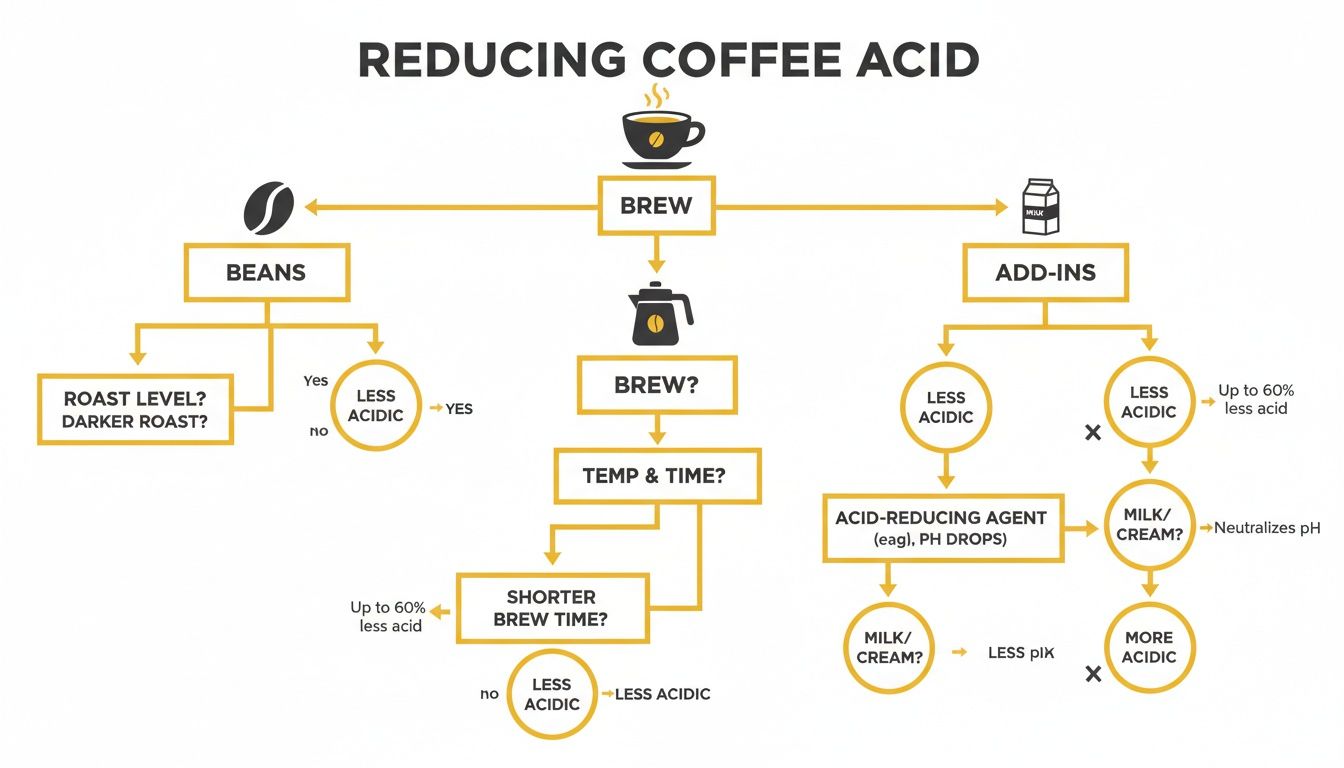
As you can see, your journey to a smoother coffee can start in several places. This gives you the flexibility to find the perfect solution that fits your taste and daily routine.
Quick Guide to Reducing Coffee Acidity
To make it even easier, I've put together a quick summary of the most effective techniques. Think of this as your cheat sheet for a gentler brew.
| Technique | Impact on Acidity | Best For |
|---|---|---|
| Choose Dark Roasts | High | Anyone who enjoys bold, roasty flavors and wants a simple starting point. |
| Use a Coarser Grind | Medium | Drip, pour-over, and French press users looking for a quick adjustment. |
| Try Cold Brewing | Very High | People with very sensitive stomachs or those who enjoy a super-smooth, mellow coffee. |
| Add Milk or Cream | Medium | Latte and cappuccino lovers, or anyone who doesn't drink their coffee black. |
| A Pinch of Baking Soda | High | Black coffee drinkers who need to neutralize acidity without adding calories or changing the flavor. |
Whether you start by changing your beans or just tweaking your brew time, each path leads to a more comfortable and enjoyable coffee experience. You don't have to sacrifice flavor for comfort.
Choose the Right Beans and Roast Level
If you want to really get a handle on reducing the acid in your coffee, you have to start at the source: the bean itself. The path to a smoother, gentler cup begins long before you even think about brewing. It all comes down to the origin of the coffee, how it was processed, and how dark it was roasted.
Start With Low-Acid Origins
Not all coffee is created equal, especially when it comes to acidity. Geography is a huge factor here. Beans grown at high altitudes in rich volcanic soil—think Kenya or Ethiopia—are famous for their bright, complex, and yes, highly acidic flavor profiles. They’re delicious, but they might not be your stomach’s best friend.
On the flip side, coffees from lower elevations tend to be naturally less acidic.
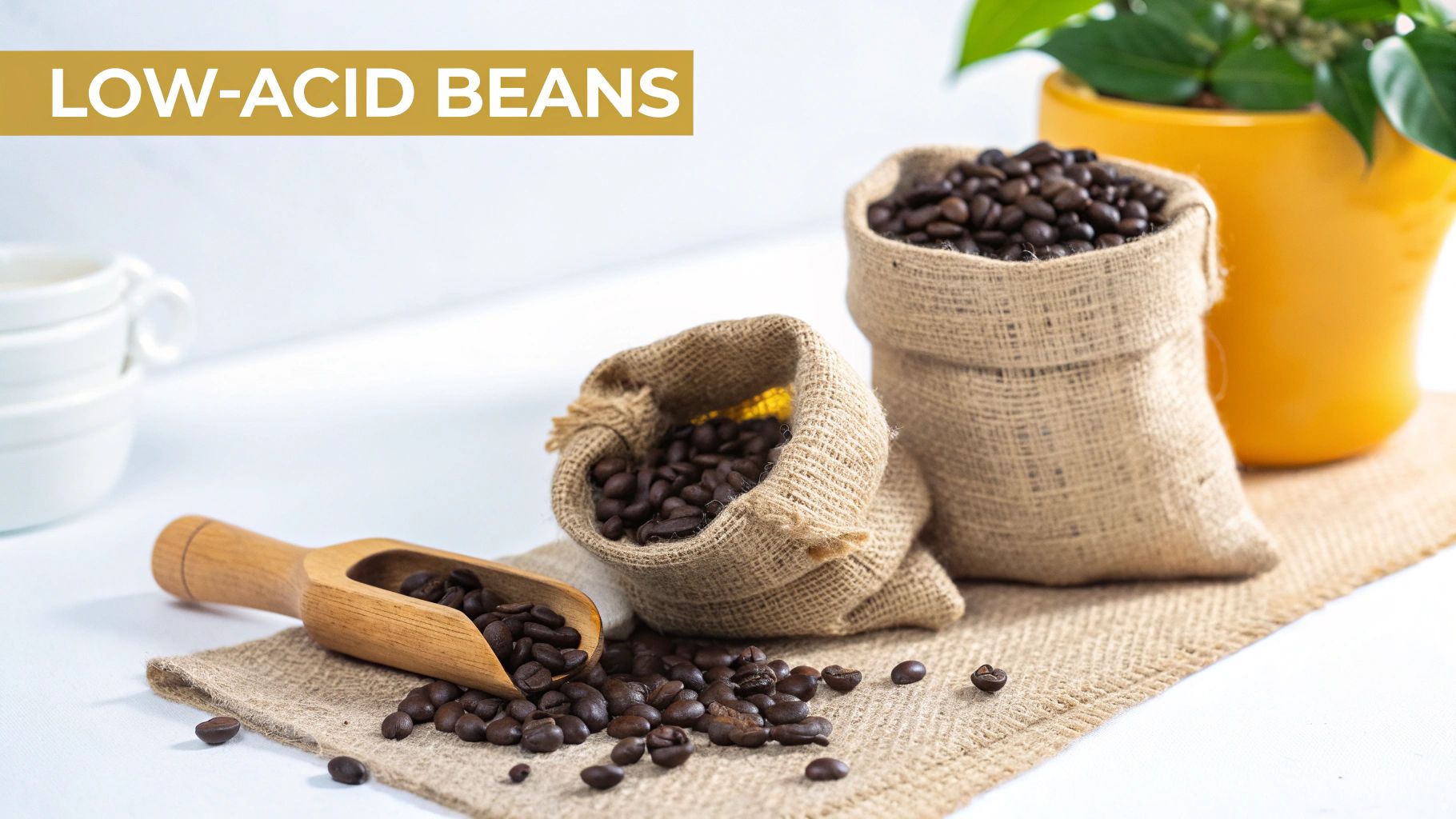
- Indonesian coffees, like those from Sumatra, are well-known for their deep, earthy, full-bodied flavors with almost no acidic bite.
- Brazilian beans often have nutty and chocolatey notes, creating a smooth, mellow profile that makes them a staple in low-acid blends.
- Peruvian coffees can also deliver a mild, gentle cup with a nicely balanced and less sharp character.
Keep an eye out for these origins when you're buying beans. It’s a simple switch that can make a massive difference.
Look for Specific Processing Methods
Once the coffee cherries are picked, they have to be processed to get to the bean inside. The technique used here directly impacts the final acidity in your cup. The two most common methods you'll see are "washed" and "natural."
Washed coffees have the fruit pulp scrubbed off before the bean is dried. This technique generally results in a cleaner, brighter, and more acidic coffee. Natural processing, however, means the entire cherry is dried first, fruit and all. This allows the fruit’s sugars to infuse the bean, creating a sweeter, fruitier, and noticeably less acidic flavor. For a lower-acid brew, a naturally processed bean is definitely the way to go.
Pick a Darker Roast
Out of everything you can control when buying coffee, the roast level is probably the most powerful. The roasting process is where the raw, green coffee bean is transformed, and its chemical makeup—including its acidity—is fundamentally changed.
The longer a coffee is roasted, the more the heat breaks down the chlorogenic acids that give coffee its bright, tart flavor. This is why a dark roast almost always tastes smoother and less acidic than a light roast.
Think of it like making toast. Lightly toasted bread is still soft and mild, but a dark piece of toast gets crunchy, bold, and loses that original doughy taste. Coffee is pretty similar:
- Light Roasts: These roasts are all about preserving the bean's unique origin flavors, which also means they have the highest acidity.
- Medium Roasts: Here you get a nice balance between acidity and the deeper flavors developed during roasting. It's a popular sweet spot for many.
- Dark Roasts (French, Italian, Vienna): These have the lowest acidity. The long roasting time minimizes acidic compounds, leaving you with a bold, rich, and smooth cup.
For a reliably low-acid coffee, a dark roast is your safest bet. Just by choosing a low-acid variety like a naturally processed Indonesian Sumatra or a Brazilian bean, you can drop the acidity by 25-40%. These beans simply contain less chlorogenic acid to begin with, making for a much more stomach-friendly brew.
Picking the right bean is a foundational first step. To learn more, check out our guide on the different types of coffee beans and what makes each one unique.
Picking the right beans is a huge step, but don't stop there. How you actually brew your coffee is where the magic really happens when it comes to taming that acidic bite. Think of it this way: your brewing technique gives you direct control over the final flavor, and a few small tweaks can make a massive difference in smoothness.
It all boils down to a concept called extraction—which is just a fancy way of saying "how water pulls flavor out of coffee grounds." If you can get a handle on the key variables like grind size, brew time, and water temperature, you can steer the extraction process to pull out the sweet, rich flavors you want while leaving the harsher, acidic compounds behind.
Dial In Your Grind Size
Your grinder is easily one of the most powerful tools in your coffee-making arsenal. The size of your coffee grounds dictates how quickly water can get in there and start extracting flavors. A really fine grind is like sand; it has a ton of surface area, which means everything—including the acids—gets pulled out very, very quickly.
For a smoother, less acidic cup, the fix is pretty straightforward: go with a coarser grind. When the grounds are larger, they have less surface area, which slows the whole extraction process down. This gives you more wiggle room to get those desirable mellow notes without accidentally overdoing it and getting a flood of sourness.
A good rule of thumb:
- French Press or Cold Brew: You'll want a very coarse grind, something that looks like rough, cracked peppercorns.
- Drip Machines: Try backing off your usual setting to a medium-coarse grind.
This one simple change prevents the water from yanking out too many acidic compounds right at the start.
Get a Handle on Brew Time and Temperature
Next up are brew time and water temperature. The longer coffee grounds sit in hot water, the more stuff gets pulled out of them. A shorter brew time can be your friend here, helping you cut off the process before the really sharp, acidic notes have a chance to dominate the cup.
Water temperature is just as crucial. Using water that’s boiling or too hot is a classic mistake that can scorch the grounds, which really only highlights acidity and bitterness.
The sweet spot for water temperature is just off the boil, somewhere between 195°F and 205°F (90°C to 96°C). It's hot enough to do its job but gentle enough to avoid scalding the coffee.
Let's say your automatic drip machine keeps giving you a sour cup. It's likely brewing too fast. If you can, switching to a pour-over gives you manual control over how quickly you add the water, letting you manage that contact time yourself.
By pairing a coarser grind with a well-managed brew time and the right water temperature, you’re creating the perfect recipe for a balanced, low-acid brew. For a deeper dive, check out our guide on the best water temperature for brewing coffee.
Using Cold Brew to Minimize Acidity
If you're really looking for a game-changer in the quest for low-acid coffee, cold brew is where it's at. This isn't just a coffee shop trend; it's a completely different approach to extraction that yields a coffee that's incredibly smooth and easy on the stomach.
The secret is simple: time over temperature.
Instead of blasting coffee grounds with hot water, the cold brew method uses a long, slow steep in cold or room-temperature water. We're talking anywhere from 12 to 24 hours. This patient process is remarkably selective. It coaxes out all the sweet, mellow, and chocolatey flavor notes while leaving behind a significant portion of the compounds that create that sharp, acidic bite.
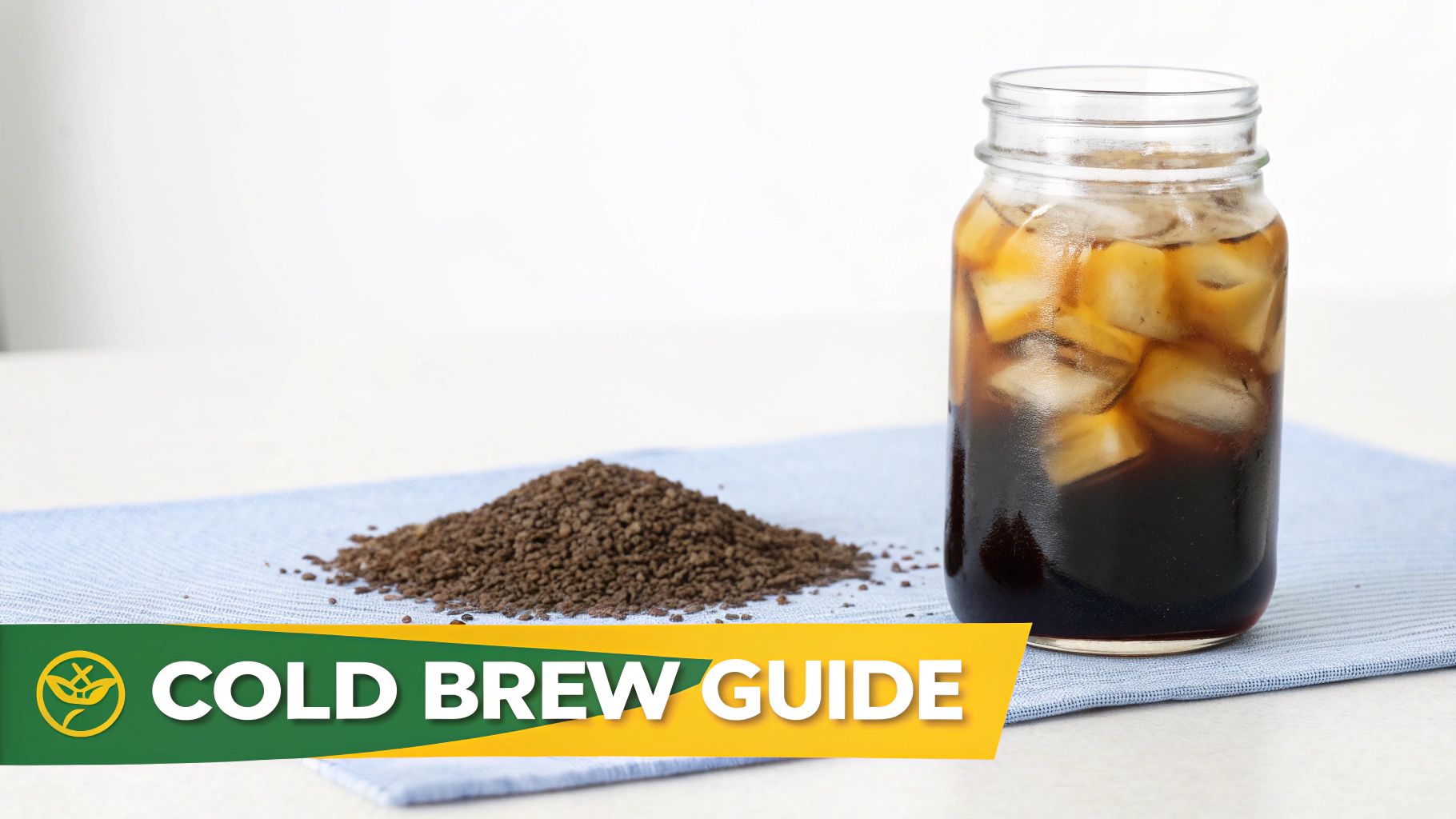
The result is a coffee concentrate that's naturally lower in perceived acidity and bitterness. The difference is dramatic—cold brew can cut acidity by as much as 70% compared to a standard hot brew. The science backs this up, too. A typical cup of hot coffee has a pH between 4.8-5.2, while cold brew lands in a much gentler range of 5.9-6.2. It's easy to see why its popularity has exploded, a trend you can explore further with the latest coffee statistics on everydaypeoplecoffeeandtea.com.
How to Make Low-Acid Cold Brew at Home
The best part? Making fantastic cold brew at home doesn't require any fancy gadgets. All you need is a jar, a filter, coffee, and water.
-
Start with a Coarse Grind: This is non-negotiable. You want your grounds to look like coarse breadcrumbs. If you go too fine, you'll end up with a muddy, sludgy brew that’s difficult to filter and tastes over-extracted.
-
Get Your Ratios Right: A great starting point is a 1:8 ratio of coffee to water by weight. If you don't have a scale, a good ballpark is 1 cup of whole beans (which you'll grind) to 8 cups of cold, filtered water. Just toss it all in a big Mason jar or a pitcher.
-
Let It Steep: Give it a good stir to make sure all the grounds are saturated. Then, cover it and let it hang out. You can leave it on the counter or pop it in the fridge for at least 12 hours, but I find the magic really happens closer to 24 hours. The longer it steeps, the stronger it gets.
-
Strain and Store: Once the time is up, carefully strain the coffee. You can use a fine-mesh sieve lined with cheesecloth or even a large paper coffee filter set in a funnel. Just be patient and let gravity do the work. What you're left with is a rich cold brew concentrate.
Remember, you've just made a concentrate, so it's going to be potent! The standard way to serve it is diluted 1:1 with cold water or milk over ice. Feel free to adjust that ratio to find your perfect strength. If you want to dive deeper, we break down everything you need to know about what is coffee concentrate in our guide.
And here’s a pro tip for when you're short on time: this method even works with a high-quality instant coffee like Cartograph Coffee. Just mix a serving with cold water, give it a stir, and you have an instant low-acid cold brew without waiting half a day. It's the perfect solution for those busy mornings.
Simple Additives for Instant Acid Reduction
What if you don't want to change your beans or your entire brewing routine? Sometimes you just need a quick fix for a cup that tastes a little too sharp or is making your stomach protest. Good news—a few simple things, many of which are probably already in your kitchen, can neutralize the acid in your cup right now.
One of the easiest yet most effective tweaks is to look at your water. Switching to alkaline water can make a massive difference. If your brewing water’s pH is bumped up from the typical neutral 7.0 to around 8.5-9.5, it actively neutralizes some of the coffee's acidic compounds.
This isn't just a guess; studies show that pH-adjusted water can slash a coffee's titratable acidity by a whopping 40-50%. For anyone sensitive to acidity, that’s a game-changer.
Pantry Staples That Do the Trick
Beyond your water source, a few common household items work surprisingly well. They’re cheap, easy to find, and you only need a tiny bit to get the job done.
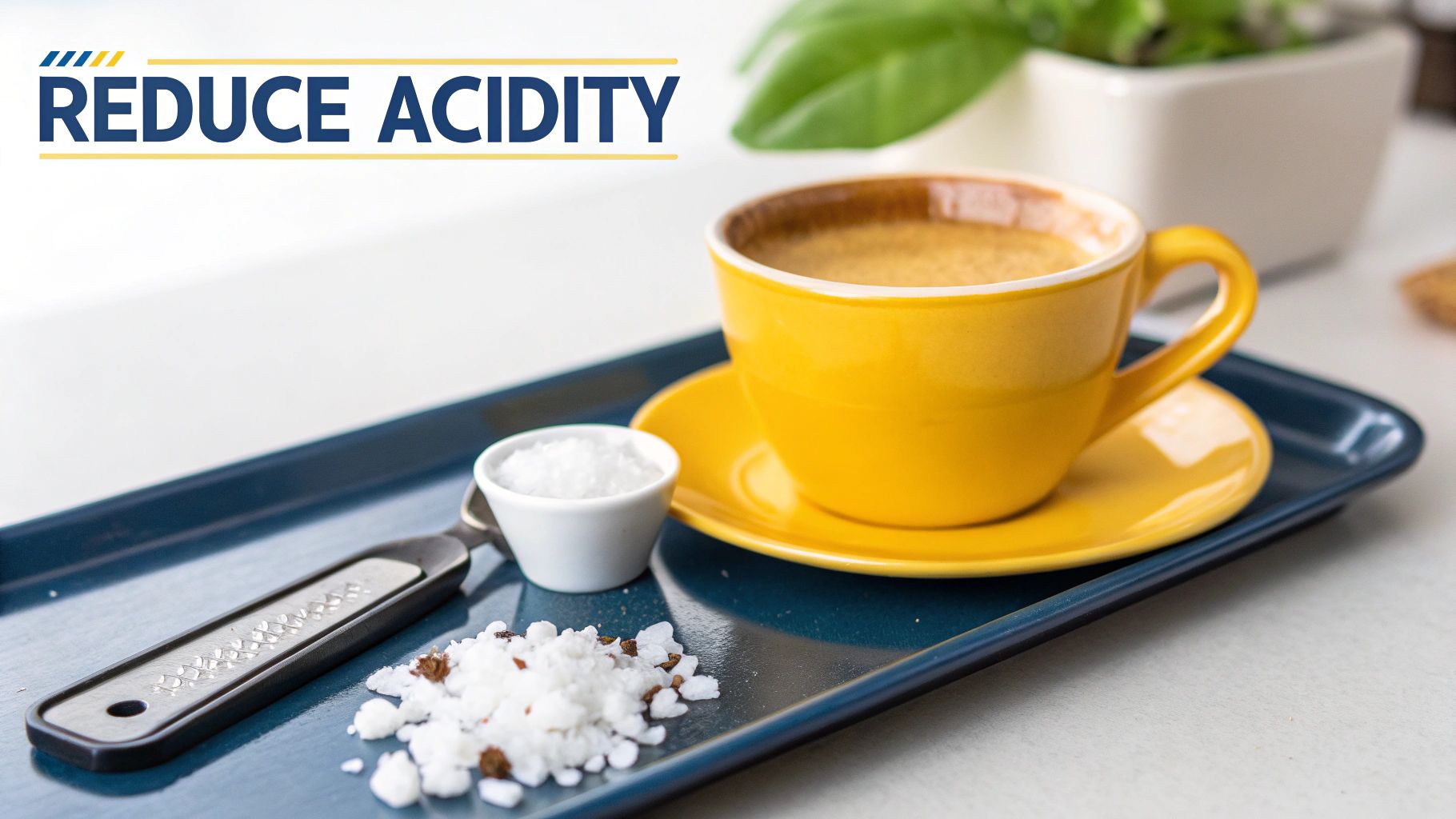
- Baking Soda: A small pinch of baking soda (sodium bicarbonate) is a classic for a reason. It's a powerful alkaline agent that directly counteracts the acid. I mean a really small pinch—think the size of a single grain of rice for an entire cup. Any more, and your coffee will start tasting soapy.
- Crushed Eggshells: This one might sound a bit strange, but it's an old-school trick that campers and cowboys have used for ages. Cleaned and crushed eggshells are made of calcium carbonate, which is alkaline. Just add a small spoonful of the crushed shells directly into your coffee grounds before you start brewing. They’ll help mellow things out during extraction.
- Milk or Cream: This is probably the most common method people use without even thinking about it. Adding dairy or a creamy plant-based milk softens the coffee’s sharp edges. The fats and proteins—especially the casein found in dairy milk—bind to acidic compounds like chlorogenic acids, smoothing out the overall flavor.
My Two Cents: If you're going the baking soda route, add it to your empty mug before you pour in the coffee. Swirl it around with the first splash of coffee to make sure it dissolves completely. This helps avoid any weird gritty texture or pockets of saltiness.
Getting the Best Results With Additives
With any of these additions, subtlety is your best friend. The goal is to take the acidic edge off, not to completely change how your coffee is supposed to taste. Always start with the smallest possible amount and see how it works for you.
When choosing a milk, whole milk or a richer oat milk will do a better job at reducing acidity than skim milk, simply because their higher fat content is more effective at binding to those harsh compounds.
If you’re dealing with general digestive discomfort that goes beyond your morning cup, other natural remedies might be worth looking into. Some people find that adding the best aloe vera juice for acid reflux to their routine offers extra stomach-soothing benefits. With these simple tricks, you have the power to make every cup a little gentler and a lot more enjoyable.
Answering Your Questions About Lowering Coffee Acidity
When you start diving into the world of low-acid coffee, a few questions always seem to pop up. Even after you've got the basics down, you might be left wondering if you're making the best call for your stomach. Let's tackle some of the most common uncertainties to get you on the right path.
Is Instant Coffee a High-Acid Trap?
This one’s a classic "it depends" scenario. The acidity in instant coffee comes down to the quality of the beans and how they were roasted long before they became instant. A cheap, mass-market instant coffee, often made from harsh Robusta beans, can definitely be a gut-punch of acidity.
On the other hand, a specialty instant coffee made from carefully selected low-acid Arabica beans with a darker roast will be inherently gentler. With something like Cartograph Coffee, you actually get more control. Since it dissolves so easily, you can mix it with cold or even alkaline water to dial down the acidity even further, making it a fantastic stomach-friendly option when you're short on time.
Does the Salt-in-Coffee Trick Actually Work?
You've probably seen this hack floating around online. While adding a tiny pinch of salt to your coffee can make it taste less acidic, it's more of a clever trick on your taste buds than a chemical solution.
The salt doesn't actually neutralize any acids or change the coffee's pH. What it does do is suppress our tongue's ability to perceive bitterness. Since our brains often confuse bitterness with the sourness from acid, masking that bitter edge makes the whole cup taste smoother. It works, but be careful—a little goes a very long way.
Does Low-Acid Coffee Taste Boring?
Absolutely not. This is probably the biggest myth out there. People hear "low acid" and think "no flavor," but that's just not the case. All you're doing is taming the sharp, tangy, or "bright" notes that can sometimes overpower everything else.
In fact, dialing back the acidity often lets the deeper, richer flavor notes come forward. By starting with naturally low-acid beans with notes of chocolate or nuts and using a method like cold brew, you can create a cup that is incredibly smooth, complex, and full-bodied—all without that sharp bite.
If you're exploring low-acid coffee because of digestive troubles, you might also find it helpful to look into broader strategies on how to relieve acid reflux for good.
What's the Worst Way to Brew for Acid Sensitivity?
If you have a sensitive stomach, you'll want to be wary of any method that uses a fine grind with a long, hot water extraction. The prime suspect is often a standard automatic drip machine, especially if it runs a bit too long. It’s built to pull out everything it can, and that includes a whole lot of acid.
An espresso shot is another one to watch. It's a small, but highly concentrated, blast of flavor and acidity. For a gentler experience, immersion methods like a French press (just make sure you use a coarse grind!) or, the king of low-acid, cold brew, will always be your best bet.
Ready for a smooth, low-acid coffee you can make in seconds? Cartograph Coffee is crafted from high-quality, organic beans for a delicious and gentle cup, every single time. Discover the difference here.