Yes, organic coffee contains caffeine. One reported 25 mL espresso made from an Arabica–Robusta blend contained approximately 132 mg, while other brews ranged from about 1.036 g/L to 1.962 g/L, depending on preparation.
The popular advice that “organic means healthier, milder, or lower in caffeine” mixes together two separate ideas. Organic describes how coffee is grown and processed. It doesn't describe whether the beans naturally contain caffeine. If the beans are caffeinated Arabica or Robusta, the finished organic coffee will be caffeinated too.
The Organic Coffee Caffeine Myth Debunked
The question “does organic coffee have caffeine?” has a straightforward answer: yes. The organic label doesn't remove caffeine, reduce it automatically, or turn ordinary coffee into a gentler drink. Caffeine occurs naturally in coffee beans, and the amount in your cup depends on what those beans are and how you prepare them.
A peer-reviewed review explains that caffeine is shaped mainly by coffee species, bean quantity, roast, grind, extraction method, and serving size, not by organic certification (peer-reviewed coffee caffeine review). Robusta generally contains more caffeine than Arabica, and brewing variables such as water temperature, pressure, extraction time, grind size, and the coffee-to-water ratio can substantially change the final amount.
Why the confusion persists
Many shoppers associate organic food with a cleaner or more natural product. That association can become a caffeine assumption: if organic coffee is perceived as gentler, perhaps it must contain less caffeine. But farming standards and caffeine chemistry answer different questions.
Organic certification concerns production practices. Caffeine is a naturally occurring compound in the coffee plant. Choosing organic may reflect your preferences about agriculture, processing, or environmental stewardship, but it isn't a reliable way to control stimulation.
The practical rule: Treat “organic” and “low-caffeine” as separate claims. One doesn't prove the other.
A caffeinated organic instant coffee can therefore provide a meaningful dose in a convenient serving. If you need less caffeine, look for a decaffeinated product or a clearly labeled caffeine amount. Don't infer caffeine content from the organic seal, the package color, or the word “natural.”
What Organic Certification Actually Means
Organic certification tells you about the production system, not the caffeine level. It addresses how coffee is cultivated and handled under applicable organic standards. It doesn't promise that the beans contain less caffeine, fewer naturally occurring compounds, or a milder physiological effect.
That distinction matters because coffee has several independent characteristics. A product may be organic, caffeinated, freeze-dried, dark roasted, or made from Robusta. Those descriptions can all be true at the same time.
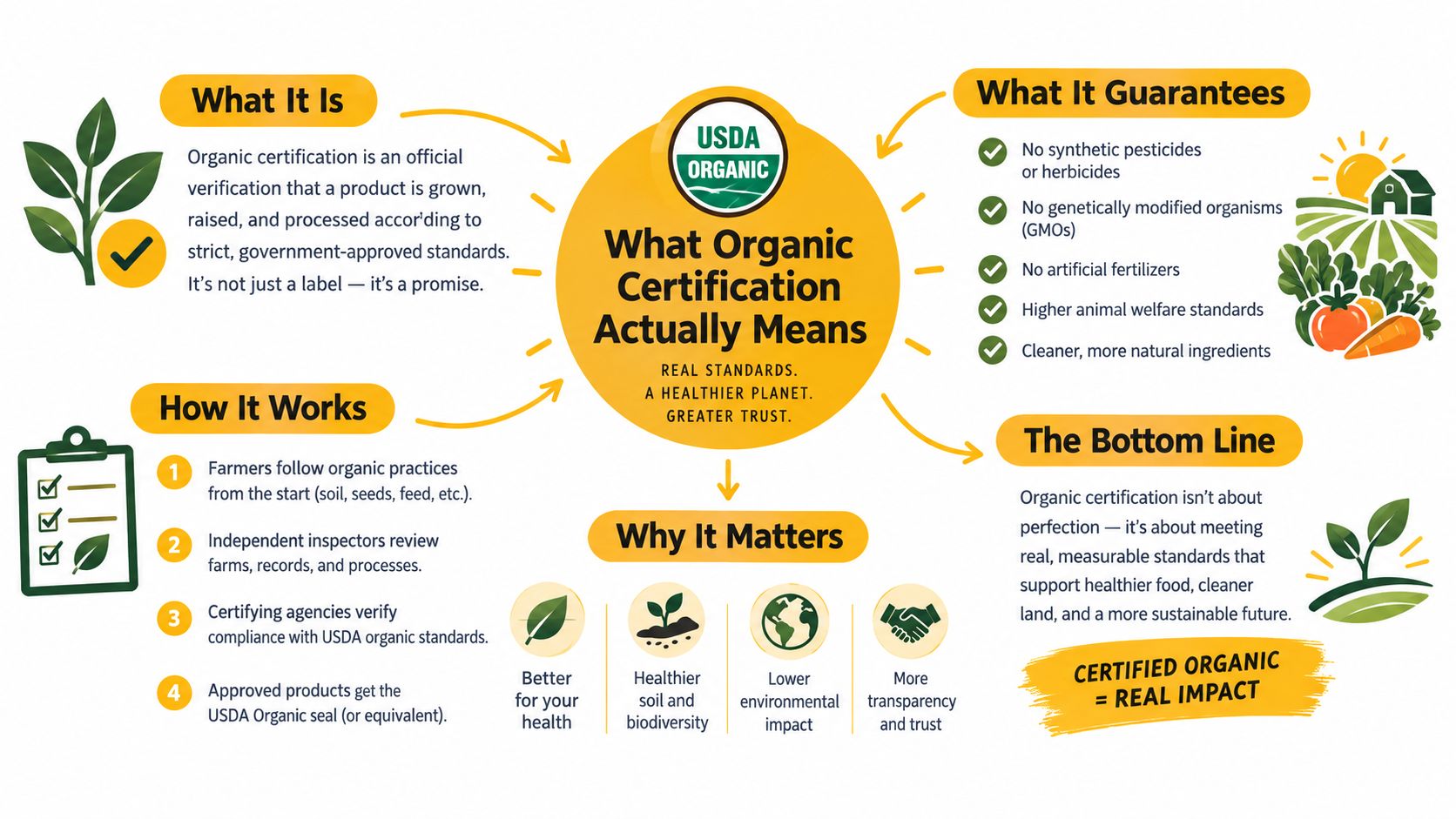
The available evidence identifies species, genetics, roast, grind, extraction, and serving size as important influences on caffeine, rather than organic certification (research on organic certification and caffeine). In plain language, the label can describe the farm while the cup's caffeine reflects the bean and the preparation.
Separate the label from the cup
When you read an organic coffee package, ask two different questions:
- How was it produced? The organic designation addresses this.
- How much caffeine will I drink? The serving size, bean composition, preparation instructions, and any measured caffeine information address this.
That separation also helps you understand adjacent ingredients. Cacao nibs, for example, are a different agricultural product with their own flavor and preparation uses. Aroma Warehouse cacao nibs can be a useful resource when comparing coffee ingredients and other plant-based additions, but cacao shouldn't be treated as a substitute for a coffee caffeine label.
For a closer look at what the organic designation means in coffee production, see Cartograph Coffee's guide to organic-certified coffee. The central point remains simple: organic certification can guide your farming and sourcing choices, but it can't predict caffeine on its own.
The Real Factors That Determine Caffeine Content
Coffee species creates one of the clearest differences. Robusta generally contains more caffeine than Arabica, so an organic blend containing Robusta may produce more caffeine than an organic coffee made entirely from Arabica. The farming method doesn't erase that botanical difference.
Roast and extraction are more complicated than many package claims suggest. A 2024 Scientific Reports study found that extraction yield generally had a greater effect on caffeine concentration than roast level, although roast can still influence results under particular conditions. That means “light roast” and “dark roast” aren't dependable caffeine shortcuts without knowing how the coffee was measured and brewed.
Serving size changes the answer
A 2024 study tested 299 coffee samples from cafés and homemade preparations. The overall mean was 82.5 mg per serving, but the results ranged from 12.8 mg to 309.4 mg (study of caffeine in café and homemade coffee samples). Those figures show why “one cup” is a weak description. A small homemade serving and a large café drink may belong to the same broad category while delivering very different amounts.
The same study reported that Americano servings averaged 143 mg, while coffee made by pouring hot water over one teaspoon of ground coffee averaged 23 mg. Takeaway coffees had a mean caffeine content about three times higher than homemade coffees. These are comparisons between tested preparations, not promises for every organic product, but they illustrate the variables that matter.
| What changes | Why it matters |
|---|---|
| Species | Robusta generally contributes more caffeine than Arabica. |
| Coffee quantity | More coffee in the recipe can increase the amount extracted. |
| Grind | Grind size affects how water contacts the coffee. |
| Water and time | Temperature and contact time influence extraction. |
| Serving volume | A larger prepared drink can contain more total caffeine. |
For a deeper explanation of how caffeine varies across products, Cartograph Coffee's coffee caffeine guide offers useful context. The buying lesson is direct: compare the bean type, recipe, and prepared serving, not just the organic wording.
How Brewing Methods Change Your Caffeine Intake
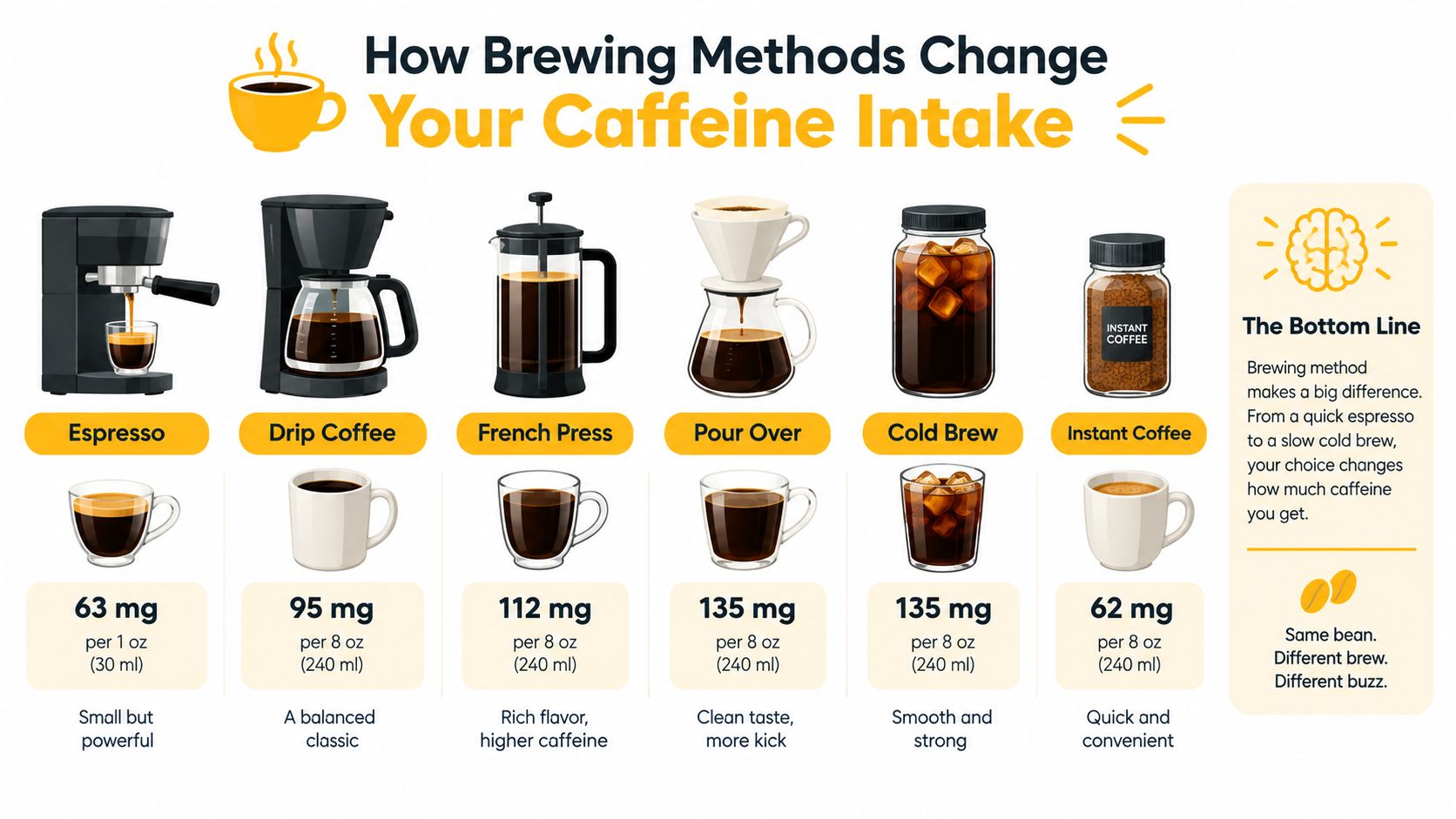
Brewing turns the caffeine inside ground coffee into the drink you consume. The amount extracted depends on several moving parts, including time, water temperature, pressure, grind size, and coffee-to-water ratio. This is why the same organic beans can produce different caffeine amounts when prepared as espresso, filter coffee, cold brew, or instant coffee.
Concentration isn't the same as total intake
A 2025 analysis found that Robusta consistently produced more caffeine than Arabica, while espresso had the highest concentration per 100 mL. Yet a typical espresso serving is only about 25–30 mL, compared with roughly 200–250 mL for other coffee preparations (analysis of coffee variety and brewing factors). A drink can therefore be more concentrated without delivering more total caffeine than a much larger beverage.
That distinction prevents a common mistake. Comparing caffeine per volume tells you about strength, while comparing caffeine per prepared serving tells you more about your actual intake. Always check which measurement a product or study uses.
A simple way to read an instant coffee label
For organic instant coffee, use this process:
- Find the serving definition. Check whether the stated amount applies to a spoonful, sachet, or prepared cup.
- Check the water volume. Caffeine per serving only makes sense when you know how much water the manufacturer used.
- Look for a measured caffeine estimate. A laboratory-tested figure is more useful than guessing from roast color.
- Keep your preparation consistent. Using a larger scoop or less water changes the drink you consume.
- Track the whole day. Include coffee from cafés, home brewing, instant products, tea, and other caffeinated foods or drinks.
For practical brewing comparisons, Cartograph Coffee's guide to coffee brewing methods can help you understand how preparation choices affect the final cup. The organic label still matters for agricultural preferences, but your recipe controls the caffeine experience far more directly.
Making Smart Choices for Your Caffeine Goals
Start with your goal, then choose the information that answers it. If you want organic coffee for farming or sourcing reasons, select a certified product. If you want to manage caffeine, look for bean species, serving size, preparation instructions, and a measured caffeine amount.
The FDA cites 400 mg per day as an amount not generally associated with negative effects for healthy adults, although individual sensitivity varies and some people experience anxiety or jitters below that level (FDA guidance on caffeine intake). That reference isn't a personal target or a guarantee of comfort. Pregnancy, medications, medical conditions, and individual sensitivity can change what feels appropriate.
Match the product to the situation
Busy professionals often benefit from consistency. An organic instant coffee with a clearly defined serving and preparation volume makes it easier to repeat the same recipe rather than guessing from a large café drink.
Families may need flexibility. Keep serving sizes clear, avoid assuming that organic means mild, and consider whether different household members have different caffeine sensitivities.
Campers and outdoor users usually value predictable preparation. A measured instant serving can be easier to control than an improvised scoop of ground coffee, especially when water and equipment vary.
Ask better questions before buying
Instead of asking only whether coffee is organic, ask:
- Is it Arabica, Robusta, or a blend?
- How much coffee makes one serving?
- What prepared water volume does the label assume?
- Does the manufacturer publish a caffeine estimate?
- Is the product caffeinated or decaffeinated?
Cartograph Coffee offers organic instant coffee products described as caffeinated, including an organic Robusta coffee with approximately 130–150 mg per 8 fl oz cup, according to the product information supplied for this guide. Treat that figure as serving-specific, and prepare the drink with the stated volume if you want the closest match.
Key Takeaways for Coffee Lovers
Organic coffee absolutely can contain caffeine. The organic designation describes agricultural and handling practices, while caffeine is a naturally occurring coffee compound shaped by species, quantity, roast, grind, extraction, and serving size.
The most useful mental model is to separate the label from the liquid:
- Organic isn't decaf. A caffeinated organic bean remains caffeinated after roasting and processing.
- Species matters. Beans generally contain more caffeine than Arabica.
- Preparation matters. Brewing conditions determine how much caffeine reaches the drink.
- Serving size matters. “A cup” can describe very different amounts of liquid and coffee.
- Measured information beats assumptions. Look for caffeine per prepared serving, along with the water volume used.
If you're choosing organic coffee because you care about farming practices, the label can help with that decision. If you're choosing coffee to manage stimulation, focus on the product's caffeine information and your preparation routine. Organic status alone can't tell you whether the cup will feel mild or strong.
Sustainability also includes what happens after brewing. If you're reducing waste around your coffee routine, Nothing's guide to compostable cups provides practical context for evaluating cup materials and disposal claims.
Cartograph Coffee offers organic instant coffee for people who want a convenient caffeinated option at home, work, or outdoors, with product information that helps you evaluate serving-specific caffeine. Visit Cartograph Coffee to compare the available organic instant coffee options and choose a preparation that fits your routine.