Yes, coffee does go bad, but probably not in the way you're imagining. It won't curdle like old milk or sprout green fuzz like forgotten bread (unless you get it wet, of course). Instead, it slowly loses everything that makes it magical.
The vibrant aroma fades, the complex flavors flatten out, and your morning ritual becomes a cup of something dull and lifeless.
Understanding Coffee Freshness
When we talk about coffee "going bad," what we’re really talking about is it going stale. Think of a freshly baked croissant—warm, flaky, and buttery—versus one that’s been sitting on the counter for a few days. You could still eat the old one, but why would you want to? The joy is gone.
It's the exact same story with your coffee. The moment those beans come out of the roaster, a countdown timer begins. The goal is simple: brew them while they're at their absolute peak to capture all the incredible flavor the roaster intended.
The Four Enemies of Fresh Coffee
There are four main culprits working against your coffee beans, actively trying to rob them of their deliciousness. Knowing what they are is the first step to brewing a better cup every single time.
-
Oxygen: Air is public enemy number one. As soon as oxygen hits the delicate oils and aromatic compounds in your coffee, it starts breaking them down. This is called oxidation, and it's what makes coffee taste flat and bland.
-
Moisture: Coffee beans act like tiny, dry sponges. They'll absorb any moisture from the air, which dilutes their flavor and can even lead to mold if stored in a damp place.
-
Heat: Storing your coffee somewhere warm is like hitting the fast-forward button on the staling process. Heat speeds up all those chemical reactions, causing the best parts of your coffee's flavor profile to simply evaporate away.
-
Light: Just like sunlight can fade a photograph, its UV rays can break down the complex compounds in your coffee beans, leaving them tasting muted and old.
Generally, coffee experts and roasters agree that whole beans are at their absolute best for about 2-4 weeks after the roast date, assuming they're stored properly. You can find more data on coffee consumption trends from industry resources like Coffee BI.
Coffee Freshness At a Glance
To make it simple, here's a quick rundown of how long different types of coffee typically stay at their best.
| Coffee Type | Peak Freshness (Unopened) | Best Quality After Opening |
|---|---|---|
| Whole Bean Coffee | 6-9 months | 2-4 weeks |
| Ground Coffee | 3-5 months | 1-2 weeks |
| Instant Coffee | Up to 20 years | 1-2 years |
| Coffee Pods (K-Cups) | 6-12 months | Best used by printed date |
Remember, these are just guidelines. The real key to a great cup is using your beans as close to their roast date as possible.
The Science Behind Stale Coffee
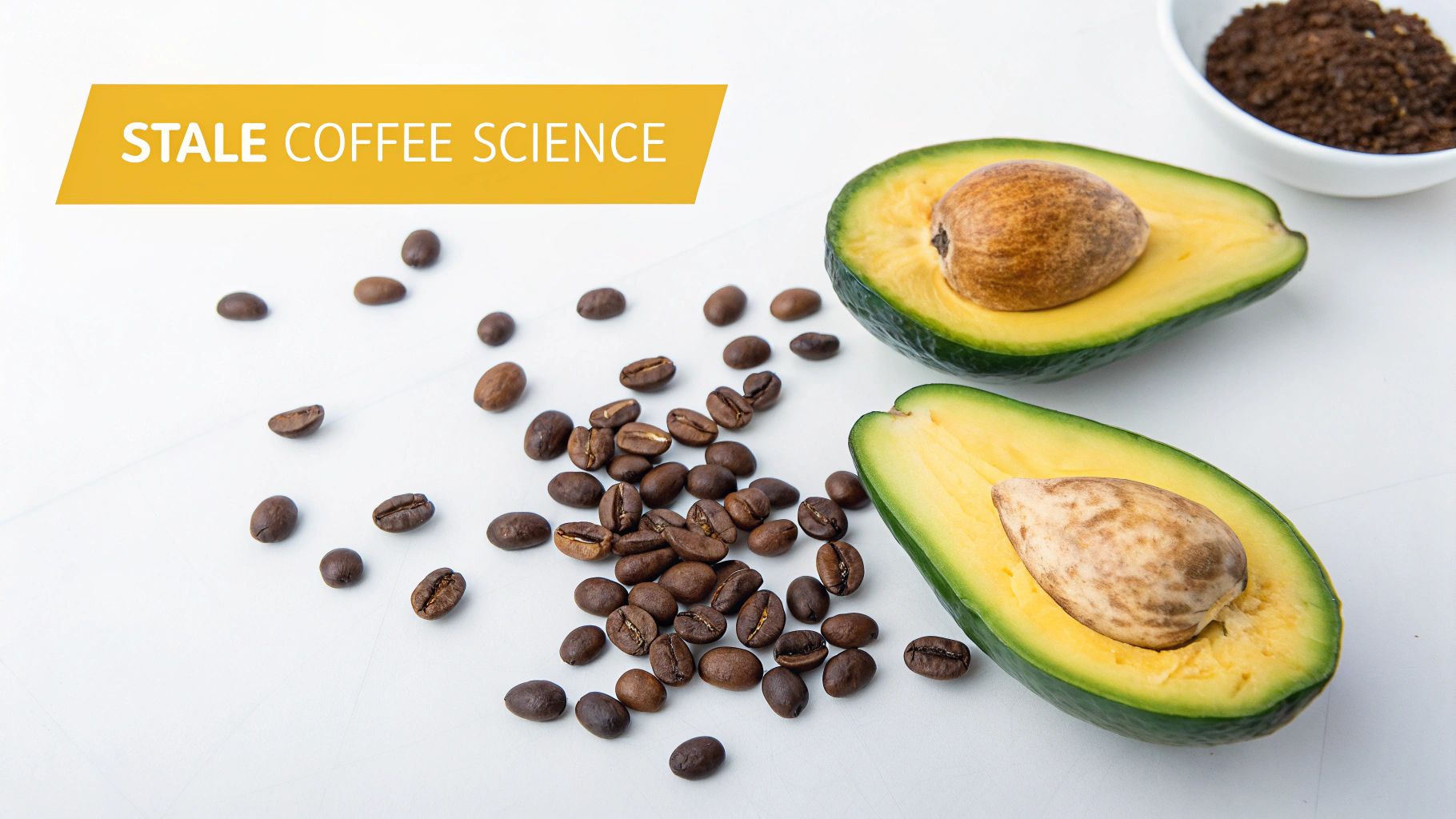
Ever wondered why that incredible bag of coffee you bought last month now tastes flat, bitter, and totally lifeless? The answer comes down to a simple chemical process that kicks off the moment roasted beans meet the air. This reaction is called oxidation, and it’s the number one reason your coffee loses its delicious flavor.
Think about what happens when you slice an avocado and leave it on the counter. It starts to turn brown pretty fast, right? That’s oxidation in action, and the exact same thing is happening to your coffee, just on a microscopic level. Your coffee beans are loaded with delicate oils and hundreds of aromatic compounds that give you those amazing notes of chocolate, fruit, or flowers.
When exposed to oxygen, these fragile compounds begin to break down, stripping away the nuanced flavors and leaving a generic, harsh bitterness in their place. This isn't just a minor change; it fundamentally alters the coffee's character.
This race against time has a few key enemies that speed up the process. Understanding them is your best defense in keeping your coffee tasting great for as long as possible.
The Flavor Thieves
These elements are constantly working to rob your coffee of its quality, making proper storage absolutely essential for a great-tasting cup.
- Heat: Warm environments are like a fast-forward button for staleness. Storing coffee near your oven or in a sunny spot on the counter is a surefire way to ruin it quickly.
- Light: Just like sunlight fades fabrics, its UV rays break down the complex molecules responsible for your coffee’s aroma and taste. The result is dull and uninspired.
- Moisture: Coffee is hygroscopic, which is a fancy way of saying it loves to absorb moisture from the air around it. This moisture not only dilutes the precious oils but can also lead to mold if your coffee isn't kept dry.
Studies have shown that opened ground coffee can lose a staggering 60-70% of its aroma in just three months. Protecting it from these elements is crucial. And this isn't just for coffee nerds; you can find more insights on coffee's resilience and market trends from sources like Everyday People Coffee and Tea.
For those who prioritize a long shelf life, it’s worth understanding the alternatives. Check out our guide on how instant coffee works to see how its unique production process helps preserve flavor for much longer.
How to Tell If Your Coffee Is Past Its Prime
When it comes to figuring out if your coffee has gone bad, your own senses are far more reliable than any date stamped on a bag. Forget the "best by" date for a moment—a quick look, sniff, and taste will tell you everything you need to know.
First, just look at the coffee. Freshly roasted whole beans often have a slight, appealing sheen on their surface, a sign of the natural oils. As they go stale, beans start to look dull, dry, and lifeless. If you're using ground coffee, keep an eye out for clumps, which is a dead giveaway that moisture has snuck in.
The Smell and Taste Test
Next, give it a good smell. Open that bag and take a deep whiff. Fresh coffee hits you with a powerful, complex aroma that might remind you of chocolate, fruit, or toasted nuts. If all you get is a faint, dusty, or cardboard-like scent, you know the best days are behind it.
The ultimate test, of course, is in the tasting. Stale coffee loses all its nuance—the sweetness, the bright acidity, the interesting flavors. What's left is a generic, harsh bitterness that tastes hollow and flat.
This simple progression from sight to smell to taste is the most foolproof way to avoid a disappointing cup.
- Look for the signs: Dull, dry-looking whole beans or clumps in your ground coffee.
- Trust your nose: A weak, dusty, or musty smell means the good stuff has faded.
- Taste the difference: If it's flat, bitter, and one-dimensional, the coffee is old.
Coffee doesn't spoil in the traditional sense, but it can grow mold if stored improperly where moisture can get in. If you ever see any visible mold, toss it out immediately. It's always a good idea to understand the potential risks of consuming moldy food to be on the safe side.
Freshness Timelines for Every Coffee Type
Not all coffee is created equal in the race against time. The form it takes—whether whole bean, pre-ground, or instant—radically changes how long it holds onto its best flavor and aroma. Getting a handle on these differences is the secret to avoiding a dull, disappointing cup.
Whole coffee beans are the undisputed champions of longevity. The best way to think of a coffee bean is as a tiny, natural fortress, perfectly designed to protect the fragile oils and aromatic compounds locked inside. When you store them right, those beans put up a powerful fight against oxygen, preserving their unique character for weeks after roasting.
Ground Coffee's Race Against Time
The moment you grind those beans, the freshness clock starts ticking—and fast. Grinding shatters the bean's protective shell, which dramatically increases the surface area exposed to the air. It's like throwing open thousands of tiny windows, inviting oxygen to flood in and kickstart the staling process almost immediately.
This is exactly why pre-ground coffee, for all its convenience, has such a short window of peak quality. It's not going to spoil in a way that makes you sick, but the vibrant flavors and aromas? They fade incredibly quickly. You'll likely notice a major drop-off in its character within just a week or two of opening the bag.
This timeline gives you a great visual for what to look for as your coffee ages.
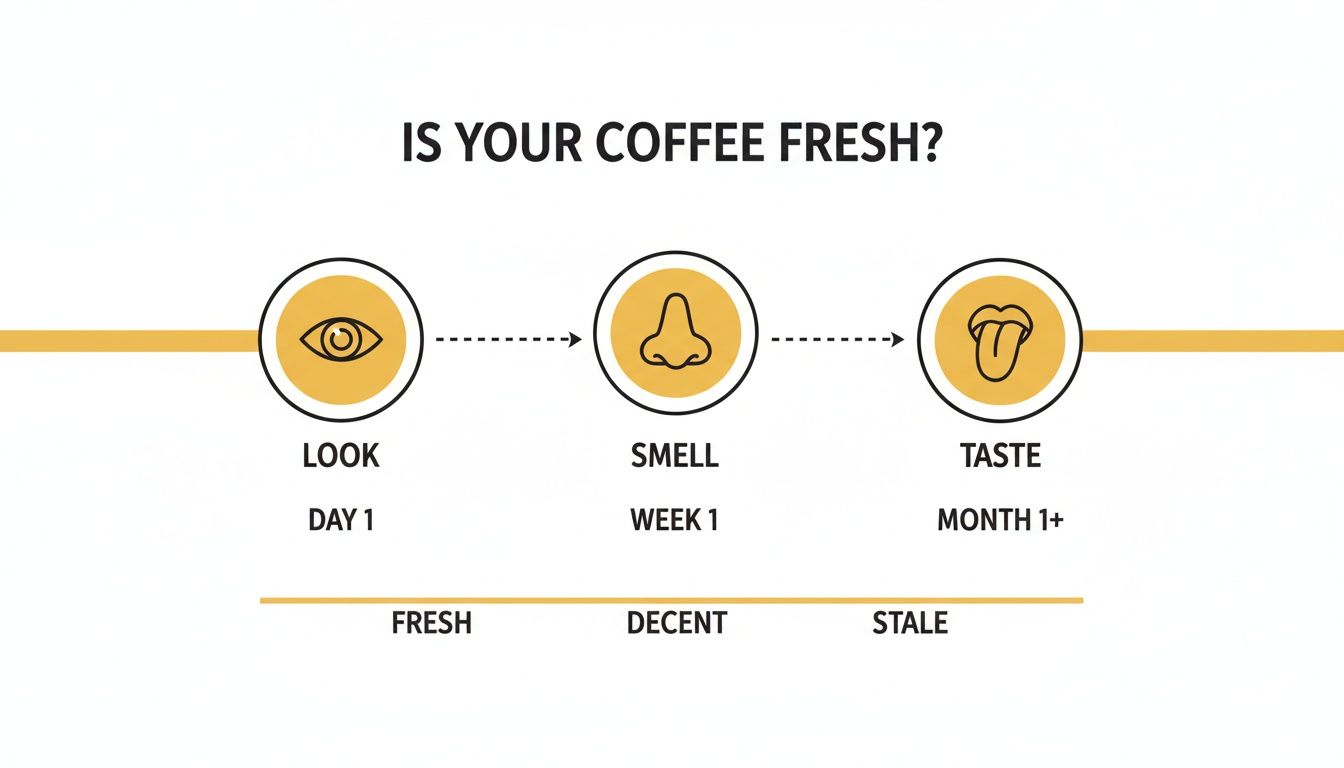
As the infographic points out, the clues your senses give you—what you see, smell, and taste—change drastically as coffee goes from its peak to completely stale.
The Incredible Stability of Instant Coffee
On the complete opposite end of the spectrum, we have instant coffee. It's the king of shelf life, hands down. The magic is all in the dehydration process. By removing almost all the moisture, you take away the main culprit behind spoilage and flavor loss, making it remarkably stable.
An unopened package of high-quality instant coffee can remain fresh for years, not just weeks or months. This remarkable stability makes it a fantastic, waste-free option for those who value both convenience and a reliably fresh-tasting cup every single time.
This impressive longevity means you're not in a constant battle against staleness. For a closer look at its durability, you can learn more about the instant coffee shelf life and what makes it last so long. It’s the perfect solution for campers, travelers, or anyone who just doesn't go through a full bag of beans very quickly.
Proven Methods for Storing Coffee
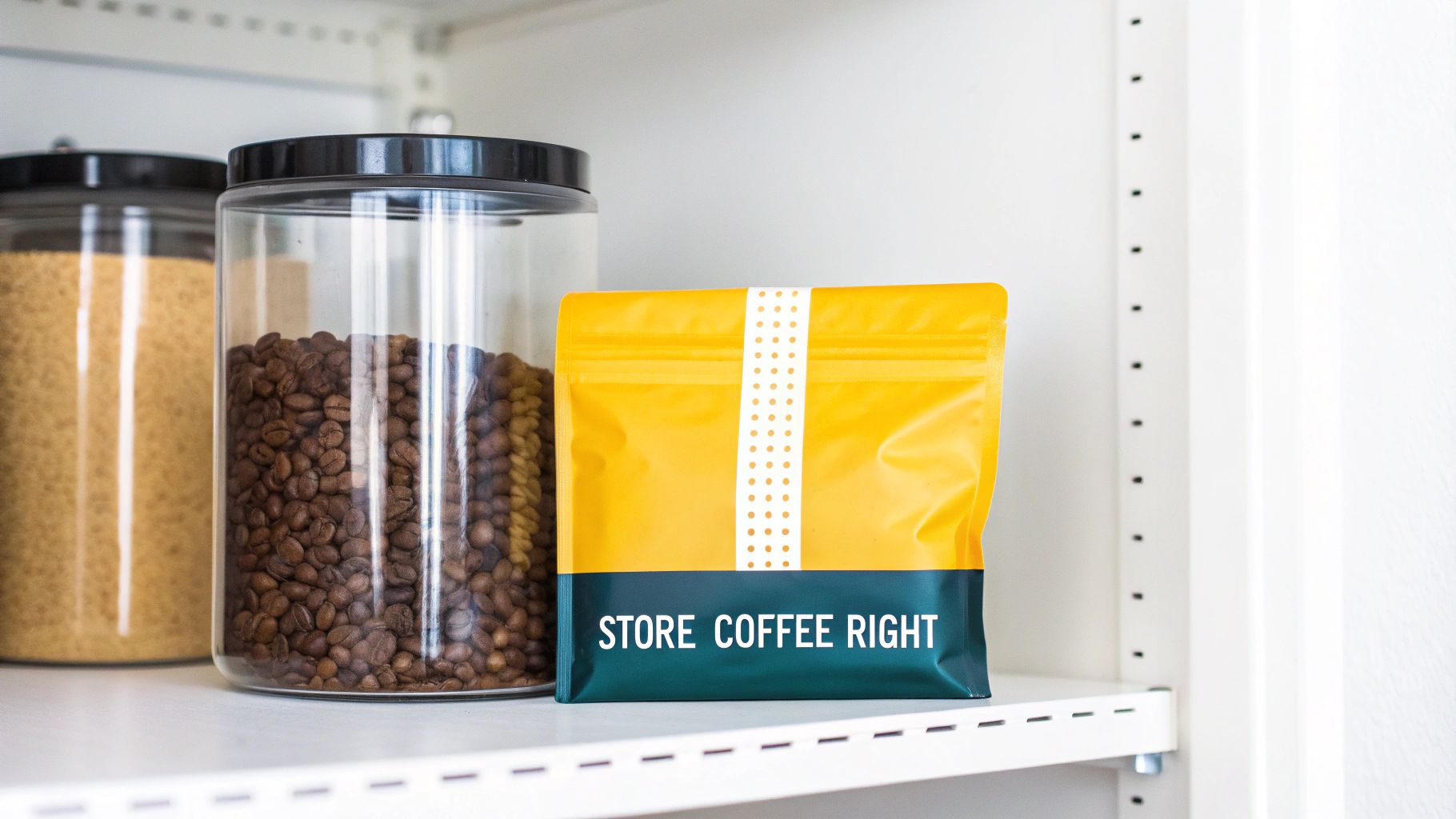
Keeping your coffee from going stale is actually simpler than you might think. It really just boils down to protecting it from its four biggest enemies: air, moisture, heat, and light. A few small tweaks to your storage routine can make a world of difference, dramatically extending that window of peak flavor.
First things first, let's bust a common myth—do not store your coffee in the freezer. I know it sounds like a good idea, but the constant temperature changes create condensation every time you open it. That moisture wreaks havoc on the delicate oils, muting the very flavors you paid for. A cool, dark pantry is a much safer bet.
The Right Container Is Your Best Defense
The container you use is easily your most powerful tool in this fight. Your goal is to create a fortress for your beans, shielding them from the outside world.
- Airtight is Non-Negotiable: Oxygen is public enemy number one for coffee freshness. A truly airtight seal stops the oxidation process that makes beans taste flat and cardboard-y.
- Opaque Matters: Light is just as bad, as it breaks down all those wonderful aromatic compounds. Always go for an opaque container, not a clear glass jar, to block out those damaging UV rays.
Think of your coffee container as a vault. It needs to be dark, perfectly sealed, and kept in a place with a stable, cool temperature—like a cabinet, not on the counter next to a sunny window.
This one change can have a massive impact on freshness. For really serious long-term preservation, some people even use tools like the best vacuum seal bags for freshness to remove every last bit of air.
Simple Storage Best Practices
Once you've got the right container, picking the right spot is the final piece of the puzzle. Just stick to these simple rules, and you'll be on your way to a better-tasting cup every single day.
- Find a Cool Spot: Heat is a catalyst for staling. Keep your coffee away from the oven, the top of the fridge (it gets warm up there!), or any patch of direct sunlight.
- Keep it Dry: Moisture is a definite threat. A dry cupboard, far from the steam of a kettle or dishwasher, is the perfect home.
- Buy Whole Beans: Whenever you can, buy whole beans and grind them right before you brew. The unground bean is nature's perfect little container for all that flavor.
Following these straightforward guidelines will help you get the most out of every bag of coffee you bring home, keeping it vibrant and delicious for as long as possible. If you want to dive even deeper, check out this fantastic guide on how to store coffee beans properly for more pro-level tips.
Answering Your Top Coffee Freshness Questions
Even with the best storage tips, some common questions always seem to pop up about coffee and its shelf life. Let's clear the air on a few of these so you can feel confident about the coffee you're brewing every day.
Is It Actually Safe to Drink Old or Expired Coffee?
You bet. As long as your coffee has stayed dry and there's no visible mold, it's completely safe to drink. That "best by" date on the bag? It's all about peak flavor, not food safety.
The only real downside to drinking old coffee is a seriously underwhelming taste. Expect it to be flat, maybe a bit bitter, and missing all of that wonderful aroma you get from a fresh brew.
Should I Really Avoid the Fridge and Freezer?
Yes, absolutely. This is one of the most common coffee storage myths, and it's a surefire way to ruin good beans. Your refrigerator is a humid environment filled with odors from last night's dinner, and your coffee will soak it all up like a sponge.
The freezer is even more of a villain. The constant cycle of freezing and thawing creates condensation, introducing moisture that wrecks the delicate oils responsible for all that amazing coffee flavor and aroma.
The best storage spot is surprisingly simple: an airtight, opaque container tucked away in a cool, dark place like a pantry or cabinet. This one habit does more to preserve freshness than anything else.
Does Instant Coffee Go Stale After Opening?
Instant coffee is the undisputed king of a long shelf life, but it’s not completely immortal. Once you break that seal, you're exposing it to its two main enemies: air and humidity.
Over several months, this exposure will cause it to clump and its flavor will slowly fade. To keep it in good shape, always seal the lid tightly and store it far away from moisture or steam—so, not right next to your kettle.
What’s the Best Way to Buy Coffee for Maximum Freshness?
If you're chasing the absolute freshest cup possible, nothing beats buying whole beans with a "roasted on" date printed right on the bag. Grinding them just moments before you brew unlocks their full, vibrant potential.
But if you’re looking for the sweet spot between convenience and lasting freshness, a high-quality instant coffee in airtight packaging is a fantastic option. It gives you a great-tasting, reliable cup every single time, no grinder or scale required.
Ready to enjoy a consistently fresh and delicious cup without the worry? Cartograph Coffee offers premium organic instant coffee designed for convenience and exceptional taste. Discover the difference at https://cartographcoffee.com.