Yes, a cappuccino has caffeine, and a single-shot cup is often around 63 to 75 mg. A larger or double-shot version can land much higher, often around 126 to 154 mg, and some café versions go far beyond that depending on how many espresso shots are built into the drink.
You're probably looking at a menu, weighing whether that afternoon cappuccino will keep you focused or keep you awake later. The answer isn't just yes or no, it's that cappuccino caffeine has a wide range, and the milk doesn't decide the number. The espresso does.
Your Afternoon Cappuccino and the Caffeine Question
You're standing at the counter after lunch, and the drink in front of you looks harmless enough. It's milky, foamy, and feels softer than a straight espresso, so it's easy to assume the caffeine is low. That assumption can be wrong.

A cappuccino does have caffeine, but the amount depends mostly on the espresso shot count, not the milk or foam. A common single-shot cappuccino is often estimated around 63 to 75 mg, while larger or double-shot versions often reach 126 to 154 mg Caffeine Informer's cappuccino guide. That's why the same drink name can feel gentle in one café and surprisingly strong in another.
A lot of people miss this because cappuccino looks like a comfort drink. In practice, it's an espresso drink wearing a soft texture. As one caffeine comparison article puts it, many drinkers don't realize how much the dose can swing from one café to the next, with common servings ranging from about 63 mg to well over 154–175 mg depending on shot count and size Victor Allen's explanation of cappuccino caffeine.
Practical rule: if you didn't ask how many shots went into the cup, you don't really know how much caffeine you ordered.
The True Source of Caffeine in Your Cup
You can judge a cappuccino by its foam, but the caffeine comes from the espresso hidden underneath. That is the part doing the heavy lifting. The milk and microfoam shape the drink's feel and flavor, while the shot determines how much stimulant ends up in the cup.
The recipe works like cooking. Flour and water change the texture of bread, but they do not decide whether the loaf is sweet or salty, and the same idea applies here. In a cappuccino, the espresso shot is the ingredient that brings the caffeine.
That is why the base matters so much. Independent measurements found cappuccino averaging 54 mg per cup, while straight espresso averaged 182.4 mg per cup in the same body of research UNDIP journal study on café drinks. The milk does not remove the caffeine, it spreads that dose through a larger drink, which is why cappuccino can feel softer even though it still contains espresso.
The fastest way to judge your cup is to ask how many shots went into it. If you are comparing roast styles or bean origins, Yemeni-style espresso blend details can show how espresso-centered blends are described before milk is added. A broader look at coffee caffeine content by brew style also helps you think in terms of dose, not just the name on the menu.
A cappuccino is an espresso drink with milk softening the edge. The milk changes the feel, but the shot decides the caffeine.
Why Not All Cappuccinos Are Created Equal
The word cappuccino describes a drink category, not a fixed caffeine dose. That's the source of most confusion. One shop may build it with a single shot, another with two, and another with a recipe that looks similar on paper but lands very differently in the cup.
The clearest real-world proof is chain variation. A 2023 comparison reported a medium cappuccino from Costa at 325 mg of caffeine, while a similarly sized cappuccino from Starbucks had 66 mg The Guardian's café comparison. That gap shows why the label alone can't tell you the whole story. The drink name is the same, but the shot count is not.
The three things that change the dose
- Espresso shots: More shots mean more caffeine. This is the biggest driver by far.
- Bean type: Different beans can carry different natural caffeine levels, so the base can vary before the shot is even pulled.
- Preparation style: Shot volume, extraction, and café recipe choices can all shift the final amount.
A cappuccino's size also matters because bigger cups often get more espresso. That's why a café cappuccino in a 12 oz or larger cup can feel much stronger than a traditional small one. An espresso shot guide from Cartograph Coffee's espresso shot size overview is useful here because it reinforces the simple idea that the shot is the unit that matters most.
For a customer, the practical lesson is straightforward. Don't ask only whether cappuccino has caffeine. Ask how many shots are in that cappuccino, because that's what changes a “light” coffee into a much more stimulating one.
Cappuccino Caffeine vs Other Popular Drinks
A cappuccino usually lands in the middle of the coffee range, which is why it gets misunderstood so often. The milk makes it feel softer, but the caffeine comes from the espresso shot, like the egg in a recipe that determines whether the final dish can really be called an omelet. Once you compare it with other drinks, the picture gets much clearer.
| Beverage | Typical Caffeine, mg |
|---|---|
| Single-shot cappuccino | 63 to 75 |
| Double-shot cappuccino | 126 to 154 |
| Standard espresso shot | about 63 |
| 8 oz drip coffee | often around or above a single-shot cappuccino |
| Latte with one shot | similar to a single-shot cappuccino |
| Instant coffee | varies widely by product |
The single-shot and double-shot cappuccino ranges come from Caffeine Informer's cappuccino data Caffeine Informer. For the espresso shot figure, a standard shot is often treated as the base unit in coffee references, and that is why the number in the table helps explain the whole drink. The point is simple, the shot sets the dose, while milk mainly changes texture.
A cappuccino can look gentle and still carry a solid caffeine load. That is where dose ambiguity shows up in real life. One café may build a cappuccino with a single shot, while another uses a double shot, so the same drink name can hide very different caffeine levels. It works like ordering soup, where the bowl looks similar but one kitchen may ladle in far more broth than another.
That is also why a foam-heavy cup can be misleading. Smooth texture does not mean a lighter dose, and a richer mouthfeel can make the coffee seem calmer than it really is. If you only judge by taste, you can miss how much espresso is in the cup.
If you want to track your day's caffeine honestly, treat cappuccino like espresso first and milk second.
For readers who want to stay inside a comfort zone, that distinction matters. A cappuccino can fit into a balanced routine, but only if you know which version you are ordering. A small café cappuccino and a large chain cappuccino can behave like different drinks, even when the menu uses the same name.
Low-Caffeine and Convenient Instant Alternatives
Some people still want the cappuccino feel without much caffeine. That's where decaf comes in. A decaf cappuccino can be made with decaf espresso, but decaf doesn't mean totally caffeine-free, so it's smart to treat it as a lower-caffeine option rather than a zero-caffeine one.
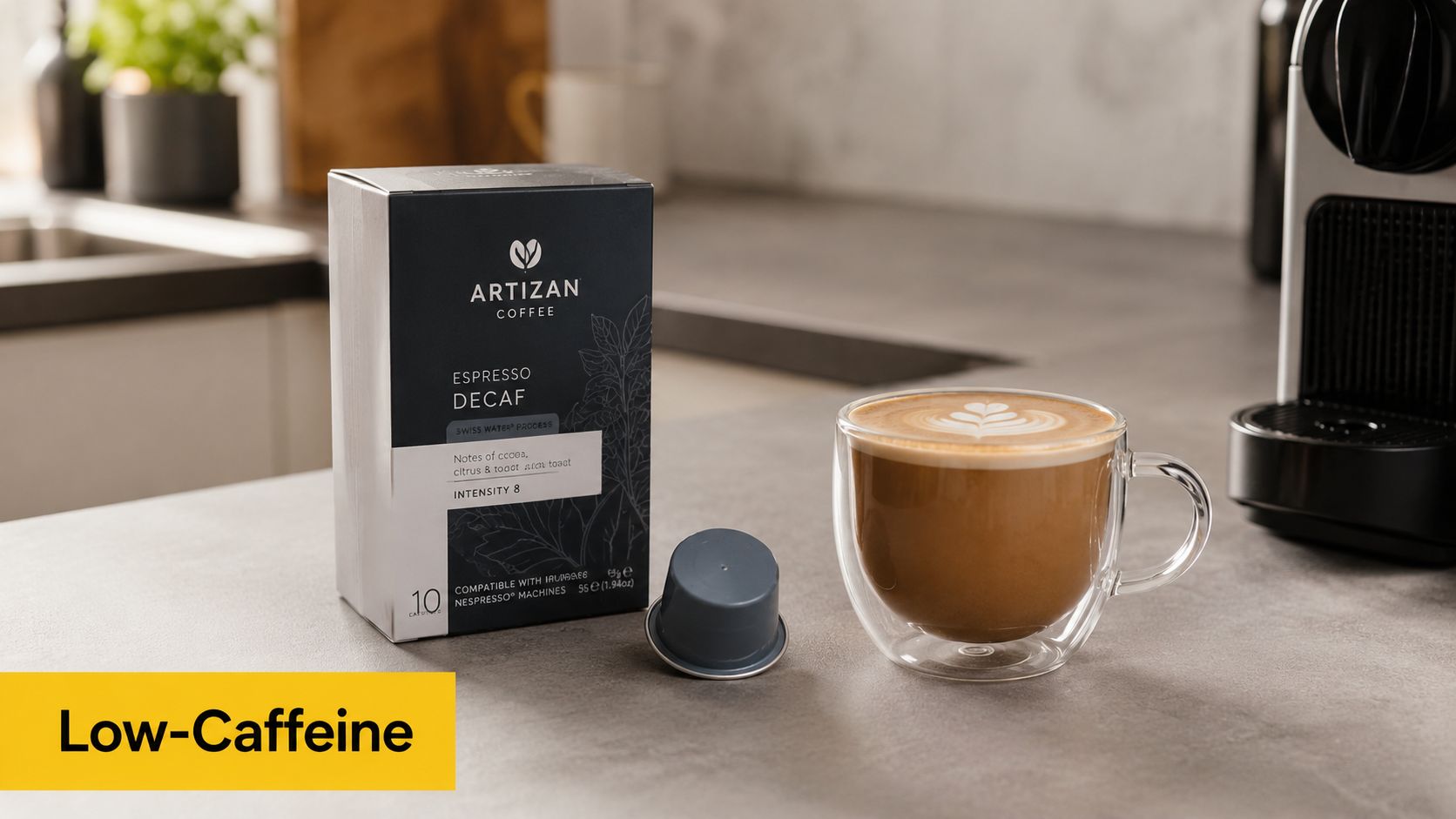
The bigger confusion is that not every “cappuccino” on a shelf or menu is the same thing. Some are espresso-based, some use decaf espresso, and some are powdered cappuccino-style beverages with a very different caffeine profile Corner Coffee Store's decaf and cappuccino overview. That's why reading the label matters more than relying on the drink name.
What to check before you buy
- Look for the espresso base: If it's decaf espresso, the caffeine will be lower.
- Check whether it's instant or powdered: Those products can behave differently from a café cappuccino.
- Ask about the shot count: Even a “small” cappuccino can change character fast if it's built with more espresso.
For people who want consistency and convenience, a well-made instant coffee can be easier to control than a café order. You can choose your scoop, water volume, and timing without guessing how many shots went into the cup. If that's the route you prefer, Cartograph Coffee's organic instant decaffeinated coffee is a useful reference point for thinking about convenience and caffeine control together.
The key idea is simple. Decaf and instant options give you more control, but only if you know what type of product you're buying.
How to Order Your Perfect Cappuccino
The smartest cappuccino customer asks about the build, not just the name. Start with the espresso shot count. Then check the size of the cup, because a 12 oz version is often built very differently from a traditional smaller cappuccino.
A good order starts with one clear question. “Is this made with a single shot or a double shot?” That one line tells you far more than the menu title ever will. If you're sensitive to caffeine, the afternoon is usually the moment to be specific.
A simple ordering checklist
- Ask about the shots: Single or double changes the dose the most.
- Confirm the serving size: Bigger cups often mean more espresso.
- Choose decaf when needed: Especially if you're drinking it later in the day.
- Don't assume milk lowers caffeine: It changes texture, not the espresso dose.
If you're trying to manage sleep, anxiety, or just a calmer afternoon, that last point matters a lot. A creamy drink can still carry a meaningful caffeine hit if the barista builds it with more than one shot. The safest habit is to order by composition, not by assumption.
A cappuccino can fit almost any routine once you know how it's assembled. Ask the right question, and you'll stop guessing about the dose.
If you want coffee knowledge that helps you choose with confidence, explore Cartograph Coffee for a closer look at thoughtful coffee options, including convenient formats that make caffeine easier to manage. When you know what you're ordering, every cup gets simpler, whether you want more focus, less caffeine, or just a better tasting coffee routine.