You are at the counter, and latte is doing the work of ten drinks. One cup is soft and barely sweet. One tastes like dessert. One is iced and thinning out before you sit down. You do not need a new machine to remake the one you actually wanted. You need the milk ratio, the flavor strength, and an instant method you can repeat on a weeknight.
This guide sorts different types of lattes into classic, iced, flavored, regional, and seasonal builds. Each one gets a taste note, a café structure, and a Cartograph Coffee swap for home, work, or a trail mug. Caffeine follows the coffee dose, not the word latte. Extra milk changes strength and taste. A tea base such as matcha or chai is a different drink, not a renamed espresso.
Milk coffee is older than the espresso bar. French café au lait, Spanish café con leche, Central European milk coffees, and Italian coffee with milk were already breakfast habits. A 1867 travel account set caffè latte beside buttered toast on the road toward Venice, so the mix was ordinary fare, not a new specialty, as traced in notes on café drinks that predate the modern menu. The standardized café latte came later, with late twentieth-century espresso culture. If barn mornings need a sturdy cup, these mug gifting ideas for equestrians fit a drink you can build without a steam wand.
1. Caffè Latte
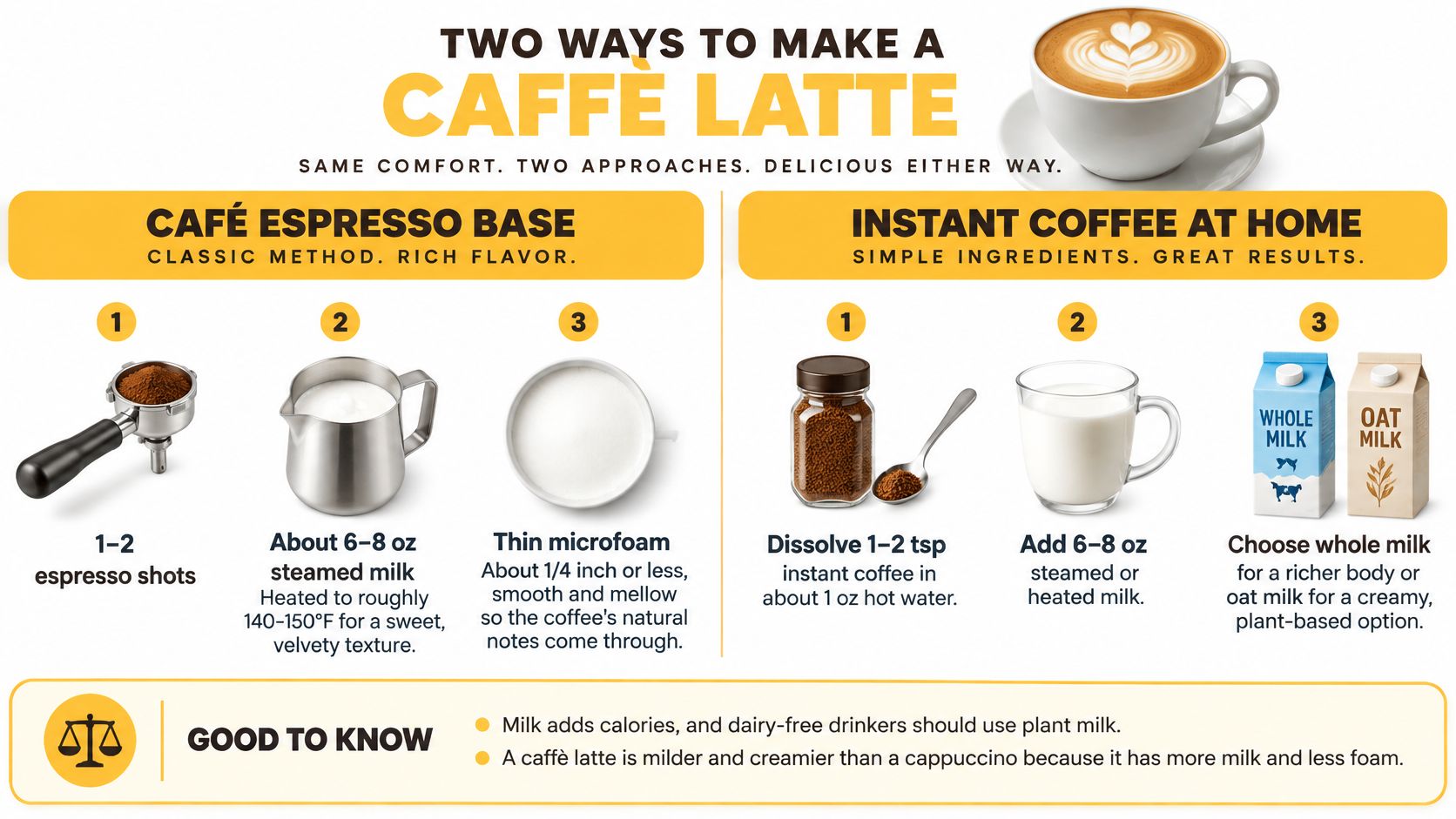
A caffè latte is the teaching drink. One or two espresso shots sit under a large pour of steamed milk and a thin microfoam cap. It tastes milder and creamier than a cappuccino because milk, not foam, fills most of the cup. Specialty cafés and big chains both sell it, and home baristas fake the base with a moka pot or a frother.
Café convention, not a law, puts a standard latte in an 8–12-ounce cup at about one part espresso to fourteen parts milk. A traditional cappuccino splits closer to one-third espresso, one-third steamed milk, and one-third foam in a cup near 150 milliliters (about 5 fluid ounces), while a latte macchiato often lands around 200–250 milliliters (7–8 fluid ounces), per this milk-to-coffee comparison of café drinks.
Instant Build
- Concentrate first: Dissolve 1 to 2 teaspoons of instant coffee in about 1 ounce of hot water.
- Milk second: Add 6 to 8 ounces of steamed milk.
- Heat window: Aim near 55–65°C. Past about 65°C, proteins cook, bubbles get coarse, and sweetness drops, according to barista-style milk foam testing.
Practical rule: Whole milk gives body. Oat milk is the creamy plant swap. Soy can microfoam hard too, so taste the same coffee dose side by side.
2. Vanilla Latte
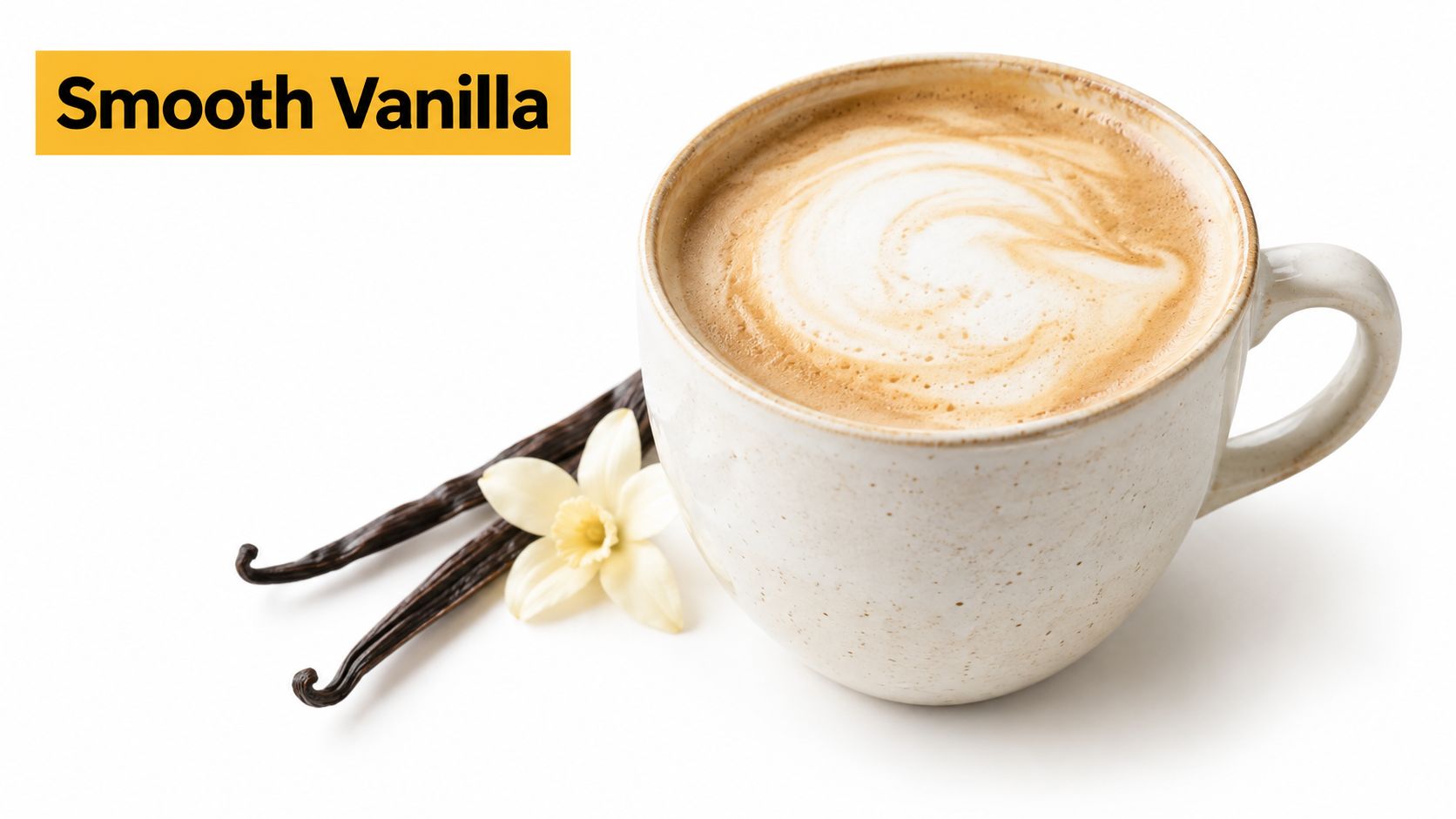
Order a vanilla latte when you want dessert aroma without losing the coffee. Syrup usually hits the cup before espresso and milk, so the vanilla rides through every sip instead of sitting on top. It is a core flavored item on major menus, and the home version is a bottle of Torani or Monin, or a few drops of pure extract plus a little sweetener.
Keep the Coffee Audible
Start with one pump, not a full dessert pour. Stir the syrup into dissolved instant coffee before the milk so the flavor does not stripe the cup. If the vanilla shouts and the coffee disappears, you added syrup to a weak base. Fix the concentrate, then the sweetness.
- Lower sugar: A few drops of pure vanilla extract plus a teaspoon of sugar or honey.
- Kid-friendly mug: Same milk ratio as the classic, half the syrup.
- Camp version: Pack a small syrup bottle. Heat milk in a pot and skip the frother.
The drink should smell like warm vanilla and still finish like coffee. If it tastes like a candle, cut the syrup in half next time.
3. Caffè Mocha
A caffè mocha is a latte that borrowed hot chocolate's pantry. Cocoa or chocolate syrup meets the coffee before the milk goes in, so the cup bridges a morning drink and a treat. Chains keep it on the core menu. At home, unsweetened cocoa plus instant coffee is faster than a sauce bottle and less candy-like.
Stir 1 teaspoon of unsweetened cocoa with 1 teaspoon of sugar and a splash of hot water until the paste is smooth. Then add your dissolved coffee and 6 to 8 ounces of hot milk. Dark cocoa keeps the result richer and less sweet. If you skip the paste step, chocolate sand settles in the bottom and the last sip turns bitter.
A Saturday version for kids can use more milk and a cinnamon dust. Your own mug can stay at the classic ratio so the coffee still shows up. For the full instant walk-through, use this mocha with instant coffee method and change only the cocoa.
Stir until the paste disappears. A mocha that looks mixed in the first inch can still hide a cocoa puck under the foam.
4. Iced Latte
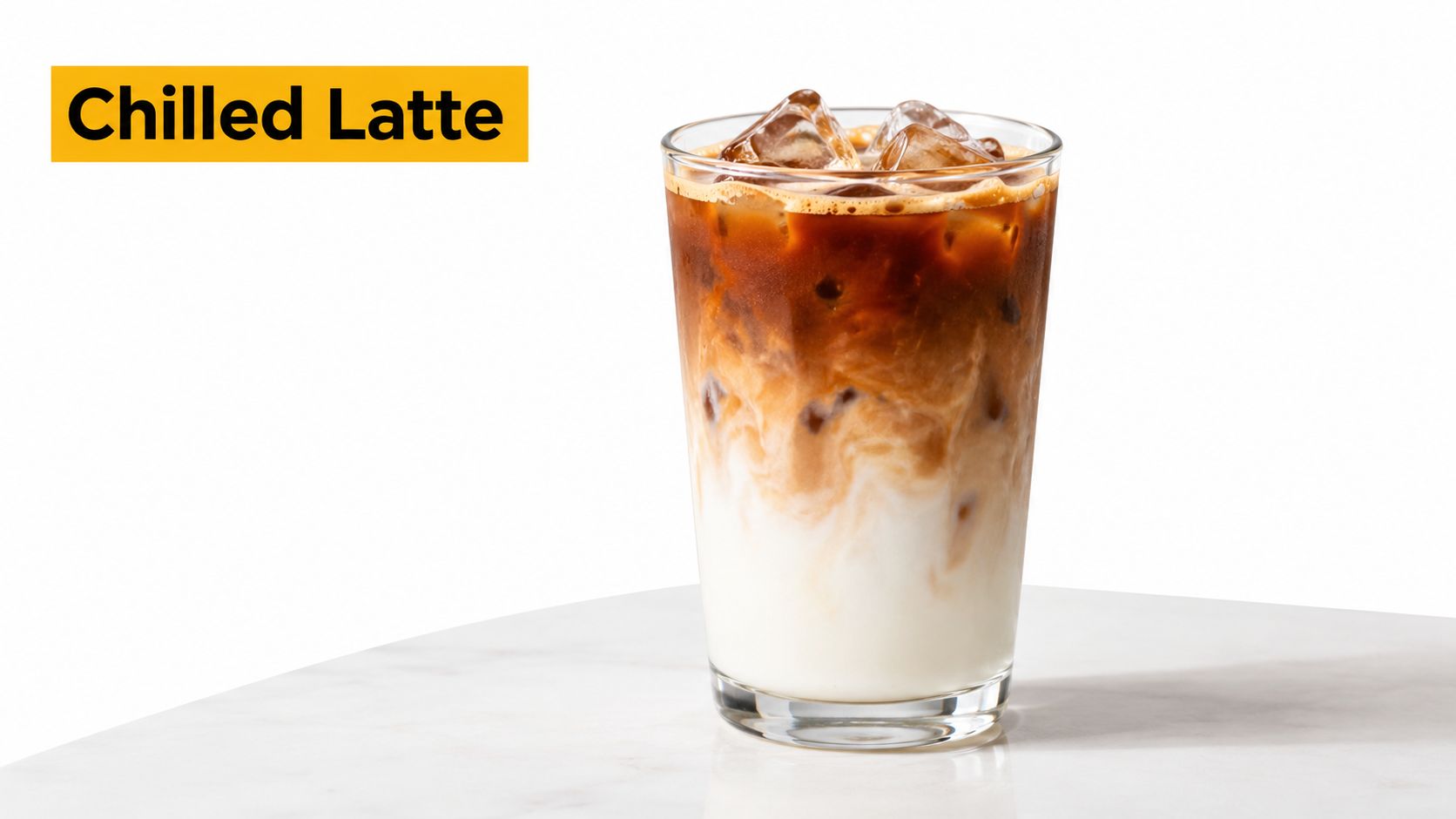
An iced latte is the same idea poured cold. Espresso or a strong concentrate goes over ice, then cold milk follows. It is the summer staple at cafés and fast-casual counters, and it batches well for a family fridge. Cold brew works, but a short, strong instant base is the weekday move.
Melt is the whole problem. Ice is water waiting to happen, so a normal hot-latte ratio tastes thin by the last third of the glass. Build a double-strength concentrate, chill it, then pour.
Layer It on Purpose
Dissolve 2 teaspoons of instant coffee in 1 to 2 ounces of hot water. Cool that shot before it hits the ice, or you melt the cubes on contact. Add cold milk slowly down the side of a tall glass if you want a stripe. Drink it before the stripe becomes one color.
The step-by-step sits in this guide to an iced latte with instant coffee. Use oat or dairy at the same coffee dose and pick the one that still tastes like coffee after five minutes on ice.
5. Latte Macchiato
Latte macchiato means stained milk. You reverse the latte. Steamed milk and foam go into the glass first, then espresso pours through and marks the milk. Italian-style cafés and photo-friendly shops serve it in a clear glass so you can see the bands. It is usually less sweet than a flavored latte, and the coffee hits later in the sip because it starts on top.
As noted earlier, the serving size stays in that shorter milk-drink range. The point is sequence, not a new recipe. An espresso macchiato is the opposite idea. There the coffee is only marked with a little milk or foam, so it stays concentrated.
Spoon Pour
Steam or heat the milk, pour it first, and let the foam settle for a few seconds. Mix a small instant concentrate, then pour it over the back of a spoon so it floats. Serve immediately. The layers are a picture, not a storage plan.
- Clear glass: You are drinking the contrast, so hide it in a mug and you just made a latte.
- Small cup: Too much milk and the stain disappears.
- No syrup: Sugar muddies the line you just built.
6. Flat White
A flat white keeps the silky milk of a latte and cuts the volume, so the coffee tastes louder. It grew up in Australian and New Zealand cafés and now sits on specialty menus across North America and Europe. You want fine, glossy microfoam folded into the milk, not a stiff cap.
Picture the difference in the first sip. A latte coats the tongue and the coffee arrives late. A flat white puts coffee forward while the milk still feels velvet, not airy. That is why the cup is smaller and why a weak instant base falls apart here.
Stronger Base, Smaller Cup
Use about 2 teaspoons of instant coffee in 1 ounce of water. Heat a modest pour of milk and stretch it only until it looks like wet paint. Serve it in a small ceramic cup so it stays hot. If the foam stands up in peaks, you made a cappuccino texture by accident.
Research that measures bubble size and foam life treats smoothness as something you can score, not just admire. Small, dense bubbles hold flavor and feel sweeter, which is the flat-white target, as shown in image analysis of coffee-milk foam. Check height right away and again after 30–60 seconds, because microfoam starts to separate in that window.
7. Dirty Chai Latte
A dirty chai latte is spiced tea that got a coffee shot. Chai brings cinnamon, cardamom, ginger, and black tea. The dirty part is the espresso, or your instant concentrate. You taste warm spice first and a clean coffee edge second. It is a regular on North American specialty menus and easy to fake from a chai concentrate.
Brew a strong cup of black tea with those three spices, or start from a bottled concentrate if the morning is short. Sweeten lightly, then add steamed milk and a small coffee dose. Two teaspoons will shout over the spice. Start smaller than a flat white and creep up.
At Home Without a Café Spice Rack
- Tea first: Steep black tea hard so the milk does not erase it.
- Spice to taste: Extra ginger reads hotter. Extra cardamom reads floral.
- Coffee last: Stir in dissolved instant coffee after the milk so you can stop when the cup turns dirty, not muddy.
A camping pot does this well. One small pan of spiced tea, a splash of shelf-stable milk, and a teaspoon of instant coffee. Families can split the pot and leave the coffee out of the kids' mugs.
8. Pumpkin Spice Latte
A pumpkin spice latte is the fall cup people plan their week around. Pumpkin purée or pumpkin syrup meets cinnamon, nutmeg, clove, and ginger in a milk-forward latte. It became a major United States seasonal menu item, and the home pan version with real purée tastes less like a candle than most bottled syrups.

Purée, Not a Puddle
Blend 1 tablespoon of pumpkin purée with 1 teaspoon of sugar and a pinch of the warm spices. Whisk that into hot concentrate before the milk, or the purée clumps. Real purée beats syrup when you want squash, not just cinnamon sugar. Keep a small spice jar airtight so the clove does not go dull by November.
Use the classic milk ratio if you want a café-sweet cup, or cut the sugar and keep the spice if you want breakfast. Oat milk leans dessert. Dairy lets the pumpkin stay clearer. Either way, taste before you froth. Spice that is right in the concentrate can turn loud once the milk cools.
9. Caramel Latte
A caramel latte is the buttery cousin of the vanilla latte. Sauce or syrup goes into the drink and often a ribbon goes on top. Chains and independent cafés both sell it, and Torani or Monin caramel is the usual home bottle. Real caramel sauce, the kind you would put on ice cream, tastes deeper and less perfumed.
Stir the caramel into the instant concentrate before the milk so it dissolves properly. A cold ribbon on hot foam looks pretty and sweetens only the first sip. A pinch of sea salt turns it into salted caramel and keeps the cup from reading as pure candy.
When It Gets Too Sweet
If the coffee vanishes, you do not need a stronger roast story. You need less sauce or a tighter milk pour, closer to the flat white idea. One teaspoon of sauce in a strong 1-ounce concentrate plus 6 ounces of milk is a sane start. Add a second teaspoon only if the first mug tasted shy. Skip whipped cream at home unless you are making dessert on purpose.
10. Lavender Latte
A lavender latte smells like a garden and drinks like a soft latte if you are careful. Culinary lavender, as syrup or as buds steeped in warm milk, adds a floral, slightly herbal note. Independent cafés run it as a seasonal special. Decorative lavender from a craft drawer is not the same plant product, and it can taste like soap.
Start near 1/2 ounce of culinary syrup, then adjust. Or steep dried culinary buds in warm milk for about 5 minutes, strain, and froth. The milk should smell gentle before coffee ever joins it. If the milk already tastes like perfume, dilute it.
For a cold floral version, follow this iced lavender latte and keep the coffee concentrate strong so the flower does not take the whole glass. Hot, it belongs in a small afternoon mug, not a bucket of milk. One bad lavender latte makes people swear off floral coffee. A light hand makes them order it again.
10 Latte Types Compared: Flavor & Ingredients
| Drink | Flavor and format | 🔄 Complexity and resources | 📊 Expected result | ⭐ Key advantage | 💡 Ideal use |
|---|---|---|---|---|---|
| Caffè Latte | Mellow espresso with steamed milk and thin microfoam | Low; espresso and milk frother; ⚡ quick to make | Creamy, balanced coffee with a mild espresso flavor | Simple, versatile base for customization | Everyday drinkers seeking an approachable coffee |
| Vanilla Latte | Smooth, sweet vanilla with espresso and milk; hot or iced | Low; add vanilla syrup or extract | Familiar, dessert-like flavor; sweetness is adjustable | Easy to customize and pair with milk alternatives | Beginners and those who prefer a sweeter cup |
| Caffè Mocha | Espresso, milk, and chocolate; often topped with whipped cream | Low to moderate; requires chocolate or cocoa | Rich, dessert-style coffee with chocolate-forward notes | Combines coffee and chocolate flavors | Cold-weather drinkers and chocolate fans |
| Iced Latte | Chilled coffee, cold milk, and ice | Low; needs ice and a strong coffee base; ⚡ quick to prepare | Refreshing, customizable drink; strong coffee helps limit dilution | Easy to make and suitable for warm weather | Busy drinkers and warm-weather occasions |
| Latte Macchiato | Steamed milk topped with espresso in visible layers | Moderate; careful pouring and a clear glass recommended | Layered presentation with a bolder first sip | Visually distinctive, with espresso flavor up front | Presentation-focused drinkers and espresso fans |
| Flat White | Strong espresso with silky microfoamed milk | Moderate; requires controlled milk steaming | Velvety texture and stronger coffee flavor than a latte | Coffee-forward balance in a smaller drink | Coffee enthusiasts who prefer less milk |
| Dirty Chai Latte | Spiced chai, milk, and one or two espresso shots | Moderate; needs chai and espresso or coffee concentrate | Spiced, sweet coffee with caffeine from tea and coffee | Combines warming spices with an added coffee boost | Those seeking a spiced drink with extra caffeine |
| Pumpkin Spice Latte | Coffee and milk with pumpkin and warm spices | Moderate; requires pumpkin or flavored syrup and spices | Seasonal, sweet, spiced flavor | Distinctive fall appeal; can be made with pumpkin purée | Seasonal coffee fans seeking a cozy drink |
| Caramel Latte | Espresso and milk sweetened with buttery caramel | Low; add caramel syrup or sauce | Sweet, rich coffee; sweetness is adjustable | Familiar dessert-style flavor | Drinkers who enjoy rich, sweet coffee |
| Lavender Latte | Espresso and milk with floral, herbal lavender | Moderate; use culinary lavender or syrup in a measured amount | Aromatic, distinctive flavor; excess lavender may taste soapy | Unusual flavor that pairs well with honey or vanilla | Adventurous drinkers who enjoy floral notes |
Pick Your Latte and Make It Yours
Start with a classic caffè latte until the milk ratio feels familiar in your own mug. Then change one variable at a time. Make the iced version so you learn dilution. Make one sweet drink, vanilla, mocha, or caramel, so you learn when syrup covers the coffee. Make one seasonal cup, pumpkin or lavender, so you learn spice and floral limits. That path teaches faster than ordering a new flavor every day and guessing why it tasted flat.
Cartograph Coffee instant coffee is built for that loop. Dissolve a small concentrate, add hot dairy or oat milk, and one add-in. You can do it at a desk, after school, or on a camp stove. Froth if you want the café texture. Shake the warm milk in a jar if you do not. The drink is still a latte if the ratio is right.
Milk is a choice, not a trophy. Oat became the default plant pour, and refrigerated oat-milk sales grew 55–58% in the measured year covered by these coffee shop industry trends. Popular does not mean it fits every goal. Specialty coverage flags oat's fast carbs, low protein, and added oils, while pea milk shows up for a neutral taste, cream, and more protein. Rice milk can drink a lot of water and carry high emissions. Almond, coconut, soy, and dairy each trade flavor, allergens, froth, and climate cost. A useful note on those trade-offs is this look at plant milks in specialty coffee.
Pick with a short scorecard, not a slogan.
- Protein and staying power: Dairy, soy, or pea if you want the cup to hold you.
- Froth: Dairy, soy, and some oat blends if microfoam matters.
- Allergens: Skip dairy, soy, or nuts when someone at the table needs you to.
- Flavor: Coconut leans sweet and tropical. Almond stays thin. Oat goes soft and cereal-like.
- Climate: Ask which impacts you are willing to own. Plant-based is not one score.
Busy mornings get a vanilla or caramel latte with a measured pump. Family breakfasts get a mocha with the sugar cut. A trail afternoon gets a dirty chai in one pot. Once the classic ratio lives in your hands, every other name on the menu is just a swap you can taste before you commit.
Cartograph Coffee makes organic instant coffee for lattes you can build with whole milk, oat milk, or almond milk, hot or iced, including mocha-style cups when you want chocolate in the same concentrate. The point is a repeatable café ratio without a machine, whether you are at a desk, in a kitchen, or packing for camp. Visit Cartograph Coffee and pick the tin that matches the latte you remake most.