You've got coffee brewing, a piece of dark chocolate on the counter, and just enough time to make something better than another rushed cup. The temptation is to drop the chocolate into milk and stir. That's also how you can end up with chocolate specks at the bottom and a drink that tastes sweet without tasting richly chocolatey.
A good dark chocolate mocha treats chocolate as the flavor engine, not just a sweetener. Start with a measured recipe, build a smooth chocolate-coffee base, and adjust sweetness last. The recipes below are starting formulations, not laboratory-tested specifications, and the caffeine estimates distinguish what you can calculate from what needs a product label.
Dark Chocolate Mocha Ratios for Every Cup
For a starting cup, try 30 ml espresso, 15 g dark chocolate, and 180 ml milk, with sugar only after tasting. These are suggested recipe quantities: the cup sizes describe serving vessels, not guaranteed finished yields, since foam, ice, and headroom change how much fits.
Choose your starting formulation
Dark chocolate mocha ratios by version
| Version | Coffee base | Chocolate or cocoa | Milk | Sweetener |
|---|---|---|---|---|
| Hot, 8 oz classic | 1 shot espresso, 30 ml | 15 g 70% dark chocolate | 180 ml steamed milk | 1 tsp sugar or none |
| Hot, 12 oz strong | 2 shots espresso | 20 g 70–85% dark chocolate | 240 ml steamed milk | 1–2 tsp sugar |
| Iced, 16 oz | 30 ml hot espresso, stronger if preferred | 15 g dark chocolate, melted into the espresso | 180 ml cold milk | 1 tbsp syrup |
| Hot instant organic, 8 oz | 1 tsp instant coffee in 60 ml hot water | 1 tbsp unsweetened cocoa | 180 ml warm milk | 1 tsp sugar or none |
| Iced instant organic, 16 oz | 2 tsp instant coffee in a small hot-water base | 1 tbsp cocoa plus 15 g dark chocolate | 240 ml cold milk | 1 tbsp syrup |
Read the table by ingredient rather than cup size. Chocolate controls cocoa depth and body; coffee controls coffee intensity; milk controls dilution. Sweetener is the final adjustment, not the foundation.
The name has a different starting point. Mocha originally referred to coffee traded through Mokha, Yemen, rather than chocolate flavor, as described in the history of Mokha's coffee trade. That distinction is useful: neither coffee nor chocolate should disappear into a sugary milk drink.
If your cup tastes thin, try a little more chocolate in the next batch. If it tastes flat rather than weak, test a tiny pinch of salt before reaching for sugar.
How to Make a Hot Dark Chocolate Mocha Step by Step
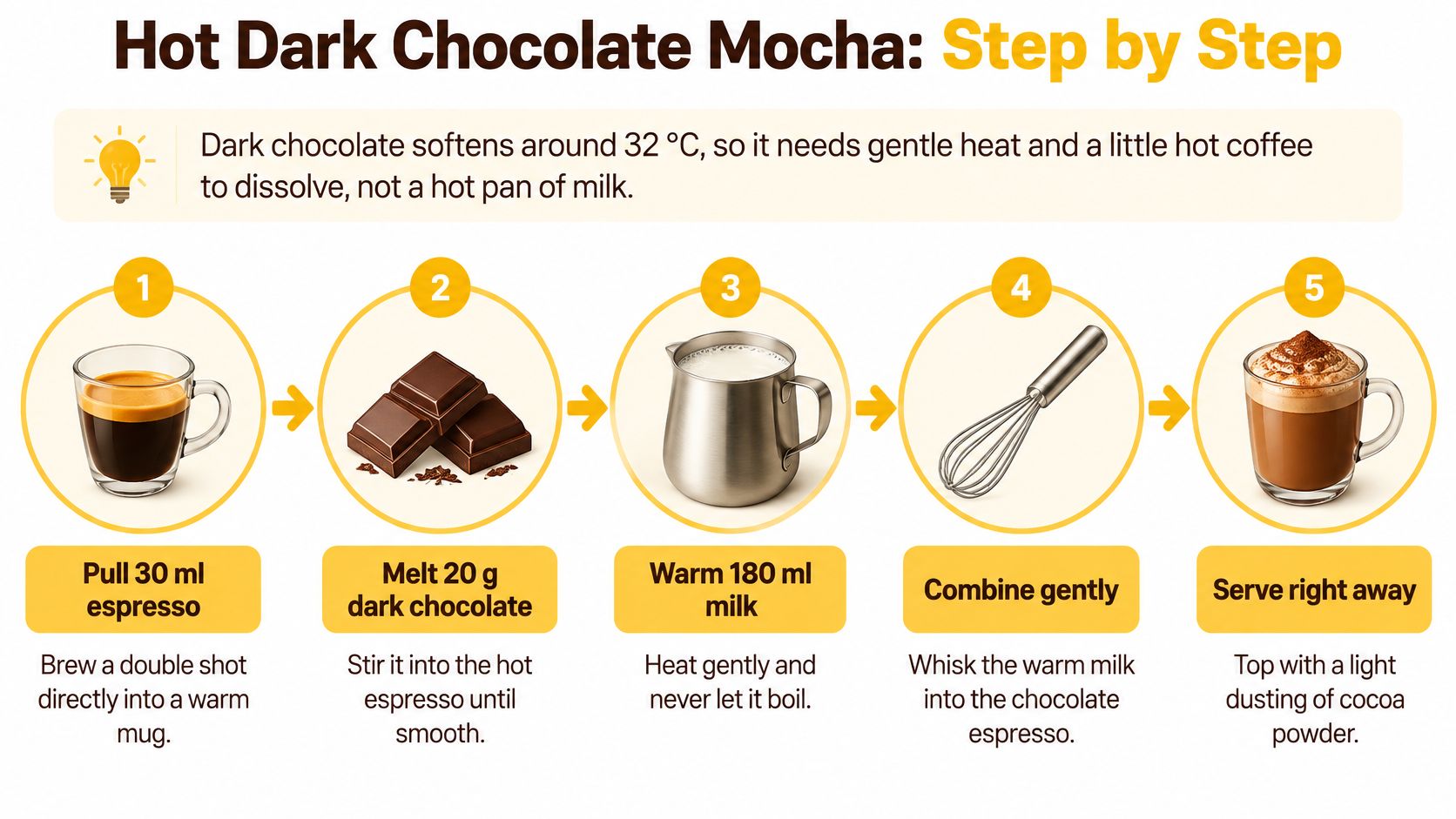
A hot mocha fails fastest at the mug: cold espresso, a thick chunk of chocolate, then milk poured on top leaves sweet foam over cocoa gravel. Melt chocolate into hot coffee first, where it can turn glossy, and treat milk as the dilution stage. For an 8 oz classic I use 30 ml espresso, 15 g dark chocolate, and 180 ml milk; the two-shot version doubles the coffee dose, so expect a clearer stimulant lift while the chocolate still sets most of the depth.
Build the base before adding milk
- Prepare the coffee first. Pull the espresso into a warm cup and keep it hot while you chop the chocolate. Starting with cold coffee makes the melting stage unnecessarily difficult.
- Chop the chocolate finely. Put the measured chocolate in your serving mug so the pieces have somewhere warm to land. Small shards melt evenly; one large piece tends to soften outside and stay waxy inside.
- Make a glossy chocolate-coffee mixture. Add some hot espresso and stir firmly, incorporating more coffee as needed until no solid pieces remain. If the paste turns stiff or grainy, add another splash of coffee and keep stirring from the bottom.
- Warm the milk separately. Heat it gently, without boiling, and use a thermometer rather than judging solely by the outside of the pitcher. Boiled milk tastes flatter and can push the chocolate toward harsh bitterness.
- Whisk in the milk gradually. Begin with a small pour, whisk until uniform, then add the remainder steadily. With a warm base this should be a short, deliberate mix that lifts any chocolate off the mug floor.
- Taste before sweetening. Add any remaining coffee, then decide whether the cup needs sweetness, more milk, or a stronger chocolate base next time. Change one variable per batch so you know what fixed it.
The visual below compresses the method to five stages; the list above has six because coffee prep and milk warming stay separate on purpose.
Judge texture before flavor
A good cup has an even brown color, a smooth surface, and a light foam line. Grit usually means under-melted chocolate or cocoa that went in dry. A dry, harsh finish points to too much dark chocolate, overheated milk, or coffee that was already bitter.
Practical rule: Fix undissolved chocolate with technique, not sugar.
Keep some cocoa edge in the cup. If bitterness crowds out the coffee, reduce chocolate intensity or rebalance the shot before adding sweetness.
How to Make an Iced Dark Chocolate Mocha
An iced mocha needs a finished chocolate-coffee base before you assemble the cold drink. Otherwise, you're trying to repair chocolate flecks while ice melts around them. Use the warm-mixing method above, then cool the base before pouring.
For this suggested stronger iced version, use 60 ml espresso, 15 g dark chocolate, 180 ml cold milk, and optional syrup, with enough room in the glass for ice. It's deliberately more coffee-forward than the lighter iced starting ratio.
The finished drink should look integrated after stirring, even if you enjoy a layered presentation first.
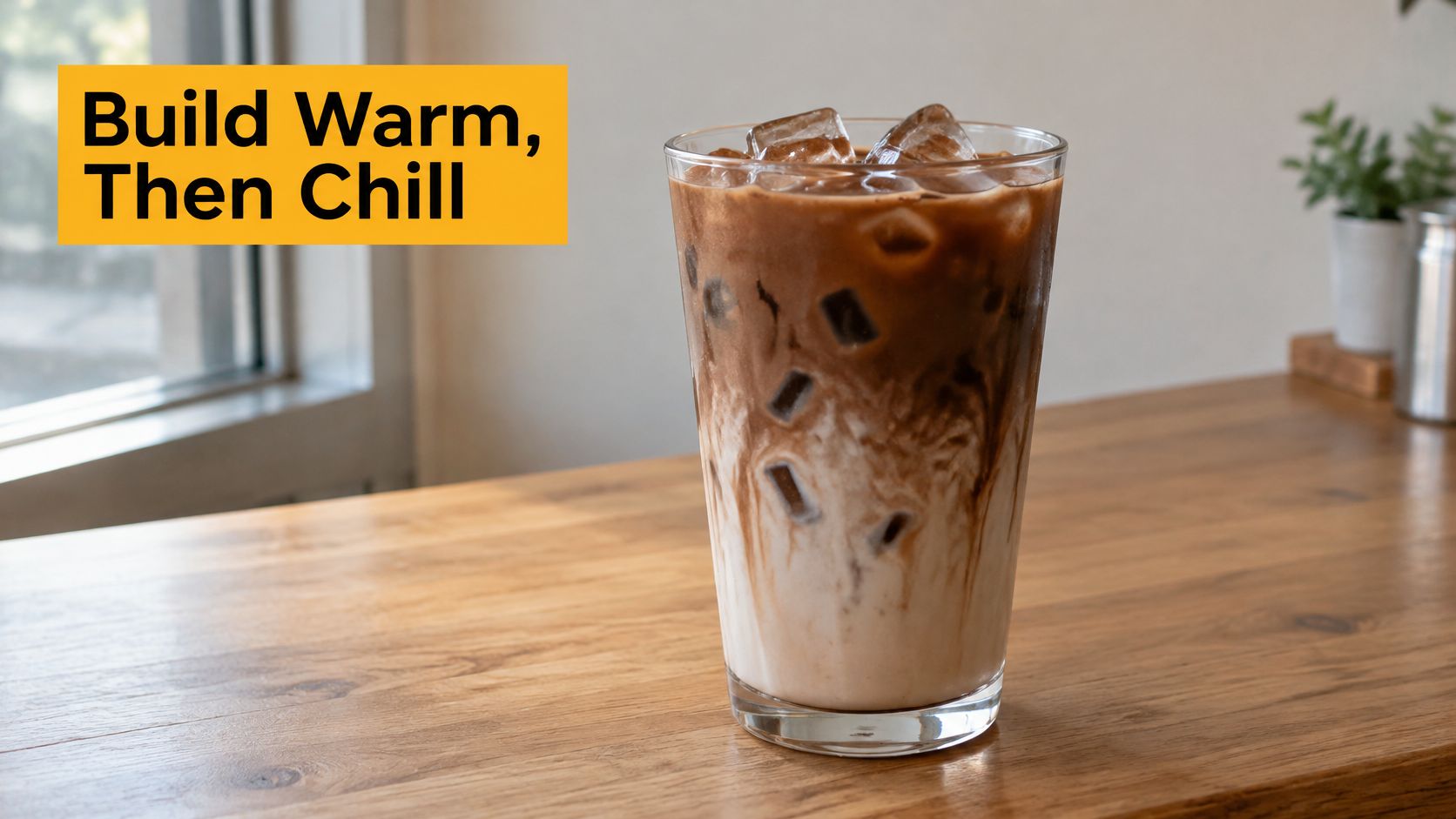
Assemble it in this order
- Brew the espresso and reserve part of it while you make the chocolate base.
- Whisk the chocolate into the remaining hot espresso until smooth, then combine with the reserved coffee.
- Add optional syrup while the base is warm. Taste before using the full suggested amount.
- Let the base cool, or refrigerate it while you prepare the glass.
- Add ice, leaving room for the liquid ingredients.
- Pour in cold milk, followed by the cooled chocolate espresso.
- Stir from the bottom until the color is even, then taste again.
For a cocoa-only variation, work unsweetened cocoa into a smooth hot-coffee paste before assembling the drink. That substitution changes the texture as well as the flavor, so don't expect it to match melted chocolate exactly.
An iced mocha should taste balanced after stirring, not just look attractive before it.
Adjust for how you'll drink it
If you'll sip slowly, start with a concentrated base and avoid overflowing the glass with milk. Pouring a still-hot base straight over the ice sacrifices control over dilution.
For a stronger, less creamy drink, shorten the milk pour rather than automatically adding more espresso. That preserves your chosen caffeine amount while changing the coffee-to-milk balance.
Instant Organic Coffee Versions That Still Taste Rich
At a campsite or shared office, instant coffee removes the need for an espresso machine without removing the need for careful mixing. A mug, spoon, small whisk, and reliable hot water are enough. The useful shortcut is the coffee preparation, not skipping the chocolate base.
This is the sort of setup where a measured dry kit earns its space.

Make the powders manageable
For the suggested hot instant formulation, start with the measured cocoa in your mug. Add a little hot water and work it into a paste, then incorporate the rest of the water and instant coffee before whisking in warm milk.
Don't pour milk onto a mound of dry ingredients and hope a quick stir will finish the job. Check the corners and bottom of the mug, where pockets of powder are easy to miss. A spoon can scrape those areas; a whisk handles the final combination.
Organic instant coffee is one option for this format, alongside conventional instant coffee or decaf. The publisher's guide to using organic instant coffee offers background on that choice, but smooth preparation depends on dissolving order, not the label alone.
A video can also help you compare the appearance of a mixed base with your own.
Pack for the cup you actually want
- Hot camping cup: Pack the coffee, cocoa, and optional sugar in measured portions, with chocolate kept separately.
- Iced office version: Make the hot concentrate first, cool it, then add refrigerated milk and ice.
- Reusable dry mix: Record the proportions on the jar instead of relying on an unmarked scoop.
If the result tastes underpowered, adjust the coffee or chocolate component. Extra sugar won't replace missing cocoa depth.
Deep Cocoa Flavor Without Piling On Sugar
Chocolate intensity and sweetness aren't the same thing. You can make a mocha taste more chocolate-forward without making it more dessert-like, but each adjustment has a cost. More dark chocolate changes body and energy content; more cocoa can make an already bitter drink harder to enjoy.
Use the flavor levers deliberately
- Choose chocolate you enjoy plain. A strongly roasted or sharply bitter bar won't become gentle just because you melt it into coffee.
- Bloom cocoa before combining. Work it into the hot base rather than sprinkling it into the finished drink. The guide to cacao powder in coffee provides another way to approach that ingredient.
- Test salt cautiously. Add a tiny pinch, taste, and stop before the drink tastes salted.
- Try vanilla for aroma. A small amount offers a different direction without requiring another spoonful of syrup.
- Read the milk carton. Choose by ingredients and sweetness, not assumptions about dairy or oat milk.
- Reduce dilution when appropriate. A shorter milk pour may solve a weak-tasting cup more directly than extra chocolate.
These are tasting options, not a requirement to put every addition in the same mug.
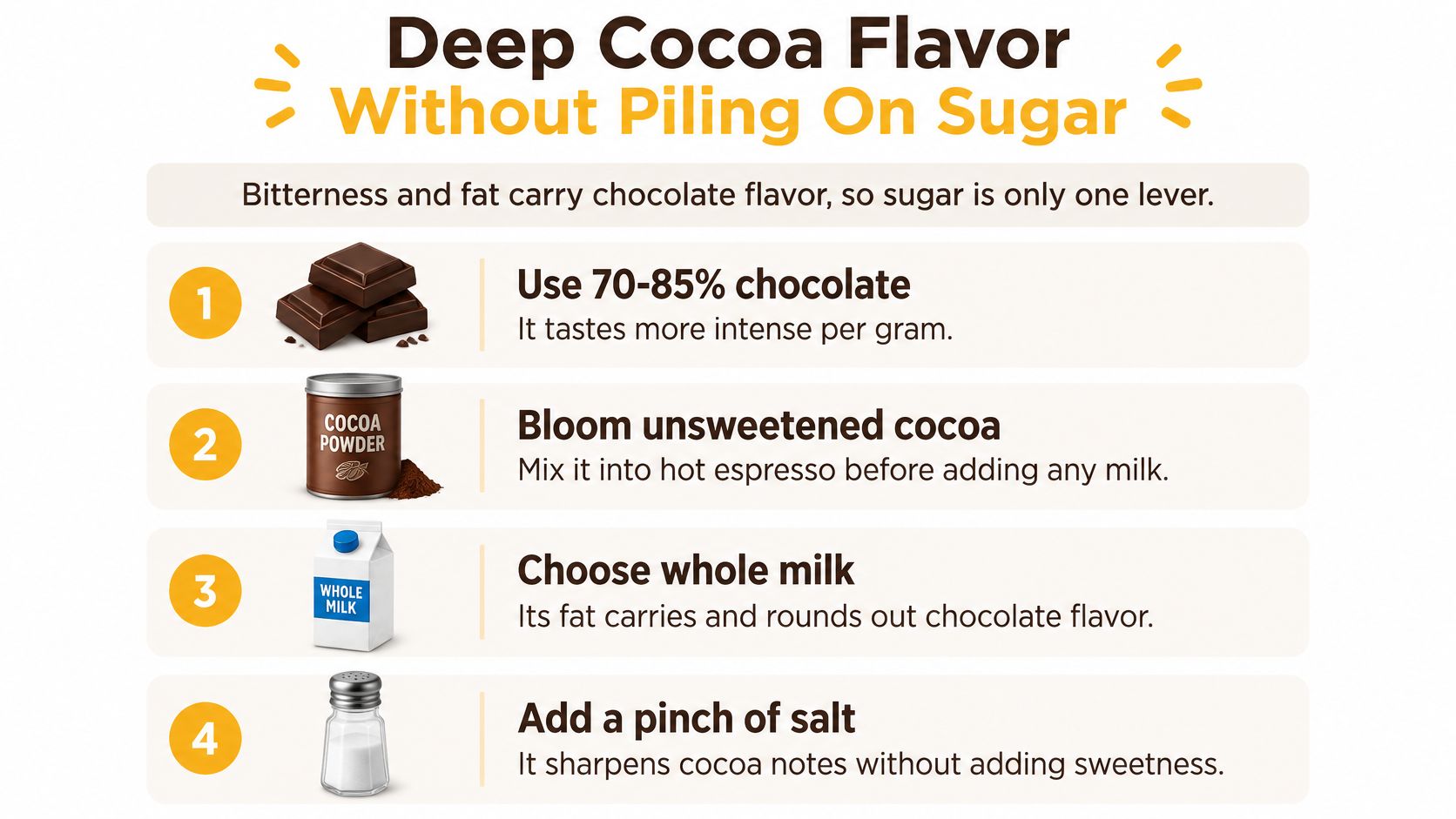
Compare ingredients without a wellness halo
Harvard's dark chocolate nutrition guidance places dark chocolate at roughly 150–170 calories per ounce, recommends moderation, and advises choosing products tested for lower heavy-metal levels. That's a reason to measure the portion, not to avoid enjoying it.
Chocolate sources compared by calories and added sugar
| Source | Suggested recipe amount | Calories, estimated | Added sugar |
|---|---|---|---|
| 70–85% dark chocolate | 15 g | Calculate from the specific bar's label | Depends on brand |
| Unsweetened cocoa | 1 tbsp | Check the product's serving information | None if the ingredient is solely unsweetened cocoa |
| Chocolate or mocha syrup | 1 tbsp | Check the syrup label | Depends on formulation |
Don't assign a health benefit to an unspecified scoop of cocoa. Cocoa percentage doesn't establish flavanol content, and neither an organic label nor a dark wrapper proves superior nutrition. Choose the ingredient for the cup you want, then assess its portion, sugar, and available testing information.
Caffeine Per Cup and When to Stop Drinking Mocha
A chocolate-heavy mocha isn't necessarily a low-caffeine mocha. Cocoa contributes caffeine, so counting only the coffee understates the total. It also contains theobromine, a milder stimulant that needs to be considered separately rather than converted into an invented caffeine equivalent.
The BBC's discussion of chocolate and caffeine provides useful benchmarks: roughly 20–30 mg caffeine per 30 g dark chocolate, compared with about 95 mg in an 8-ounce brewed coffee. Those are estimates, not measurements of your espresso or cocoa powder.
Calculate what you can verify
Use the caffeine amount supplied for your actual coffee preparation, then add the chocolate contribution. Don't use the brewed-coffee benchmark as though it measured a concentrated espresso shot.
Estimated caffeine per dark chocolate mocha
| Version | Coffee caffeine, estimated | Chocolate or cocoa caffeine, estimated | Total, estimated |
|---|---|---|---|
| Hot 8 oz, espresso plus 15 g chocolate | Use the coffee supplier's estimate | About 10–15 mg, scaled from the benchmark above | Coffee amount plus 10–15 mg |
| Hot 12 oz, double espresso plus 20 g chocolate | Use the supplier's double-shot estimate | About 13–20 mg, scaled from the benchmark above | Coffee amount plus 13–20 mg |
| Iced 16 oz, double espresso plus 15 g chocolate | Use the supplier's double-shot estimate | About 10–15 mg, scaled from the benchmark above | Coffee amount plus 10–15 mg |
| Hot instant organic with cocoa | Check the instant coffee information | Requires cocoa product data | Add the verified ingredient amounts |
| Iced instant organic with cocoa and chocolate | Check the amount of instant actually used | Chocolate contribution plus product-specific cocoa caffeine | Add all verified contributions |
| Decaf instant with cocoa | Check the decaf product information | Requires cocoa product data | Lower-caffeine option, not a guaranteed zero |
For more on comparing preparations, consult the guide to coffee caffeine content. If either ingredient lacks caffeine information, an exact total isn't defensible.
Set your own evening boundary
Caffeine check: Replacing coffee with more dark chocolate doesn't automatically make an evening-friendly drink.
If mocha affects your sleep, move it earlier or choose a smaller, lower-caffeine version. People who are pregnant, caffeine-sensitive, or managing reflux should discuss appropriate intake with their healthcare professional rather than relying on a recipe's serving size. Decaf can reduce the coffee contribution, but it doesn't remove cocoa's stimulants.
Garnish and Serve Your Dark Chocolate Mocha
Choose the version around the situation: a compact hot cup for a weekday morning, an iced drink when you want something cold, or an instant formulation when equipment is limited. Then finish it with a garnish that adds contrast rather than burying the chocolate.
Match the garnish to the drink
- Hot and chocolate-forward: Use a light dusting of cocoa or finely grated dark chocolate. Keep the surface thin enough that it doesn't become a dry mouthful.
- Cold and creamy: Try a few flakes of sea salt, then stir before judging the balance.
- Bright and aromatic: Express an orange-zest twist over the cup and remove it if the flavor becomes dominant.
- Warm and spiced: Add a cinnamon stick as an aromatic accent rather than covering the surface with powder.
- Crunchy: Use cocoa nibs only if you want texture. They aren't a substitute for properly dissolved chocolate.
Pick a garnish, taste, and stop. A balanced mocha doesn't need to become a collection of toppings.
Serve fresh and handle milk carefully
Make the drink close to consumption, and don't treat an insulated mug as a safety system for extended warm holding. Use pasteurized milk and follow appropriate refrigeration practices; chocolate's sugar and fat don't make a milk drink safe to leave out.
USDA material on milk processing and pasteurization explains that pasteurization uses specified temperatures and times to destroy dangerous bacteria. Home steaming isn't a replacement for that validated process, and a drink that looks acceptable isn't necessarily safe.
If you're saving a freshly prepared portion, cool and refrigerate it promptly rather than repeatedly warming the whole batch. Treat dairy alternatives with the same attention to handling and their own storage instructions.
Make the amount you want to drink, not a large batch you'll keep lukewarm.
Try the classic hot formulation this week. Record the chocolate weight, coffee preparation, milk amount, and any sugar, then change only the ingredient that needs adjusting next time. That gives you a repeatable recipe instead of another cup you can't quite recreate.
Cartograph Coffee offers organic instant coffee for home, work, and camping, making it one option for the instant mocha method above. Visit Cartograph Coffee, choose your coffee base, and pair it with measured cocoa or dark chocolate to build a cup around your preferred balance of richness and sweetness.