A typical 12-ounce Americano contains about 150 mg of caffeine because the dose comes from the espresso shots, not the added water. Its mild taste doesn't mean it delivers a small amount of caffeine.
A Frontiers in Nutrition study uses 150 mg per Americano serving as a reference value. That's the useful way to approach this drink: count the caffeine in the espresso base, then decide how much water makes it pleasant to drink. Your tongue can judge flavor, but it can't measure milligrams.
What an Americano Actually Contains
An Americano contains espresso and water. At a café, the barista pulls the espresso and combines it with hot water to create a longer drink. The result can taste much gentler than straight espresso, even though you're drinking all the caffeine extracted into those shots.
Say you order an Americano before work. The barista makes the espresso, pours it into your mug, and adds water. You take a sip and decide it tastes light enough for another cup later. The missing detail isn't the mug's size or the coffee's color. It's the espresso recipe.
Water stretches the drink
Think of adding water to orange juice. You get more liquid and less orange flavor in each sip, but you haven't removed the juice you started with. You've spread it through a larger serving.
Water plays the same role in an Americano. It's a stretcher, not a subtractor. Unless you leave some of the drink unfinished, you consume the caffeine carried into the mug by the espresso.
That distinction separates two meanings of strength:
- Flavor strength describes how concentrated or intense the drink tastes.
- Caffeine dose describes the total milligrams you consume.
- Serving size describes how much liquid is in the cup, not necessarily how much espresso it contains.
Ask about the espresso base
The word shot also needs context. A café's standard espresso serving may use a different coffee dose or beverage yield from the one you make at home. Understanding espresso shot size helps you ask a more useful question than whether the drink is strong.
Ask the barista how many shots go into your chosen size and whether a larger cup gets additional espresso. Those answers make comparisons with brewed coffee, instant coffee, and your daily caffeine intake much more meaningful.
Practical rule: Ask how many shots are in the cup before judging it by color, size, or taste.
Typical Caffeine in an Americano
| Drink | Usual build | Caffeine |
|---|---|---|
| Single espresso | 1 fl oz, about 30 mL | About 63 mg |
| One-shot Americano | 1 espresso shot plus water | About 63 mg |
| Two-shot Americano | 2 espresso shots plus water | About 126 mg |
| 8 fl oz Americano | Often 1 to 2 shots in about 240 mL | About 63–126 mg |
| 12 fl oz Americano | Often 2 shots in about 340 mL | About 94–150 mg |
A 2024 peer-reviewed coffee study gives about 63 mg per standard espresso, 63–126 mg for an 8-ounce Americano, and about 150 mg for a 12-ounce Americano, with USDA-linked estimates of 94–150 mg for the 12-ounce drink. These are typical reference values, not fixed amounts for every café recipe.
Read the rows as estimates, not specifications
Use the espresso row as the measuring unit. The shot-based arithmetic is simple: two shots × about 63 mg = about 126 mg. Adding water increases the drink's volume, much like adding water to juice spreads the flavor through more liquid. It does not subtract the caffeine already in the espresso.
The size-based rows describe common serving builds, not a precise caffeine dose for every cup of that size. A 12-ounce Americano may contain two shots, but its estimated range reflects differences in the espresso recipe. Cup size helps identify the drink; shot count gives a clearer starting point for estimating its caffeine.
Match the estimate to your order
If you know the shot count, use the corresponding shot-based estimate. If the café publishes caffeine information for its recipe, use that figure instead. When you know only the cup size, treat the size-based range as a guide.
For repeat orders, record the drink size, shot count, any published caffeine information, and when you drink it. That gives you a more useful picture of your daily intake than cup size alone. For help deciding when to have a coffee, read the Sleep Consultant's guide to caffeine timing for better rest.
What Changes the Caffeine Dose
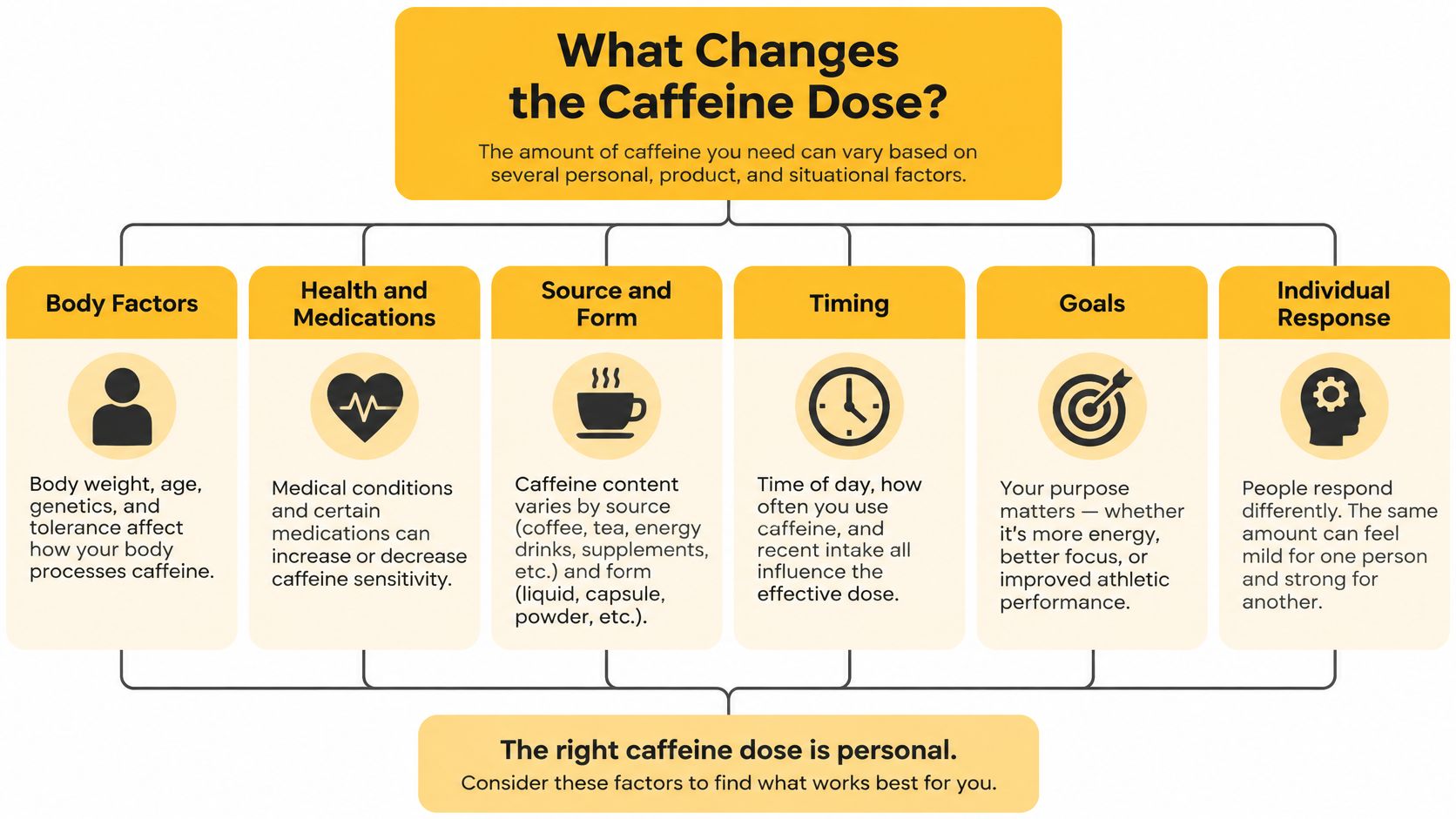
The most useful information comes from the recipe, not the finished mug. Ask about the factors below in this order, starting with what's easiest to establish at the counter.
Start with shots and the coffee dose
Shot count is the first check. An extra shot adds another portion of extracted coffee. If the barista makes your large Americano with additional espresso, that matters more than the extra space in the cup.
Next, ask how the café defines its espresso serving. Baristas commonly work with the weight of dry grounds and the weight of liquid espresso produced. Those measurements describe the recipe more clearly than the appearance of a shot glass.
A larger coffee puck gives the brewer more coffee to extract from. Changing the pull length can also change caffeine extraction, but the result isn't a simple rule that a longer-looking shot always contains proportionally more caffeine. The coffee dose and extraction conditions still matter.
At home, use a digital coffee scale to keep the dry dose and espresso yield consistent. Measuring only the water you add afterward won't make an inconsistent espresso recipe predictable.
Check beans and brewing before dilution
Bean selection comes next. Canephora generally contains more caffeine than arabica, so changing the blend can change the caffeine dose even when the drink looks familiar. Roast color is less useful as a consumer shortcut because a dark, bitter cup doesn't tell you the weight or composition of the coffee used.
Brewing method also deserves a clear label. A home moka pot makes concentrated coffee, but you shouldn't automatically assign it the caffeine estimate for a café espresso shot. Likewise, pulling more water through the grounds isn't the same action as adding clean water to finished espresso.
Use these distinctions when checking coffee caffeine content:
- Coffee going into the brewer establishes the material available for extraction.
- Water passing through grounds participates in brewing and can change extraction.
- Water added after brewing changes the finished drink's concentration.
Keep concentration separate from the total
A 2023 review in Pharmaceuticals reports approximately 91.7–213.3 mg of caffeine per 100 mL of Americano. That is a concentration range, not a universal serving total, and it shouldn't be multiplied across an unfamiliar café cup as though every recipe had that concentration.
The reported range also doesn't describe a universal espresso base before dilution. It describes Americano coffee as reported in that review. The practical lesson is to keep the units attached to the number: per serving and per volume answer different questions.
Think of added water as a dimmer switch for perceived intensity. To investigate the actual dose, ask about shots, coffee weight, and beans, in that order, rather than inspecting how dark the cup looks.
Americano Compared with Other Coffees
At the counter, the useful question isn't which drink sounds strongest. It's which preparation gives you the caffeine amount you want in a serving you'll finish.
| Drink | Reference serving | Typical caffeine | What sets the dose |
|---|---|---|---|
| Espresso | 1 fl oz, about 30 mL | About 63 mg | Shot size and dose |
| Café Americano | 12 fl oz, about 340 mL | About 150 mg | Often two shots plus water |
| Brewed coffee | 8 fl oz | About 96 mg | Coffee weight and brew volume |
| Instant coffee | 8 fl oz | About 62 mg | Powder amount per cup |
The Mayo Clinic caffeine guide gives reference values of approximately 63 mg for espresso, 96 mg for an 8-ounce brewed coffee, and 62 mg for an 8-ounce instant coffee. The café Americano row uses the serving estimate established earlier, so the table compares common servings rather than equal volumes.
Compare the order you'll drink
In this particular comparison, the café Americano has the highest reference serving dose. That doesn't establish a ranking for every coffee shop. A different brewed-coffee serving or espresso recipe can change the result.
Brewed coffee depends on the coffee used to make the batch and how much of that batch you drink. Americano caffeine depends chiefly on its espresso base. Instant coffee depends on the product and the powder you measure into the cup.
Those differences matter when you change your order:
- Small brewed coffee to a two-shot Americano may be an increase in caffeine, even if the Americano tastes gentler.
- Americano to measured instant coffee can give you a more controllable preparation because you choose the powder amount, though the product's own caffeine information still matters.
- Straight espresso to an Americano with additional shots increases the espresso you consume, despite making each sip less concentrated.
If you're exploring instant and brewed options from Japanese brands, the Buy Me Japan coffee guide can help you identify products to compare. Then check the actual format, serving instructions, and available caffeine information rather than assigning a dose from a brand name alone.
Don't let the drink name replace the recipe
The same principle applies to milk-based café drinks. Ask about their espresso base rather than assuming a latte, cappuccino, or mocha has a predictable caffeine amount because of its name.
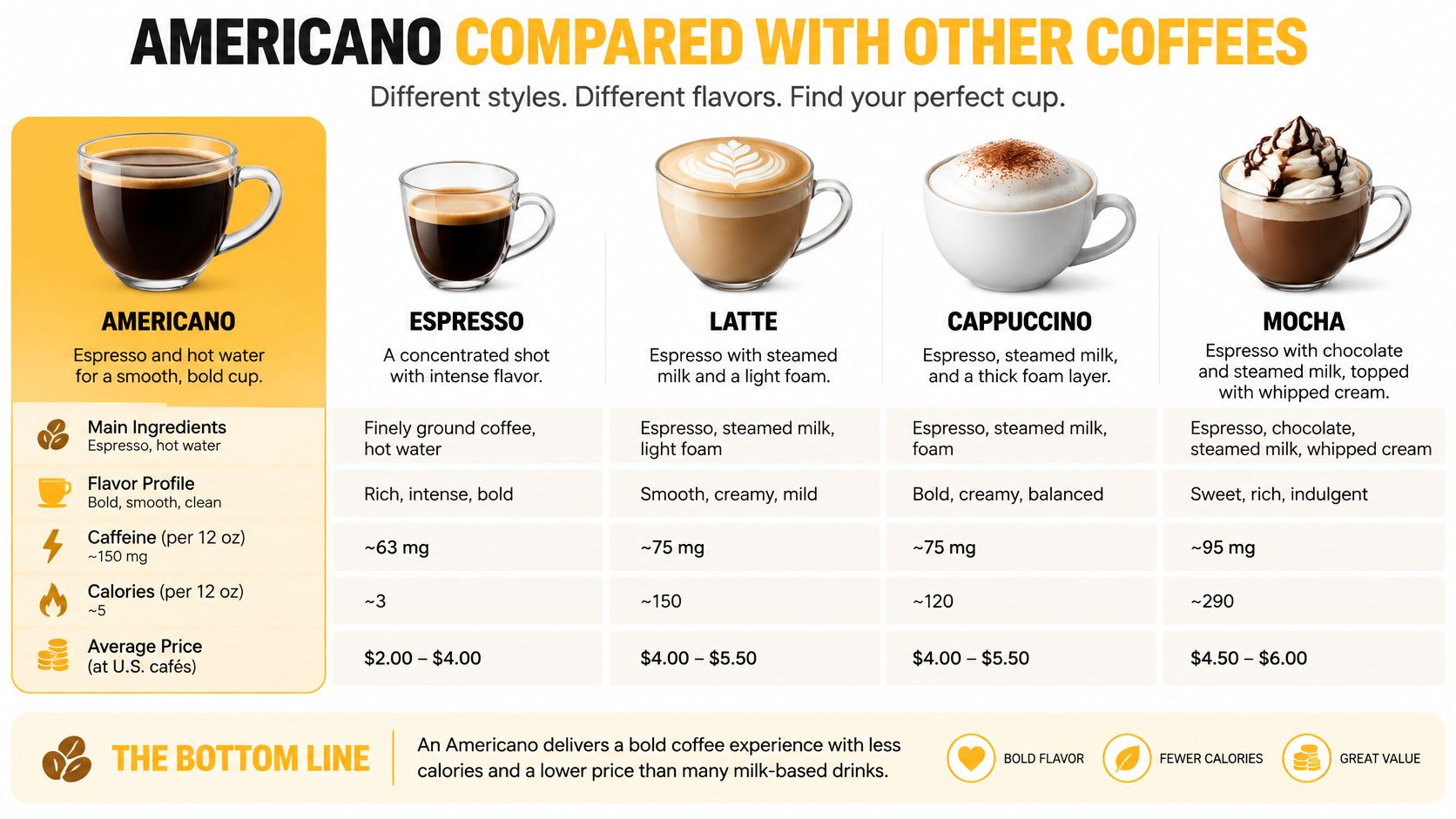
Milk, foam, chocolate, and water change the experience of drinking coffee, but the espresso recipe remains an important starting point. Don't use a general comparison graphic as a substitute for a shop's ingredient and caffeine information.
Compare milligrams per drink you'll finish, with the preparation named. Cup ounces alone hide too much of the recipe.
How an Americano Fits a 400 mg Day
The U.S. Food and Drug Administration states that up to 400 mg of caffeine per day is an amount not generally associated with negative effects for most adults, described as roughly two to three 12-ounce cups of regular coffee. Against that benchmark, a 150 mg Americano accounts for 37.5%, while two provide about 300 mg, or 75%; the 143 mg Americano average measured in a study of 299 coffees is about 36%.
Treat that guidance as a population benchmark, not a target you need to reach. The FDA also emphasizes individual differences in sensitivity and variation among caffeinated products.
Budget for the whole day
Say your workday includes a café Americano in the morning and another during an afternoon break. Before placing the second order, include everything else you've consumed or intend to consume, rather than keeping a coffee-only tally.
The sources that still belong in that tally include:
- Tea, including cups you don't think of as a caffeine purchase.
- Chocolate, particularly when you're eating it alongside coffee.
- Energy drinks, even if they replace a snack rather than a beverage.
- Supplements and medications, checked against their labels and pharmacist advice.
A larger water portion doesn't create more room in this budget. It may make a drink easier to sip or finish, but you still need to record the espresso it contains.
Understand which estimate a chart uses
The illustration below uses standard shot arithmetic, not the higher café-serving estimate used in the workday example. Those are different assumptions, so don't switch between them to make an extra cup appear to fit.
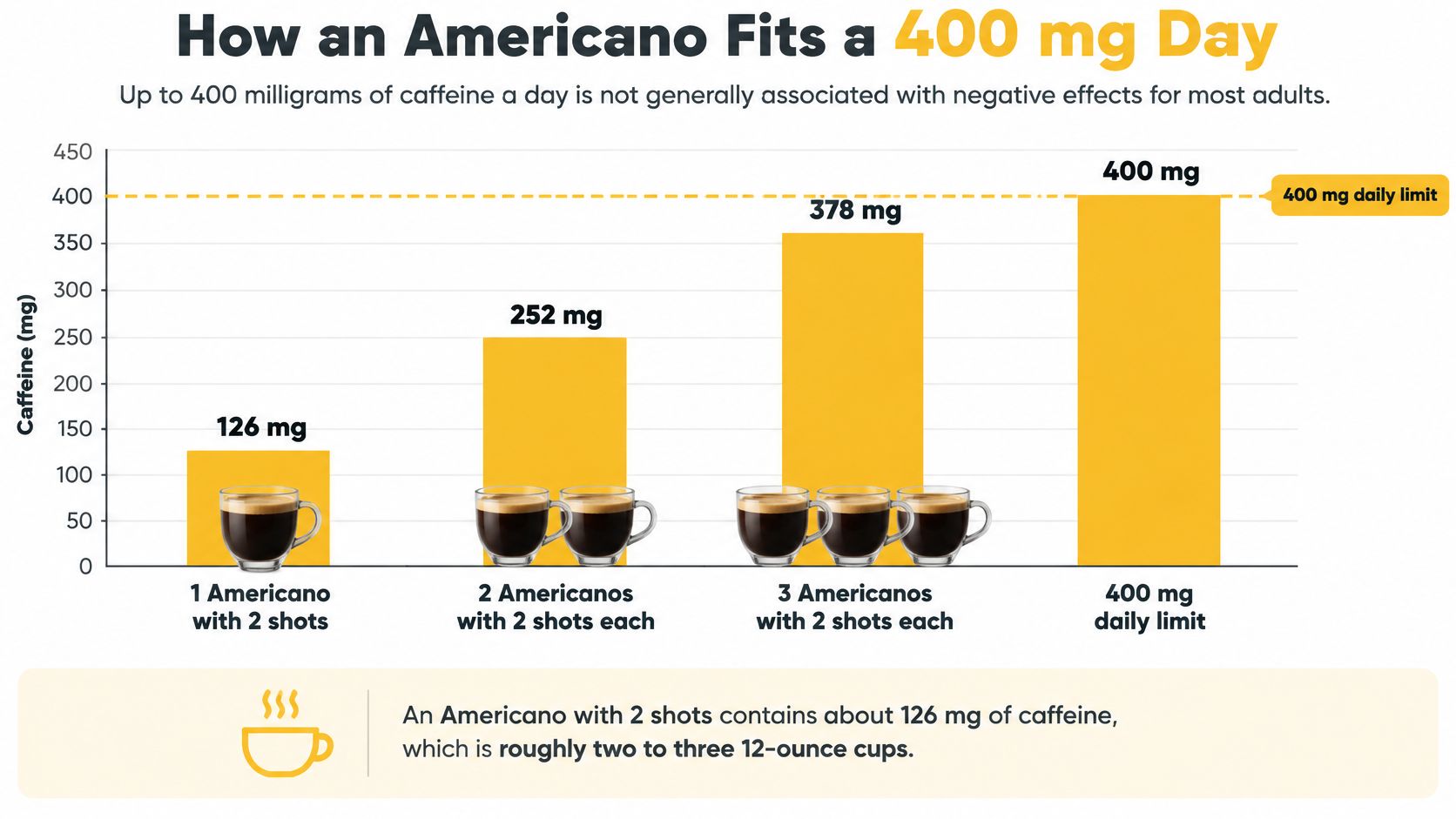
The chart's reference line isn't a personal prescription. Pregnancy, adolescence, medical conditions, and medication use call for advice appropriate to the person, not automatic use of a general adult benchmark.
For a broader decision framework, use this guide to how much caffeine is safe per day, then discuss your circumstances with a clinician when needed.
Keep the tally simple: use the café's published caffeine figure when available, use shot-based estimates cautiously when it isn't, and add every other caffeine source. If your reaction to coffee tells you the amount doesn't suit you, don't let an unused portion of a general benchmark persuade you otherwise.
Myths About Dilution and Strength
Most confusion about caffeine in Americano comes from treating sensory clues as measurements. Size, smoothness, bitterness, and temperature can all influence your impression without revealing the espresso recipe.
A bigger cup must be stronger
Not if the barista only adds water. Consider a shop that uses the same espresso base for its regular and large Americanos. Choosing the large gives you a longer drink, not additional espresso.
The counterexample is a café that adds another shot to the larger size. That order does carry more caffeine because the recipe changed, not because the cup is taller. Ask what changes between sizes before paying for an upgrade.
A smoother drink must have less caffeine
A sharp espresso can feel more powerful than an easy-drinking Americano made from that same espresso. Your mouth is responding to the concentration and flavor balance, not reading the total caffeine.
To see the distinction at home, taste your espresso before adding water, then taste the finished Americano. You've changed the sensory experience without taking caffeine out of the drink.
A dark or bitter coffee must contain more
Roast flavor isn't a caffeine measurement. A dark-roasted coffee can taste forceful in a modest recipe, while a less bitter coffee can be prepared with more grounds or additional shots.
An unpleasantly bitter pull also doesn't provide a reliable caffeine result. If a cup tastes unusually harsh, ask about preparation rather than trying to translate that bitterness into milligrams.
Iced Americanos belong in a different category
With the same espresso base, choosing ice instead of a hot-water serving doesn't create a separate caffeine category. Melting ice changes the drink's temperature and concentration, not which shots were added.
The important exception is a shop that puts extra espresso into its large iced recipe. A refreshing drink can conceal that change especially well because you may finish it without noticing much flavor intensity.
Taste reports your sensory experience. The espresso recipe gives you the better estimate of the dose.
Choose a Cup That Matches Your Day
Choose your caffeine amount before choosing how large you want the drink to look. That approach works at a café counter, beside a camp stove, or between meetings when convenience matters more than ceremony.
Match the preparation to the situation
For a focused morning, order an Americano with an explicit shot count and check the café's caffeine information if it's available. If you're planning tea, an energy drink, or another coffee later, include those plans before deciding that a repeat order is harmless.
For a smaller, more controlled preparation at your desk or campsite, consider measured instant coffee rather than assuming a pale Americano is a light dose. Use the product's stated serving weight and caffeine information where available, and measure the powder consistently. Instant coffee isn't automatically low in caffeine just because it dissolves in water.
If you've already consumed much of your intended daily amount, consider fewer caffeinated shots or a caffeine-free drink. Adding water to your usual order can make it last longer, but it isn't the way to reduce the caffeine you've ordered.
- Ask or measure the espresso base or instant-coffee serving.
- Add the other sources you've consumed and still plan to have.
- Choose deliberately instead of letting cup size or mildness make the decision.
A kitchen scale and a simple note on your phone are more useful than trying to remember whether the last cup tasted strong. If a manufacturer doesn't provide a caffeine figure, don't treat a carefully measured portion as a laboratory-confirmed dose.
Make your next order specific: name the shot count, ask whether size changes the recipe, and record the best available estimate. If the recipe is unknown, the caffeine is unknown, no matter how gentle the cup tastes.
Cartograph Coffee offers organic instant coffee for home, work, and camping, providing an alternative to an espresso-based order. Visit its product information and check the stated serving instructions and any available caffeine details before deciding how a cup fits your day.