A pound (454 g) of roasted ground coffee makes about 30 standard 8 oz cups at 15 g per cup, about 45 cups at 10 g, and about 18 cups at 25 g. The actual count depends on how much coffee you use per serving and how large your cup is.
That difference matters when you're estimating what a bag will make. A “cup” might mean an 8 oz serving or a large travel mug, and a stronger brew consumes more coffee each time. The most useful estimate is the one based on your own dose and mug, not a single cups-per-pound rule.
How Many Cups Are in One Pound of Coffee
At a standard dose of 15 g per 8 oz cup, 1 pound yields about 30 cups. To calculate your own number, convert the bag to grams, then divide by the dry coffee dose for each serving: 454 ÷ dose in grams = cups per pound. This counts servings' worth of coffee, not the final volume of brewed beverage.
| Brew strength | Coffee per 8 oz cup | Ratio (water:coffee) | Cups per 1 lb (454 g) |
|---|---|---|---|
| Light | 10 g (about 2 level tbsp) | 1:24 | 45 |
| Standard | 15 g (about 3 level tbsp) | 1:16 | 30 |
| Strong | 20 g (about 4 level tbsp) | 1:12 | 22 |
| Extra strong | 25 g (about 5 level tbsp) | 1:10 | 18 |
The cup counts are rounded from the division. For example, 454 ÷ 20 = 22.7, so a 20 g dose makes about 22 full servings, with some coffee left over. The tablespoons are estimates, not a substitute for weighing: grind size and how loosely or firmly the grounds sit in a spoon affect the amount.
Mug size changes the count
A 16 oz mug holds twice the water of an 8 oz serving. At the same 1:16 coffee-to-water ratio, it takes about 30 g of coffee, so a pound makes roughly 15 mugs. The ratio gives you a consistent strength; the larger vessel uses more coffee per serving.
The drip-coffee ratio study identifies brew ratio as an important variable in extraction and sensory results. That's why cup count alone doesn't tell you whether a pound is a good fit: the same bag can produce more servings at a lighter dose or fewer, stronger servings at a heavier one.
Value check: A lighter dose lowers the coffee cost of each serving on paper. If the brew tastes too weak and you compensate with another cup, cream, or sugar, the apparent saving may shrink.
Choose the row closest to the way you brew, then use its cup count to plan. If you routinely fill a large mug, calculate by mug size rather than treating it as one standard cup.
Grams, Ounces and Scoop Conversions for One Pound
One pound is 453.6 g, or 16 oz. For quick calculations, 1 oz is about 28.35 g. The bag's stated net weight is the starting point: check the label before using a conversion, especially if you're comparing packages that don't contain a full pound.
| Measure | Notes |
|---|---|
| 1 pound | Standard net weight of a 1 lb bag |
| 1 ounce | About 28.35 g; useful for small doses |
| 1 kilogram | About 2.2 lb, or 1,000 g |
| 1 US cup whole beans | Weigh; density changes with roast |
Why scoops drift
A tablespoon of drip-ground coffee may weigh about 5 g, so two level tablespoons are roughly 10 g. But a spoon measures volume, not mass. Fine grounds can pack more tightly than coarse grounds, and darker-roasted beans are less dense and occupy more volume. The same scoop can therefore deliver a different dose from one coffee to another.
Whole beans also don't have a dependable cup-to-gram conversion. Bean size, roast, and how the beans settle in the cup all affect the amount, so treat a cup measure of beans as weigh-only when you need a repeatable recipe.
Use the bag label and a scale
A kitchen scale with 1 g resolution makes dosing straightforward. Put your brewer or filter on the scale, tare it to zero, add coffee to the target weight, then weigh the water separately or weigh it as you pour. Ounces are a workable fallback, but grams are easier for small changes between brews.
For example, a 20 g dose is about 0.7 oz. A bag labeled 12 oz, however, tells you the package's net mass, not how much volume the beans or grounds occupy. Check whether the label lists ounces by weight, then convert from that amount rather than relying on a cup or scoop.
Brew Ratios and Water Needed for Each Method
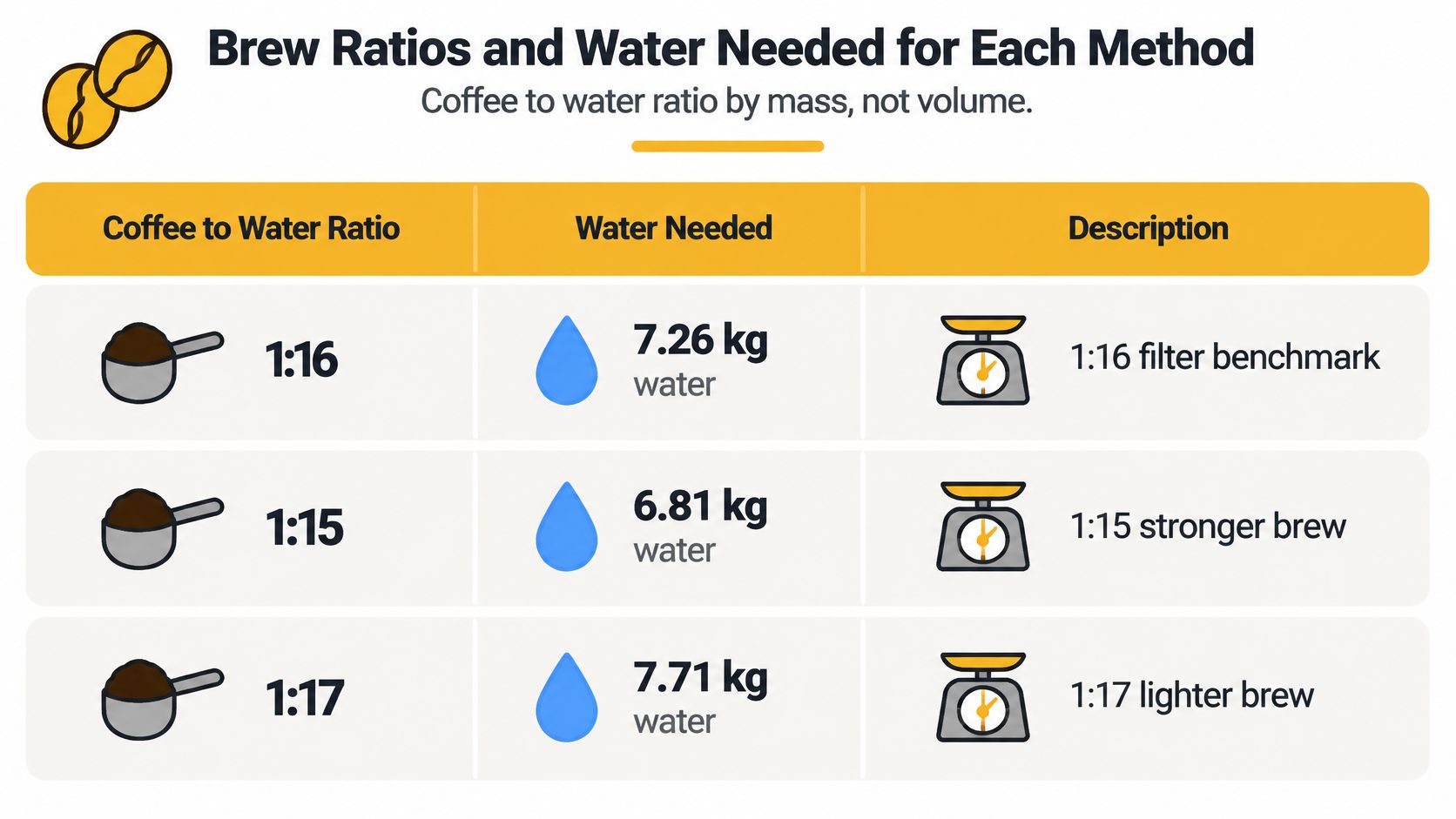
At a 1:16 ratio, one pound of coffee calls for about 7.26 kg of water. The ratio compares coffee and water by mass, not volume. With the same 454 g of coffee, a 1:15 ratio uses about 6.81 kg of water, while 1:17 uses about 7.71 kg. A smaller ratio makes a stronger brew by using less water for the same coffee dose.
| Method | Typical ratio (coffee:water) | Notes |
|---|---|---|
| French press | 1:12 to 1:15 | Full immersion; coarse grind |
| Drip machine | 1:15 to 1:17 | Weigh water; 1:16 (7.26 kg) is a common start |
| Pour-over | 1:15 to 1:17 | Grind speed controls drawdown time |
| AeroPress | 1:12 to 1:16 | Brew concentrated, then dilute for larger mugs |
| Moka pot | 1:7 to 1:10 | Concentrated; dilute with hot water |
| Cold brew concentrate | 1:4 to 1:5 | Dilute about 1:1 before drinking |
| Espresso | Recipe-specific | Dose in, liquid out; use a scale |
These totals describe how much water the ratio calls for, not how much liquid reaches the cup. Grounds retain water. For example, a 20 g dose brewed with 320 g of water at 1:16 yields around 280 to 290 g of beverage, depending on grind, filter, and method.
For repeatable filter coffee, weigh both ingredients. Volume measures shift with grind and roast; mass keeps the ratio consistent. For serving-dose guidance, see this guide to grams of coffee per cup. If a pound is stretched across more servings, each serving gets less coffee. Adding a second serving or extra cream can offset that saving, so compare the dose and mug size you use.
Adjust one variable at a time
Start near the middle of your method's ratio range. If the coffee tastes too strong, add a little more water for the same dose. If it tastes too weak, use less water or more coffee. Change one variable at a time to identify what altered the cup.
Grind and filter choice also affect extraction and drawdown. Keep the grind, dose, or water amount unchanged while testing another variable, and hold water temperature steady while making adjustments. This makes comparisons clearer without changing several parts of the recipe at once.
Espresso, Cold Brew and Large Mug Edge Cases
An 18 g espresso dose produces about 25 doses from a pound, because 454 ÷ 18 = 25.2. Espresso is usually tracked as dry coffee going in and liquid espresso coming out, so a scale is more useful than counting cups. A shot's beverage weight is a different measurement from the dose.
Cold brew concentrate uses a much tighter ratio than standard filter coffee. At 1:4, one pound needs about 1.8 kg of water; diluting the concentrate roughly 1:1 produces about 3.6 kg of finished drink, or around 15 standard 8 oz servings. That estimate treats a serving as about 237 g of beverage and assumes the concentrate is diluted evenly. Grounds retain water, so the amount you can pour may be lower.
Calculate for the container you'll actually use
A 20 oz mug holds about 591 g of water. At 1:16, that calls for about 37 g of coffee per mug (591 ÷ 16), so one pound makes about 12 mugs. A larger serving doesn't create extra coffee; it spends more of the bag in one pour.
The same method helps with camping plans. If you choose a dose of 20 g per 8 oz serving and plan two servings a day for four days, you'll need 160 g of coffee (20 × 2 × 4), roughly a third of a pound. Pack by dose, not by an assumed number of cups, especially if your camp mug is larger than your home cup.
When the brewing method or mug changes, recalculate using coffee and water in grams. The ratio sets the brew strength; the dose determines how many servings the pound can provide.
Stronger brewing can suit a smaller serving or someone who wants one concentrated cup, but it reduces the count. For a larger mug, you can brew concentrate and dilute it, or scale coffee and water together to keep the same ratio.
Cups From a Pound of Instant Coffee
Instant coffee uses a different serving dose because the powder dissolves in the water rather than leaving spent grounds. A practical starting point is about 2 g for a level teaspoon, 3 g for a heaping teaspoon, or 4 g for two teaspoons. Using a 454 g pound, the arithmetic is:
- Level teaspoon: 454 ÷ 2 = about 227 cups.
- Heaping teaspoon: 454 ÷ 3 = about 151 cups.
- Two teaspoons: 454 ÷ 4 = about 113 cups.
These estimates use an 8 oz serving as the reference. A teaspoon's actual weight changes with granule size and how it's filled, so weigh a sample from your own package if you want a reliable count. Taste matters too: a stronger cup uses more powder and reduces the number of servings.
Why instant yield differs
The USDA coffee conversion table estimates that one pound of green coffee yields about 0.84 pounds of roasted coffee, but about 0.40 pounds of instant soluble coffee under its conversion basis. Those are processing yields from green coffee, not a claim that a retail pound of instant contains only 0.40 pounds. A pound of instant is already finished product, and its cup count depends on how much powder you use per mug.
That distinction helps explain why “cups per pound” for instant can look much higher than for ground coffee. Ground coffee is dosed into a filter or brewer, and some liquid stays in the grounds; instant is measured directly into the serving and dissolves. For a larger mug, keep the dose appropriate to the volume. If a 12 oz mug needs 4.5 g to match the strength of a 3 g dose in an 8 oz cup, a pound makes about 101 mugs (454 ÷ 4.5).
For a more precise starting dose, use this guide to how much instant coffee per cup, then adjust to your mug and preferred strength.
Storage Guidance and Shelf-Life Estimates
| Storage condition | Estimated quality-limited shelf life | Notes |
|---|---|---|
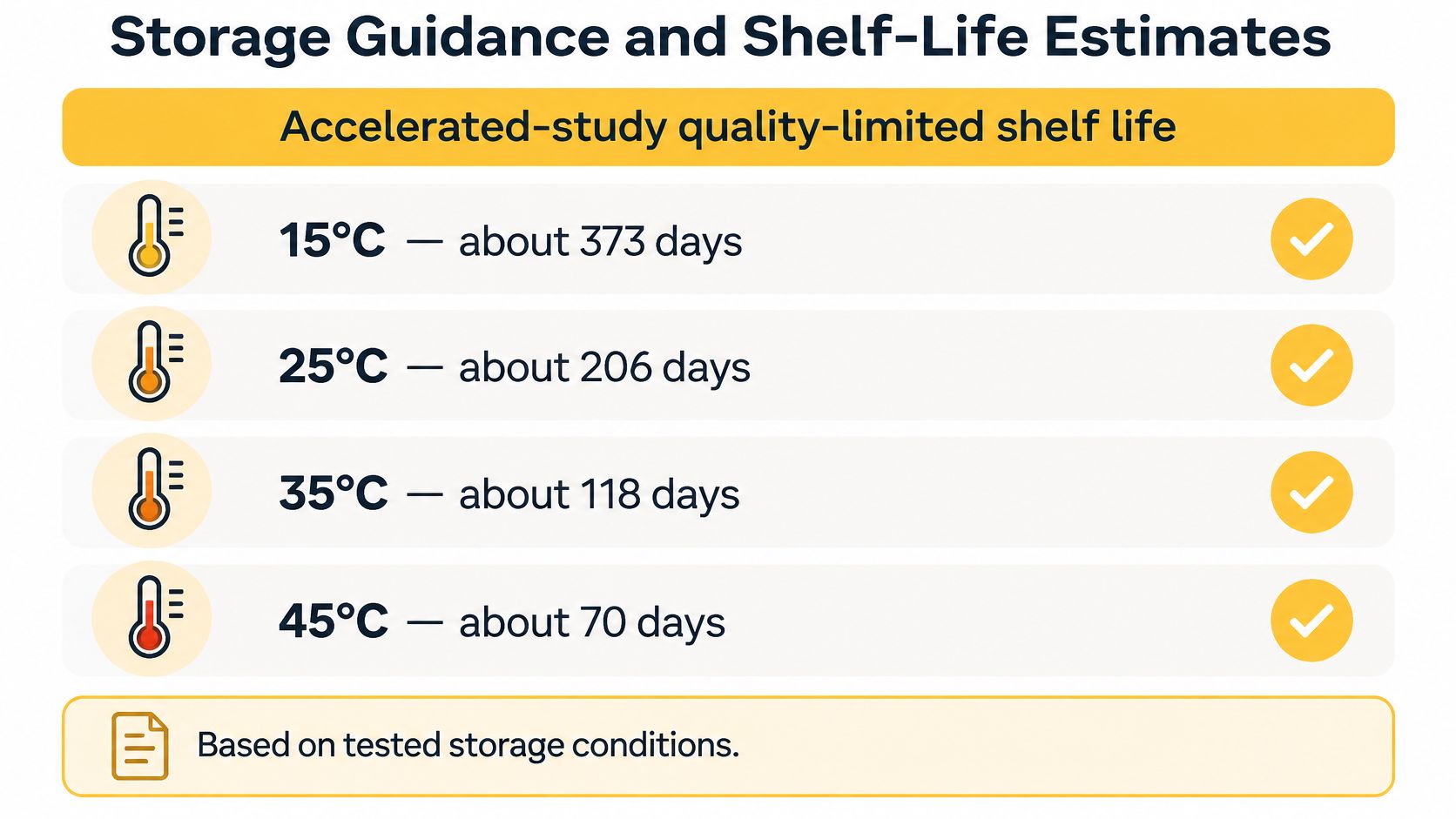
| 15°C (cool cupboard) | About 373 days | Accelerated-study estimate |
| 25°C (typical room temperature) | About 206 days | Keep away from light and moisture |
| 35°C (warm kitchen) | About 118 days | Keep away from ovens and appliances |
| 45°C (heat extremes) | About 70 days | Avoid; quality falls quickly |
| Opened, resealed tightly | No fixed estimate | Oxygen can rise above 10% after opening |
These figures are estimates from an accelerated shelf-life study under tested conditions, not guarantees for every coffee, package, or home. They show why heat matters: coffee stored hot can lose quality faster than coffee kept in a cooler place. The coffee packaging and shelf-life study also identifies oxygen and moisture as important controls for preserving aroma and quality.
Protect an opened pound
Sealed packages designed for oxygen control can reduce package oxygen to roughly 1–2% through modified-atmosphere packaging. Once a package is opened, oxygen may rise above 10% and can approach ambient levels after about two weeks if the closure doesn't seal well. A resealable bag helps, but each opening still exposes the coffee to air and moisture.
Use this routine to limit repeated exposure:
- Keep it sealed until use. Don't open the bag just to transfer it to another container.
- Press out excess air and reseal. Close the seal promptly after scooping.
- Store it cool and dry. Keep the bag away from the stove, oven, and direct light.
- Divide a long-lasting pound. If you won't finish it within about two weeks after opening, portion it into smaller sealed packs to reduce repeated exposure.
- Avoid loose containers. A loosely fitting lid lets air and moisture circulate around the coffee.
Instant coffee is particularly sensitive to moisture: clumping can be an early sign that the powder has absorbed water. For a one-pound package, use a dry spoon and close the container tightly after each serving. For more on freshness and spoilage, see this guide to whether coffee goes bad.
Cost per Cup and Whether a Pound Is Good Value
The reported U.S. average coffee price reached $9.258 per pound in November 2025, and U.S. coffee prices rose 33.43% between 2020 and 2025, according to StoneX's coffee market analysis. At that price, the cost per serving depends on how many servings you get:
- 45 servings at a 10 g dose: $9.258 ÷ 45 = about $0.21 per cup.
- 30 servings at a 15 g dose: $9.258 ÷ 30 = about $0.31 per cup.
- 22 servings at a 20 g dose: $9.258 ÷ 22 = about $0.42 per cup.
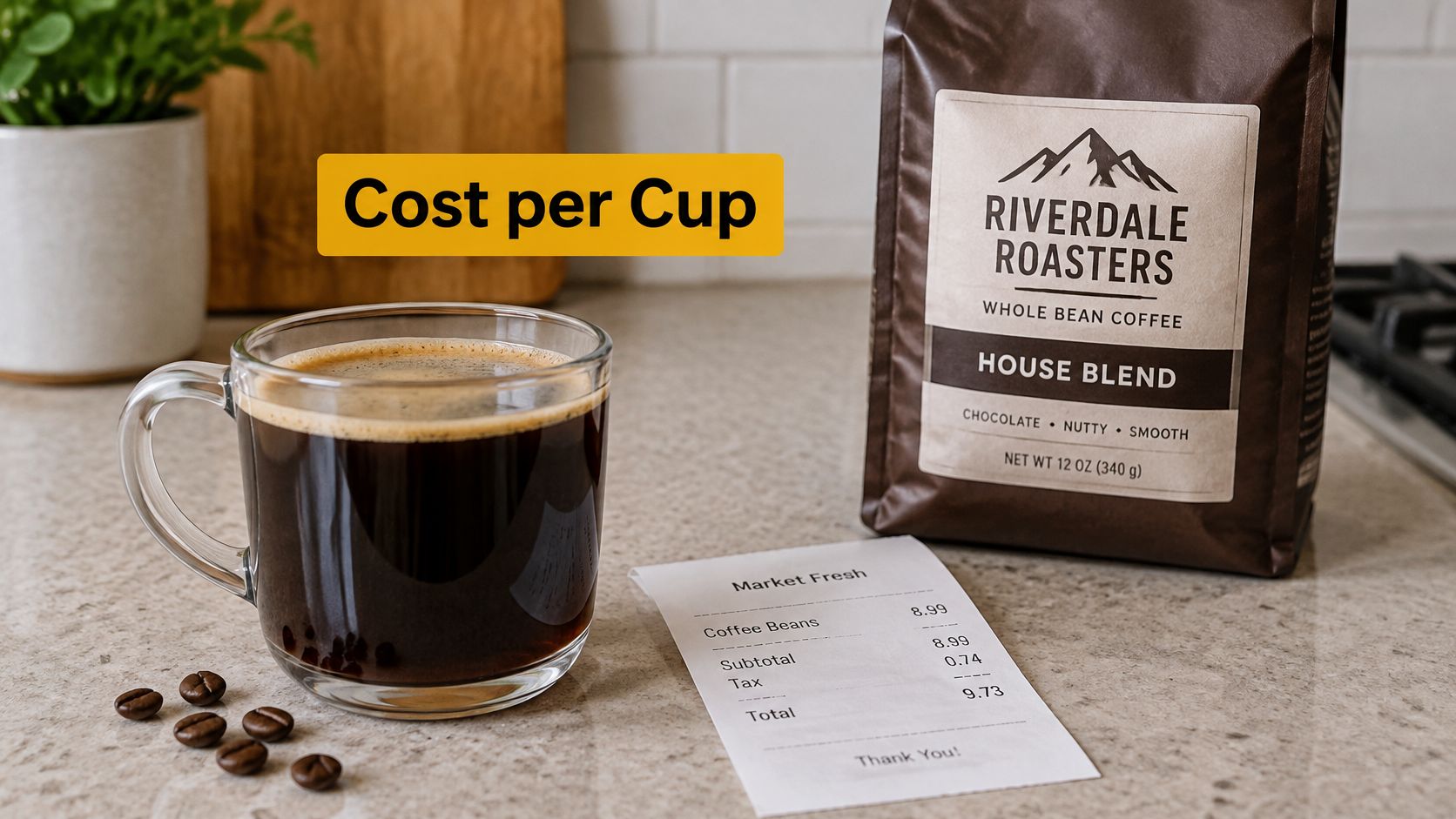
Those are ingredient costs based on the cited average price and the rounded serving counts, not a promise about what a particular bag costs. Your retail price may differ, and the number of usable servings falls if coffee goes stale before you finish it or you brew more than you drink.
Count the usable servings
Suppose 10% of a pound becomes unusable through staleness or waste. A 15 g dose then yields about 27 servings instead of 30, and $9.258 ÷ 27 gives roughly $0.34 per cup. The wasted coffee didn't make the remaining servings more expensive at the register, but it raised the effective cost of each cup you drank.
Track three sources of waste: unused coffee that goes stale, grounds discarded after brewing, and over-preparation that gets poured away. Grounds discarded after brewing are part of the process rather than a separate loss of dry coffee, but brewing more beverage than you drink still wastes the coffee used to make it. The clearest household calculation is price divided by usable cups after waste.
Market supply changes don't guarantee an immediate drop in the price at the shelf. StoneX reported an International Coffee Organization projection that 2025/26 production would rise while consumption was projected to decline, but those global forecasts don't determine the price of an individual bag on their own. Treat sourcing and sustainability claims as separate questions from cost per cup: a label alone doesn't show how much value reaches farmers.
For a fuller view of coffee-shop delivery economics, this overview of pricing a member coffee delivery program offers useful context on how recurring service costs can shape a customer's price.
Choose the Pound Plan That Fits Your Routine
A pound's serving count only helps if the plan matches your brewing method, dose, and household schedule. Choose a repeatable dose, then estimate how long the coffee will last.
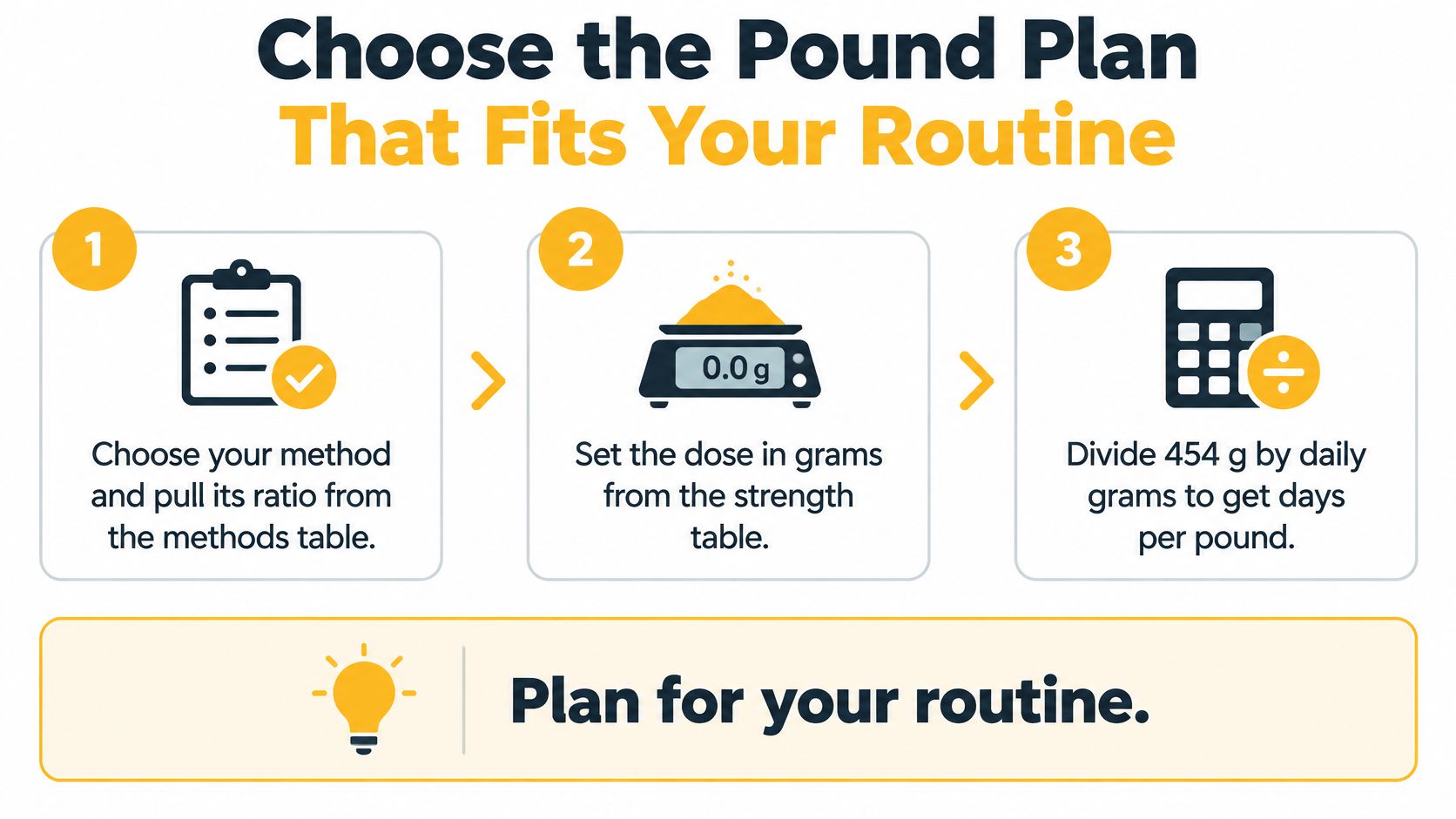
- Choose your method. Use a ratio suited to your brewer, such as drip, pour-over, or French press.
- Set the dose. Choose the amount in grams per serving that gives you the strength you prefer.
- Estimate days per pound. Divide 454 g by your daily coffee use. At 20 g per day, 454 ÷ 20 is about 23 days.
- Portion and reseal the coffee as described in the storage section if you expect the pound to last longer than two weeks.
- Check the package weight before estimating servings or comparing prices.
- For instant, use the starting doses in the “Cups From a Pound of Instant Coffee” section. Its dose differs from the ground coffee used for brewing. About 2 g per level teaspoon is a starting point for an 8 oz cup.
Cartograph Coffee describes its organic instant coffee as an option for quick cups at work, at home, or on camping trips. To estimate servings from a pound of instant, compare its weight with the starting dose of about 2 g per level teaspoon for an 8 oz cup, not with the ground-coffee count. The dose you choose and the size of your mug affect how many cups the pound yields.
Keep the plan simple. Record how many cups you make over two weeks, then adjust the dose gradually if the coffee tastes too weak or too bitter. If stretching the pound means making a second serving or adding extra cream to compensate, compare the resulting cost per satisfying cup, not just the number of cups.
For a related look at recurring service costs, see this overview of pricing a member coffee delivery program.
Choose the format and dose that fit your routine, then follow the storage guidance to plan each pound. Visit Cartograph Coffee to explore its organic instant coffee for cups at home, work, or outdoors.