Let's be honest, instant coffee has a bit of a reputation. For a long time, it was seen as the less-than-glamorous cousin of a freshly brewed cup. But what if I told you that reputation is seriously outdated? The instant coffee on shelves today isn't your grandma's instant coffee.
So, what exactly is it?
At its core, instant coffee is simply real, brewed coffee with all the water removed. Imagine a perfectly good pot of coffee that's been concentrated down and then dehydrated, leaving behind soluble crystals or a fine powder. All you have to do is add hot water to bring it back to life.
Before we dive deeper, here's a quick rundown for those who just want the fast facts.
Instant Coffee At a Glance
| Characteristic | Description |
|---|---|
| What It Is | Real, brewed coffee that has been dehydrated into a soluble powder or crystals. |
| How It's Made | Coffee is brewed into a concentrate, then dehydrated via spray-drying or freeze-drying. |
| Key Benefit | Unbeatable convenience—just add hot water for a cup of coffee in seconds. |
| Shelf Life | Extremely long and stable, making it perfect for pantries, travel, and emergencies. |
This simple process is the key to its convenience, but how that water gets removed makes all the difference in the world when it comes to flavor.
The Magic is in the Dehydration
The journey from a liquid brew to a shelf-stable solid happens in one of two ways. This step is where quality is either won or lost, and it’s what separates a cheap, bitter brew from a surprisingly delicious, complex cup.
-
Spray-Drying: This is the old-school, mass-market method. The coffee concentrate is blasted as a fine mist into a tower of scorching hot air. The water evaporates almost instantly, and the tiny coffee particles fall to the bottom as a powder. It's fast and cheap, but the intense heat tends to destroy the delicate oils and aromatic compounds that give coffee its wonderful flavor and smell.
-
Freeze-Drying: This is the modern, quality-focused approach. The coffee concentrate is first frozen into a solid slab. Then, it's placed in a low-pressure vacuum chamber where the ice is gently turned directly into vapor—a process called sublimation. Because it avoids high heat, freeze-drying does an incredible job of preserving the coffee's original flavor and aroma.
The goal is the same for both: take out the water to create a stable, long-lasting coffee you can rehydrate in a flash. But the method used is the single biggest factor in determining the final quality in your cup.
Ultimately, instant coffee is a brilliant piece of food science, engineered for speed and simplicity. By understanding what's behind the label—especially when you choose an option made with premium organic beans and the superior freeze-drying method—you can get a genuinely great cup of coffee without any of the fuss.
The Journey from Bean to Crystal
Ever wonder how a rich, aromatic coffee bean becomes a simple, soluble crystal? It’s a pretty clever process, and it all starts in the same place as your favorite café brew: on the farm. The best instant coffees begin with high-quality, meticulously sourced beans, which are then roasted to bring out all those delicious, complex flavors.
From there, the roasted beans are ground up and brewed into a very, very strong coffee liquid. We're not talking about your average morning cup; this is a super-concentrated essence, a liquid powerhouse of coffee flavor. This concentrate is the key, and from here, it goes down one of two paths to become the instant coffee we know.
The whole trick is getting the water out. This diagram breaks down the basic three-step journey.
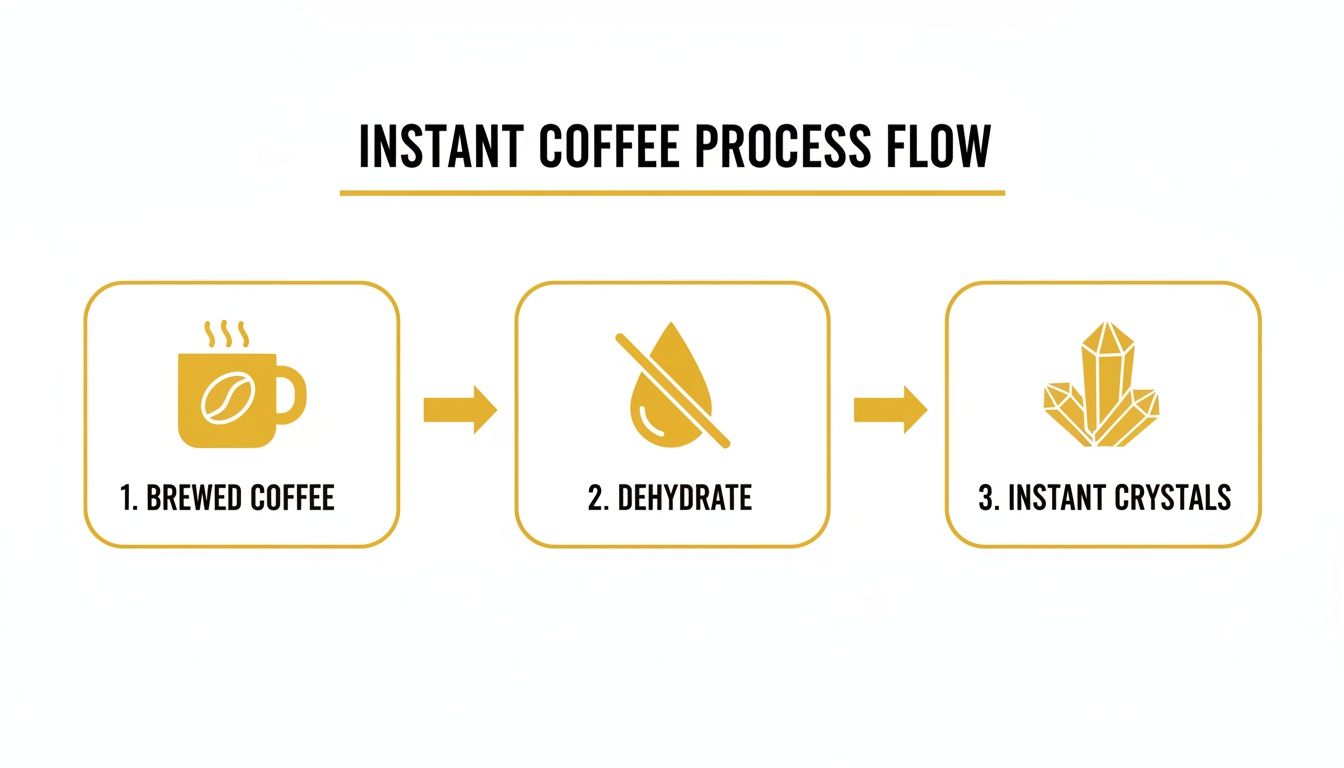
As you can see, it really comes down to brewing, dehydrating, and then packaging the final crystals. That middle step—dehydration—is where the magic (and the quality) really happens.
The Two Paths of Dehydration
How you remove the water makes all the difference, and it’s the main reason specialty-grade instant coffee tastes so much better than the old-school stuff. The two methods couldn't be more different.
First up is spray-drying. Picture the coffee concentrate being sprayed as a fine mist into a chamber filled with scorching hot air. The water flashes into steam almost instantly, leaving tiny, dry coffee particles to fall like dust. It's fast and cheap, but that intense heat zaps away many of the delicate oils and aromas that make coffee taste and smell so good.
The Freeze-Drying Difference
The second, much gentler method is freeze-drying. This technique is all about preserving flavor. The coffee concentrate is frozen solid, often in thin sheets, and then placed inside a powerful vacuum chamber.
In the vacuum, the frozen water turns directly into vapor without ever melting—a process called sublimation. This gentle technique carefully preserves the coffee's original flavor and aromatic compounds, resulting in a far superior taste.
This meticulous, heat-free process is why premium brands like us at Cartograph Coffee choose freeze-drying. It's the only way to ensure the rich, nuanced notes of the original bean actually make it into your cup. You can dive deeper into how this fascinating process works in our detailed guide.
And people are noticing the difference. The global instant coffee market was valued at USD 46.9 billion in 2025 and is expected to hit USD 76.4 billion by 2035. This massive growth shows a real shift in how we think about coffee—convenience doesn't have to mean compromising on quality anymore.
The Great Instant Coffee Taste Debate
Alright, let's tackle the elephant in the room: how does instant coffee actually taste? For a long time, the honest answer was often, "not great." Many of us have memories of a bitter, almost burnt-tasting cup, a reputation earned by mass-market brands that put cost savings way ahead of quality.
That old stereotype is exactly why so many coffee purists turn their noses up at the idea. But here's the thing—that perception is getting more outdated by the day. A new generation of specialty instant coffee is proving that you don't have to sacrifice flavor for convenience. It all boils down to two things: the beans and the process.
It All Starts With the Bean
Just like with any great cup of coffee, the story begins with the beans. The two main players in the coffee world couldn't be more different, and that difference ends up right in your mug.
- Robusta Beans: These are the tough guys of the coffee world. They're easier and cheaper to grow and pack a serious caffeine punch. The downside? They often carry a harsh, rubbery bitterness that's largely responsible for instant coffee's bad rap.
- Arabica Beans: This is what the specialty coffee scene is built on. Arabica beans are prized for their incredible complexity and aromatic qualities, offering sweeter, softer notes of everything from fruit to flowers.
When a producer starts with 100% Arabica beans, they're building on a foundation of fantastic flavor from the get-go.
The Process Protects the Flavor
As we touched on earlier, how you get the water out is the second piece of the quality puzzle. The old-school spray-drying method blasts the coffee concentrate with intense heat, which unfortunately torches the delicate compounds that make coffee taste so good.
This is why the freeze-drying method is a game-changer. By gently freezing the coffee and removing the ice in a vacuum, it keeps those nuanced, delicious flavors intact. It's the only method we use here at Cartograph for our organic beans, ensuring the taste we worked so hard to cultivate actually makes it to you. If you're still wondering about the basics, we break it all down in our guide on whether instant coffee is real coffee.
When you combine high-quality, flavorful Arabica beans with a careful freeze-drying process, the result is an instant coffee that is aromatic, balanced, and genuinely delicious—a world away from the instant coffee of the past.
So, how do you spot the good stuff? Just read the label. Look for "100% Arabica" and "freeze-dried." Those two phrases are your clearest signs that you've found a high-quality coffee made for people who truly care about taste.
Weighing the Pros and Cons
So, when does instant coffee make sense? Just like any other way of making coffee, it has its brilliant moments and its drawbacks. Figuring out where it fits best in your routine is all about understanding this trade-off.
Let's dive into what makes instant coffee a go-to for so many people. The upsides are compelling, especially for anyone living a busy life.
The Clear Advantages
The number one reason people reach for instant is pure, unadulterated convenience. Nothing else comes close. You can literally have a cup of coffee in your hands in less than a minute. No grinders, no filters, no complicated machines—just hot water and a spoon. It's coffee at the speed of life.
That speed makes it incredibly portable. Because it's so lightweight and compact, instant coffee is a dream for anyone on the move. It’s a non-negotiable for campers and backpackers, but it’s just as handy for beating sad hotel coffee or getting a decent fix at the office.
But the practicality doesn't stop there. Two other things make it a smart pantry staple.
- Long Shelf Life: Kept in a cool, dry place, a jar of instant coffee can last for years. You can always have it on hand for that unexpected coffee craving or when you run out of your regular beans.
- Affordability: Cup for cup, instant coffee is almost always easier on the wallet than buying fresh beans or swinging by a coffee shop every morning. It makes a daily caffeine habit much more accessible.
The Potential Downsides
Now, let's talk about the other side of the story. For a long time, instant coffee has had a bit of a reputation, and it's mostly tied to the mass-produced stuff that put cost-cutting ahead of flavor.
The biggest hurdle for true coffee lovers has always been the potential for a less complex flavor profile. In the past, most instant was made from lower-grade Robusta beans and blasted with high heat during the spray-drying process. This aggressive method would cook off many of the delicate oils and aromatic compounds that give coffee its magic, often leaving behind a flat, bitter taste.
The core trade-off has always been flavor versus convenience. However, this gap is narrowing significantly as premium brands enter the market.
This brings us to the second major concern: the quality of the beans themselves. To keep prices rock-bottom, many of the big players historically used cheaper beans that you'd never want to brew in a pour-over. This is where reading the label becomes so important.
The good news? This is all changing. Specialty brands like Cartograph Coffee are completely rewriting the rules. By starting with high-quality, organic Arabica beans and using a gentler freeze-drying technique, we’re able to protect the nuanced, rich flavors you’d expect from a great cup of coffee. It’s how we bridge that old gap, finally giving you both incredible convenience and uncompromising quality.
To make the choice even clearer, let's look at a direct comparison. Here’s how instant coffee stacks up against a traditional brew on the key things that matter most to coffee drinkers.
Comparing Instant Coffee and Brewed Coffee
| Feature | Instant Coffee | Brewed Coffee |
|---|---|---|
| Preparation Time | Less than 1 minute | 3-10 minutes (depending on method) |
| Equipment Needed | Mug, spoon, hot water | Grinder, brewer, filter, scale, etc. |
| Flavor Profile | Varies; can be simple or nuanced | Typically complex, full-bodied, aromatic |
| Convenience | Extremely high; just add water | Lower; requires setup and cleanup |
| Shelf Life | Very long (1-2 years or more) | Short (1-4 weeks for beans) |
| Cost Per Cup | Generally lower | Generally higher |
| Best For | Travel, camping, office, quick mornings | Home brewing, savoring the ritual |
Ultimately, choosing between instant and brewed coffee isn't about one being "better" than the other. It's about what works best for your moment. Sometimes you want the ritual, and other times, you just need a great cup of coffee, right now.
How to Choose the Best Instant Coffee
Walking down the coffee aisle can feel a bit like a guessing game, but finding a truly great instant coffee is simpler than you might think. It all comes down to knowing what to look for on the label. Once you can spot the signs of quality, you'll be able to pick a winner every time.
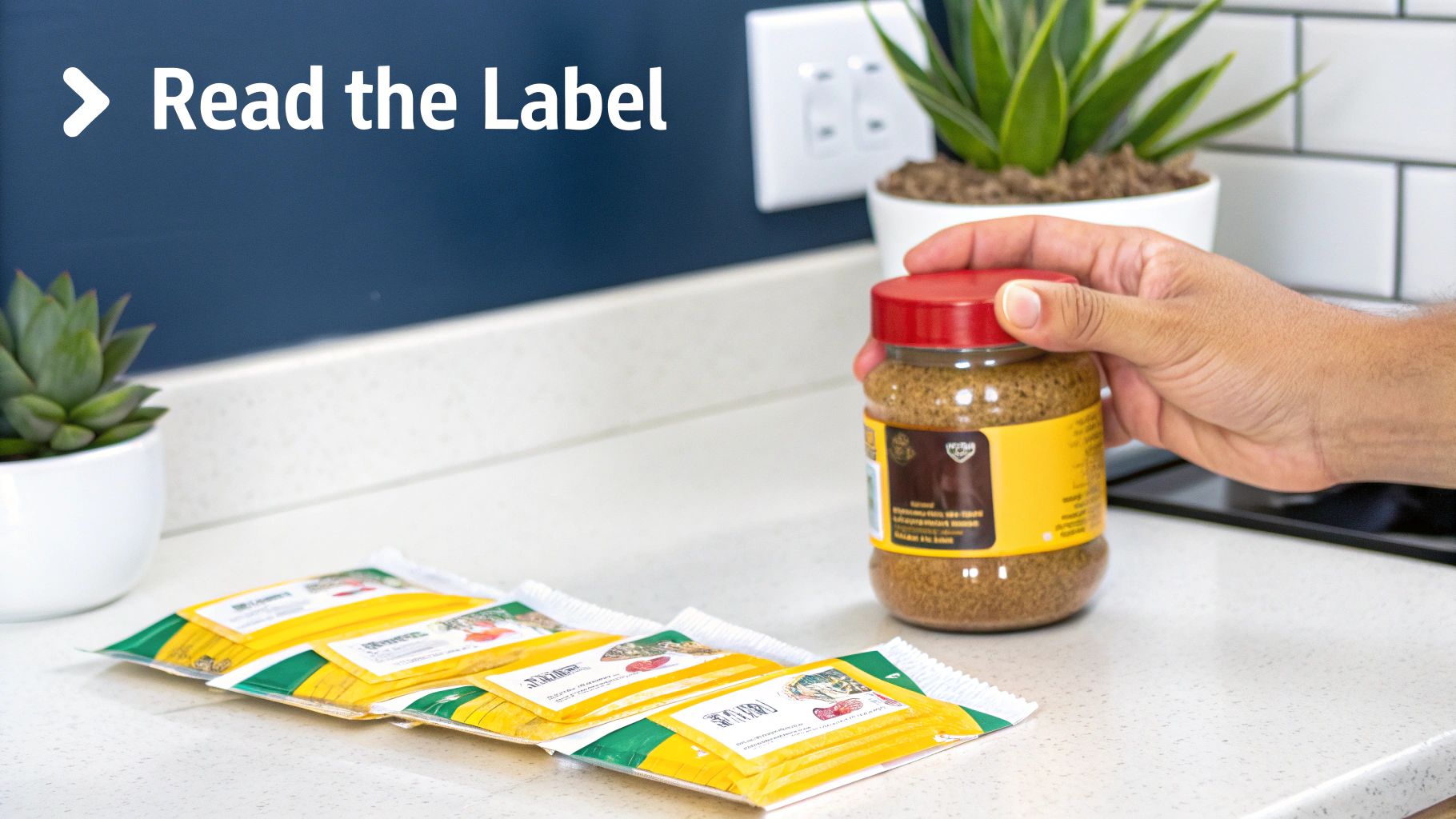
The first thing to check? The bean type. Your eyes should be searching for one magic phrase: “100% Arabica.” These are the beans the specialty coffee world is built on, known for their nuanced, aromatic flavors and bright, clean finish. They create a far more enjoyable cup than their more bitter Robusta cousins.
Next up is the production method. As we've covered, how the brewed coffee is turned into crystals makes a world of difference. The gold standard here is “freeze-dried.” This gentle, low-temperature process is all about preserving the delicate flavor compounds and oils that give coffee its incredible aroma and taste. It's a far cry from the high-heat spray-drying that can scorch away those precious notes.
Key Quality Indicators to Look For
To cut through the noise, here are the three non-negotiables to look for on the packaging:
- 100% Arabica Beans: This is your guarantee of a foundation built on superior flavor and aroma.
- Freeze-Dried: This tells you the brand invested in a premium process to protect the coffee’s natural character.
- Organic Certification: This ensures the beans were cultivated without synthetic pesticides, which is better for the environment and for you.
When a brand invests in all three—like we do at Cartograph Coffee with our single-origin organic beans—you know they’re serious about quality. For a closer look at other great options, check out our guide to the best instant coffee brands and see how they stack up.
Choosing a coffee that ticks these boxes—Arabica beans, freeze-drying, and organic sourcing—is the surest way to get an instant coffee that rivals a café brew in quality and flavor.
Finally, think about how and where you'll be drinking your coffee. While unflavored coffee dominates the market with 85.01% of revenue, the numbers show a clear shift in consumer preference. Freeze-dried options are the fastest-growing segment at a 6.33% rate, proving that more and more people are demanding better taste.
Jars are perfect for your kitchen counter or a well-stocked camping kit, while single-serve sachets are unbeatable for travel, a quick office brew, or tossing in your bag. Armed with this knowledge, you're ready to find an instant coffee that you'll actually look forward to drinking.
Creative Uses for Instant Coffee Beyond the Mug
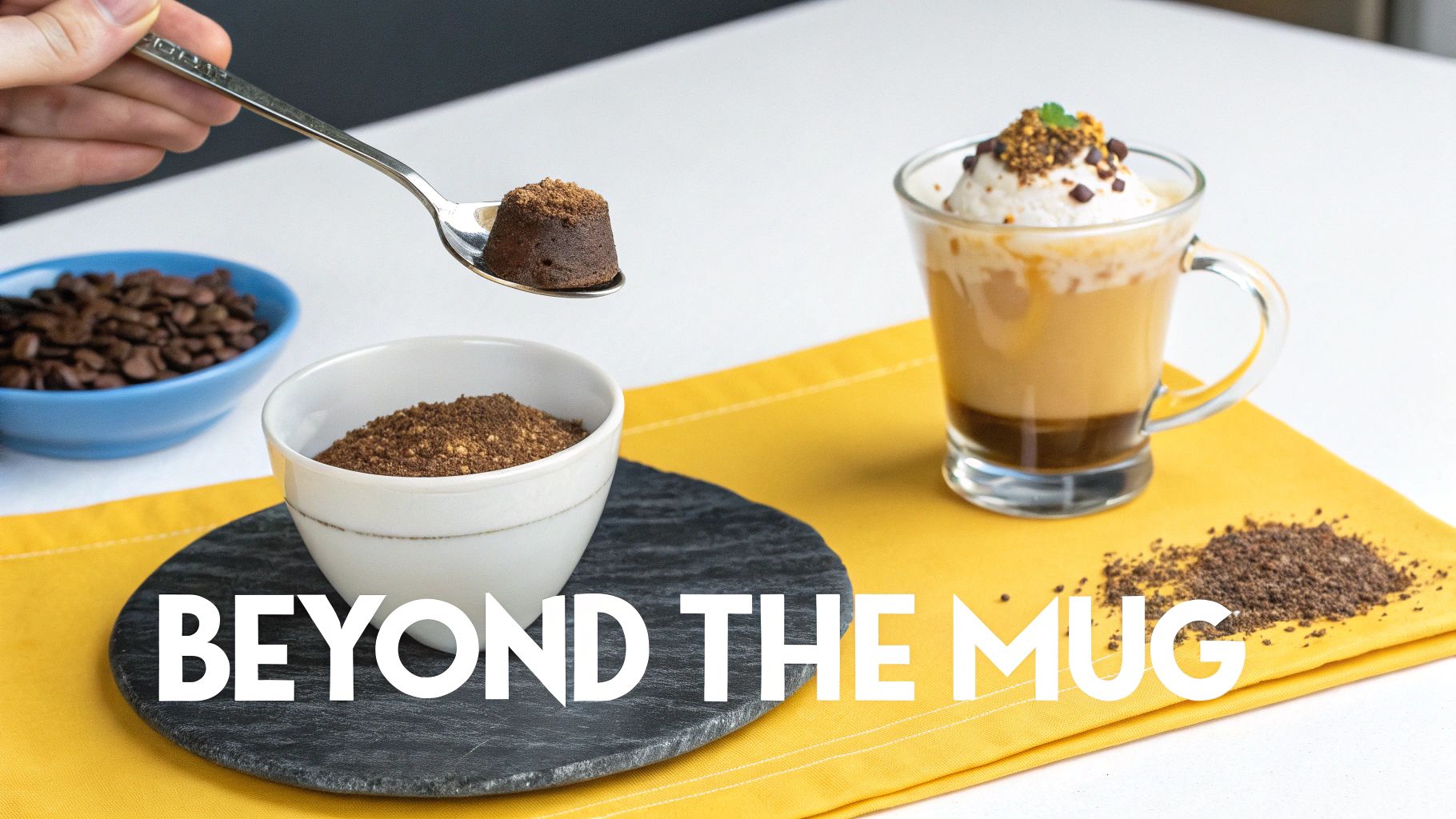
If you think instant coffee is just for a quick morning cup, you’re missing out. Its real magic shines in the kitchen, where its concentrated flavor and easy-dissolving nature make it a secret weapon for both sweet and savory recipes.
Think of it as an edible espresso powder. A small spoonful can add a deep, roasted complexity that beautifully enhances other ingredients—all without watering down your dish. It's the perfect way to give your cooking and baking a sophisticated, subtle edge.
Elevate Your Baking and Desserts
One of the best tricks in a baker's arsenal is using instant coffee to amplify chocolate. A teaspoon tossed into brownie batter, chocolate cake mix, or a rich mousse won't necessarily make it taste like coffee. Instead, it deepens the cocoa notes, creating an incredibly rich and complex flavor.
Here are a few other delicious ideas to get you started:
- Quick Coffee Syrup: Dissolve a tablespoon of instant coffee and sugar in a few tablespoons of hot water. Drizzle this simple, potent syrup over ice cream, pancakes, or use it to soak ladyfingers for tiramisu.
- Morning Smoothies: Need a caffeinated boost? Add half a teaspoon of granules directly into the blender with your go-to smoothie ingredients for a more robust flavor.
- Flavorful Frosting: Mix a small amount of dissolved instant coffee into buttercream or cream cheese frosting. Suddenly, you have a perfect mocha topping for cakes and cupcakes.
Remember, a little goes a long way. The goal is to complement existing flavors, not overpower them. Start with a small amount and adjust to your taste.
And who could forget the viral sensation, Dalgona Coffee? Just whip equal parts instant coffee, sugar, and hot water until it forms fluffy, stiff peaks. Spoon that glorious cloud over iced milk for a treat that looks like it came straight from a cafe. From savory meat rubs to decadent desserts, instant coffee is a versatile pantry staple just waiting to be explored.
Got Questions About Instant Coffee? We've Got Answers.
We've covered a lot of ground, but you might still have a few things you're curious about. Let's tackle some of the most common questions to clear up any lingering doubts about instant coffee and how to get the most out of it.
Does Instant Coffee Have Less Caffeine?
Generally, yes, but it’s not a hard and fast rule. A standard cup of instant coffee usually lands in the 60-80mg range, while a typical drip coffee has closer to 95mg.
The real answer, though, is that you're in control. The final caffeine punch depends entirely on the brand and how much coffee you spoon into your cup. If you need a stronger kick to get going, just add a little more.
Is Organic Instant Coffee Worth It?
For anyone who cares about what they're putting in their body and the impact it has on the planet, the answer is a definite yes. Organic instant coffee comes from beans grown without synthetic pesticides or fertilizers, which is a win for both the environment and the farmers.
But it goes beyond that. A commitment to organic practices is often a sign of a brand that cares about quality from start to finish. They tend to invest in better beans and more careful processing, and you can truly taste the difference. It's about choosing a product that aligns with a more thoughtful way of living.
The demand for high-quality, organic options is completely changing the game. Younger coffee drinkers, especially, are looking for convenience that doesn’t compromise their wellness values, and that’s fueling some serious growth and innovation.
This isn't just a niche trend. Millennials and Gen Z are behind a projected 6.9% annual growth in the market. That's expected to add a staggering USD 16.3 billion between 2024 and 2029 as they hunt for premium, portable, and organic coffee. You can dive deeper into these trends in this in-depth industry analysis.
Can I Make Iced Coffee Instantly?
Absolutely! In fact, it's one of the quickest and easiest ways to make a fantastic iced coffee.
Just dissolve your instant coffee granules in a splash of hot water to make a quick, concentrated coffee shot. Pour that over a tall glass packed with ice, then top it up with cold water or your milk of choice. Give it a stir, and you’ve got a perfectly chilled iced coffee in less than a minute.
Ready to see how good instant coffee can be when it's done right? The Cartograph Coffee collection is crafted with 100% organic, freeze-dried Arabica beans to deliver a rich, flavorful cup every single time, no matter where your day takes you. Discover your new favorite instant coffee today.