That sharp, unpleasant flavor in your cup? It almost always comes down to a handful of common culprits. More often than not, what makes coffee taste bitter is over-extraction—essentially, pulling too many of the wrong compounds from the grounds while you brew. But that's not the whole story; the beans you choose, how they're roasted, and even the water you use are all part of the equation.
Your Guide to Fixing Bitter Coffee
A bitter cup of coffee is a frustrating start to the day, but here's the good news: it's almost always fixable. Bitterness isn't just a random flaw. Think of it as a signal, a clue telling you that something in the journey from bean to cup is slightly out of balance. Once you learn to read those clues, you're well on your way to a better brew.
Most bitterness problems can be traced back to one of three areas. By looking at each one, you can quickly diagnose what's going on and make a few simple tweaks. The three primary suspects are:
- The Bean Itself: The starting point matters. Things like roast level (darker roasts are inherently more bitter) and the quality of the beans can set the stage for bitterness before you even grind them.
- Your Brewing Process: This is where most issues hide. Variables like your water temperature, how fine or coarse you grind the coffee, and how long you let it brew have a huge impact on the final taste.
- Overlooked Details: Sometimes it's the simple things. Stale beans, poor-quality water, or even a dirty coffee maker can sneak harsh, bitter flavors into what should have been a perfect cup.
This handy decision tree can help you start sleuthing out the cause of your bitter coffee.
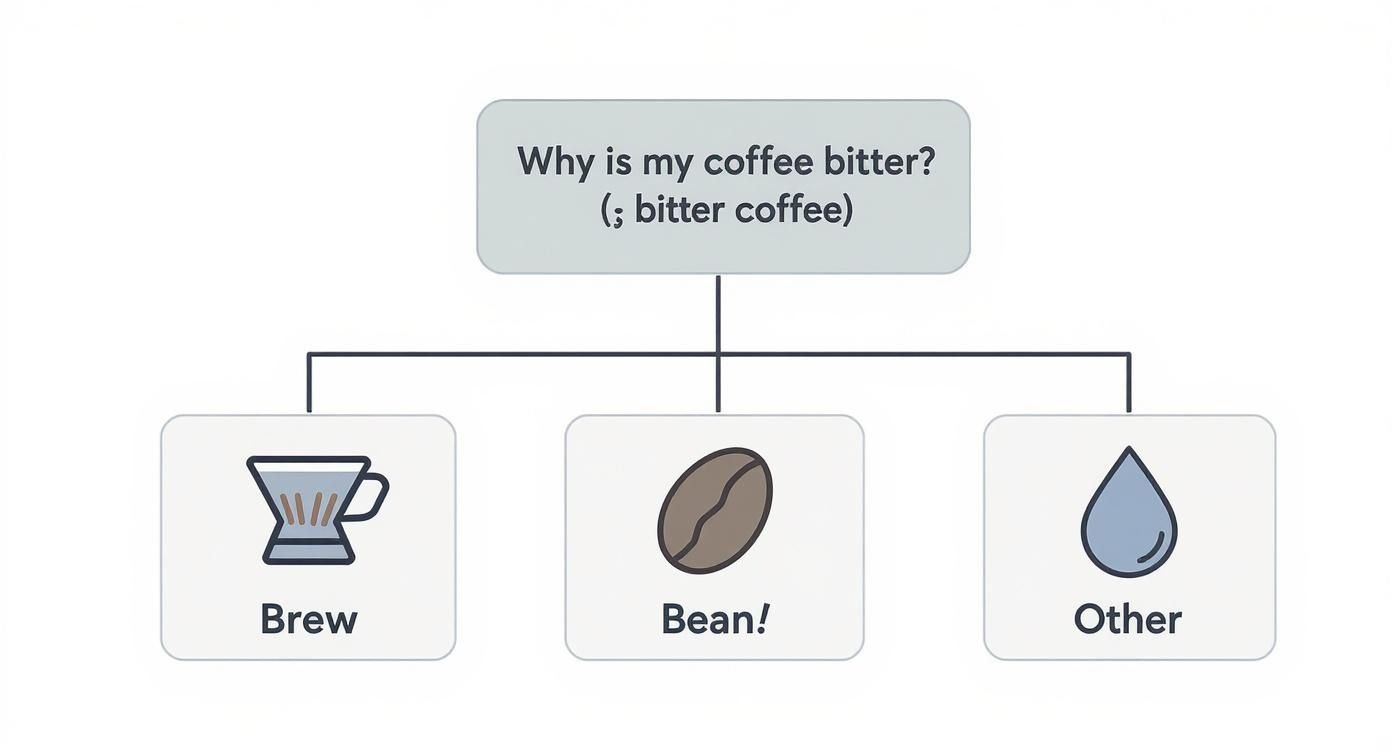
As you can see, your brewing technique is often the most direct and controllable source of bitterness. To help you zero in on the problem even faster, we've put together a quick diagnostic table. Find the symptom that best describes your coffee, then jump to the right section in this guide for a detailed fix.
Quick Guide to Bitter Coffee Causes and Solutions
| Symptom | Likely Cause | Primary Solution (Explained in This Article) |
|---|---|---|
| Harsh, lingering bitterness | Over-extraction | Adjust your grind size, brew time, or water temp |
| Burnt or "roasty" taste | Dark Roast Beans | Explore bean chemistry and choose a lighter roast |
| Flat, dull bitterness | Stale Beans or Water | Check bean freshness and your water quality |
Think of this table as your troubleshooting shortcut. Now, let's dive into each of these causes and figure out exactly how to get that delicious, balanced flavor you're after.
The Hidden Chemistry Inside Your Coffee Beans
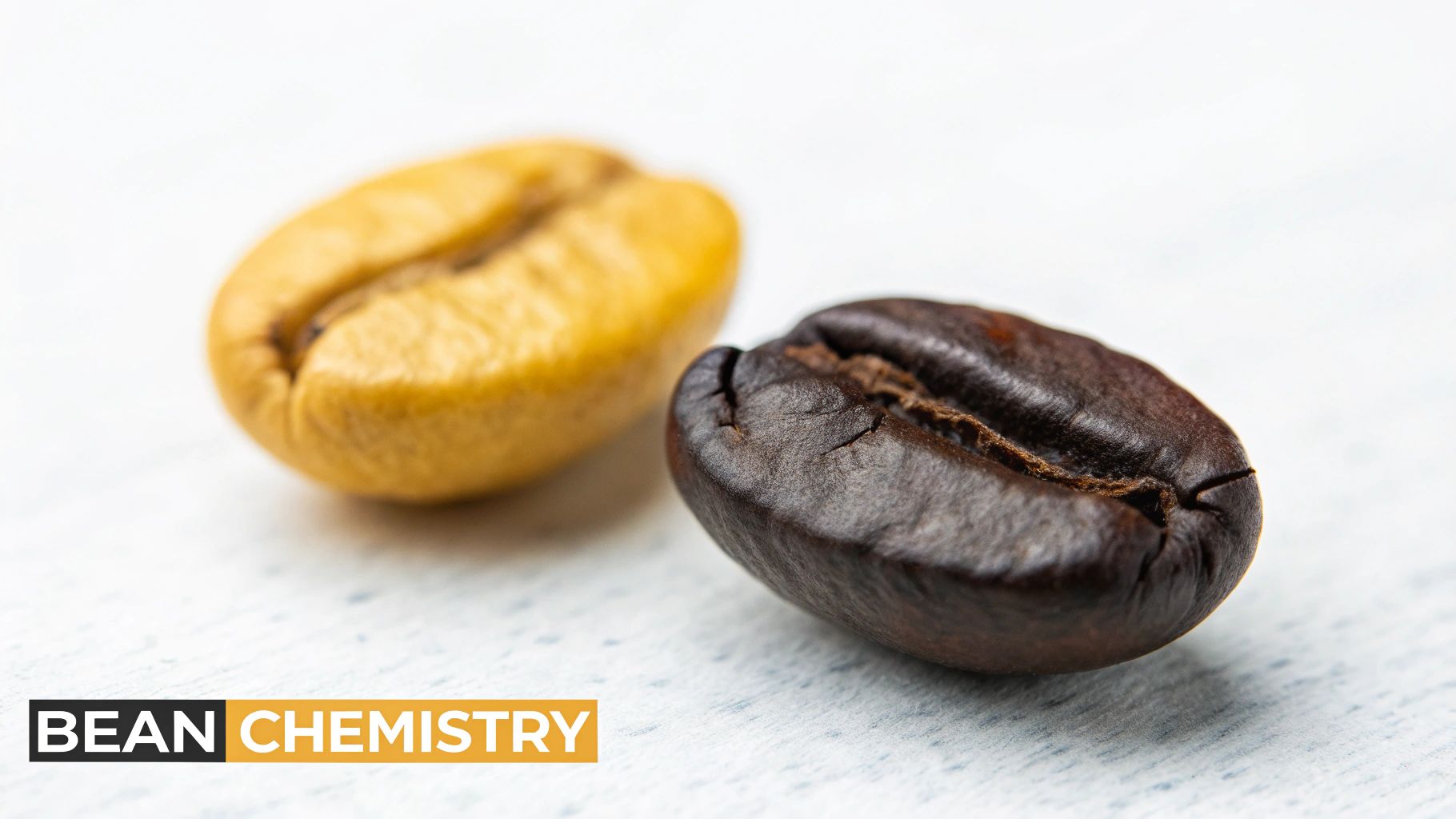
Before you ever grind a single bean, a complex chemical drama has already played out. The story of what makes coffee taste bitter often starts right here, deep inside the bean itself, where natural compounds meet the transformative heat of the roaster. It’s less about just cooking and more about a carefully controlled reaction that creates the flavors we know and love.
Think about toasting a piece of bread. When it's golden brown, it's sweet and delicious. Leave it in just a little too long, and it becomes acrid, burnt, and unpleasantly bitter. Coffee roasting is surprisingly similar. Green coffee beans are full of chemical potential, but they don't taste anything like coffee until a skilled roaster applies heat to unlock it.
The Role of Chlorogenic Acids
One of the star players in this chemical show is a group of compounds called chlorogenic acids, or CGAs. In their raw state, they aren’t overwhelmingly bitter. The magic—and the bitterness—happens during roasting, when these acids begin to break down into entirely new substances.
As the roast gets darker, more and more of these CGAs degrade. You might think that sounds like a good thing for avoiding bitterness, but it’s actually the opposite. The new compounds created from this breakdown are what produce that classic, sharp "roasty" bitterness you find in a French or Italian roast.
This is the core reason dark roasts are more bitter. Studies show that while CGAs can account for up to 7% of a green bean's weight, the bitter compounds created when they break down are what truly define a dark roast's intense flavor profile.
It’s an incredibly delicate balancing act. A little bit of roasting coaxes out sweetness and nuance. Too much, and you've pushed the beans into burnt-toast territory. A great roaster knows exactly when to stop the process to hit that perfect sweet spot.
Caffeine and Other Bitter Compounds
Of course, CGAs aren't working alone. Caffeine itself is a naturally bitter compound. It provides a steady, baseline level of bitterness in every cup, and its concentration doesn't change much during the roasting process.
The type of bean you start with also makes a huge difference. For instance, Robusta beans can pack nearly twice the caffeine of their Arabica counterparts, which is a major reason they often taste significantly stronger and more bitter. You can learn more about these differences by exploring Arabica and Robusta beans in our detailed guide.
Finally, roasting also kicks off the famous Maillard reaction—the same process that gives a seared steak its crust and bread its golden-brown color. This reaction creates hundreds of new flavor and aroma molecules, including bitter-tasting compounds called melanoidins, which are also responsible for the rich brown color of roasted coffee.
The darker the roast, the more melanoidins develop, adding yet another layer of bitterness. All this chemistry explains how a light roast and a dark roast, made from the exact same green beans, can end up tasting like two completely different coffees.
How Your Brewing Method Creates Bitterness
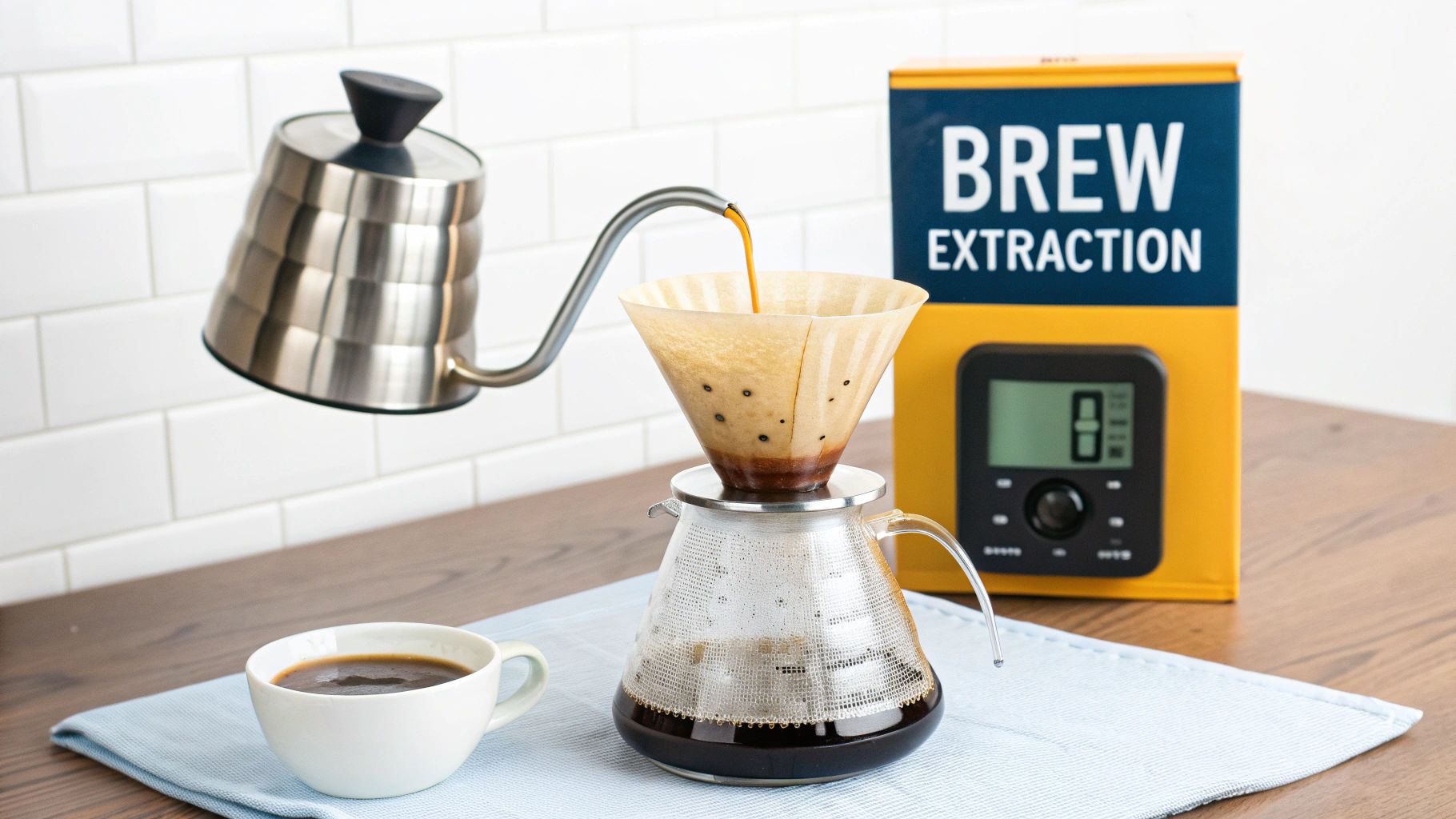
Even if you start with the world's most incredible coffee beans, the final flavor is ultimately in your hands. During brewing, you're the chef, deciding precisely which flavors to pull from the grounds. This whole process is called extraction, and learning to control it is the single most important skill for avoiding a bitter cup.
Think of it like making tea. If you pull the bag out too early, you get weak, watery tea. But if you leave it in for too long? It becomes harsh, astringent, and overwhelmingly bitter. Coffee works the exact same way. Your goal is to get all the sweet, aromatic, and nuanced flavors out without pulling out the harsh, bitter compounds that are the last to leave the bean. More often than not, a bitter cup is just a simple case of over-extraction.
You control extraction by tweaking three main variables: your grind size, the water temperature, and the total brew time. I like to think of these as the three main dials on a sound system. If you crank one up too high, you get unpleasant distortion—or in our case, bitterness.
The Three Dials of Brewing Flavor
Finding that "just right" balance between these three factors is everything. Each one dramatically affects how quickly and how much flavor gets pulled from your coffee grounds. Getting them in sync is your best defense against a bitter brew.
- Water Temperature: The hotter the water, the faster and more aggressively it extracts flavor. Using water that’s at a rolling boil can actually scorch the grounds on contact, releasing a flood of bitter compounds right from the start.
- Brew Time: This is simply how long your coffee grounds and water are hanging out together. The longer they're in contact, the more time the water has to dissolve everything in the coffee—including those heavier, bitter elements.
- Grind Size: This one’s huge. Finer grounds have a ton more surface area, which means they give up their flavor much, much faster. Using a grind that’s too fine for your brewing method is probably the most common culprit behind a bitter cup.
When you brew, you’re in a race against time. The goal is to stop the process right after the delicious sugars and acids are extracted, but before the bitter-tasting phenols and other heavy compounds have a chance to dissolve.
How Brewing Choices Impact Bitterness
The interplay between these variables is what makes each brew method unique. A French press, for instance, uses a very coarse grind and a long, four-minute steep time. An espresso shot, on the other hand, requires an incredibly fine grind but only about 25-30 seconds of contact time.
You can see how things go wrong. If you used a fine espresso grind in a French press, you'd end up with a muddy, intensely bitter sludge because those tiny particles would be completely over-extracted long before the four minutes were up. On the flip side, using a coarse French press grind in an espresso machine would give you a weak, sour, and watery shot because the water would just rush through without grabbing enough flavor.
This relationship between brewing and bitterness is universal. Just look at cold brew: it steeps for up to 24 hours but uses cold water, which extracts compounds much more slowly. The result is a brew with up to 67% less bitterness than its hot-brewed counterparts.
Learning how to match your grind size, brew time, and water temperature to your specific coffee maker is the key. To get a better handle on this, check out our guide on the best coffee brewing methods and how to dial in each one. Once you master these three simple controls, you can consistently brew a balanced, delicious cup that’s free of that unwanted bite.
A Practical Guide to Troubleshooting Your Brew
Knowing the why behind bitterness is one thing, but actually fixing it in your kitchen is what really counts. The secret to finally nailing your brew is to be methodical. It's tempting to change everything at once when you're frustrated, but if you adjust your grind, water temperature, and brew time simultaneously, you'll never learn which change was the one that made all the difference.
That brings us to the golden rule of brewing: change only one variable at a time.
By isolating each element, you can systematically figure out what's causing that unwanted bitterness. This approach turns brewing from a guessing game into a controlled experiment, putting you firmly in the driver's seat.
Start with Your Grind Size
Does your coffee have a harsh, lingering bitterness that just coats your entire mouth? That's the classic sign of over-extraction, and your most powerful tool to combat it is your grinder. When coffee grounds are too fine, they have a massive amount of surface area, which lets the water rip out all those bitter compounds way too fast.
So, your first move should always be to make the grind coarser.
Try bumping your grinder setting one or two clicks coarser and brew another cup, keeping every other part of your recipe identical. This simple adjustment slows the whole extraction process down, often shaving off that harsh, bitter edge and letting the coffee's natural sweetness shine through.
Next, Check Your Water Temperature
What if the bitterness is less of a lingering harshness and more of a "scorched" or burnt taste? This is often a dead giveaway that your water is just too hot. Pouring boiling water (212°F or 100°C) directly onto your coffee grounds can shock them, essentially scalding the coffee and releasing a flood of bitter flavors right from the start.
The sweet spot for brewing is generally between 195–205°F (90–96°C). If you're using water right off a rolling boil, you're almost certainly brewing too hot. A simple fix is to let your kettle sit for about 30 to 60 seconds after it clicks off. This gives the water just enough time to cool down into that optimal brewing zone.
Think of it like cooking a delicate piece of fish. You wouldn't throw it in a searing hot pan on the highest heat—you'd scorch the outside before the inside even cooks. Coffee needs that same gentle touch. A slightly cooler temperature gives you far more control over the extraction.
If you want to go deeper on this, our guide to the best water temperature for brewing coffee breaks down exactly how temperature changes the final taste in your cup.
Fine-Tune Your Brew Time
The last major dial you can turn is your brew time—the total amount of time water is in contact with your coffee grounds. If you've already made your grind coarser and lowered your water temperature but still taste some bitterness, you might simply be brewing for too long. This is a really common issue with immersion brewers, like the French press, where the coffee and water hang out together for several minutes.
Try shortening your total brew time by 30 seconds. If your go-to French press recipe calls for a four-minute steep, try plunging at the three-and-a-half-minute mark instead. This gives the water less time to pull out those final, less-desirable compounds that tend to be the most bitter.
Adjusting Your Brew to Control Bitterness
To make this process even clearer, here's a quick cheat sheet. Remember to only adjust one of these at a time to see how it impacts your coffee's taste.
| Variable to Change | Adjustment to Reduce Bitterness | Reasoning | Potential Impact on Flavor |
|---|---|---|---|
| Grind Size | Make the grind coarser | Reduces the coffee's surface area, which slows down the rate of extraction. | Less harshness, more sweetness and clarity. Might become weak if you go too coarse. |
| Water Temperature | Use cooler water (195-205°F) | Extracts flavors more gently and prevents the "scorching" of delicate compounds. | Removes burnt or "baked" notes, allowing more nuanced fruit and floral flavors to emerge. |
| Brew Time | Make the brew time shorter | Reduces the total contact time between water and coffee, preventing over-extraction. | A cleaner finish with less lingering bitterness. Might taste underdeveloped or sour if too short. |
By working through these steps methodically—always starting with your grind size—you can diagnose what's making your coffee bitter and finally start brewing a consistently delicious cup you'll love.
The Overlooked Factors That Ruin Your Coffee
It’s a frustrating moment for any coffee lover. You’ve dialed in your grind, timed your brew, and perfected your technique, but that harsh, unpleasant bitterness still creeps into your cup. When this happens, the problem usually isn't your method—it's one of the hidden culprits hiding in plain sight.
Let's start with the most common offender: old, stale coffee beans. Once coffee is roasted, the clock starts ticking. The delicate oils responsible for all those wonderful aromas and flavors begin to break down and go rancid. This creates a flat, dull, and unmistakably bitter taste that no amount of brewing skill can fix. It’s all about freshness.
The Critical Role of Water Quality
Think about it: your finished cup of coffee is over 98% water. That means the quality of your H2O has an outsized impact on the final flavor. Using straight tap water can be a real gamble, as it’s often loaded with minerals and chemicals that interfere with extraction, leaving a harsh, chalky aftertaste.
- Hard Water: This is water with a high mineral content, especially calcium and magnesium. These minerals are almost too good at their job, bonding aggressively with the coffee’s flavor compounds. The result is classic over-extraction, pulling out those nasty bitter notes you want to avoid.
- Soft or Distilled Water: On the flip side, water with too few minerals is a lazy solvent. It doesn’t have the chemical oomph to pull the good stuff out of the grounds, leaving your coffee tasting weak, sour, and hollow.
The sweet spot is filtered water. A good filter strips out impurities like chlorine while leaving behind just enough of the right minerals to do the job perfectly.
Where the coffee is grown also sets the stage for its bitterness. The terroir—a combination of soil, climate, and altitude—plays a huge role. For instance, coffee from higher altitudes tends to mature more slowly, developing complex sugars and less bitterness. It's no coincidence that 70% of premium specialty coffee comes from these high-altitude farms. You can find more data on global coffee production on worldpopulationreview.com.
Why a Clean Brewer Is Non-Negotiable
The last hidden factor is probably the least glamorous: a dirty coffee maker. Over time, a sticky residue of coffee oils builds up on every surface your brew touches, from the grinder burrs and the filter basket to the carafe itself.
These old, stale oils will impart a rancid, bitter flavor to every new batch you brew, tainting your fresh, high-quality beans. Keeping your equipment clean isn't just about hygiene; it's a fundamental part of making great-tasting coffee.
By staying on top of these three details—fresh beans, good water, and clean gear—you can finally eliminate those last nagging sources of bitterness and unlock the true potential in every cup.
Bringing It All Home: Your Path to a Better Brew
Mastering bitterness isn't about following a rigid, unforgiving rulebook. It's about developing an intuition—a feel for the delicate dance between your coffee beans, the size of your grind, your water, and time. Once you understand how these elements work together, you'll stop just avoiding bad coffee and start intentionally creating amazing coffee. You're the barista in your own kitchen, and now you have the know-how to experiment with confidence.
The real goal here is to find out what you actually like. Every tweak to your grind size or a few seconds shaved off your brew time is another step on that path. You're dialing in your recipe until you land on a cup that tastes perfect to you. This is where the science of extraction meets the simple art of making something delicious.
Think of it this way: you’ve moved beyond just following a recipe. Now you’re the chef. By getting a handle on these variables, you’re not just troubleshooting bitterness—you’re unlocking all the incredible, nuanced flavors hiding inside every single bean.
To keep you on track as you start experimenting, here’s a quick-and-dirty checklist of the most important things to remember when bitterness creeps in:
- Start with Fresh Beans: You can't fix stale. Old beans will always taste flat and rancid, no matter how perfect your technique is.
- Check Your Grind: If your coffee is harsh, the first thing to try is a coarser grind. This is your number one tool against over-extraction.
- Mind Your Water and Time: Keep that water temperature between 195-205°F. If the brew is still too aggressive, try shortening the brew time.
- Clean Your Equipment: Don't let the ghosts of coffees past haunt your cup. Old, rancid oils will ruin a fresh brew every time.
Your Lingering Questions About Bitter Coffee
Even with a good grasp of the basics, a few specific questions always seem to surface when you're on a mission to stamp out bitterness. Let’s tackle some of the most common ones.
Is a Dark Roast Just Naturally Bitter?
For the most part, yes. That deep, dark roast color comes from a longer time spent in the roaster, which breaks down more of the coffee's original acids into compounds that taste distinctly bitter. It's that classic "roasty" flavor many people associate with strong coffee.
You can definitely make a light roast bitter by messing up the brew, but with a dark roast, that bitterness is part of its core identity. It's a feature, not a bug—unlike the accidental, harsh bitterness you get from a brewing mistake.
I Heard Putting Salt in Coffee Works. Is That True?
It sounds crazy, but it can actually work. A tiny pinch of salt in a bitter cup can trick your taste buds. The sodium ions essentially run interference, blocking the receptors on your tongue that detect bitterness.
Think of it as a band-aid, though. It’s a neat trick if you're stuck with a bad cup, but it only masks the problem. The real fix is to figure out why your coffee is bitter in the first place—whether it’s your beans, your water, or your brew method.
"A common myth is that bitter coffee is 'over-extracted.' More often, bitterness, especially astringency, is a sign of channeling—where water finds an easy path through the coffee bed, unevenly extracting the grounds. A coarser grind often solves this by promoting a more even flow."
Is Instant Coffee Doomed to Be Bitter?
It often is, but it doesn't have to be. The cheap instant coffee that fills most grocery store shelves is typically made from Robusta beans, a variety of coffee that's naturally higher in caffeine and has a much more bitter, rubbery taste.
But the game is changing. A new wave of specialty instant coffee is hitting the market, using high-quality Arabica beans and much more sophisticated drying techniques. The result is a cup that's surprisingly smooth and complex. You just have to know what to look for—brands that are proud to tell you where their beans come from.
Tired of battling bitterness in your daily brew? Cartograph Coffee offers a consistently smooth, flavorful, and convenient experience with our premium organic instant coffee. Discover a better brew at cartographcoffee.com and taste the difference quality makes.