You're standing in the coffee aisle, or scrolling an online shop, and every bag seems to promise something better. Premium. Specialty. Gourmet. Artisan. Some mention a farm. Some mention flavor notes. Some just use elegant packaging and a higher price.
That's where many get stuck.
You don't want a lecture in trade jargon. You want to know what makes coffee better, what's just marketing, and how to buy something that tastes good without turning your morning routine into a hobby.
Premium coffee isn't just “expensive coffee.” It's coffee with verifiable quality cues you can look for: traceable origin, better bean sorting, cleaner flavor, and freshness that shows up in the cup.
That's the useful way to think about it.
If you've been asking what is premium coffee, the short answer is this: it sits above everyday commodity coffee because somebody paid attention to quality at multiple steps, from sourcing and grading to roasting and packaging. Sometimes that overlaps with specialty coffee. Sometimes it shows up in convenient formats too. The point isn't the label by itself. The point is whether the quality can be checked.
Introduction to Premium Coffee Beyond the Buzzword
A lot of coffee terms became popular before they became clear.
A shopper sees “premium roast” on one shelf, “specialty single origin” on another, and “gourmet instant” somewhere else. All three might cost more than basic coffee, but they don't tell you the same thing. One may be mostly branding. Another may reflect careful sourcing. A third may be a useful convenience product made from better beans.
That confusion matters because coffee is one of those daily purchases where small differences add up. If you drink it every morning, you notice when the cup tastes flat, bitter, stale, or muddy. You also notice when it tastes clean and easy to enjoy without needing sugar or heavy cream to cover flaws.
Why the word premium feels slippery
Part of the problem is that people use premium in two different ways.
Sometimes they use it as a sales word, meaning “this costs more.” Other times they use it as a shorthand for real quality, meaning “this coffee has stronger sourcing, grading, freshness, or flavor than standard coffee.” Those are not the same thing.
A handsome bag can be ordinary coffee in nice packaging. A simple-looking product can be much better if it tells you where the coffee came from, how it was handled, and what kind of flavor to expect.
The easiest way to cut through the buzzword is to stop asking, “Does it say premium?” and start asking, “What proof does it give me?”
A more practical way to think about it
Think of premium coffee the way you'd think about produce.
A supermarket apple might be fine. A carefully grown apple with known variety, better handling, and peak freshness usually tastes more vivid. Coffee works the same way. Better beans, fewer defects, clearer origin, and fresher roasting don't just sound nice on a label. They change what lands in your mug.
That's why a useful definition has to be practical. It should help you make a buying decision, not just repeat industry language. The goal is simple: know what signs point to quality, know where price matters and where it doesn't, and know how convenience can still fit into the premium category.
What Premium Coffee Really Means Today
The meaning of premium coffee has shifted. It's no longer best understood as a fancy synonym for expensive coffee, or as a single score cutoff repeated without context.
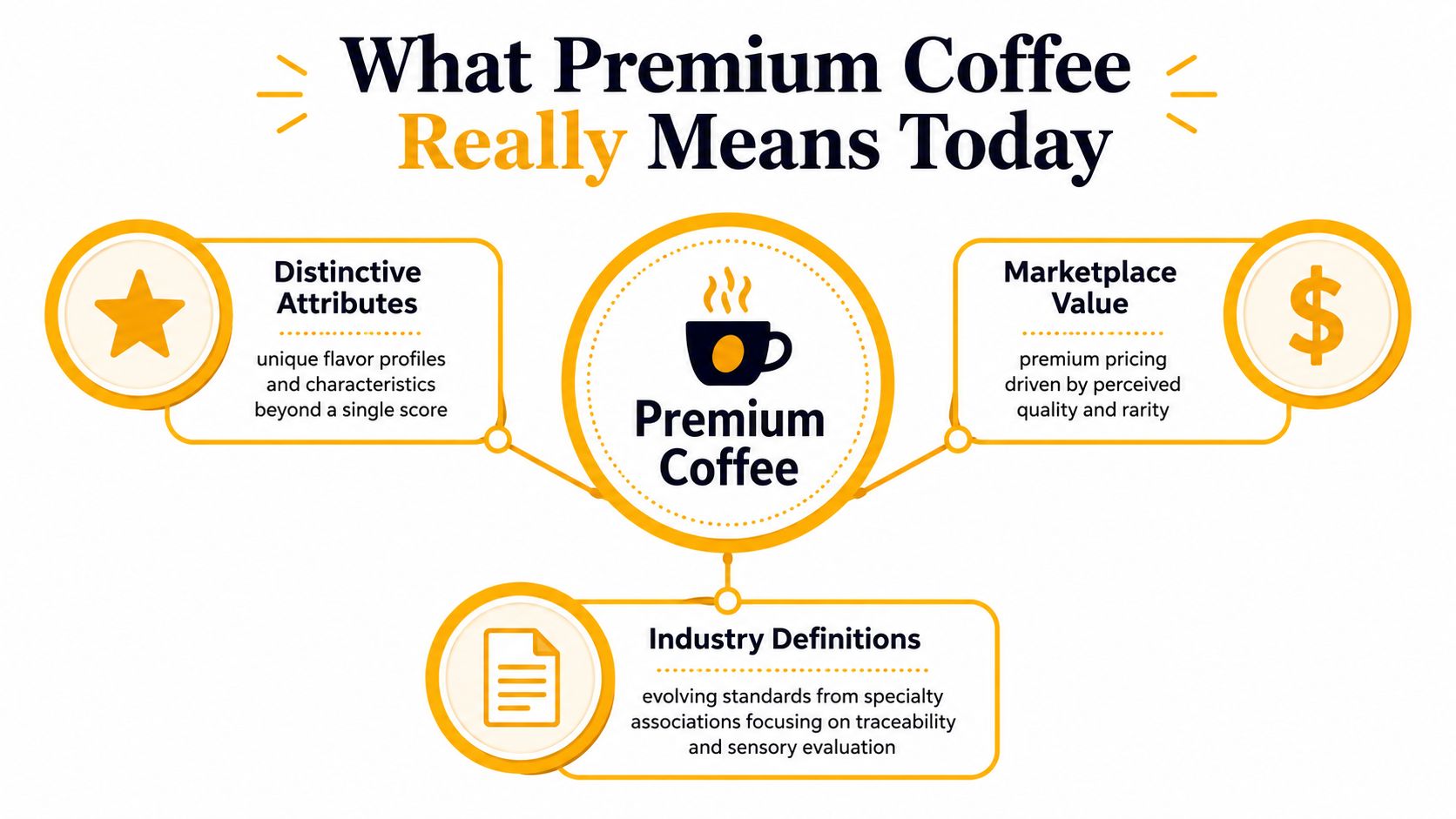
The Specialty Coffee Association updated its current definition of specialty coffee in 2021 through its Coffee Value Assessment. It describes specialty coffee as “a coffee or coffee experience recognized for its distinctive attributes, and because of these attributes, it has significant extra value in the marketplace” in this overview of specialty coffee definitions. That's important because it moves the conversation toward distinctiveness and market value, not just one old grading rule.
Distinctive attributes matter more than a vague promise
In plain language, premium coffee means the coffee has traits that stand out for good reasons.
That could mean a cleaner cup. It could mean more defined flavor. It could mean traceable sourcing from a known region, cooperative, or farm. It could also mean the coffee was handled in a way that preserves those qualities instead of flattening them into a generic roast profile.
Older trade language often treated an 80-point score as the key threshold for specialty coffee. That older benchmark still helps explain how coffee quality has been discussed. But the newer framing is broader. It asks whether the coffee has distinctive attributes and whether buyers recognize added value in them.
Premium sits between basic coffee and top-tier specialty
People often get confused. Premium coffee and specialty coffee overlap, but they aren't always identical in everyday use.
Some trade language places premium coffee below specialty coffee, often with lots in the 70 to 79 range on a 100-point cupping scale, while specialty sits at 80+, as explained in this coffee grading overview. That doesn't mean premium is “bad specialty” or mere branding. It means there's a quality ladder, and premium often names coffee that is clearly above commodity level even if it doesn't sit at the very highest end.
Origin and standards are part of the value
The International Coffee Organization also distinguishes premium coffee through factors like regional identity, traceability, and voluntary standards such as Fairtrade, organic, RFA/UTZ, and company sustainability programs, as summarized in this discussion of premium coffee and provenance. That tells you something important. Premium status often comes from verifiable sourcing and standards, not branding alone.
If you want a deeper look at how specialty coffee relates to this conversation, Cartograph has a helpful guide on what specialty coffee is.
Premium coffee today is best understood as coffee with recognizable quality and traceable value, not just a luxury label.
The Six Markers That Make Coffee Premium
If the word premium means anything useful, it has to show up in concrete markers you can look for.
That's the good news. You don't need a lab or a professional cupping table to spot many of them. You just need to know where quality leaves clues.
Marker one and two
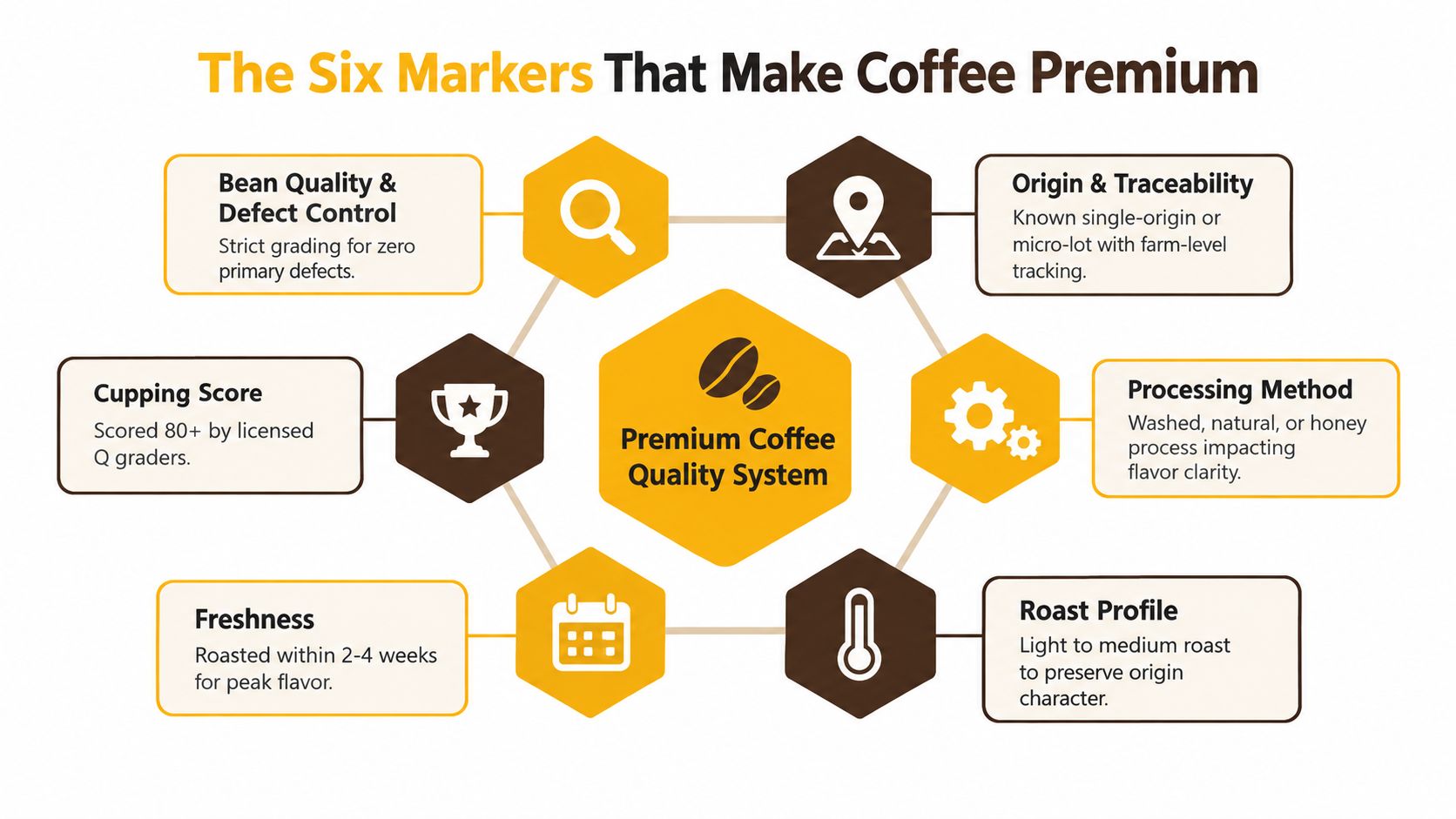
Bean quality and defect control come first because they affect everything else. According to the International Coffee Organization's specialty benchmarks, top-grade green coffee requires no more than 5 defects per 350 g sample and zero primary defects, with moisture commonly kept around 10 to 12% or within broader 9 to 13% ranges depending on the system, as outlined in this ICO specialty coffee definitions document. Fewer defects usually means fewer off-flavors, more even roasting, and a more consistent brew.
Origin and traceability are the next major clue. A premium coffee should tell you more than “packed somewhere.” Look for a specific country, region, cooperative, or farm. That information doesn't guarantee greatness, but it does show accountability. If a seller can trace the coffee clearly, they're usually treating the product as something more than an interchangeable commodity.
Marker three and four
Processing changes flavor in noticeable ways. Washed coffees often drink cleaner and more focused. Natural coffees can taste fruitier or heavier. Honey processing often lands somewhere in between. You don't need to memorize all of that. Just know that when a bag includes processing information, it's giving you a real quality clue.
Then there's sensory clarity. This is one of the most useful concepts for buyers. Premium coffee usually tastes like it knows what it is. Chocolate notes taste distinct from caramel. Nutty notes don't blur into harsh roastiness. Acidity feels structured rather than sour. The flavor doesn't have to be exotic to be premium. It just has to be clear.
A premium coffee doesn't need to taste wild. It needs to taste clean, intentional, and free of obvious flaws.
Marker five and six
Certifications can help, especially if they support claims about organic production, Fairtrade practices, or sustainability standards. They don't replace cup quality, but they can strengthen trust around sourcing and production.
Freshness matters too. Roast date is often more useful than a vague “best by” date. Coffee changes over time, and even a well-sourced bean can taste dull if it sat too long. Freshness affects aroma, sweetness, and definition.
Here's a simple buying checklist:
- Check the origin: Specific place names beat generic phrases.
- Check for quality language: Processing notes, flavor descriptors, and sourcing detail are useful.
- Check for defect-conscious handling: Sellers may mention grading, sorting, or cleaner cup profiles.
- Check the date: Roast date tells you more than decorative packaging.
- Check certifications if they matter to you: Organic and sustainability cues can support the premium claim.
- Check the relationship story: A useful example is direct trade coffee, which can signal closer sourcing relationships and more transparency.
How Premium Coffee Compares to Commodity and Instant Options
Not all coffee categories answer the same need. Some are built for cost. Some for sensory precision. Some for speed. Premium coffee matters because it often tries to balance quality with everyday usability.
A simple analogy helps. Commodity coffee is like bulk supermarket produce selected for consistency and scale first. Specialty coffee is closer to a standout farmers market selection with exceptional character. Premium coffee often sits in the middle or overlaps upward. It offers stronger sourcing and better cup quality than basic coffee, without always asking you to become a home barista.
Premium vs Commodity vs Specialty vs Instant at a Glance
| Type | Sourcing and Traceability | Quality Threshold | Flavor Profile | Best For |
|---|---|---|---|---|
| Commodity | Usually broad, blended, and minimally transparent | General commercial standards | Familiar, often roast-driven, sometimes flat | Lowest-friction daily coffee where detail matters less |
| Premium | More sourcing detail, stronger handling, often traceable by region or producer group | Above ordinary commercial quality, sometimes below specialty, sometimes overlapping it | Cleaner, more distinct, more consistent | Buyers who want noticeable quality without fuss |
| Specialty | Highly traceable, often with strong origin identity | Often associated with 80+ cupping language in older standards | More expressive, nuanced, and origin-specific | People chasing clarity, complexity, and coffee character |
| Instant | Varies widely by producer | Can be basic or premium depending on bean quality and process | Can range from dull to surprisingly clean | Speed, travel, office use, camping, simple mornings |
Instant isn't automatically low quality
This is one of the biggest outdated assumptions.
Instant coffee describes a format, not a quality ceiling. The premium instant coffee segment was estimated at $14.8 billion globally in 2025, with projections reaching $28.6 billion by 2034, according to this market summary on premium coffee categories. That doesn't prove every instant coffee is good. It does show that premium instant is a real commercial category, not a contradiction in terms.
The practical question is whether the instant product preserves the same cues that matter elsewhere. Does it start with better coffee? Is it transparent about ingredients? Does it taste clean? Does it solve a convenience problem without hiding low quality behind sweetness or flavoring?
The category is larger than many people assume
Specialty coffee offers a useful scale for understanding premium demand. Independent estimates put the global specialty coffee market at $62.8 billion in 2025, with a projected rise to $112.4 billion by 2034 at a 6.7% CAGR, while another estimate placed the broader specialty market at $111.5 billion in 2025. The wider coffee industry was valued at $176.55 billion in 2025, according to this specialty coffee market report. Those numbers show that better-than-basic coffee is no small side niche.
Some industry sources also note that only about 2% to 10% of global coffee production meets specialty-grade thresholds, as noted in that same market report on specialty coffee scarcity. That scarcity helps explain why traceable, cleaner coffees stand out.
How to Spot and Buy Premium Coffee with Confidence
Most buying decisions happen in a few seconds. You pick up a bag, glance at the front, and decide whether to keep reading. A good premium coffee gives you useful information quickly.
The front label might catch your eye. The side or back label should earn your trust.
Read the label like a quality checklist
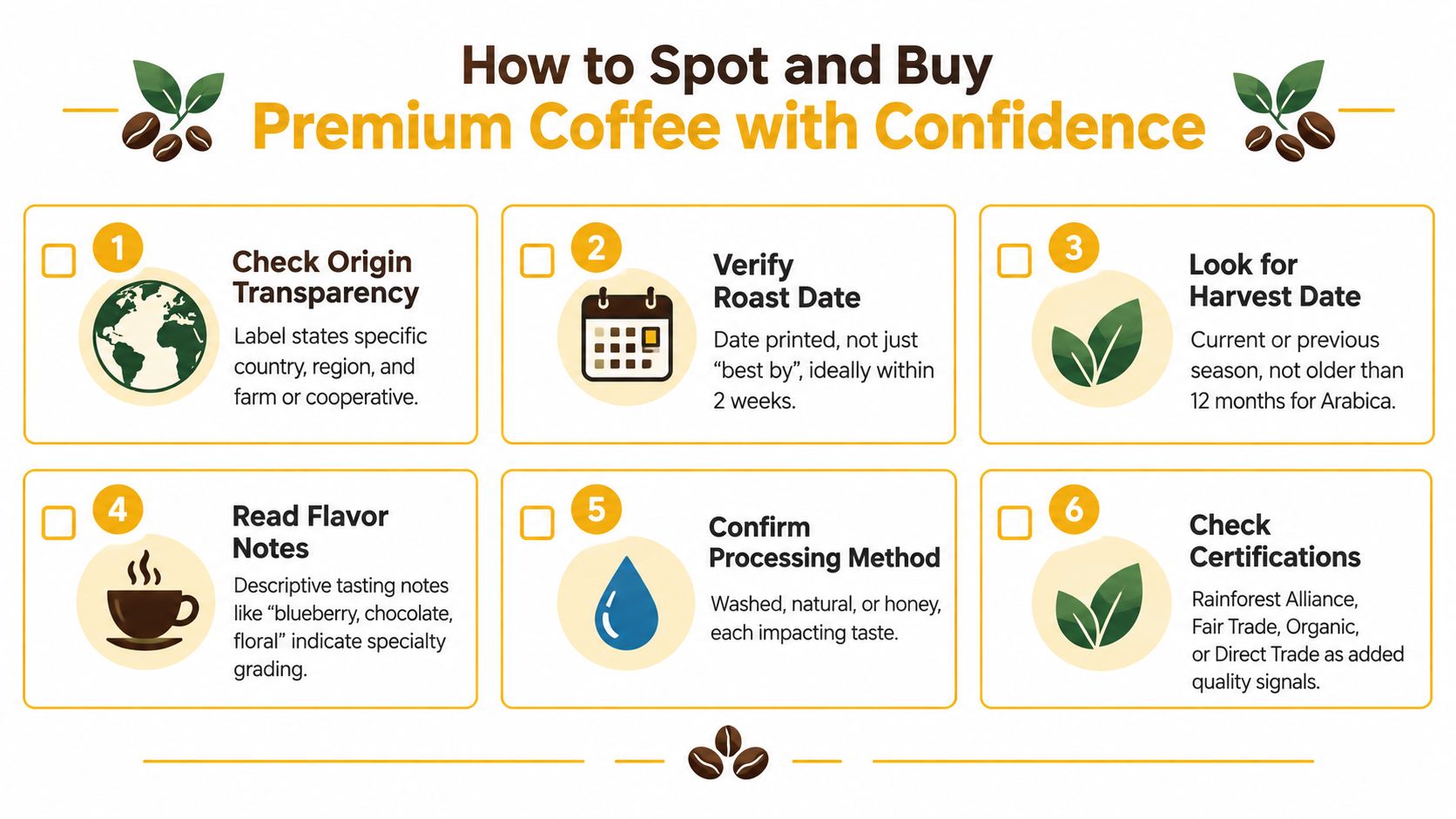
Start with origin. “Colombian coffee” is more helpful than nothing. “Huila, Colombia” is better. A farm or cooperative name is even better. Specificity suggests the coffee wasn't treated as an anonymous bulk input.
Next, look for a roast date. If the package only gives you a “best by” date, you're learning less than you should. Freshness is one of the simplest quality signals available to ordinary shoppers.
Then check for processing notes and flavor notes. If a coffee says chocolate, caramel, vanilla, brown sugar, or nutty, that can still be premium. It doesn't have to read like a tropical fruit salad to be high quality. The National Coffee Association's 2026 framing also shows that consumers often connect specialty and premium with mainstream-friendly flavor profiles and convenience, not just exotic taste, as discussed in this National Coffee Data Trends summary.
A simple store or online workflow
Use this sequence when you shop:
- Scan for place names. Country, region, farm, or cooperative.
- Find the date. Roast date first, not just shelf-life language.
- Look for flavor clarity. Descriptors should sound intentional, not generic.
- Check sourcing signals. Certifications, direct relationships, or origin detail.
- Match the coffee to your routine. Espresso, drip, French press, travel, office, or camping.
Don't buy premium coffee for its label alone. Buy it because the information on the package helps you predict the cup.
For convenience-focused buyers
If convenience matters, be honest about that. There's no prize for owning brewing gear you won't use.
A premium choice for a busy workweek might be a well-labeled whole bean for home and a cleaner instant option for the office or trail. For example, Cartograph Coffee offers an organic freeze-dried instant coffee format built around single-ingredient coffee for people who want speed without flavored add-ins or café prep.
That kind of choice makes sense if the product still gives you the quality cues that matter.
Brewing Premium Coffee for the Best Flavor at Home or On the Go
Once you've bought better coffee, the next step is not wasting it.
Small brewing decisions make a visible difference. Grind size, water quality, and dose all shape whether the cup tastes clear and balanced or harsh and muddled.
Keep the method simple
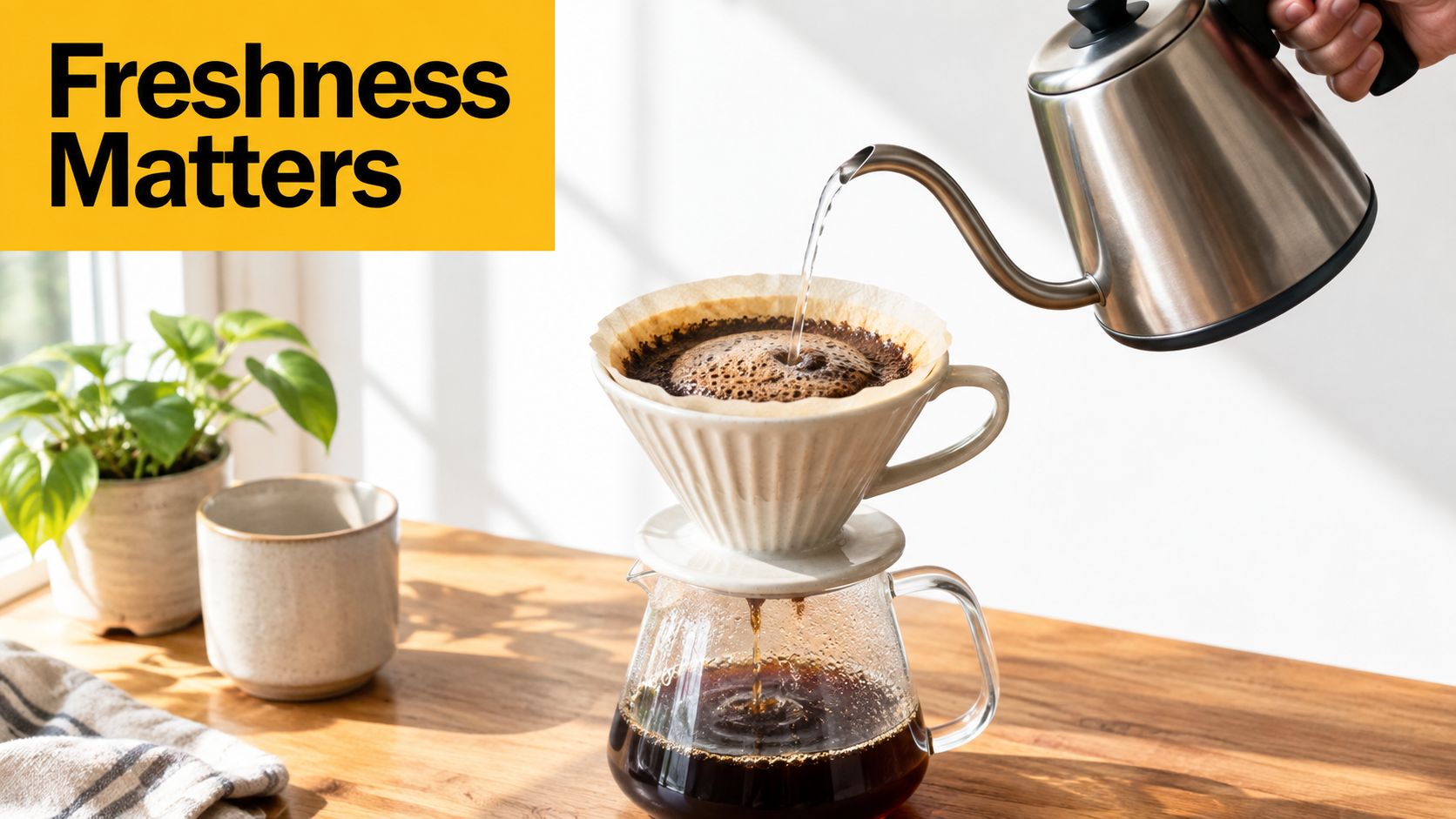
You don't need a café setup. A pour-over dripper, French press, AeroPress, or a solid drip machine can all do the job. The key is consistency.
Use water that tastes clean. Measure your coffee if you can. Grind just before brewing if you're using whole beans. If the cup tastes sour or thin, the grind may be too coarse. If it tastes bitter or drying, it may be too fine.
If you want a practical overview of different setups, this guide to best coffee brewing methods is a good place to compare them.
Match the brew to the situation
At home, slower manual methods can highlight clarity and aroma. At work, a reliable drip brewer may be the most realistic option. Outdoors, instant coffee can be the smartest answer because it removes grinder and equipment variables.
That matters because premium coffee isn't only about the bean. It's also about whether the final cup fits real life.
Here's a useful brewing reference if you want to see technique in action:
A few habits that protect flavor
- Use fresh coffee first: Better beans fade if they sit open too long.
- Store it well: Keep coffee sealed, cool, and dry.
- Adjust one variable at a time: Usually grind size is the first thing to change.
- Choose the right format for the moment: Whole bean for relaxed brewing, instant for speed and portability.
Better coffee doesn't ask for perfection. It asks for a few consistent choices.
Price Sustainability and Value Worth Paying For
Premium coffee usually costs more for understandable reasons. Better sorting, stronger traceability, tighter defect control, and more careful roasting all require more work. Scarcer high-quality lots also create real limits on supply.
But price alone doesn't make coffee premium. Value comes from what the higher price is buying.
For some people, it buys a cleaner cup and more satisfying flavor. For others, it buys trust in origin, organic standards, or sustainability programs. For a busy parent, commuter, or camper, value may also include convenience. If a coffee is easier to prepare and still tastes clean and distinct, that convenience is part of the premium experience, not a compromise.
Consumer behavior supports that broader view. The National Coffee Association reported record-high specialty coffee consumption in 2026, with 47% of American adults having had specialty coffee in the past day, and 69% of adults age 25 to 39 having had specialty coffee in the past week, according to this National Coffee Association specialty framing page. That tells you premium coffee isn't only for purists. It has become part of ordinary routines.
If you remember one idea, make it this one. What is premium coffee? It's coffee with quality you can verify and value you can use. Sometimes that means a beautifully traceable whole bean. Sometimes it means a clean, well-made instant you can trust on a rushed morning.
If you want premium coffee in a form that fits real life, Cartograph Coffee offers organic instant coffee designed around quality, flavor, and convenience. It's a practical option for mornings at home, long workdays, and travel when you want better coffee without extra equipment.