Espresso roast is not a specific bean or legally fixed roast color but a roast style tuned for high-pressure espresso extraction, commonly medium to dark, where roast level is calibrated to flavor and method rather than a strict category. Espresso is commonly brewed at about 9 bars, but the roast itself can be light, medium, medium-dark, or dark.
Have you ever bought a bag labeled “espresso roast” and assumed it came from a special kind of coffee bean? That assumption is understandable, but it confuses the brewing method with the way coffee is roasted. The label usually describes the roaster's intended use and flavor profile, not a botanical species, origin, or legally defined color.
That distinction matters at the grinder, the espresso machine, and even the instant-coffee shelf. A coffee roasted for espresso should be developed with concentrated, high-pressure extraction in mind, but it still needs to be matched with the right grind, recipe, and serving style. For a busy morning, the same principle can guide a convenient espresso-style drink made from organic instant coffee.
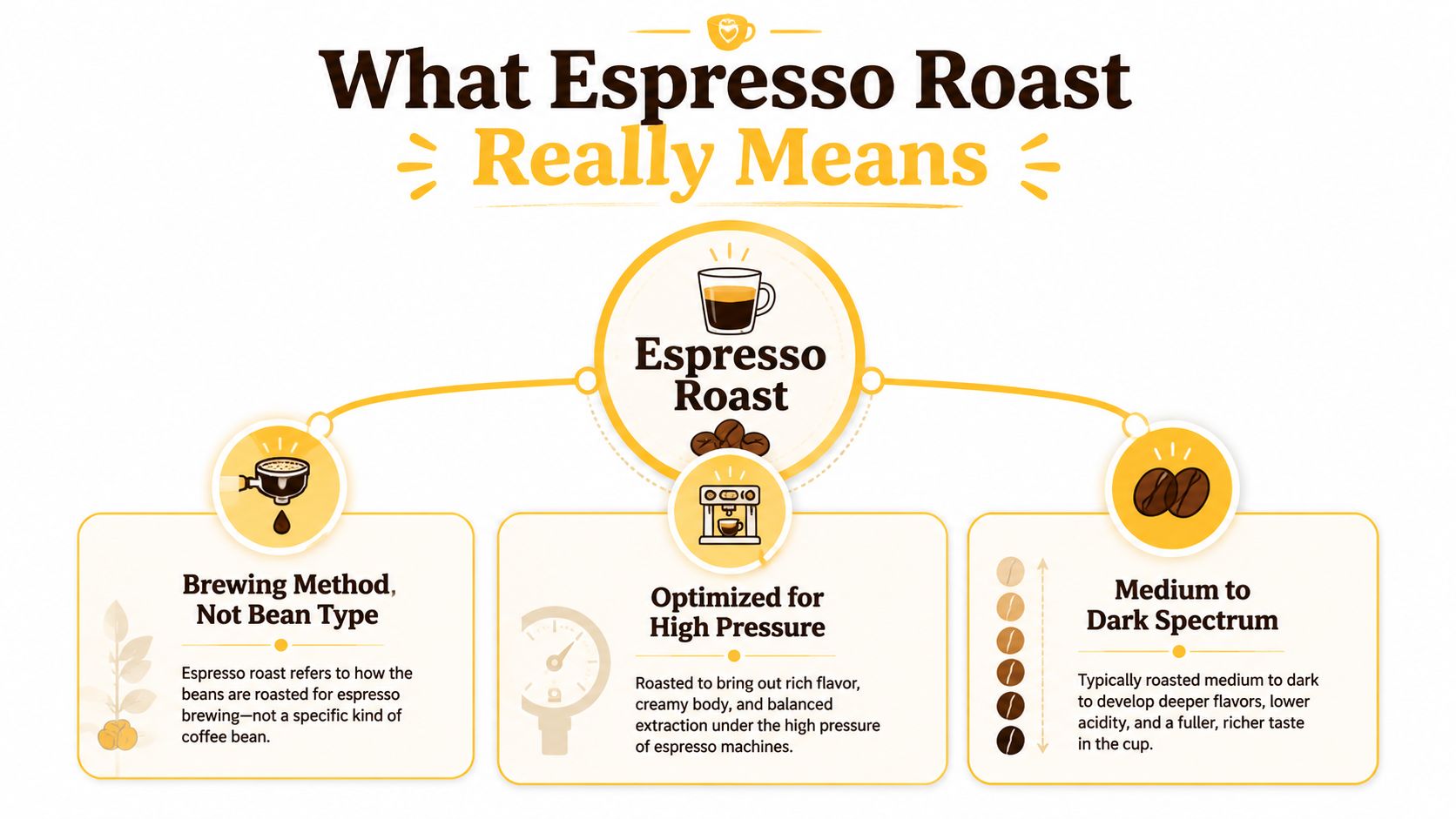
What Espresso Roast Really Means
Is “espresso roast” a dark bean type, or is it coffee prepared in a particular way? The answer begins with separating two terms.
Espresso is an extraction method. Hot water passes through finely ground coffee under pressure, producing a concentrated beverage with a dense texture and, when conditions are right, crema. Espresso roast is a roast style chosen to make that concentrated extraction taste balanced and satisfying.
No single bean origin or coffee species defines espresso roast. Authoritative background on espresso notes that any bean or roast level can be used to produce authentic espresso, so a light-roasted Ethiopian coffee and a dark-roasted blend can both be prepared through an espresso machine. The difference lies in how each coffee responds to pressure and how its flavors appear in the cup. Wikipedia's espresso overview also connects the term primarily with rapid, high-pressure brewing rather than a mandatory roast color.
Roast label versus brewing outcome
A roast label gives you a starting expectation. It may suggest a fuller body, lower perceived acidity, more roast-driven bitterness, or enough intensity to remain noticeable in a milk drink. It doesn't guarantee that the coffee will produce good crema, flow correctly, or taste balanced in your machine.
The final cup depends on several linked choices:
- Roast development affects how readily compounds dissolve.
- Grind size controls how quickly water moves through the coffee.
- Dose and yield change concentration and balance.
- Pressure and temperature influence extraction.
- Serving style determines whether clarity or intensity matters more.
That's why “espresso roast” is best understood as a performance intention. A roaster is saying, in effect, “This coffee was developed with espresso-style extraction in mind,” not “This is a separate bean category.”
Practical rule: Treat “espresso roast” as a useful recommendation, not a strict requirement.
Many commercial espresso blends are darker roasted and combine multiple origins. Roasters often build these blends for a flavor profile that can hold its own against pressure brewing and steamed milk. Still, medium roasts can be deliberately calibrated for espresso, particularly when the goal is sweetness, clarity, and origin character rather than a smoky profile.
Origins of Espresso Brewing and Roast Style
The history of espresso helps explain why people associate the method with darker coffee. The category developed around a machine and a service experience, not around the discovery of a unique espresso bean.
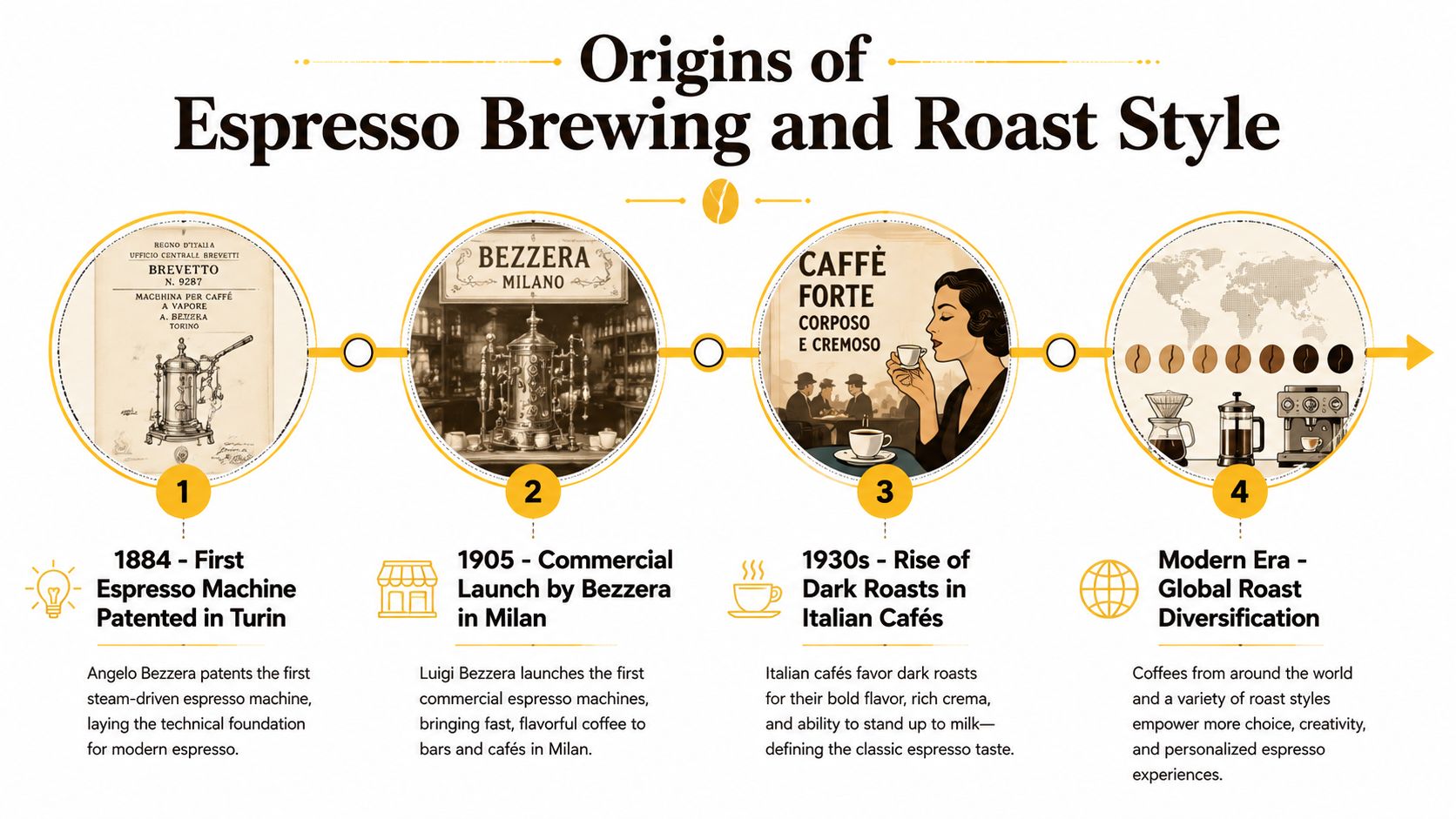
Angelo Moriondo patented an early espresso machine in 1884, an important milestone in the development of rapid coffee preparation. Luigi Bezzera later introduced commercial refinements in the early 1900s, helping establish espresso as a distinct brewing method. These developments took place in Italy, where cafés needed a way to prepare individual servings quickly. The historical overview of espresso describes this development as a story of machine design and brewing speed, not a shift to a legally designated roast.
Why darker styles became familiar
Espresso is often served in drinks containing steamed milk. Historical and industry accounts describe espresso blends as being developed to cut through roughly 6 to 12 ounces of steamed milk. The espresso history reference helps explain why a bold, darker profile became familiar in many cafés, especially where milk drinks and traditional Italian-style espresso shaped customer expectations.
Darker roasting can create flavors that feel heavy, intense, and immediately recognizable. Those characteristics may remain noticeable in a latte or cappuccino, where a delicate coffee could seem less prominent. Blending multiple origins can also help a roaster maintain a consistent flavor target while balancing body, sweetness, and roast character.
That history created a convention, but convention isn't the same as a technical rule. Espresso became associated with darker roasting because those coffees suited particular café drinks and preferences. The brewing method itself never required a specific roast shade.
The lasting misconception
The phrase “espresso bean” reinforces the confusion. It usually means a coffee selected or roasted for espresso, just as “filter coffee” often describes a coffee's intended brewing approach. Neither phrase identifies a separate species.
The useful question isn't “Is this bean an espresso bean?” Ask instead: Was this roast developed for the extraction and drink I want to make? That question leads to better decisions, whether you drink a straight shot, a milk beverage, an Americano, or a fast espresso-style instant coffee.
How Roast Degree Changes Espresso Chemistry
Roasting changes the coffee bean's internal structure and chemical composition. The transformation affects how water interacts with the grounds, which means roast degree changes more than surface color.
A peer-reviewed study that examined espresso prepared from light, medium, medium-dark, and dark roasts found measurable compositional differences among the roast levels. An academic review also reported that medium roasting often produced the most suitable sensory balance for espresso preparation. The espresso roast study indexed by PubMed supports the central idea that espresso roast is a calibration decision, not a synonym for dark roast.
What changes inside the bean
Longer roasting generally increases bean porosity and changes solubility. In plain language, the roasted structure becomes more open, and water can access and dissolve some compounds more readily. That can make darker coffee easier to extract quickly, but it also reduces the margin for error.
Roast degree influences the balance among:
- Acidity, which can feel bright, sharp, or fruit-like.
- Sweetness, including caramelized and brown-sugar impressions.
- Bitterness, which becomes more prominent when extraction or roast character dominates.
- Body, the physical weight and texture of the drink.
- Aroma, including both origin-derived and roast-derived notes.
Light roasts often preserve more origin character and can taste vivid or acidic. Darker roasts commonly emphasize heavier body and more developed roast flavors. Medium roasting can sit between those extremes, offering enough solubility for espresso while retaining a clearer sense of the coffee itself.
Why “stronger” can mislead
Consumers often use “strong” to mean dark, bitter, concentrated, or high in caffeine. Those aren't interchangeable. A dark roast may taste more intense because its roast flavors and bitterness are prominent, while a medium roast espresso can taste equally concentrated but sweeter or more transparent.
A roaster therefore adjusts roast development to the intended beverage. A shot served straight may benefit from balance and clarity. A latte may call for more body and a profile that remains distinct through milk. Neither goal automatically requires the darkest possible roast.
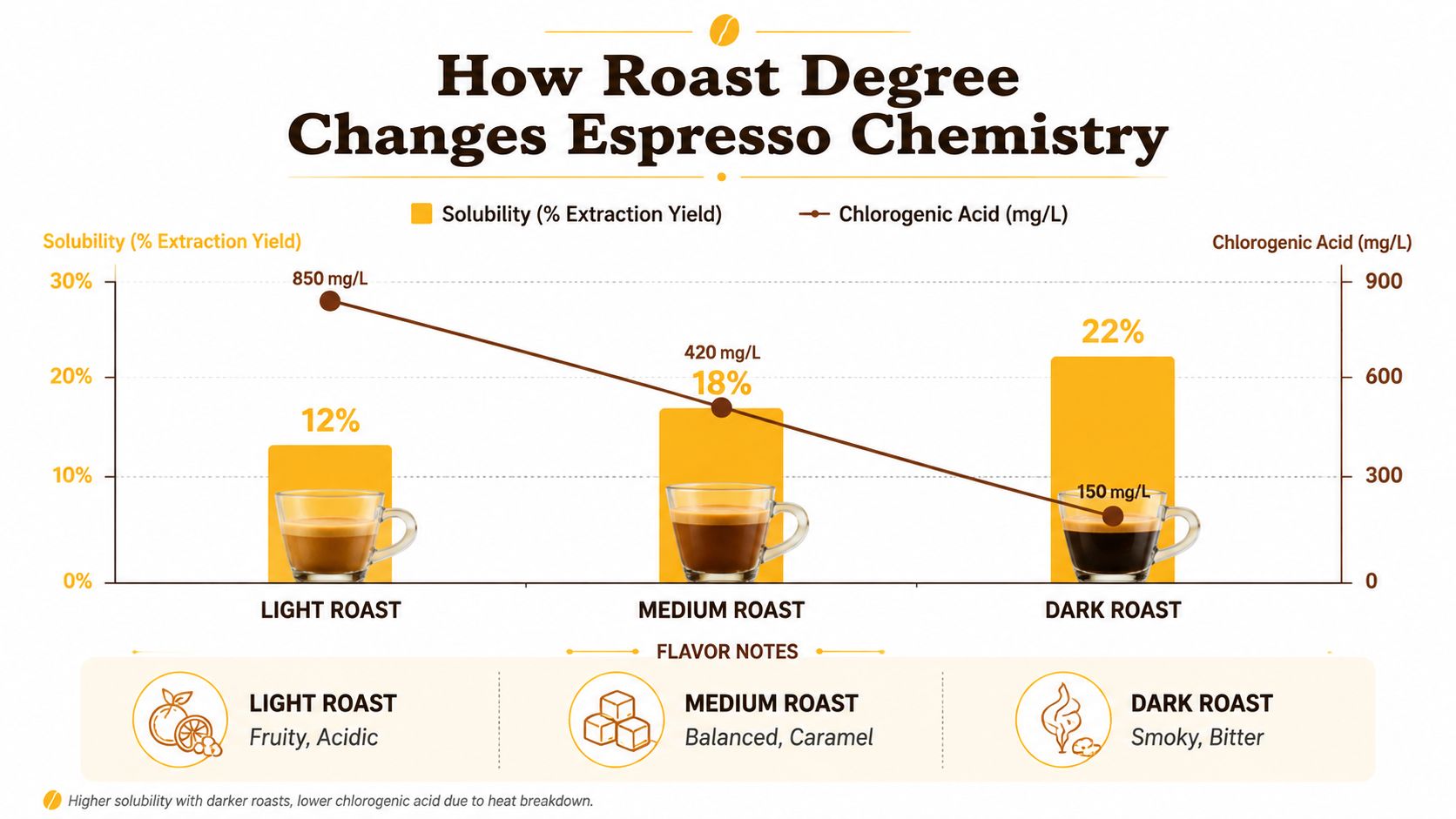
The practical conclusion is simple: roast degree changes extraction behavior and sensory balance. If a shot tastes sour, bitter, thin, or smoky, the roast may be part of the explanation, but it isn't the only variable. Grind, dose, water temperature, pressure, and contact time still determine whether the coffee reaches a pleasant balance.
Espresso Roast Versus Other Roast Levels
A useful way to compare roast levels is to ask what each one is likely to contribute to the espresso experience. The table below describes broad tendencies, not rigid rules. Origin, processing, blend composition, and roast development can move a coffee outside these expectations.
| Roast Level | Espresso Suitability | Milk Drink Fit |
|---|---|---|
| Light | Can produce expressive, bright espresso, but often demands careful dialing in | Works when you want fruit and acidity to remain noticeable |
| Medium | Often offers a balanced combination of sweetness, acidity, clarity, and body | Versatile for lattes, cappuccinos, and straight shots |
| Medium-dark | Provides more body and developed sweetness with less obvious acidity | Strong fit for milk drinks that need a pronounced coffee flavor |
| Dark | Can deliver heavy body, smoky intensity, and pronounced bitterness | Suits traditional, bold milk drinks, depending on personal taste |
The common commercial convention places espresso-specific roasts in the medium-to-dark range. That convention exists because many people want a shot with enough body and intensity for milk, and because darker roasting can increase solubility. It doesn't mean every dark coffee will extract well or that every medium coffee is unsuitable.
Choosing by the drink
For straight espresso, medium roast often gives you more room to notice origin character, sweetness, and texture. A medium-dark roast may feel more familiar if you prefer a denser, more traditional profile. Dark roast can work when you enjoy intense roast notes, but it may taste harsh if your recipe extracts too aggressively.
For milk drinks, choose based on contrast. A bright light roast can create a lively latte, while a medium or medium-dark coffee may produce a rounder and more conventional result. If you're still learning, a medium roast is a practical starting point because it can offer balance without locking you into a strongly smoky flavor.
You can also explore how roast labels relate to intended use through this guide to coffee roast types. The important shopping habit is to read the tasting notes and brewing recommendation alongside the roast name. “Espresso” on the package tells you about intended performance, while the flavor description tells you what the roaster wants you to taste.
Brewing Espresso by Roast Level
Roast degree affects how the puck behaves, so the same espresso recipe won't suit every coffee. Longer roasting generally increases porosity and solubility, which can shorten the time needed to extract desirable compounds. The tradeoff is a greater risk of over-extraction and bitterness when the grind, temperature, or pressure remains too aggressive. Independent espresso pressure guidance explains why roast level and pressure need to be considered together.
Start with the roast, then adjust
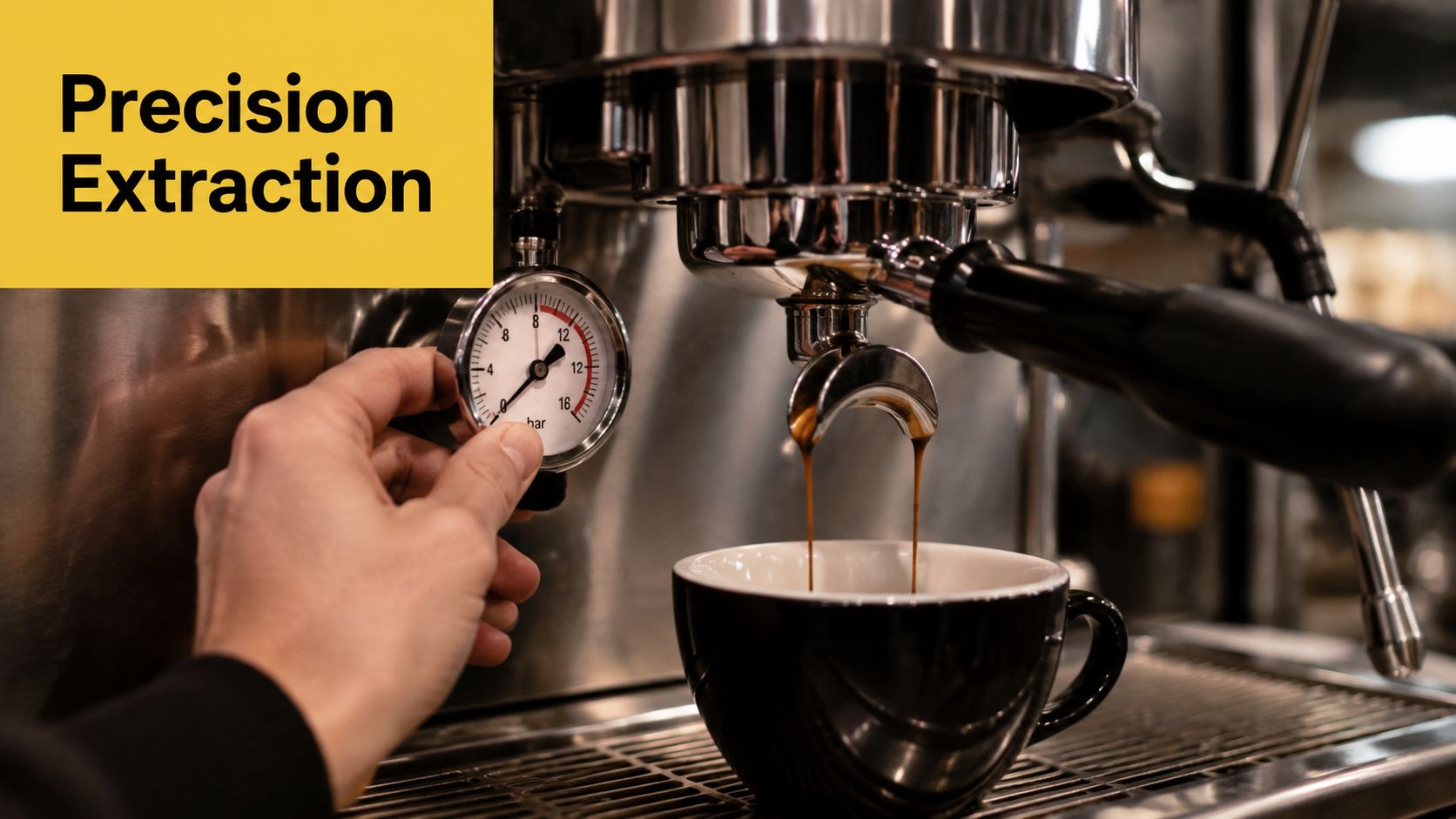
Standard espresso commonly runs at about 9 bars, but that number is a reference point rather than a guarantee of good flavor. Lighter roasts often benefit from slightly lower pressure and longer pre-infusion, giving water more time to begin saturating a resistant puck. Darker roasts may respond better to gentler pressure profiles, which can limit the rapid extraction of bitter or overly roasty compounds.
Use the first shot as information rather than a verdict. If a light roast tastes sharply sour and finishes too quickly, you may need a finer grind, more heat, or a longer extraction path. If a dark roast tastes bitter and dry, try a coarser grind, a cooler setting, a shorter yield, or gentler pressure.
Dial-in principle: Change one meaningful variable at a time, then taste the result.
Grind size is usually the most accessible adjustment. A finer grind slows water and increases contact, while a coarser grind speeds the flow. Because darker beans can be more porous, they may need less extraction than a dense light roast. A light roast can resist water, so copying a dark-roast recipe may leave it underdeveloped.
Read the cup, not just the gauge
Pressure gauges and shot timing help you diagnose a brew, but flavor remains the final test. Sourness often suggests that the coffee needs more extraction, while drying bitterness can indicate too much extraction or an unsuitable roast-pressure combination. Thin texture may point to grind, dose, yield, or the coffee's natural profile rather than roast level alone.
If you're buying beans for a home machine, this guide to beans for espresso machines can help frame the choice around equipment and intended drink. The best coffee is the one you can adjust into a cup you enjoy.
Espresso Roast in Organic and Instant Coffee
The practical meaning of espresso roast becomes especially useful when you don't have time to grind, tamp, and dial in a machine. An organic instant coffee can still be judged by the same questions: what flavor profile does the roast create, how concentrated should the drink taste, and will it work black or with milk?
Instant coffee isn't brewed in an espresso machine. It doesn't reproduce the exact pressure-driven extraction that creates a traditional shot, and a label suggesting espresso style shouldn't be read as proof that the product contains a special espresso bean. Instead, the term can describe the intended flavor direction or the way the prepared drink is meant to be used.
Where roast branding helps
A roast label helps when it gives you a reliable expectation. Medium roast usually suggests a more balanced, adaptable profile, while darker espresso-style products may appeal to someone seeking heavier body and a more pronounced roast taste. For an instant drink, that distinction can matter because you may prepare it quickly as a black coffee, mix it into a latte, or use it as the base for an iced drink.
The label does less work when it replaces useful information. Look for tasting notes, preparation instructions, organic certification details where applicable, and guidance on whether the coffee is intended for black drinking or milk-based recipes. A product called “espresso” isn't automatically more concentrated, more flavorful, or more suitable for your routine.
Convenience without abandoning flavor goals
For a professional rushing between meetings, a camper carrying a compact coffee kit, or a family preparing coffee without an espresso machine, instant coffee removes the equipment and cleanup involved in traditional brewing. That convenience doesn't eliminate the need to choose a roast that matches your preferences.
Cartograph Coffee offers organic instant coffee for use at work, at home, and outdoors, connecting espresso-style drink ideas with a format designed for quick preparation. You can explore the distinction between espresso-style preparation and ordinary instant coffee in Cartograph Coffee's guide to instant espresso coffee.
The right comparison is not “instant versus authentic espresso” as though they serve the same purpose. Traditional espresso is a pressure extraction method. Organic instant coffee is a convenience format. If your priority is a machine-made shot with crema, use an espresso setup. If your priority is a fast, portable cup with a roast profile you enjoy, instant coffee may fit the moment better.
Common Espresso Roast Questions Answered
Is espresso roast a bean type?
No. Espresso roast is a roast style associated with espresso preparation, not a separate species or origin. Any coffee can technically be prepared as espresso, although some coffees are roasted and blended to perform more predictably in that format.
Does espresso roast automatically create better crema?
No roast label guarantees crema. Crema depends on the coffee, its freshness, grind, dose, machine, pressure, and preparation. A darker roast may create the appearance and body many people associate with traditional espresso, but that doesn't make it universally better. Judge the drink by balance, sweetness, texture, and aftertaste rather than foam alone.
Must espresso be dark roasted?
It doesn't. Sensory research on espresso found that an intermediate roast paired with espresso extraction produced the best match to in-origin cupping attributes, and the authors concluded that medium roasting was most suitable for emphasizing sensory qualities. The research article on roast level and espresso sensory character challenges the simple “espresso equals dark” rule.
Why is medium roast becoming more visible?
Industry data from 2025 placed medium roast at about 42.8% of roasted-coffee consumption, while dark roast represented a smaller share and declined in several specialty-drinker datasets. The reported roast-preference data suggests that many drinkers value a roast that works across espresso and other brewing methods, though regional preferences still differ.
Choose medium when you want flexibility and balance, medium-dark when you want more body, and dark when you specifically enjoy bold roast character. The word “espresso” should guide your brewing expectations, not dictate your taste.
If you want to explore coffee designed for fast preparation without losing sight of roast style and flavor balance, visit Cartograph Coffee to browse its organic instant coffee options. Choose the format that fits your day, whether you're making a quick cup at work, packing for camp, or preparing coffee at home.