A rushed morning can turn a smooth cup into a bitter one. You stir in a little sugar, the harsh edge softens, and suddenly the coffee tastes fuller rather than sweeter.
The Historical Journey of Sweetening Your Cup
A spoonful of sugar can carry centuries of coffee history. The habit grew from trade, economics, roasting styles, and changing expectations about convenience, then settled into everyday routines.
When coffee reached Europe in the 16th century, both coffee and sugar were luxury goods. Wealthy drinkers often combined them because sugar softened the intense, smoky character of the dark-roasted beans available at the time. The pairing was practical as well as fashionable: sweetness made a challenging cup easier to enjoy. As Caribbean production expanded during the 17th century, sugar became more affordable, falling from 32 pence per pound in 1600 to 5.7 pence per pound later on. Consumption eventually rose to 33 pounds per person by 1854–56. Perfect Daily Grind's history of sugar in coffee traces how these changes shaped sweetened coffee over nearly 500 years.
The historical shift matters for flavor. Sweetness became a familiar tool for reducing the harsh impression of bitter coffee, much as a softer light can make a sharp image appear more balanced. That tradition still influences how drinkers approach a cup, including high-quality organic instant coffee.
From luxury ingredient to daily habit
As sugar moved from an expensive ingredient to a common pantry staple, sweetened coffee became easier to prepare and more widely accepted. Its popularity reflected broader changes in global trade and industrial food production, not just a sudden preference for sweeter flavors.
A sugared cup therefore connects personal routine with economic history. The sugar bowl helped coffee adapt to the beans, roasting methods, and food systems available in each era.
Historical insight: The sugar bowl didn't create the coffee habit. It helped coffee adapt to the beans, roasting styles, and food systems available in each era.
Why instant coffee kept the pairing alive
The relationship continued into the 20th century, when instant coffee made preparation faster and less expensive for more households. Often made with Robusta, instant coffee could have a bold, intensely roasted profile, so sugar remained a familiar way to make its character more approachable. Historical accounts connect instant coffee's flavor with the continued appeal of sweetening.
That history explains why adding sugar can feel automatic today. You may be following a long-standing flavor tradition rather than correcting a poorly made cup. For health-conscious drinkers, the useful question is how much sweetness supports the coffee without overwhelming its aroma or turning a carefully produced organic instant coffee into a sugar-forward drink.
The Chemistry of Taste and Bitterness Suppression
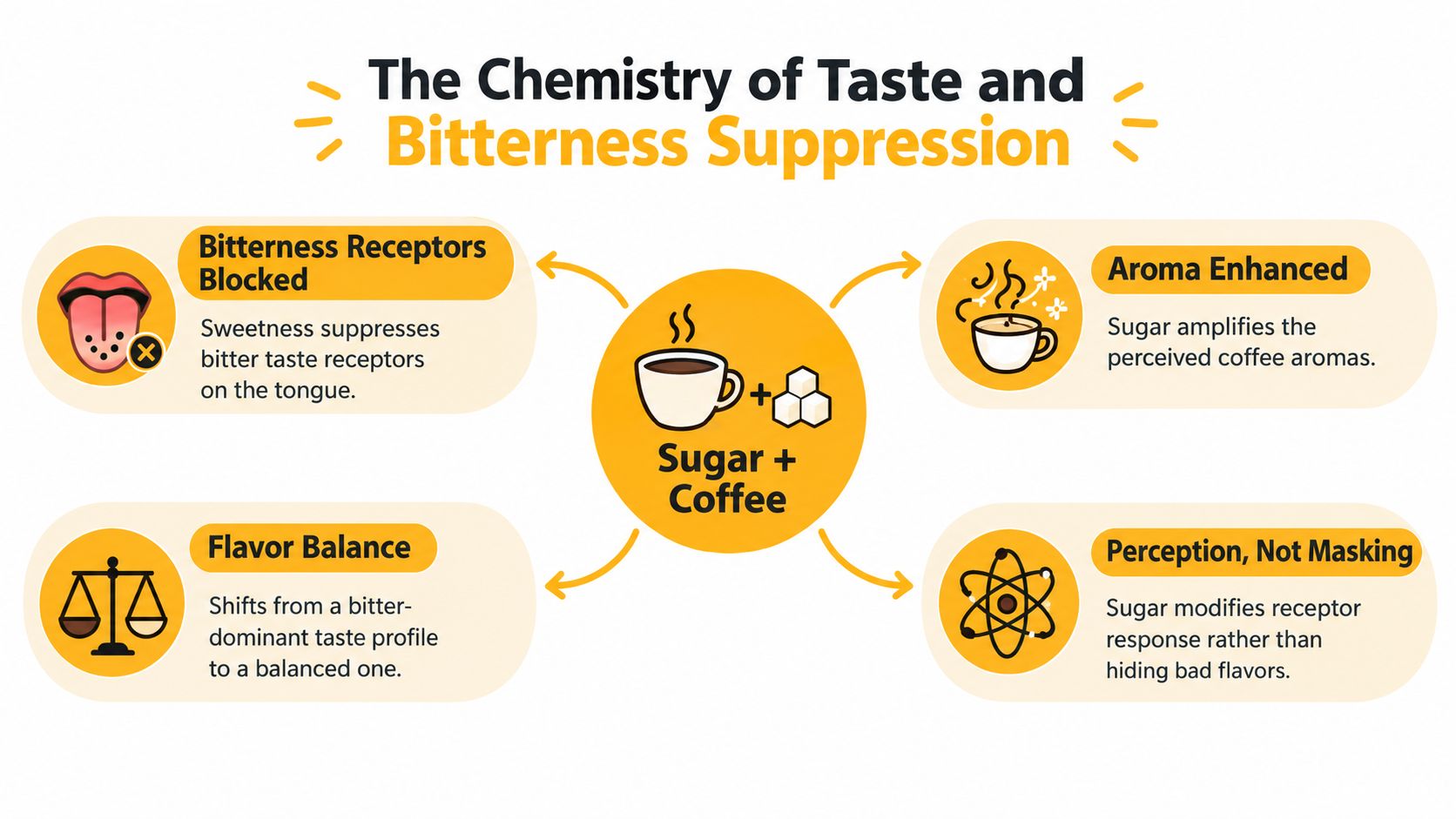
Sugar doesn't merely sit on top of bitterness like a blanket. Sucrose changes the sensory balance of coffee, which is why a small addition can make a strongly bitter drink seem noticeably smoother.
Controlled sensory studies found that sucrose suppressed the perceived intensity of caffeine and coffee flavor by about 30–40% under matched perceived-intensity conditions. The effect was strongest at lower caffeine concentrations of 6–13 mM, and it remained measurable at higher concentrations of 26–52 mM. The sensory study on sucrose, caffeine, and coffee flavor provides the evidence behind this distinction.
Suppression is different from covering
When people say sugar “masks” bitterness, they often picture sweetness hiding an unpleasant flavor. That description is incomplete. The sensory evidence suggests that sucrose can reduce the intensity with which caffeine and coffee bitterness are perceived, shifting the cup away from a bitter-dominant profile.
Sweetness can alter your judgment of the entire drink. A coffee may seem less harsh, more aromatic, or more rounded even though the underlying coffee compounds haven't disappeared. Sugar changes the relationship between the sensations your tongue receives.
The effect also explains why sugar can be useful in instant coffee. Instant coffee has already gone through brewing, concentration, and drying, so its flavor balance depends heavily on the quality of the coffee and the production process. A modest amount of sweetness can make a strong cup easier to drink without requiring a large quantity of sweetener.
Use sugar as a flavor tool
Treat sugar like salt in cooking. You don't add it automatically, and you don't need enough to make the dish taste sugary. You add a controlled amount, taste, and decide whether it brings the main flavors into better focus.
For readers who want a straightforward overview of what sugar is and how it behaves in food, SANS Meal Bar's guide to sugar offers useful background. The important coffee lesson is simple: sweetness can balance bitterness, but more sweetness isn't automatically better.
Start with the smallest addition that changes the cup. If the coffee still tastes sharp, check the coffee itself, the water, and the mixing process before assuming you need more sugar. A better ingredient or a better preparation may solve the problem more effectively than another spoonful.
Health Considerations and the Dose That Matters
A spoonful can turn a sharp morning cup into an enjoyable drink, but the health effect depends on how much you use, what else is in the drink, and what you eat alongside it. A plain organic instant coffee with a small measured addition is a different beverage from a large café drink made with sweetened creamer, flavored syrup, and other ingredients.
Sugar contributes carbohydrate and should not be treated as a neutral flavoring. Controlled human testing found that coffee itself did not materially change glycaemic or insulinaemic responses when consumed with carbohydrate. In the tested context, adding milk and sugar increased post-meal glucose and insulin exposure relative to water preloads. The controlled nutrition study on decaffeinated coffee, milk, sugar, and meal responses also found that coffee with milk and sugar produced a 14% lower glucose incremental AUC than water preloads before a high-GI meal.
That finding applies to a particular meal, beverage, and timing combination. It does not make a sweetened coffee universally beneficial or harmful. Milk, sugar, the carbohydrate being eaten, and the timing of the drink can all shape the total response.
Why the teaspoon question matters
Health headlines often group every sweetened coffee together, even though a lightly sweetened cup differs greatly from a dessert-like café drink. The evidence discussed in this context concerns a small amount, roughly one teaspoon per cup, rather than a heavily sweetened preparation. Harvard's summary of coffee with added sugar describes findings from a large U.K. Biobank analysis in which coffee with about a teaspoon of sugar still showed a mortality association, while the added sugar provided no additional benefit. A separate U.S. analysis based on NHANES associated black coffee and coffee with low added sugar and saturated fat with lower all-cause mortality, while coffee with high added sugar and saturated fat was not. These are observational associations, so they do not prove that sugar or coffee caused the outcomes.
Practical rule: Do not generalize findings about a lightly sweetened cup to a much sweeter coffee drink.
The coffee itself contributes little energy compared with many additions. This guide to how many calories are in a cup of coffee helps explain why the recipe matters. Sugar, milk, cream, and flavored additions can change the drink more than the organic instant coffee alone.
A realistic daily approach
Measure your usual amount once instead of guessing. Then ask whether the sweetness lets you taste the coffee more clearly or merely covers an overly bitter base. With a high-quality organic instant coffee, gradual reduction can help your palate notice acidity, roast character, and natural sweetness while keeping the change manageable.
Artificial sweeteners do not automatically resolve every health question. A 2025 cross-sectional study reported that sweetened coffee was preferred over unsweetened coffee among its participants, as described in The 2025 study in Frontiers in Nutrition. Preference and health evidence answer different questions, so choose a level that fits both your flavor expectations and your daily eating pattern.
Measuring Sweetness for the Perfect Balance
“Add sugar to taste” leaves too much room for guesswork. A repeatable method starts with the coffee you already enjoy, then changes one measured variable at a time. Sugar does not remove bitter compounds from coffee. It changes how strongly your palate perceives them, much like lowering the volume of a sharp sound.
Prepare your organic instant coffee exactly as usual. Keep the mug, water volume, and coffee quantity consistent. Dissolve the granules fully before adding sugar, because undissolved particles can create extra bitterness and make the dose seem less effective than it is.
Build a personal reference point
Use a clean spoon and begin with a small, deliberate measure. Stir until the crystals disappear, then wait until the drink is comfortable to taste. Take a sip and record the result: still bitter, balanced, or distinctly sweet. A quick note on your phone can turn a vague preference into a reliable recipe.
For a lightly sweetened cup, one teaspoon per cup works as an upper comparison point, not a universal target. A smaller dose may soften bitterness while leaving roast, acidity, and aroma visible. A larger dose can make sweetness the main feature and hide the details that distinguish a high-quality instant coffee.
| Measurement | Approximate amount | Flavor impact |
|---|---|---|
| Pinch | ~0.5 g | Takes the edge off bitterness while preserving the coffee's character |
| 1/4 teaspoon | ~1 g | Brings roasted and chocolate-like notes forward without making the cup plainly sweet |
| 1 teaspoon per cup | ~4 g, use as an upper reference only | Creates clearly noticeable sweetness and a softer bitter impression |
Household spoons vary, so weigh each measure once with a kitchen scale to calibrate your spoon. After that, the same pinch or quarter-teaspoon can provide a repeatable starting point.
Adjust for roast and additions
A dark, roasty instant coffee may need only a pinch to smooth a harsh impression. A lighter coffee often benefits from a smaller adjustment because its acidity and delicate aromas can disappear beneath stronger sweetness. Taste the coffee before deciding that more sugar is the answer. Excess bitterness may come from the coffee-to-water ratio or preparation, not from a lack of sugar.
Milk or creamer changes the finished balance. Add it first if that is your normal recipe, then adjust the sugar in the complete drink. Milk can soften bitterness and add body, so a dose that tastes balanced in black coffee may become overly sweet after the addition.
Taste the finished recipe, not the individual ingredients.
Use three sensory checks: can you still identify the roast character, does sweetness support the aroma, and does the sip finish cleanly rather than sugary? If the cup needs a heavy dose to become enjoyable, try a smoother coffee base before continuing to increase the sugar.
Exploring Natural Alternatives to Refined Sugar
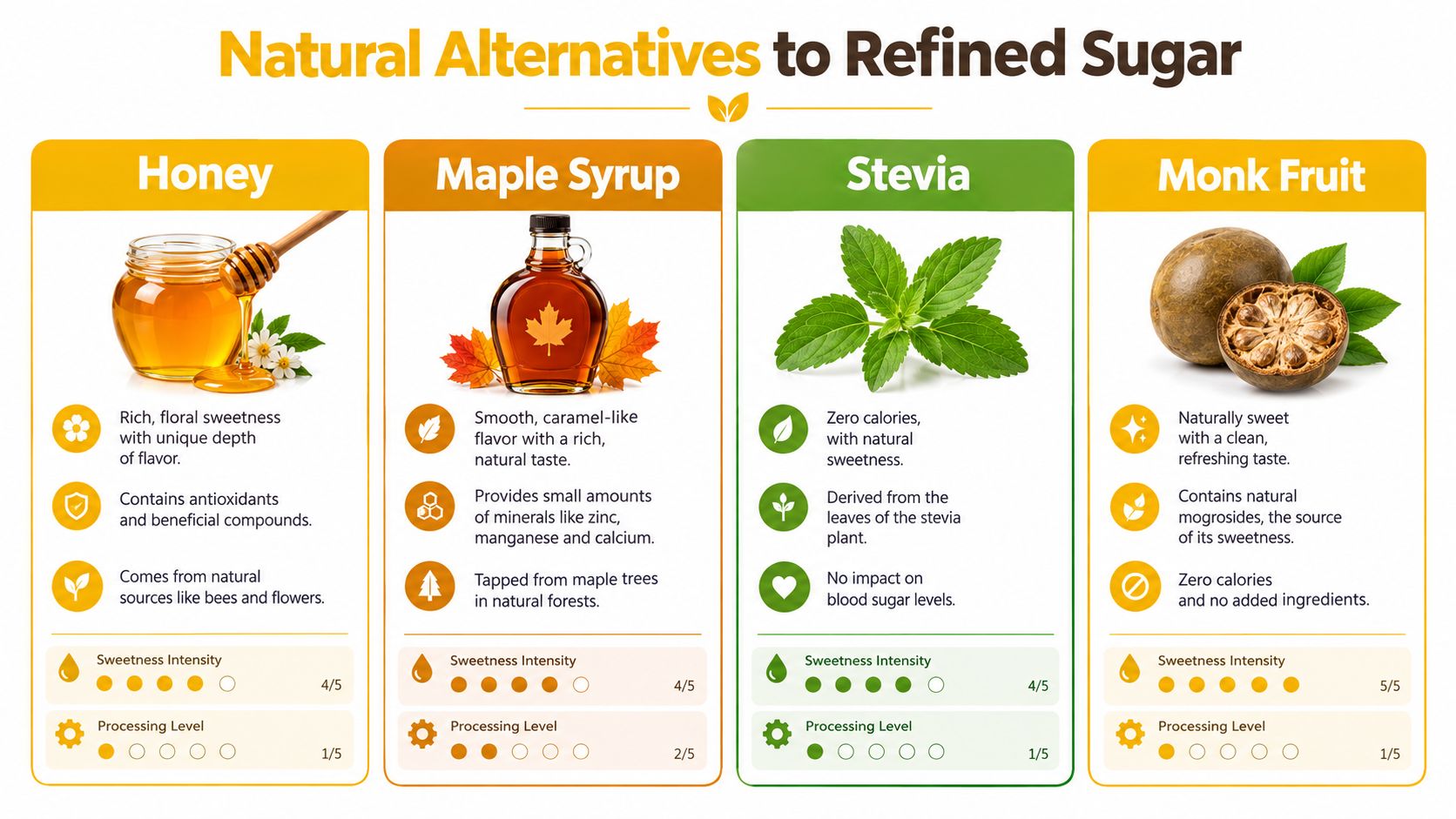
Natural sweeteners can change more than sweetness. They can add floral notes, caramel tones, herbal impressions, or a lingering aftertaste. That makes the choice especially important in organic instant coffee, where the drink is quick to prepare and every added flavor remains prominent.
Match the sweetener to the coffee
Honey brings a rounded sweetness with floral or meadow-like notes. It works well when the coffee has gentle fruit or toasted flavors, but a strongly aromatic honey can compete with a delicate cup. Stir it into hot coffee so it disperses completely.
Maple syrup contributes a darker, caramel-like character. It can complement a bold roast, especially when paired with milk, but it changes the coffee's identity more noticeably than plain sucrose. Use it when you want the sweetener to become part of the recipe rather than disappear into the background.
Stevia offers concentrated sweetness with a possible herbal or lingering finish. It can suit drinkers who want sweetness without adding sugar, but the aftertaste may become more apparent in black coffee. Add very cautiously and mix well.
Monk fruit can provide a clean, concentrated sweetness, though blended products may contain other ingredients. Check the label if you're trying to keep the recipe simple, and compare the finished flavor rather than relying on the sweetener's reputation.
For a broader look at sugar-free options in coffee, this guide to sugar-free sweeteners for coffee can help you compare formats and preparation ideas.
Don't overlook coconut sugar
Coconut sugar has a deeper, lightly caramelized profile that may suit robusta-forward or dark-roasted instant coffee. It won't taste identical to refined sugar, so use it when you enjoy a more rustic flavor. A helpful ingredient overview of paleo-friendly coconut sugar provides additional context for shoppers comparing sweetener choices.
Natural doesn't mean flavorless, and it doesn't automatically mean better for every goal. Honey and maple syrup still make the drink taste richer, while stevia and monk fruit can make sweetness more concentrated. If your priority is preserving the coffee's character, choose the option with the mildest flavor you enjoy.
Palate exercise: Taste the same coffee with no sweetener, sucrose, and one alternative. Compare the finish, not just the first impression.
Organic instant coffee benefits from this side-by-side test. Its convenience makes experimentation easy, and you can evaluate each sweetener without changing a complicated brewing recipe.
Elevating Your Organic Instant Coffee Experience
The most effective way to use less sugar isn't always to develop more discipline. It's often to start with coffee that tastes good before sweetening.
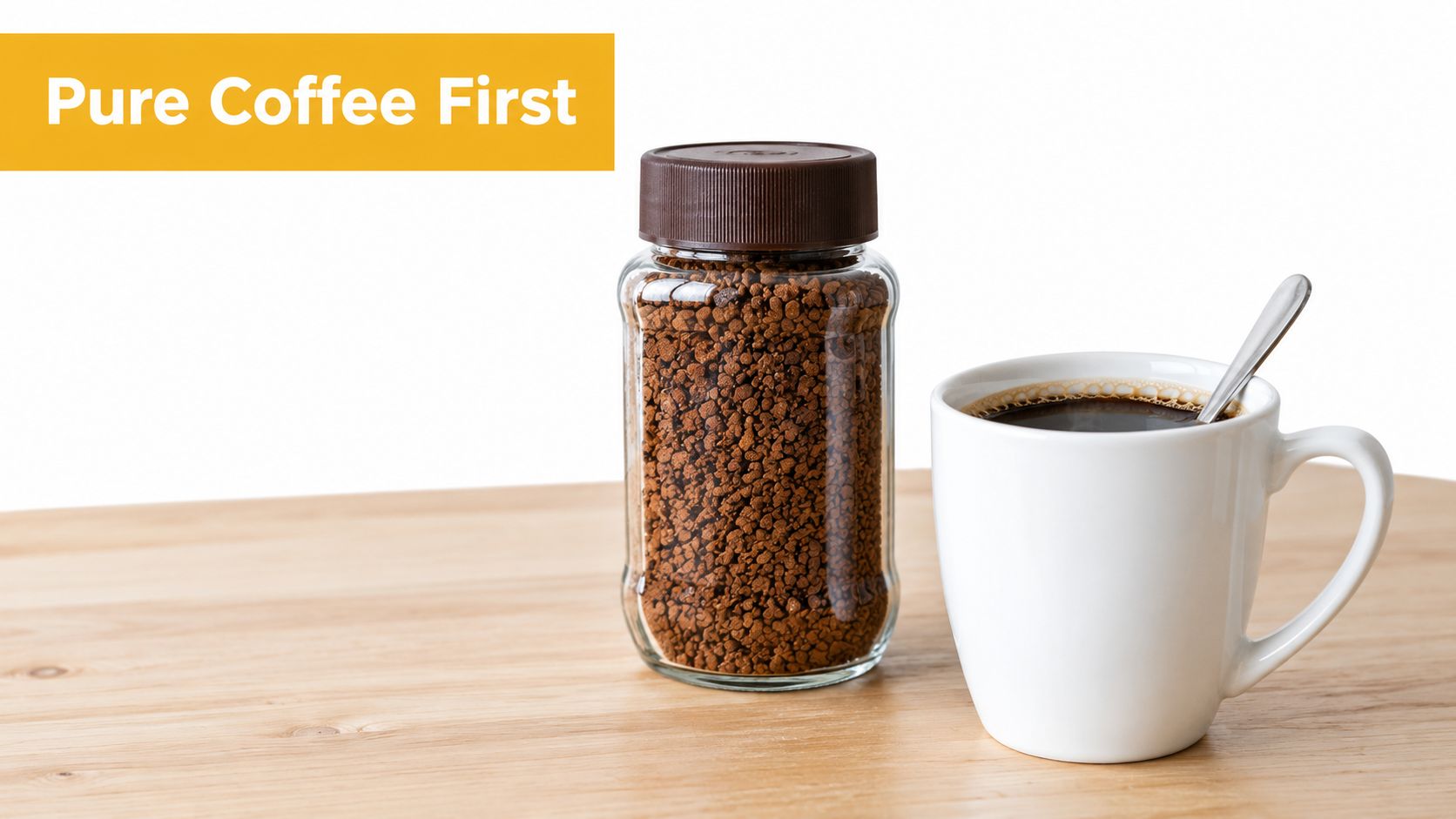
A high-quality organic instant coffee should give you a satisfying base in hot water, with enough aroma and balance that sugar becomes optional rather than corrective. A single-ingredient product with no additives or sugar also lets you control every addition yourself. You decide whether the cup contains sucrose, honey, maple syrup, milk, or nothing beyond coffee and water.
Convenience should not dictate flavor
Instant coffee is useful because it removes equipment, cleanup, and brewing time. That doesn't mean you have to accept a flat or aggressively bitter cup. The preparation is simple, but the ingredients still determine what you taste.
Water quality matters. Freshly heated water helps dissolve the coffee evenly, while water that tastes stale or heavily mineralized can distract from the cup. Mixing matters too. Pouring a small amount of hot water over the granules first creates a smooth paste, then the remaining water can be added gradually. This reduces dry pockets and gives you a more even extraction of flavor from the prepared coffee.
The organic instant coffee described by Cartograph Coffee's guide to organic instant coffee is positioned for people who want a convenient coffee format without giving up attention to ingredients. That approach suits a health-conscious sweetener strategy because the coffee starts without added sugar, leaving the final flavor and sweetness under your control.
Let the base set the sweetener dose
Try the coffee black before adding anything. Note the first aroma, the middle of the sip, and the aftertaste. If the cup tastes balanced, you may find that a small amount of sweetness is enough. If it tastes harsh, test water temperature, mixing, and the coffee itself before reaching for more sugar.
This is particularly useful at work, while traveling, or outdoors. A simple jar or pouch of organic instant coffee can travel easily, and a measured sweetener lets you repeat the same recipe wherever you are. You get convenience without surrendering the ability to shape the cup.
The aim isn't to eliminate sugar from every coffee. It's to make sugar a deliberate choice. Better coffee gives you more choices because it supplies flavor worth preserving.
Serving Suggestions for Every Lifestyle
The right sweetener routine depends on the situation. A rushed weekday cup needs speed and consistency, while a weekend drink can reward slower tasting. Organic instant coffee works across both because you can change the recipe without changing the basic preparation.
Busy professional
Use a clean mug and add the coffee before the water. Pour in hot water, stir until fully dissolved, then add a small measured amount of sugar. Taste before adding anything else.
For a smoother result, dissolve the sweetener in the first small pour of water, then add the rest. This distributes sweetness evenly and avoids a sugary layer at the bottom. If you use milk, add it before making the final sweetness adjustment.
Home relaxer
A slower cup gives you room to explore. Prepare the coffee with hot water, let it settle briefly, and try it before adding honey or maple syrup. Honey can bring a floral lift, while maple syrup adds a dessert-like caramel note.
Warm milk can soften the drink further, but it also changes the balance. Add the milk gradually and use less sweetener than you would in black coffee. The goal is a cup where coffee, milk, and sweetness remain identifiable.
Fitness-focused routine
If you prefer black coffee, prepare the instant coffee with hot water and taste it without sweetener first. A small amount of stevia can provide sweetness without turning the cup into a sugary drink, but its herbal finish may stand out more in a plain coffee.
Don't assume a sugar-free sweetener makes every beverage nutritionally identical. Read the product label, especially for blends, and choose according to your own dietary needs. The useful habit is control, not a universal rule about one ingredient.
Outdoor adventurer
At a campsite, use water that has reached a hot, drinkable temperature rather than pouring violently boiling water directly into the cup. Add a small amount first, stir the coffee into a paste, and then top up the mug. This technique works with limited equipment and reduces clumping.
Pack one sweetener in a small sealed container and measure it before leaving. Maple sugar or coconut sugar can complement a darker outdoor brew, while honey works well if you already carry it for other food. Keep the recipe simple so wind, cold, and limited cleanup don't turn coffee preparation into a chore.
Social host
For guests, serve the coffee unsweetened with sweeteners on the side. That gives each person control and lets the coffee's character remain visible. Offer milk, honey, maple syrup, and a concentrated option such as stevia separately, but encourage guests to add one change at a time.
A dessert-style coffee can be enjoyable, especially when the sweetness is intentional. Pair a maple-sweetened cup with a plain biscuit, or use honey with a lightly spiced baked treat. The coffee doesn't need to be heavily sweetened when the food supplies part of the dessert experience.
Sugar in coffee is easiest to manage when you treat it as part of a recipe rather than an automatic reflex. Start with a quality base, measure your addition, and adjust for the way you drink the cup.
Choose a single-ingredient organic instant coffee, test it black, and add sweetness only where it improves the flavor you want. Visit Cartograph Coffee to explore a convenient coffee option for work, home, and outdoor brewing, then build a measured cup that fits your taste and routine.