Of course you can put soy milk in coffee—in fact, for a long time, it was the go-to dairy-free option, and for good reason. It’s one of the best plant-based milks for creating a genuinely creamy texture and a stable, silky microfoam that other alternatives often struggle to replicate. This makes it a consistently solid choice for lattes, cappuccinos, and just about any coffee that needs a splash of creaminess.
Why Soy Milk Is Still a Barista Favorite
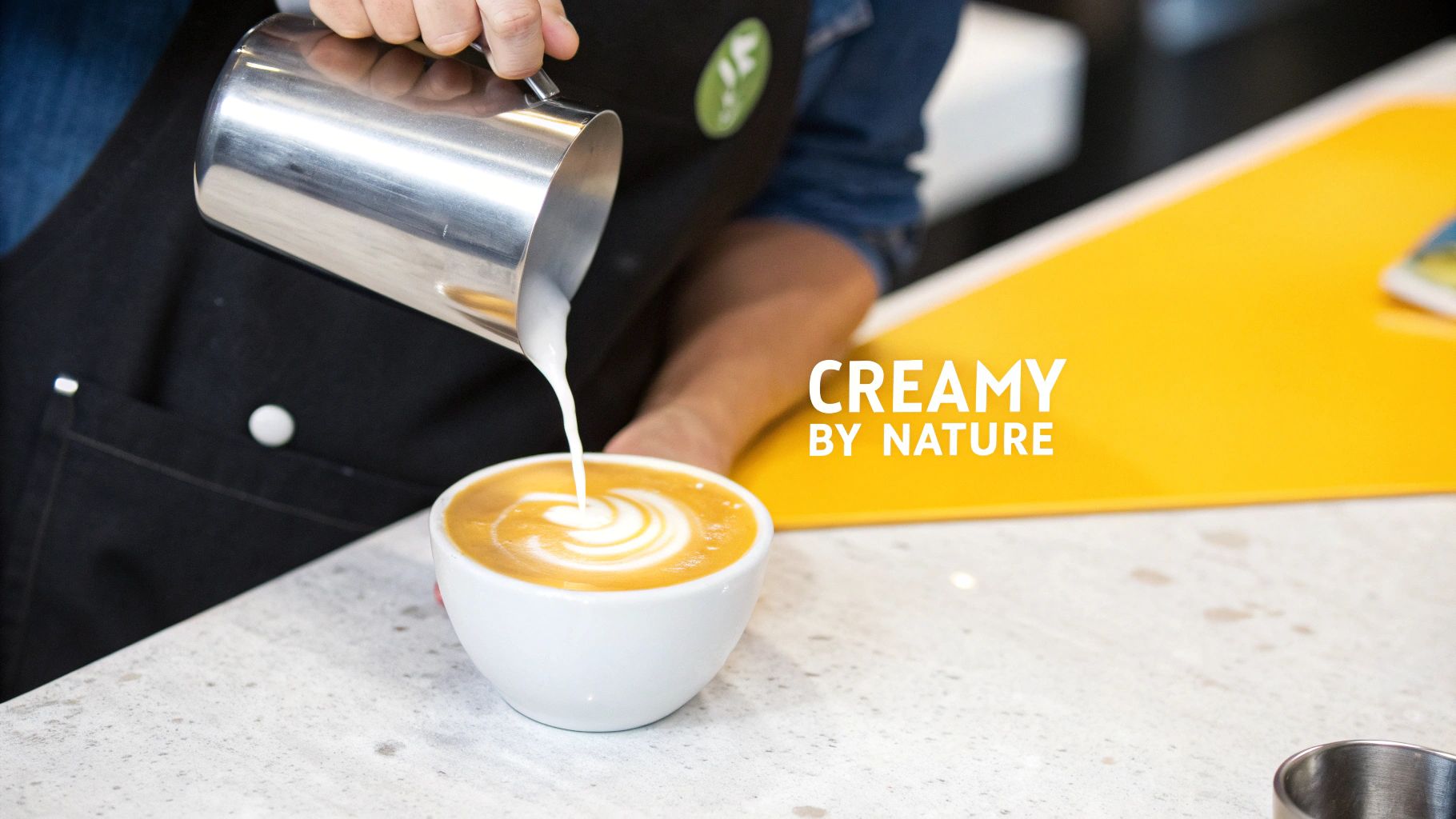
Before oat and almond milk became the stars of the show, soy milk was the original plant-based powerhouse on every café menu. It really set the standard for what a dairy alternative could achieve in coffee, and its staying power isn't just a fluke. It all comes down to its performance and a uniquely satisfying flavor.
The magic is in its high protein content, which is much closer to dairy milk than most other plant-based options. Why does that matter? Protein is the key to creating that velvety, dense microfoam you need for latte art. When steamed, the proteins trap air, building a rich, stable foam that won't just dissolve the second it touches your espresso.
It's Not Just About the Foam
While its ability to froth is a huge plus, the taste and body are just as crucial. Soy milk has a subtle, almost nutty sweetness that beautifully complements the rich, roasted notes of coffee without stealing the spotlight. It has a much fuller body than, say, almond milk, adding a truly satisfying creaminess to everything from a hot Americano to a cold brew.
Today's "barista blend" soy milks are even better, specifically formulated to resist curdling when they hit acidic coffee and to steam with incredible consistency. These specialized blends are a clear sign of soy milk's lasting importance in the coffee world.
A Global Staple for a Reason
Soy milk first appeared in coffee shops back in the 1990s. While newer milks have grabbed a lot of attention in the U.S. market, soy remains a global favorite.
Even though its U.S. market share was around 13% in 2018, its worldwide influence is undeniable. One market analysis found that soy milk made up about 82.3% of all soy beverage sales in 2024. The Asia-Pacific region is a huge part of that, accounting for a massive 67% of the share. This isn't just history; it’s proof of its trusted performance and flavor. You can read more about soy milk's journey in the coffee industry to see how it paved the way.
Ultimately, soy milk delivers a balanced, reliable, and delicious coffee experience that has kept people coming back for decades.
How to Choose the Right Soy Milk for Coffee
Walking into a grocery store and facing that wall of plant-based milks can be a bit much. When you’re just looking for soy milk, the options seem endless: sweetened, unsweetened, organic, and the all-important "barista edition." Picking the right one is your first and most critical step to making a great soy milk coffee at home.
The truth is, not all soy milks are created equal, especially when they meet the heat and acidity of coffee. The standard, refrigerated soy milk you pour on your cereal often isn't formulated to create that stable, velvety microfoam you want in a latte. It’s far more likely to curdle or produce a thin, bubbly foam that disappears in seconds.
Decoding the Label for Better Coffee
To sidestep disappointment, you need to become a bit of an ingredient detective. The secret to a soy milk that holds up in coffee is right there on the nutrition label, and it comes down to two things: protein content and stabilizers.
-
Protein Power: I always look for soy milks with at least 7-8 grams of protein per serving. Protein is what gives foam its structure; it's the key to trapping air during steaming to create that dense, creamy texture we all love. Anything less, and you’ll almost always end up with weak, unstable foam.
-
Helpful Stabilizers: Don’t be intimidated by ingredients like gellan gum, dipotassium phosphate, or calcium carbonate. These are added to "barista blend" soy milks for a very good reason. They act as acidity regulators and emulsifiers, preventing that dreaded curdling when your hot soy milk hits the acidic coffee.
The best-performing soy milks are intentionally designed for coffee. They nail the balance of protein and carefully selected stabilizers to ensure they steam into a silky texture without breaking down or separating.
Unsweetened vs. Barista Edition
The biggest choice you'll make is between a standard unsweetened soy milk and a barista-specific blend. While a high-quality unsweetened version can work in a pinch, barista editions are your best bet for consistently great results. They are specifically formulated to handle the high heat and pressure of steaming.
This really matters to coffee drinkers. In fact, studies show that a milk's ability to froth and hold microfoam is a major reason someone will buy it again. It’s why so many people now reach for specially formulated barista blends. If you want to dive deeper, you can explore the research on consumer preferences for non-dairy milk.
While soy is a fantastic choice, it's just one of many. If you're curious about how it compares to other popular alternatives, take a look at our guide on the best substitutes for milk in coffee. Trust me, investing in a barista blend is a small change that makes a huge difference in your daily coffee ritual.
The Secret to Steaming Soy Milk Without Curdling
Nothing ruins a perfectly good coffee faster than curdled soy milk. You see those little white clumps floating on top, and the dream of a creamy, café-style latte instantly evaporates. It's the most common frustration when using soy milk, but it's completely avoidable once you understand what’s happening behind the scenes.
Curdling is just a simple chemical reaction. Coffee is naturally acidic, and when you pour very hot soy milk into it, the proteins in the milk essentially seize up and clump together. This is what creates that unpleasant, separated texture. The fix isn't about changing your coffee, but about handling the soy milk with a little more care.
Understanding the Temperature Shock
The biggest mistake I see people make is overheating their soy milk. They crank it up to the same temperatures as dairy milk—often well above 160°F (71°C)—which is a guaranteed recipe for curdling. Soy protein is just more delicate and can't handle that intense heat, especially right before it hits an acidic environment like coffee.
Instead, the sweet spot for steaming soy milk is much lower. Aim for a range between 140°F and 150°F (60°C to 65°C). This is warm enough to create a beautiful, velvety texture without shocking the proteins into submission.
Staying within this gentle temperature window is the single most effective way to prevent curdling. If you want to dive deeper into why this matters so much for your brew, our guide on finding the proper coffee temperature is a great resource.
The right milk choice also sets you up for success before you even turn on the machine.

Starting with a high-protein, barista-formulated soy milk gives you a huge advantage in getting that perfect, curd-free texture.
Foolproof Methods for Silky Soy Foam
Whether you have a high-end steam wand, a handheld frother, or even just a French press, the core principles don't change. You want to heat the milk gently and introduce air gradually.
For Steam Wand Users:
- Always start with cold soy milk in a cold pitcher. It gives you more time to work the milk.
- Purge your steam wand first to get rid of any trapped water.
- Submerge the tip just below the surface and listen for a gentle hiss—that's the sound of air being incorporated.
- Keep a close eye on the temperature, staying below 150°F (65°C). Use a thermometer until you can nail it by feel.
For Handheld Frothers or a French Press:
- Gently heat your soy milk on the stovetop or in the microwave, stopping just before it starts to simmer.
- Pour the warm milk into your frothing container.
- With a handheld frother, submerge the whisk and run it until you see a silky microfoam form.
- If you're using a French press, pump the plunger up and down quickly until the milk doubles in volume and feels creamy.
One simple trick I always use is to warm my coffee mug before pouring. It lessens the temperature difference between the coffee and the milk, giving you one more line of defense against curdling.
Here's another pro tip: try pouring the hot espresso into the steamed soy milk, not the other way around. This helps the two liquids integrate more smoothly and prevents the coffee's acidity from shocking the milk proteins all at once. Follow these steps, and you'll be making smooth, velvety soy milk that perfectly complements your coffee every single time.
Crafting Café-Quality Soy Milk Coffee Drinks
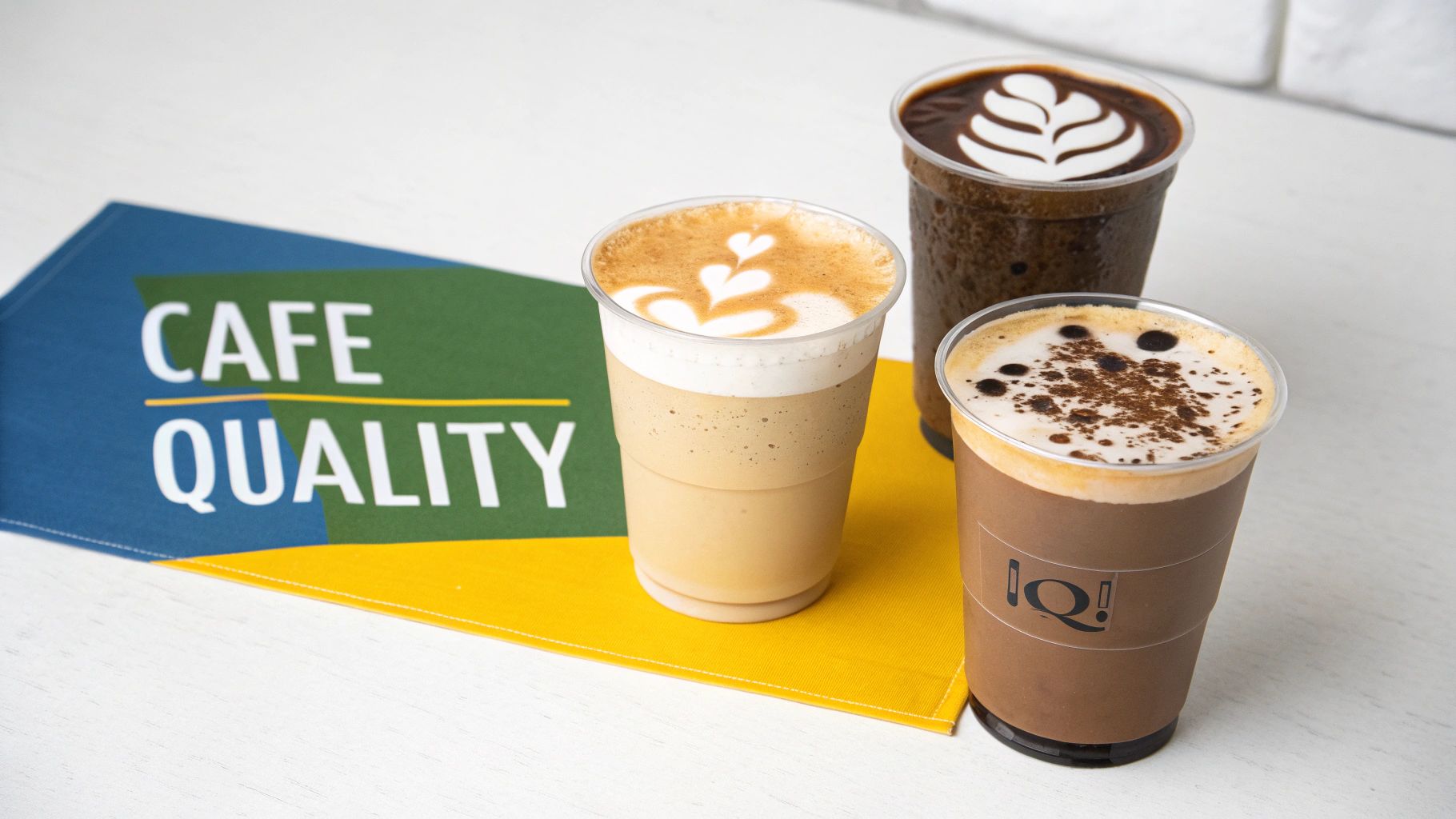
Alright, you’ve mastered the art of perfectly steamed, curd-free soy milk. Now for the fun part: making coffee drinks that taste like they came straight from your favorite café.
It’s not about having a complicated setup or memorizing dozens of recipes. Honestly, it all comes down to getting the ratios right and understanding how the coffee and soy milk play together. Once you nail a few key drinks, you'll feel like a pro.
The Perfect Soy Latte Ratio
The soy latte is the cornerstone of any home café menu. Its beauty is in its simplicity, creating a smooth, creamy base that you can easily build on.
For a classic latte, I’ve found the sweet spot is a ratio of about one part espresso to four parts soy milk. If you're making a standard 12-ounce drink, that translates to a double shot of espresso (around 2 ounces) paired with 8-10 ounces of steamed soy milk.
Pull your espresso shots right into your favorite mug. While that's happening, give your pitcher of steamed soy milk a good, firm swirl on the countertop—this is crucial for folding that velvety microfoam back into the milk. Then, pour the milk steadily into the center of the espresso. As you finish, lift the pitcher to create a simple dot or even a heart if you're feeling fancy.
My personal tip for an exceptional soy latte is to pair it with a coffee that has deep, complementary flavors. The subtle nutty notes of soy milk are a perfect match for the rich, chocolaty profile of Cartograph instant coffee, creating a balanced and satisfying drink every time.
This simple approach lets the coffee's character shine without getting lost in the creaminess of the milk.
Creative Soy Drink Variations
Once you have the soy latte down, branching out into other café classics is surprisingly easy. The biggest difference between drinks like lattes and cappuccinos really just comes down to the milk's texture and foam.
-
For a Rich Soy Cappuccino: You're aiming for a much thicker, more decadent layer of foam. When you're steaming the soy milk, keep the steam wand near the surface a little longer to pull in more air. A classic cappuccino is a balanced trio: one-third espresso, one-third steamed milk, and one-third airy foam. If you want to dive deeper, our guide explains the difference between a cappuccino and a latte in more detail.
-
For a Refreshing Iced Soy Latte: This is my go-to on a warm day, but there’s a trick to it. To avoid any weird separation, build the drink in layers. Start with a glass full of ice, then pour your (cooled) espresso shots over the ice. The final step is to slowly and gently pour in your cold soy milk. This gradual introduction helps it mix beautifully without the temperature shock.
With these foundational recipes, your soy milk in coffee journey is off to a great start. Don't hesitate to play around with the ratios or add a splash of vanilla or a dash of cinnamon to create a drink that’s uniquely yours.
Troubleshooting Common Soy Milk Coffee Problems
Even when you do everything right, soy milk can have a mind of its own. It happens. But don't get frustrated—most issues have a simple fix. Think of this as your go-to guide for solving the most common hiccups when mixing soy milk and coffee, from foam that vanishes in seconds to a flavor that just tastes a little off.
The number one complaint I hear, right after curdling, is about foam that looks absolutely perfect one moment and completely deflates the next. If your beautiful microfoam collapses into a sad, thin layer of bubbles within a minute, you're dealing with a stability problem.
More often than not, this is a sign of under-aerated milk. You might have nailed the temperature, but if you didn't introduce enough air to create a strong protein structure, that foam won't last. The fix? Try keeping the steam wand tip or your frother's whisk just below the surface for a few seconds longer at the start. You're aiming to inject more air right at the beginning.
Why Does My Soy Foam Disappear So Fast?
Another common culprit behind vanishing foam is simply old or poorly stored soy milk. Once you open the carton, the proteins start breaking down, and they lose their ability to create and hold that beautiful, stable foam. For the best, most consistent results, always use soy milk that’s been opened within the last 5-7 days and kept chilled in the fridge.
Here's a quick checklist to run through if your foam is failing you:
- Check the date: Is your soy milk fresh? Seriously, this is the first thing to look at.
- Revisit your technique: Are you aerating long enough? Give it a few extra seconds of that tss-tss-tss sound.
- Evaluate your gear: Some weaker handheld frothers just don't have the power to build a really dense, stable foam.
Here's a pro tip: try frothing a little bit of the soy milk while it's still cold. If it still won't hold a decent foam, the problem is almost certainly the milk itself, not what you're doing.
Addressing Beany Aftertaste and Separation
Sometimes the texture is spot-on, but the taste just isn't quite right. That subtle "beany" aftertaste is a known characteristic of some soy milk brands, but it gets a lot more noticeable if the milk gets too hot. Pushing soy milk past 150°F (65°C) can really change its flavor, bringing those earthy notes to the forefront. Keep your temperature in check for a much cleaner, sweeter taste.
Finally, let's talk about iced drinks. If you've ever watched in dismay as your iced soy latte separates into weird-looking layers, the enemy is almost always temperature shock. Pouring cold soy milk straight into a shot of hot espresso is a recipe for separation.
The solution is simple: let your espresso cool down first. Either pull the shot a few minutes ahead of time or, even better, build your drink in a glass that's already full of ice. This helps chill everything down quickly and lets the coffee and soy milk combine into a smooth, perfectly blended drink.
Making Great Soy Milk Coffee Anywhere with Cartograph
A busy schedule or a weekend adventure shouldn't mean settling for mediocre coffee. I've found that crafting a delicious soy latte away from my home kitchen is surprisingly simple, as long as I have the right setup. It’s all about creating a minimalist, portable toolkit.
The secret to great portable coffee starts with a fantastic base. This is where a top-notch instant coffee like Cartograph Coffee completely changes the game. It dissolves perfectly in hot water, giving you a rich, full-bodied espresso-style shot without any clunky equipment.
Your On-the-Go Soy Latte Toolkit
Forget trying to replicate a full café setup at your desk or campsite. This routine is all about convenience without sacrificing quality. You only need a couple of things.
-
An Insulated Flask for Your Soy Milk: Before you head out, gently warm up your favorite barista-blend soy milk at home. I always aim to keep it below 150°F (65°C) so the taste stays pure. Pour it into a good insulated flask, and it will stay at the perfect temperature for hours.
-
A Portable Frother: A small, battery-powered handheld frother is one of the best coffee gadgets you can own. It’s tiny enough to toss in any bag but has enough power to whip your pre-warmed soy milk into a decent microfoam in seconds.
With just these two items, you can prepare an excellent soy milk in coffee no matter where your day takes you.
A little travel trick I’ve picked up: I mix my Cartograph Coffee with hot water in my travel mug first. Then, I use the handheld frother to foam the soy milk right in its insulated flask before pouring it over the coffee. It keeps cleanup to a minimum and makes the whole process incredibly fast.
The Portable Soy Latte Routine
When you’re ready for that coffee break, the whole process takes less than a minute. Just dissolve your instant coffee in hot water, give your warm soy milk a quick froth, and pour it in. That's it—a fantastic soy latte that honestly rivals what you'd get at a coffee shop.
This convenient approach is backed by a huge, and still growing, market. The global demand for soy milk is incredible; the market was valued at USD 5.51 billion in 2024 and is expected to hit USD 7.40 billion by 2030. That steady growth means we'll continue to see amazing, barista-friendly soy milks on the shelves. You can discover more insights about the soy milk market to get a sense of its popularity.
This simple, portable method is proof that you never have to settle. With the right ingredients and a minimalist toolkit, a perfect soy milk latte is always within reach.
Ready to elevate your coffee routine, wherever you are? Try Cartograph Coffee and discover the rich, convenient flavor that pairs perfectly with your favorite soy milk. Shop our organic instant coffee today.