If you only remember two numbers about making better coffee, make it these: brew between 195-205°F (90-96°C) and serve between 120-140°F (49-60°C). Honestly, getting this right is the single biggest leap you can take toward making café-quality coffee right in your own kitchen.
The Unsung Hero of Your Morning Brew
Ever wonder why the coffee you make at home just doesn’t have that something special you get from your favorite coffee shop, even when you're using the exact same beans? The secret weapon probably isn't a five-thousand-dollar espresso machine. It's temperature.
This simple, often-ignored detail is the conductor of the flavor orchestra in your cup. It tells all the different flavor compounds when to show up and how loudly to play.
Think of it like searing a steak. If the pan isn't hot enough, you get a gray, tough piece of meat. If it's screaming hot, you get a charred, bitter crust. Coffee works the same way. Nail the temperature, and you unlock a whole world of flavor, from bright, fruity notes to deep, chocolatey richness.
Why Temperature Matters So Much
The interaction between hot water and coffee grounds is really just a delicate bit of chemistry. For years, the Specialty Coffee Association has promoted the 195-205°F range because it’s the sweet spot for dissolving all the good stuff—the oils and acids that taste amazing—while leaving the bitter, unwanted compounds behind.
But brewing is only half the story. The temperature when it hits your lips is just as crucial.
The ideal temperature at consumption is between 120°F and 140°F (49°C and 60°C), based on specialty coffee recommendations and health guidelines. This range avoids potential risks associated with beverages served hotter than 65°C (149°F), ensuring both optimal flavor and consumer safety. You can find more great insights about ideal serving temperatures from MTPak Coffee.
Throughout this guide, we'll break down these crucial temperature zones one by one. We'll get into how to hit them perfectly, fix common issues, and turn your daily cup from just "good enough" into something truly exceptional.
To get started, here's a quick cheat sheet you can reference anytime.
Coffee Temperature Quick Reference Guide
This table gives you a quick overview of the ideal temperatures for each part of the coffee journey, from the kettle to the cup. It’s a great way to see how each stage has its own "sweet spot" for heat.
| Stage | Ideal Temperature (°F) | Ideal Temperature (°C) | Purpose |
|---|---|---|---|
| Brewing | 195-205°F | 90-96°C | Optimal extraction of flavor and aroma |
| Serving | 120-140°F | 49-60°C | Best for tasting nuanced flavors |
| Safety Limit | Below 149°F | Below 65°C | Avoids potential health risks |
Keep these numbers in mind as we dive deeper. They're the foundation for everything that follows and will help you troubleshoot any cup that doesn't taste quite right.
How Temperature Unlocks Your Coffee's Flavor
Think of your coffee grounds as a treasure chest, packed with a whole spectrum of flavors—from bright acids and sweet caramels to rich chocolates and even some harsher, bitter notes. Water temperature is the key that opens that chest. The right key unlocks everything perfectly, but the wrong one can either jam the lock or smash it to bits.
This whole process is called extraction. It’s just a fancy word for how much flavor the water pulls from the coffee grounds.
When your water is too hot, it’s like taking a sledgehammer to that treasure chest. You get everything out, sure, but you also get all the unpleasant, bitter compounds that were meant to stay hidden. We call this over-extraction, and it’s what gives you that harsh, astringent cup of coffee where all the delicate sweetness is completely overpowered.
On the flip side, water that’s too cool is like a key that doesn’t quite fit the lock. It struggles to dissolve and pull out all the good stuff—the sugars and nuanced organic acids. This leads to under-extraction, which tastes sour, thin, and disappointingly flat. If you've ever had a coffee that tasted unpleasantly lemony, this is probably why. For more tips on this, check out our guide on how to reduce the acidity of coffee.
The Flavor Journey from Sour to Bitter
As the water temperature climbs, you can actually map out a clear flavor journey. Different compounds in the coffee extract at different rates, creating a predictable path from one taste to the next.
- Too Cool (Under-Extracted): The first things to dissolve are the bright, fruity acids. When that’s all you get, the coffee tastes overwhelmingly sour because there’s no sweetness to balance it out.
- Just Right (Balanced): In that perfect temperature sweet spot, you get the acids, but you also pull out the sweet, caramel-like sugars and deeper flavor notes. This is where you find balance, complexity, and a truly great cup of coffee.
- Too Hot (Over-Extracted): After all the good stuff is gone, the last compounds to dissolve are the bitter, dry, and sometimes papery-tasting ones. This is what creates that classic "burnt" coffee flavor.
This incredible sensitivity to temperature doesn’t just start with your kettle; it begins right at the farm.
Global coffee production relies on very specific climates. For instance, Arabica beans—making up about 70% of the world’s coffee—thrive in a narrow band between 18°C and 21°C (64°F to 70°F). If the growing temperatures get too high, the coffee cherry ripens too fast, leading to a less complex, lower-quality bean before it even gets to a roaster. You can read more about how climate impacts coffee flavor on climate.gov.
Ultimately, mastering water temperature puts you in the driver’s seat of this flavor journey. By adjusting the heat by just a few degrees, you can steer your brew away from the sour or bitter extremes and land right in that perfectly balanced sweet spot. It’s easily the most powerful tool you have for perfecting your daily cup.
Finding the Brewing Golden Zone
If you've ever wondered why professional baristas are so obsessed with water temperature, there's a good reason. They know that the secret to a great cup of coffee lies within a very specific window: 195°F to 205°F (90.5°C to 96°C). This is the undisputed "golden zone" for brewing.
Think of this range less like a rigid rule and more like a playground. It’s where the science of coffee extraction works its magic. Water in this sweet spot is hot enough to pull out all the desirable sugars and nuanced flavors from the grounds, but it's not so scorching that it starts yanking out the harsh, bitter compounds you want to leave behind. It’s the perfect balance point.
One of the biggest myths I hear is that you should use boiling water. Please don't do this! Pouring boiling water (212°F or 100°C) directly onto your coffee grounds is like putting a blowtorch to a delicate flower. It shocks and scalds them, immediately releasing a wave of bitterness and destroying the very aromatic oils that give coffee its incredible complexity.
Adjusting Your Temperature for Different Roasts
That golden zone isn't a one-size-fits-all solution; it's a starting point you can fine-tune based on the beans you're using. The roast level, in particular, dramatically changes how you should approach your water temperature.
Here’s a simple way to think about it:
-
Lighter Roasts: These beans are denser and haven't been roasted as long, so their complex flavors are a bit harder to unlock. You need more energy—meaning hotter water—to properly extract their bright, often fruity or floral notes. I usually aim for the higher end of the spectrum here, somewhere around 202°F to 205°F (94°C to 96°C).
-
Darker Roasts: On the flip side, darker beans are more brittle and porous from their extended time in the roaster. Their flavors are much easier to extract, which also means they're easier to over-extract. Using water that's too hot will quickly turn your brew into a bitter, ashy mess. For these, I dial it back to the cooler end of the range, usually 195°F to 200°F (90.5°C to 93°C), to keep that bitterness in check.
Want to dive even deeper into this? You can learn more about finding the best water temperature for brewing coffee in our detailed guide.
This whole process is about hitting that perfect middle ground, avoiding the sourness of an under-brewed cup and the bitterness of an over-brewed one.
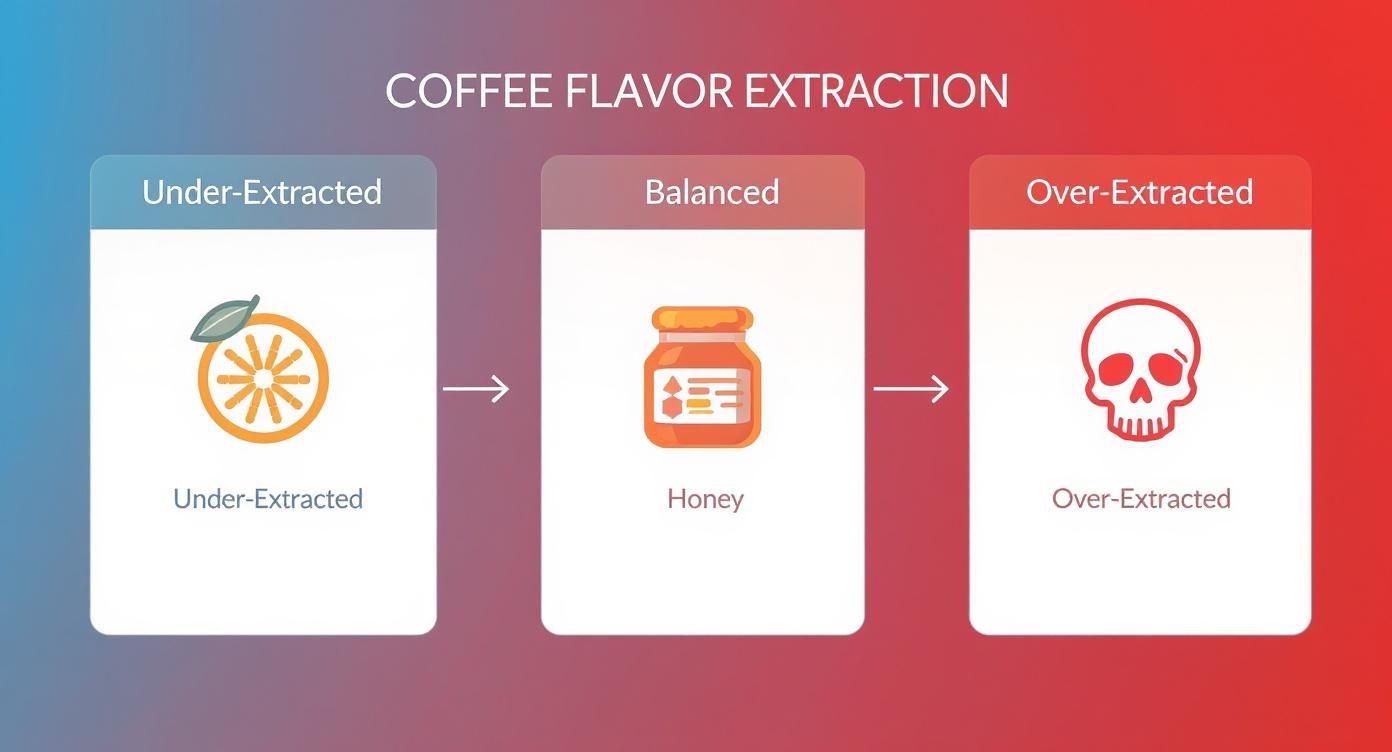
As you can see, drifting too far in either direction is a recipe for a bad morning. That balanced, honey-colored sweet spot is what we're all chasing.
Pro Tip: Don't have a fancy kettle with a temperature gauge? No worries. Just bring your water to a rolling boil, take it off the heat, and let it sit for about 30 to 60 seconds. This simple trick will naturally drop the temperature right into that 195°F to 205°F golden zone. It's an easy hack for a much better brew.
Serving Coffee at the Perfect Temperature
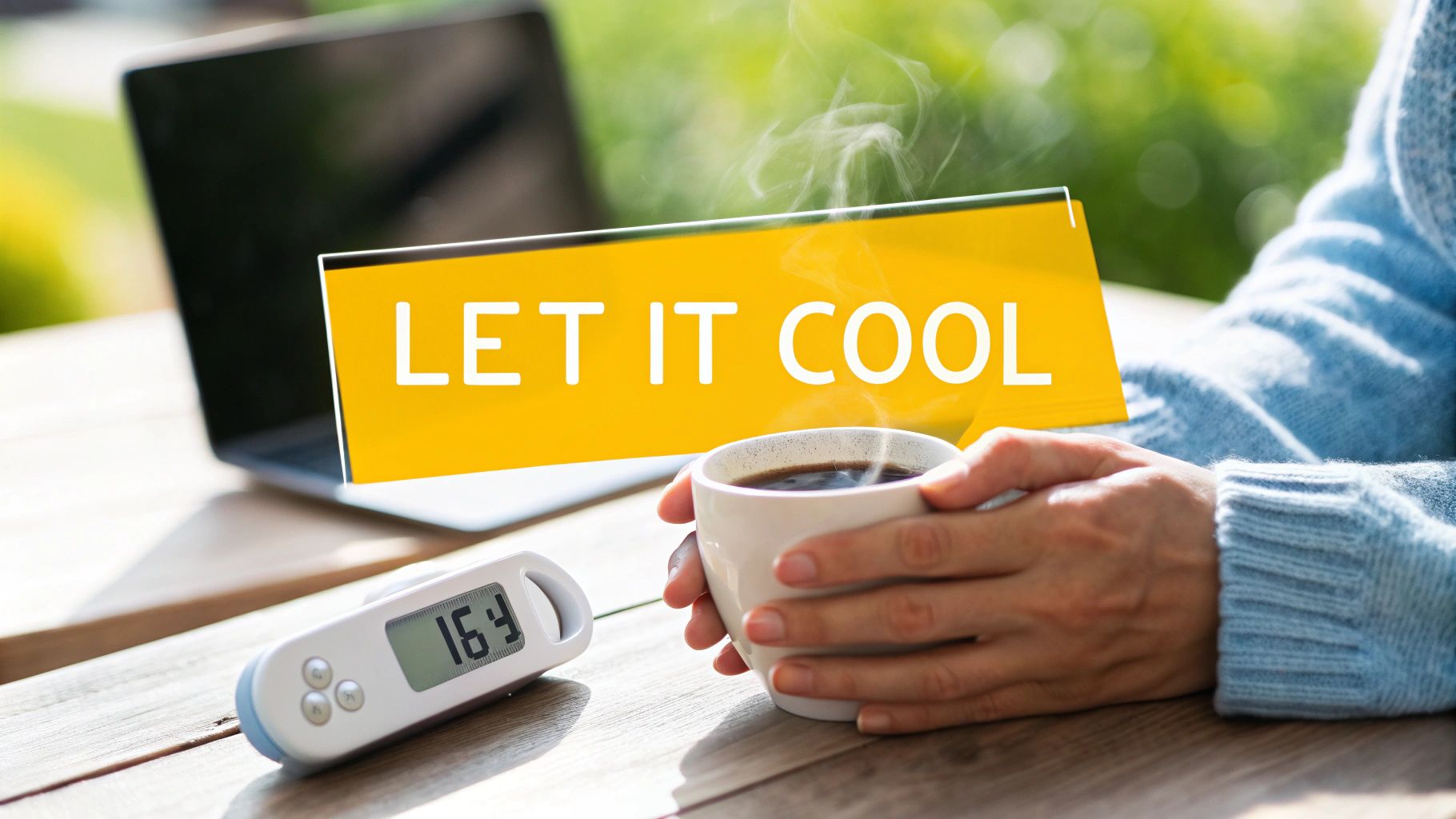
You’ve nailed the brew, hitting that perfect extraction window with your carefully chosen beans. But the journey to a truly great cup of coffee isn’t quite over. One of the most common mistakes is to start sipping immediately while it’s still piping hot. The truth is, the ideal drinking temperature is a lot cooler than you might think.
Think about what happens when you touch something scorching hot. Your nerves get overloaded, and all you can register is the intense heat, not the texture or detail. It’s the exact same story with your taste buds. Extreme heat completely numbs your palate, bulldozing over all those delicate, complex flavors you just worked so hard to pull out of the beans.
The real magic happens as the coffee starts to cool. This cooling process is like turning up a volume knob for flavor, revealing all the subtle notes that were previously drowned out. As the temperature drops, your ability to perceive sweetness, acidity, and those unique origin characteristics goes way up.
Finding the Flavor Sweet Spot
So, where is this sweet spot? While everyone has their own preference, both science and expert consensus point to a specific window where coffee is at its absolute best. It’s a range where the drink is still warm and comforting, but cool enough for its true character to finally step into the spotlight.
"The difference between a good cup and a great one is often patience. Letting coffee cool for a few minutes isn't just about safety; it's about unlocking a flavor profile that is completely inaccessible at higher temperatures. You begin to taste the fruit, the florals, the chocolate—not just the roast."
Giving your coffee a moment to breathe allows the aromatic compounds to settle and the full spectrum of flavors to become clear. It's in this zone that an Ethiopian coffee might suddenly reveal its bright blueberry notes, or a Colombian bean might showcase its perfectly balanced, nutty sweetness.
The Science of Sipping Temperature
Extensive taste-testing has zeroed in on the optimal drinking window with impressive accuracy. Research shows that people’s enjoyment peaks when coffee is served within a surprisingly narrow range, a temperature where the balance of flavor is perceived as just right.
For instance, large-scale studies consistently find that the best temperature for drinking coffee is between 58°C and 66°C (136°F to 151°F). Coffee served in this range gets the highest satisfaction scores from tasters all over the world. Interestingly, serving it closer to 70°C (158°F) is a smart move for cafes, as it effectively minimizes complaints of the coffee being 'too cold.' You can dive into the full consumer temperature preferences on nature.com to see the data for yourself.
And it’s not just about flavor—there are real safety concerns, too. Regularly consuming beverages that are too hot has been linked to potential health risks, which just adds to the wisdom of letting your cup cool down. By aiming for a slightly cooler proper coffee temperature, you're not only protecting your palate and your health but also unlocking a much more rewarding and nuanced tasting experience.
Tools and Techniques for Temperature Control
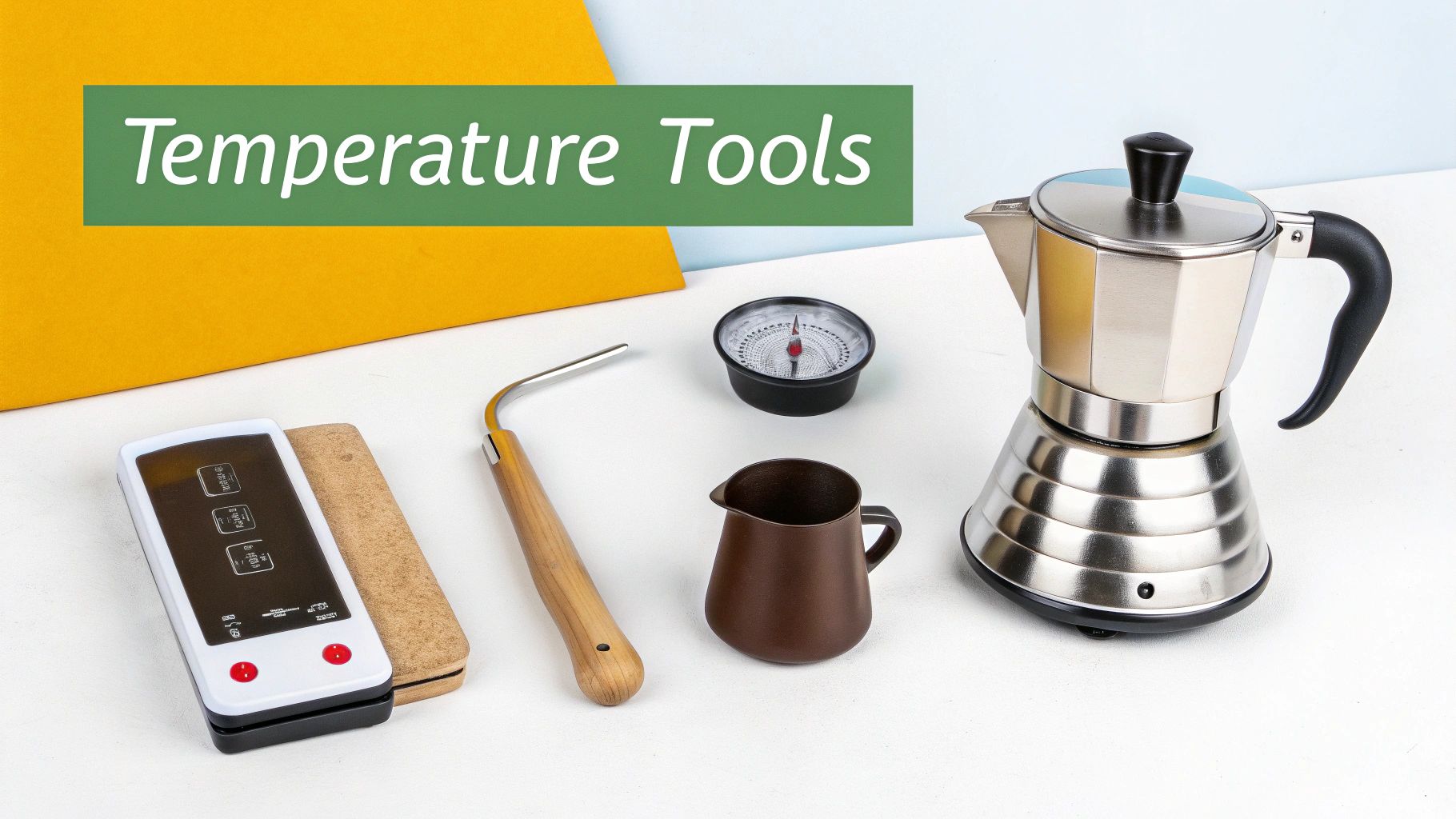
Knowing the ideal brewing window is one thing, but actually hitting it every single time is where the magic happens. The good news? You don’t need a fancy café setup to nail the proper coffee temperature right in your own kitchen.
Whether you're a gear-head who loves gadgets or someone who prefers to keep things simple, there's a perfect method for you. The goal is always the same: get your water to the right temperature before it ever touches those precious coffee grounds. This little bit of control is the secret to a consistently amazing cup, day in and day out.
High-Tech Precision With Kettles
If you crave precision and consistency, a variable temperature kettle is your best friend. These electric kettles are a game-changer, letting you dial in your exact target temperature with the push of a button. They heat the water quickly and then hold it there, ready for you to pour. All the guesswork is gone.
Sure, they're a bit more of an investment upfront, but their accuracy and sheer convenience are second to none. They're especially great if you love to experiment with different beans or brew styles, as you can easily tweak the temperature degree by degree to see what happens.
Everyday Tools for Accuracy
You can absolutely get fantastic results without a specialized kettle. A basic kitchen thermometer is an affordable and surprisingly effective tool. It doesn't matter if it's a fancy digital one or a simple analog dial—they both get the job done.
Just heat your water on the stovetop or in a regular kettle, and keep an eye on the thermometer. Once it hits your target, you're good to go. This approach takes a little more hands-on attention, but it offers excellent precision for a fraction of the cost. It’s a great starting point for anyone looking to get more serious about their coffee, and you can learn how different tools fit with the best coffee brewing methods in our other guide.
The Simple Off-Boil Method
What if you’re caught without any special tools? No thermometer, no problem. The off-boil method is a classic technique that gets you remarkably close to the ideal range using nothing but a timer (or just your own internal clock).
Here’s how it works:
- Bring your water to a full, rolling boil (212°F or 100°C).
- Take it off the heat.
- Just let it stand for about 30 to 60 seconds.
That short pause is all it takes for the water to cool down and drop right into that sweet spot of 195°F to 205°F. It may not be pinpoint accurate, but it’s a world away from pouring scorching hot water over your grounds. It’s the perfect trick for camping, travel, or any minimalist setup.
By simply waiting a minute after boiling, you avoid scalding your coffee grounds. This easy habit prevents the release of harsh, bitter compounds, instantly improving the quality of your brew with zero extra cost.
Choosing the right tool is all about finding what works for your routine and budget. To make it a bit easier, here’s a quick breakdown of the most common methods.
Comparison of Temperature Control Methods
| Method/Tool | Accuracy | Cost | Best For |
|---|---|---|---|
| Variable Temperature Kettle | High | $$$ | Coffee enthusiasts who want ultimate precision and convenience for various brew methods. |
| Kitchen Thermometer | High | $ | Anyone wanting accurate, repeatable results without investing in a specialized kettle. |
| Off-Boil Method | Medium | Free | Quick, no-fuss brewing, camping, or situations where you have no special equipment. |
No matter which path you take, taking charge of your water temperature is a huge step toward making better coffee. Each approach offers its own blend of convenience, cost, and precision, so you can find the perfect fit for your inner barista.
Troubleshooting Common Coffee Problems
Even when you start with amazing beans, a bad cup of coffee can happen to the best of us. But here's the secret: your own taste buds are the best tool you have for figuring out what went wrong. More often than not, the flavor issues in your cup point directly back to one thing: the temperature of your brew water.
Think of it like being a coffee detective. Once you learn to spot a few key flavor clues, you can trace the problem back to the source and know exactly how to fix it for your next brew. This simple skill turns a disappointing coffee into a valuable learning experience.
Why Does My Coffee Taste Sour?
Does your coffee have a sharp, tangy, or unpleasantly acidic taste that makes your mouth pucker? That's the tell-tale sign of under-extraction. In nearly every case, it means your water was too cold.
When water isn't hot enough, it just doesn't have the energy to dissolve all the good stuff locked inside the coffee grounds. It only pulls out the easiest compounds—the bright acids—leaving the deeper, sweeter flavors behind. The result is a cup that tastes thin, grassy, and incomplete.
- The Problem: Your water temperature was probably below 195°F (90°C).
- The Fix: Heat your water more. Aim for the hotter side of that sweet spot, somewhere around 202-205°F (94-96°C). If you're using the "off-boil" method, just let it sit for 30 seconds instead of a full minute.
Why Does My Coffee Taste Bitter?
Now for the opposite problem. If your coffee is overwhelmingly harsh, bitter, or tastes vaguely burnt, you're dealing with over-extraction. This is a dead giveaway that your water was too hot.
Water that's at a rolling boil is too aggressive. It strips everything out of the coffee grounds, including the undesirable, bitter-tasting compounds that are supposed to be left behind. Think of it like scorching a delicate spice in a hot pan—all the subtlety is gone, and you're just left with a harsh, acrid taste.
Simply by tasting your coffee, you can diagnose your technique. Sourness points to water that's too cool, while bitterness indicates it's too hot. Adjusting your temperature based on these taste cues is the fastest way to perfect your brew.
- The Problem: The water was boiling or extremely close to 212°F (100°C).
- The Fix: Let your water cool down a bit more. Try the lower end of the ideal range, like 195-200°F (90-93°C), which works especially well for darker roasts. If you're using the off-boil method, give it a good 60 seconds to rest before you pour.
Answering Your Coffee Temp Questions
Alright, we’ve covered the core science of coffee temperature, but the real world always throws a few curveballs. Let's dig into some of the most common questions that pop up.
Think of this as your go-to reference for handling any coffee situation like a pro.
Handling Milk and Special Brews
Does adding milk change the ideal serving temperature?
It sure does. A splash of cold milk or cream will instantly drop the temperature of your coffee, which can sometimes dull the more delicate flavors. To get ahead of this, I'd suggest aiming for the warmer end of the serving range—around 150°F (65°C)—before you add your dairy.
For drinks like lattes or cappuccinos, the milk itself is key. You'll want to steam it to somewhere between 130-150°F (55-65°C). This is the sweet spot where you get that beautiful creamy texture and bring out the milk's natural sweetness without scalding it.
What about the temperature for cold brew?
Cold brew is a totally different beast. It throws the rulebook for hot coffee right out the window. Instead of using high heat for a quick extraction, it uses time—a lot of it.
You’ll be steeping your grounds in cool or room-temperature water for 12 to 24 hours. This long, gentle process is what creates its signature smooth, low-acid flavor, so the temperature guidelines for hot coffee just don't apply here.
Reheating and Keeping Coffee Hot
If you can avoid it, please don't reheat your coffee in the microwave. It's notorious for heating unevenly and completely nuking the delicate aromatic compounds that make coffee taste so good. All you'll be left with is a flat, bitter cup of disappointment.
So, what's the better option? A good thermal carafe is your best friend. It’s designed to hold your coffee at the right temperature for hours, preserving all those wonderful flavors you worked so hard to extract in the first place.
At Cartograph Coffee, we believe great coffee should be accessible anywhere, from the mountain top to your kitchen table. Our premium organic instant coffee delivers exceptional flavor without the fuss, perfect for your next adventure. Discover a better instant coffee.