You've finished dinner, the kitchen is quiet, and you want something warmer and more comforting than another glass of wine. An Irish coffee sounds right, but there's no espresso machine waiting on the counter, and you don't want to build a complicated cocktail after clearing the plates. A good recipe for Irish coffee with Baileys solves that problem with hot coffee, a measured pour of liqueur, and a soft cream cap that feels special without demanding bar equipment.
The reliable version depends less on expensive hardware than on strong coffee, controlled temperature, and restrained cream. High-quality instant coffee can work particularly well because it dissolves quickly, gives you direct control over strength, and eliminates the weak, watery base that ruins many homemade Irish coffees.
What Makes Irish Coffee with Baileys Different
You're probably making this drink for the same reason people reach for a blanket after dinner. It's warm, sweet, creamy, and gently alcoholic. That puts it in a different category from a sharper whiskey-led Irish coffee, where the coffee, sugar, whiskey, and floated cream each have a clearly separate role.
The historical lineage is also different. Classic Irish coffee is associated with 1940s Ireland, while Baileys Irish Cream was created in 1971 by a team led by Tom Jago for Gilbeys of Ireland and introduced commercially in 1974 as the first Irish cream on the market. A Baileys version is therefore a later variation, built around a liqueur that didn't exist when the original drink became popular. Baileys Irish Cream's history and commercial timeline help explain why the two drinks share a name but don't taste or behave identically.
One pour replaces several ingredients
Baileys brings dairy cream, sugar, whiskey, and Irish-malt character in one bottle. In practical terms, it acts as both sweetener and cream, though it shouldn't replace the separate whipped cream cap if you want the familiar layered presentation.
That changes the build. The Baileys is stirred into the hot coffee so it becomes part of the drink rather than sitting as a dense layer at the bottom. A smaller amount of lightly whipped cream then floats above it, giving you a cool, soft first contact before the coffee and liqueur arrive underneath.
The flavor is rounder than a whiskey-forward version. Baileys contributes vanilla, chocolate, caramel, and milky sweetness, while Irish whiskey on its own brings more heat, oak, grain, and sometimes a smoky edge. Add separate whiskey and the drink becomes more assertive. Leave it out and the result is softer, sweeter, and better suited to a relaxed after-dinner serving.
Practical rule: Treat Baileys as a sweetened cream liqueur, not as a direct substitute for every component in a classic Irish coffee.
Temperature and glassware matter more than they seem
Because Baileys already contains cream, an overheated coffee base can make the drink taste harsh and can stress the dairy when the ingredients meet. A warm, heat-safe glass also gives the drink a better chance of staying hot while you prepare the cream cap.
A clear Irish coffee glass shows the contrast between dark coffee, pale liqueur-softened coffee, and white cream. A warmed ceramic mug works just as well for temperature retention, though you'll lose the visual layer. If you're exploring more whiskey-based combinations beyond this recipe, elevate your tasting with craft cocktails offers useful context on how spirits change a mixed drink's structure and flavor.
Baileys became widely recognizable partly because the brand expanded rapidly. It reached 1 billion bottles sold by December 2007 and a second billion 12 years later, which helps explain why Baileys coffee drinks are familiar well beyond Ireland. The drink feels traditional, but its specific liqueur-based format belongs to a modern, global cocktail tradition.
Ingredients and Exact Measurements You Need
For one serving, use a 6-ounce, or roughly 177-milliliter, heat-safe glass or mug. The finished drink needs room for the cream cap, so don't fill the vessel to the rim with coffee.
The measured build
- Hot filtered water, 177 milliliters: Use water just off the boil, around 195°F, or 91°C, for dissolving instant coffee. Filtered water gives the coffee a cleaner flavor than strongly chlorinated or heavily mineralized tap water. Mineral content isn't automatically bad, but very hard water can make coffee taste dull or chalky, while extremely soft water can produce a flatter cup.
- High-quality instant coffee, about 4 grams: Weighing the crystals is more repeatable than using a scoop or teaspoon, because crystal size varies between products. This amount creates a concentrated base that can stand up to Baileys and cream.
- Baileys Original, 30 to 45 milliliters, or about 1 to 1.5 ounces: Use 30 milliliters for a drier, coffee-led drink and 45 milliliters for a softer, sweeter version. The Baileys recipe benchmark uses a 6-ounce hot coffee base with about 1 to 2 ounces of Baileys and recommends a heat-safe glass or mug. Baileys' Irish coffee recipe supports that general proportion.
- Cold heavy cream, 30 milliliters, or about 2 tablespoons, with roughly 35% to 40% milk fat: This should be lightly whipped until it resembles melted soft-serve or holds very soft peaks. Lower-fat cream may collapse quickly, while overwhipped cream becomes grainy and difficult to float.
- Optional brown sugar syrup, 5 milliliters: Add this only if your coffee is bitter or you prefer a sweeter finish. Baileys already contributes sugar, so starting without syrup gives you more control.
- Finishing salt or nutmeg, a small pinch: A tiny pinch of salt can soften bitter edges. Freshly grated nutmeg adds aroma without adding more sweetness.
For a deeper look at how coffee and liqueur interact, this guide to the art of crafting coffee liqueur is useful background, especially if you're comparing roasted, sweet, and spirit-driven flavor profiles.
Flavor and scaling choices
Baileys Original gives the most balanced starting point. Chocolate and Salted Caramel versions push the drink toward dessert, so reduce or omit the syrup. A vegan alternative changes the texture and may produce a thinner cream layer, depending on the product's formulation.
The recipe scales linearly for two or four servings, but whip the cream separately and build each glass individually. That keeps the coffee hot and lets you adjust sweetness before the topping goes on. If you're interested in making a simple dairy accompaniment for other drinks, Cartograph Coffee's homemade creamer recipe provides a useful reference point for balancing coffee with milk and sweetness.
How to Build the Drink From First Pour to Last Layer
Start by heating filtered water to around 195°F, or 91°C. If you don't have a thermometer, bring the water to a boil and let it stand briefly rather than pouring aggressively boiling water directly onto the coffee.
While the water heats, warm the glass. Fill it with hot water, let it sit for about 30 seconds, then empty it completely. This small step prevents the cold vessel from pulling heat out of the drink before you've even added the cream.
Mix the instant coffee and hot water in a small cup or directly in the mug if the mug has already been warmed. Stir until every crystal disappears. Don't rush this part. Undissolved coffee settles at the bottom and creates a gritty final sip, while a fully dissolved base gives you a cleaner texture.
Taste the coffee before adding Baileys. It should taste slightly stronger and more concentrated than a cup you'd drink black, because the liqueur and cream will soften the coffee's intensity. If it tastes thin, add a small amount of instant coffee and dissolve it completely before continuing.
Integrating Baileys without losing heat
Empty the warming water and pour in the hot coffee. Add the brown sugar syrup now, while the coffee is hottest, if you're using it. Stir until it's fully incorporated.
Pour the Baileys in a slow, steady stream. Stir gently rather than whisking. A forceful stir can cool the drink and create unnecessary foam, while a few deliberate turns are enough to combine the liqueur with the coffee.
Let the coffee rest briefly if it's visibly steaming hard. Dairy-based ingredients behave better when the base isn't scalding, and the drink will still be hot enough to serve. The goal isn't to create a separate Baileys layer. It's to make a smooth, integrated coffee with a distinct cream cap above it.
Floating the cream
Keep the heavy cream cold until you're ready to whip it. Whip it by hand or with a small mixer until it has the consistency of melted soft-serve. It should move slowly from a spoon but still spread. Stiff, dry peaks don't float gracefully and tend to break into lumps.
Warm a spoon under hot water, dry it, and hold the back just above the coffee. Spoon the cream onto the spoon so it slides gently across the surface instead of plunging into the drink. The cream should form a visible cap, but leave enough coffee exposed for the drink to remain easy to sip.
For more detail on creating smooth milk and cream textures at home, Cartograph Coffee's guide to frothing milk for coffee covers the importance of texture and controlled aeration.
Finish with a little nutmeg, cocoa, or grated chocolate. Serve immediately. The best contrast is between hot coffee below and cool, lightly whipped cream above, and that contrast fades as the drink sits.
Choosing and Brewing the Coffee Base
Baileys can make a mediocre coffee taste sweeter, but it can't give weak coffee the structure it lacks. The base needs enough roast character and concentration to remain present after the liqueur and cream are added.
Fresh drip coffee offers clean clarity and a familiar texture. French press produces more body, which can work well with Baileys, but it also carries more sediment and can taste heavy if the roast is too dark. AeroPress gives you a concentrated cup with good control, though it requires more active preparation than instant coffee.
Instant coffee has a different advantage. You can adjust the strength directly, avoid grind-size errors, and prepare the base in the same mug you'll serve. For this drink, that convenience is practical rather than a compromise, provided the crystals dissolve cleanly and the coffee has enough roast depth.
Roast and strength decisions
Medium-dark coffee usually suits Baileys better than a very light roast. Caramelized, nutty, cocoa-like notes can reinforce the liqueur's vanilla and chocolate character. Light roasts may bring bright acidity or floral flavors that become sharp beside the sweetness.
For brewed coffee, a useful starting point is a 1:12 coffee-to-water ratio, meaning one part coffee by weight to 12 parts water. For instant coffee, use about 2 teaspoons per 6 ounces of water, or weigh the powder when possible. These are starting points, not laws. Taste the base before adding Baileys and increase the coffee dose if the cup seems watery.
Cartograph Coffee's organic instant coffee is one option for this format. Its freeze-dried crystals are designed to dissolve in hot water, making them suitable when you want a quick coffee base without an espresso machine. Cartograph's guide to preparing coffee at home offers broader context on matching preparation method to the moment.
French press coffee benefits from a 4-minute extraction, followed by a gentle plunge. Keep the water below a rolling boil, especially with a dark roast. A coffee base brewed too hot can taste bitter before the Baileys ever reaches the mug.
Coffee base comparison
| Method/Product | Coffee-to-Water Ratio | Brew Time | Best Roast Level | Notes |
|---|---|---|---|---|
| High-quality instant coffee | About 2 teaspoons per 6 oz water | Immediate after dissolving | Medium to medium-dark | Fast, clean, and easy to strengthen |
| Drip coffee | 1:12 by weight | Depends on brewer | Medium to medium-dark | Clean profile and familiar texture |
| French press | 1:12 by weight | 4 minutes | Medium | Full-bodied, with more sediment |
| AeroPress | Use a concentrated brew, then adjust with water | Short and hands-on | Medium to medium-dark | Flexible and strong, but less convenient |
| Dark-roast brewed coffee | Start conservatively and adjust by taste | Method-dependent | Dark | Can overpower Baileys with bitterness |
The final test is simple. Take a sip of the coffee base on its own. If it tastes pleasant but slightly too strong, it's ready. If it already tastes burnt, dilute it with better water or lower the brewing temperature. If it tastes weak, fix the coffee before reaching for extra Baileys.
Variations Worth Trying at Home
The core drink is flexible, but every variation should preserve the same logic: coffee provides structure, Baileys provides sweetness and creaminess, and the topping supplies contrast. Change one major element at a time so you can tell what improved the drink and what merely added sugar.
| Variation | Coffee Base | Baileys Amount | Cream Type | Key Adjustment |
|---|---|---|---|---|
| Classic Baileys Irish coffee | Strong hot coffee | 30 to 45 ml | Lightly whipped heavy cream | Stir Baileys into coffee and float cream |
| Iced version | Cold-brewed concentrate | About 30 ml | Chilled whipped cream | Pour over ice and use a cold topping |
| Non-alcoholic version | Strong coffee or Irish breakfast tea coffee substitute | None | Cream with vanilla syrup | Replace the liqueur with a homemade cream-and-vanilla mixture |
| Vegan version | Strong hot coffee | Dairy-free Baileys alternative | Oat cream with aquafaba | Whip the topping carefully and expect a different hold |
| Espresso-forward version | Double-strength coffee | 1.5 oz | Lightly whipped cream | Reduce sweetness and finish with cocoa |
The classic remains the benchmark
Use the standard hot coffee, Baileys, and floated cream build when you want the clearest expression of the drink. Keep the coffee medium to medium-dark, and don't add syrup until you've tasted the Baileys mixture.
The iced version is more refreshing but loses the defining hot-and-cool contrast. Use a cold-brewed concentrate over ice, add Baileys, and float chilled whipped cream on top. Chilled cream is less forgiving than warm cream, so keep the layer modest and serve promptly.
Alcohol-free and plant-based options
For a non-alcoholic version, make a cream-and-vanilla syrup instead of using Baileys. Irish breakfast tea steeped into the cream can add malt-like body, though it won't reproduce the whiskey character. Keep the coffee strong enough to prevent the syrup from turning the drink into a sweet milk coffee.
A vegan version can use oat cream whipped with aquafaba and a dairy-free Baileys alternative such as Baileys Almande. The topping may be less stable than dairy cream, so whip it shortly before serving and avoid overworking it.
The espresso-forward variation is for readers who want coffee to lead. Use a double-strength base, reduce Baileys to 1.5 ounces, and add cocoa instead of nutmeg. This version tastes darker and less dessert-like, but it can become harsh if the coffee is roasted too dark or extracted aggressively.
Troubleshooting the Most Common Problems
Most failed Baileys Irish coffees don't fail because the recipe is complicated. They fail because the ingredients meet at the wrong temperature or in the wrong order.
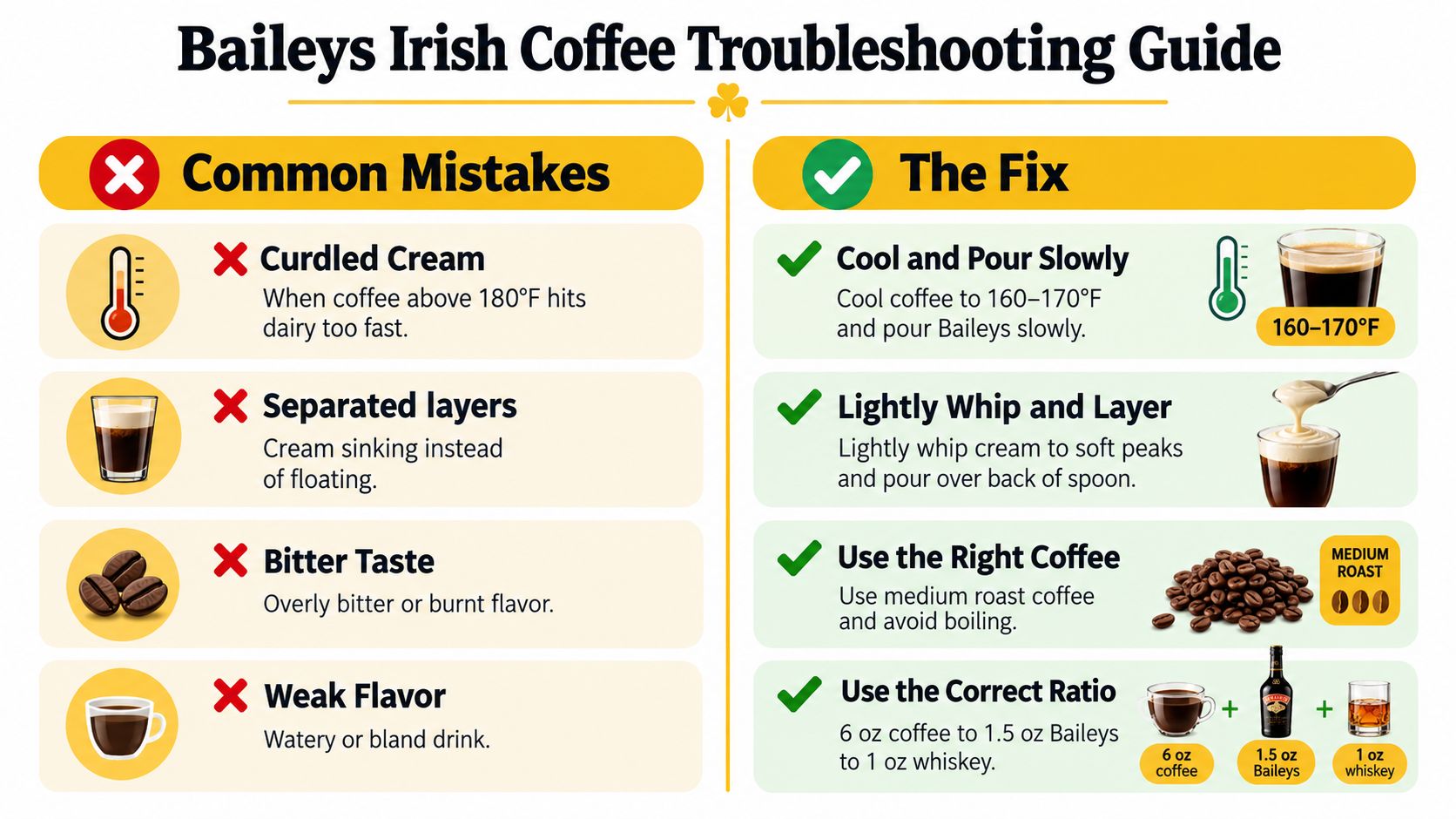
Curdled cream or a rough texture
If very hot coffee hits dairy too quickly, the cream can look grainy or separated. A reader may blame the Baileys, but the more common problem is thermal shock.
Let the coffee settle for about two minutes before adding the liqueur, or use Baileys straight from the refrigerator to help buffer the temperature. Pour slowly and stir gently. If the coffee is still aggressively steaming, it's too hot for a delicate cream finish.
Cream that sinks instead of floating
Liquid cream sinks. Overwhipped cream clumps. The useful middle ground is lightly whipped cream with a soft, cohesive texture.
Hold the back of a warmed spoon just above the coffee surface and let the cream slide across it. Pouring from height punches through the coffee and destroys the layer before it has a chance to float.
The cream should flow slowly from the spoon, not stand rigidly like frosting.
A lukewarm drink
A cold mug can steal enough heat to make the finished drink disappointing. Rinse the vessel with hot water for about 30 seconds, empty it, and build the coffee immediately.
Don't prepare the cream first and leave the coffee waiting. Whip the cream close to serving time, and keep the glass warm until the base is ready.
Weak flavor
Weak flavor usually comes from an under-dosed or under-extracted coffee base, not from Baileys being too dilute. The liqueur adds sweetness and dairy, which makes a weak coffee seem even flatter.
Increase the coffee concentration before adding more Baileys. With instant coffee, weigh the crystals and dissolve them completely. With brewed coffee, adjust the coffee-to-water ratio or use a more concentrated method.
Bitter or burnt coffee
Boiling water and very dark coffee can produce harsh flavors that no amount of cream can hide. Lower the brewing temperature and try a medium roast with cocoa, nut, or caramel notes.
A burnt base may taste acceptable before the liqueur arrives, then become cloying and bitter after the sweetness amplifies the roast. If that happens, start again with cooler water rather than adding more sugar.
Watch the troubleshooting process in action with this practical preparation video:
Serving, Storage, and Smart Drinking Habits
Brew strong hot coffee, stir in Baileys while the base is hot but not scalding, and finish with lightly whipped cream floated over a spoon. Warm the glass first, leave headspace for the topping, and serve as soon as the cap is in place.
A classic Irish coffee glass shows the layers best. A warmed ceramic mug retains heat well, while a rocks glass suits the iced variation. Nutmeg, cocoa, grated chocolate, or a single coffee bean can finish the drink without competing with its main flavors.
Pair it with shortbread, dark chocolate, or a modest cheese plate. Food makes the drink feel like an after-dinner course rather than a fast pour, and it helps prevent the alcohol from arriving on an empty stomach.
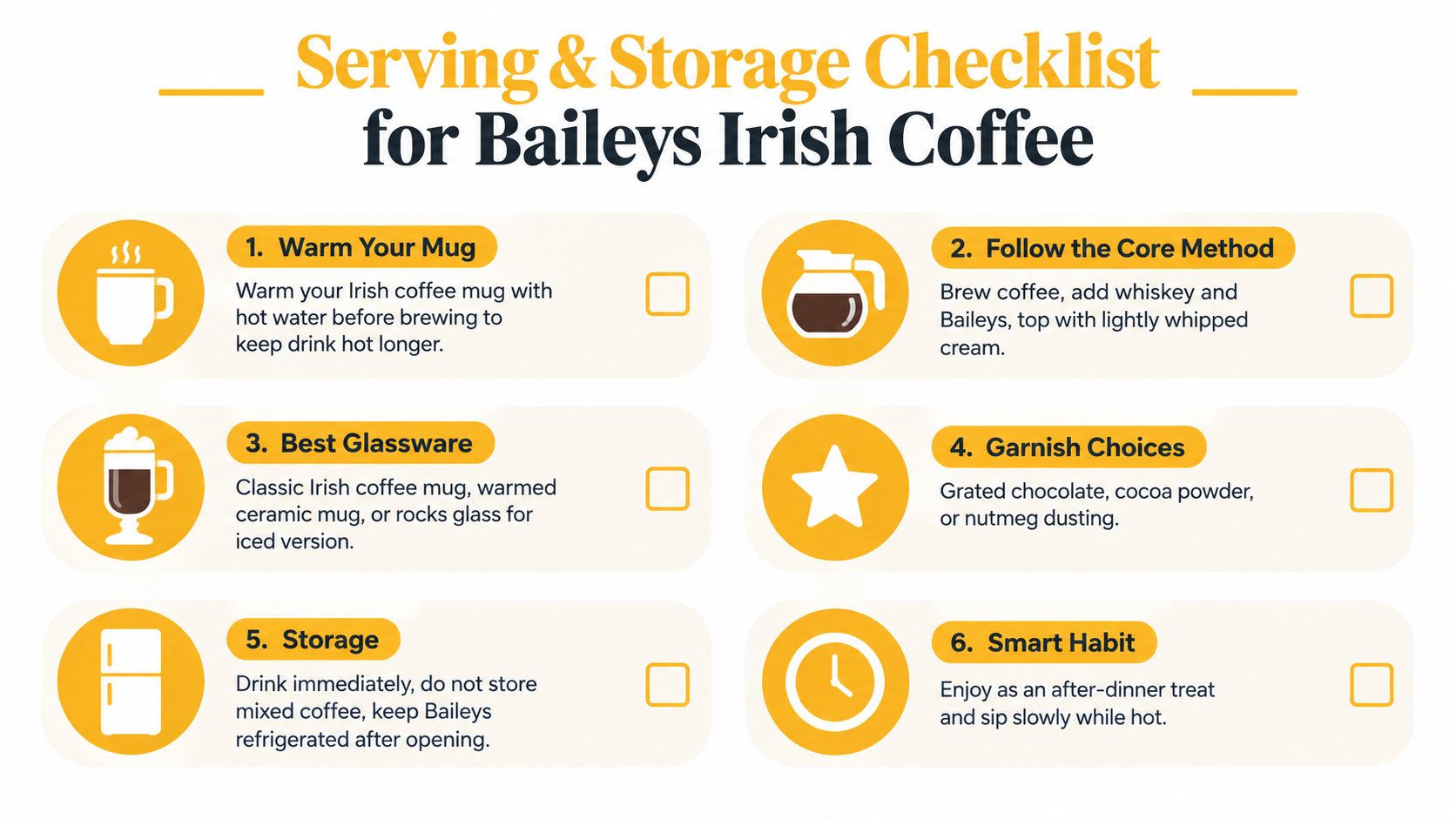
Don't pre-mix a large batch and refrigerate it. Baileys can curdle when combined with cold coffee, and the whipped cream cap breaks down quickly. If you're preparing ahead, keep the brewed coffee and liqueur separate, reheat the coffee base, and rebuild each serving fresh.
Caffeine can mask some of alcohol's sedating effects, which may leave you feeling less impaired than you are. Health guidance on combining caffeine and alcohol emphasizes moderation, so sip slowly and avoid treating the coffee as a reason to drink more. Don't serve the alcoholic version to anyone who's pregnant or under the legal drinking age, and offer a caffeine-free or alcohol-free alternative when needed.
Cartograph Coffee offers organic instant coffee designed for convenient preparation at home, at work, or outdoors, which makes it a practical fit for this Baileys Irish coffee method when you don't own an espresso machine. Visit Cartograph Coffee to explore a coffee base you can measure, dissolve, and turn into a warm after-dinner drink whenever the occasion calls for it.