You're staring at the kettle, the milk frother, and a nearly empty coffee tin, trying to decide whether to build a real espresso drink or just settle for something close enough. That's exactly where organic instant espresso earns its keep, because it's made for the moments when you want the punch of espresso without hauling out a grinder, machine, or portafilter.
The category exists because coffee drinkers don't always need ceremony, they need a reliable cup that works in a latte, a mocha, a cake batter, or a travel mug. Organic instant espresso sits between convenience coffee and true espresso, and the difference is more than marketing. It's about how the coffee is grown, how it's brewed, and how the final powder is dried so it can still taste concentrated enough to do real work in your kitchen.
What Makes Organic Instant Espresso Different
A cup of coffee at 6 a.m. can mean a lot of things. Maybe you're leaving for work in ten minutes, maybe you're camping and the stove's already going, or maybe you want a café-style drink without turning your counter into a small machine room. Organic instant espresso is for those situations, and it solves a very specific problem, getting espresso-like intensity fast, with no grinder and no pressure machine.
Organic, instant, and espresso are three different ideas
The organic part refers to how the coffee is grown and handled, not to a special brewing trick. If you want a deeper primer on that farming side, this guide to what makes coffee organic is a useful companion. The instant part means the coffee has already been brewed and dried into a soluble form, so it dissolves in water instead of needing extraction in a machine.
The espresso part is the flavor and strength target. Espresso has long been associated with speed and intensity, which makes it the natural reference point for instant products that need to feel bold rather than watery. Britannica notes that early espresso machines cut brewing time to about 30 seconds and Smithsonian describes those machines as using pressures of nine or more atmospheres (Britannica). That history explains why consumers expect an “espresso” label to mean concentrated flavor, not just dark color.
Why this product exists at all
Organic instant espresso serves people who want the function of espresso, not the ritual. It can fit into travel kits, office drawers, camper boxes, and pantry shelves because it doesn't need fresh beans, a scale, or a machine warm-up. It's also easier to standardize than pulling shots manually, which matters when you want the same result every morning.
That said, it's not a perfect substitute for a fresh shot. The category is best understood as a convenience ingredient with espresso ambitions. If you need milk drink support, baking strength, or a quick iced coffee base, it can be a smart choice. If you want the layered sweetness and crema drama of a freshly pulled shot, you'll still notice the gap.
How Organic Instant Espresso Is Made
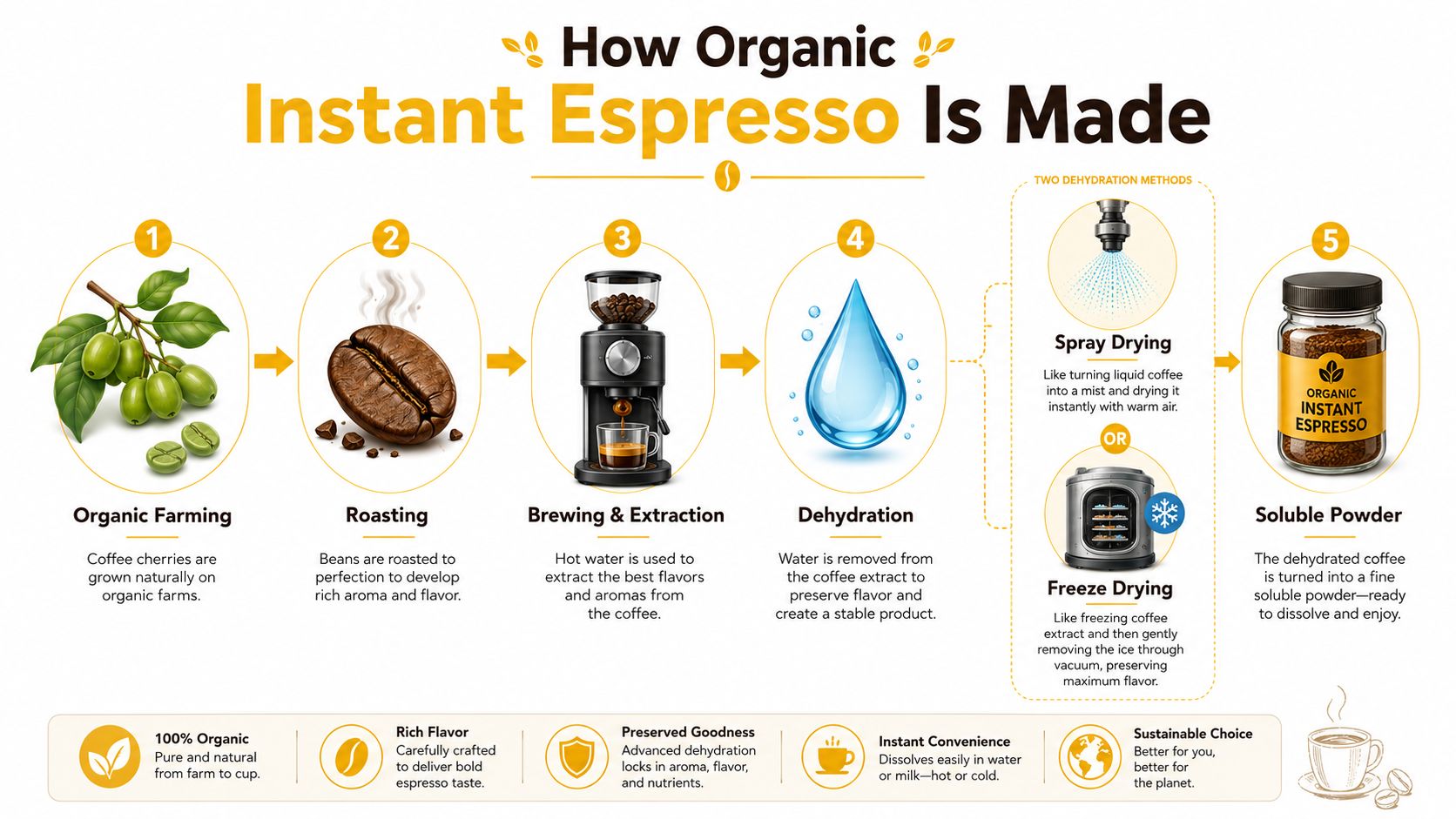
Think of organic instant espresso as a coffee concentrate that has been dried into a shelf-stable form. The beans are grown organically, roasted, brewed, concentrated, and then dehydrated until only the soluble coffee solids remain. The hard part is removing the water without stripping away the aromas that make the cup taste alive.
From farm to brewed concentrate
The organic part starts on the farm, where growers follow organic certification rules for the crop and the land management around it. After harvest, the beans are roasted just like other coffee, because instant espresso starts with brewed coffee, not raw beans. The roast is then extracted into a liquid coffee base that's stronger than a normal drip brew, since the final powder needs enough intensity to stand up once it's rehydrated.
That brewed base is where process decisions start to matter. Manufacturers can adjust the roast, brew strength, and concentration so the dried powder dissolves cleanly later. A product like Naturata's organic instant espresso is described as spray-dried from a coffee concentrate with 25% dry matter before the final drying step, which shows how much of the process happens before the powder ever reaches the jar (Beautiful Wine). In plain language, the coffee has already been turned into a liquid form dense enough to survive dehydration.
Freeze-drying and spray-drying work differently
The two main industrial methods are freeze-drying and spray-drying. Freeze-drying is gentler. The brewed coffee is frozen, then placed under vacuum so the ice turns directly into vapor. That avoids a harsh heat phase and usually preserves more aroma, which is why many premium instant coffees taste cleaner and closer to fresh brew.
Spray-drying is faster. The coffee concentrate is turned into tiny droplets and exposed to hot air, which dries it quickly. It can be efficient, but it often gives a flatter sensory profile. That's why freeze-dried versions often command a premium, not because of branding alone, but because the process is better at protecting volatile compounds that make coffee smell and taste fresh.
Practical rule: if a label says freeze-dried, expect a better chance at aroma retention and a more espresso-like cup.
Cartograph Coffee's own instant coffee guide points readers toward 100% organic coffee as the cleanest ingredient list and describes its organic instant coffee as freeze-dried Arabica, which aligns with the processing logic above. For another view on the same technique, this freeze-dried coffee guide is worth reading.
Why this matters when you buy
Processing isn't just factory trivia. It affects how much foam you get, how strong the first sip feels, and whether the coffee still has some sweetness under milk. If you've ever had instant coffee taste thin or papery, the issue often comes back to how the powder was made. Better dehydration won't make it identical to espresso, but it can make the difference between “good enough” and “this works.”
Organic Instant Espresso vs Regular Instant Coffee vs Fresh Espresso
The key question isn't whether organic instant espresso is trendy. It's whether it can do the job in a latte, a mocha, a brownie batter, or an iced drink without tasting weak. The answer depends on what you're asking it to replace.
Side by side comparison
| Characteristic | Organic Instant Espresso | Regular Instant Coffee | Fresh Espresso |
|---|---|---|---|
| Flavor intensity | Concentrated, designed to feel bold | Usually milder and less espresso-like | Highest fresh intensity and complexity |
| Solubility | Dissolves quickly in water or milk | Also dissolves quickly | Not soluble, must be brewed |
| Crema formation | Limited, depends on formulation and mixing | Limited | Natural crema from pressure extraction |
| Convenience | Very high | Very high | Low to moderate |
| Best uses | Lattes, mochas, baking, iced drinks, travel cups | Basic hot coffee, emergency pantry use | Straight shots, café drinks, nuanced tasting |
Organic instant espresso sits closer to fresh espresso in purpose than regular instant coffee does. It's made to bring stronger flavor into drinks that need body, especially milk-based recipes and desserts. Regular instant coffee can still work, but it's more likely to read as generic coffee flavor than as a concentrated espresso stand-in.
Where it performs well
For lattes and mochas, organic instant espresso has a real advantage because milk softens small flavor gaps. If the coffee base is strong enough, the drink still tastes deliberate instead of diluted. It's also useful in baking, where the goal is often to add depth, not to preserve every aromatic note from a freshly extracted shot.
Fresh espresso still wins on nuance, crema, and texture. A machine-pulled shot gives you a layered experience that instant can't fully match because the cup starts from a different physical process. But that doesn't make instant espresso useless. It just means you should use it where its strengths matter most, consistency, speed, and portability.
Useful test: if you're making a drink with a lot of milk, sugar, or ice, organic instant espresso often holds up better than a lighter instant coffee.
For buyers comparing specialty drink ingredients, the guide to choosing mushroom coffee is a helpful example of how shoppers increasingly think in terms of use case, not just label category. A similar logic applies here. Also, if you want a direct comparison between forms, this instant espresso versus instant coffee guide helps frame the trade-offs.
Where it falls short
It won't fully replace fresh espresso if you care about shot texture, crema, or the subtle sweetness that comes from a well-pulled extraction. It also can't be customized the same way a machine-based setup can. You can change dose and dilution, but you can't adjust pressure, grind, or extraction timing.
Health Benefits and Organic Certification Truths
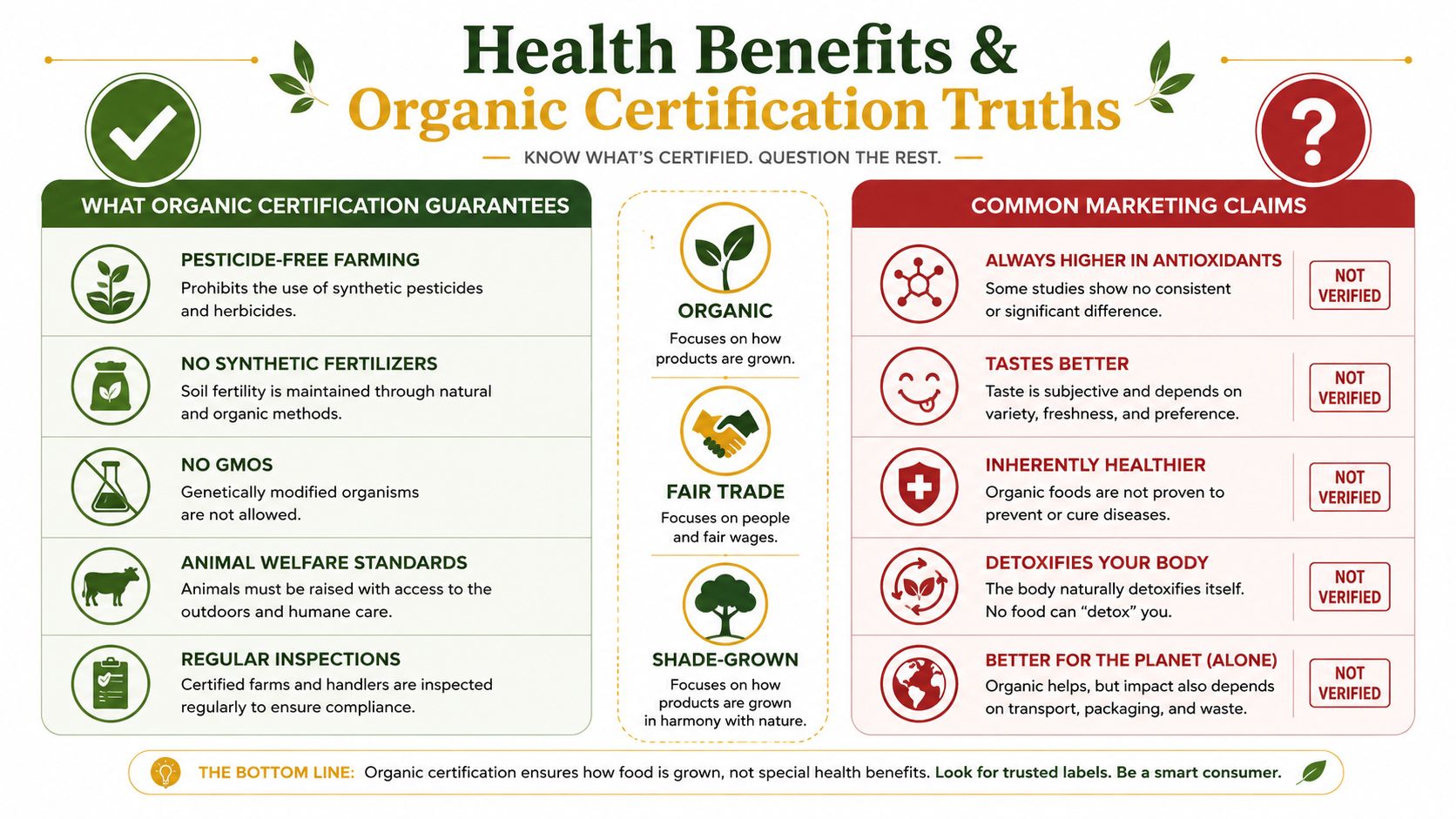
Organic labels can be reassuring, but they don't mean every health claim a package implies is automatically true. Organic certification is about how the coffee is farmed and processed under the rules of the certifying body. It does not turn coffee into a different food category, and it doesn't magically make every cup stronger, cleaner, or more nutritious.
What organic does and doesn't guarantee
The strongest part of the label is the farming standard. Organic coffee is grown without the synthetic inputs that conventional farms may use, and that matters to people who care about agricultural practices and environmental impact. It can also align with shoppers who want a product that fits a more cautious approach to pesticide exposure.
What it doesn't guarantee is broader wellness magic. Claims like “always higher in antioxidants” or “tastes better” are marketing language unless a specific product proves them with actual testing. The same caution applies to claims about being healthier than regular coffee. Coffee is still coffee, and the beverage's caffeine behavior is not changed just because the beans were grown organically.
Certification labels are not the same thing
Organic, fair trade, shade-grown, and similar labels speak to different values. Fair trade is about labor and trade structures, not pesticide rules. Shade-grown relates to how coffee is farmed in relation to tree cover and habitat. Those labels can overlap, but they shouldn't be treated as interchangeable.
If you're sorting through package claims, look for the distinction between what's certified and what's merely implied. That matters because coffee buyers often pay extra for values that sit outside flavor alone. The challenge is to separate those values from unsupported promises about body effects, detox language, or magical health outcomes.
Simple reading habit: if a package promises a health benefit, ask whether it names a certification, a processing method, or just a vague wellness idea.
For shoppers who want a broader view of ethical coffee claims, this fair-trade instant coffee roundup shows how often these labels are presented together, even when they refer to different standards. Organic instant espresso can absolutely fit a values-driven purchase, but the label should be read carefully, not romantically.
Preparation Methods and Recipes for Every Situation
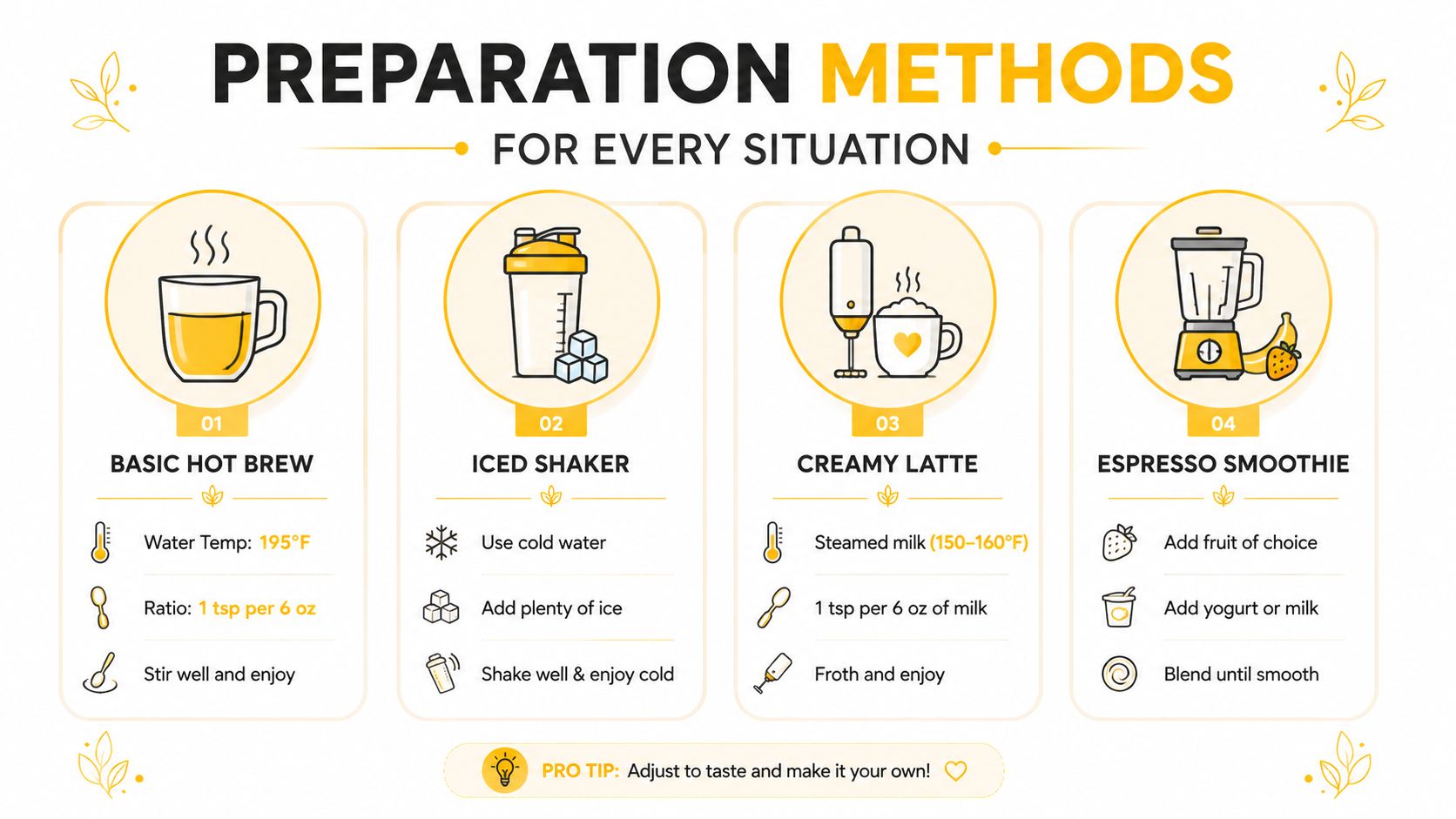
The biggest mistake people make with instant espresso is treating it like weak coffee dust. It behaves more like a dry concentrate, so the details matter. If you dissolve it in too little liquid, it clumps. If you over-dilute it, the cup tastes flat. The sweet spot is simple to hit once you know the pattern.
The basic hot cup
Start with hot water, not boiling water. A practical guide is 195°F water with about 1 tsp per 6 oz of liquid, then stir until fully dissolved. If you want a stronger base for milk drinks, mix the powder with a small splash of hot water first, then build the drink from there.
A clean mug helps more than many might realize. Coffee residue from an old cup can make instant espresso taste harsher than it really is. Stirring thoroughly before adding milk or sweetener gives the powder the best chance to dissolve evenly.
Milk drinks, iced drinks, and a quick baking use
For a morning latte, dissolve the coffee in hot water, then add steamed or warmed milk. A milk frother helps, but you don't need café equipment to get a creamy result. For iced drinks, dissolve the powder in a small amount of hot water first, then pour it over ice and top with cold milk or sparkling water depending on the style you want.
For baking, treat it as a flavor booster. Dissolve it in the liquid already in the recipe, or mix it into warm butter or milk before combining. That keeps the flavor distributed instead of leaving bitter pockets in the batter.
Good kitchen habit: dissolve the powder first, then build the drink or batter around it. That avoids grainy texture and weak spots in flavor.
If you want a straight practical setup, the brand-specific routine is easy to adapt. Cartograph Coffee's organic instant packets are designed for travel and quick milk drinks, and the same logic works at home. The point is not precision for its own sake, it's making sure the coffee stays bold enough to matter.
Here are four reliable ways to use it:
- Morning latte: Mix the espresso powder with a splash of hot water, add steamed milk, then sweeten lightly if you want a softer cup.
- Camping mocha: Dissolve it in hot water, stir in cocoa and sugar, then add warm milk or a dairy-free alternative.
- Iced espresso tonic: Make a concentrated base first, then pour over ice and finish with tonic water for a bright, sharp drink.
- Baking substitution: Replace the liquid coffee component in recipes with a concentrated instant espresso solution so the batter doesn't get watered down.
For a visual walkthrough, the embedded tutorial can help with pacing and texture.
Storage, Freshness, and Buying the Right Product
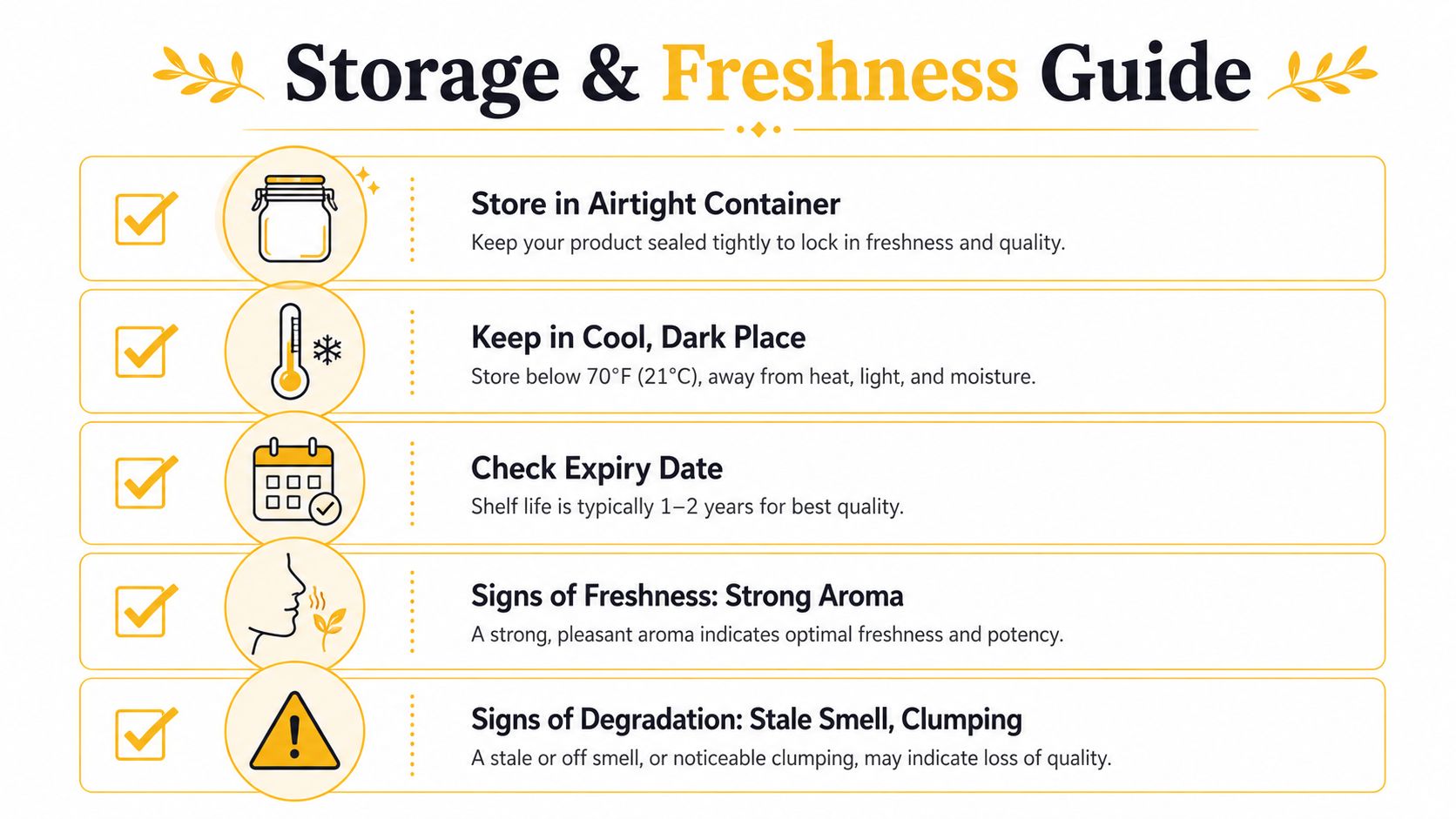
Instant espresso lasts longer than ground coffee, but it still loses quality if you treat it like an afterthought. Air, heat, light, and moisture all work against the powder, which is why the container matters almost as much as the beans. A product can start strong and still fade fast if the jar stays open on a warm shelf.
What to look for on the package
Choose packaging that seals well, and pay attention to whether the product lists the bean origin and drying method. A transparent ingredient list is a good sign because it tells you whether you're buying 100% coffee or a blend padded with extras. If the label mentions freeze-dried, that usually signals a product built with flavor retention in mind.
Expiry dates matter, but they're only part of the picture. Storage quality often decides how the coffee tastes long before the printed date becomes relevant. A cool, dark cupboard is a better home than a sunny counter, and an airtight container is better than a loose-lidded jar.
How to spot freshness problems
Fresh instant espresso should still have a clear coffee aroma when you open it. If it smells stale, faint, or musty, the powder has probably lost some of what made it useful in the first place. Clumping can happen if moisture gets in, and that's a warning sign even if the coffee technically remains usable.
If you want a broader packaging perspective, Packaging Panda's food-safe packaging guidance is a practical resource for understanding why barrier protection matters for shelf-stable foods. For coffee, that translates into fewer flavor losses and less moisture exposure.
Buying logic that saves money and disappointment
Bigger tubs can be tempting, but only if you'll use them quickly enough to keep the flavor intact. Smaller packages make more sense when you're still testing brands or comparing processing styles. Price can reflect better drying methods, but it can also reflect branding, so read the label before assuming the expensive jar is automatically the better one.
Organic instant espresso should be judged on ingredient clarity, processing method, and packaging quality. If all three look thoughtful, you're much more likely to get a cup that stays useful past the first week.
Environmental Impact and Ethical Sourcing Considerations
Organic instant espresso sits at an interesting crossroads. It can support farming practices that align with environmental values, while also reducing the equipment burden that comes with fresh espresso at home. That doesn't make it automatically sustainable, but it does make it easier to fit a low-waste morning into a busy life.
The environmental story depends on the whole chain. Organic farming can change what goes into the soil and onto the crop, while instant processing adds an extra manufacturing step that fresh espresso skips. On the other hand, instant coffee can also cut down on the need for expensive machines, filters, capsules, and the material footprint that often comes with convenience brewing.
Ethical sourcing matters too. Buyers often use the word “organic” as shorthand for “better in every way,” but the label itself doesn't speak to labor conditions. That's where fair-trade style sourcing comes into the conversation, because it shifts attention from the cup alone to the people who grow and process the beans.
The cleanest way to think about it is this. Organic speaks to farming inputs. Fair trade speaks to trade ethics. Convenience speaks to how the product fits your day. When those three line up, the coffee becomes more than a shortcut, it becomes a values-based choice that still works when you're short on time.
Cartograph Coffee offers organic freeze-dried instant coffee packets that fit the same travel, office, and home use cases discussed here. If you want a practical way to test whether organic instant espresso can stand in for your usual drinks, visit Cartograph Coffee and compare it against the recipes and buying criteria above.