Let's face it, "instant decaf" hasn't always been a phrase that inspires excitement. For a long time, it was the coffee you drank when you had no other choice—a bland, watery compromise. But what if it could actually be delicious, convenient, and good for you? That's the promise of a new wave of organic decaffeinated instant coffee, and it's completely changing the game.
Why Better Decaf Coffee Is Worth Exploring
For decades, combining "instant" and "decaf" usually meant one thing: a subpar coffee experience. Most of us wrote it off as a last resort, a pale imitation of a real, freshly brewed cup. And to be fair, that reputation was often earned. Old-school production methods tended to prioritize low cost over everything else, leaving taste and quality behind.
But the coffee world has evolved. A handful of passionate brands are flipping the script, driven by the belief that you shouldn't have to choose between flavor, convenience, and your health.
The Modern Evolution of Instant Decaf
This isn't your grandparents' decaf. Modern organic decaffeinated instant coffee begins with high-quality, specialty-grade beans grown on organic, ethical farms. Instead of being stripped of their flavor by harsh chemical solvents, these beans go through sophisticated, natural decaffeination processes that gently remove the caffeine while carefully preserving the delicate tasting notes.
That same commitment to quality carries through to the final step. The perfectly brewed coffee is turned into instant crystals using gentle methods like freeze-drying, which locks in all the original aroma and flavor. What you get in the end is a product that delivers on all fronts:
- Exceptional Flavor: A rich, smooth, and complex cup without that weird chemical aftertaste you might remember from older decafs.
- Unmatched Convenience: A perfect cup of coffee is literally seconds away, whether you're at home, at your desk, or halfway up a mountain.
- Health and Wellness: It's a pure, pesticide-free choice that lets you enjoy the ritual and taste of coffee without the caffeine jitters or a sleepless night.
This guide will take you beyond the old myths, exploring how sustainable farming, clean decaffeination, and meticulous production create a truly premium organic decaffeinated instant coffee.
Thanks to this modern approach, what was once a sad compromise has become a fantastic choice for people who truly care about what they're drinking. It’s for anyone who loves coffee but wants a cleaner, more flexible option that fits their life. Prepare to have your expectations changed.
Understanding Organic Decaffeinated Instant Coffee
When you see “organic decaffeinated instant coffee” on a label, it can feel like a mouthful. But each of those words tells an important story about what’s inside your mug. Let's break down what that phrase really means by looking at its three core promises: organic, decaffeinated, and instant.
Think of it like building a custom piece of furniture. You can't just slap any materials together and expect a masterpiece. The quality of the final product hinges on every single component working in harmony. Each term on that label is a promise of purity, flavor, and convenience.
The Organic Promise: Purity From the Start
First up, "organic." This is the foundation. It’s a guarantee that the coffee beans were grown without any synthetic pesticides, herbicides, or fertilizers. Organic farming is all about working with nature, not against it, focusing on healthy soil and promoting biodiversity on the farm.
By steering clear of harsh chemicals, these farms protect local water sources from contamination and create a safer environment for farmers and their communities. For you, it means you’re getting a cleaner cup of coffee, free from any unwanted chemical residues.
The Decaffeinated Method: Preserving Flavor
Next, we have "decaffeinated." This simply means that at least 97% of the caffeine has been removed from the green coffee beans before they’re roasted. But here's the crucial part: how that caffeine is removed makes all the difference. The best brands avoid harsh chemical solvents, choosing gentle, natural processes instead.
The best organic decaffeinated instant coffee relies on methods that use natural elements like pure water or carbon dioxide to draw out the caffeine. This ensures the coffee's delicate, original flavors remain intact, giving you a rich taste without the chemical aftertaste you might find in lower-quality decafs.
Imagine trying to remove a single thread from an intricate tapestry. A clumsy pull would ruin the design, but a careful, precise touch would leave the beautiful image untouched. Chemical-free decaffeination is that careful touch, preserving the coffee’s true character.
The Instant Advantage: Sophisticated Convenience
Finally, "instant" signals modern convenience without cutting corners on quality. Forget the bitter, burnt-tasting instant coffee you might remember from decades ago. Today’s premium instant coffee is created by brewing expertly roasted organic beans and then using a sophisticated method called freeze-drying.
This process involves flash-freezing the brewed coffee and then gently turning the ice directly into vapor. What's left behind are pure, flavorful coffee crystals that lock in all the rich aroma and nuanced taste of the original brew. It means you can have a perfect, delicious cup of coffee anywhere, in just a few seconds.
This blend of quality, health, and ease is exactly what people are looking for today. The global decaffeinated coffee market was valued at around $2.5 billion and is expected to climb to over $4.5 billion by 2034. Organic and instant options are a huge part of that growth as people demand better, more convenient choices. You can discover more insights about the growing decaf market trends.
Together, these three elements—organic, decaffeinated, and instant—create something special. It's a coffee that delivers on taste, supports your well-being, and fits right into a busy life.
How Coffee Is Decaffeinated Without Chemicals
The word “decaffeinated” seems straightforward, but the journey a coffee bean takes to become decaf is a fascinating science. How caffeine is removed is one of the biggest factors in what your coffee will taste like and how pure it is. If you're looking for the best organic decaffeinated instant coffee, getting to know this process is the key to making a great choice.
Think of caffeine as just one ingredient woven into the fiber of a green, unroasted coffee bean. The challenge is to gently coax that single ingredient out while leaving the hundreds of other delicate flavor compounds behind. Older, cheaper methods often used a brute-force approach with harsh chemical solvents, which unfortunately stripped away a lot of flavor along with the caffeine.
Thankfully, the world of specialty coffee has embraced cleaner, more natural methods. These processes are all about preserving flavor and purity, so the coffee you drink is as delicious as it is clean.
This chart illustrates how all the pieces of a top-tier instant coffee come together—from organic farming and clean decaffeination to the final soluble granules.
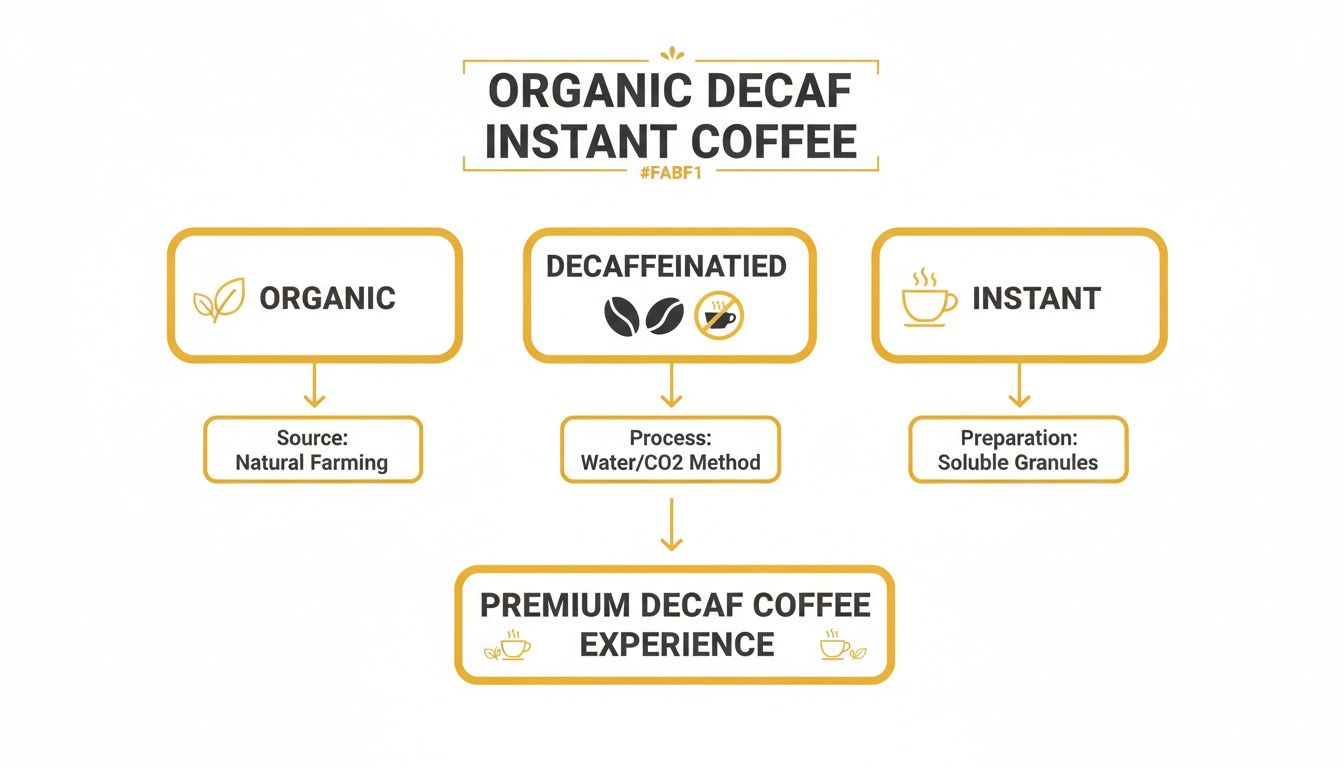
As you can see, each step builds on the last. It all starts with pesticide-free farming, moves to a pure decaffeination process, and ends with a convenient, high-quality coffee ready for your cup.
Comparing Decaffeination Methods
To really understand what makes a great organic decaf, it helps to see the main methods side-by-side. The Swiss Water and CO2 processes are the only ones you'll find in certified organic coffee, as they avoid synthetic chemical solvents entirely.
| Method | Process Overview | Flavor Impact | Organic Certified |
|---|---|---|---|
| Swiss Water Process | Uses water and a proprietary Green Coffee Extract (GCE) to gently coax caffeine from beans. No chemicals involved. | Excellent. Preserves the coffee’s original, nuanced flavor profile. | Yes |
| CO2 Process | Uses pressurized, "supercritical" carbon dioxide (CO2) to act as a natural solvent, pulling caffeine from the beans. | Very good. Effectively retains delicate aromatic oils and vibrant flavors. | Yes |
| Solvent-Based | Beans are treated with chemical solvents like methylene chloride or ethyl acetate to strip out caffeine. | Can be poor. Often strips flavor and body along with the caffeine, leaving a flatter taste. | No |
Choosing a coffee decaffeinated with the Swiss Water or CO2 method ensures you're getting a cup that’s not just free of unwanted chemicals, but also full of the flavor it was meant to have.
The Swiss Water Process: The Gold Standard
The Swiss Water Process is widely considered the pinnacle of chemical-free decaffeination. It’s a beautiful concept that relies on just two things: pure water and time. There are absolutely no added chemical solvents, which makes it a perfect match for certified organic coffee beans.
Here’s a simple look at how it works:
- Create the Flavor-Charged Water: First, a batch of green coffee beans is soaked in hot water. This dissolves both the caffeine and all the soluble flavor compounds, creating what’s called a Green Coffee Extract (GCE). This first batch of beans is discarded.
- Filter Out the Caffeine: The GCE is then passed through special activated carbon filters. These filters are designed to trap the larger caffeine molecules while letting the smaller, flavor-rich compounds pass right through.
- Decaffeinate the New Beans: Now, a fresh batch of green coffee beans is soaked in this caffeine-free GCE. Because the water is already saturated with coffee flavor, the flavor can't escape from the new beans. Only the caffeine migrates from the beans into the water, a process that continues until the beans are 99.9% caffeine-free.
The result is a decaffeinated bean that keeps its original, complex flavor profile. It’s why brands that use the Swiss Water Process, like Cartograph Coffee, can offer a decaf that tastes just as rich and interesting as its fully caffeinated counterpart.
The Swiss Water Process is a testament to the idea that the gentlest method is often the most effective. By using the coffee's own elements to remove caffeine, it preserves the soul of the bean.
The CO2 Method: A Natural Alternative
Another fantastic chemical-free option is the CO2 Process, sometimes called Supercritical Carbon Dioxide Decaffeination. This process uses carbon dioxide—the same gas we exhale—in a special "supercritical" state where it acts like both a gas and a liquid.
In this state, CO2 becomes a highly effective and totally natural solvent for caffeine. The process begins with green coffee beans being soaked in water before they’re placed in a high-pressure chamber filled with supercritical CO2. The CO2 then circulates through the beans, bonding with caffeine molecules and drawing them out while leaving the larger flavor compounds untouched.
Much like the Swiss Water Process, the CO2 method is clean, natural, and fully approved for organic coffee. It’s particularly great at preserving the delicate aromatic oils in coffee, which means a vibrant and flavorful cup.
Why You Should Avoid Solvent-Based Methods
While you won’t find them in the specialty coffee world, older solvent-based methods are still used for a lot of mass-market decaf. These processes rely on chemical solvents like methylene chloride or ethyl acetate to strip caffeine from the beans.
Although regulatory agencies say the tiny amounts left on the beans are safe, many of us would rather just avoid these chemicals altogether. For a product to be certified organic, it must be decaffeinated without synthetic solvents. That’s why methods like Swiss Water and CO2 are the only real options for a premium organic decaffeinated instant coffee. Choosing a brand that is transparent about its chemical-free process gives you peace of mind with every single sip.
The True Meaning of the Organic Certification
When you grab a jar of organic decaffeinated instant coffee, that "organic" seal is much more than a trendy buzzword. It’s a hard-earned guarantee, backed by strict agricultural standards that protect the environment, the farmers, and you. Seeing that USDA Organic logo means you're holding a product that stands for purity and responsible farming from the ground up.
So, what does it actually take to earn that certification? Forget the idea of a sterile production line. An organic coffee farm is a vibrant, living ecosystem. The journey to becoming certified starts long before the first coffee cherry is ever picked—it begins with the soil itself.
A Foundation Built on Healthy Soil
Conventional coffee farming often treats soil like a neutral medium, pumping it full of synthetic fertilizers to feed the plants directly. Over time, this can strip the soil of its vitality, leaving it weak and lifeless. Organic farming takes the complete opposite approach.
Organic farmers are soil builders. They are required to create and maintain healthy, nutrient-rich earth using only natural methods. That means absolutely no synthetic fertilizers. Instead, they rely on time-tested techniques that let nature do the work.
- Composting: They recycle organic matter, like coffee pulp, to create a natural, slow-release fertilizer.
- Cover Cropping: Special plants are grown between coffee rows to prevent soil erosion and add back valuable nutrients when they decompose.
- Natural Inputs: Farmers use materials like animal manure to enrich the soil, feeding the complex web of life within it.
This intense focus on soil health creates a resilient foundation. Healthy soil grows stronger coffee plants that can naturally draw all the nutrients they need, making them better equipped to fend off pests and diseases on their own.
Saying No to Synthetic Chemicals
One of the biggest promises behind the organic seal is the total ban on synthetic pesticides, herbicides, and fungicides. On a typical conventional farm, these chemicals are standard practice for controlling weeds and insects. Unfortunately, they can have unintended consequences for the local environment and the people who work the land.
The "organic" label is a firm promise: the coffee you are drinking was grown without the aid of synthetic pesticides or genetically modified organisms (GMOs). This commitment ensures a cleaner final product, from the farm to your cup.
This is a huge deal for a crop like coffee. As one of the world's most traded agricultural goods, conventional coffee production can involve a startling amount of chemical treatments. When you choose organic, you’re directly supporting a system that keeps these synthetics out of our water, soil, and air. You can dive deeper into what makes coffee organic and how it impacts everything from health to flavor in our guide.
This chemical-free method also means a much safer workplace for farmers and their families, who are no longer exposed to potentially harmful substances day in and day out.
Promoting a Thriving Ecosystem
If you were to walk onto a certified organic coffee farm, you'd immediately notice it’s buzzing with life. Instead of uniform rows of coffee plants baking in the sun, you're more likely to find them nestled under the canopy of native trees. This practice, known as shade-grown coffee, is a hallmark of sustainable, organic farming.
Growing coffee in the shade mimics a natural forest. This creates a rich habitat for birds, insects, and other wildlife that help keep the ecosystem in balance. The birds and beneficial insects act as a natural pest control crew, which again reduces the need for any outside intervention.
This method doesn't just help the planet—it often results in better-tasting coffee. The shade allows the coffee cherries to ripen more slowly, giving them time to develop deeper, more complex flavors. Ultimately, the organic certification tells a story of connection, linking healthy soil and thriving ecosystems to the pure, clean taste you enjoy in every cup of organic decaffeinated instant coffee.
Health Benefits of Choosing Organic Decaf
When you reach for an organic decaffeinated instant coffee, you're doing more than just picking a drink. It's a conscious choice for your own well-being, one that tackles health from two sides: cutting back on caffeine and avoiding synthetic pesticides. It’s all about keeping that comforting coffee ritual you love, but without the potential downsides that can mess with your body and mind.
For a lot of people, making the switch to decaf is all about improving their day-to-day life. When you drastically lower how much caffeine you drink, you’re helping your body get back to its natural rhythm. The benefits are real things you can actually feel, from morning to night.
A Path to Better Sleep and Less Anxiety
We all know caffeine is a stimulant. Its main job is to block adenosine, the natural compound that signals to your brain that it’s time to wind down. That's great for a morning jolt, but caffeine consumed later in the day can seriously throw off your internal clock, making it tough to fall asleep and wrecking the quality of your rest.
Swapping to decaf, particularly in the afternoon or evening, lets your body relax on its own schedule. It’s a small change, but it can lead to much deeper, more restorative sleep, so you wake up feeling genuinely recharged. Many also find that less caffeine means less of that anxious, jittery feeling, creating a more stable and calm mood throughout the day.
Imagine enjoying a warm, satisfying cup of coffee after dinner, knowing it won’t interfere with a peaceful night's sleep. That freedom is one of the key health benefits of embracing a high-quality organic decaf.
There's a growing movement towards more mindful consumption. People who are health-conscious or sensitive to caffeine are changing the game, rethinking when and why they drink coffee. In fact, surveys from major coffee associations show that about 40% of coffee drinkers are actively trying to reduce their caffeine intake, pointing to sleep, anxiety, and heart-health as their main reasons. This trend is so strong that the global demand for decaf is expected to grow at around 7.3% CAGR between 2022 and 2028, pushed forward by new methods that deliver a fantastic coffee experience, minus the buzz.
The Double Advantage of Going Organic
Choosing an organic coffee adds another critical layer of protection. That little USDA Organic seal is your guarantee that the beans were grown without any synthetic pesticides, herbicides, or fertilizers. This is a big deal for coffee, as conventional farming often relies heavily on chemical sprays.
So, when you go organic, you get a double health win: all the benefits of less caffeine, plus the peace of mind that your coffee is free from unwanted chemical residues. It's a commitment to a cleaner cup, from the farm all the way to your kitchen. You can dive deeper into the full range of organic coffee health benefits in our detailed article. This choice doesn’t just support your health; it also helps create a healthier planet and safer working conditions for farmers.
This two-for-one benefit—less caffeine and no pesticides—makes organic decaffeinated instant coffee an incredibly smart addition to a balanced, health-focused lifestyle. It proves you don't have to sacrifice the rich flavor and comforting experience of a great cup of coffee to put your well-being first.
How to Brew Your Perfect Cup

Making a great cup of organic decaffeinated instant coffee is about more than just splashing some hot water in a mug. It's a simple ritual, but a few small tweaks can turn a quick convenience into a genuinely delicious experience, day after day. It all begins with the water.
It’s so tempting to pour water straight from a screaming kettle, but that intense heat can actually scorch the delicate coffee crystals. The result? A bitter, flat brew. For the best flavor, you want water that's just off the boil, ideally between 195°F and 205°F (90°C to 96°C).
Here’s an easy trick: once your kettle boils, just let it sit for 30 to 60 seconds before you pour. That tiny pause makes all the difference, allowing the coffee's more subtle, nuanced flavors to dissolve perfectly without getting burned.
Fine-Tuning Your Coffee-to-Water Ratio
One of the best things about instant coffee is how much control you have. You get to decide exactly how strong your coffee is, and finding that perfect balance is all about personal preference. My advice is to start with a good baseline and then experiment.
A solid starting point for a well-balanced cup is one to two teaspoons of instant coffee for every six ounces (about 177 ml) of hot water.
- For a milder cup: Start with one level teaspoon.
- For a stronger, more robust flavor: Go for two teaspoons, or even a slightly heaping one.
Don't hesitate to play around. Add a little more coffee one day, a bit more water the next. You're essentially calibrating your own personal recipe for the perfect brew. For a deeper dive into the technique, check out our guide on how to make perfect instant coffee.
Creative Ways to Enjoy Your Decaf
Your organic decaf is good for so much more than just a hot drink. Because it dissolves so easily, it's an incredibly versatile ingredient for all sorts of coffee creations you can enjoy any time of day, without worrying about the caffeine.
The secret to great instant coffee lies in the details. By controlling water temperature and your coffee-to-water ratio, you unlock the rich, smooth flavor that specialty-grade organic beans have to offer.
Here are a few ideas to get your creativity flowing:
- Quick Iced Coffee: Dissolve one to two teaspoons of coffee in just a splash of hot water. Once it's a smooth liquid, fill the glass with cold water, ice, and your milk of choice.
- Flavorful Smoothie Boost: Add a teaspoon of instant coffee right into your blender along with your other smoothie ingredients. It's an amazing way to give a protein shake or a banana smoothie a rich coffee kick without the buzz.
- Simple Affogato: For a ridiculously easy and elegant dessert, put a scoop of vanilla ice cream in a bowl. Then, pour a "shot" of concentrated instant coffee (one teaspoon dissolved in two tablespoons of hot water) right over the top.
With these simple tips, your organic decaffeinated instant coffee goes from being a quick, caffeine-free fix to a key ingredient for delicious drinks, whether hot or cold.
Got Questions? We’ve Got Answers.
Even after diving into the details, a few questions always seem to come up when people are thinking about making the switch. Let's tackle those lingering curiosities so you can feel great about what's in your mug.
Does Organic Decaf Instant Coffee Actually Taste Good?
It absolutely can, but the quality of the brand makes all the difference. When you're dealing with a top-tier organic decaf—one that uses a meticulous method like the Swiss Water Process on specialty-grade beans—the flavor is remarkably rich and complex.
The secret is working with a company that’s obsessed with taste at every step, from the farm to the final freeze-dried crystal. The result is a cup that's smooth and satisfying, without that weird chemical bitterness you might remember from older, mass-produced decafs.
Is There Still Caffeine in Decaf Coffee?
Decaf isn't 100% caffeine-free, but it's incredibly close. To earn the "decaffeinated" label, a coffee must have at least 97% of its original caffeine removed.
For perspective, a standard cup of coffee rocks about 95 mg of caffeine. A cup of decaf? Usually just 2-5 mg. That's such a tiny amount that most people won't even notice it.
It’s this near-zero caffeine content that lets you enjoy a warm, comforting coffee ritual in the evening without staring at the ceiling all night.
Why Is "Organic" So Important for Decaf?
Going organic is a smart move for any coffee, but it's especially crucial when it comes to decaf. Think about it: the decaffeination process involves soaking the green coffee beans for an extended period. If those beans were grown using synthetic pesticides or fertilizers, where do you think those residues might end up?
Choosing certified organic beans means you're starting with a clean slate. It's your guarantee that the cup you're about to enjoy is pure, healthy, and free from any unwanted chemical baggage.
Is Instant Coffee "Real" Coffee?
You bet it is. Instant coffee is 100% real coffee, plain and simple. It's made by brewing a large, concentrated batch of coffee from actual roasted beans. From there, all the water is removed, leaving behind the soluble coffee crystals.
The best brands rely on a gentle process called freeze-drying. The brewed coffee is frozen solid, and then the ice is turned directly into vapor, skipping the liquid phase entirely. This method is fantastic at locking in the original coffee’s delicate aromas and deep flavors, giving you a cup that’s as close as you can get to a fresh brew in seconds.
Ready to taste a decaf that delivers on both flavor and integrity? See for yourself why Cartograph Coffee’s organic decaffeinated instant coffee is changing minds. You can discover our commitment to quality and convenience here.