Yes, cacao powder contains caffeine, but a typical tablespoon provides only about 12.4 mg, roughly one-tenth of a cup of drip coffee. The more useful question is whether cacao's other natural stimulant, theobromine, changes how that small caffeine dose feels.
That distinction matters because cacao isn't caffeine-free, even though it usually lands far below coffee. A tablespoon in a smoothie may feel insignificant to one person and noticeable to someone who is highly sensitive, avoiding caffeine for sleep, or combining cacao with tea, coffee, or matcha.
The answer also depends on serving size, processing, and product type. Natural cocoa, Dutch-process cocoa, raw cacao, and ceremonial cacao don't necessarily deliver the same stimulant profile. Understanding those differences lets you use cacao intentionally instead of guessing from the word “chocolate” on the label.
What You Need to Know About Cacao Powder and Caffeine
The short answer to “is there caffeine in cacao powder?” is yes. A USDA-referenced figure cited by independent health coverage on caffeine in chocolate puts one tablespoon of 100% unsweetened cocoa powder at 12.4 mg of caffeine. That amount is modest beside a typical 8-ounce cup of drip coffee, which contains roughly 70 to 120 mg.
Low caffeine doesn't mean stimulant-free
Cacao is best understood as a low-caffeine food, not a caffeine-free ingredient. A recipe containing one tablespoon contributes a small amount. A drink made with two or three tablespoons contributes more, and that total can matter if you drink it late in the day or add it to other caffeinated products.
The powder's caffeine also isn't the whole story. Cacao naturally contains theobromine, a related stimulant that usually appears in much higher concentrations. Theobromine tends to create a different experience from coffee's familiar caffeine jolt, so some people describe cacao as gentler while still noticing alertness or difficulty settling down.
Three details change the practical answer
Keep these questions in mind when you evaluate a product:
- How much are you using? A tablespoon and a heaped scoop aren't equivalent servings.
- What type is it? Natural and Dutch-process powders can differ because alkalization changes the alkaloid content.
- What else did you consume? Cacao can join coffee, tea, chocolate, energy products, or other sources in your daily total.
For ordinary cacao recipes, they fit comfortably into a routine. For caffeine-sensitive drinkers, however, a low dose can still be relevant. The sensible approach isn't to fear cacao. It's to treat the serving size as real information and notice how your body responds.
How Much Caffeine Is in a Serving of Cacao Powder
How much caffeine reaches your cup when you add cacao powder? Start with the amount on your spoon. A level tablespoon contains about 12.4 mg of caffeine. Natural and unsweetened powders commonly contain about 200 to 230 mg per 100 grams, so a larger scoop can change the total quickly. These figures are practical estimates, not a guarantee for every brand.
A simple serving estimate
| Serving | Approximate Amount | Caffeine (mg) |
|---|---|---|
| Level tablespoon | One tablespoon | About 12.4 |
| Small cacao recipe | Two tablespoons | About 24.8 |
| Larger cacao recipe | Three tablespoons | About 37.2 |
| Natural or unsweetened powder | 100 grams | About 200 to 230 |
The two- and three-tablespoon amounts come directly from the tablespoon estimate. They describe the caffeine in the powder before you add milk, water, oats, or other ingredients. The finished drink may be larger, but its total caffeine stays tied to the quantity of cacao used.
That distinction matters because dilution changes taste and texture, not caffeine. Two tablespoons blended into a full mug may taste mild, yet you still consume the caffeine in those two tablespoons. A heaped spoon can also hold more powder than a level tablespoon, making visual estimates less reliable.
Baking requires one more calculation. If a cake contains cacao powder, divide the recipe's total caffeine among the portions you eat. The same method works for a batch of energy bites or overnight oats. One slice does not contain the caffeine of the entire recipe.
Kitchen rule: Estimate caffeine from the total cacao powder, then divide it among the servings you consume.
Theobromine adds another reason cacao can feel different from its caffeine number. This related stimulant is usually present in a much higher amount, so a serving may feel gently stimulating even when its caffeine contribution is modest.
Processing and brand differences can move the result up or down. If you monitor caffeine closely, check the package's serving information, measure the powder consistently, and include cacao with your other daily sources. For a product-specific serving estimate, consult this caffeine guide to cocoa powder.
Cacao Powder Compared with Coffee, Tea, and Chocolate
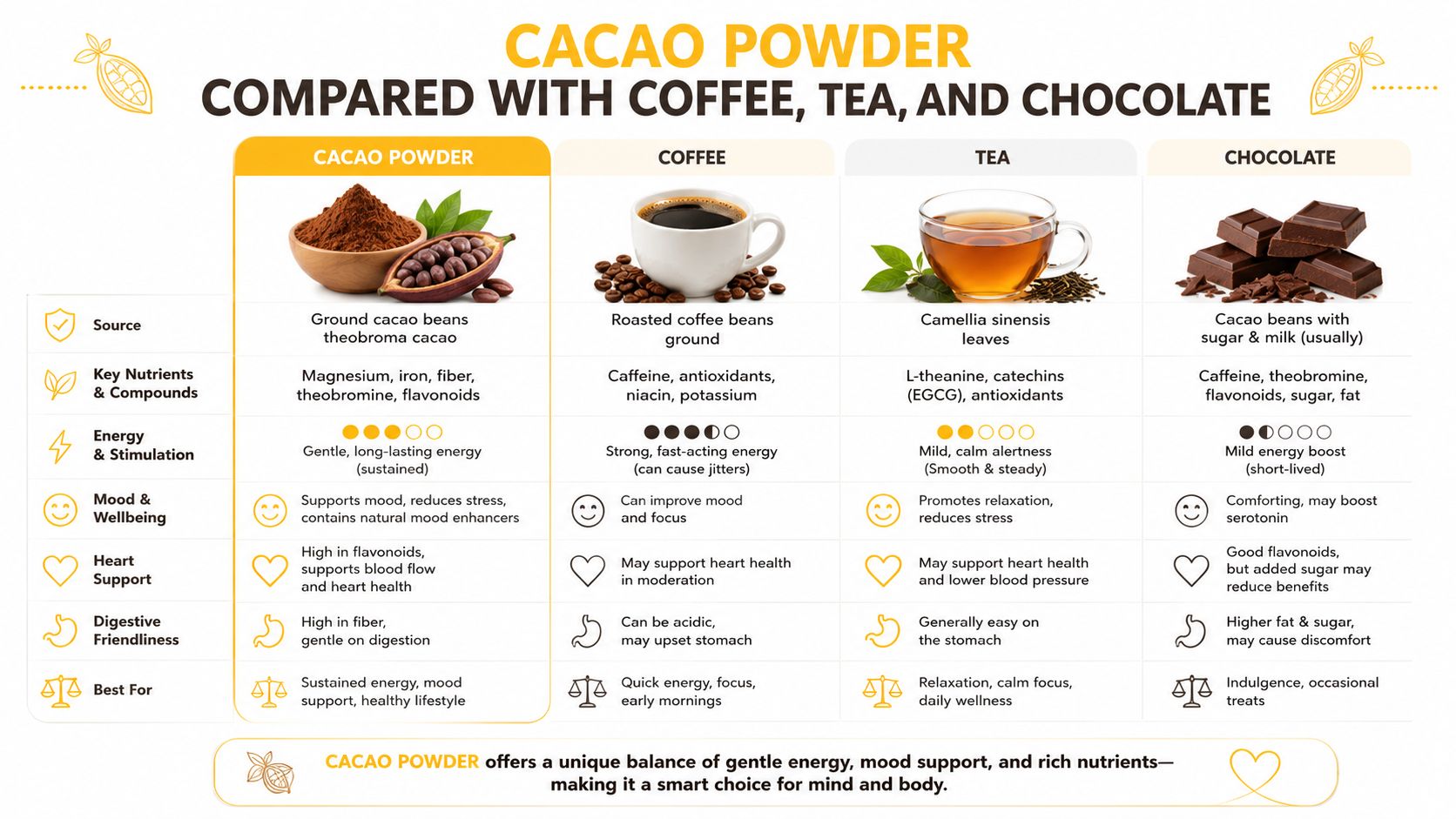
How does cacao compare with coffee, tea, and chocolate once you measure a real serving? Cacao generally sits toward the lower end of the caffeine range, though the amount depends on the quantity and preparation. A modest cacao drink is far below coffee, while a concentrated or ceremonial serving may approach some teas or lower-caffeine coffees.
The useful comparison is the serving
| Beverage | Typical Serving | Caffeine (mg) |
|---|---|---|
| Cacao powder | One tablespoon | About 12.4 |
| Cacao powder | Two to three tablespoons | About 24.8 to 37.2 |
| Drip coffee | 8 ounces | Roughly 70 to 120 |
| Espresso | One shot | Varies by preparation |
| Black tea | One cup | Varies by preparation |
| Green tea | One cup | Varies by preparation |
| Dark chocolate | One piece or serving | Varies by product |
The table puts the difference into practical terms. Two or three tablespoons of cacao provide much less caffeine than an 8-ounce drip coffee, according to this coffee and cocoa comparison from Cartograph Coffee. That can make cacao useful for reducing coffee, but it is not a caffeine-free substitute. Tea varies by type and brewing method, so its position can overlap with concentrated cacao.
Chocolate adds another layer of confusion. A powder-based drink with milk and sweetener is prepared differently from one made by melting a chocolate bar or using a prepared chocolate mix. This hot cocoa versus hot chocolate comparison explains why those names can describe different ingredient combinations and final drinks.
Where ceremonial cacao changes the picture
Ceremonial cacao may use a substantially larger, more concentrated serving than everyday baking powder. That changes the caffeine calculation and can make the drink feel more stimulating, even though cacao remains different from coffee. The key question is the amount used, not whether the product is called cacao.
Theobromine also matters here. Cacao's caffeine may be modest, but this related stimulant is usually present in a much larger amount. As a result, a serving can feel active without matching coffee's caffeine level. Caffeine-sensitive drinkers should compare the actual serving, preparation, and timing rather than rely on the label “barely stimulating.”
Caffeine and Theobromine: Why Cacao Feels Different
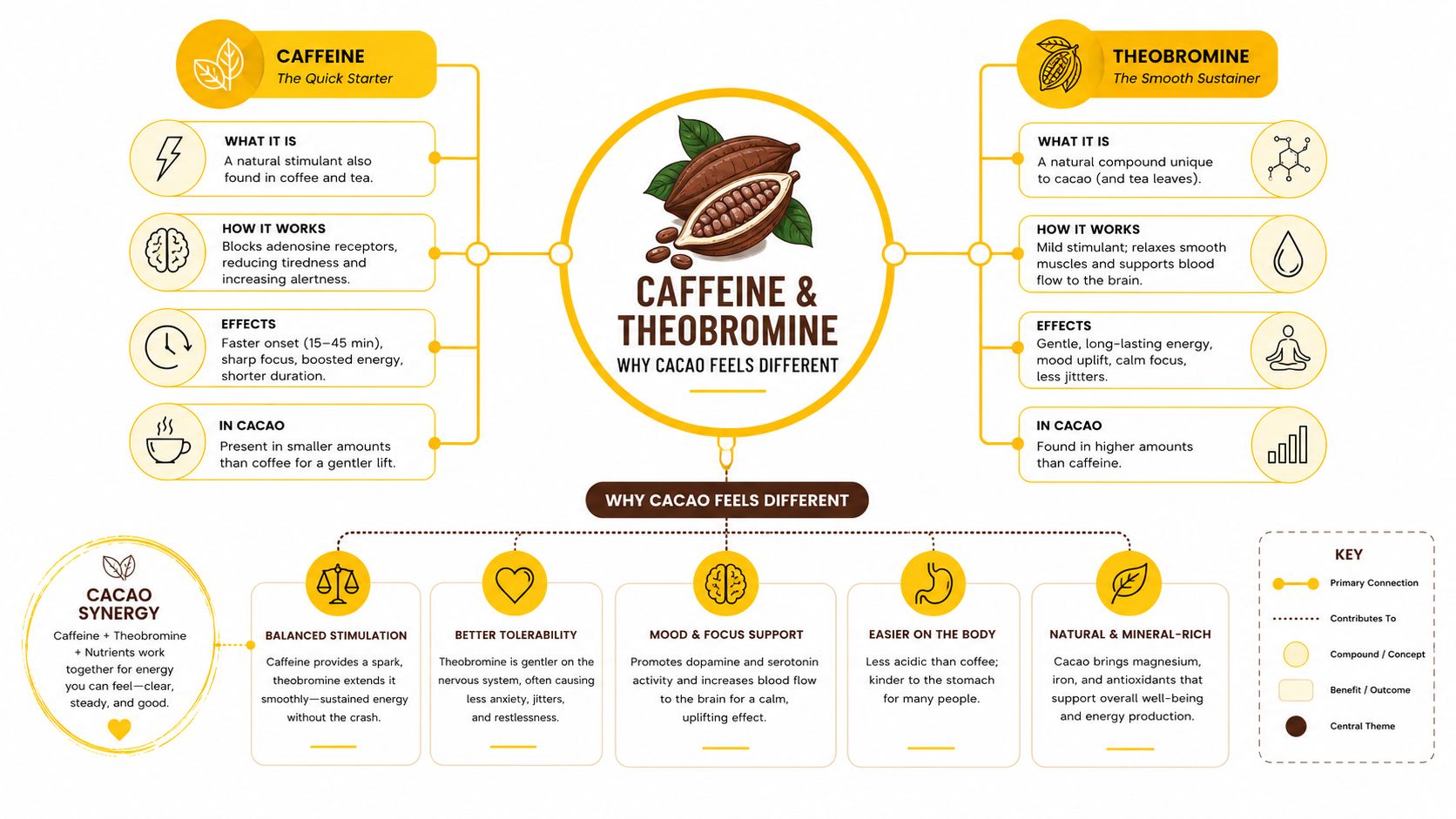
Why can cacao feel stimulating even when its caffeine content seems modest? The answer is theobromine, cacao's more prominent stimulant. Cocoa powder averages around 2% theobromine by weight. Unsweetened cocoa may contain roughly 1,750 to 2,060 mg of theobromine per 100 grams, compared with about 230 mg of caffeine per 100 grams, according to this analysis of theobromine in chocolate types.
A steady walk rather than a sprint
Caffeine often feels like a quick push toward alertness. Theobromine is stimulating too, but many people experience its effect as less abrupt and more sustained. A sprint and a steady walk both involve movement, yet their pace and sensation differ. That comparison helps explain why cacao can feel active without resembling coffee.
A tablespoon of cacao can contain roughly 90 to 140 mg of theobromine, compared with about 12 mg of caffeine, based on the same food-science evidence. The larger theobromine amount is why a small serving may have a noticeable effect even when its caffeine figure looks low.
Your response also depends on sensitivity, whether you have eaten, the preparation, and the drink's other ingredients. Cacao's fat, sugar, and milk can affect how quickly you consume and experience the beverage. They do not remove the fact that the powder contains both compounds.
Low caffeine is a useful description of cacao. It isn't the same as no stimulation.
Why sensitive drinkers should still pay attention
People managing sleep concerns, anxiety, reflux, or stimulant sensitivity may notice cacao, even if coffee feels much stronger. Theobromine helps explain that experience, so checking only the caffeine number gives an incomplete picture. A modest caffeine serving can still feel different when theobromine is the dominant stimulant.
If cacao leaves you restless, makes you more aware of your heartbeat, or affects sleep, reduce the serving or drink it earlier in the day. Ceremonial cacao can also feel more stimulating when its serving is larger than an everyday powder serving. Compare the amount used and your own response with coffee, tea, or ceremonial cacao rather than relying only on the product name.
How Processing Changes the Caffeine in Cacao
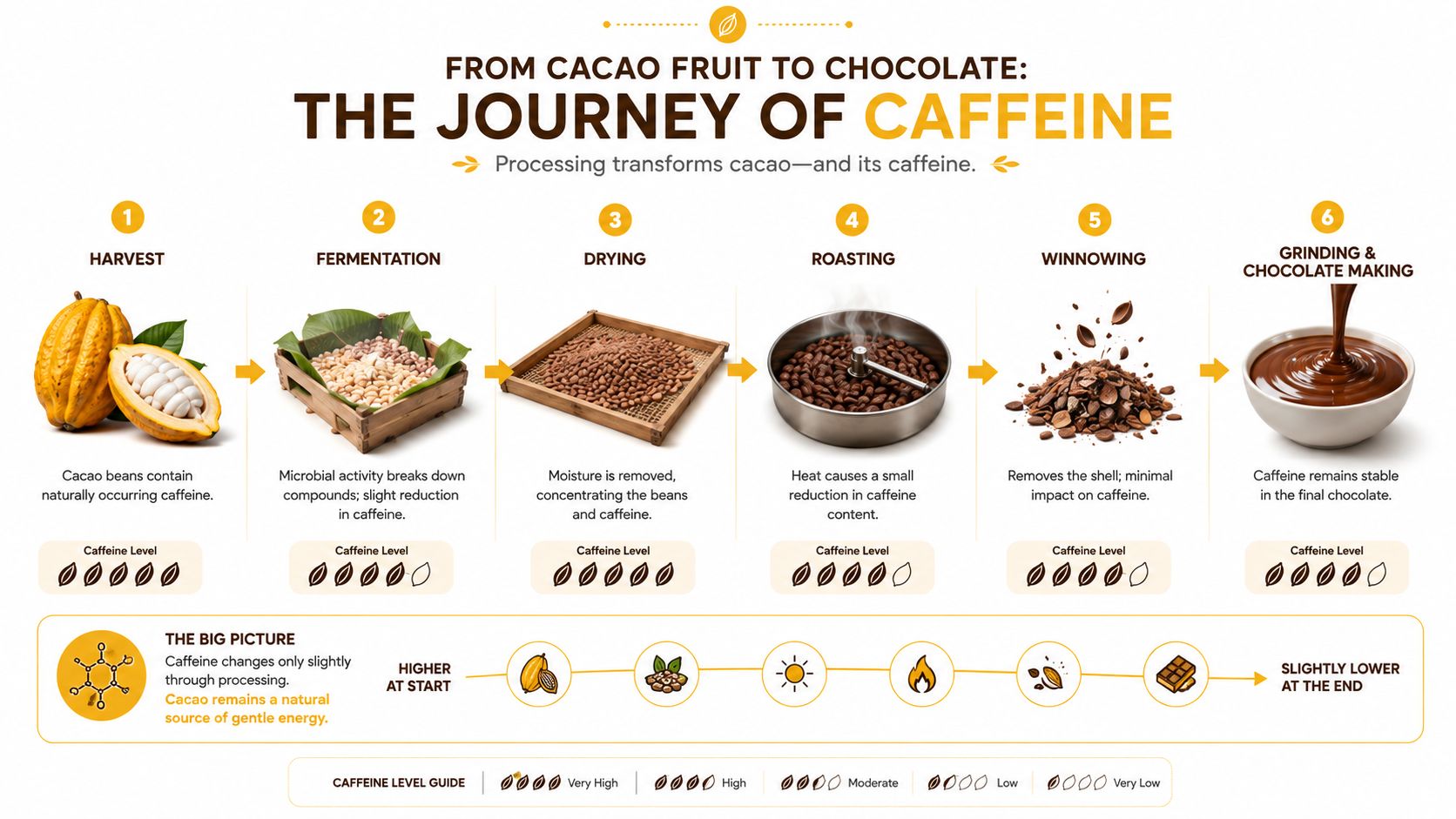
Two containers can both say “cocoa powder” and still produce different caffeine estimates. The most important label distinction is often natural versus Dutch-process, also called alkalized cocoa.
Natural cocoa can contain about 230 mg of caffeine per 100 grams, while Dutch-process cocoa can fall to about 78 mg per 100 grams. The difference represents a reduction of roughly 66% associated with alkalization, according to the National Center for Biotechnology Information reference on cocoa constituents.
Natural and Dutch-process powders
Natural cocoa is acidic and typically has a sharper chocolate flavor. Dutch-process cocoa is treated to reduce acidity, which changes its color, flavor, baking behavior, and measured alkaloid content. If you're choosing based on caffeine, Dutch-process may provide a lower amount, but the package doesn't always provide a precise caffeine declaration.
The word “raw” also deserves caution. It describes a processing style or marketing position, not a guarantee that every product has the same caffeine concentration. Bean characteristics, manufacturing choices, and serving size still matter.
What to check before buying
Use the label as a starting point, then consider the way you'll consume the powder:
- Read the processing term: Look for natural, alkalized, or Dutch-process wording.
- Find the serving size: A tablespoon estimate is more useful when your recipe uses measured spoonfuls.
- Ask the manufacturer: If caffeine matters medically or personally, contact the brand for product-specific information.
- Separate ceremonial products: A serving designed for a ceremonial drink may contain much more cacao than a baking recipe.
Cacao and coffee beans also differ in their natural stimulant profiles. Cartograph Coffee's comparison of cocoa beans and coffee beans offers useful context for understanding why the two ingredients behave differently in drinks.
Treat published values as ranges unless a brand provides a tested figure for its exact product. That approach is more accurate than assuming every dark powder has the same composition.
Who Should Treat Cacao as a Meaningful Stimulant
For many adults, cacao in an ordinary smoothie, drink, or baked recipe won't feel like a major stimulant. Some people should still count it deliberately, especially when they're limiting caffeine for a specific reason.
A typical hot chocolate made with two to three tablespoons of cacao provides roughly 24 to 36 mg of caffeine, while ceremonial cacao can reach 60 to 145 mg per serving, according to this cacao caffeine guide. The latter range can overlap with some tea drinks and low-dose coffees, so ceremonial cacao shouldn't be treated as interchangeable with a lightly flavored cocoa beverage.
Situations that call for extra awareness
- Pregnancy: People following a caffeine limit should include cacao in their overall calculation rather than counting only coffee and tea. For general background, this discussion of caffeine risks for expectant mothers can help frame the question for a conversation with a healthcare professional.
- Anxiety or stimulant sensitivity: A small amount may be enough to notice, particularly when cacao joins other sources.
- Reflux: Chocolate products can be troublesome for some people. If cacao appears to worsen symptoms, discuss the pattern with a qualified clinician.
- Sleep concerns: An evening drink may seem mild but still feel activating for an individual who reacts strongly to caffeine or theobromine.
- Medication questions: If you're taking medication that affects stimulation, heart rate, anxiety, or sleep, ask a pharmacist or clinician whether cacao deserves special consideration.
Personal test: Use a measured serving on a day when your other caffeine intake is predictable, then observe your sleep and symptoms rather than relying on someone else's tolerance.
People who experience coffee jitters may also find practical reduction strategies in this guide to stopping caffeine jitters. The aim isn't automatic avoidance. It's matching the product and serving to your own response.
Smart Ways to Choose and Use Cacao Powder
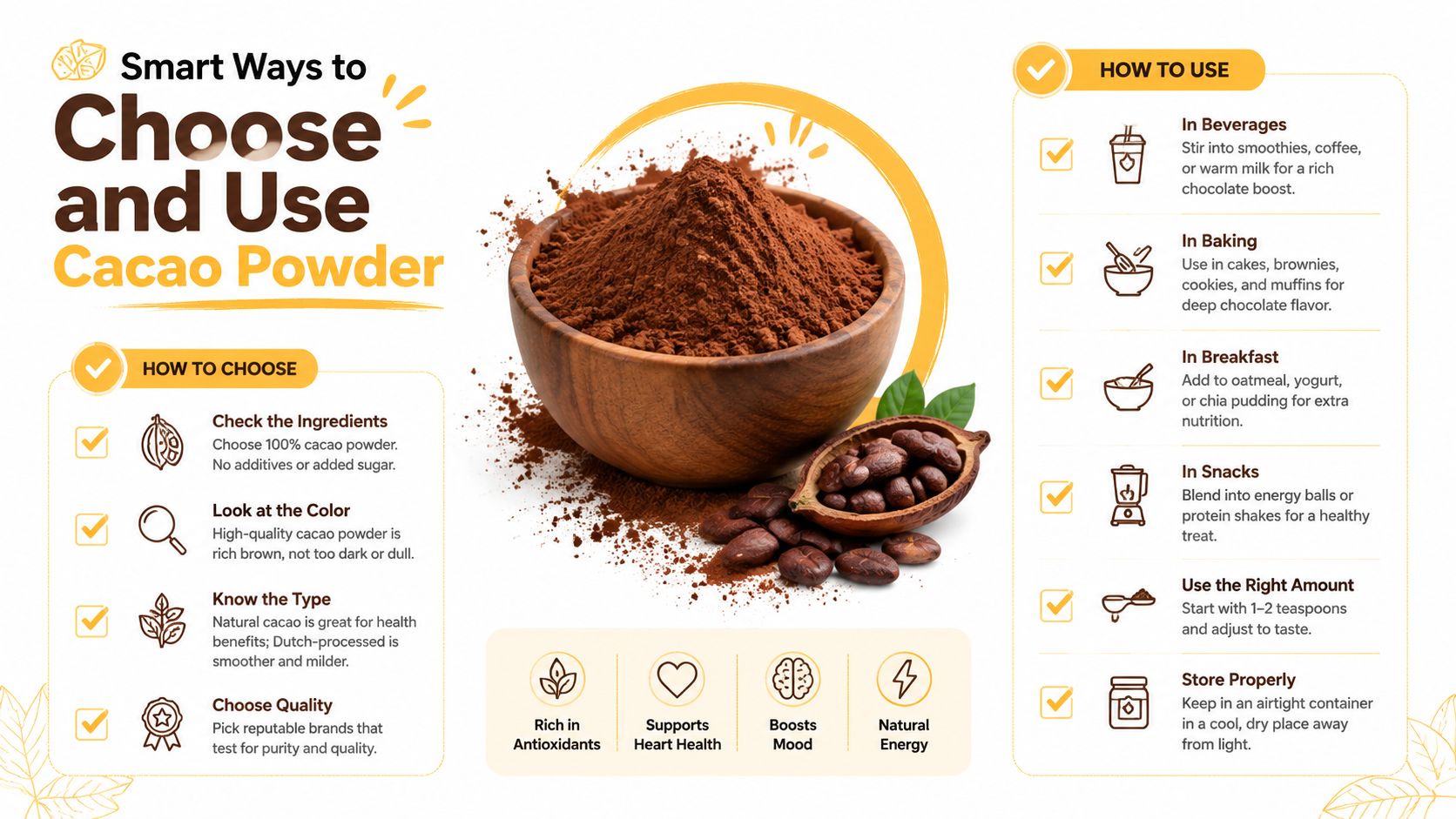
How can you make cacao's stimulant effect easier to judge? Start by making the serving consistent. Use a level tablespoon instead of an unmeasured scoop, and note whether the product is natural, raw, or Dutch-process. A repeatable serving works like a fixed ruler: it lets you compare your response from one drink to the next.
Make the label work for you
Choose natural cocoa when its flavor and behavior in a recipe suit you. Dutch-process cocoa has a smoother taste and may contain less caffeine after alkalization. Neither choice guarantees a caffeine-free result, and taste can affect how much powder you add. A satisfying smaller serving may be easier to manage than one that leads you to keep increasing the amount.
If you want a cacao-free chocolate flavor, carob is an option to consider. Decaffeinated cocoa may also fit your needs, but read the manufacturer's wording carefully. “Reduced caffeine” does not necessarily mean “caffeine-free.”
Control combinations and timing
A recipe using one to three tablespoons can provide a noticeable stimulant load, especially later in the day or alongside coffee, tea, matcha, or other sources. Cacao's caffeine is usually modest, but its theobromine content can still make the drink feel active. For caffeine-sensitive drinkers, the practical question is the complete recipe, not cacao in isolation.
Try a routine that separates those decisions:
- Morning smoothie: Add a measured cacao serving if you already understand how coffee affects you.
- Afternoon drink: Reduce the powder when coffee or tea has already been part of your day.
- Evening dessert: Choose less powder, carob, or a suitable decaffeinated alternative when sleep is a priority.
- Coffee-cacao blend: Count both ingredients. Chocolate flavor does not make the coffee component disappear.
Ceremonial cacao deserves separate attention because its concentrated preparation can feel stronger than an everyday baking amount. Cartograph Coffee offers organic instant coffee as a convenient coffee option alongside your cacao choices. Whether you use one or combine them, identify the powder type, measure the serving, account for other stimulants, and set the timing deliberately.
Key Takeaways and Smart Choices on Cacao and Caffeine
Cacao powder does contain caffeine, but the amount is usually modest. The practical baseline is about 12.4 mg per tablespoon, while a two- to three-tablespoon recipe provides roughly 24.8 to 37.2 mg. That is far below the 70 to 120 mg found in a typical 8-ounce cup of drip coffee.
The bigger scientific distinction is theobromine. Cacao contains much more theobromine than caffeine, which helps explain why it can feel stimulating without producing the same sharp sensation as coffee. Low caffeine doesn't guarantee that a cacao drink won't affect sleep, anxiety, reflux, or individual sensitivity.
Use these rules as a quick reference:
- Measure the powder: Your serving determines your exposure.
- Check processing: Natural and Dutch-process products can differ substantially.
- Count ceremonial cacao separately: Concentrated servings may be much more stimulating than everyday baking amounts.
- Watch combinations: Cacao adds to coffee, tea, matcha, and other stimulant sources.
- Adjust timing: If sleep matters, avoid testing a larger serving late in the day.
Cacao is a reasonable low-caffeine ingredient. For sensitive drinkers, pregnant people following caffeine limits, or anyone using concentrated ceremonial cacao, it deserves the same thoughtful attention given to other stimulant foods.
If you want to compare cacao with convenient coffee options, visit Cartograph Coffee to explore organic instant coffee designed for work, home, travel, and outdoor use. Use the same serving-and-timing approach from this guide to decide how it fits alongside cacao in your routine.